Leggy Growth on Aluminum Plant: Causes, Checks & Fixes
Quick answer
Leggy Aluminum Plant grows as upright bare stems with silver-marked leaves clustered at the tips-usually from skipped pinching and natural apical dominance, sometimes worsened by low light. First step: pinch every soft growing tip just above a leaf node, then reassess light if new side shoots stay thin or widely spaced.
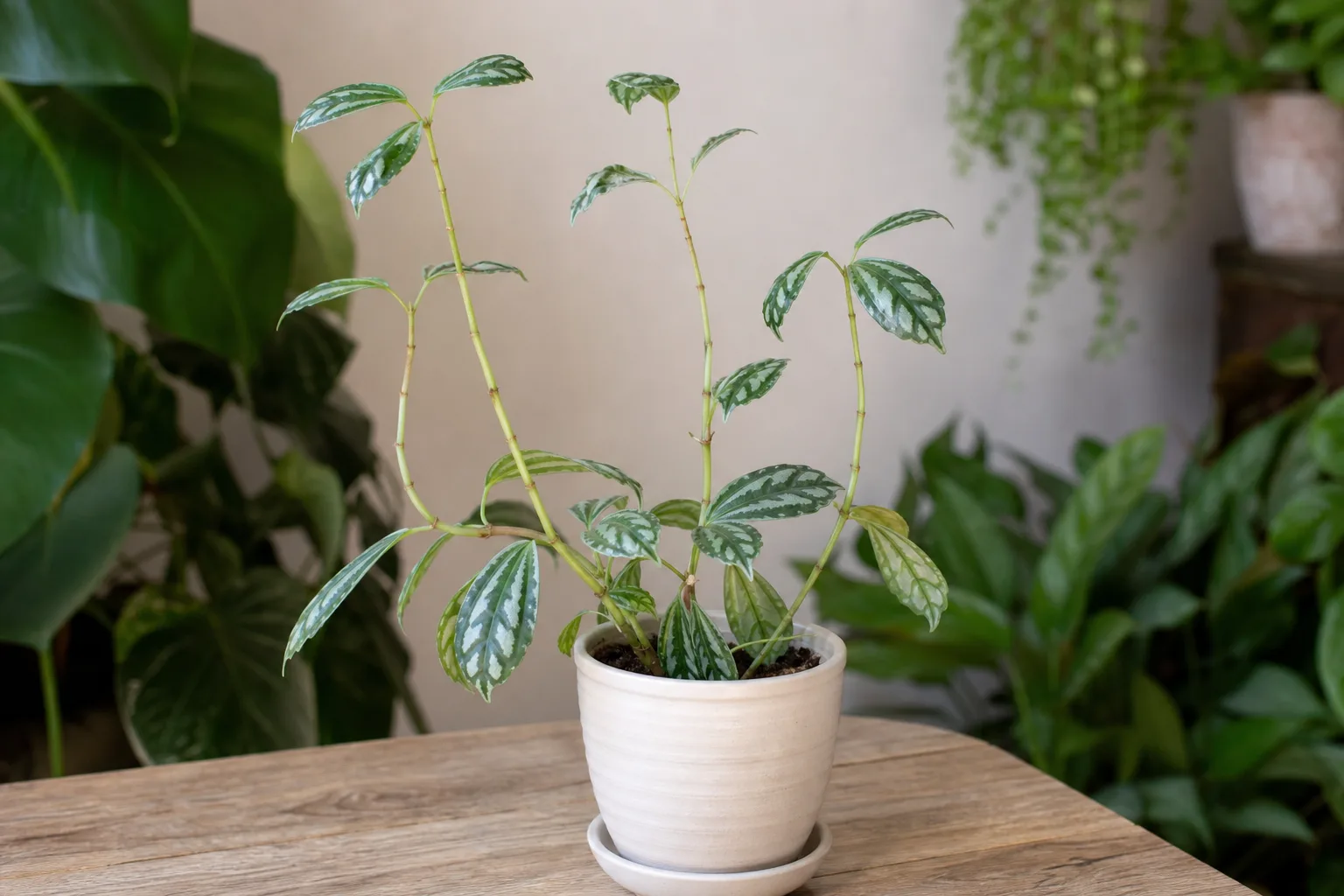
Leggy Growth on Aluminum Plant: Causes, Checks & Fixes
This guide covers leggy growth on Aluminum Plant. See also the general Leggy Growth guide, watering, and light pages for this plant.
Leggy Growth on Aluminum Plant: Causes, Checks & Fixes
Quick answer
Leggy Aluminum Plant (Pilea cadierei) is a shape problem before it is a mystery disease. In good light, this fast-growing species still elongates unless you break apical dominance at the stem tips. Left unpinched, upright stems stretch, lower leaves drop, and the metallic silver patches end up clustered at the top like a small palm tree.
First step: pinch every soft growing tip just above a leaf node with clean fingers or scissors. That redirects growth from the dominant tip to lateral buds below the cut. If side shoots emerge thin, widely spaced, or with dull silver markings within two weeks, light is still limiting-see our not enough light on Aluminum Plant guide before you pinch again.
This page covers maintenance legginess-neglected pinching, natural aging, and lanky form even when light is borderline-adequate. If your main symptoms are washed-out silver patches, strong window lean, and a dim-room placement, start with the not-enough-light guide instead; pinching in deep shade cannot produce a bushy clump.
Visual check: Tip-heavy Aluminum Plant with 2 cm or longer bare internodes and silver patches only at the stem tips-compare with a compact pinched clump where lateral shoots carry marked foliage lower on the plant. Photo reference: side-by-side of stretched single-stem form vs bushy pinched form on the same windowsill.
Leggy growth vs not enough light vs slow growth on Aluminum Plant
These three problems overlap on Pilea cadierei but need different first moves:
| What dominates | Main signal | First action | Guide |
|---|---|---|---|
| Leggy growth (this page) | Bare lower stems, silver only at tips, no pinching in weeks | Pinch tips above nodes | Stay here |
| Not enough light | Dull silver across leaves, lean toward glass, dim placement | Move brighter or add grow light | Not enough light |
| Slow growth | Almost no new tissue for weeks in warm weather | Check roots, temperature, pests | Slow growth |
| overwatering on Aluminum Plant in dim corners | Yellow lower leaves, soggy mix, soft stem base | Dry down; inspect roots | Overwatering |
Diagnostic split: When silver dulls across the whole plant, light is usually involved. When silver stays sharp but only at the tips while lower stems go bare in a reasonably bright spot, skipped pinching is the prime suspect. Both can coexist-fix light first when fade and lean dominate, then pinch once new growth shows energy.
What leggy growth looks like on Aluminum Plant
Leggy Aluminum Plant is easy to spot once you know you are looking at form, not a single damaged leaf.
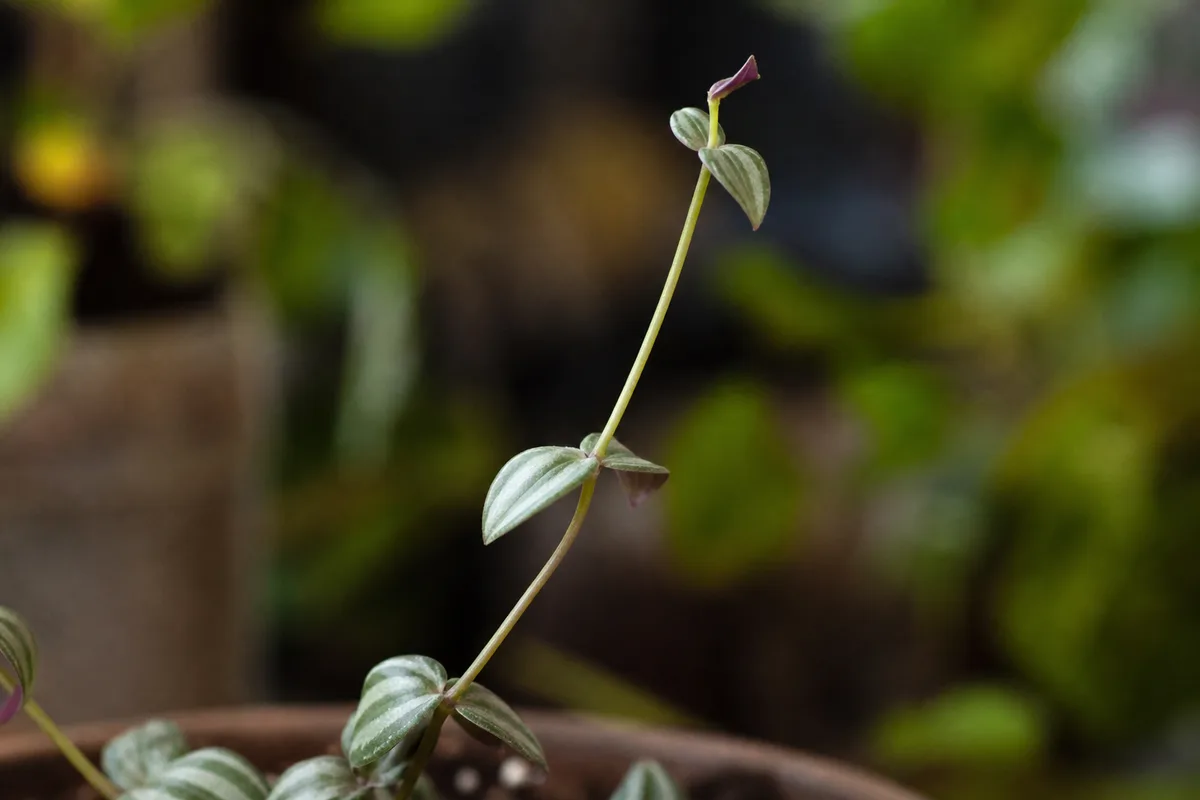
Leggy Growth symptoms on Aluminum Plant - compare with healthy tissue on the same plant.
Typical leggy-growth signs:
- One or two dominant vertical stems with little branching below the top third
- Long bare internodes-gaps of 2 cm or more between leaf pairs on new growth
- Silver patches concentrated at tips while lower stems stay green and leafless
- Top-heavy silhouette that may lean even near a window
- Smaller leaves at the very top compared with older foliage lower down when the plant has been stretching for weeks
- Lower leaf drop as stems age-bare sections below a tuft of marked foliage
Compare with not enough light on Aluminum Plant: low light usually adds dull or faint silver patches across the whole plant, strong lean toward glass, and smaller new leaves even before stems go fully bare. Leggy growth from skipped pinching can happen in a reasonably bright east window-the plant simply never branched.
Leggy form is also different from slow growth on Aluminum Plant: a stalled plant produces almost no new tissue. A leggy Aluminum Plant may grow vigorously upward while refusing to bush out.
Internode check: Measure the gap between the newest leaf pairs on the dominant stem. Gaps longer than about 2 cm on fresh growth confirm ongoing stretch; older compact sections lower on the same stem show what tighter spacing looked like before pinching stopped. Photo reference: ruler beside a stretched internode with silver-marked leaves only at the tip.
Why Aluminum Plant gets leggy
Skipped pinching and apical dominance (most common on this page)
Aluminum Plant is an upright, fast-growing herbaceous perennial that typically grows in a shrubby clump to about 12 inches-but only with regular tip removal. Each stem has strong apical dominance: the growing tip suppresses side branches below it until you remove it.
Pinch stem tips as needed to keep the plant compact, and NC State Extension recommends the same for indoor growers. PlantTalk Colorado notes that pinching growing tips produces a stockier, more shapely plant. Without that routine, a single stem races upward, especially in warm bright conditions where the plant has energy to grow but no reason to branch.
Indoor growers often buy a compact potted plant, place it in fair light, and never pinch again. Within four to six weeks the silhouette opens into bare sticks with silver-marked foliage only at the tips.
Natural aging and lower leaf drop
Even with good care, Aluminum Plant naturally becomes leggy over time and loses lower leaves as stems elongate. Best foliage appears on younger, well-lit plants-a signal that older stretched specimens often look better after a refresh from cuttings than after endless tip pinches on bare lower stems. NC State Extension notes that some growers replace plants each year because the best foliage is on new plants.
Some gardeners replace plants each year by taking stem tip cuttings in early spring for fresh bushy starts. That is normal maintenance for this species, not a failure on your part.
Low light as a co-factor-not always the whole story
Indoor plants stretch toward light when intensity is too low, becoming spindly with faded leaf color-see our not-enough-light guide when silver fade, window lean, and wet soil in a dark corner dominate. On this page we treat light as a co-factor when pinching has been neglected: you can pinch a dim plant and still get weak side shoots with long internodes.
When color fade and placement in a far corner are the main complaints, fix light first using the Aluminum Plant light guide-aim for roughly 400 to 800 foot-candles in the active growing spot, with 200 foot-candles as a hard floor-then pinch once compact new growth with sharp silver patches appears.
Single-stem starts never pinched at purchase
Nursery liners often arrive as one compact stem. If you pot it and never remove the dominant tip, the plant will look leggy within weeks even in acceptable light. A first pinch within a few days of bringing the plant home prevents the lollipop shape before it starts.
Leggy growth vs not enough light - which guide to read
| What you see most | Urgency | Start here | First action |
|---|---|---|---|
| Bare lower stems, tip-heavy shape, no pinching in weeks | Low - cosmetic | This page (leggy growth) | Pinch tips above nodes |
| Dull silver patches, lean toward window, dim room placement | Medium - worsens weekly | Not enough light | Upgrade placement or grow light |
| Almost no new growth for weeks in warm weather | Medium - stall | Slow growth | Check roots, temperature, pests |
| Wet soil, yellow lower leaves, soft stem base | High - root risk | Overwatering | Stop watering; inspect roots |
| Pinch placement, one-third rule, hard rejuvenation | Low - technique | Aluminum Plant pruning | Follow pruning workflow |
Both leggy-growth and low-light pages can apply to the same plant. Work light first when silver fade and lean scream “dim,” then pinch once brighter growth proves the plant has energy to branch.
How to confirm the cause
Run this Aluminum Plant-specific checklist before you repot or fertilize:
- Pinch history - When did you last remove growing tips above a node? If the answer is “never” or “not since purchase,” skipped pinching is the prime suspect.
- Internode pattern - Measure the newest stem section. Gaps longer than older compact growth below confirm ongoing stretch.
- Light sanity check - Is the pot within about two to four feet of an east or north window, or under a grow light? Use a light meter or the foot-candle ranges in our Aluminum Plant light guide-spots consistently under 200 foot-candles will produce thin pale laterals even after pinching. If the plant sits on a distant shelf with dull silver markings, confirm light before blaming pinching alone.
- Lower leaf drop - Bare sections with healthy green tips above suggest aging stretch, not sudden pest damage.
- Soil moisture in dim spots - Wet mix for many days while stems stretch can mean low light is slowing water use. Firm roots and normal dry-down support a pinching-first approach.
- Pest scan - Mealybugs in leaf axils or spider mites on undersides can stall branching. Inspect with a hand lens before assuming pure legginess.
Confirmation test: Pinch all active tips above nodes. During active growth in warm bright conditions, you should see two new shoots per pinched tip within one to three weeks. If side growth stays pale, sparse, or widely spaced, move to the not-enough-light guide before the next pinch round.
First fix: pinch growing tips above nodes
Pinch every soft growing tip just above a leaf node-about 5–10 mm above the point where leaves attach to the stem. Use clean fingers for tender tips or sharp scissors for woody lower sections.
That single action breaks apical dominance and is the correct first response when light is adequate but form is not. Do not hard-prune the entire plant to stubs on day one; limit each session to about one-third of living foliage if you also need to shorten long bare stems.
After pinching:
- Rotate the pot weekly so all sides receive even light and branch symmetrically.
- Hold fertilizer for one week unless you know the plant is actively growing in warm bright conditions.
- Reassess light if new side shoots are thin, pale, or widely spaced-upgrade placement or add grow lights before pinching again.
- Root tip cuttings from pinch trimmings if you want a fresh compact plant-Aluminum Plant propagates easily from stem tip cuttings in spring or summer.
For cut placement diagrams, sterilizing tools, and the one-third rule, see our full Aluminum Plant pruning guide.
Step-by-step recovery
Once tips are pinched:
- Wait one to three weeks for lateral buds to break. Warm rooms above ~65°F (18°C) speed branching during the active season.
- Pinch again when new tips reach two to three leaf pairs-repeat every three to four weeks from spring through early fall to keep the plant compact.
- Shorten severely bare stems after side shoots establish-cut back to a node above healthy leaves, not into naked internodes with no visible buds.
- Optional restart: If the mother plant is mostly bare stems with tiny top leaves, root healthy three- to four-inch tip cuttings in water or moist mix and grow a compact replacement while the parent recovers.
- Upgrade light if needed after two weeks of weak side growth-pinching cannot substitute for photosynthesis.
- Adjust watering if you moved the plant brighter-check the top half-inch of soil before every drink.
Make one major change at a time when diagnosing. Pinch first when form is the issue; move the pot first when silver fade and window lean dominate.
Recovery timeline
Expect the first side shoots to appear within one to three weeks after pinching during active growth. A noticeably fuller shape often returns within six to eight weeks after moderate pinching through the growing season.
Old bare internodes never shorten. Stretched stem sections stay long; success means new branches emerging lower on the plant and a fuller silhouette from the top down.
If no side shoots appear after three weeks in a bright spot, revisit light placement or check for root stress in wet soil. If side shoots are pale with faint silver markings and widely spaced, read not enough light on Aluminum Plant before another pinch cycle.
If three pinch cycles in a clearly bright location (400+ foot-candles per our light guide) still produce weak laterals, inspect roots for rot before pruning again-see overwatering when the mix stays soggy.
Lookalike symptoms to rule out
Not enough light - Dull silver patches, pronounced lean toward glass, and smaller new leaves across the plant. Fix light before repeated pinching. See not enough light on Aluminum Plant.
Slow growth - Little or no new tissue for weeks in warm weather. Different from vigorous upward stretch. See slow growth on Aluminum Plant.
Overwatering in dim corners - Yellow lower leaves, soggy mix, soft stem base. Leggy stretch can coexist, but root trouble needs separate treatment. See overwatering on Aluminum Plant.
Low humidity - Brown crisp edges on leaf margins-more common on margins than the silver-center fading seen in shade or aging stretch.
Pests on weak tips - Mealybugs in axils or fine webbing on undersides can stall branching. Treat pests before expecting pinching alone to restore shape.
What not to do
Do not skip pinching because the top still looks pretty-a silver-marked tip on a bare stem is still leggy.
Do not pinch repeatedly in a dark corner hoping for bushiness. Side shoots need light to thicken and show sharp silver patches.
Do not hard-prune more than one-third of foliage in one session on an indoor plant; stage severe rejuvenation over two to three weeks per our pruning guide.
Do not relocate a shade-adapted plant to harsh direct south-window sun the same day you prune-acclimate over one to two weeks to avoid scorching the silver-marked foliage.
Do not stack Aluminum Plant repotting guide, heavy pruning, and pesticide on the same day. Give the plant one stress at a time.
Do not over-fertilize a stretched plant to force bushiness. Fertilizer cannot replace pinching or adequate light.
How to prevent leggy Aluminum Plant next time
Pinch on a schedule-every three to four weeks from spring through early fall, not only when the plant already looks like bare sticks with a top tuft.
Start pinching at purchase if the plant is a single compact stem.
Rotate pots weekly for even branching on all sides.
Reassess light each autumn when daylight shortens-neglected pinching and seasonal dimming often combine. A north window that held 300 foot-candles in July can drop below 200 by December. Add a full-spectrum LED grow light 12 to 14 inches above the canopy on a 12-hour timer before stems go fully bare-specs and placement detail live in our Aluminum Plant light guide.
Refresh from cuttings when an older plant is mostly bare lower stems. Early-spring tip cuttings give you a compact replacement with the sharpest silver foliage.
Keep technique reference handy in our Aluminum Plant pruning guide for node placement and tool hygiene.
When to worry
Pure legginess is a cosmetic and maintenance issue-your Aluminum Plant is not dying because it looks like a small palm.
Escalate when:
- The plant topples or stem bases soften under top-heavy weight
- Wet soil, yellow leaves, and mushy stems on Aluminum Plant suggest root trouble layered on stretch-follow overwatering before another pinch round
- Pest populations explode on weak new tips after prolonged neglect
- No side shoots after three to four weeks of pinching in a clearly bright location-reassess light, roots, or pests
Gradual tip-heavy growth over weeks is fixable with pinching and light checks-no panic, but do not wait until lower stems are completely bare.
What to do next - escalation summary
| Your situation | Do this first | Then |
|---|---|---|
| Tip-heavy bare stems, sharp silver only at tips, fair light | Pinch all soft tips above nodes | Re-pinch in 3–4 weeks; rotate pot weekly |
| Dull silver, window lean, dim shelf | Move brighter or add grow light per light guide | Pinch once new growth shows sharp markings |
| Mostly bare lower stems, tiny top tuft | Root tip cuttings + light pinching on parent | Replace mother with compact cutting when rooted |
| Wet soil, yellow leaves, soft base | Stop watering; inspect roots via overwatering | Pinch only after mix dries and roots are firm |
| Three failed pinch cycles in bright light | Check roots and pests | Escalate to repot or pest treatment-not more pinching |
Related Aluminum Plant problems: not enough light, slow growth, overwatering. Care guides: Aluminum Plant pruning, Aluminum Plant light, Aluminum Plant overview.
FAQs
How can I confirm leggy growth on Aluminum Plant?
Look for one or two dominant upright stems with internodes longer than about 2 cm, bare lower sections where leaves dropped, and silver patches concentrated at the top. If the plant also leans hard toward a window and new leaves look dull with faint markings, read our not-enough-light guide-light may be the main limiter. Pure maintenance legginess often happens in reasonably bright spots where the plant simply was never pinched after purchase.
Is leggy Aluminum Plant the same as not enough light?
Not always. Low light stretches stems and dulls silver patches across the whole plant, often with a strong lean toward glass. Maintenance legginess from skipped pinching can happen in a fair east window-the plant grows upward but never branches. Silver patches only at the tips with bright lower stems usually point to form, not energy deficit. Use the decision table above to choose pinch-first vs light-first.
Will leggy Aluminum Plant stems fill in after pinching?
Old stretched internodes do not shorten, but pinching the apical bud above a node usually forces two side shoots within one to three weeks during active growth. If side branches stay thin, pale, or widely spaced after pinching, light is still too weak-pinching alone cannot replace brighter exposure. Judge success by fresh lateral growth with sharp silver patches, not by old bare stem sections reverting.
When is leggy growth urgent on Aluminum Plant?
Legginess alone is a shape problem, not an emergency. Act faster when a tall spindly plant cannot support itself, sits in chronically wet soil with yellow lower leaves and a soft stem base, or carries heavy mealybug or spider mite populations on weak new tissue. Those patterns suggest root trouble or pests layered on top of stretch-not pinching alone.
How do I prevent leggy Aluminum Plant next time?
Pinch stem tips every three to four weeks from spring through early fall, rotate the pot weekly so all sides branch evenly, and start fresh from tip cuttings when the mother plant is mostly bare stems. Reassess window placement each autumn when daylight shortens-add a grow light before stems go fully bare per our light guide. See our Aluminum Plant pruning guide for technique detail and the not-enough-light guide when silver fade dominates.
When to use this page vs other Aluminum Plant guides
- Aluminum Plant watering guide - Use for routine moisture checks before assuming leggy growth is the main issue.
- Aluminum Plant problems hub - Browse all 16 common issues on this species.
- Not Enough Light on Aluminum Plant - Different entry point when symptoms overlap with leggy growth.
- Slow Growth on Aluminum Plant - Different entry point when symptoms overlap with leggy growth.
- Yellow Leaves on Aluminum Plant - Different entry point when symptoms overlap with leggy growth.