Yellow Leaves on Aluminum Plant: Causes, Checks & Fixes
Quick answer
Yellow leaves on Aluminum Plant are a symptom, not one diagnosis. First step: push your finger into the top inch of mix and note whether lower leaves only or upper pale leaves are affected-wet heavy soil with limp lower yellowing points to overwatering; dry soil with crispy edges points to underwatering or low humidity; pale upper leaves with faded silver patches usually mean insufficient light.
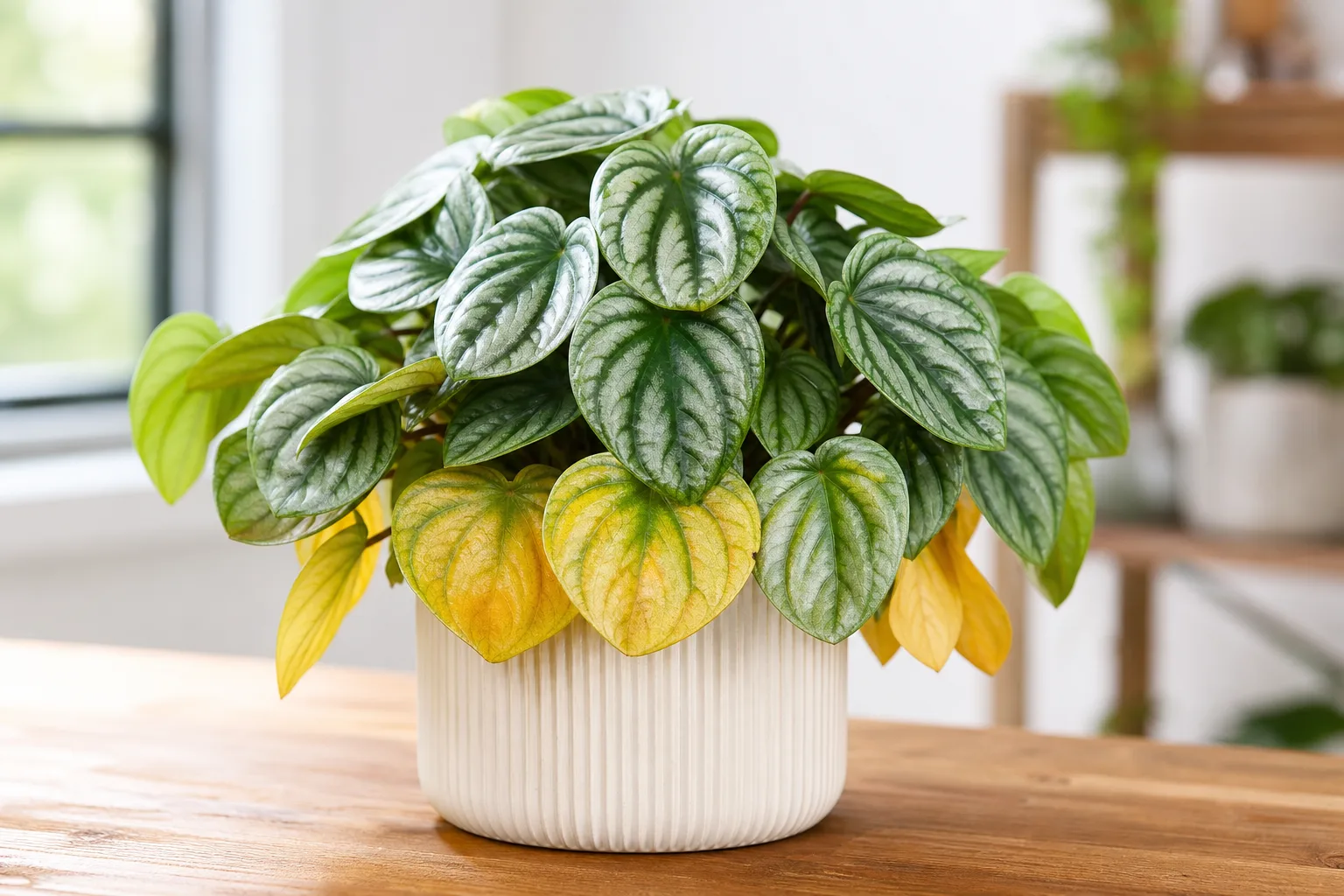
Yellow Leaves on Aluminum Plant: Causes, Checks & Fixes
This guide covers yellow leaves on Aluminum Plant. See also the general Yellow Leaves guide, watering, and light pages for this plant.
Yellow Leaves on Aluminum Plant: Causes, Checks & Fixes
Quick answer
Yellow leaves on Aluminum Plant (Pilea cadierei) are a symptom, not a single diagnosis. This is a tropical understory herb with textured, cupped leaves and four rows of raised silver patches-not a succulent and not a drought-tolerant species. Indoors, yellowing most often traces to overwatering (especially in winter), low light fading upper leaves, underwatering or dry winter air, or normal shedding of the oldest lower leaves.
First step: check soil moisture at the top inch and which leaves are affected. Push your finger into the mix, lift the pot to feel weight, and look at the leaf pattern. Wet heavy soil with soft yellow lower leaves points to root stress or overwatering. Dry light soil with crispy brown edges points to thirst or low humidity. Pale yellow-green upper leaves with dull silver patches usually mean insufficient light-even if watering looks correct on a calendar.
Do not fertilize, repot, or increase watering on day one. Match the first fix to what you find. Full species context: Aluminum Plant watering guide.
What yellow leaves look like on Aluminum Plant
Yellowing on Pilea cadierei follows patterns tied to its shrubby clump habit and silver-marked foliage. The plant grows upright to about 12 inches with elliptic leaves that cup slightly and hold water on the surface-wet foliage plus still indoor air invites leaf spot, which Aluminum Plant overview is prone to when kept too wet.
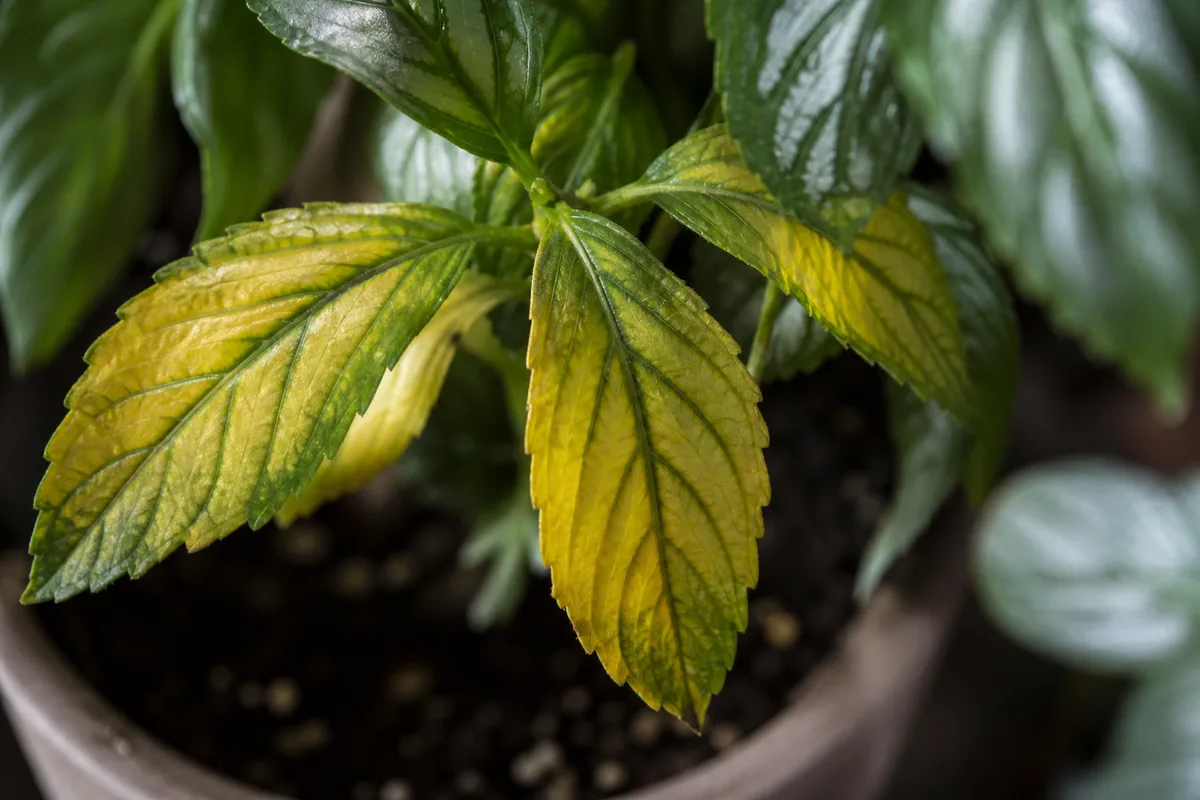
Yellow Leaves symptoms on Aluminum Plant - compare with healthy tissue on the same plant.
Overwatering and root stress (most common indoor cause):
- Lower leaves yellow first, often starting at the tip or margin and creeping inward
- Leaves feel soft or limp while the mix is wet or cool at depth
- Pot stays heavy for many days after watering; surface may look dark
- Small water-soaked blisters or rust-colored spots on leaf undersides (edema)
- Faint sour or musty smell from the soil surface
- Stems near the soil line may go soft and dark in advanced cases-see root rot on Aluminum Plant
Winter schedule mismatch:
- Yellowing accelerates in December through February even though you have not changed placement
- Soil stays damp 10+ days because growth slowed but watering did not
- Same pot that needed water every 5 to 7 days in summer now takes 12 to 14 days to dry-see overwatering
Insufficient light:
- Upper and newer leaves turn pale yellow-green; the four-row silver pattern fades or blurs
- Stems may stretch slightly toward the brightest window
- Soil dries slowly because metabolism is low-can mimic overwatering
- Distinct from sun scorch (rare indoors on this part-shade species)
Underwatering and low humidity:
- Leaves droop and perk after a thorough drink if roots are still healthy
- Crispy brown edges and tips on yellowing leaves; mix is dry an inch down or more
- Worsens in winter when forced-air heat drops humidity below what this Vietnamese understory plant prefers
- See low humidity and wilting
Natural lower-leaf aging:
- One or two bottom leaves fade slowly over weeks to months
- Center growth stays green with sharp silver patches; no sour wet soil
- Common on mature clumps as new crown leaves replace old ones
Salt or fluoride damage:
- Yellow or brown leaf tips and margins with a burnt look, often on older leaves first
- White crust on soil surface or pot rim; builds from tap water and fertilizer over months
- Flush the mix every four to six weeks if you use tap water-aligned with the watering guide
Pests:
- Spider mites cause fine stippling and dull, yellowish patches, often with webbing on leaf undersides
- Mealybugs show as white cottony clusters in leaf axils; stressed plants yellow as sap is drained
- See spider mites and mealybugs
Why Pilea cadierei gets yellow leaves
Overwatering and the “moist, not soggy” line
Aluminum plant wants an evenly moist root zone, not saturated soil. When the mix stays wet too long, roots lose oxygen, stop taking up water and nutrients, and the plant sheds lower leaves it can no longer support. Pilea cadierei is noted for susceptibility to leaf spots and stem rot if kept too wet-the line between healthy moisture and rot is unusually thin on this species.
Dense peat-heavy mix, pots without drainage, oversized containers, and watering on a calendar instead of by soil feel all keep roots saturated. Textured cupped leaves can also pool irrigation water on the foliage, encouraging fungal leaf spot when air circulation is poor.
Winter schedule mismatch
This is the pattern many growers miss. In spring and summer, most aluminum plants need water roughly every 5 to 7 days when the top inch dries. As light drops in fall, the same pot may need water only every 10 to 14 days-or longer in a cool room. Watering at summer pace through January is one of the most common reasons Pilea cadierei collapses in winter: cool soil holds moisture, roots sit in stale mix, and lower leaves yellow while the surface still feels damp. The Missouri Botanical Garden recommends reducing watering in fall to late winter for this species.
Insufficient light
Native to Vietnam, aluminum plant is grown indoors in bright indirect light. In dim rooms, chlorophyll production drops, upper leaves pale, silver markings lose contrast, and the plant uses less water-so a fixed watering schedule can leave soil wet longer than you expect. Low light and overwatering often occur together; fix placement before assuming the plant is hungry. See not-enough-light and light guide.
Underwatering and low humidity
Less common than overwatering but real: a small pot in a sunny window, hydrophobic old mix, or a missed winter check can dry the root ball. Low humidity in heated rooms accelerates transpiration even when soil is moderately moist, producing crispy yellow-brown edges that look like drought stress. See drooping leaves when limp foliage is the main symptom.
Natural senescence
Pilea cadierei produces new leaves from the crown; the oldest leaves at the base naturally yellow and drop as the clump matures. One or two fading bottom leaves on an otherwise vigorous plant is normal turnover, not a crisis.
Cold drafts and temperature swings
Keep this tropical species away from drafty winter windows, AC vents, and exterior doors. Sudden cold exposure can yellow or drop leaves even when soil moisture looks fine. Comfortable range indoors is roughly 60 to 75°F.
Confirm the cause - ordered checklist
Work through these checks before changing more than one variable.
1. Soil moisture and pot weight. Push your finger one inch into the mix. Wet and heavy with cool damp soil below the surface points to overwatering. Dusty dry an inch down with a light pot points to underwatering. Use a wooden skewer or chopstick for a deeper read in peaty mix.
2. Which leaves are yellowing. Lower leaves only with firm upper growth and sharp silver patches often means aging or early root stress. Upper pale leaves with faded patterning points to light. Multiple leaves at once with wet soil is more urgent.
3. Stem firmness at the base. Press gently near the soil line. Soft, dark tissue is a stem-rot warning-stop watering and inspect roots.
4. Smell and drainage. Sour or musty soil odor suggests anaerobic wet conditions. Confirm drainage holes are open and saucer water is emptied after every drink.
5. Season and recent watering history. Did you keep summer frequency into November or December? Did light drop without adjusting water? Winter mismatch is a leading cause on this species.
6. Light placement. Hold your hand between plant and window at midday-a faint shadow means low light for this species. Silver patch sharpness on the newest leaves is a good long-term light gauge.
7. Humidity and leaf edges. Crispy margins with moderately moist soil suggest dry air, not necessarily underwatering.
8. Pests. Check leaf undersides and leaf axils with a magnifying glass for mites, mealybugs, or stippling.
Symptom lookalike comparison table
| Pattern | Soil | Leaf texture | Most likely cause |
|---|---|---|---|
| Lower leaves yellow first, soft, wet heavy pot | Wet / cool | Limp, may have edema spots | Overwatering / root stress |
| Lower leaves yellow, dry pot, crispy edges | Dry | Papery brown tips | Underwatering |
| Lower leaves yellow, moist soil, crispy edges | Moist but not soggy | Crispy margins | Low humidity |
| Upper leaves pale, silver faded, slight stretch | Often slow-drying | Soft, not crispy | Insufficient light |
| One or two bottom leaves over months | Normal | Firm center growth | Natural aging |
| Yellow tips/margins, white soil crust | Variable | Burnt-looking edges | Salt / fluoride buildup |
| Stippling, webbing, cottony clusters | Variable | Dull patchy yellow | Pests |
First fix by most likely cause
If soil is wet and lower leaves are soft: Stop watering immediately. Move to brighter indirect light with good airflow so the surface can dry. Poke aeration holes in the mix with a chopstick without disturbing roots. Let the top inch dry fully before the next drink-often one to two weeks in winter. Do not fertilize. If stems are soft or soil smells sour, unpot and inspect roots per the root-rot guide.
If soil is dry and leaves are droopy: Water thoroughly until excess drains, empty the saucer, and check again in an hour-healthy roots perk leaves quickly. If mix has shrunk from the pot sides, bottom-water 15 to 30 minutes. See underwatering if dryness is chronic.
If upper leaves are pale with faded silver: Improve light first-within two to four feet of an east window or set back from filtered south or west glass. Add a grow light if winter windows are weak. Do not move into harsh direct sun in one step. See not-enough-light.
If only one or two bottom leaves are fading slowly: Remove fully yellow leaves at the base with clean scissors. No watering or light overhaul needed if center growth is healthy.
If tips are burnt with soil crust: Flush the mix with room-temperature water until drainage runs clear for 30 seconds. Hold fertilizer until new growth looks normal.
Make one primary correction first. Stacking repot, feed, and pruning on the same day obscures what helped and stresses roots further.
Recovery timeline and what to expect
Fully yellow leaves will not turn green again-that chlorophyll loss is permanent on mature foliage. Success means yellowing stops spreading, soil moisture stabilizes, and new crown leaves emerge firm with clear silver patches.
Mild overwatering caught at the yellow-lower-leaf stage often stabilizes within one to two dry-down cycles-roughly two to three weeks. If several leaves softened and soil smelled sour, expect four to eight weeks and possible Aluminum Plant repotting guide after root cleanup. Severe stem rot at the base is not always reversible; focus on saving firm stem tissue above the damage.
For light correction, new leaves may take three to six weeks to show sharper silver patterning-old pale leaves will not fully recover their markings.
What not to do
Do not fertilize a yellowing aluminum plant to “green it up” while soil is still wet. Salt buildup from overfeeding can also yellow foliage, and stressed roots cannot use nutrients safely.
Do not increase watering when the pot is already heavy or the surface stays dark for days.
Do not repot on day one unless roots are mushy or soil will not dry-unnecessary repotting adds stress.
Do not mist heavily to fix yellow leaves; wet cupped foliage in still air encourages leaf spot on this species.
Do not assume every yellow leaf must be removed immediately-wait until care is corrected, then trim fully spent blades.
How to prevent yellow leaves next time
Water when the top inch of mix dries, not on a fixed calendar. Expect every 5 to 7 days in active growth and every 10 to 14 days in fall and winter-always confirm with finger or skewer tests. See the full watering guide for seasonal rhythm.
Keep bright indirect light year-round; weak winter light and generous watering together are the classic failure pair.
Maintain humidity near 50 percent or higher in heated rooms-a humidifier beats misting for this humidity-loving species.
Use a peaty, well-draining mix with perlite; refresh every 18 to 24 months before compaction slows dry-down.
Flush salts every four to six weeks if you fertilize or use tap water.
Pinch stem tips as needed to keep the clump compact; best foliage is on younger growth.
When to worry
Escalate quickly if:
- Three or more leaves yellow within two weeks
- Stems feel soft or dark at the soil line
- Soil smells rotten even after you stop watering
- New crown leaves emerge pale and small while mix stays wet
- Plant wilts despite wet soil-classic root-damage signal; see drooping leaves
- Rapid leaf drop after a cold draft or repot into heavy mix
A single bottom leaf slowly fading over months on a firm, silver-marked plant is lower urgency-adjust checks, do not panic.
Conclusion
Yellow leaves on Aluminum Plant are usually a watering, light, or seasonal rhythm problem-not a mystery disease. Pilea cadierei tells you clearly when the root zone is wrong: soft lower yellowing with wet soil, winter collapse from summer watering pace, or pale upper leaves when silver patches fade in dim rooms. Confirm moisture and leaf pattern, apply one matched fix, and judge recovery by new growth, not by old yellow blades turning green again.
When to use this page vs other Aluminum Plant guides
- Aluminum Plant watering guide - Use for routine moisture checks before assuming yellow leaves is the main issue.
- Aluminum Plant problems hub - Browse all 16 common issues on this species.
- Overwatering on Aluminum Plant - Different entry point when symptoms overlap with yellow leaves.
- Underwatering on Aluminum Plant - Different entry point when symptoms overlap with yellow leaves.
- Not Enough Light on Aluminum Plant - Different entry point when symptoms overlap with yellow leaves.
Related Aluminum Plant guides
- Aluminum Plant overview
- Aluminum Plant watering
- Aluminum Plant light
- Aluminum Plant soil
- Overwatering on Aluminum Plant
- Underwatering on Aluminum Plant
- Not Enough Light on Aluminum Plant
- Root Rot on Aluminum Plant
- Aluminum Plant problems
Related tool
Use the Yellow Leaves Diagnosis Tool to narrow causes for yellow leaves on this plant before changing multiple variables at once.