Wilting on Aluminum Plant: Causes, Checks & Fixes
Quick answer
Wilting on aluminum plant means the silver-marked leaves lost turgor fast-often from severe underwatering, heat shock, or roots failing in wet soil. First step: push a finger one inch into the mix and lift the pot. Dry and light means water thoroughly; wet and heavy with soft stems means stop watering and inspect roots today.
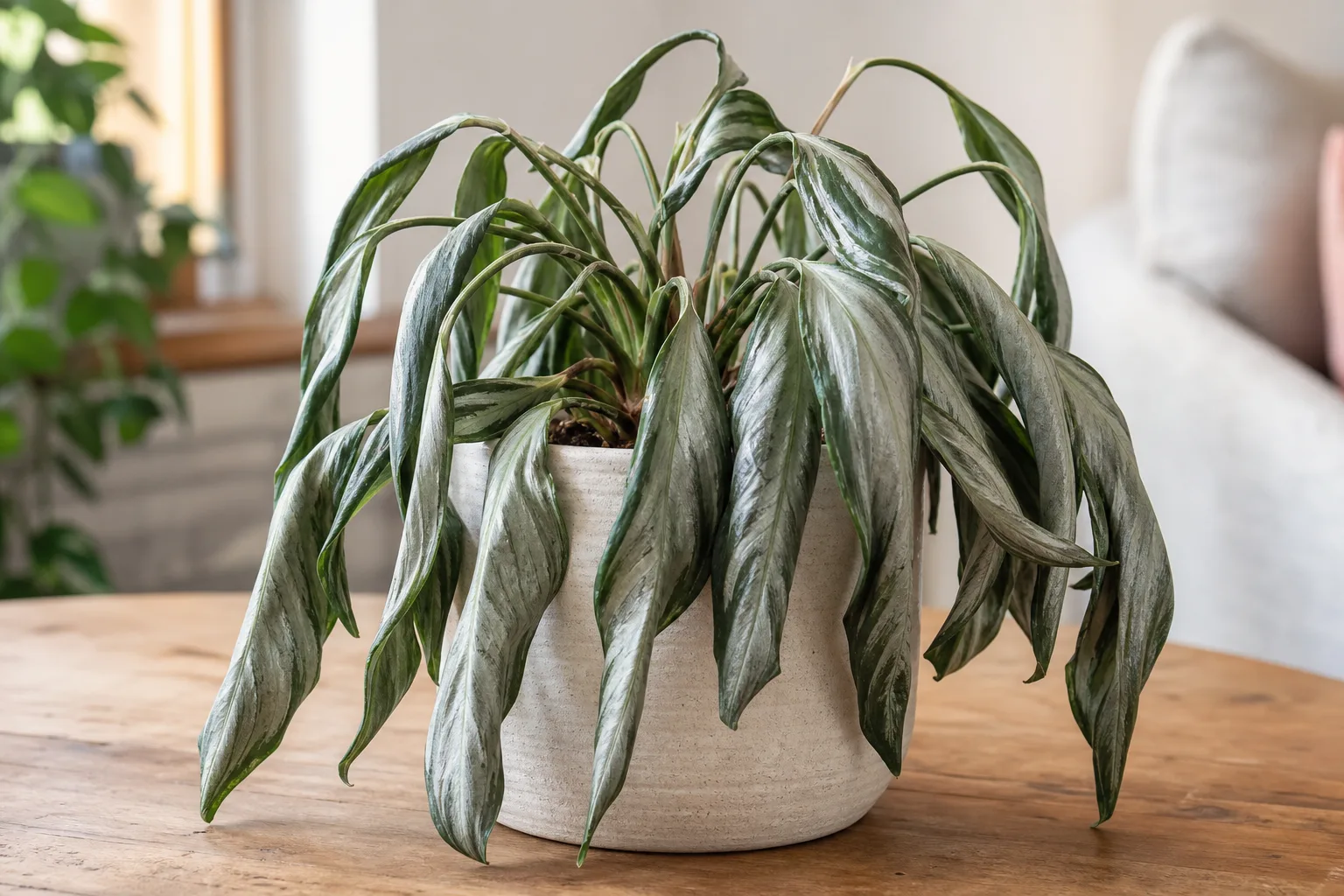
Wilting on Aluminum Plant: Causes, Checks & Fixes
This guide covers wilting on Aluminum Plant. See also the general Wilting guide, watering, and light pages for this plant.
Wilting on Aluminum Plant: Causes, Checks & Fixes
Quick answer
Wilting on aluminum plant (Pilea cadierei) is acute turgor loss-the normally upright, cupped silver foliage goes limp quickly, sometimes across the whole plant in hours. On this tropical understory species, the cause is almost always soil moisture out of balance, low humidity, cold or heat shock, or root failure from staying too wet-not a random leaf disease.
First step: push your finger one inch into the mix and lift the pot. A dry, lightweight pot with limp but still firm leaves calls for a thorough watering (or bottom-watering if the soil has shrunk away from the pot walls). A heavy, wet pot with soft stems at the base means do not water-rotted roots cannot move water upward, and adding more water accelerates stem rot on a species highly susceptible to leaf spots and stem rot when kept too wet.
Wilting vs drooping on aluminum plant
Both symptoms look limp, but the timeline and urgency differ. Wilting is sudden collapse-tissue loses firmness fast, often after a missed watering, a heat spike, or root failure in soggy mix. Drooping is a gradual sag over days as leaves lose their normal upward angle without full collapse.
On aluminum plant, the wet-vs-dry diagnostic rules are the same for both, but wilting pages are for emergency triage when you walked in to find the plant dramatically limp. Use our drooping leaves guide when you notice a slow loss of leaf angle and want to sort chronic moisture issues first.
| Symptom pattern | Timeline | Soil feel | Stem base | Likely cause | Next page |
|---|---|---|---|---|---|
| Whole plant limp in hours | Acute | Dry top inch, light pot | Firm | Severe underwatering / heat | Underwatering |
| Limp despite wet mix | Hours to 1–2 days | Wet many days, heavy pot | Soft or dark | Overwatering / root rot | Overwatering |
| New tips collapse, crispy edges | Gradual to acute | Moist, not bone-dry | Firm | Low humidity | Low humidity |
| Collapse after repot | 1–3 days post-repot | Evenly moist | Firm | Transplant shock | Repotting |
| Slow sag, firm stems | Days | Dry or wet | Firm | Chronic imbalance | Drooping leaves |
What wilting looks like on Pilea cadierei
Healthy aluminum plant leaves sit slightly cupped with four rows of raised silver patches that catch light. When they wilt, the whole leaf plane hangs downward, stems may kink at nodes, and the plant can look dramatically smaller because upright tissue has collapsed.
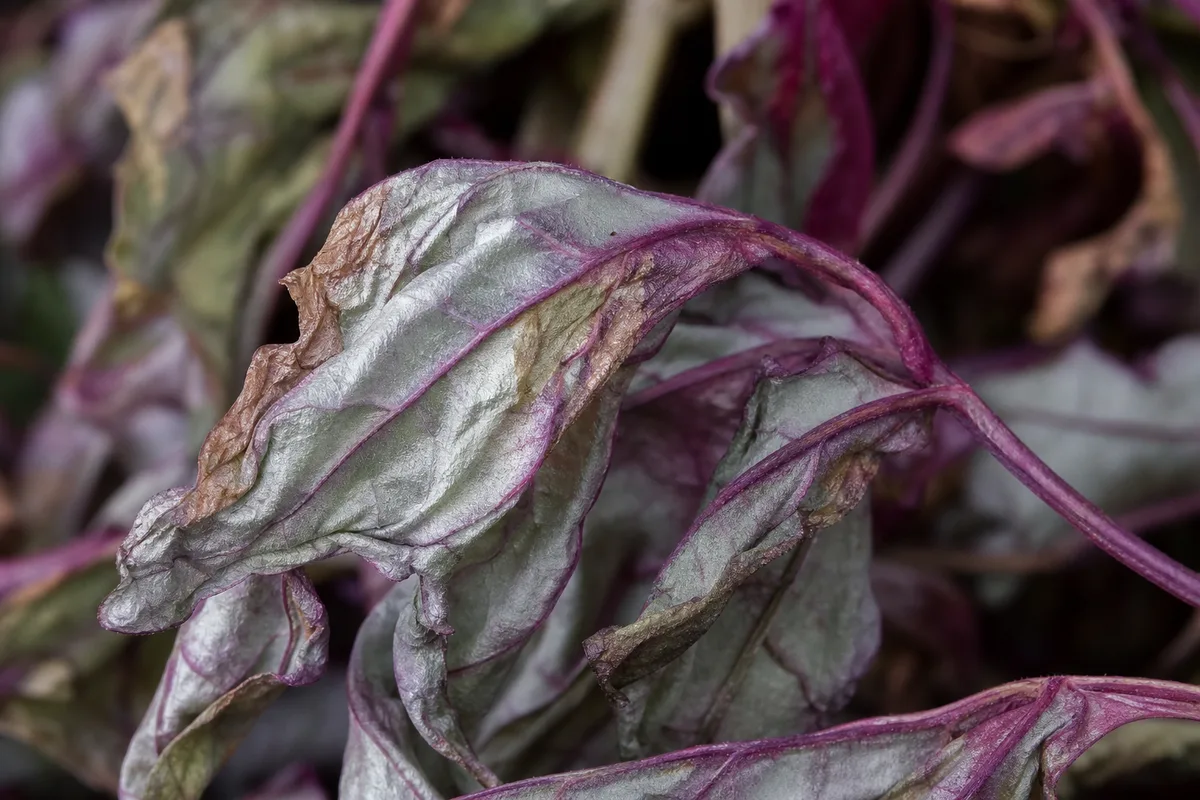
Wilting symptoms on Aluminum Plant - compare with healthy tissue on the same plant.
Dry-soil wilt shows a dry top inch, a noticeably light pot, and sometimes crispy brown edges on older leaves. Silver patches look dull rather than metallic. Stems stay green and firm-the plant reads as thirsty, not rotting.
Wet-soil wilt is the dangerous mimic: soil stays dark and cool at the surface for many days, the pot feels heavy, and leaves hang limply even though the mix is wet. Lower leaves may yellow. Stems near the soil line can feel soft or dark. Overwatering or poor drainage commonly causes root rot on Pilea cadierei, and wilt with wet soil often means roots cannot absorb water-not that the plant needs another drink.
Low-humidity wilt can strike while soil is still moist. Leaf margins turn brown and papery, new leaves may arrive small and curled, and collapse appears on the newest growth during winter heating season. Pot weight and the finger test still read “moist,” which is why humidity belongs in every wilt diagnosis.
Heat or draft wilt shows limp tissue after a sudden temperature swing-near a heating vent, an open window in winter, or a hot afternoon in direct sun. Soil may read dry or moist depending on timing; stems are usually firm unless rot was already present.
Wet-soil wilt vs dry-soil wilt
The single most important split on aluminum plant is soil moisture at one inch combined with pot weight and stem firmness. Wet wilt with soft stems is a rot emergency. Dry wilt with firm stems is a rehydration fix. Never assume limp leaves always mean “add water”-that mistake is the fastest route to crown loss on this species.
Why aluminum plant wilts
Overwatering and stem rot
Pilea cadierei wants evenly moist soil, not constant sogginess. When the root zone stays saturated, roots lose oxygen and decay. Damaged roots cannot transport water upward, so leaves wilt despite wet soil-the classic overwatering trap. Missouri Botanical Garden notes this species is prone to leaf spots and stem rot when kept too wet, and winter overwatering in cool soil is especially risky because evaporation slows.
Underwatering and dry-down
Unlike desert succulents, aluminum plant does not tolerate extended dry spells. The top inch can dry between waterings, but the root zone below should stay lightly moist. A pot that goes from soaked to bone-dry in a few days-or a missed watering during summer growth-can collapse the whole plant within hours as fine roots desiccate.
Low humidity
This species evolved in humid forest understory and prefers high humidity with bright indirect light. When indoor air drops below roughly 40 percent-common with forced-air heating-the plant transpires faster than roots replace water, even in moist soil. Wilt on new tips with crispy edges while soil reads damp points here.
Cold drafts and temperature swings
Pilea cadierei is comfortable between about 60 and 75 °F indoors. Sudden cold below that range or hot drafts above it disrupt cell function and cause rapid limpness. Draft wilt often follows a move near an exterior door, air-conditioning vent, or radiator.
Root-bound or repot stress
A severely root-bound pot dries unevenly and can wilt between waterings despite surface moisture. Fresh repotting disturbs roots temporarily; mild wilt for a few days with firm stems and no sour smell is normal transplant stress-not rot.
Sap-sucking pests
Spider mites, mealybugs, and aphids drain sap and dull foliage. Wilt from pests usually develops over days with stippling, webbing, or cottony clusters in leaf axils-soil moisture checks read normal. Treat pests before adjusting water.
How to confirm the cause
Work through these checks in order:
- Timeline - Collapse in hours supports drought, heat, or acute root failure. Slow decline over a week may fit chronic overwatering or pests; see drooping leaves for gradual patterns.
- Soil at one inch - Dry knuckle-depth soil with a light pot supports underwatering. Dark, cool, wet surface for many days supports overwatering.
- Pot weight - Lift the pot. Light and limp = thirsty. Heavy and limp = do not water.
- Stem base firmness - Mushy or dark tissue at the soil line with wet mix confirms rot overlap-inspect roots the same day.
- Silver patch quality - Dull, flat silver often tracks moisture or light stress on this species.
- Room conditions - Note heating vents, recent repot, and humidity below 40 percent.
- Pest scan - Check leaf undersides and axils for mites, mealybugs, or aphids.
The first fix to try
Push your finger one inch into the mix and lift the pot-then act on what you find, not on how the leaves look alone.
If soil is dry and the pot is light: water thoroughly until a small amount drains from the bottom, empty the saucer, and recheck in one hour. Use room-temperature water on the soil surface, not the leaves, to avoid pooling in the cupped silver foliage.
If soil is wet and stems are soft: skip watering entirely and inspect roots the same day-follow the rescue path in our overwatering and root rot guides.
Make one change at a time so you can read the plant’s response over the next week.
Step-by-step recovery
Dry soil and light pot
Water deeply once, then maintain the rhythm from our watering guide: top inch dry in summer, slower in fall and late winter when growth slows. If soil has pulled away from pot walls, bottom-water for 15–30 minutes, then drain. Trim fully brown leaves-they will not re-green. If humidity is below 40 percent, add a humidifier or pebble tray so new leaves do not wilt again immediately after rehydration.
Wet soil and soft stems
Stop watering until the top inch dries. Move to bright indirect light with good air movement-slow evaporation worsens wet soil in shade. If the surface stays wet more than a week or the mix smells sour, unpot, rinse roots, trim mushy tissue with sterilized scissors, and repot in fresh gritty mix with drainage holes. Yellow lower leaves may drop; focus on firm new tips.
After repotting or heat shock
Keep soil evenly moist but not soggy, hold off on fertilizer for three to four weeks, and stabilize temperature away from vents. Mild wilt should ease within two to three days if stems stay firm.
Low-humidity wilt
Raise room humidity toward 50 percent with a humidifier rather than heavy misting-wet foliage encourages leaf spot on this species. Keep soil appropriately moist but address air dryness directly; see low humidity.
Recovery timeline and success signs
Single-event drought wilt often corrects within one hour of proper watering. Overwatering recovery without crown damage takes one to three weeks once soil oxygen returns. Root rot rescue runs four to eight weeks before you can trust new growth, assuming at least a third of the root system was healthy at inspection.
Old wilted leaves may stay limp even after the plant stabilizes. New upright leaves with sharp silver patches are the success signal-not forcing old tissue to stand up. If no new growth appears after three weeks of corrected care, re-inspect roots.
Lookalike symptoms
- Drooping leaves - Gradual sag over days; same wet-vs-dry rules but less acute urgency.
- Yellow leaves - Often pairs with wet-soil wilt on lower foliage; yellow without wilt may be light or cold stress.
- Overwatering - Focuses on chronic wet-soil management when wilt comes with sogginess.
- Root rot - Crown softening and sour soil; wilting is a secondary symptom.
- Spider mites - Stippling and webbing with dull leaves; soil moisture normal. Treat pests before adjusting water.
Mistakes to avoid
Do not water automatically because leaves look tired-confirm soil moisture first. Wet-soil wilt plus extra water accelerates rot on a species highly susceptible to stem rot when overwatered.
Do not mist heavily when leaves are already limp; pooled water on silver patches encourages leaf spot. Do not fertilize a wilted plant before you know the cause. Do not repot into a larger pot “to help drying”-oversized pots stay wet longer.
Do not move a wilted plant into harsh direct sun to “perk it up”-that increases transpiration and can scorch silver-marked foliage. Do not stack repotting, pruning, and pesticide on the same day.
How to prevent wilting next time
Water when the top inch dries, not on a fixed calendar. Reduce watering in fall and late winter when indoor growth slows. Keep humidity near 50 percent in heated rooms. Use terra-cotta or tight pot sizing if you tend to overwater.
Review our watering guide for the finger test, pot weight method, and seasonal rhythm. Match soil and pot drainage so the top inch can dry while the root zone stays lightly moist-the narrow band this species tolerates.
Inspect weekly: pot weight, soil at one inch, and newest leaf firmness. Catch wilt while stems are still firm and you avoid most rot rescues.
When to worry - and when to read root rot next
Escalate immediately if the crown softens while soil is wet, the mix smells sour, or wilting spreads over several days despite dry soil-those patterns suggest root failure, not simple thirst. Dry wilt with firm stems is lower urgency but still needs water within 24 hours.
If wilt returns every week despite careful watering, reassess pot size, mix density, light level, and winter frequency together rather than adding more water each time. When most roots are mushy on inspection, propagate healthy stem tips-aluminum plant propagates easily from stem cuttings in spring-as backup while the main plant recovers.
Related aluminum plant guides
Wilting is usually a downstream signal from watering rhythm, humidity, or drainage-not an isolated leaf disease. Start with our overview for species context, then use the cluster guides above for the confirmed cause. A healthy pilea in bright indirect light with well-drained mix and seasonal watering rarely wilts without an obvious trigger-missed watering, January overwatering, or a dry heating vent.