Underwatering on Aluminum Plant: Causes, Checks & Fixes
Quick answer
Underwatering on Aluminum Plant shows as a very light pot, limp stems, and dry soil well below the surface. First step: check moisture at root depth, then soak the mix thoroughly until water drains-do not give repeated small sips.
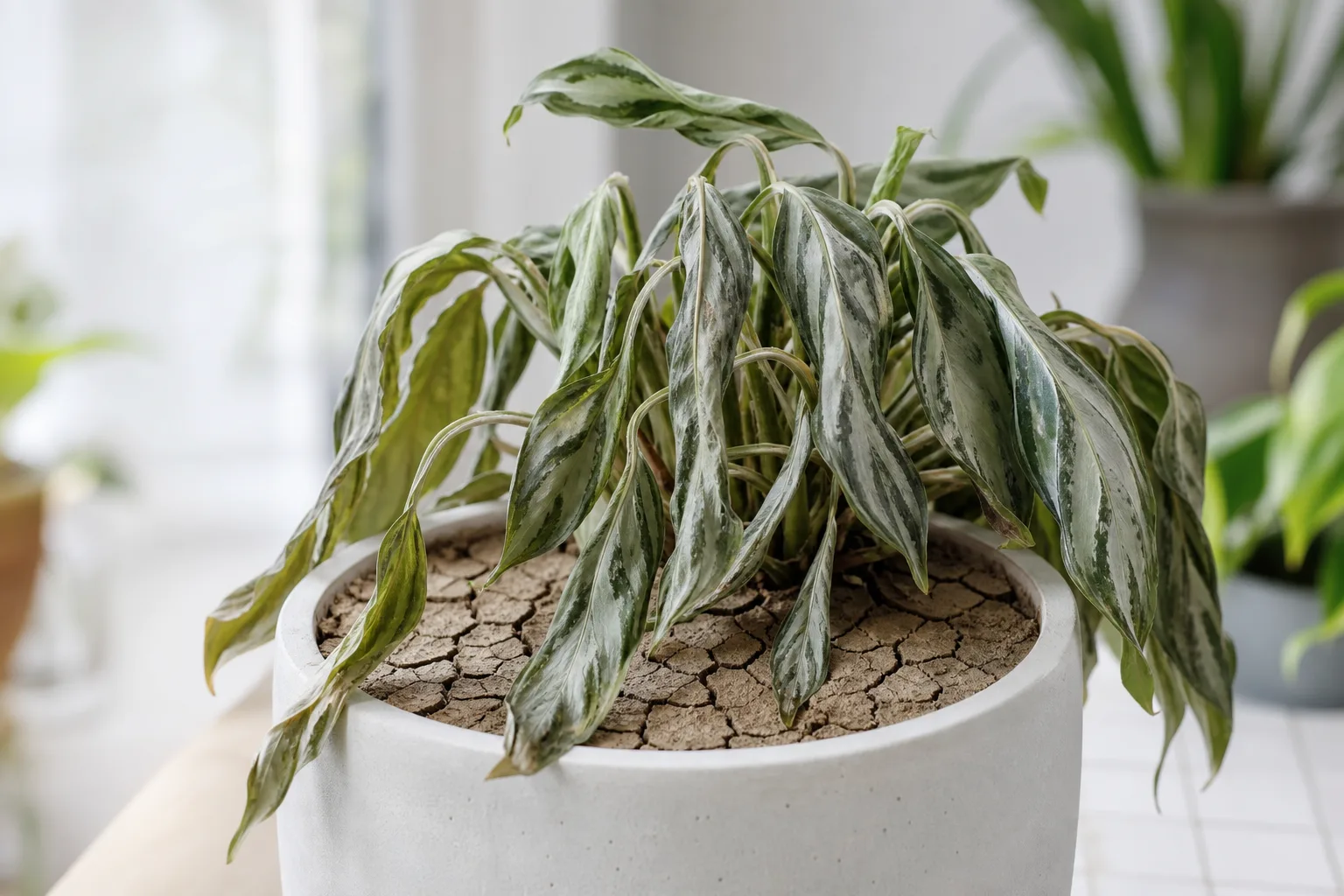
Underwatering on Aluminum Plant: Causes, Checks & Fixes
This guide covers underwatering on Aluminum Plant. See also the general Underwatering guide, watering, and light pages for this plant.
Underwatering on Aluminum Plant: Causes, Checks & Fixes
Quick answer
Underwatering on Aluminum Plant (Pilea cadierei) means the root zone stays dry too long for a species that evolved in the humid tropical understory of Vietnam and southern China-not a plant that tolerates weeks without water like a succulent. The silver-splashed leaves are thin and lose turgor fast when roots cannot pull moisture from dry mix.
First step: check soil moisture at root depth, then soak thoroughly once. Stick your finger into the top half-inch; if it is dusty dry and the pot feels light, water until excess runs from the drainage holes and empty the saucer within 30 minutes. Do not respond with daily teaspoons that wet only the surface.
For the evenly-moist-not-soggy baseline that makes drought timing harder on this species, see the Aluminum Plant watering guide. For wet-soil wilt with a heavy pot, start with overwatering instead-adding water to drowning roots makes rot worse.
Underwatering vs. overwatering vs. low humidity on Pilea
All three can crisp leaf edges on aluminum plant-but the first fix differs. Run this fork before you pour:
| Pattern | Pot weight | Soil at depth | Leaf feel | First action |
|---|---|---|---|---|
| Underwatering (this page) | Light | Dry half-inch down | Limp whole clump; dull silver patches | One thorough soak; empty saucer |
| Overwatering / root rot | Heavy | Cool and damp | Limp with yellow lower leaves; soft stem nodes | Stop watering; inspect roots |
| Low humidity | Normal | Moist at depth | Firm leaves; crisp tips only | Raise humidity; do not flood |
| Heat stress | Normal to light | Fast-drying near vent | Crisp edges; may perk overnight | Relocate; soak only if mix is dry |
When in doubt, pot weight plus a finger or skewer at half depth beats how the surface looks. Pilea’s thin leaves make a light dry pot a more reliable drought signal than finger depth alone on very small 4-inch containers where the root ball is shallow.
What underwatering looks like on Aluminum Plant
Above soil, drought stress on this bushy 8–12 inch plant usually shows in a predictable pattern:
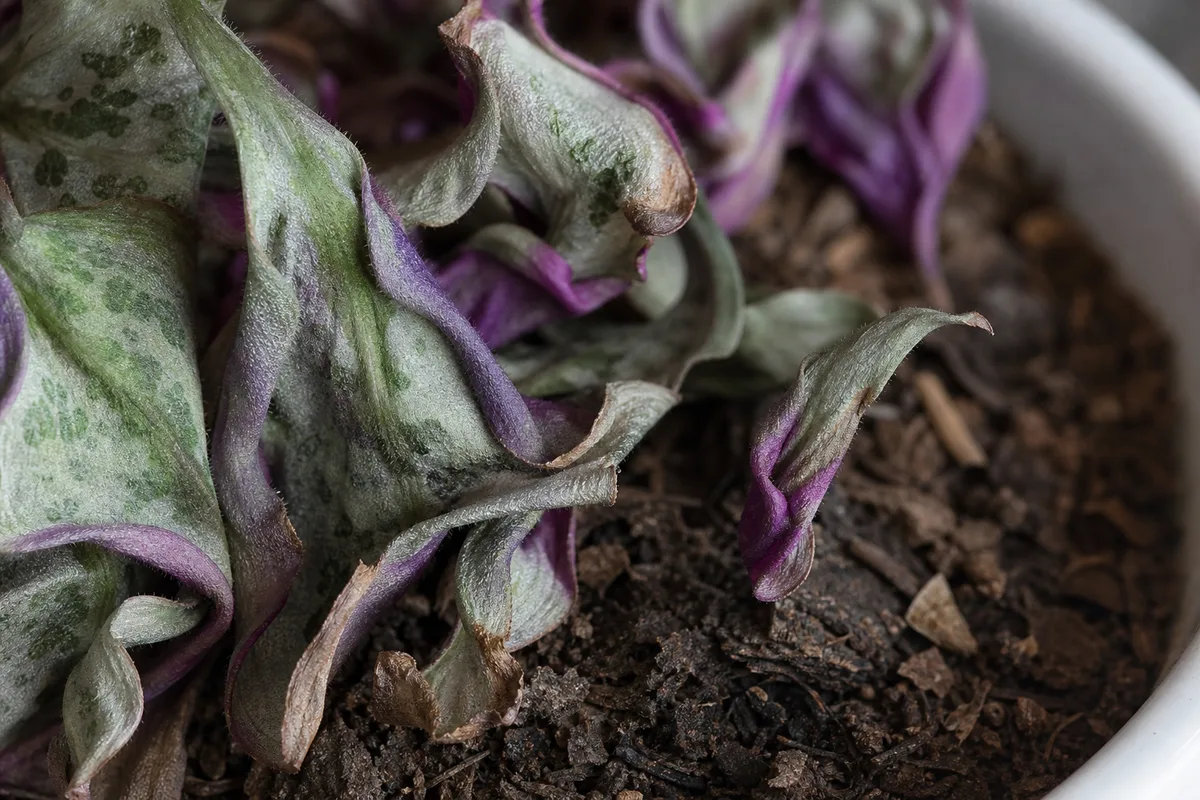
Underwatering symptoms on Aluminum Plant - compare with healthy tissue on the same plant.
- Limp, drooping stems - the whole clump looks tired, not just one leaf
- Dry, crispy brown edges on older leaves, especially where silver patches meet the margin
- Dull or slightly curled foliage - the metallic leaf pattern looks flat instead of crisp
- Slowed or stalled new growth at stem tips during what should be active season
- Soil pulled away from the inside of the pot wall
- Very light pot when lifted with one hand
Unlike overwatering, the mix is dry and pale at the surface and usually dry an inch or more down. There is no sour smell, no fungus gnats hovering over constantly wet soil, and stems at the base stay firm-not mushy.
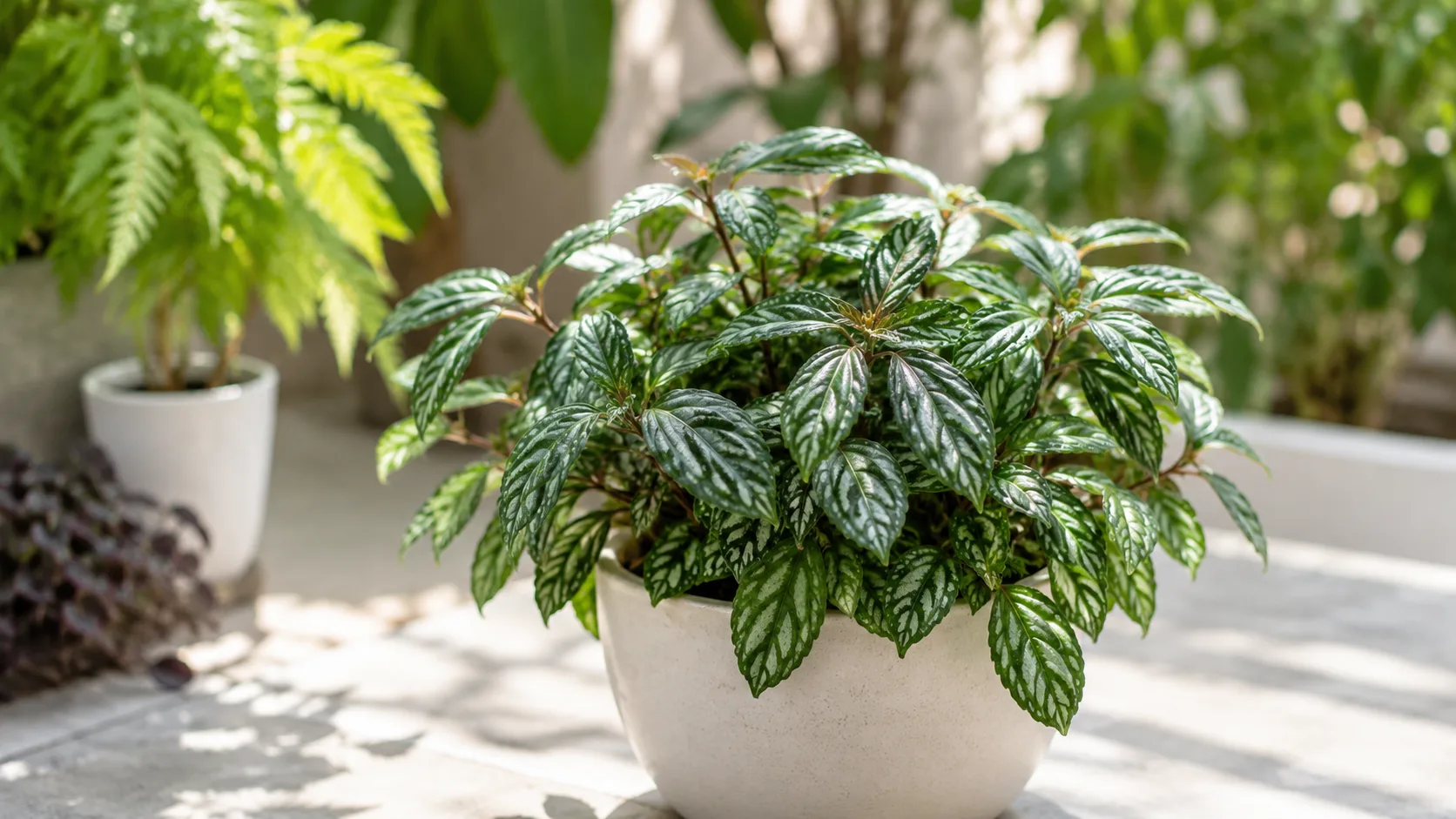
Healthy Aluminum Plant holds its oval leaves at a slight angle with the characteristic four rows of raised silver patches standing out against dark green. When underwatered, those patches can look washed out because the leaf tissue has lost internal pressure.
What old damage will not do: brown crispy margins on fully desiccated leaves do not green up again. New leaves after proper watering tell you whether recovery is working.
Why Aluminum Plant gets underwatered
Pilea cadierei wants steady moisture without sogginess-a narrower window than many beginner houseplants. NC State Extension notes moderate watering in the growing season and less from fall through late winter, in bright indirect light with high humidity. That combination means the plant drinks regularly when actively growing but still punishes long dry spells.
Common triggers in real homes:
Calendar watering in winter only. Many owners cut back correctly in cool months but let the plant go completely dry for two or three weeks while indoor heat still pulls moisture from small pots. Reduced watering is not the same as no watering.
Small pots in bright light. Aluminum Plant belongs in bright indirect light, which increases transpiration. A 4-inch pot on a sunny shelf can go from moist to dust-dry in three or four days-faster than a weekly reminder app allows.
Light sips instead of deep soaks. Pouring a half-cup on the surface when the root ball has shrunk away from the pot wall often runs down the gap without rewetting the center. The top looks briefly damp while roots stay dry inside.
Hydrophobic old mix. Peat-heavy potting soil that has dried out completely can repel water on the next attempt. Water channels through and out the drainage hole while the middle stays dry-a classic repeat-wilt pattern.
Root-bound containers. When roots fill the pot, the small soil volume dries in a day or two. Frequent wilting between waterings often means the plant needs a slightly larger pot per the repotting guide, not that you should ignore the wilt.
Terracotta vs. plastic dry-down. Unglazed clay pots wick moisture through porous walls and dry faster than plastic-helpful if you tend to overwater, punishing on a moisture-loving pilea in a bright summer window. Plastic retains water longer, which suits aluminum plant’s steady-moisture preference but can mask how fast a root-bound nursery pot still dries in heat. Match your check rhythm to the container, not a generic interval.
Self-watering pots. Reservoir systems that keep mix constantly damp suit some ferns but work against Pilea’s narrow moist-not-soggy window-owners who fear rot often under-fill the reservoir and the plant still goes dry between top-ups. If you use one, confirm the wick actually reaches the root ball center; a dry upper crust with limp silver foliage means the reservoir is not doing its job.
Heat and low humidity. Vents, radiators, and dry winter air stress houseplants and pull water from thin leaves faster. Low humidity alone causes brown tips-see low humidity-but heat plus skipped watering produces simultaneous wilt and crisp edges.
Fear of overwatering after past rot scares. Aluminum Plant is highly susceptible to stem rot when kept too wet-but alternating between drought and occasional floods is harder on roots than a consistent soak-when-dry rhythm. After a dry spell, do not panic-water daily; that swings toward root rot. One thorough soak, then resume the watering guide dry-down test.
How to confirm the cause
Work through these checks before you pour:
- Surface moisture - Dry half-inch down strongly suggests drought. Cool, dark, damp surface means wait-do not water wilted leaves on wet soil.
- Pot weight - Lift the pot. Very light compared to post-watering weight confirms dry mix throughout.
- Stem base firmness - Press lower stems gently. Firm and woody-feeling with dry soil fits underwatering. Soft, dark base with wet mix suggests root rot.
- Wilting response history - Did the plant perk up within hours after your last deep drink? That pattern confirms roots still work and you simply waited too long between sessions.
- Light and placement - Bright window, heat register, or small terracotta pot all accelerate drying. Adjust your schedule to the spot, not a generic interval.
- Root peek if repeat wilting - Slide the plant out. Healthy drought-stressed roots are pale and firm. Brown, mushy, foul-smelling roots mean overwatering damage, not simple thirst.
If soil is wet at depth but leaves still wilt, stop-adding water will not help and may cause rot. That pattern needs a root inspection per the root rot guide, not another soak.
First fix for Aluminum Plant
Soak the root zone thoroughly once, then let excess drain.
Place the pot in a sink or use bottom-watering when mix has gone hydrophobic: set the container in a tray of room-temperature water until the surface darkens, then lift and drain fully. For routine dry-down, top-water until it runs freely from drainage holes-aluminum plant needs the entire root ball rewetted, not a surface mist.
Empty the saucer within 30 minutes. Do not leave the pot standing in leftover water.
After the soak, move the plant to stable bright indirect light-not hot direct sun on a dehydrated plant. Check again in 24 hours. Most mild cases show firmer stems and lifted leaves by then.
If water ran through instantly on the first pass, the mix may be hydrophobic. Repeat the soak once, or bottom-water for 30–45 minutes so capillary action pulls moisture into the dry center.
Do not fertilize, repot, or prune heavily on the same day as emergency rehydration. One correction first; read the plant’s response.
Step-by-step recovery
For plants that have been dry repeatedly or wilt badly:
- Initial deep soak - As above; note whether leaves recover within a day.
- Adjust rhythm - After the top half-inch dries, water fully again. In active growth that is often every 5–7 days; in slower winter growth, extend to 7–10 days-but never let the pot go bone dry for weeks.
- Humidity support - A pebble tray or humidifier helps stressed foliage while roots recover. Aluminum Plant appreciates humidified air, especially after drought.
- Trim dead edges - Snip fully brown crispy tips for appearance once turgor returns. Leave partially green tissue alone. Cosmetic edge damage overlaps with brown tips from dry air-drought edges usually come with a light pot.
- Repot only if needed - If the root ball was so dry it shrank and repeat soaks fail to hold moisture, repot into fresh peaty, well-draining mix after the plant stabilizes-not on day one.
- Upsize if root-bound - When roots circle the pot and soil dries in 24–48 hours every cycle, move up one pot size in spring with fresh mix.
Hold fertilizer until new growth looks normal for two weeks. Salt on drought-damaged roots adds stress without fixing thirst. If you overcorrect with daily shallow water after drought, watch for edema or leaf spot-see the watering guide section on overcorrection.
Worked example: vacation dry-down (observed 2026-03)
A 4-inch aluminum plant on a bright east windowsill was left ten days without water while the owner traveled in early spring. On return: pot felt feather-light, mix had pulled 3–4 mm from the terracotta wall, and silver patches looked washed out on limp lower leaves. One 40-minute bottom soak in a sink tray rewetted the center; stems stiffened within 28 hours and the first new leaf pair showed crisp silver rows six days later. Old crisp margins on the lowest two leaves stayed brown-recovery was judged on new tips, not old damage.
Recovery timeline
Hours to 48 hours: Mild dehydration often shows visible perk-up within one day after a proper soak-stems stiffen and leaves rise off the rim of the pot.
One to two weeks: New leaf buds at stem tips confirm roots are functioning again. Old damaged margins remain brown.
Several weeks: If the plant was severely dried out repeatedly, full bushy shape returns only after several new nodes grow-pinching tips per the pruning guide can restore compact form once watering is stable.
Worsening signs: Continued limpness 48 hours after thorough watering, spreading stem softness, or widespread yellowing with wet soil means root damage-not ongoing drought. Unpot and inspect; see root rot or wilting if wet-soil wilt persists.
Lookalike symptoms
| Symptom pattern | Likely cause | Key check |
|---|---|---|
| Limp clump, light pot, dry top half, dull silver patches | Underwatering (this page) | Soak once; resume watering rhythm |
| Limp leaves, heavy wet soil, yellow lower leaves | Overwatering / root rot | Stop watering; inspect roots |
| Crisp brown tips, firm leaves, normal soil moisture | Low humidity | Humidity boost; not emergency flood |
| Sudden limpness near vent, firm by morning | Heat stress / wilting | Relocate; soak only if mix is dry |
| Limp stems only, soil normal, no silver dulling | Drooping leaves from other stress | Match symptom page before soaking |
| Stippling and webbing on undersides | Spider mites | Rinse and treat pests, not water |
Overwatering / root rot - Wilting with wet soil, yellow lower leaves, mushy stem bases, sour smell. Dry soil rules this out.
Low humidity alone - Brown tips on otherwise turgid leaves in dry winter air; soil moisture normal. Fix humidity and consistency, not emergency flooding.
Normal winter slowdown - Less new growth and slower drying in cool months; reduce water but do not abandon the plant entirely.
What not to do
Do not water daily in panic after one dry spell-that swings toward overwatering and cold wet roots rot easily on Pilea species.
Avoid cold tap water straight from a chilled pipe on stressed roots; room-temperature water reduces shock on tropical foliage.
Do not mist instead of soaking-surface humidity does not rehydrate dry roots.
Skip fertilizer on a wilted, dry plant until it drinks normally again.
Do not assume all drooping means drought without touching the soil-this is the most common mistake on Aluminum Plant and leads to rot when wet roots are drowning. Drooping leaves from heat or transplant shock can look identical until you check moisture and pot weight.
How to prevent underwatering next time
Build a check habit tied to the pot, not the calendar: check soil moisture before watering when the top half-inch is dry, water thoroughly until drainage runs clear, then empty the saucer.
Match frequency to season-more often in warm bright months, less in fall and winter when growth slows-but keep the same dryness test per the watering guide.
Use well-draining peaty mix in a pot with open drainage holes. If the plant dries out in less than three days every cycle, consider a slightly larger container, a humidity boost near the foliage, or switching from terracotta to plastic in very bright summer placements.
Group Aluminum Plant with other humidity lovers or set it on wet pebbles if your home runs dry in winter-consistent moisture at the roots plus moderate air humidity keeps the silver markings crisp.
When to worry
Act the same day if the plant is fully collapsed with bone-dry soil in hot sun, or if it stays limp 48 hours after a confirmed full soak.
Escalate to root inspection if lower stems soften, leaves yellow while soil stays wet, or repeat wilting continues despite a steady soak-when-dry schedule-those point to root loss, not simple thirst.
Panic daily watering after drought can convert a recoverable dry spell into wet-soil rot within a week-one soak, then wait for the top half-inch to dry before the next full drink.
Mild droop on a light pot with dry soil can wait for a proper watering today-not emergency repotting.
Related Aluminum Plant guides
- Aluminum Plant overview - species hub and full care context
- Watering guide - evenly-moist baseline and dry-down tests
- Overwatering - wet-soil wilt lookalike
- Root rot - rot misread after drought panic-watering
- Wilting - fast collapse when cause is unclear
- Drooping leaves - limp foliage overlap
- Low humidity - crisp edge overlap
- Brown tips - margin damage with normal soil moisture
- Light guide - bright placement that speeds dry-down
Conclusion
Underwatering on Aluminum Plant is a moisture-timing problem on a humidity-loving tropical foliage plant-not a mystery disease. Confirm it with dry soil at depth, a light pot, and firm stems, then soak once and drain. Prevent it by watering when the surface half-inch dries through every season, adjusting for light, pot material, and pot size per the watering guide. Judge success by new turgid growth with sharp silver patches, not by old brown edges-and always touch the soil before you pour.