Aphids on Aluminum Plant: Causes, Checks & Fixes
Quick answer
Aphids on Aluminum Plant cluster on freshly pinched stem tips and new silver-marked leaves-exactly the soft tissue pinching creates. First step: isolate the plant and rinse colonies off with a firm stream of water in the sink, covering leaf undersides and leaf axils.
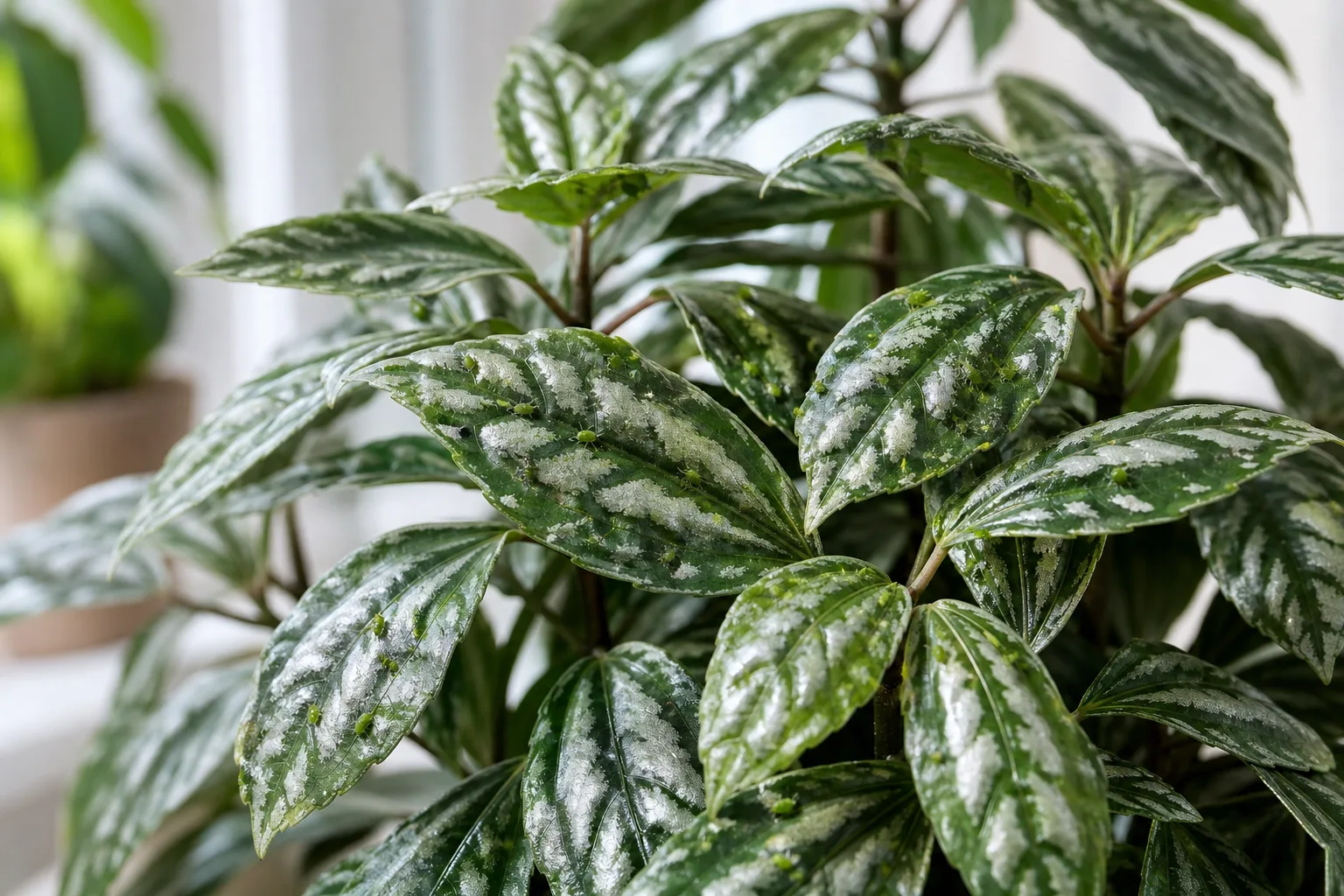
Aphids on Aluminum Plant: Causes, Checks & Fixes
This guide covers aphids on Aluminum Plant. See also the general Aphids guide, watering, and light pages for this plant.
Aphids on Aluminum Plant: Causes, Checks & Fixes
Quick answer
You pinched your Pilea cadierei for bushiness-and now the softest new shoots at those tips are covered in tiny insects. That is not a coincidence. Pinching stem tips triggers fresh soft growth that aphids prefer over hardened lower leaves, and Aluminum Plant’s raised silver patches make sticky honeydew easy to miss until ants show up.
First step: isolate the plant away from propagation trays and neighboring pots, then rinse colonies off with a firm stream of water in the sink. Cover pinched stem tips, leaf undersides, and leaf axils where oval leaves meet square stems. Repeat every two to three days before reaching for sprays.
For species baseline and culture, see the Aluminum Plant overview.
Why Aluminum Plant gets aphids - pinching, growth flushes, and entry routes
Several traits of Aluminum Plant culture put aphids exactly where you are least likely to look during routine care:
- Pinching for bushiness creates feeding sites. NC State Extension notes that pinching stem tips keeps the plant compact and that the best foliage appears on new plants and new growth. Every pinch produces tender shoots aphids target before lower silver-marked leaves harden.
- Spring and summer flushes indoors. During active warm-season growth in bright indirect light, Pilea cadierei pushes new leaves every few days. Aphids reproduce rapidly when temperatures sit in this plant’s comfort zone of roughly 60–79°F (15–26°C).
- Propagation culture spreads pests. Many growers replace leggy plants each spring from cuttings. Shared cuttings, nursery imports, open windows in warm weather, and crowded shelf neighbors are predictable entry routes-and cuttings often show pests before the parent plant.
- Soft nitrogen-rich shoots attract sap feeders. Excess fertilizer during strong light produces lush foliage aphids favor. Align feeding with the fertilizer guide once the plant is pest-free; do not push soft tissue faster than you can inspect it.
- Crowded bushy pots and still air. Dense groupings of small plants let pests walk between pots. Ants attracted to honeydew protect aphid colonies from predators that would control them outdoors.
Because Aluminum Plant has smooth-not hairy-leaves, you can rely on water rinses that would damage fuzzy African violets. That is a real advantage on this species.
What aphids look like on Aluminum Plant
Field marks to compare before treating:
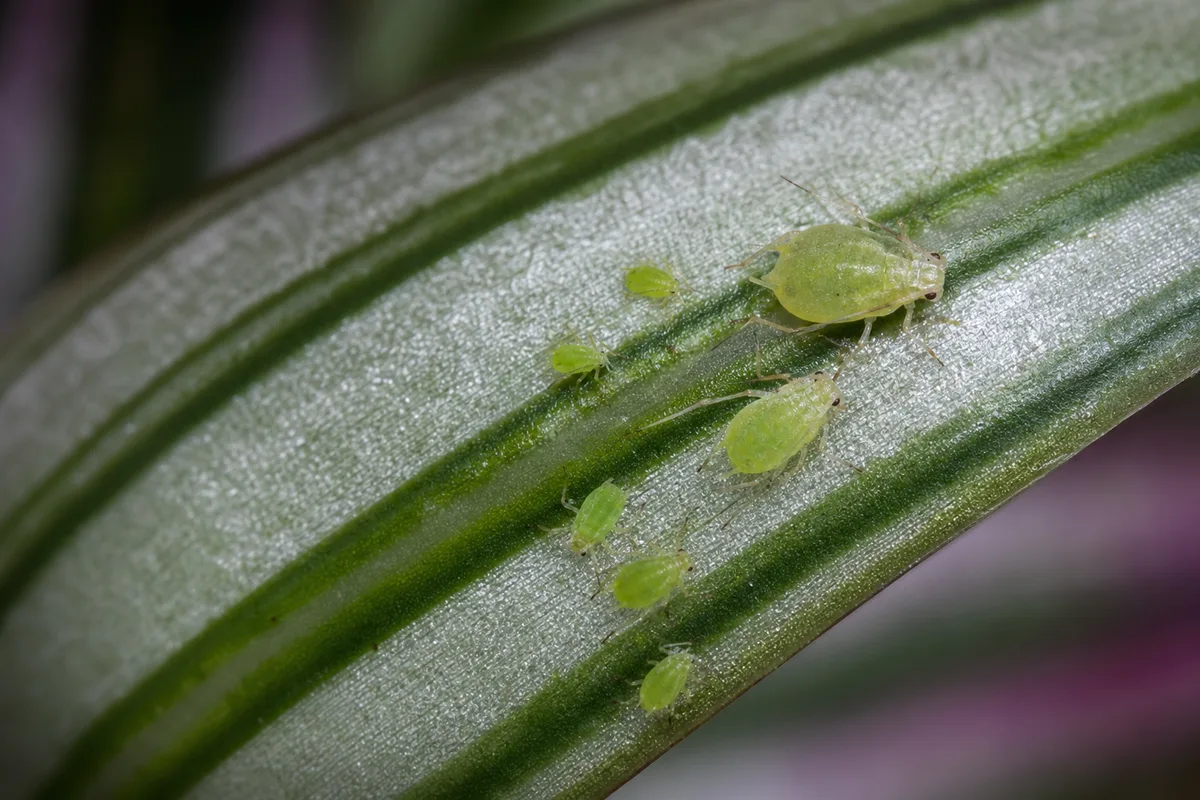
Aphids symptoms on Aluminum Plant - compare with healthy tissue on the same plant.
| What you see | Likely meaning |
|---|---|
| Soft green, black, or pink bumps clustered on a freshly pinched tip | Aphids on the tenderest regrowth |
| Shiny tacky patches on raised silver leaf markings | Honeydew-easy to confuse with dust until you wipe and it returns |
| Ants on the pot rim or saucer | Often farming aphids on stem tips above, not fungus gnats in soil |
| Curling or stunted newest leaves while older silver foliage looks normal | Active feeding on soft tissue only |
| White flecks on leaf undersides | Shed aphid exoskeletons from molting-not powdery mildew |
| Dull gray film across silver patches | Sooty mold following untreated honeydew |
Aphids are soft-bodied, pear-shaped insects roughly 1/16 to 1/8 inch long. They may be green, black, brown, pink, or yellow, and they cluster on stems just below opening leaf buds and in leaf axils. Unlike mealybugs-which form white cottony masses in the same axils-aphids are bare and move when disturbed. Unlike scale insects, they have no hard shell. Unlike spider mites, they do not leave fine webbing or yellow stippling across mature leaves in dry air.
Why honeydew hides on silver patches: The raised metallic patches reflect light and can mask stickiness until you run a finger along the leaf or notice ants. Check pinched tips first, not just the most visible silver faces.
Confirm aphids vs. mealybugs, scale, mites, and culture problems
Work in good light with a hand lens. Use the table when more than one cause could fit.
| Symptom | Most likely cause | Quick check |
|---|---|---|
| Soft pear-shaped insects on pinched tips + sticky silver patches | Aphids | Crush one-green or pink smear on tissue |
| White cottony masses in leaf axils that stay put when touched | Mealybugs | Alcohol swab turns waxy cluster orange-pink |
| Immobile brown or tan bumps on stems | Scale insects | Fingernail test-shell does not move; no legs |
| Fine webbing + stippled older leaves in dry air | Spider mites | Tap leaf over white paper; mites are dust-speck fast |
| Brown leaf tips only, no insects or stickiness | Low humidity | Wipe dries clean; no ant trails |
| Gnats from soil; foliage looks clean | Fungus gnats | Insects emerge from mix, not from stem tips |
Six-step pinched-tip inspection checklist
Check in this order:
- Highest pinched shoots and any leaves still unfurling.
- Leaf axils where petioles meet square stems-especially lower branches you rarely rotate toward the light.
- Leaf undersides on the two newest leaf rows.
- Honeydew test - wipe a silver patch; if stickiness returns within a day, sap feeders are still active.
- Ant trail follow - ants on the saucer usually lead to aphids above, not soil pests below.
- Propagation cross-check - if you recently rooted stem cuttings nearby, inspect those first per the propagation guide.
Crush one insect with a tissue. Aphids leave a green or pink smear; perlite, dust, or dried water spots do not.
First fix: isolate and rinse
Move the plant away from your collection, propagation trays, and open windows first. Isolation helps prevent further spread of aphids to other pots on the same shelf.
Then rinse colonies off with a forceful spray of water in a sink or shower. Aluminum Plant’s smooth glossy leaves tolerate washing well-aim at pinched stem tips, leaf undersides, and leaf axils. Let foliage dry completely before returning the pot to its spot.
Repeat every two to three days to knock down nymphs that hatch between rinses. Aphid nymphs can reach adulthood within about a week; one rinse rarely clears an established colony.
Wipe honeydew from silver patches with a damp cloth so you can spot new activity quickly. Because Aluminum Plant is non-toxic to cats and dogs, rinsing indoors is low risk-but wash hands, keep pets from drinking runoff water in the sink, and contact ASPCA Animal Poison Control or your veterinarian if a pet chews heavily treated foliage or drinks rinse water containing soap or neem residue.
Do not repot, heavily prune, or fertilize on the same day you start treatment. Make one correction first so you can read the plant’s response.
Treating aphids on propagation cuttings separately
Never rinse or spray cuttings in a shared propagation tray. Crawlers move across damp perlite, moss, and tray walls within hours.
For each infested cutting:
- Move it to its own small cup or pot.
- Rinse stem tips and any rooted leaves gently-avoid blasting fragile new roots.
- Keep cuttings isolated for two full weeks with weekly tip-and-axil checks.
- Start new spring replacements only from pest-free stock, not from a parent you have not inspected.
See the propagation guide for clean-start practices before sharing cuttings with other growers.
Insecticidal soap and neem on smooth silver-marked leaves
If colonies remain after two or three rinses, apply insecticidal soap or neem oil labeled for ornamentals. Clemson HGIC recommends a 1–2% soap solution (follow your product label exactly-never use household dish soap). Test a small leaf area first and wait 24 hours before treating the whole plant.
On Aluminum Plant:
- Cover all tender growth thoroughly, especially leaf axils and pinched tips where aphids hide inside curled leaves.
- Apply in early morning or evening indoors-avoid spraying above 90°F or in direct hot sun, which can burn tender post-pinch shoots.
- Repeat every four to seven days for two to three cycles because soaps and oils work on contact only and have no residual effect.
- Insecticidal soaps can also wash honeydew and sooty mold from leaves-useful on silver patches once live aphids are gone.
Light, moderate, and heavy infestation tiers
| Severity | What you see | First action |
|---|---|---|
| Light | Few aphids on one or two pinched tips | Isolate + rinse every 2–3 days for two weeks |
| Moderate | Sticky silver patches, curled new shoots, ants visiting | Rinse + labeled insecticidal soap or neem on schedule |
| Heavy | Sooty mold across multiple leaves, winged aphids, cuttings infested | Separate all plants and cuttings; soap/neem cycles; consider discarding worst cuttings |
Do not stack neem oil, soap, and alcohol wipes on the same day across the whole plant-test tolerance on one section first.
When to consider systemic treatment
For chronic infestations that survive three properly timed contact-spray cycles, imidacloprid is listed among indoor options for aphids-but it is systemic, long-lasting, and not appropriate for every situation. Use only on valuable mature plants with firm roots, read the label for houseplant use, and avoid if you recently repotted or the plant is drought-stressed. When in doubt, contact your local cooperative extension office for identification help and region-appropriate guidance before applying systemic products indoors.
Recovery timeline for silver-marked new growth
Visible aphids should clear within one to two weeks of consistent rinsing or soap treatment. Expect clean new silver-marked leaves within two to three weeks during active growth. Distorted young leaves will not fully flatten-judge success by the next clean flush, not by fixing tissue that already hardened with damage.
Sooty mold on silver patches: Once aphids are gone and honeydew stops, wipe leaves with a damp cloth. Light mold usually clears in one to two wipe-downs. Heavy film may need repeated cleaning over a week. Gray dullness that remains on a clean, dry leaf surface is permanent cosmetic damage-not active mold.
Pinch off tips that stay heavily curled or coated in sooty mold once the colony is gone; fresh bushy growth replaces them quickly on a healthy plant per the pruning guide. A plant that keeps pushing firm new leaves at multiple nodes is recovering even if older blemished foliage remains.
What not to do
Do not increase watering because shoots look limp-check whether aphids or drought is the cause first. See the watering guide once pests are cleared.
Do not use homemade dish soap sprays; commercial insecticidal soap products are formulated to reduce leaf burn on ornamentals.
Do not treat once and assume eggs are gone-schedule repeats on the label interval.
Do not ignore ants-they protect colonies from natural predators.
Do not share stem cuttings until the parent plant has been pest-free for two full weeks.
Do not return the plant to a crowded shelf until two consecutive weekly checks find no live insects on pinched tips.
How to prevent aphids next time
Quarantine every new Aluminum Plant and every stem cutting for two weeks before placing them near other plants. Inspect pinched tips weekly during spring and summer active growth. Rinse foliage occasionally when you water, especially after moving plants between rooms or near open windows.
Keep bright indirect light and moderate humidity so growth stays steady without excess soft tissue from heavy nitrogen feeding. Pinch tips on a schedule you can inspect-not faster than you can check the new shoots that follow.
Space small bushy plants so air moves between pots and pests cannot walk from leaf to leaf unnoticed. When replacing older leggy plants with fresh cuttings each spring-a common practice for this species-start clean cuttings from pest-free stock rather than cloning from a plant you have not inspected recently.
When to escalate
Escalate treatment when rinsing plus two soap or neem cycles still finds live aphids on every new pinched tip, honeydew returns within days of wiping, or winged aphids appear on multiple plants in the same area.
Consider discarding heavily infested propagation cuttings rather than risking your whole tray-starting fresh from a clean parent is often faster than rescuing mold-coated stems.
Chronic feeding during peak growth can stunt a small Aluminum Plant and ruin the clean silver markings that make this plant worth growing. Aphids alone rarely kill a mature plant with firm stems and active nodes, but they spread quickly to nearby pileas and other soft-leaved houseplants.
For infestations that survive repeated treatment across your collection, contact your local cooperative extension office for identification help and region-appropriate pesticide guidance.
Related Aluminum Plant guides
- Aluminum Plant overview - light, watering, and culture basics
- Mealybugs on Aluminum Plant - white cottony masses in the same leaf axils
- Spider mites on Aluminum Plant - stippling and webbing without soft bud clusters
- Aluminum Plant pruning - pinch schedule and disposal of infested trimmings
- Aluminum Plant propagation - clean-start cutting practices
- Aluminum Plant fertilizer - hold feed until new growth looks normal after pest stress
- Low humidity on Aluminum Plant - brown tips without insects or stickiness
Weekly habit: After every pinch session, scan the top three stem tips and two newest leaf axils with a hand lens. Catching five aphids beats treating five hundred.
Related tool
Use the Pest Identifier Tool to narrow causes for aphids on this plant before changing multiple variables at once.