Peperomia Hope Care: Light, Water & Tips
Peperomia tetraphylla 'Hope'
Peperomia Hope needs bright to medium indirect light, watering every 10–14 days when soil is completely dry, and a fast-draining mix. Non-toxic to pets. Excellent in hanging baskets.
Peperomia Hope Care: Light, Water & Tips
Start with wateringThe most common care mistake for Peperomia HopeWatering guide →Peperomia Hope care essentials
Light
bright indirect light, medium indirect light
Water
Every 10–14 days - soil must dry completely before watering. Every 3–4 weeks in winter. Semi-succulent leaves store water - never water before soil is dry.
Soil
50 % potting compost + 50 % perlite. Fast-draining. pH 6.0–7.0.
Humidity
Average household humidity (40–50%)
Temperature
18°C to 27°C (65–80°F)
Fertilizer
Feed lightly during active growth. Use monthly during spring and summer..
About Peperomia Hope
Peperomia Hope has a upright growth habit.
| Detail | Information |
|---|---|
| Growth habit | Upright |
| Scientific name | Peperomia tetraphylla 'Hope' |
Peperomia Hope Care: Light, Water & Tips
What Is Peperomia Hope?
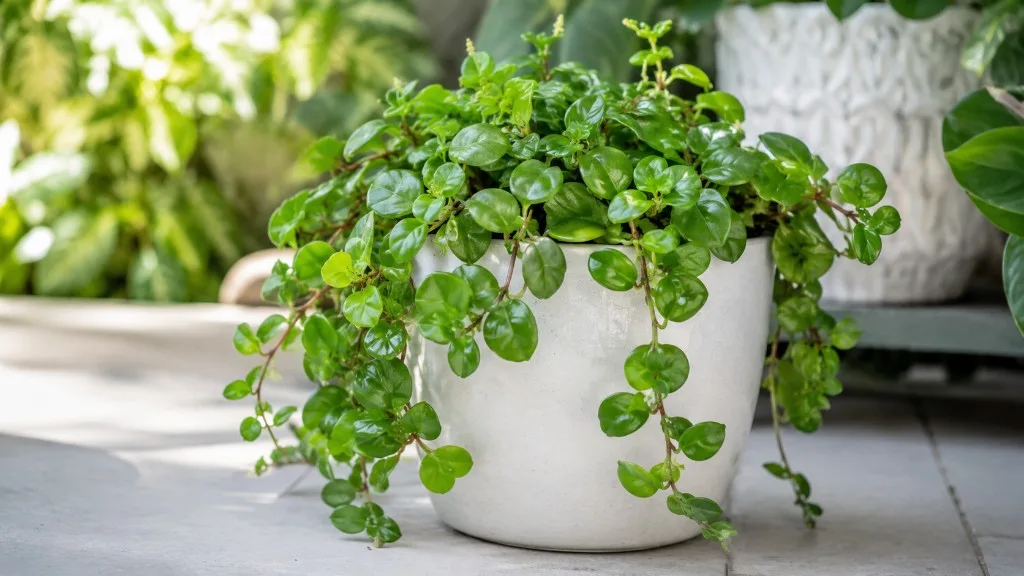
Peperomia Hope is a compact trailing houseplant grown for clusters of round, coin-like leaves that look soft and succulent but stay small enough for desks, shelves, and hanging baskets. The most common label is Peperomia tetraphylla ‘Hope’, though you may also see it sold as Peperomia rotundifolia ‘Hope’ or simply “Hope peperomia” on tags that omit the cultivar name. For practical care purposes, the plant in commerce under any of those names is the same trailing hybrid with whorled foliage - not the upright, thick-leaved Peperomia obtusifolia (baby rubber plant), which follows a similar watering philosophy but a very different display habit.
Indoors, Peperomia Hope typically reaches 6 to 12 inches (15 to 30 cm) tall with trailing stems that can extend 12 to 24 inches (30 to 60 cm) over time in a hanging basket or on a high shelf. Growth is slow to moderate in average home conditions - faster in bright, warm rooms and noticeably slower in dim corners. Leaves are semi-succulent: they store water internally, which is why the plant tolerates missed waterings better than a true tropical foliage plant like a calathea, but also why overwatering destroys roots before the leaves tell the full story.
If you are deciding whether Peperomia Hope fits your home, the honest summary is this: it rewards Peperomia Hope light guide, a fast-draining mix, and patience between waterings - and it punishes oversized pots, soggy soil, and hot direct sun. It is easier than a fiddle-leaf fig and harder than a pothos in the sense that it wants drier roots and tighter pots. The payoff is a pet-friendly trailing plant with sculptural foliage that looks polished without demanding daily attention. One of its strongest selling points for apartment dwellers is ASPCA-listed non-toxicity for cats and dogs across the Peperomia genus, which makes it a sensible choice where chewing-prone pets share the room - with the usual caveat that any plant material can upset a stomach if eaten in quantity.
Botanical Background and Hybrid Origins
Peperomia Hope belongs to the family Piperaceae - the pepper family - which includes hundreds of small-statured species adapted to forest floors and tree branches across the tropics. The Missouri Botanical Garden notes that ‘Hope’ is a hybrid cross between Peperomia deppeana and Peperomia quadrifolia, two species whose parent lineages contribute the trailing stems and the distinctive whorls of rounded leaves. That hybrid origin matters because Hope is not a wild species with a single native range; it is a cultivated selection bred for ornamental foliage, which means its tolerances reflect the parent plants’ epiphytic habits more than any one forest climate.
The parent species and close relatives grow as tropical epiphytes in Central and South America - plants that root in leaf litter on branches and absorb moisture from humid air and brief rain events rather than sitting in heavy wet soil. In that native context, roots expect excellent drainage, frequent drying cycles, and moderate light filtered through a canopy. Indoors, your job is to approximate that rhythm: airy mix, a pot that dries predictably, and light strong enough to keep internodes short without scorching the fleshy leaves. The name tetraphylla refers to leaves arranged in groups of four - a visual hallmark you can use to confirm you have Hope rather than a generic trailing peperomia with alternate leaf placement.
Peperomia Hope is sometimes described as a succulent. That label is half accurate. The leaves store water like a succulent, and the plant prefers to dry down between drinks, but it lacks the full desert-adapted metabolism of a true cactus or echeveria. Treat it as a semi-succulent tropical: drought-tolerant by houseplant standards, not drought-proof, and still vulnerable to cold drafts and prolonged darkness. Confusing Hope with a desert succulent is a common reason people underwater it in summer while overwatering it in winter - the calendar flips but the plant’s actual moisture use depends on light and temperature, not the word “succulent” on a marketing tag.
Why the Trailing Habit Changes Care
Peperomia Hope is trailing, not upright, and that growth form changes several practical decisions before you ever pick up a watering can. Trailing stems expose more leaf surface to ambient light than a compact rosette, which means a hanging basket near a bright window often performs better than the same plant on a low table where only the top whorls receive real light. It also means weight distribution matters: long stems snap easily if you grab the plant by the vines instead of supporting the pot, and a top-heavy basket with a small root system can dry unevenly if the mix holds water at the bottom while the surface looks dry.
The trailing habit makes Hope exceptionally well suited to hanging baskets, wall-mounted planters, and high shelves where the stems can cascade. That display choice introduces a specific risk: decorative baskets without drainage or cachepots that hide standing water. Epiphytic roots that evolved on tree bark will rot quickly if the bottom of the pot stays saturated for days - a failure mode that shows up first at the crown where stems meet the mix, long before the trailing tips look distressed. The fix is boring but reliable: use an inner nursery pot with a drainage hole, lift it above any saucer or basket liner, and empty runoff after every watering.
Because Hope looks best slightly root-bound, resist the urge to repot into a much larger hanging basket just because the vines are getting longer. Extra mix without matching root mass holds water the plant cannot use, which is the fastest route to crown rot in trailing peperomias. A shallow pot wider than it is deep often works better than a deep tub - the root system is compact, and shallow containers dry more evenly. If you want a fuller cascade, pinch sparse stems early to encourage branching rather than upsizing the pot prematurely.
Best Growing Conditions for Peperomia Hope
Peperomia Hope does best when your space approximates the warm, bright, airy rhythm of a tropical understory. The four variables that decide almost every outcome are light, water, soil, and temperature. Get those aligned and feeding, Peperomia Hope repotting guide, propagation, and hanging-basket display become routine. Get one badly wrong - especially water in an oversized pot - and the plant declines slowly enough that many growers blame the wrong variable.
Light Requirements
Peperomia Hope needs bright, indirect light for compact growth and firm coin-like leaves. A practical starting point is strong ambient daylight without hot direct sun on the foliage - the kind of light you get near an east-facing window, a few feet back from an unobstructed south or west window, or directly in a north window in a bright room. The Missouri Botanical Garden recommends bright, indirect light and notes that direct sun scorches peperomia leaves, producing pale yellow halos that turn crisp brown at the margins.
The fastest diagnostic for incorrect light is new growth, not old leaves. Compact whorls with firm, evenly green leaves mean the plant is probably happy. Long internodes, smaller pale leaves, and bare sections near the crown mean the plant wants more light - a common issue when Hope is sold as a “low-light plant” and then kept far from any window. Bleached patches, brown scorch on sun-facing leaves, or sudden collapse after a move to a south sill mean it wants softer light or a slower acclimation over one to two weeks. Leaves formed in lower light burn easily if you jump straight into afternoon sun.
Hope tolerates lower light for a limited time, which is why it survives dim offices temporarily, but it is not a long-term low-light plant. Extended shade produces leggy, sparse stems and increases overwatering risk because the mix dries slowly while the plant uses less water - the worst combination for epiphytic roots. If your only spot is moderate indirect light, reduce watering accordingly and consider a full-spectrum grow light on a 10–12 hour timer, positioned 12–18 inches above the canopy, to prevent the stretched look that develops on windowsill plants in northern latitudes between November and February. Rotate the pot weekly so all sides of a hanging basket receive light; otherwise growth thickens only on the window side and the far stems thin out.
Temperature and Humidity
Peperomia Hope prefers stable temperatures between 65 and 80°F (18 and 27°C) during active growth, matching the guidance in most current care references for this hybrid. It tolerates normal home conditions well and does not demand greenhouse humidity, though it dislikes cold drafts below about 55°F (13°C) and sudden drops near poorly sealed windows in winter. Watch problem spots: directly under an AC vent, on a metal windowsill on freezing nights, and above a radiator that cycles hot dry air - each can stress the plant within hours even if the room average temperature looks fine.
Humidity is helpful but secondary compared with light and watering. Average indoor levels in the 40–50% range suit Hope reasonably well. Very dry winter air - below about 30% - can encourage spider mites on indoor specimens, especially if the plant sits near a heating vent. Grouping plants, using a pebble tray with the pot elevated above the water line, or running a small humidifier nearby all help more than misting, which raises humidity briefly and can leave wet foliage that invites fungal spotting if air circulation is poor. Do not mist as a substitute for correct watering; wrinkled leaves from underwatering will not smooth out from mist alone.
Soil and Drainage
Use a fast-draining, airy potting mix that dries predictably within days, not weeks. A workable home recipe is 50% quality potting compost and 50% perlite, targeting a slightly acidic to neutral pH around 6.0–7.0 - the same perlite-amended, well-draining mix recommended for this cultivar. The principle matters more than a branded bag: the mix should hold enough moisture for roots to drink, retain air space so roots can breathe, and not stay wet for days after a thorough watering. Heavy, peat-compacted indoor mix is one of the fastest paths to crown rot in semi-succulent peperomias.
Always plant in a container with a drainage hole. For hanging baskets, use an inner pot that drains freely and never let decorative outer shells pool water. Terracotta accelerates drying - useful if you tend to overwater - while plastic retains moisture longer, which can help in hot, bright rooms where the pot dries in two to three days. Avoid the myth that gravel at the bottom of a pot improves drainage; it actually creates a perched water table that keeps the root zone wetter than intended. Refresh mix every one to two years, or sooner if it has compacted into fine mud that water runs through without soaking.
How to Water Peperomia Hope
The general rule for Peperomia Hope is water when the mix has dried, not on a calendar. Because the leaves store water, the plant is drought-tolerant by houseplant standards - missing a watering by a few days rarely kills it - but roots still need periodic full drinks during active growth. A practical starting interval in a 6-inch (15 cm) pot in bright indirect light is roughly every 10 to 14 days in warm months and every 3 to 4 weeks in cooler, dimmer winter conditions, according to common grower reports and the LeafyPixels care data for Peperomia Hope overview. Your home will differ; treat those numbers as reminders to check, not rules to obey blindly.
Check moisture 1 to 2 inches (2.5 to 5 cm) deep with a finger or wooden skewer before watering - Clemson Extension advises letting peperomia mix dry out between waterings to prevent root rot on Peperomia Hope. If the deeper mix feels cool, slightly damp, or clings to your skin, wait. If it is dry and the pot feels noticeably lighter, water thoroughly until a small amount runs from the drainage hole, then empty the saucer or basket liner so roots are not standing in stale water. Lift the pot when you can - weight is one of the most reliable signals for semi-succulent plants whose surface color lies about moisture at the bottom.
Peperomia Hope watering guide During Active Growth
During the warm, bright months when new whorls are forming, Hope uses water steadily but still prefers a full dry-down between drinks. Water thoroughly when the top 1 to 2 inches of mix are dry, not when only the surface looks pale. Wrinkled, slightly soft leaves on a light, dry pot are a clear thirst signal - rehydrate once and watch for recovery within 24 to 48 hours. Wrinkled leaves on a heavy, wet pot point to root stress from overwatering, not drought; adding more water worsens that pattern.
If you just bought the plant, expect a short adjustment period. Nursery Hope often arrives in peat-heavy mix with roots accustomed to greenhouse humidity. Do not compensate for transplant shock by watering more frequently unless the pot is genuinely dry; stabilize light first, then fine-tune the interval based on how fast your specific container dries in your room.
Seasonal Adjustments
In cooler, dimmer months, growth slows and the pot dries more slowly. Stretch the interval between waterings and reduce or pause fertilizer until new growth resumes in spring. The most common winter failure mode is continuing a midsummer watering rhythm in lower light, which keeps the mix waterlogged and leads to yellow lower leaves, fungus gnats, and root rot. A Hope that sits near a cold window in winter may need less water still, even if the heat runs - cold roots absorb less moisture.
In bright, air-conditioned rooms, the opposite can happen: strong light plus dry AC air dries small pots quickly even in winter. Read the pot, not the calendar. A hanging basket in a sunny kitchen may dry faster than a shaded bedroom plant in July.
Common Watering Mistakes
The single most damaging mistake is watering on a fixed schedule without checking the pot. The second is letting the plant sit in a full saucer or undrained decorative basket, which suffocates epiphytic roots within days even if the top of the mix looks fine. The third is giving tiny daily sips instead of a full soak when the plant is dry - that wets only the surface while the center stays parched, producing repeated wrinkle cycles that weaken fine roots over time.
People also misread semi-succulent foliage. Hope’s leaves wrinkle when underwatered, but they can also wrinkle when overwatered roots fail to take up moisture - the leaves look thirsty while the mix stays wet. Always pair visual wilt with a moisture check at depth and a smell check near the crown before adding more water. If stems are mushy at the base and the mix smells sour, stop watering, inspect roots, trim any brown soft tissue, and repot into fresh airy mix rather than trying to “revive” the plant with another drink.
How to Feed Peperomia Hope
Peperomia Hope is a light feeder, not a hungry one. A balanced water-soluble houseplant fertilizer - for example 10-10-10 or 20-20-20 - diluted to one-quarter to one-half of the label rate is sufficient during active growth. Apply to already-moist soil every four to six weeks from spring through early fall, or monthly at half strength if your potting mix contains a slow-release starter charge. The Missouri Botanical Garden suggests small amounts of diluted fertilizer monthly during the growing season; in practice, many growers fertilize less because overfeeding produces salt buildup and crisp leaf margins on slow-growing peperomias.
Hold fertilizer entirely during the cool, low-light months, after a major repot until new growth appears, and while the plant is recovering from root rot or pest damage. Overfeeding a plant that cannot use nutrients adds salt to the mix without improving growth. If margins crisp despite good moisture, flush the pot with plain water at two to three times the pot volume and pause feeding for six to eight weeks. Pinching the tips of long sparse stems during active growth encourages branching and a fuller trailing habit without any fertilizer at all.
Repotting and Root Health
Repot Peperomia Hope roughly every two to three years, or whenever roots circle drainage holes, the mix has compacted into mud, or water runs straight through without soaking in. Hope prefers being slightly root-bound, so err on the side of waiting rather than upsizing early. The best timing is early spring as active growth resumes, which gives the plant a full warm season to settle into fresh mix. Avoid repotting purely because trailing stems have lengthened - length is not a root-volume signal.
Choose a pot only one size larger than the current root ball - typically 1 inch (2.5 cm) wider, or the same pot refreshed with new mix if roots have not filled the space. Oversized pots hold excess wet mix around roots that cannot use it, which is the most common trigger for rot after repotting. Use fresh 50% potting compost and 50% perlite, plant at the same depth as before, and water lightly for the first week while cut roots heal. Keep the plant in bright indirect light and avoid fertilizer until you see new whorls forming.
Signs It Is Time to Repot
Physical signs include roots emerging from drainage holes, mix that dries in hours despite healthy foliage, or mix that stays wet for two weeks despite sparse watering. Performance signs include stalled new whorls for months during warm bright weather despite adequate light, or chronic leaf drop near the crown while trailing tips still look green - sometimes indicating breakdown at the base rather than tip stress.
Do not repot a plant that is actively collapsing from overwatering until you have inspected roots and trimmed rot. Moving a failing root ball into fresh mix without fixing the underlying moisture problem rarely saves Hope. When in doubt, downsize into a smaller pot with fresh airy mix rather than upsizing “to give it room” - extra room is often extra water retention for this species.
Propagation Methods for Peperomia Hope
The standard home propagation method for Peperomia Hope is stem cuttings, though leaf cuttings also work if you include a bit of petiole attached to the leaf. Stem cuttings are faster and produce plants that match the parent’s trailing habit immediately. Spring and summer into early fall offer the highest success rates because warm temperatures and bright indirect light support rooting without the rot risk that cold, dim seasons bring.
Take a 3- to 4-inch (7 to 10 cm) stem cutting with at least one node and two to three healthy whorls using clean, sharp shears. Remove the lowest leaves so a node sits below the medium surface. You can root cuttings in plain water - change the water every few days - or directly in a moist, fast-draining mix of perlite and potting compost. Water propagation shows roots within two to four weeks at warm room temperatures near 70°F (21°C); transplant to mix once roots reach 1 to 2 inches (2.5 to 5 cm) long rather than waiting until they circle the jar.
If rooting in mix, place the cutting in bright indirect light, keep the medium lightly moist but not soggy, and maintain moderate humidity with a loose clear bag or dome if your air is very dry - vent briefly every few days to prevent mold. Tug gently after three weeks to feel resistance before treating the cutting as established. Leaf cuttings laid on moist mix with petiole buried at the node can sprout plantlets, but this method takes longer than stem segments and is better for experimentation than bulk propagation.
Do not propagate stressed, diseased, or heavily pest-infested plants - cuttings inherit the parent’s problems. A healthy parent with firm leaves and no crown softness gives the highest success rate.
Common Peperomia Hope Problems
Most Peperomia Hope problems are environmental, not mysterious diseases. The plant communicates through leaf firmness, internode length, and crown health long before the entire trailing display collapses. The useful habit is to check light, moisture at depth, and pot size in that order before reaching for pesticide or extra fertilizer.
Yellow Leaves, Wrinkled Foliage, and Pests
Yellow leaves can mean overwatering, underwatering, low light, natural aging of older lower whorls, or root failure from a mix that stays wet too long. If yellow leaves are soft and the mix is wet, suspect overwatering and inspect the crown for mushy stems. If yellow leaves are crisp and the pot is very light, drought stress is more likely. A single yellow whorl near the base on an otherwise firm plant is often normal senescence - remove it and watch new growth rather than overcorrecting every variable at once.
Wrinkled, slightly deflated leaves usually mean the plant needs water - but only if the pot is dry at depth. If leaves wrinkle while the mix is wet, roots may be compromised and the plant cannot take up moisture; watering again makes rot worse. Rehydrate thoroughly once when dry, then judge by the next new whorl, not by old leaves that will not plump back to perfect form.
Leggy, sparse stems with small leaves almost always mean insufficient light, especially on plants kept as “low-light tolerant” far from windows. Move to brighter indirect exposure or add a grow light, then pinch long stems to reset shape. Brown scorch patches on sun-facing leaves mean too much direct sun - pull back or filter the window.
Watch for mealybugs in leaf axils as white cottony clusters, scale as immobile bumps along stems, and spider mites in dry air - fine webbing and stippled leaves are the tell. Fungus gnats indicate overly wet surface mix; let the top layer dry slightly between waterings. Catch pests early with weekly inspection. A strong shower, manual removal with alcohol on a cotton swab for mealybugs, and insecticidal soap applied per label directions handle most infestations if you act before the population spreads.
Crown rot at the base combined with foul-smelling mix is advanced overwatering damage, often in an oversized or undrained pot. Trim healthy cuttings above the rot and restart propagation rather than trying to save mushy base tissue.
Is Peperomia Hope Safe for Pets?
Peperomia Hope is considered non-toxic to cats and dogs according to the ASPCA’s toxic and non-toxic plant listings for multiple Peperomia species, including vining and blunt-leaf peperomias in the same genus. The ASPCA lists Non-Toxic to Dogs, Non-Toxic to Cats for peperomia entries examined under various species names. Hope itself is not always listed as a separate cultivar entry, but the ASPCA Peperomia listing treats plants in the Peperomia genus as non-toxic to cats and dogs - a practical and widely accepted framing for pet owners choosing this plant.
Non-toxic does not mean problem-free if eaten. Ingesting any houseplant material can cause mild gastrointestinal upset - vomiting or soft stool - simply from unfamiliar fiber, especially in cats. Discourage chewing if your pet is a habitual plant nibbler, both to protect the plant and to avoid unnecessary stomach episodes. Confirm the botanical name on the tag when pet safety matters; common names like “baby rubber plant” attach to both Peperomia obtusifolia (non-toxic peperomia) and Ficus elastica (true rubber tree, toxic) depending on the seller.
If you suspect your pet ate a large amount of any plant and shows persistent vomiting, lethargy, or loss of appetite, contact your veterinarian or the ASPCA Animal Poison Control Center at (888) 426-4435 (a consultation fee may apply). This is general information, not veterinary advice. For households with curious pets, Peperomia Hope belongs in the favorable category alongside other peperomias - a strong choice for a hanging basket out of reach, or a shelf display where trailing stems add visual interest without the toxicity concerns of pothos or philodendron.
Conclusion
Peperomia Hope (Peperomia tetraphylla ‘Hope’) is a semi-succulent trailing hybrid with coin-like whorled leaves that rewards a simple care rhythm: bright indirect light, fast-draining mix, thorough watering only after the top 1 to 2 inches of soil dry, and stable warm temperatures without cold drafts. It tolerates missed waterings better than most tropical foliage plants, prefers slightly tight pots over spacious ones, and shines in hanging baskets when drainage is honest rather than decorative.
When something looks wrong, read the plant in context: leggy sparse stems mean more light; bleached scorched leaves mean less direct sun; wrinkled leaves on a dry pot mean water; wrinkled leaves on a wet pot mean roots. Yellow lower whorls often trace to moisture imbalance or natural aging, not a missing magic nutrient. Fix light and pot size first, adjust watering second, propagate healthy cuttings if the crown fails, and treat pests before they spread. Do that, and Peperomia Hope becomes one of the most manageable trailing houseplants you can grow - attractive, drought-tolerant, and safe for pet-friendly homes when you keep chewing habits in mind.
When to use this page vs other Peperomia Hope guides
- Peperomia Hope overview - Canonical hub for this species - care topics and problems branch from here.
- Peperomia Hope problems - Symptom-first path when you already know something is wrong.
Related Peperomia Hope guides
- Peperomia Hope watering
- Peperomia Hope light
- Peperomia Hope soil
- Peperomia Hope propagation
- Peperomia Hope fertilizer
- Peperomia Hope repotting
- Peperomia Hope pruning
- Ants on Plant on Peperomia Hope
- Leggy Growth on Peperomia Hope
- Plant Leaning on Peperomia Hope
- Pot Too Large on Peperomia Hope
- Slow Growth on Peperomia Hope
How to care for Peperomia Hope?
How much light does Peperomia Hope need?
bright indirect light, medium indirect light
- bright indirect light, medium indirect light - bright indirect light, medium indirect light.
When should you water Peperomia Hope?
Every 10–14 days - soil must dry completely before watering. Every 3–4 weeks in winter. Semi-succulent leaves store water - never water before soil is dry.
- Check top 2 inches - Stick a finger or knuckle into the soil; water only when the top layer feels dry.
- Drain excess water - Every 10–14 days - soil must dry completely before watering.
What soil works best for Peperomia Hope?
50 % potting compost + 50 % perlite. Fast-draining. pH 6.0–7.0.
- Well-draining mix - Fast-draining.
Grower notes for Peperomia Hope
What makes Peperomia Hope different
Peperomia Hope is trailing and round-leaved, so it behaves differently from upright radiator plants. The stems can snap if they are handled roughly, and the leaves wrinkle when the plant is either too dry or sitting on weak roots. It looks best when grown slightly tight in the pot and allowed to trail from a bright shelf. Do not move it into a much larger hanging basket just because the vines are getting longer.
Peperomia Hope basket note
Use a shallow hanging pot or a small nursery pot slipped inside a basket, and make sure water can fully drain after each soak. Dense decorative baskets hide wet soil, which is the fastest way to lose the crown. Rotate the plant so all sides get bright indirect light, or the trailing growth will thicken only on the window side. Pinch sparse stems early if you want a fuller basket.
Peperomia Hope buying note
Look for firm round leaves along the entire stem, not just healthy tips. Bare sections near the crown usually mean the plant has been too dark, too wet, or repeatedly dried out. Check where the stems meet the mix because rot starts there before the trailing tips look bad. A smaller full plant is usually a better purchase than a long thin one.
What matters most with Peperomia Hope
Peperomia Hope has smaller root systems than many houseplants, so oversized pots are a common hidden problem. Firm leaves and a drying pot matter more than frequent watering. In practice, the care checkpoint is simple: bright indirect light, medium indirect light. Pair that with 50 % potting compost + 50 % perlite. Fast-draining; pH 6.0–7.0, and avoid changing water, pot size, and placement all at once.
Best placement in a real home
Peperomia Hope belongs where bright indirect light, medium indirect light is realistic for most of the day, not only where the pot looks good. Every 10–14 days - soil must dry completely before watering. Every 3–4 weeks in winter. Semi-succulent leaves store water - never water before soil is dry. If the pot stays wet longer than expected, move the plant into better light or reassess the mix before watering again. Humidity target: Average household humidity (40–50%).. Temperature comfort zone: 18°C to 27°C (65–80°F).
Before you buy this plant
Choose Peperomia Hope with firm new growth, clean leaf undersides, and soil that does not smell sour or feel compacted. Be cautious if you see root-rot, sticky residue, collapsed crowns, or a pot that is wet in poor light. Cosmetic old-leaf damage is less worrying than weak roots or active pests.
First month after bringing it home
Do not repot Peperomia Hope on day one unless the mix is failing or pests are obvious. Quarantine it, learn how fast the pot dries, and keep care boring while it adjusts. Watch especially for root-rot, yellow-leaves, and leggy-growth. If problems appear, correct the condition first rather than stacking fertilizer, repotting, and pruning together.
Is it pet safe?
Peperomia Hope is generally considered pet safe.
Watering Peperomia Hope
Every 10–14 days - soil must dry completely before watering. Every 3–4 weeks in winter. Semi-succulent leaves store water - never water before soil is dry.
Soil & potting for Peperomia Hope
50 % potting compost + 50 % perlite. Fast-draining. pH 6.0–7.0.
Humidity & temperature for Peperomia Hope
Peperomia Hope prefers average household humidity (40–50%), though normal home humidity is usually fine. Keep temperatures around 18°C to 27°C (65–80°F).
| Detail | Information |
|---|---|
| Humidity | Average household humidity (40–50%) - normal home humidity is fine. |
| Ideal temperature | 18°C to 27°C (65–80°F) |
Fertilizer & pruning for Peperomia Hope
Use feed lightly during active growth. Use monthly during spring and summer.. for Peperomia Hope.
| Detail | Information |
|---|---|
| Fertilizer type | Feed lightly during active growth. Use monthly during spring and summer.. |
Common problems on Peperomia Hope
Likely cause: Sep 3, 2025 · Peperomia is a large genus of ornamental foliage tropical plants in the family Piperaceae native to Mexico, South America, and the Caribbean. With more than 1,500 known species, like …
Quick fix: Follow extension or botanical guidance for Peperomia Hope ants on plant; adjust care before applying broad treatments.
Full fix guide →Leggy Growth
MediumLikely cause: Insufficient light
Quick fix: Move to brighter indirect light
Full fix guide →Plant Leaning
MediumLikely cause: Sep 3, 2025 · Peperomia is a large genus of ornamental foliage tropical plants in the family Piperaceae native to Mexico, South America, and the Caribbean. With more than 1,500 known species, like …
Quick fix: Follow extension or botanical guidance for Peperomia Hope plant leaning; adjust care before applying broad treatments.
Full fix guide →Pot Too Large
MediumLikely cause: Peperomia is one of the two large genera of the family Piperaceae. It is estimated that there are over 1,000 species, occurring in all …
Quick fix: Confirm diagnosis on your Peperomia Hope, then address the most likely care or pest factor described in current extension guidance.
Full fix guide →Slow Growth
LowLikely cause: Insufficient light or cool temperatures
Quick fix: Bright indirect light; ensure above 18 °C
Full fix guide →Root Rot
HighLikely cause: Overwatering before soil dries
Quick fix: Allow to dry completely; repot in fast-draining mix
Full fix guide →Yellow Leaves
MediumLikely cause: Overwatering or insufficient light
Quick fix: Ensure soil dries fully; move to brighter light
Full fix guide →