Peperomia Hope Watering: Schedule, Checks & Mistakes
Peperomia Hope Watering: Schedule, Checks & Mistakes
Peperomia Hope Watering: Schedule, Checks & Mistakes
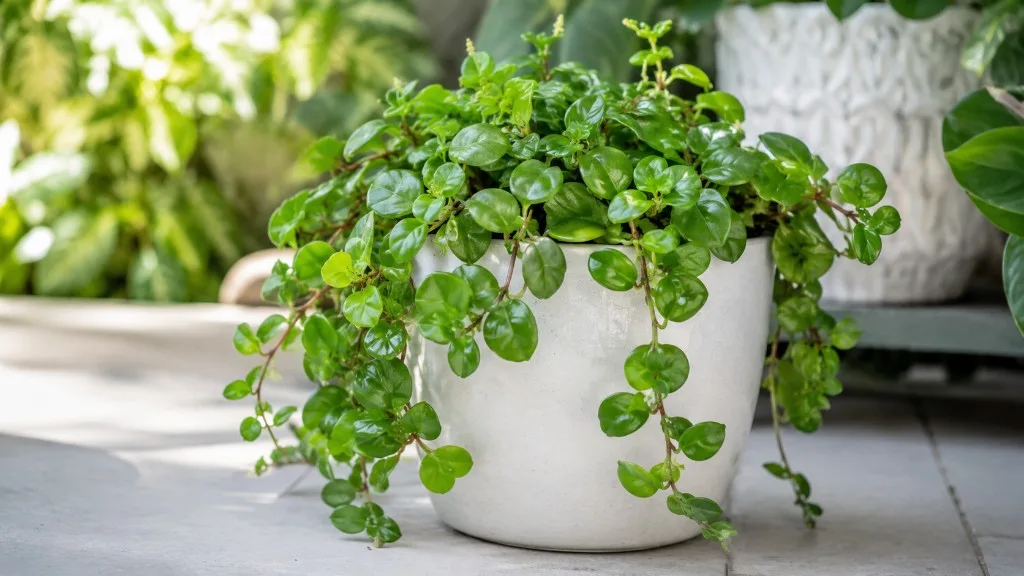
Peperomia Hope watering is less about memorizing a calendar and more about reading a semi-succulent plant that stores moisture in its round, fleshy leaves. Peperomia tetraphylla ‘Hope’ - a trailing hybrid often sold as Four-Leaf Peperomia - behaves like a drought-tolerant houseplant with a small, fragile root system. Give it a steady drink on a rigid weekly schedule and the mix stays wet long after the leaves have had enough. Wait until the top half of the potting mix has dried, then water thoroughly and let the pot drain, and you get firm stems, plump leaves, and far fewer emergencies at the soil line.
The practical protocol is straightforward: treat Hope as a semi-succulent, not a thirsty tropical foliage plant. Let the top half of the mix dry before the next watering. Soak until water runs from the drainage holes, empty every saucer and cachepot, and adjust the interval for season, light, and pot size rather than the day of the week. The most dangerous mistake is not underwatering - Hope can bounce back from a dry spell - but overwatering, which suffocates roots, triggers root rot on Peperomia Hope, and produces the cruel symptom of wilting leaves on wet soil.
This guide covers the dry-down rule, how often to water in each season, the correct soaking technique, how to tell thirst from rot, and what to do when the mix has stayed too wet for too long.
Why Peperomia Hope Needs a Semi-Succulent Watering Approach
Peperomia Hope is not a true succulent, but it is semi-succulent in the ways that matter for watering. Each rounded leaf acts as a small water reservoir. The plant evolved with epiphytic and terrestrial habits in Central and South America, where roots encounter alternating moisture and dryness rather than permanently damp peat. Indoors, that biology translates into a simple rule: roots need air between drinks, and leaves can carry the plant through a modest dry window.
The root system reinforces the same story. Hope produces a compact, relatively small root mass compared with its trailing stems and leaf volume. Those roots absorb water efficiently but cannot survive long in anaerobic, waterlogged mix. When a large pot holds wet soil around a small root ball, the plant looks fine for weeks - then collapses quickly once rot reaches the crown.
Many general houseplant guides suggest watering when the top inch of soil feels dry. That works as a minimum threshold for small pots in bright, warm rooms. For Hope, a conservative drought protocol - waiting until roughly the top half of the mix has dried - aligns better with semi-succulent leaf storage and reduces the risk of chronic overwatering in average home conditions. The Missouri Botanical Garden recommends watering when the soil almost dries on top during active growth and cutting back in winter. Extending dry-down toward the top half is a safer default when light is moderate, pots are slightly oversized, or the plant sits in a decorative basket that slows evaporation.
If you remember one distinction, make it this: succulent-style patience beats tropical-style frequency for Peperomia Hope overview. Hope will forgive a late watering more readily than a soggy week.
The Top-Half Dry Rule: Your Main Watering Signal
The central Peperomia Hope watering rule is to let the top half of the potting mix dry before you water again. Not the surface alone - the surface can look pale and dusty while the middle of the pot still holds moisture. Not the entire pot bone-dry - a fully desiccated root ball is harder to re-wet and stresses fine roots. The target zone is the upper 50% of the mix volume approaching dry, with the lower half allowed to retain slight moisture but never stay continuously wet for days on end.
In a 4-inch nursery pot, that often means the top 2 inches feel dry to a finger or probe while the bottom third may still hold faint dampness you detect only on a chopstick pulled from the drainage hole. In a shallow hanging basket, the “top half” dries faster on the exposed surface and slower in the center - which is why a second check matters.
Use this pre-water checklist every time:
- Finger or chopstick test: Insert to mid-pot depth. If the upper half feels cool and clings to the probe, wait.
- Pot weight: Lift the container. A light pot with dry upper mix is ready; a heavy pot with limp leaves suggests overwatering, not thirst.
- Leaf feel: Firm, slightly springy leaves mean stored moisture remains. Soft, wrinkled leaves with dry mix mean underwatering.
- Season context: In winter, stretch the interval even if the top half dries slowly - cold wet roots rot faster than warm wet roots.
The top-half dry rule replaces calendar watering. A plant in a bright, warm kitchen may need water every 10 days. The same cultivar in a cool north room may go three weeks in winter. Both can be correct if the dry-down check passes first.
How to Test Moisture at the Right Depth
Surface color lies. Peat-based mixes lightens as the top dries, which tricks growers into watering while the root zone remains saturated. For accurate Peperomia Hope watering, test depth, not appearance.
Your finger works in pots up to about 6 inches wide - insert to the knuckle or second knuckle depending on pot depth. A wooden chopstick or skewer is more reliable: push it gently toward the center, leave it 30 seconds, pull it out, and look for darkening or soil clinging to the lower portion. Moist mix stains the stick; dry mix falls off cleanly.
A moisture meter can help beginners but treat readings as a hint, not gospel. Cheap probes often misread chunky perlite mixes. If the meter says “dry” but the pot still feels heavy and leaves are soft with sour-smelling soil, trust the plant and your nose over the dial.
For hanging baskets, slide the probe near the inner rim where stems meet the mix - rot often starts there first because water pools against the basket liner. If the top half is dry but you detect persistent wetness at the crown, reduce volume per watering and improve airflow rather than adding another full soak.
Pot Weight as a Second Confirmation
Learning pot weight is the fastest skill upgrade for semi-succulent care. Water Hope thoroughly once, let it drain completely, and lift the pot with both hands. Note the heft. Over the next week, lift it every few days without watering. When the top half of the mix has dried, the pot feels noticeably lighter - sometimes by a third or more in small containers.
Weight resolves ambiguous leaf signals. Limp leaves plus a heavy, cool pot almost always mean excess moisture or failing roots, not a request for water. Limp leaves plus a feather-light pot and dry probe mean drought. Watering the first case accelerates rot; withholding in the second case prolongs stress but is reversible.
If you use a decorative cachepot, lift the inner nursery pot only. Outer pots hide standing water and give a false sense of dryness when the inner mix is saturated.
How Often to Water Peperomia Hope Indoors
There is no universal “every X days” answer that holds across homes. Published care ranges cluster around every 10 to 14 days in spring and summer and every 2 to 4 weeks in fall and winter for plants in Peperomia Hope light guide with well-draining mix. Clemson Extension advises letting peperomia dry out between waterings rather than following a fixed calendar. Treat those numbers as frequency hints after the top-half dry check passes, not as commands.
Your actual interval depends on four variables: light intensity, pot volume relative to roots, mix porosity, and ambient temperature. A Hope on a bright shelf dries faster than one in a bathroom with low light. A 6-inch pot with two inches of unused soil dries slower than a snug 4-inch pot. A 50/50 peat-perlite mix dries faster than straight potting soil with no amendment.
When in doubt, wait an extra day. Semi-succulent leaves buffer short delays. Early watering on a still-moist root zone creates chronic stress that shows up as yellow lower leaves, stem softness, and eventual root rot.
Spring and Summer Rhythms
Active growth increases transpiration - the plant pulls more water through leaves and stems as it produces new whorls of rounded foliage. From mid-spring through summer, most indoor Hope plants in 4- to 6-inch pots need water roughly every 10 to 14 days, provided the top half of the mix dries within that window.
Bright indirect light and warm rooms (65–80°F / 18–27°C) sit at the shorter end of the range. Air conditioning lowers humidity and can slow drying in some setups, while direct sun through glass - which Hope does not want - can push the opposite extreme and shrink intervals dramatically. Check more often during heat waves, but still let the dry-down rule govern the actual pour.
Summer is also when growers overcompensate. Seeing new trailing growth, they assume more water equals more vigor. For Hope, more air between soaks equals healthier roots, which supports more vigor. Feed lightly during active growth if you use fertilizer, but never substitute feeding for correct watering.
Fall and Winter Slowdown
Growth slows as days shorten and rooms cool. The same pot that dried in ten days in July may take three weeks or longer in January. Winter Peperomia Hope watering should be conservative: pass the top-half dry test, then consider waiting another day if temperatures drop below 65°F or the plant sits near a cold window.
The danger in winter is not dehydration - it is a cold, wet root ball. Roots metabolize slowly in cool conditions and sit in stagnant moisture longer. Reduce volume slightly if you tend to flood the pot; a thorough soak is still fine when the dry-down check passes, but skip “just a little splash” top-ups that keep the surface damp without flushing salts or refreshing air pockets.
If you run grow lights and keep the room warm, Hope may continue modest growth through winter. Adjust upward slightly, but keep the semi-succulent protocol intact. Never water on a calendar because “it has been two weeks.”
How to Water Peperomia Hope the Right Way
When the top half of the mix is dry and the pot weight confirms readiness, water thoroughly and evenly - not with ice-cold dribs from a half-empty watering can. Room-temperature water reduces shock to fine roots. Pour slowly across the soil surface until water exits the drainage holes freely. That single deep event rehydrates the root zone and pulls fresh oxygen into the mix as water displaces air and then drains.
Avoid splashing the crown repeatedly if your tap water is hard or chlorinated; mineral spots on fleshy leaves are cosmetic but persistent. Water the soil, not the foliage.
After soaking, discard all runoff. Hope should never sit in a saucer of water for more than 30 minutes. In hanging baskets, verify that liner drainage holes are open and not clogged with roots or moss - trapped runoff is a common hidden cause of crown rot in trailing plants.
Drench, Drain, and Clear the Saucer
The drench-and-drain method suits semi-succulents better than frequent shallow sips. Shallow watering wets only the upper layer, encourages roots upward where they dry fastest, and leaves the center of the pot chronically uneven in moisture. One full cycle - wet the entire root ball, let excess leave, empty the saucer - matches how Hope prefers to drink.
Follow this sequence:
- Check dry-down with finger/chopstick and pot weight.
- Water slowly until ~10–20% of the volume runs out the bottom.
- Wait 5 minutes for final drainage.
- Empty saucer, cachepot, or basket tray completely.
- Do not water again until the top half dries - no matter how sunny the week was.
Some growers bottom-water by placing the nursery pot in a basin for 15–20 minutes. That works if you still allow full drainage afterward and do not leave the pot submerged. Top watering remains simpler for diagnosing how fast mix absorbs moisture and for flushing occasional salt buildup from fertilizer.
Signs You Are Overwatering Peperomia Hope
Overwatering is the primary killer of Peperomia Hope indoors. Because the leaves store water, the plant can look acceptable while roots decline underground - until a tipping point triggers visible collapse. Clemson Extension identifies root rot from overwatering as the most common peperomia disease. Learn these signs early:
- Yellowing lower leaves that drop with a gentle touch, often starting near the soil line
- Soft, mushy stems at the base where they enter the mix
- Persistent wilting despite wet soil - the hallmark confusion symptom
- Sour or musty smell when you lift the plant or slide it from the pot
- Brown or black, slimy roots if you inspect (healthy roots are pale and firm)
- Edema or scab-like bumps on leaves from cells bursting under excess moisture
- Fungal spotting on foliage linked to prolonged wet crowns or high humidity combined with overwatering
Chronic overwatering also shows up as no new growth for months while old leaves hang on, thin and dull. The plant survives on leaf reserves while roots starve for oxygen.
If multiple signs appear together, stop watering immediately. Do not fertilize. Move the plant to bright indirect light with good airflow - not hot direct sun - and read the recovery section below before reaching for the watering can again.
Why Overwatered Plants Sometimes Wilt
Wilting feels like a drought signal, so growers water more - and kill the plant. That paradox is the most important diagnostic lesson in Peperomia Hope watering.
When roots sit in saturated mix, they lose function. Root rot destroys the fine absorptive roots first. Without working roots, the plant cannot take up water even though the pot is full of it. Leaves lose turgor pressure and droop exactly as they would in a drought. Adding more water worsens anaerobic conditions and accelerates decay.
The tell is in the pairing of symptoms: wilting plus heavy pot, cool soil, yellowing lower leaves, or a musty smell means too much water, not too little. Wilting plus light pot, dry top half, and wrinkled leaves means too little water.
When uncertain, do not split the difference with a medium pour. Check the mix at depth, inspect the crown with your finger near the stem base, and weigh the pot. If the lower mix is wet, treat it as overwatering even if leaves look sad. Hope rewards patience here more than sympathy watering.
Signs Your Peperomia Hope Is Too Dry
Underwatering is real but usually less fatal than rot. Hope’s fleshy leaves wrinkle slightly when internal stores drop, and stems may feel softer without being mushy. Leaf margins can curl inward, and growth pauses until moisture returns.
A single dry episode often resolves within hours of a proper soak. Leaves re-plump as turgor returns. Repeated drought cycles - letting the entire pot go bone dry for weeks, or chronic shallow watering that never reaches lower roots - damages fine root tips and makes the plant react poorly when water finally arrives.
Dry-down stress also masquerades as other problems. Crisp brown tips sometimes trace to low humidity or fertilizer salts, not thirst. Whole-plant droop with dry mix and light pot is thirst. Check the pot before assuming humidity is the culprit.
If you underwatered, rehydrate with one full drench-and-drain cycle. Do not compensate with daily small cups; that pattern keeps the upper layer wet while the center stays dry, mimicking the worst of both worlds. After recovery, return to the top-half dry protocol rather than switching to a nervous daily schedule.
Pot Size, Soil, and Drainage Effects on Watering
Watering does not happen in isolation. The pot, mix, and drainage path determine how fast the top half dries and how much forgiveness you have when you pour too soon.
Hope thrives in well-draining, airy mix - commonly 50% potting compost and 50% perlite, with perlite and orchid bark amendments recommended for porous peperomia culture. Dense, peat-heavy bags straight from the store hold water longer and shrink the safe watering window.
Every pot needs a functional drainage hole. Decorative pots without holes force you to guess at reservoir depth; for long-term health, grow in a drilled nursery pot slipped inside decor, and empty the outer shell after every watering.
When a Bigger Pot Changes Everything
Oversized pots are the silent cause of Peperomia Hope overwatering. Trailing stems tempt growers to repot into a large hanging basket “to give it room.” The roots do not fill that volume for months. Excess mix stays wet around a small root ball, and rot begins at the center where you never think to probe.
Hope prefers to be slightly snug - repot only when roots circle the pot or growth stalls despite good light and correct watering. When you do upsize, jump one pot size, refresh mix completely, and expect a slower dry-down for four to eight weeks while roots colonize the new space. Adjust watering downward during that period even if top growth looks vigorous.
Terracotta dries faster than plastic or glazed ceramic because the wall breathes. That can shorten intervals by a day or two - still governed by the top-half rule, not the material alone.
Light, Temperature, and Humidity
Bright indirect light increases water use modestly compared with heavy-feeding tropicals, but the difference still matters. A Hope stretching toward a window dries faster than one in a dim corner - and the dim one is more vulnerable to rot because evaporation is slow. Low light plus frequent watering is a common failure pair.
Temperature affects metabolism and drying rate. Warm rooms above 72°F (22°C) shorten intervals slightly; cool rooms below 65°F (18°C) extend them and raise rot risk if soil stays wet. Keep Hope away from blasting heat vents and cold drafty panes.
Average household humidity (40–50%) suits Hope without misting. Misting leaves does not replace soil moisture and can worsen fungal spotting if crowns stay wet. If air is extremely dry, a humidifier helps the plant lose less water through leaves, which indirectly lengthens soil dry-down - adjust checks accordingly, not the calendar.
Seasonal and Environmental Adjustments
Treat season as a modifier on the top-half dry rule, not a separate schedule. In spring, as light increases, check pots every few days until you relearn the rhythm for that year. In summer heat, the top half may dry quickly - but still verify before watering. In fall, lengthen the mental countdown. In winter, assume half the summer frequency at most, pending dry-down.
Travel and life disruptions matter too. Before leaving for a week, water only if the top half is already dry and the trip falls within normal interval - not “just in case.” Hope handles short absences better than a pre-trip flood. Upon return, check weight before reacting to any droop.
After Peperomia Hope repotting guide, roots are disturbed and uptake is uneven for several weeks. Water after dry-down, but avoid saturating a mix that has not yet been colonized by roots. After propagation, newly rooted cuttings in small cups dry fast - they need shorter intervals but tiny volumes, still with drainage.
Group care adjustments: if you water on a “plant Sunday” routine, use that day as a reminder to check, not an automatic pour for Hope. Semi-succulent protocol means this plant often skips a week while neighbors drink.
Recovering from Overwatering and Root Rot
If you caught overwatering early - soft crown but no widespread black roots - recovery is possible without drama. Stop watering, provide bright indirect light and gentle airflow, and let the top half dry fully before a cautious next soak. Remove any clearly yellow leaves to reduce demand on stressed roots. Do not fertilize until new firm growth appears.
If the plant continues to wilt on wet mix or smells sour, unpot and inspect roots. Healthy roots are white or tan and firm. Rotted roots are brown, black, or gray and mushy. Trim damaged tissue with clean scissors, leaving only firm material. Repot into fresh, porous mix in a smaller clean pot if you removed significant root mass. Water lightly once, then return to the top-half dry protocol with extra patience - regrowth may take weeks.
Severe crown rot at the stem base is often terminal. Prevention beats surgery for Hope. When in doubt after repotting a rot-trimmed plant, err toward dryness; the leaves carry reserves while new roots form.
For chronic cases where mix has broken down into muck, full mix replacement matters as much as trimming. Old, compacted peat holds water like a sponge and recreates rot even if you water perfectly on fresh logic.
Common Peperomia Hope Watering Mistakes
Even experienced growers slip on predictable errors. Avoid these:
- Calendar watering without checking the top half of the mix
- Watering because leaves drooped without confirming pot weight and soil moisture
- Letting the plant sit in runoff inside saucers or basket liners
- Repotting into an oversized hanging basket because vines got long
- Misting instead of checking soil, leaving roots dry while leaves stay superficially wet
- Using heavy, undrained potting mix with no perlite or bark
- Winter watering on a summer schedule because the heating is on
- Top-up splashes that keep the surface damp without full drainage cycles
- Ignoring cachepots that hide standing water after every soak
- Fertilizing a stressed, wet plant - salts plus rot stress compound damage
Hope pairs well with pet-safe households: Peperomia species are generally listed as non-toxic to cats and dogs by the ASPCA, though individual sensitivities vary. That makes correct watering even more worthwhile - you are less likely to lose the plant to rot and less likely to rush risky home remedies near curious pets.
Conclusion
Peperomia Hope watering succeeds when you respect its semi-succulent nature: let the top half of the mix dry, then drench and drain completely. In most homes that works out to roughly every 10 to 14 days during active growth and every two to four weeks in winter - always subordinate to the dry-down check, never to the calendar.
Watch for the pairing that saves plants: wilting with a heavy, wet pot means stop watering; wilting with a light, dry pot means soak. Overwatering causes root rot and suffocated roots; underwatering wrinkles leaves but usually recovers with one proper drink. Match pot size to roots, use fast-draining mix, empty every saucer, and adjust for light and season.
Get the drought protocol right and Hope rewards you with trailing stems, firm round leaves, and far fewer rescue missions at the soil line. Get it wrong and the plant wilts on wet soil - the cruelest hint that the roots, not the leaves, needed help first.
When to use this page vs other Peperomia Hope guides
- Peperomia Hope overview - Start here for whole-plant context before deep-diving this topic.
- Peperomia Hope problems hub - Jump to symptom-specific fix guides when this care topic does not resolve the issue.
- Root Rot on Peperomia Hope - Escalate here when watering adjustments are not enough.