Peperomia Hope Light: Best Window & Warning Signs
Peperomia Hope Light: Best Window & Warning Signs
Peperomia Hope Light: Best Window & Warning Signs
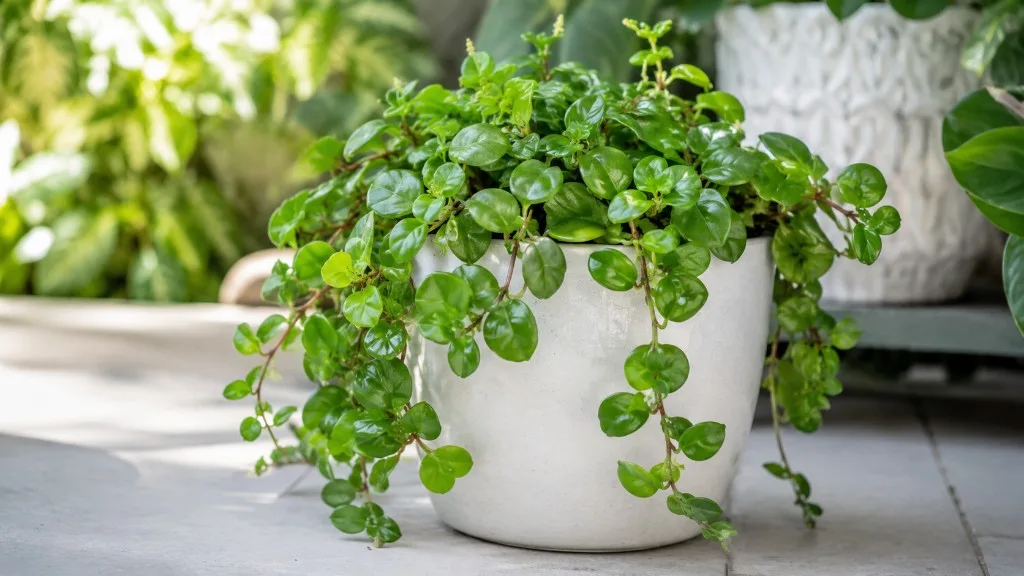
Peperomia Hope looks like it should love full sun. The round, plump, coin-shaped leaves read as semi-succulent, and the trailing stems suggest a tough little plant that can handle a bright windowsill without complaint. That appearance is misleading. Peperomia tetraphylla ‘Hope’ is a trailing tropical epiphyte in the Piperaceae family - not a desert succulent - and its fleshy foliage stores water precisely because it evolved under filtered canopy light, not harsh midday beams. Put it in unfiltered south-window sun and you will see pale halos, crispy margins, and wrinkled leaves within days. Park it in a dim hallway and it will survive longer than you expect, then slowly stretch into a wispy vine with tiny pale leaves spaced far apart on the stem.
This guide covers the full indoor light picture for Peperomia Hope: how much brightness it actually needs, which window works best, how much direct sun is safe on those coin leaves, what too much and too little light look like on the plant, when to add a grow light, and how to move the pot without scorching foliage that spent months adapting to a softer spot.
The Short Answer: How Much Light Peperomia Hope Needs
Peperomia Hope grows best in bright indirect light, with medium indirect light as an acceptable long-term alternative if you accept slower, leggier trailing growth. The Missouri Botanical Garden recommends placing Peperomia Hope overview where it receives plenty of bright, indirect light and keeping it out of direct sun, which scorches peperomia leaves. In practical indoor terms, that means on or within one to two feet of an east-facing window, on a north-facing sill in a bright room, or three to five feet back from a south or west window with a sheer curtain filtering the harshest rays. Aim for roughly 250 to 600 foot-candles at the leaf surface - the range where most peperomias maintain compact form without photodamage.
Medium indirect light - roughly 150 to 250 foot-candles, such as a shelf a few feet from a window or a bright north exposure - will keep the plant alive and slowly growing, but internodes lengthen and the trailing habit becomes sparse rather than lush. Low light below 100 foot-candles is a poor long-term setup; the plant may linger for months, then show stretched stems, smaller leaves, and increased vulnerability to overwatering because it is photosynthesizing too slowly to use moisture efficiently. If your home cannot deliver bright indirect light naturally, a full-spectrum LED grow light run 10 to 12 hours daily at 12 to 18 inches above the canopy is the reliable substitute. Judge success by firm, round new leaves on short stem segments, not by how green the room looks to your eyes.
Why Peperomia Hope Prefers Bright Indirect Light Over Direct Sun
Light is the main driver of leaf size, internode length, stem thickness, and the full trailing silhouette that makes Peperomia Hope worth displaying in a hanging basket. A plant in appropriate bright indirect light will push plump coin leaves close together along the vine, maintain a slight gloss on healthy foliage, and grow steadily without looking stretched or sun-bleached. A plant in harsh direct sun will show damage quickly because those thick leaves have a limited capacity to dissipate intense radiation and heat before tissue breaks down. A plant in dim light will drink slowly, stay wet longer, and produce the elongated, wispy growth that makes beginners think the plant needs fertilizer when it actually needs photons.
That distinction matters because Peperomia Hope is often grouped with succulents based on leaf appearance alone. Echeveria and jade plants want direct sun; Peperomia Hope does not. Its native relatives in the Peperomia tetraphylla complex grow as low creeping herbs and epiphytes in wet highland forests across tropical regions, often on fallen logs and tree bark where light is bright but filtered through canopy and humidity. The cultivar ‘Hope’ - documented by the Missouri Botanical Garden as a hybrid involving P. deppeana and P. quadrifolia traits - inherits that partial-shade preference while adding the ornamental trailing form sold in hanging baskets. Get the light wrong and you get scorched coin leaves, root stress from slow metabolism in dim corners, or both.
What the Fleshy Coin Leaves Tell You About Light Tolerance
The round leaves on Peperomia Hope are semi-succulent, not fully succulent. They store moisture to buffer short dry periods - useful for an epiphyte with a compact root system - but they lack the thick cuticle and reflective wax layer that help true succulents tolerate direct sun. The leaf surface area is relatively large for the stem diameter, which means each leaf intercepts a lot of light energy when exposed to unfiltered midday sun. Heat builds faster than the plant can cool itself through transpiration, especially on a windowsill where glass amplifies temperature.
You can use the leaves as a light meter once you know what to watch. Firm, slightly glossy, evenly green coins on short internodes mean the current exposure is working. Flat, dull, or slightly wrinkled leaves on a plant in bright sun often mean heat or light stress, not thirst - check placement before watering. Small, pale, widely spaced leaves on long thin stems mean the plant wants more brightness, not more fertilizer. The leaves tell the story faster than the tag that came with the pot.
What Bright Indirect and Medium Indirect Light Mean in Practice
“Bright indirect light” is the most overused phrase in houseplant care because human eyes adapt to indoor dimness and cannot measure photons. For Peperomia Hope, bright indirect means the plant receives strong ambient light for most of the day without direct sun beams hitting the leaves for more than a brief early-morning stretch. You should be able to read comfortably near the plant without turning on a lamp during daylight hours, and the plant should cast a soft, diffuse shadow when you hold your hand between it and the window at midday - not a sharp dark shadow, which indicates direct sun.
Medium indirect light means the plant sits farther from the glass, behind a light-filtering curtain, or on a north-facing sill where sky brightness is consistent but never intense. Growth continues, but the trailing stems elongate between leaf clusters and the overall plant looks airier. That is not a crisis for a shelf plant you like for its delicate trailing habit, but it is a step down from the full, coin-dense look you see in nursery photos shot under greenhouse brightness.
| Light level | Approximate foot-candles | What it looks like indoors | Peperomia Hope response |
|---|---|---|---|
| Bright indirect | 250–600 fc | East sill, 1–2 ft from south/west window with sheer curtain | Ideal: compact trailing form, firm coin leaves |
| Medium indirect | 150–250 fc | North sill, bright shelf 3–5 ft from window | Acceptable: slower growth, longer internodes |
| Low light | Below 150 fc | Interior room, far corner, windowless bath | Poor long-term: leggy, pale, slow, rot-prone |
How to Read Light at the Plant, Not in the Room
The most common Peperomia Hope light mistake is judging by room brightness instead of plant-facing exposure. A living room flooded with afternoon glare can still leave a plant on the opposite wall in medium or low light. A north-facing office can feel dim to you while a plant on the sill receives adequate medium indirect brightness all day. Move your hand to the leaf level and check the shadow. Rotate the pot weekly if growth thickens on one side - trailing peperomias lean toward the brightest source quickly because their stems are flexible and the root system is small enough to shift easily in the pot.
Distance drops intensity fast. A spot six feet from a south window is a different plant environment than one foot from the same window, even though both are “in the same room.” For hanging baskets, remember that the top of the basket receives more light than the lower trailing stems shaded by upper leaves. If the top coins look healthy but lower leaves yellow and drop, the basket may need lowering slightly, rotating more often, or supplementing with a grow light above the canopy.
Best Window Placement for Peperomia Hope
The best window for Peperomia Hope is the one that delivers consistent bright indirect light without harsh direct rays on the fleshy leaves. Distance matters as much as direction. Place the pot on an east sill, within one to two feet of a filtered south or west window, or directly on a bright north sill - not on a side table six feet into the room unless you are deliberately accepting medium-light growth. Rotate hanging baskets a quarter turn every week so all sides receive exposure; otherwise the vine thickens only on the window side and looks lopsided by mid-summer.
Wipe dust from the coin leaves monthly with a damp cloth. Clean foliage absorbs more usable light than dusty matte surfaces, and Peperomia Hope leaves are small enough that dust accumulation measurably dulls their light capture over time. If the pot rim or leaves feel hot to the touch at midday, pull the plant back, add a sheer curtain, or move it temporarily - heat stress on a windowsill compounds light stress on semi-succulent tissue.
East and North Windows: The Easiest Indoor Setups
An east-facing window is the default recommendation for Peperomia Hope. Morning sun is gentler and shorter than afternoon sun, and the plant receives bright indirect light from east or south-facing windows for the rest of the day as the sun tracks south. A trailing Peperomia Hope on an east sill often shows the best balance of compact internodes and firm coin leaves without daily worry about scorch. If you have a choice between east and a brighter but unfiltered west window, choose east for this plant.
A north-facing window works well for Peperomia Hope in most temperate latitudes because the light is consistent and never harsh. Growth may be slightly slower and stems slightly longer than on an east exposure, but the plant typically maintains healthy color and avoids burn entirely. North windows are especially useful for hanging baskets where the lower vines need protection from direct rays that would hit an east or west sill only part of the day but could still scorch exposed top leaves. In very dark north rooms at high latitudes, treat supplemental grow lights as necessary rather than optional.
South and West Windows: When Filtering Becomes Mandatory
A south-facing window delivers the strongest indoor light path. Peperomia Hope can live in south-facing rooms, but not on an unfiltered south sill for most of the year. Pull the plant three to five feet back from the glass, use a sheer white curtain, or place it to the side of the window frame where direct beams do not strike the leaves. The goal is to borrow the room’s brightness without exposing the coin foliage to the 1,000 to 2,500 foot-candle midday intensities that unfiltered south glass can deliver.
A west-facing window is the higher-risk option because afternoon sun is warmer and more intense than morning sun. Late-day west light can scorch Peperomia Hope leaves in a single afternoon if the plant was grown in lower nursery light and placed directly on the sill without acclimation. Filter west windows from mid-spring through early fall, or position the plant far enough back that only bright indirect light reaches the canopy. In winter, when the sun angle is lower and heat is milder, a west window with brief late-day direct exposure is sometimes tolerable for acclimated plants - but watch for bleaching the first time temperatures spike.
| Window direction | Typical light profile | Suitability for Peperomia Hope |
|---|---|---|
| East | Gentle morning direct sun, then bright indirect | Best default for compact trailing form |
| North | Consistent medium to bright indirect | Excellent; may need grow light in very dark rooms |
| West | Warm afternoon direct sun, intense in summer | Good only with filtering or distance; scorch risk high |
| South | Strong direct sun most of the day | Use only back from glass or behind sheer curtain |
Can Peperomia Hope Take Direct Sunlight?
No - not in the way succulents can. Peperomia Hope should not sit in unfiltered direct sun for extended periods, and harsh midday rays on fleshy coin leaves are the fastest route to cosmetic damage and stress. Clemson Extension and the Royal Horticultural Society both warn that direct sunlight scorches peperomia leaves, producing brown spots, bleaching, and wilting despite the succulent-like appearance. That does not mean the plant wants a dark corner. It means the plant wants brightness without beam intensity - the same distinction that separates a shaded greenhouse bench from an open desert patio.
The narrow exception is brief early-morning direct sun on an east window for a plant that has been acclimated gradually and shows no signs of bleaching. Even then, monitor closely during summer when the sun angle shifts and morning exposure lengthens. If you would not comfortably read a book in the direct beam hitting the leaves at noon, the plant should not sit there either. Never move a Hope peperomia from a dim interior shelf or low-light nursery bench directly onto an unfiltered south or west sill at midsummer. The leaves that formed in soft light cannot handle the sudden intensity, and damage appears within 24 to 72 hours.
Warning Signs Your Peperomia Hope Is Getting Too Much Sun
Too much sun on Peperomia Hope shows up as tissue damage on the window-facing leaves, not slow stretching. The most common signs include pale yellow or silvery halos around leaf margins that later turn crispy brown; bleached patches on the sun-facing side of individual coins while the shaded side stays green; wrinkled or slightly collapsed leaves during the brightest hours even when soil moisture is adequate; brown dry spots in the center of leaves that do not spread like fungal spots but stay localized to sun-exposed tissue; and sudden leaf drop on the side facing the glass after a placement change. You may also see reddish or bronze tinting on some leaves - a stress pigment response - followed by browning if exposure continues.
These symptoms are easy to confuse with underwatering because both can cause wrinkled leaves. Sun stress usually follows a placement change, a seasonal intensification when spring sun strengthens, or a curtain removal that suddenly exposed the plant. Damage is one-sided, concentrated on leaves facing the beam. Underwatering stress builds more gradually, affects leaves throughout the vine more evenly, and pairs with dry, lightweight potting mix rather than moist soil and hot glass.
How to Recover Sun-Stressed Peperomia Hope Leaves
Move the plant immediately to a spot with bright indirect light but no direct beam on damaged tissue - one to three feet back from the window, behind a sheer curtain, or to an east or north exposure temporarily. Do not compensate by overwatering; stressed leaves do not recover faster in wet soil, and Peperomia Hope’s compact roots are especially vulnerable to rot when light drops and metabolism slows. Do not fertilize until new growth looks healthy; fertilizer on a stressed root system solves nothing.
Leave partially damaged leaves in place unless they are fully brown and papery. The plant may still photosynthesize with them while pushing new growth from stem tips and nodes. Give the plant two to four weeks in stable, softer light before judging recovery. Old bleached or crispy tissue will not turn green again. Your success metric is new coin leaves: firm, round, evenly colored, and spaced at normal internode length along the trailing stems. Once new growth looks healthy, acclimate back toward your target bright window using the schedule below - slowly this time.
Warning Signs Your Peperomia Hope Needs More Light
Insufficient light is the slower, quieter failure mode for Peperomia Hope - and the more common one in apartments with few windows. The plant tolerates dim conditions longer than it tolerates scorch, which is why so many trailing peperomias linger on bookshelves looking acceptable while gradually losing density. Warning signs include long thin stems with wide spacing between coin leaves; smaller, darker new leaves compared to older growth near the crown; loss of gloss on foliage that looks flat and matte; leaning or reaching toward the nearest window or light fixture; slow or absent new growth for months, especially during spring and summer; and bare sections near the crown where older leaves dropped and no replacements formed because the plant lacked energy to push new shoots.
Low light also changes how the plant uses water. A dim Peperomia Hope transpires less, so soil stays wet longer after each watering. That wetness invites root problems, and yellow leaves from root stress can look similar to nutrient deficiency - except the plant will show no bleaching on a sun-facing side, will sit far from any window, and may have been on the same Peperomia Hope watering guide that worked fine last season near a brighter sill. If your Hope is yellowing in a dim corner with soil that never dries, fix light first, then adjust watering to match the slower metabolism.
Leggy etiolation means the plant is stretching because brightness is below what it needs for compact trailing form. Recovery requires more usable light, not just rotating the pot in the same dim room. Move to the brightest indirect window, add a grow light above the hanging basket, or both - then trim the longest bare stems back to a healthy node once light improves. Those cuttings root easily in bright indirect light and can fill in sparse baskets.
How Light Changes Watering, Growth, and Trailing Form
Every light change changes how fast your Peperomia Hope drinks. A plant in strong bright indirect light on an east sill transpires actively and may need water every 10 to 14 days in a warm room during the growing season, always confirming that the top of the mix is dry and the pot feels lighter before soaking. The same plant moved to a dim interior shelf might need water every three to four weeks - or less - because it is photosynthesizing and losing moisture more slowly. Water on soil dryness and plant metabolism, not on a calendar that worked last month in a different spot.
Bright light also supports the trailing form that defines this cultivar. Short internodes and plump coin leaves along the full length of the vine require enough brightness for the plant to generate energy at every node. In medium or low light, the plant prioritizes stem extension to search for photons, producing the thin wispy look that beginners often misread as a watering or humidity problem. Pinching leggy tips after improving light encourages branching, but pinching without more light only produces smaller leaves on the same stretched stems.
Growth speed follows the same logic. In bright spring and summer light, Peperomia Hope can push visible new leaves every week or two on a healthy vine. In low winter light, growth slows sharply - and that is normal. Do not fertilize aggressively or water heavily to “wake up” a winter plant in a dim spot; give it the best light you can, reduce water slightly, and wait for longer days to do the rest. A grow light on a timer prevents the winter etiolation that makes plants look tired by February.
Grow Lights for Peperomia Hope: Setup, Duration, and Distance
When natural light is insufficient - north rooms that stay dim even at midday, interior offices, short winter days, or apartments blocked by neighboring buildings - a full-spectrum LED grow light is the most reliable fix. Peperomia Hope needs more intensity than a decorative warm-white desk lamp provides, but far less output than a flowering tropical like bird of paradise. A modest 15-to-30-watt full-spectrum LED panel or bar light designed for houseplants is usually sufficient for a single hanging basket or shelf plant.
Start with 10 to 12 hours of light daily on a timer. Place the fixture 12 to 18 inches (30 to 45 cm) above the top of the tallest stem or the rim of the hanging basket. Closer placement increases intensity but also heat; if leaves nearest the bulb look pale, tight, or slightly crisp at the edges, raise the fixture a few inches. Farther placement reduces intensity - if internodes stretch toward the bulb, lower it slightly or extend daily duration by an hour rather than pushing the plant against the heat source.
Choose a full-spectrum LED in the 4000K to 6500K range. Combine artificial light with the brightest natural window you have when possible; the mix produces the most natural-looking growth. A working setup produces new coin leaves matching older growth in size and spacing within four to six weeks. Grow lights are especially valuable for hanging baskets where lower vines shade themselves and the top of the plant would otherwise be the only section receiving adequate brightness.
Peperomia Hope vs. Other Peperomias: Light Differences
Not all peperomias share the same light appetite, and treating them as interchangeable leads to scorched Peperomia caperata or leggy Peperomia obtusifolia. Peperomia Hope sits in the middle of the family range: it wants brighter indirect light than obtusifolia to maintain its compact trailing form, but it is less tolerant of direct sun than some thicker-leaved species because its coin leaves are fleshy without being heavily waxed. Peperomia argyreia (Watermelon Peperomia) has similar bright-indirect needs and similar scorch risk on patterned leaves. Peperomia rosso and other red-underside cultivars also demand bright filtered light for color intensity.
If you already grow Baby Rubber Plant (P. obtusifolia) successfully in medium light, do not assume Hope will look equally full there. Hope’s trailing habit makes legginess more visible, and its smaller leaves show spacing problems faster. Conversely, if you grow succulents on a south sill, do not place Hope in the same unfiltered spot. The practical rule: match Hope with east windows, filtered bright shelves, or grow lights - not with open south-sill succulent culture.
Seasonal Light Shifts and Hanging-Basket Placement
Window light is not static. The same east sill that delivers gentle morning sun in December can deliver longer, warmer beams by June as the solar angle rises. Peperomia Hope on hanging hooks near windows needs seasonal adjustment more often than upright floor plants because baskets sit closer to the glass and cannot be pulled back as easily without remounting the hook. Check trailing plants at the spring and fall equinox and at the start of summer: if direct beams now hit leaves that were in indirect light all winter, add a sheer curtain or lower the basket six to twelve inches.
Hanging baskets introduce a second variable: self-shading. Upper leaves intercept light that lower vines never receive. Rotate the basket weekly and consider a small grow light above the planter if the lower third of the vine becomes sparse while the top stays full. Avoid dense decorative baskets that block airflow and light from the sides; open wire or macramé hangers allow more ambient brightness to reach the full circumference of the plant. Pair light awareness with drainage discipline - a bright, correctly watered Hope in an open hanger is a different plant than a dim, overwatered one in a closed moss basket where wet soil and low light compound.
How to Move Peperomia Hope Without Scorch or Leaf Drop
Peperomia Hope reacts badly to sudden light increases - especially moves from dim interiors or shaded nursery benches into unfiltered south or west windows. You may see leaf curl, bleaching, or drop within days even when the new spot is technically correct long term. The fix is gradual acclimation: increase brightness in small steps over seven to fourteen days so existing leaves adjust before exposure peaks. Sudden moves to lower light cause less immediate cosmetic damage but produce stretched growth over the following month; still avoid whiplash changes when possible.
When moving to brighter light, start by placing the plant in the new room but farther from the window than your final position, or filter the window with a sheer curtain. After four to five days with no bleaching or wrinkling, move it closer or remove one layer of filtering. When moving a hanging basket, adjust the hook height in six-inch increments rather than jumping from a dim corner to full sill exposure. Make one change at a time. Do not simultaneously repot, fertilize, and move to a new window. Peperomia Hope already stalls when stressed; stacking changes makes it impossible to know which variable caused the reaction. Wait at least two weeks after a light move before adjusting watering frequency or pot size.
A Simple 7–14 Day Acclimation Schedule
For a plant moving from medium indoor light to a bright east sill or a filtered south window, use this schedule. Slow down if you see bleaching - hold the current step for extra days rather than pushing through damage.
Days 1–4: Place the plant in the new room at double your intended final distance from the window, or behind a sheer curtain. Water normally based on soil dryness. Watch for pale halos, midday wrinkling, or sudden leaf drop on the window-facing side.
Days 5–9: Move halfway to the final position, or remove one curtain layer. Rotate the pot or basket a quarter turn daily if light is strongly directional.
Days 10–14: Move to the final placement on the sill or at the intended hanging height. Keep monitoring new growth for three more weeks before treating the move as complete.
If leaves bleach during acclimation, hold at the current step for several extra days rather than advancing. Firm new coin leaves along the trailing stems are the green light to continue. Ongoing bleaching with no healthy new growth means the target spot may still be too intense at peak hours - filter midday sun while keeping morning and late-afternoon brightness.
Conclusion
Peperomia Hope light needs come down to one practical target: bright indirect light at the plant itself, with medium indirect light as a workable fallback and harsh direct sun off the fleshy coin leaves. An east-facing sill, a bright north window, or a filtered spot a few feet back from south or west glass gives you the compact trailing form and firm round leaves that make this cultivar worth the shelf space. Low-light corners and interior rooms are survival placements, not thriving ones - and unfiltered south sills are burn placements, not “bright indirect” shortcuts.
Read the plant, not the room. Firm, glossy coin leaves on short internodes mean the placement works. Bleaching, one-sided crispy margins, and midday wrinkling after a move mean too much sun too fast. Long thin vines, small pale leaves, and bare crown sections mean too little. Change exposure gradually, adjust watering when light changes, and judge success by new leaves along the trailing stems - not by whether old scorched tissue greens up again, because it usually will not. Get the window right and the rest of Peperomia Hope care - watering, soil, and propagation - becomes simpler; get it wrong and no amount of fertilizer or Peperomia Hope repotting guide will give you the full, coin-dense basket you saw at the nursery.
When to use this page vs other Peperomia Hope guides
- Peperomia Hope overview - Start here for whole-plant context before deep-diving this topic.
- Peperomia Hope problems hub - Jump to symptom-specific fix guides when this care topic does not resolve the issue.
- Leggy Growth on Peperomia Hope - Escalate here when light adjustments are not enough.
Related Peperomia Hope guides
- Peperomia Hope overview
- Peperomia Hope watering
- Peperomia Hope soil
- Peperomia Hope propagation
- Peperomia Hope fertilizer
- Peperomia Hope repotting
- Leggy Growth on Peperomia Hope
- Peperomia Hope problems
Related tool
Try the Plant Problem Diagnosis Tool with peperomia-hope pre-selected to estimate needs for your setup.