Root Rot on Peperomia Hope: Causes, Checks & Fixes
Quick answer
If your Peperomia Hope is wilting in wet soil, stop watering first. Unpot, trim all mushy roots and soft stem bases, repot into airy mix in a smaller pot, and restart watering only after the top half of the mix dries.
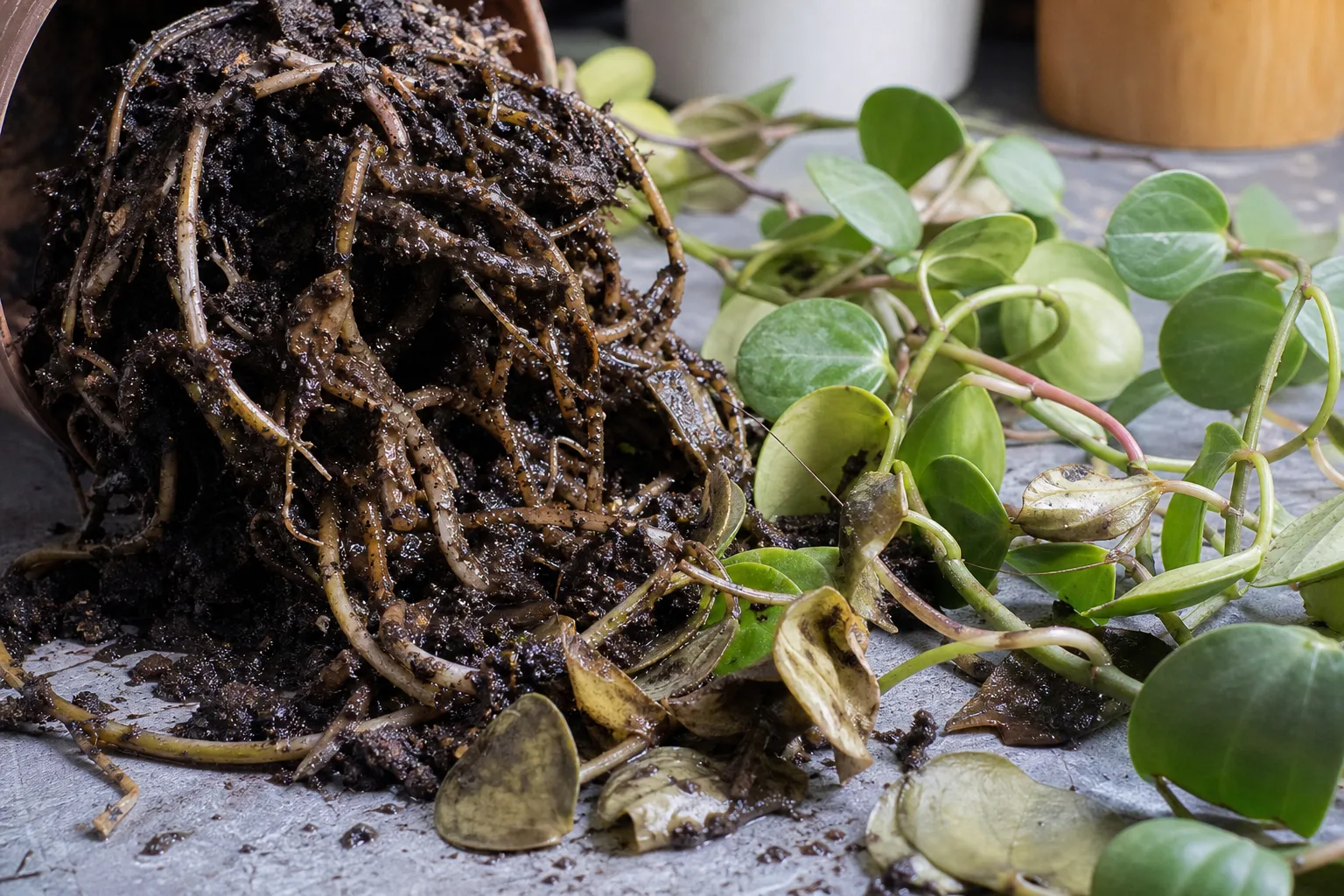
Root Rot on Peperomia Hope: Causes, Checks & Fixes
This guide covers root rot on Peperomia Hope. See also the general Root Rot guide, watering, and light pages for this plant.
Root Rot on Peperomia Hope: Causes, Checks & Fixes
Quick answer
Root rot on Peperomia Hope is usually a moisture-management failure, not a mystery disease. This trailing hybrid has succulent leaves and stems on vines, but roots that fail quickly in stagnant media (Missouri Botanical Garden). If your plant droops while the pot is still heavy and wet, treat that as a rot warning first, not a thirst signal. Your first move is to stop watering, inspect roots and crown, and remove all mushy tissue before you repot.
Root rot vs thirst wilt on Peperomia Hope
Peperomia Hope often confuses growers because rot and dehydration can both look like limp vines. The difference is the moisture state of the root zone and stem base.
- Likely root rot: limp plant in wet soil, sour smell, yellowing near the crown, soft stem bases, dark mushy roots.
- Likely thirst stress: lighter pot, dry top half of mix, wrinkling leaves, firm stem bases, roots not black or mushy.
RHS and extension guidance both emphasize that peperomias are highly prone to root decline if kept too wet, especially when pots stay waterlogged or sit in runoff (RHS, Clemson HGIC).
What root rot looks like on Peperomia Hope overview
On Peperomia Hope, decline often starts at the crown and stem bases before all trailing tips look bad. That pattern catches people off guard because some vines still look plump while the center is already failing.
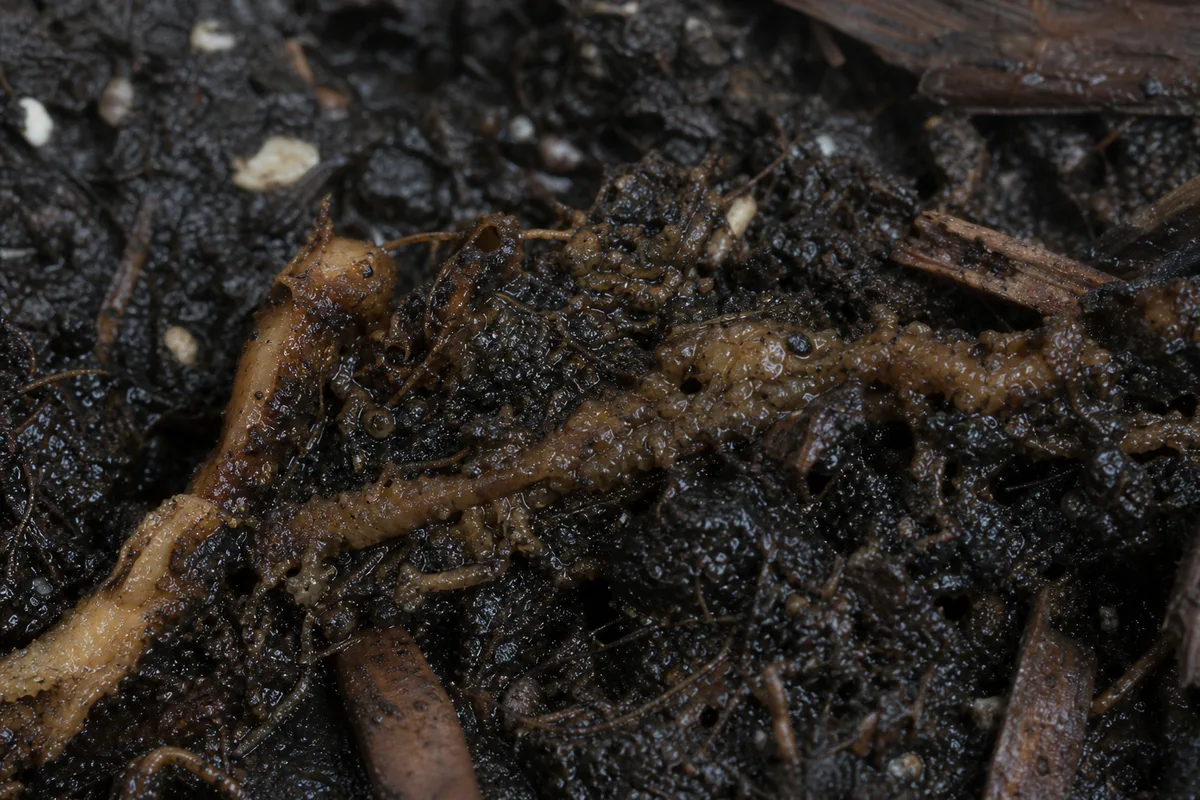
Root Rot symptoms on Peperomia Hope - compare with healthy tissue on the same plant.
Common progression:
- Crown leaves dull or yellow while pot still feels heavy.
- Stem bases at soil line soften.
- Soil smells sour or swampy.
- Roots become brown to black and soft, not firm and pale.
- Whole vine sections collapse from the crown outward.
University and extension references describe this same root/crown pattern: wilting despite adequate moisture, blackened or mushy roots, and soft lower stem tissue in advanced cases (University of Maryland Extension, Wisconsin Horticulture).
Why Peperomia Hope gets root rot
This is not just “too much water once.” It is usually repeated oxygen deprivation in a small root system.
1) Pot stays wet too long
RHS recommends only slightly upsizing pots because oversized containers hold excess wet media that roots cannot use quickly (RHS). In hanging baskets, this is a common failure point: lots of substrate, modest root mass.
2) Mix is too dense for Hope’s root architecture
Missouri Botanical Garden specifically recommends adding orchid bark, coir, or extra perlite for drainage in this cultivar (Missouri Botanical Garden). Dense compacted mixes trap water around the crown.
3) Watering cadence ignores seasonal slowdown
Both RHS and Missouri Botanical Garden advise reducing watering in cooler, lower-light periods (RHS, Missouri Botanical Garden). Reusing summer frequency in winter is a frequent trigger.
4) Standing water in saucers or cachepots
Clemson notes that after watering, the pot should drain before returning to the saucer, and plants should dry between waterings (Clemson HGIC). Hidden standing water is enough to restart rot.
How to confirm the diagnosis before you cut
Use this quick check order so you do not perform unnecessary root surgery.
- Lift the pot: heavy and cool mix plus wilt points toward excess water.
- Smell the media: sour odor supports active decay.
- Press stem bases at the crown: soft tissue is a high-urgency sign.
- Unpot and inspect roots: healthy roots are firm and pale; rotted roots are dark and mushy.
If all four signs appear together, proceed with immediate rescue. If roots are still firm and only the top layer is damp, correct watering and airflow first, then reassess after dry-down.
First fix to try (in order)
Do one clear first intervention: remove the plant from wet media and eliminate rotted tissue.
- Stop watering immediately.
- Unpot carefully and remove old wet mix.
- Sterilize snips, then cut all mushy black/brown roots to firm tissue.
- Remove any stem sections that are soft at the base.
- Repot into fresh airy mix in the smallest pot that fits remaining roots.
- Keep in Peperomia Hope light guide with airflow.
- Delay rewatering until the top half of mix is dry.
Extension guidance supports this sanitation + repot workflow, including clean media and clean tools to reduce reinfection pressure (University of Maryland Extension, Wisconsin Horticulture).
Recovery timeline and what progress looks like
Most recoverable Peperomia Hope plants follow this cadence:
- Days 1-7: no more collapse; crown remains firm; no new sour smell.
- Weeks 2-4: leaf droop stabilizes; stem firmness improves.
- Weeks 4-8: new growth appears at tips or nodes if enough root function returned.
Damaged yellow leaves usually do not revert to healthy green. Judge success by stopped spread and new growth, not by cosmetic recovery of old tissue.
If the crown turns fully mushy even after Peperomia Hope repotting guide, assume the base plant is unsalvageable and shift to stem propagation from healthy segments.
What not to do during rescue
- Do not water again just because leaves look limp while mix is still moist.
- Do not fertilize a stressed, recently trimmed root system.
- Do not repot into a larger “recovery pot.”
- Do not leave runoff in saucers or decorative outer pots.
- Do not keep obviously rotten media “to avoid shock.”
These mistakes are why mild rot often escalates into crown failure.
How to prevent root rot next time
Build your routine around air in the root zone, not calendar watering.
- Use a well-draining mix and keep the pot slightly snug for the root ball (RHS).
- Let the top half of the mix dry before each watering.
- Water thoroughly, then empty saucer and cachepot.
- Reduce frequency in winter and low light periods (Missouri Botanical Garden).
- Recheck your setup if you repeatedly see fungus gnats, moldy soil, or persistent heavy-pot conditions.
For prevention context, see the species watering workflow in peperomia-hope-watering.md, plus substrate and container setup in peperomia-hope-soil.md and peperomia-hope-repotting.md.
Peperomia species are generally listed as non-toxic to cats and dogs by ASPCA, which is useful when placing recovering plants in shared homes (ASPCA).
When to use this page vs other Peperomia Hope guides
- Peperomia Hope watering guide - Use for routine moisture checks before assuming root rot is the main issue.
- Peperomia Hope problems hub - Browse all 7 common issues on this species.
- Yellow Leaves on Peperomia Hope - Different entry point when symptoms overlap with root rot.