Yellow Leaves on Peperomia Hope: Causes, Checks & Fixes
Quick answer
Yellow leaves on Peperomia Hope usually mean root-zone stress from staying wet too long, then made worse by low light. First check pot weight and stem-base firmness before watering again.
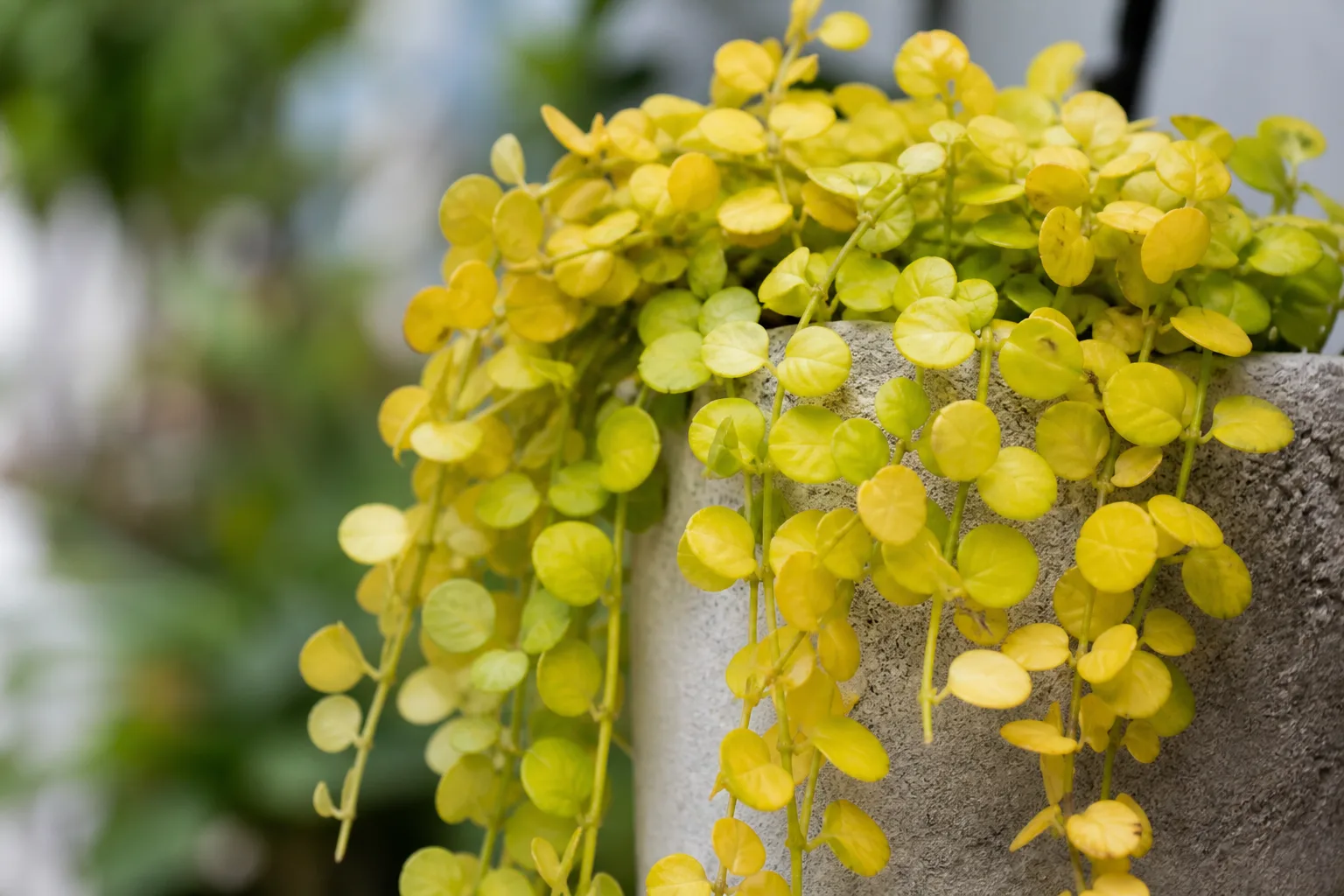
Yellow Leaves on Peperomia Hope: Causes, Checks & Fixes
This guide covers yellow leaves on Peperomia Hope. See also the general Yellow Leaves guide, watering, and light pages for this plant.
Yellow Leaves on Peperomia Hope: Causes, Checks & Fixes
Quick answer
Yellow leaves on Peperomia Hope are usually a moisture-management problem, not a fertilizer emergency. This trailing hybrid with fleshy round leaves can look fine at the tips while the crown declines. On peperomias, roots kept too wet are prone to rot, causing yellowing and leaf drop. First fix: pause watering and confirm whether the root zone is wet or dry before you do anything else.
What yellow leaves look like on Peperomia Hope
Yellowing on Hope does not always look the same, and pattern matters more than color alone.
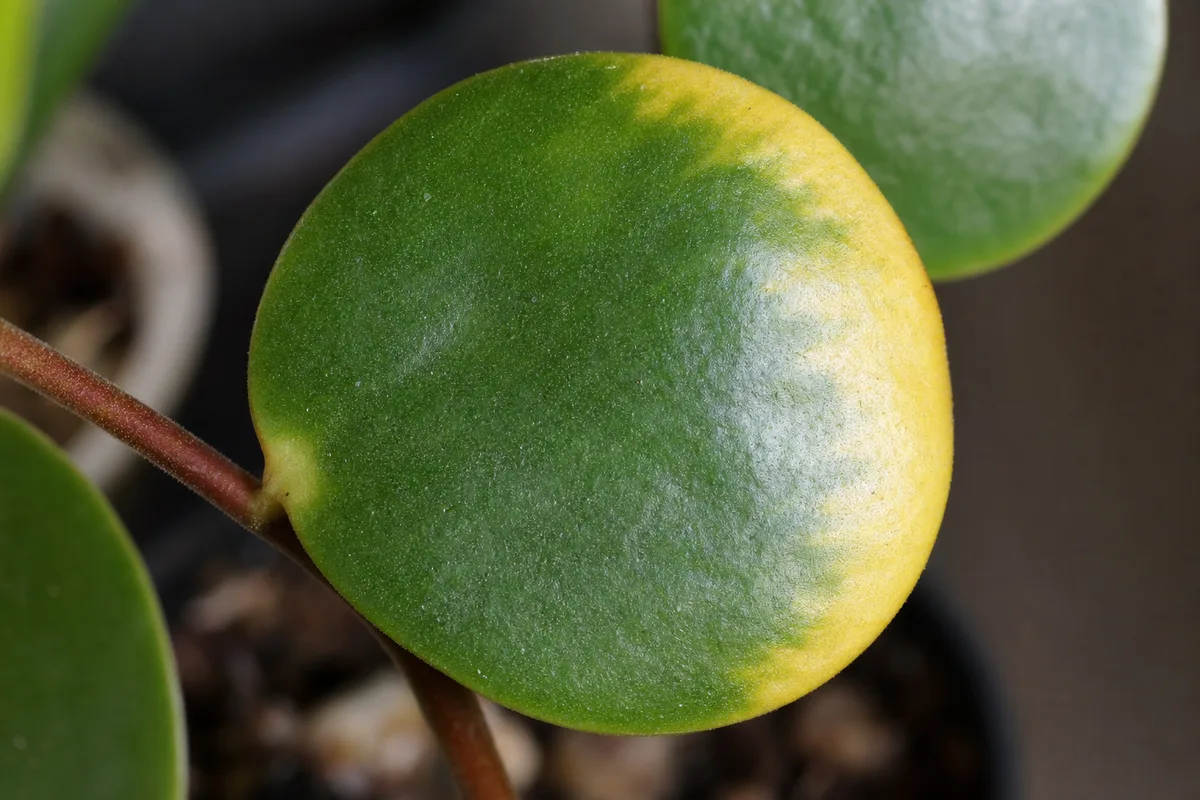
Yellow Leaves symptoms on Peperomia Hope - compare with healthy tissue on the same plant.
Overwatering pattern (most common)
Yellowing often begins on older leaves near the crown while the outer trailing tips still look decent. The pot feels heavy for days, soil stays cool and damp at depth, and stem bases can feel soft. This matches classic excess-moisture stress where too much water reduces oxygen in potting media and damages fine roots.
Underwatering pattern
Yellow leaves from drought are usually accompanied by thin or slightly wrinkled leaf texture, especially on round mature leaves. The container feels very light, and the mix may pull away from the pot wall. A thorough drink improves turgor quickly, but fully yellow leaves still fall.
Low-light pale yellowing
In dim rooms, growth slows and the same watering habit suddenly becomes too frequent. Leaves may shift from green to pale yellow-green with smaller new growth and longer internodes. Extension guidance notes that low light can contribute to yellowing and poor growth in houseplants.
Natural lower-leaf aging
A few older leaves yellowing and dropping over time can be normal, especially on long trailing vines. Normal aging is slow and limited. If many leaves yellow at once, or yellowing climbs quickly up the vine, treat it as stress.
Why Peperomia Hope gets yellow leaves
Peperomia Hope has semi-succulent leaves but a relatively compact root system. That combination makes it tolerant of a missed watering but sensitive to stale wet soil.
Wet soil and oversized pots
Hope is often grown in hanging baskets where pot volume exceeds root volume. Big containers dry slowly, so roots sit in moisture too long. Missouri Botanical Garden culture notes advise allowing the medium to almost dry between waterings and using extra drainage amendments for this cultivar (MOBOT Plant Finder).
Dim light slows water use
RHS and extension guidance align here: lower light means slower growth and slower dry-down, so previously safe watering frequency can become chronic overwatering (RHS peperomia guide).
Watering by schedule instead of by dryness
Calendar watering is a frequent failure point. UMD recommends checking the medium and pot weight because watering needs vary by medium, pot type, humidity, and temperature (UMD overwatered indoor plants).
Secondary contributors
Cold drafts, exhausted compacted mix, and root-bound plants can all worsen yellowing response, but they usually become serious only when moisture management is already off.
How to confirm the cause
Work through this sequence before changing care:
- Lift the pot: heavy suggests wet stress; very light suggests drought.
- Probe 5-7 cm deep: damp at depth after several days means dry-down is too slow.
- Check crown firmness: soft bases with wet mix indicate rot risk.
- Inspect roots if uncertain: healthy roots are pale and firm; soft brown or black roots indicate rot.
- Review recent changes: moved farther from light, switched pots, or seasonal light drop often explains sudden yellowing.
If wet soil, sour smell, and soft stem bases appear together, treat as urgent root-zone failure.
The first fix to try
Stop watering until you confirm moisture status. This single move prevents the most common mistake: adding more water to roots that are already oxygen-starved.
If soil is wet:
- Move to brighter indirect light.
- Improve airflow around the pot.
- Empty all saucers/cachepots immediately.
If soil is truly dry:
- Water thoroughly once, then drain completely.
- Resume watering only after most of the mix dries again.
Do not fertilize as a first response to yellowing unless you have ruled out moisture and light causes.
Step-by-step recovery
Recovery path for wet yellowing
- Pause watering fully.
- Let top and mid-zone dry.
- If decline continues, unpot and trim mushy roots.
- Repot into fast-draining mix in a pot sized to roots, not vine length.
- Wait about one week before cautious rewatering.
Recovery path for dry yellowing
- Deeply rehydrate once.
- Recheck leaf firmness within 24 hours.
- If mix stayed hydrophobic, bottom soak 20-30 minutes, then drain.
- Return to dry-down-based watering, not a fixed schedule.
If crown tissue is failing
When crown stems are collapsing, prioritize salvage. Keep only firm tissue and propagate healthy cuttings while you stabilize the parent plant.
Recovery timeline
Dry-stress plants usually stop worsening within a few days after proper rehydration. Wet-stress recovery takes longer because roots need time to regrow. Mild cases can stabilize in 1-2 weeks; more severe root loss can take 4-8 weeks before strong new growth appears.
Judge progress by:
- no new yellow leaves at the crown,
- stable, firm stem bases,
- and fresh, firm leaves along active vines.
Old yellow leaves will not return to green.
Lookalike symptoms to rule out
Yellow leaves vs drooping leaves
Drooping with heavy wet soil strongly suggests root dysfunction. Use the same diagnostic flow as this guide and compare with /plants/peperomia-hope/drooping-leaves/.
Yellow leaves vs wilting
Wilting can happen from both drought and rot. Soil status plus stem-base firmness separates them. See /plants/peperomia-hope/wilting/ for the full split.
Yellow leaves vs root rot on Peperomia Hope
Root rot is not a separate color symptom; it is often the mechanism behind wet yellowing. If roots are black and mushy, follow /plants/peperomia-hope/root-rot/ after immediate stabilization.
Mistakes to avoid
- Watering again because leaves look tired without checking pot weight.
- Upsizing pots to match vine length rather than root mass.
- Leaving nursery pots sitting in collected runoff water.
- Fertilizing yellowing plants before moisture/light causes are corrected.
- Assuming all yellow leaves are nutrient deficiency on this semi-succulent plant.
How to prevent yellow leaves next time
Use Peperomia Hope light guide and a quick-draining mix. For peperomias, allow compost to dry partially between waterings and reduce watering in slower-growth periods (MOBOT Plant Finder). UMD also recommends using pot weight and depth checks rather than routine calendar watering (UMD overwatered indoor plants).
For the Hope cluster, keep these pages in your care workflow:
/plants/peperomia-hope/peperomia-hope-watering//plants/peperomia-hope/overwatering//plants/peperomia-hope/underwatering//plants/peperomia-hope/root-rot//plants/peperomia-hope/drooping-leaves//plants/peperomia-hope/peperomia-hope-[Peperomia Hope overview](/plants/peperomia-hope/)/
When to worry
Escalate fast when yellowing spreads over days (not weeks), the pot smells sour, roots are dark and mushy, or stem bases collapse. At that point you are treating active root failure, not simple cosmetic leaf loss.
Peperomia is listed as non-toxic to cats and dogs, but stress handling can still break brittle vines, so inspect and repot gently.
When to use this page vs other Peperomia Hope guides
- Peperomia Hope watering guide - Use for routine moisture checks before assuming yellow leaves is the main issue.
- Peperomia Hope problems hub - Browse all 7 common issues on this species.
- Root Rot on Peperomia Hope - Different entry point when symptoms overlap with yellow leaves.