How to Prune Peperomia Hope: When, Where & What to Cut
How to Prune Peperomia Hope: When, Where & What to Cut
How to Prune Peperomia Hope: When, Where & What to Cut
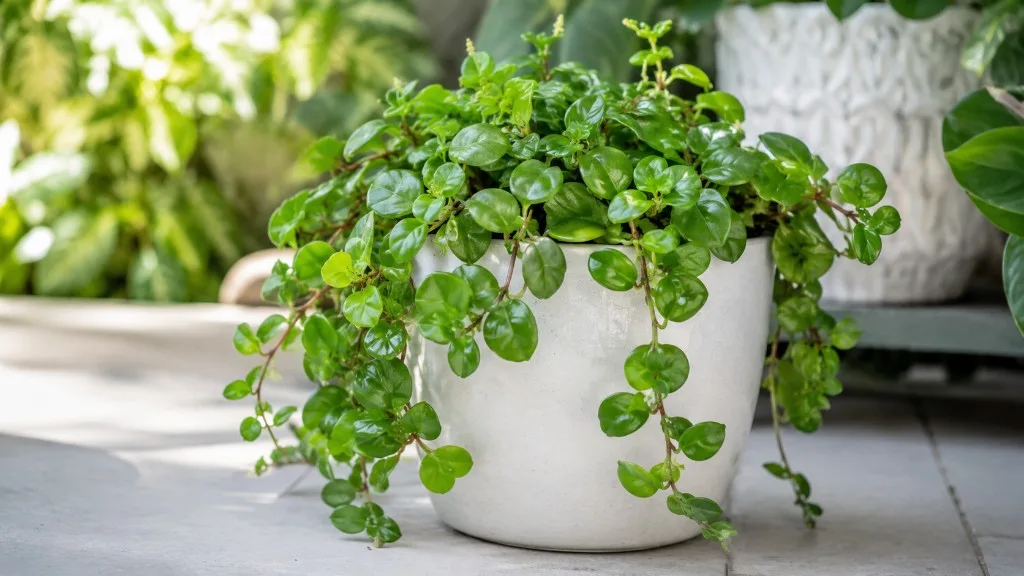
Peperomia Hope looks best as a tight cascade of round, coin-like leaves - not a few long bare strings with foliage only at the ends. Peperomia Hope pruning works on nodes along semi-succulent trailing stems: removing damaged growth, cutting leggy vines above whorled leaf points, and rooting the trimmings back into the same pot for instant fullness. Peperomia tetraphylla ‘Hope’ stores water in thick leaves and runs on a small root system, so cut placement and pot size matter as much as the scissors you use.
Quick Answer
First, remove any yellow, mushy, or broken stems at the base with clean snips - that is the only cut you should make on a stressed plant until you know why the tissue failed. Once leaves are firm and soil has dried appropriately, cut long bare trailers 5–10 mm above a node (where round leaves attach in whorls). Limit shaping to one-third of stems per session. Pinch soft new tips during active growth for light maintenance. Root healthy cuttings in water or moist perlite and tuck them around the parent crown to fill sparse baskets.
What Pruning Does for Peperomia Hope
Hope is a trailing hybrid - often described as a cross between Peperomia deppeana and Peperomia quadrifolia - with round leaves clustered at nodes along fleshy stems. NC State Extension lists Peperomia tetraphylla as a trailing, succulent-like species with small round green leaves. Without periodic trimming, stems stretch toward light and leave bare sections near the crown.
Cutting or pinching above a node breaks apical dominance - the hormone-driven preference for tip growth - and encourages side shoots from the node below your cut. Clemson HGIC recommends pruning a stem above a leaf node to make peperomias look fuller. On Hope, combining node cuts with rooted cuttings planted at the pot edge is faster than waiting for a single vine to branch on its own.
Pruning also removes wrinkled leaves from drought stress, yellow foliage from overwatering, and broken stems from rough handling. It cannot fix chronic root rot on Peperomia Hope or an oversized wet pot - those need care corrections before aggressive shaping.
What to Check Before You Cut
Walk through this inspection before any shaping session:
- Leaf firmness. Round leaves should feel plump, not paper-thin or deeply wrinkled along the whole plant. Widespread wrinkling often signals root stress - check whether the pot is too large or soil stays wet too long before cutting heavily.
- Crown condition. Look where stems meet the soil. Soft, dark, or collapsed tissue at the crown means rot - remove affected stems only and fix drainage before further pruning.
- Soil moisture. Hope is semi-succulent; Clemson HGIC notes peperomias prefer to dry out between waterings. Avoid a major trim session while the mix is saturated, especially in dense decorative basket liners that trap moisture.
- Light exposure. One-sided thick growth toward a window and bare back-side stems usually mean uneven light, not a pruning failure. Rotate the basket weekly so all sides receive Peperomia Hope light guide.
- Stem integrity. Hope snaps easily at the crown if tugged. Support each stem with your free hand when cutting.
The First Cut to Make
Remove only dead, damaged, or diseased material first - yellow leaves, mushy stems, and snapped sections cut cleanly at the base or back to the nearest healthy node. Do not pinch tips or shorten long trailers until you have cleared this material and confirmed the remaining stems are firm.
If more than a third of the plant looks damaged, stop after cleanup. Fix Peperomia Hope watering guide, pot size, or light before any fullness pruning. Stacking heavy cuts on a plant with failing roots invites crown rot in hanging baskets.
When to Prune Peperomia Hope
Maintenance pinching - removing the top one to two leaf whorls from soft new growth - works any time the plant is actively growing, typically spring through early fall indoors.
Structural cutbacks on long bare trailers fit late spring through early summer, when warm temperatures and longer days support new branching. NC State Extension describes peperomias as slow-growing houseplants that propagate readily from stem cuttings during active growth.
Emergency removal of yellow or mushy stems is appropriate any season - treat it as triage, not shaping.
Light pinching every few weeks during growth keeps a dense basket with less renovation later.
When Not to Prune
Delay heavy shaping when:
- The plant was repotted within the last two to three weeks
- Soil is still wet from a recent soak and the basket liner holds moisture
- Widespread leaf wrinkling suggests root stress - diagnose pot size and watering first
- The room is below about 18°C (65°F) and growth has stalled
A few yellow leaves from old age can be snipped individually without counting toward a major pruning session.
Where to Cut on Trailing Stems
Hope bears round leaves in whorls at nodes along semi-succulent stems. The space between nodes is the internode - cutting here leaves a stub with no buds and no recovery path.
Make your cut 5–10 mm above a node at a slight angle with sharp floral snips or scissors. For a long bare trailer, cut back to a node roughly two-thirds of the way toward the pot, leaving at least one healthy whorl on the remaining section when possible.
Pinching vs. Stem Cuts
Pinch soft new tips with fingernails during the growing season when you want light, frequent maintenance - ideal for stems that still have leaves along their length but are getting leggy at the tip.
Stem cuts suit bare trailers with long internodes and no side shoots. A clean cut above a node on a bare section forces branching from that node within a few weeks in good light.
What Not to Cut
- Mid-internode. No buds exist between nodes; the stub will brown and die back.
- The crown center on a multi-stem plant - never cut all stems flush at soil level unless propagating divisions from a healthy parent.
- Firm healthy whorls on a stressed plant you have not yet diagnosed - preserve photosynthetic tissue until roots recover.
How to Prune Peperomia Hope Step by Step
- Inspect crown, drainage, and leaf firmness. Confirm the pot is not dramatically oversized for the root mass.
- Sterilize snips with rubbing alcohol.
- Remove yellow, mushy, or broken stems first - the triage cut.
- Cut the longest bare trailers above nodes around the pot perimeter, working evenly so the basket stays balanced.
- Pinch active tips on dense sections if they are stretching toward light.
- Set aside healthy cuttings with at least one node and one leaf for propagation.
- Root cuttings in water or bury nodes in moist perlite at the pot edge.
- Wait to water until soil has dried fully from the pre-pruning state - Hope rots easily when foliage is reduced and soil stays wet.
Support each stem when cutting. A sudden tug can snap Hope at the crown.
How Much You Can Safely Remove
Follow the one-third rule: remove no more than one-third of total stems or visible foliage in one session. Hope’s root system is small relative to its trailing top growth, and NC State Extension notes many species will not need frequent Peperomia Hope repotting guide - a sign of modest root volume.
An overpotted plant in a wet hanging basket loses the crown quickly when stripped aggressively. If your basket is mostly bare strings, plan a staged renovation across two or three sessions spaced four to six weeks apart, rooting cuttings into the pot between sessions.
Dead or mushy material removed during triage does not count toward the one-third limit.
Using Pruning Cuttings for a Fuller Basket
Every healthy trim is propagation material. Clemson HGIC describes stem cuttings three to five inches long with lower leaves removed, inserted into potting mix or water under bright indirect light.
For Hope specifically:
- Choose sections with at least one node and one firm leaf.
- Remove lower leaves that would sit in water or bury in soil.
- Root in water in three to four weeks, or in moist perlite with a humidity cover.
- Plant rooted cuttings around the parent crown at the pot edge, not stacked on top of existing stems.
This “chop and prop” approach fills bare crown sections faster than waiting for lateral branching alone - a practical reason to prune and propagate in the same session.
Aftercare and Recovery
Place the basket in bright indirect light after pruning. New whorls typically emerge from nodes within two to four weeks during active growth. Growth slows in cooler or dimmer conditions - allow more time before assuming the cut failed.
Watering: Let soil dry completely between waterings. Hope’s semi-succulent leaves store moisture; reduced foliage means less water uptake. An oversized decorative basket that hides wet soil is a common post-pruning failure point.
Humidity: Average household levels (40–50%) suffice. Do not mist heavily onto cut stems - damp crowns in dense liners invite rot.
Fertilizer: Skip feeding for two to three weeks after a major trim. Resume light half-strength fertilizer only when new growth is visible.
Signs pruning worked: Fresh whorls at cut nodes, shorter internodes on new tips, and firmer leaf texture once watering stabilizes.
Signs pruning was too much or badly timed: Continued yellowing, soft crown tissue, or stems collapsing at the soil line - reduce watering, check pot size, and pause further cuts.
The ASPCA lists the Peperomia genus as non-toxic to cats and dogs, so grooming Peperomia Hope in pet-accessible hanging locations is safe - still dispose of trimmings if your pets chew plants.
Mistakes to Avoid
- Letting one long vine run without pinching. The classic sparse basket - foliage only at the tip while the crown goes bare.
- Cutting with dull tools. Crushed semi-succulent stems rot at the crown in moist baskets.
- Heavy prune in a wet oversized pot. Root rot follows when foliage is stripped and soil stays saturated.
- Ignoring bare crown until renovation is major. Early pinching on young plants prevents empty centers.
- Snapping stems during handling. Always support the stem below your cut.
- Pruning without improving light. Leggy growth returns if the basket stays in dim corners - move to brighter indirect light when you trim.
Keeping Hope Dense Between Pruning Sessions
Rotate the basket weekly for even light. Pinch soft tips every few weeks during spring and summer rather than waiting for long bare trailers. Keep the plant slightly tight in its pot - do not upsize just because vines lengthen. When a stem reaches the desired length, pinch the tip above the top node to hold the shape.
A five-minute pinching pass every month beats a hard renovation twice a year. That rhythm matches how Hope actually grows: slow, trailing, and responsive to node-level cuts when light and watering are already right.
When to use this page vs other Peperomia Hope guides
- Peperomia Hope overview - Start here for whole-plant context before deep-diving this topic.
- Peperomia Hope problems hub - Jump to symptom-specific fix guides when this care topic does not resolve the issue.
- Leggy Growth on Peperomia Hope - Escalate here when pruning adjustments are not enough.
- Plant Leaning on Peperomia Hope - Escalate here when pruning adjustments are not enough.
- Slow Growth on Peperomia Hope - Escalate here when pruning adjustments are not enough.