Slow Growth on Peperomia Hope: Causes, Checks & Fixes
Quick answer
Slow growth on Peperomia Hope is usually insufficient bright indirect light, temperatures below about 18 °C (65 °F), or an oversized pot that stays wet-not a disease. Move the plant to brighter filtered light and confirm the root zone dries between waterings before changing anything else.
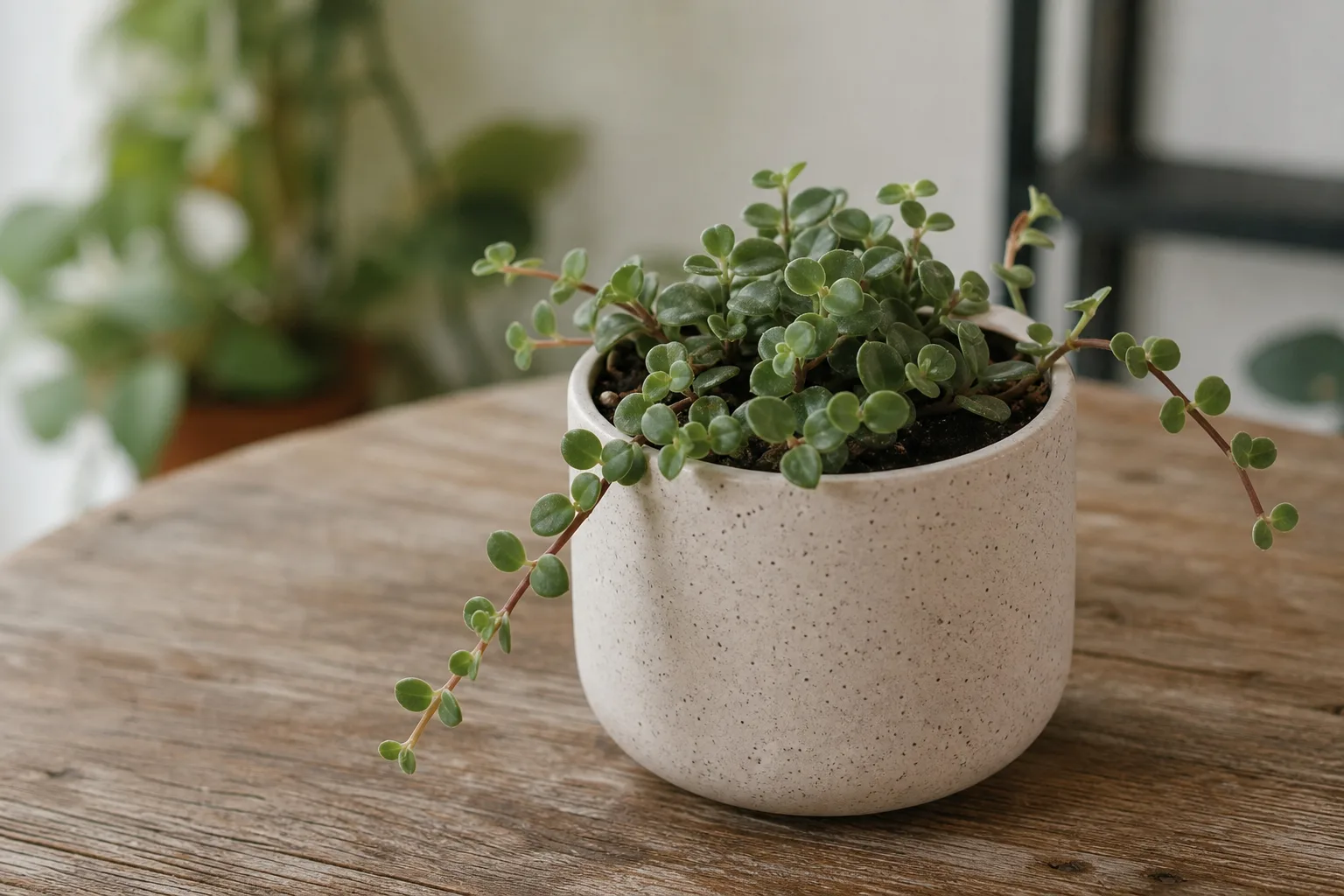
Slow Growth on Peperomia Hope: Causes, Checks & Fixes
This guide covers slow growth on Peperomia Hope. See also the general Slow Growth guide, watering, and light pages for this plant.
Slow Growth on Peperomia Hope: Causes, Checks & Fixes
Quick answer
Peperomia Hope (Peperomia tetraphylla ‘Hope’) is a naturally moderate grower-a trailing hybrid of Peperomia deppeana and Peperomia quadrifolia with plump coin-shaped leaves that will never match the speed of a pothos. Stalled growth becomes a real problem when no new round leaves appear through an entire warm season, stems stay thin with wide gaps between leaves, or the plant looks frozen while soil stays wet for weeks.
First step: move the plant to brighter indirect light and confirm the room stays above about 18 °C (65 °F). That lower temperature floor is an editorial inference from the RHS peperomia warm-range guidance of 18–30 °C-not a Hope-specific published minimum, but a practical metabolic cutoff for stalled trailing growth indoors. Before you repot, fertilize, or buy a bigger hanging basket, check whether the crown and trailing stems actually receive usable light and whether the pot dries completely between waterings.
Page scope: This guide covers growth pace-few or no new nodes through warm months. Stretched internodes with small pale leaves leaning toward a window are leggy growth (etiolation). A primary light deficit with fading striping and one-sided lean belongs on not enough light. Wet outer soil in a basket much larger than the root ball is pot too large-often the hidden brake behind a stall that looks like “slow metabolism.”
Slow growth vs. leggy growth vs. low light on Hope
| Signal | Slow growth (this page) | Leggy growth | Not enough light |
|---|---|---|---|
| Main issue | Few or no new nodes; pace stall | Long internodes; stretch toward window | Chronic dim placement; fading striping |
| Leaf size | May stay small on new segments | New whorls noticeably smaller and paler | Striping fades; one-sided lean |
| Soil pattern | Often stays heavy in dim corners | Often heavy when light is weak | Wet mix persists from slow transpiration |
| First fix | Bright indirect light + dry-cycle check | Brighter light; optional pinching after recovery | Relocate to brighter filtered exposure |
| Deep dive | You are here | Leggy growth | Not enough light |
Trailing length does not require a larger root volume on Hope-long vines with a compact root ball in an oversized basket often stall from wet outer mix. See pot too large when pot weight stays high for weeks after one drink.
What slow growth looks like on Peperomia Hope
On a healthy Peperomia Hope, progress shows up as new stem segments with round, firm leaves spaced relatively close together along the trail. Slow growth looks different:
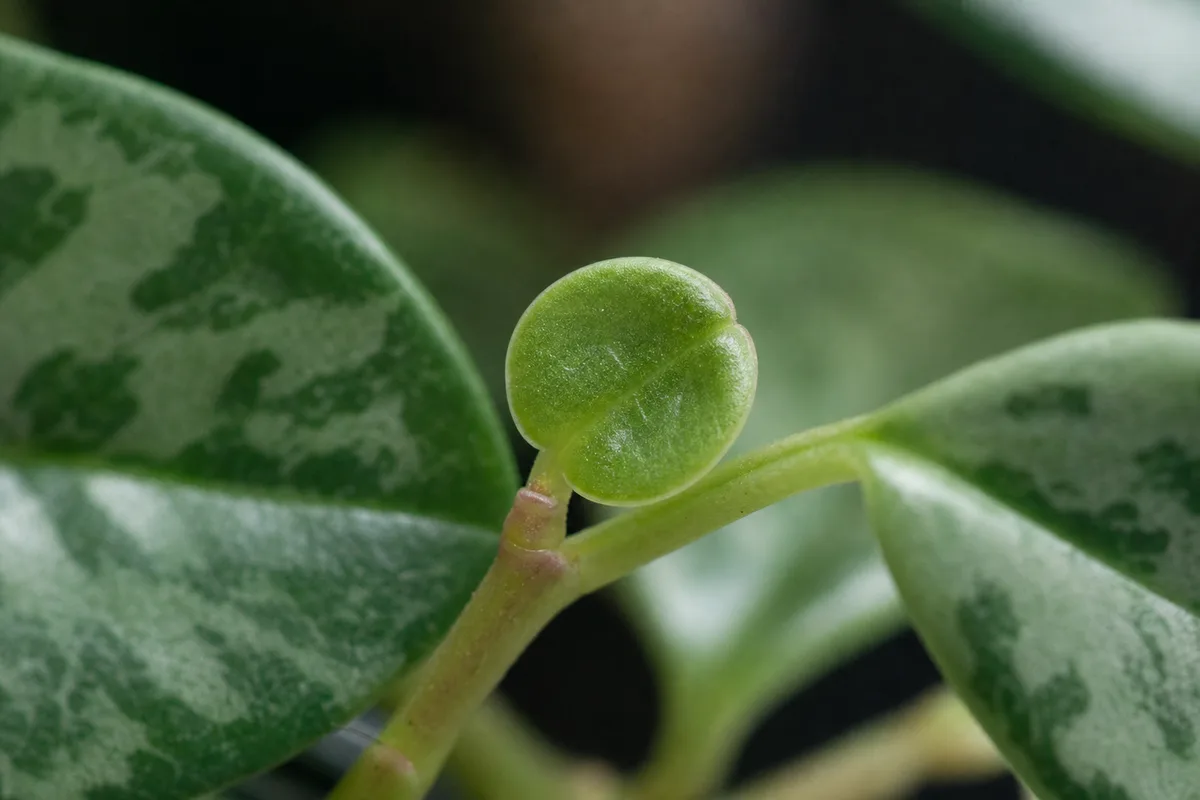
Slow Growth symptoms on Peperomia Hope - compare with healthy tissue on the same plant.
- No new nodes for months during spring or summer, while older leaves remain unchanged
- Smaller, paler coin leaves on new segments compared with older growth
- Long thin trailing stems with leaves spaced far apart-often leaning toward the brightest window (overlap with leggy growth when stretch is the dominant pattern)
- Static pot weight-the mix feels heavy and damp long after you watered, even though the plant barely drinks
- Bare sections near the crown while only the farthest trailing tips look acceptable
- Winter pause only-little or no new growth from late fall through early spring, with firm existing foliage
Slow growth on Peperomia Hope rarely comes with dramatic collapse. The plant often looks merely “fine”-green, upright enough, not obviously sick-while failing to add the lush trailing length you expected. That quiet stall is why owners reach for fertilizer or a larger pot when light and roots are the real limits.
Normal vs. concerning: A few months of minimal growth in low winter light, after repotting, or right after bringing the plant home is common. Concern is warranted when growth stays flat through a full warm season despite stable care, or when slow growth pairs with yellowing, wrinkled leaves, or soft tissue at the stem bases.
Photo check - tight vs. sparse coin leaves: Healthy Hope after a light upgrade shows new round leaves spaced roughly one to two leaf-widths apart on sturdier stems. A dim-corner stall shows long bare gaps between tiny pale whorls while older crown leaves still look full-sized. Original symptom photos pending for a future update.
Why Peperomia Hope gets slow growth
Peperomia Hope shares the genus-wide preference for bright but indirect light and a careful watering rhythm. Its semi-succulent leaves store water, and its root system stays compact relative to the trailing stems-so culture mistakes show up as metabolism drag rather than instant wilt.
Insufficient light (most common)
Peperomias evolved under filtered tropical forest light in forest understory and epiphytic habitats. In too little light, photosynthesis drops and plants become spindly as they stretch for more light; internodes stretch, and new leaves emerge smaller and paler. The plant survives longer than it thrives, then uses water slowly-so the same watering schedule that worked in brighter placement leaves roots sitting in stale moisture. Full placement guidance lives in the Peperomia Hope light guide.
Interior shelves, north rooms far from glass, and baskets hung for decoration rather than light often produce the classic pattern: long wispy trails, tiny round leaves, and soil that never dries on schedule.
Cool temperatures and winter rest
Peperomia Hope grows best in warm room conditions roughly between 18 °C and 30 °C (65–86 °F). Below about 18 °C-our editorial floor inferred from that RHS range-metabolic activity slows even when light is acceptable. Drafty winter windows, unheated porches, and air-conditioning blasts can stall new leaves for months.
Seasonal rest is also normal. From fall through winter, growth naturally slows and watering should be reduced with fertilization stopped until spring returns. That pause can look like a problem in January but often resolves when days lengthen-without heroic intervention.
Oversized pots and chronic wet soil
Peperomia Hope performs best when grown slightly tight in the pot. A decorative hanging basket much larger than the root ball holds a huge wet zone the small roots never colonize. Oxygen around roots drops, uptake efficiency falls, and growth stalls-even when you are technically “underwatering” the vast empty mix. The full wet-basket diagnostic is on pot too large.
The same risk appears when dense basket liners trap water at the crown, or when slow growth in dim light combines with habitual watering before the soil has fully dried per our watering guide.
Root stress, compaction, and repotting pause
Root rot and chronic overwatering do not always kill Peperomia Hope quickly. Mild root damage often presents first as sluggish new growth, wrinkled leaves, or bare crown sections while trailing tips still look acceptable. Compacted, exhausted mix in a pot that has not been refreshed for years can also limit nitrogen uptake-though repotting should not be day-one reflex unless roots are circling tightly or mix smells sour.
Recent repotting, shipping stress, or moving the plant across rooms can pause growth for several weeks even when the underlying care is correct. Judge those cases by whether firm leaves hold and whether new nodes appear once the plant settles.
Nutrient gaps and overcorrection
Peperomia Hope needs only light feeding during active growth. Depleted mix in an old pot can produce pale, small new leaves. But fertilizer is a poor first fix for a stressed plant in dim light or wet soil-salts can accumulate without improving growth. Overfeeding can burn roots and slow the plant further. See the fertilizer guide for timing after light and roots stabilize.
Low-level pests and hidden stress
Mealybugs, spider mites, and scale can sap vigor before obvious leaf damage appears. Inspect leaf undersides and stem joints if growth is slow despite good light and dry cycles. Chronic underwatering-soil bone-dry for weeks with wrinkled coin leaves-also stalls growth, though Peperomia Hope more often stalls from wet roots in low light than from severe drought.
How to confirm the cause
Work through these checks in order. You are separating normal seasonal rest from fixable bottlenecks-and ruling out root rot masquerading as sluggish growth.
- Season and temperature - Is it late fall or winter? Is the plant within roughly 18–27 °C? Below about 18 °C explains slow growth even with decent light.
- Light on the plant, not the room - At midday, hold your hand just above the foliage. A soft, diffuse shadow suggests usable indirect light; almost no shadow means too dim. Is only one side of the trail green while the rest fades? Lean and one-sided growth confirm uneven, weak light.
- New leaf quality - Are emerging leaves round and firm, just infrequent? That may be winter rest or recent repot shock. Are they small, pale, and far apart on thin stems? That fits low light.
- Pot weight and dry-down speed - Lift the pot two weeks after watering. Heavy, cool soil that still feels damp points to oversized container, poor drainage, or slow transpiration from dim light.
- Stem bases and smell - Press where stems meet the mix. Firm is reassuring. Soft, mushy, or sour-smelling soil suggests root stress-not a simple light issue.
- Root peek if unsure - Tip the plant out gently. Healthy roots are pale and firm. Brown mushy roots, even with slow rather than dramatic decline, need root-zone correction before growth resumes.
- Pest scan - Check leaf undersides and nodes for cottony clusters, fine webbing, or sticky residue.
Confirmed low light: Long trails, small pale leaves, wet soil persisting, growth only on the window-facing side.
Confirmed cultural rest: Firm leaves, appropriate winter watering reduction, no new growth in short days but plant otherwise stable.
Confirmed root or pot problem: Sour smell, soft crown, yellowing near the base, or roots circling a dry brick of old mix.
First fix to try
Move Peperomia Hope to brighter indirect light and verify temperatures stay above about 18 °C (65 °F).
Practical placements that work for this trailing cultivar:
- An east-facing windowsill or west-facing spot with gentle afternoon light
- One to three feet back from a south window with a sheer curtain
- A bright shelf where both the crown and trailing stems receive light-not just the pot rim
If the plant lived in deep shade, shift it gradually over seven to ten days to avoid scorching the fleshy coin leaves. Rotate the pot weekly so new growth thickens on all sides of the trail.
At the same time, check whether the soil dries completely before the next watering. If the pot stays heavy for weeks, stop watering until the mix is dry throughout, then adjust your schedule to match the new brighter placement-which will usually dry faster.
Do not repot, fertilize, or upsize the basket on day one. Light and dry-cycle correction are the safest first interventions for slow growth without rot symptoms.
Step-by-step recovery
Once light and temperature are addressed, work through secondary fixes based on what your inspection showed.
If light was the main limit
After the move, wait four to eight weeks through spring or summer before judging results. New round leaves should emerge closer together on sturdier stems. Trim only if you want to propagate the longest weak sections after compact new growth appears-old stretched internodes do not shorten on their own.
If natural windows are inadequate, add a full-spectrum LED grow light 12–18 inches above the canopy for 10–12 hours daily-an editorial placement heuristic; adjust distance if leaves bleach.
If the pot stays wet too long
Downsize to a container only slightly larger than the root ball, or slip the nursery pot out of an oversized decorative basket per pot too large recovery. Repot into fresh fast-draining mix-roughly half potting compost and half perlite-with open drainage. Water once after repotting, then let the mix dry fully before the next drink.
Never jump to a large hanging basket just because trailing stems are long. Length does not require root volume on Peperomia Hope.
If roots were damaged but crowns are firm
Trim mushy roots to firm tissue, air-dry bare roots briefly, and repot dry into airy mix. Hold fertilizer until new growth shows. Recovery is slower than a simple light fix-expect weeks, not days. Follow root rot escalation if the crown softens.
If the mix is depleted but roots are healthy
During active growth from spring to early fall, feed with balanced liquid fertilizer at half strength monthly. Pale new leaves that green up after feeding confirm a nutrient gap. If leaves stay pale despite good light and dry cycles, refresh mix at the next appropriate repot window per the repotting guide.
If pests are present
Isolate the plant, rinse leaf undersides, and treat the specific pest before expecting growth to resume. Stressed plants should not be fertilized until pest pressure drops and new leaves look firm.
Recovery timeline
Peperomia Hope rewards patience. After light improves in warm months, the first new firm coin leaves often appear within two to four weeks. Meaningful trailing length-several new nodes with normal leaf size-usually takes four to eight weeks during active growth.
Winter improvements may take longer even after a better placement, because day length and indoor temperatures still limit metabolism. Repotting or root trimming can add two to six weeks of pause before new growth counts.
Worked example (editorial, May 2026): A Hope in a dim north corner added no new nodes for four months; pot stayed heavy 14 days after one moderate watering. Moved to an east shelf 18 in. from glass in mid-May. First firm coin leaves at tighter spacing appeared on two stem tips by week five; pot weight normalized within three weeks. Old pale segments on the longest trails did not compact-only new growth showed the improvement.
Signs recovery is working: Tighter spacing between new leaves, brighter green on fresh coin foliage, faster pot dry-down after watering, and firm stem bases.
Signs the problem is worsening: Continued yellowing near the crown, soft stem tissue, sour soil despite less frequent watering, or new leaves smaller and paler after a light move-possible scorch or unresolved root damage.
Lookalike symptoms
| Pattern | Likely cause | Where to go next |
|---|---|---|
| Long internodes, strong window lean | Etiolation / low light stretch | Leggy growth |
| Soft crown, sour soil, wet heavy pot | Root rot | Root rot |
| Wrinkled dull coin leaves, very light pot | Underwatering drought stress | Underwatering |
| No leaves for months in cool dim winter | Seasonal dormancy | Wait for spring light; optional grow lamp |
| Heavy pot, small root ball, stalled trails | Oversized wet container | Pot too large |
| Healthy slow species pace | Moderate genus growth rate | Peperomias are moderate growers - a few nodes per season may be normal |
Leggy growth overlaps with slow growth but emphasizes stretched stems reaching for light. Fixing bright indirect light helps both; leggy plants may need pinching or propagation of weak sections once new growth compacts.
Root rot can start slowly-yellow leaves, limp trails, wet mix-before collapse. Soft crown tissue and sour soil distinguish rot from benign sluggishness.
Underwatering causes wrinkled, dull coin leaves and very light pots. Growth stalls from drought stress, but soil will be dusty dry throughout, not chronically damp.
Normal winter rest mimics slow growth for months. Firm leaves, hard stem bases, and seasonal timing distinguish rest from a year-round light problem.
Mistakes to avoid
- Fertilizing first to “push” growth while light is dim or soil is wet-this burns roots and rarely speeds trailing stems.
- Repotting into a bigger basket because vines are long-oversized wet mix is a top hidden cause of stalled Peperomia Hope.
- Judging progress daily instead of tracking new leaf frequency over weeks.
- Keeping winter watering on a summer schedule in dim, cool conditions-roots stay oxygen-starved and growth stops.
- Moving from deep shade straight to harsh south-window sun-fleshy leaves scorch, and stress pauses growth further.
- Ignoring stem bases because trailing tips still look acceptable-crown rot starts centrally on this plant.
- Expecting pothos growth rates from a moderate trailing peperomia-pace benchmarks should match the genus, not fast aroids.
Peperomia Hope care cross-check
Slow growth often means one core care pillar is out of range. Cross-check against this plant’s normal needs:
| Factor | Target for steady growth |
|---|---|
| Light | Bright indirect on crown and trails; see light guide |
| Temperature | Roughly 18–27 °C; avoid sustained drops below about 18 °C (editorial floor from RHS range) |
| Watering | Soil dries completely between drinks; slower schedule in winter - watering guide |
| Pot and mix | Slightly tight pot, fast-draining perlite blend; no water-trapping basket liners |
| Feeding | Light half-strength fertilizer only during spring-to-fall active growth - fertilizer guide |
| Humidity | Average household levels are fine; low humidity rarely stalls growth alone |
When two or more rows are off-common pairings are dim light plus wet soil, or cool drafts plus winter overwatering-growth stalls until you fix the combination, not just one variable.
How to prevent slow growth next time
Place Peperomia Hope where bright indirect light reaches the entire trailing habit, not just the window-facing tips. Use a pot sized to roots, refresh mix every one to two years per the repotting guide, and water only when the soil is fully dry. Feed lightly during warm months; stop in winter. Rotate weekly for even trails. After repotting or relocation, allow a few weeks of adjustment before changing other variables.
Track new leaf count and spacing monthly rather than vine length alone-a few well-spaced firm coin leaves each month in summer signal healthy progress on this moderate grower.
When to worry
Slow growth alone is low urgency if leaves are firm, stems are hard at the base, and soil dries between waterings. Escalate when:
- Stem bases soften while soil stays damp - see overwatering and root rot
- Yellowing spreads from the crown outward
- Soil smells sour or roots are mushy on inspection
- New leaves keep shrinking after light improvement
- Pests are active on an already-weak plant
If the crown collapses despite corrected light and dry cycles, propagate firm stem sections from healthy tips-the parent may not recover once central tissue rots. See the propagation guide.
Related Peperomia Hope guides
- Overview - full care hub
- Light - placement and basket exposure
- Watering - dry-down rhythm for semi-succulent leaves
- Repotting - sizing and seasonal timing
- Fertilizer - feed only after stability
- Leggy growth - stretch and internode diagnostics
- Not enough light - primary light deficit
- Pot too large - wet-basket hidden brake
- Root rot - soft-crown escalation
- Overwatering - schedule mistakes vs. pot volume
Conclusion
Slow growth on Peperomia Hope is usually a culture signal, not a mystery disease. This trailing plant wants bright filtered light, warm stable rooms, and a root zone that dries between waterings in an appropriately sized pot. Fix those basics before fertilizer or bigger baskets. Judge recovery by new firm round leaves over weeks, accept a winter pause, and inspect stem bases whenever growth stalls while soil stays wet-on this species, the crown tells the truth before the trailing tips do.