Pot Too Large on Peperomia Hope: Causes, Checks & Fixes
Quick answer
Peperomia Hope has a compact, shallow root system and grows best slightly tight in the pot, so an oversized container keeps excess soil wet and weakens roots. First step: slide the plant out and compare root ball width to pot diameter before watering again.
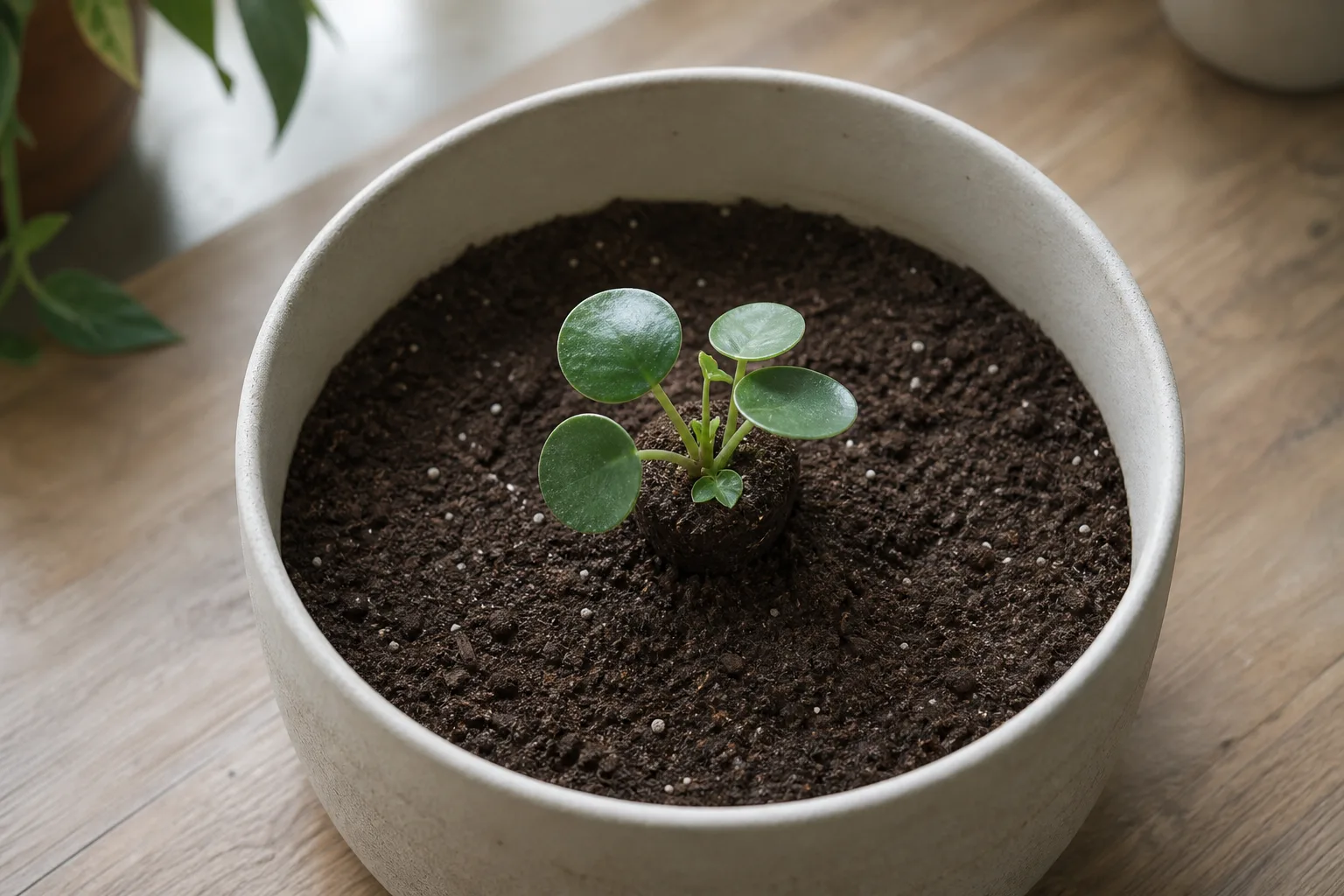
Pot Too Large on Peperomia Hope: Causes, Checks & Fixes
This guide covers pot too large on Peperomia Hope. See also the general Pot Too Large guide, watering, and light pages for this plant.
Pot Too Large on Peperomia Hope: Causes, Checks & Fixes
Quick answer
On Peperomia deppeana × quadrifolia ‘Hope’, trailing stems can cascade two feet or more while the root ball stays surprisingly small and shallow - a mismatch that makes deep hanging baskets look right and feel wrong. An oversized container keeps excess soil wet around those compact roots and triggers quiet decline: yellow lower leaves, wrinkled foliage on weak roots, fungus gnats, stalled trailing stems. First step: slide the plant out and compare root ball width to pot diameter before watering again.
This hybrid stores water in round semi-succulent leaves, but its shallow, epiphyte-style roots explore only part of a generous pot. The outer ring of mix stays damp long after the center could use a drink, mimicking chronic overwatering even when you pour lightly. For sizing rules and seasonal timing, see the Peperomia Hope repotting guide - this page focuses on diagnosing and fixing a container that is already too large.
Why trailing Hope outgrows its pot visually before its roots do
Peperomia ‘Hope’ is a vigorous hybrid of P. deppeana and P. quadrifolia with trailing stems that can reach four feet or longer in ideal conditions. Both parent species carry shallow-root habits from epiphytic ancestry - roots spread horizontally near the soil surface rather than diving deep. Vine length does not track root volume.
That is why the most common oversizing mistake is visual: you hang Hope in a tall coir or glazed basket because the cascade looks proportional, but the root ball may still fit a shallow 4- to 5-inch nursery pot. Extra soil below and beside those roots holds moisture the plant never reaches. Missouri Extension warns that soil kept too moist becomes sticky and invites root rots - risk rises sharply when pot volume far exceeds root mass.
Day-one repotting into a show container adds strain while the plant acclimates. Missouri Extension notes that plants just brought home seldom need immediate repotting. Clemson Extension advises planting peperomia in only a slightly larger pot than the grower’s pot - not a dramatic jump - and keeping it in the same container for several years when roots are not circling.
Low light and winter slow evaporation further. In cooler months when you water every three to four weeks, an oversized pot that barely dried in summer may stay saturated for weeks, softening roots at the edges where wet outer soil meets live tissue.
Hanging baskets vs shallow pots: the Hope sizing mistake
Hope is marketed for hanging baskets, and Missouri Botanical Garden lists it as suitable for baskets where stems cascade freely. The trap is depth, not hanging itself. A deep basket with six or more inches of mix below a shallow root ball behaves like an oversized pot: the bottom stays anaerobic while you wait for the surface to dry.
| Container type | Typical depth | Root-ball fit for mature Hope | Wet-soil risk | Best use |
|---|---|---|---|---|
| Shallow 5-inch nursery pot with drainage | 4–5 in. | Snug; 1 in. fresh mix around sides | Low when mix is airy | Table, shelf, or inner pot inside a hanger |
| Standard 6-inch table pot | 5–6 in. | Acceptable if roots nearly fill it | Moderate | Floor or counter when roots circle |
| Deep 8-inch hanging basket | 7–9 in. | Root ball often under half width | High - unused mix stays wet at bottom | Only after roots fill a 6-inch pot; otherwise use shallow inner pot |
| Decorative cache pot (no holes) | Varies | Hides wet unused volume | Very high without drainage and runoff removal | Nursery pot inside only; empty saucer every time |
Rule of thumb: if the root ball occupies less than half the pot width after a gentle unpot, treat the container as oversized for current growth. That ratio is home diagnostic guidance, not a published threshold - it helps you spot excess wet soil volume before crown tissue softens. Authoritative repot sizing still follows the 1–2 inch diameter increase rule when roots genuinely need more room.
Repot observation (editorial, June 2026): A 18-month Hope with ~24 in. trailing stems was growing in a 10-inch deep coir basket. Unpotting revealed a 4.5-inch root ball occupying roughly 40% of the basket width; outer mix stayed damp 12+ days after one moderate watering. Downsized to a 5-inch shallow plastic pot with 50% perlite mix inside the same hanger. Pot weight normalized within 18 days; new firm leaves on two stem tips by week five. Old yellowed crown leaves did not green up.
What an oversized pot looks like on Peperomia Hope
Common patterns when the container outpaces the roots:
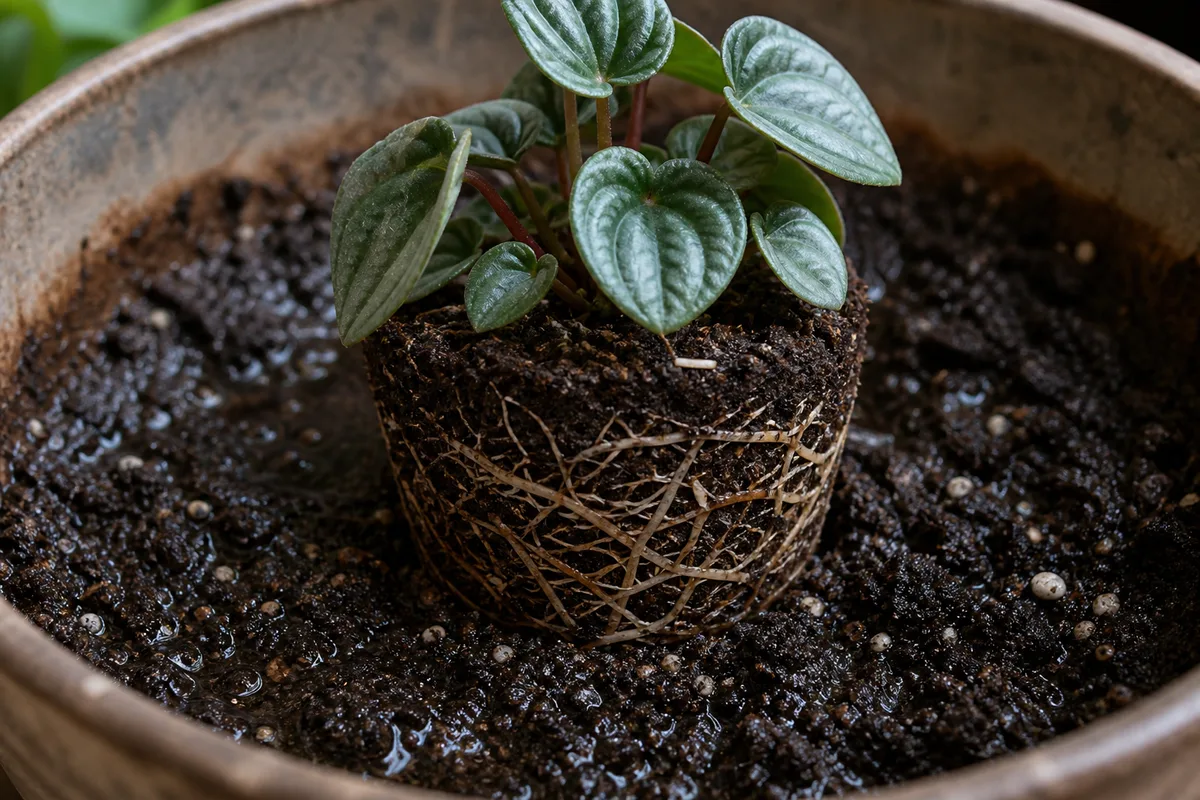
Pot Too Large symptoms on Peperomia Hope - compare with healthy tissue on the same plant.
- Root ball sits in the center with inches of unused mix around and below it
- Outer soil stays dark and cool while you wait long between waterings
- Pot stays heavy for ten days or more after a single moderate drink
- New round leaves stall along trailing stems despite otherwise adequate light
- Lower leaves yellow gradually without one obvious overwatering episode
- Leaves wrinkle on firm-looking stems - weak roots from wet soil, not drought alone
- Fungus gnats hover over the wide wet soil surface
- White or green mold appears on constantly damp top layer
- Stems stay firm at tips but feel soft where they meet constantly wet mix at the crown
A root-bound Hope dries out within a few days of watering and may show roots at drainage holes. An overpotted plant stays heavy and wet - opposite moisture pattern, same root-zone stress if you keep pouring on schedule.
How to confirm the cause
Work through these checks in order - crown and moisture clues come first on trailing Hope because rot often starts at stem bases before tips look bad:
- Crown check - Pinch where stems meet the mix. Softness here with wet outer soil points to oversizing progressing toward root rot.
- Measure root ball vs pot - Slide the plant out gently, supporting trailing stems so they do not snap. If root ball width is less than half the pot diameter, the container is likely too large for current growth.
- Moisture profile - After watering, compare outer edge soil to center over the next week. A persistent wet outer ring with a small root mass confirms oversizing.
- Repot history - Did the last repot jump more than 1–2 inches in diameter? Did you repot on day one into a decorative hanging basket sized to vine length, not roots?
- Root health - Mushy outer roots with a firm center suggest rot in the wet perimeter soil. Healthy peperomia roots are pale and firm, not brown and stringy.
- Pot weight test - Lift the container. A heavy pot days after watering with a small root mass inside confirms excess wet soil volume.
Lookalike symptoms to rule out
Pure overwatering on a schedule affects any pot size - confirm whether volume, retention, or both are wrong. Underwatering wrinkles leaves too, but the pot feels light and mix pulls away from the sides. Low light slows evaporation and can keep any pot wet longer without oversizing being the primary issue. Root-bound plants dry fast and may show roots at drainage holes; overpotted plants stay heavy with few visible roots.
First fix for Peperomia Hope
Unpot the plant and compare root ball width to the current container before the next watering.
This single inspection tells you whether downsizing is warranted. If the root ball is less than half the pot width and outer soil has stayed wet, proceed to repot - do not keep watering on your old schedule hoping the plant adjusts.
When oversizing is confirmed:
- Choose a shallow container only 1–2 inches wider than the root ball with open drainage holes
- Use 50% potting compost and 50% perlite - fast-draining mix that matches how Peperomia Hope overview dries in your home
- Trim any mushy roots back to firm tissue with clean scissors
- Repot at the same depth; do not bury the crown or stem bases
- Water once lightly to settle mix, then let soil dry completely before the next drink
Avoid stacking fertilizer, heavy pruning, and a room move on the same day as repotting. Peperomia stems snap easily - gather trailing growth loosely in one hand and tip the pot with the other rather than yanking vines.
If you already repotted into too large a container recently, the repotting guide recommends not repotting again immediately - that compounds shock. Water sparingly at the root ball center, maximize Peperomia Hope light guide without scorch, and downsize only once the plant is stable enough for one more disturbance.
Step-by-step downsizing and recovery
After confirming oversizing:
- Shake off wet outer soil from the unused volume around the root ball - do not bare-root aggressively; fine peperomia roots break easily.
- Inspect and trim - Remove brown, mushy roots; keep pale firm tissue.
- Repot snugly into the smallest shallow pot that fits the root ball with about one inch of fresh mix around the sides.
- Place in bright indirect light so the smaller soil mass dries predictably.
- Adjust watering - Wait until soil is completely dry before rewatering; reduce frequency through winter when growth slows.
- Monitor for fungus gnats - Let the top layer dry fully; sticky traps help while soil stabilizes.
Best timing: Spring and early summer repots recover fastest when Hope is actively growing. Emergency downsizing for sour soil or soft crowns can happen any season - just expect slower rebound in winter.
When to propagate instead of repot
Downsizing works when the crown is still firm and some roots stay pale after trimming. Switch to salvage propagation when:
- Stem bases at the soil line are soft and dark despite dry-down attempts
- More than half the root mass is mushy after unpotting
- Lower vine sections collapse while upper stems still look plump
Take 3- to 5-inch cuttings from firm upper stems with at least one node. Root in moist perlite or water under bright indirect light - the full workflow is in the Peperomia Hope propagation guide. Stem cuttings often root in two to four weeks during active growth, but success drops if parent tissue was already stressed by advanced rot. Start backups before the crown fails completely; you can still downsize the main plant if salvageable roots remain.
Recovery timeline
Right-sizing before advanced rot often shows stabilized pot weight within two to three weeks. Mild yellowing may stop spreading within a month. New firm round leaves on trailing stems can appear within four to eight weeks during spring and summer; winter recovery is slower. Wrinkled or yellowed old leaves usually do not fully revert - judge by new growth and firm stem bases at the crown, not by old foliage re-plumping.
What not to do
- Do not upsize again “so you won’t have to repot soon” - Hope tolerates slight crowding better than excess wet soil.
- Do not size a hanging basket to vine length; size it to the root ball.
- Do not keep the large decorative pot as the primary container without drainage; use a nursery pot inside it and empty runoff after every watering.
- Do not water on your old schedule - a smaller, grittier pot dries faster and needs a recalibrated rhythm.
- Do not fertilize until new growth appears and the root zone dries evenly between drinks.
- Do not assume stalled trailing growth means hunger; wet outer soil often causes stall before nutrient deficiency.
- Do not repot twice within a few weeks unless crown rot forces emergency action - see alignment with the repotting guide on compound shock.
Prevention: repot timing and sizing rules for Hope
- Repot only when roots circle the pot or emerge from drainage holes - typically every two to three years, not because vines got longer.
- Increase pot diameter by only 1–2 inches each time.
- Prefer shallow pots with drainage over deep decorative baskets that trap wet mix below the roots.
- Use fast-draining mix with perlite; avoid deep pots with large unused soil mass below a shallow root ball.
- For hangers: match inner nursery pot to root ball; let the decorative shell follow vine display, not soil volume.
- Let soil dry completely between waterings and reduce winter watering when growth slows.
Hope-specific prevention rule: trailing length is a display problem, not a root-volume signal - when stems need more room to hang, adjust hanger height or prune tips; do not upsize soil mass until roots circle the current pot.
When to worry
Escalate if stem bases soften at the crown, soil smells sour, or lower leaves collapse along the vine - oversizing has likely progressed to root rot. Immediate unpotting, root pruning, and dry repot into a smaller shallow container are needed; start propagation backups the same day.
Lower urgency when leaves are firm, smell is neutral, and the issue is slow trailing growth in a large pot - downsize proactively before softness reaches the crown.
Related Hope problems
- Peperomia Hope repotting - correct sizing, mix, and seasonal timing
- Root rot - when wet outer soil has already damaged roots and crown
- Overwatering - schedule mistakes vs container volume problems
- Fungus gnats - common on wide, constantly damp soil surfaces
- Propagation - stem salvage when crown tissue fails
- Slow growth - stall from wet roots vs light or nutrition limits
An oversized pot on Peperomia Hope is a vine-length illusion: shallow roots in too much wet mix. Unpot, measure, downsize into a shallow drained container (or a smaller inner pot in your hanger), and judge recovery by firm new leaves on trailing tips - not by old yellow foliage greening up again.
When to use this page vs other Peperomia Hope guides
- Peperomia Hope watering guide - Use for routine moisture checks before assuming pot too large is the main issue.
- Peperomia Hope problems hub - Browse all 7 common issues on this species.