Plant Leaning on Peperomia Hope: Causes, Checks & Fixes
Quick answer
Peperomia Hope leans when trailing stems reach toward one-sided light or when a small pot becomes top-heavy. First step: rotate the pot so the lean faces your brightest indirect window, then watch new growth for two weeks before pruning or repotting.
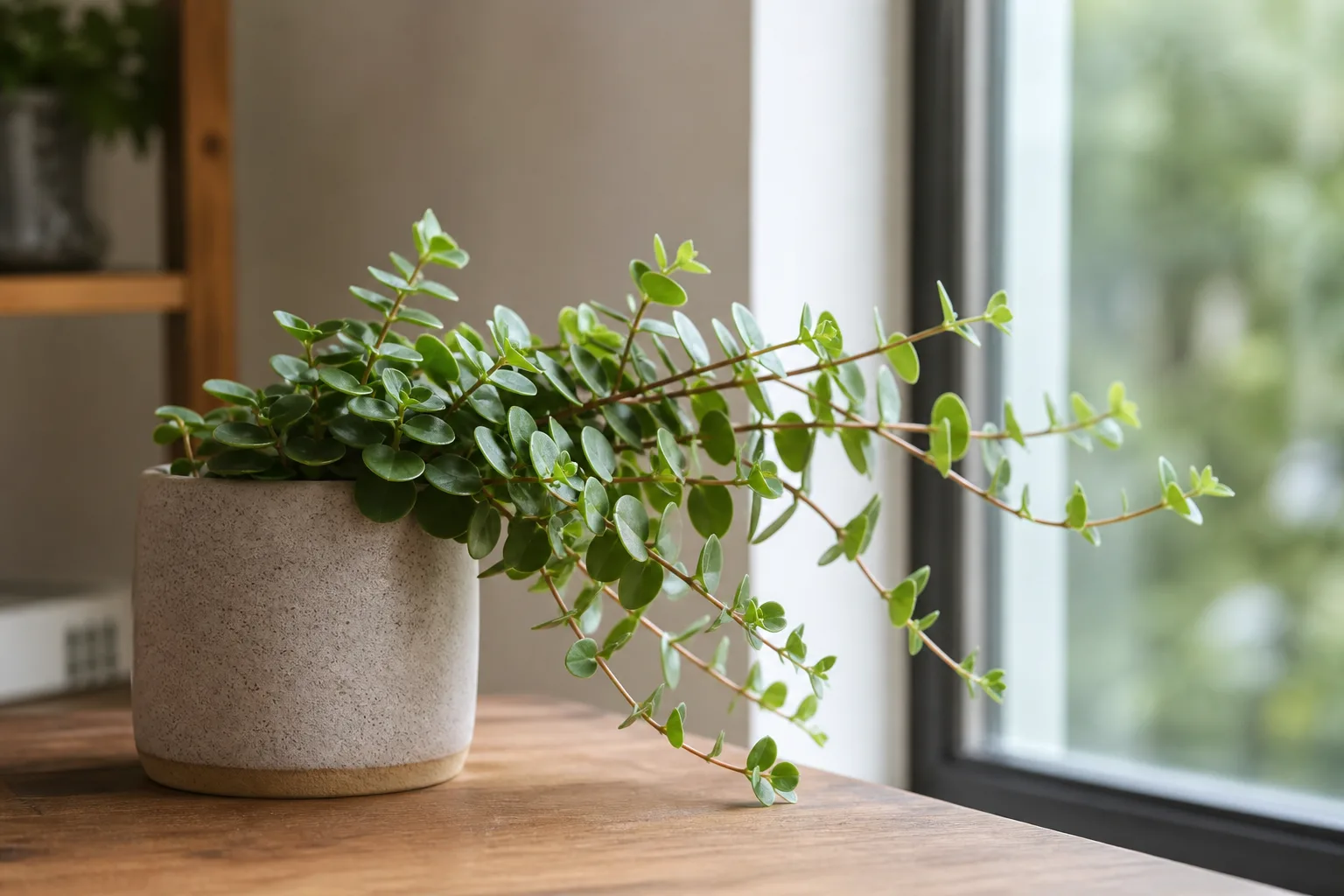
Plant Leaning on Peperomia Hope: Causes, Checks & Fixes
This guide covers plant leaning on Peperomia Hope. See also the general Plant Leaning guide, watering, and light pages for this plant.
Plant Leaning on Peperomia Hope: Causes, Checks & Fixes
Quick answer
A leaning Peperomia Hope (Peperomia tetraphylla ‘Hope’) is usually reaching for light or tilting under its own trailing weight-not a sign the plant is dying. This trailing hybrid bred for shelves and hanging baskets naturally grows toward the brightest direction, and long vines on a small pot create leverage that pulls the display sideways.
First step: rotate the pot a quarter turn so the current lean faces your brightest indirect window, then leave it for one week. Watch whether new whorls of round leaves emerge tighter and more upright. If internodes keep lengthening with smaller leaves, move the whole plant to brighter indirect light before pruning, Peperomia Hope repotting guide, or fertilizing.
What plant leaning looks like on Peperomia Hope
Healthy Hope sits stable in its pot while trailing stems cascade evenly-or grow horizontally before gravity pulls them down. Leaning shows up as a tilted pot, vines arching sharply toward one window, or the whole basket listing because trailing weight exceeds pot stability.
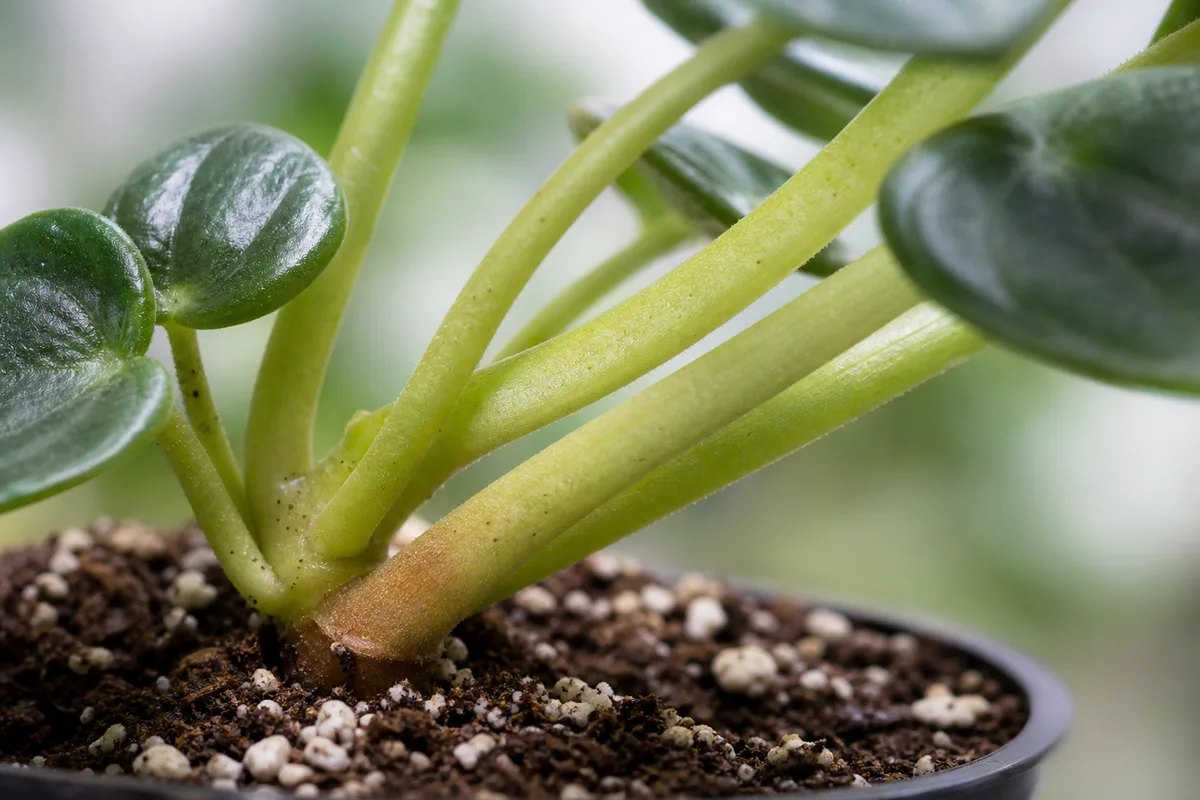
Plant Leaning symptoms on Peperomia Hope - compare with healthy tissue on the same plant.
On Hope specifically, watch for these patterns:
- One-sided reach - all stem tips and leaf whorls point the same direction while the shaded back of the basket stays sparse
- Long gaps between whorls on the leaning vine, with smaller round leaves than older crown growth
- Pot instability - a modest nursery pot supporting long cascading stems that pull the container sideways
- Horizontal stretch before vines drop - new growth may grow diagonally or upward like an antenna before trailing down under leaf weight
- Fading faint leaf striping on the reaching side as chlorophyll thins in weak light
This differs from normal trailing length. A long vine with closely spaced plump round leaves is fine. A vine that tilts the whole display, stretches with empty gaps between whorls, or leaves the back of the basket bare is a care signal.
Leaning Hope with firm green stems and predictable dry-down between soaks points to light or mechanical tilt. Soft, dark stem bases on wet soil mean inspect roots before assuming phototropism alone.
Why Peperomia Hope leans
Phototropism is the most common cause. When light reaches plants from one direction, they can develop a lean as foliage grows toward the brightest source. Hope’s trailing habit amplifies the look-stems on the window side thicken while shaded vines stretch and drop leaves, so the whole basket appears lopsided within weeks.
Insufficient light deepens directional lean into stretch. Peperomias need bright but indirect exposure indoors; in dim corners too much shade leads to poor, straggly growth. Stems elongate toward photons, internodes lengthen, and each new whorl holds smaller leaves-classic etiolation that reads as lean plus legginess.
Top-heavy trailing growth adds mechanical lean. Hope is grown for long cascading stems from hanging baskets. A shallow small pot with several feet of trailing vine creates leverage that pulls the display sideways even when roots are healthy-especially if the hook or shelf edge lets the pot rock.
One-sided light on hanging baskets is a Hope-specific trigger. A pot hung in a window receives strong light on the front face only. Back-side stems stretch toward the window, bare sections form, and the visual center of gravity shifts until the basket tilts.
Weak roots from overwatering cause a different lean-stems lose turgor and flop rather than actively reach. Hope’s compact root system rots easily when kept too wet. Wet soil in a dim corner, yellow lower leaves, and soft crown tissue mean you may have rot paired with low light, not phototropism alone.
Semi-succulent leaves mask the timeline. Thick round leaves store water, so Hope survives dim corners longer than thin-leaved tropicals. Lean and stretch can progress for weeks before leaves wrinkle from drought-leading many growers to water more instead of adding light or rotating the pot.
Less common triggers include recent moves from bright to dim shelves, which redirect all new growth toward the nearest window within days, and oversized decorative baskets that trap moisture around small roots while vines keep extending outward.
How to confirm the cause
Work through these checks before staking, repotting, or heavy pruning:
-
Direction test - mark which way stem tips point. If every whorl aims at the same window, phototropism is likely.
-
Internode comparison - measure gaps between leaf whorls on the leaning vine versus compact growth near the crown. Long gaps with smaller round leaves confirm stretch from low light; uniform yellowing with wet soil points elsewhere.
-
Pot weight and moisture - lift the container. A light dry pot with firm stems means drought is not driving the lean. Chronic heaviness with slow growth in a dim spot suggests overwatering paired with low light.
-
Crown firmness - press where stems meet the mix. Firm green tissue supports a light-only diagnosis. Soft, dark, or sour-smelling crown tissue means escalate to root checks before staking.
-
Stability test - gently upright the plant. If it springs back and stems feel pliable but firm, structure is sound. If stems bend mushily at nodes or collapse at the base, inspect roots.
-
Back-of-basket check - sparse trailing growth on the shaded side with full window-side whorls confirms uneven exposure even when the room feels adequately bright.
Confirmed phototropism with firm roots and normal dry-down does not need repotting on day one.
The first fix to try
Rotate the pot a quarter turn so the leaning side faces your brightest indirect light source, then leave it there for one week.
This single step tests whether the lean is normal one-sided growth. Hope should start producing more even tips within two to three weeks when light is adequate. If new whorls still stretch with long internodes, move the entire plant closer to an east- or west-facing windowsill filtered by sheer curtain-not into harsh direct afternoon sun that can scorch peperomia foliage.
Do not water heavily, fertilize, or repot solely because the plant tilts. Those steps do not correct directional light hunger and can worsen wet-soil lean on small roots.
Step-by-step recovery
After the initial rotation:
-
Improve light if stretch continues - relocate to the brightest indirect spot available. Acclimate over a week if moving from deep shade. A grow light 30–45 cm (12–18 in) above the canopy for 10–12 hours daily helps dark rooms.
-
Prune bare leaning vines - once light is better, cut long empty stems just above a node with clean scissors. Pruning straggly stems back encourages bushier growth when conditions support branching. Remove no more than one-third of total length per session-Hope stems snap easily when handled roughly.
-
Stabilize top-heavy pots - shift to a wider stable base, a deeper hook, or loop trailing vines through a small support so weight does not rock the pot. Avoid tight ties on brittle stems.
-
Establish rotation - turn the container weekly so all sides receive similar exposure and trailing growth thickens evenly.
-
Check roots only if stems soften - if wet soil, yellow leaves, and sour mix accompany lean, slide the plant out and inspect for brown mushy roots before repotting into fast-draining mix with perlite. Hope performs best slightly tight in the pot; oversized wet containers increase rot risk.
Propagate healthy tip cuttings from pruned vines-stem cuttings in spring root readily in water or moist perlite-to rebuild a balanced basket while the parent fills in from pinched nodes.
Recovery timeline
Rotation shows a change in growth direction within two to three weeks when light is sufficient during active growth. After a light upgrade and node cutback, expect new side shoots in two to four weeks. Hardened curved stems will not fully straighten; new compact whorls from pruned nodes define success.
Old elongated sections stay bent permanently. A recovered Hope may still show curved vine segments above tight new growth unless you prune or propagate.
Signs you are on track:
- New whorls emerge tighter with plumper round leaves
- Stem tips stop all pointing one direction within a few weeks of rotation
- Pot sits stable without constant tipping
- Mix dries predictably between soaks
Signs the problem is worsening:
- Crown softens or smells sour while soil stays wet
- Lean accelerates with yellow leaves and collapsing stem bases
- New leaves keep shrinking despite a light move
Lookalike symptoms
Leggy growth overlaps with leaning but emphasizes long gaps between whorls rather than pot tilt. The fix path-brighter indirect light first-is identical.
Drooping leaves mean turgor loss from drought or root rot on Peperomia Hope-stems hang limp across the whole plant rather than actively reach toward light. Wet droop with soft crowns needs root-zone correction before rotation alone will help.
Wilting after repotting is temporary transplant stress with limp foliage everywhere, not directional reach.
Slow growth in winter can stall new whorls without much lean change; active phototropism with stretch means light is still inadequate even if overall growth is slow.
If lean worsens while soil stays soggy and lower leaves yellow, treat as a root-zone problem first.
Mistakes to avoid
-
Staking heavily without fixing light - ties on weak stretched stems only hold a struggling plant in place while new growth keeps reaching.
-
Moving suddenly into direct south-window sun - afternoon direct rays scorch fleshy round leaves. Filtered or east exposure is safer.
-
Repotting into a bigger hanging basket because vines are long. Larger wet soil zones increase rot risk; Hope trails best from a modest pot.
-
Watering on a calendar regardless of light season. A leaning plant in a dark winter corner uses water slowly; extra soaks keep mix stale at the crown.
-
Ignoring the back of a hanging basket - one-sided brightness produces one-sided fullness; rotation is part of the fix.
-
Pruning hard before improving light - cut stems in dim corners often produce another round of weak stretch from the same nodes.
Peperomia Hope care cross-check
Leaning Hope in a dim spot often sits in moist mix too long because reduced photosynthesis lowers water use. Confirm soil dries completely before the next soak-roughly every 10–14 days in bright active growth and less often in winter or low light.
Use fast-draining mix (about half potting compost and half perlite) and open drainage. Dense decorative basket liners that trap water accelerate crown problems on weak, tilted plants.
Keep Hope in its comfort zone of 18–27 °C (65–80 °F). Temperature below 18 °C (65 °F) slows growth and can pair with light-related stall.
How to prevent leaning next time
Place Hope where bright indirect light reaches the entire trailing canopy, not only the window-facing whorls. East windows, filtered west windows, or supplemental lighting in dark rooms all work.
Rotate the pot weekly. Pinch sparse trailing tips early in the growing season so stems branch before they become long, brittle, and top-heavy.
When buying, choose plants with firm round leaves along the full stem length, not just healthy tips on bare lower vines-bare crown sections often mean the plant already lived too long in low light or wet soil.
Use a stable hook or wide shelf base for hanging displays so trailing weight does not rock the pot toward one side.
When to worry
Leaning alone rarely threatens survival. Escalate if:
- The crown goes soft, dark, or smells sour
- Stems mush at the soil line despite corrected light and rotation
- The pot tips repeatedly and crushes stems against a shelf edge
If the crown is firm and new whorls tighten after four to six weeks in better light with weekly rotation, the plant is recovering. Persistent one-sided reach on every new whorl means the spot is still too dim-add a grow light rather than waiting another season.
Conclusion
Plant leaning on Peperomia Hope is a placement and light problem far more often than a disease. Rotate toward brighter indirect exposure, upgrade brightness when stretch appears, prune bare reaching vines, and stabilize top-heavy trailers. Firm roots, tighter new whorls, and even tip direction tell you the fix is working.
When to use this page vs other Peperomia Hope guides
- Peperomia Hope watering guide - Use for routine moisture checks before assuming plant leaning is the main issue.
- Peperomia Hope problems hub - Browse all 7 common issues on this species.