Pilea Moon Valley Care Guide: Pilea mollis Indoors
Pilea mollis
Pilea Moon Valley needs bright indirect light for deepest colour, watering every 7–10 days when top 2–3 cm is dry, and moderate humidity. Non-toxic to pets.
Pilea Moon Valley Care Guide: Pilea mollis Indoors
Start with wateringThe most common care mistake for Pilea Moon ValleyWatering guide →Pilea Moon Valley care essentials
Light
bright indirect light, medium indirect light
Water
Every 7–10 days in summer - allow top 2–3 cm to dry. Every 10–14 days in winter.
Soil
Standard potting mix + 15–20 % perlite. Well-draining. pH 6.0–7.0.
Humidity
Moderate to high humidity (50–60%)
Temperature
16°C to 24°C (60–75°F)
Fertilizer
Feed lightly during active growth. Use monthly during spring and summer..
About Pilea Moon Valley
Pilea Moon Valley has a upright growth habit.
| Detail | Information |
|---|---|
| Growth habit | Upright |
| Scientific name | Pilea mollis |
Pilea Moon Valley Care Guide: Pilea mollis Indoors
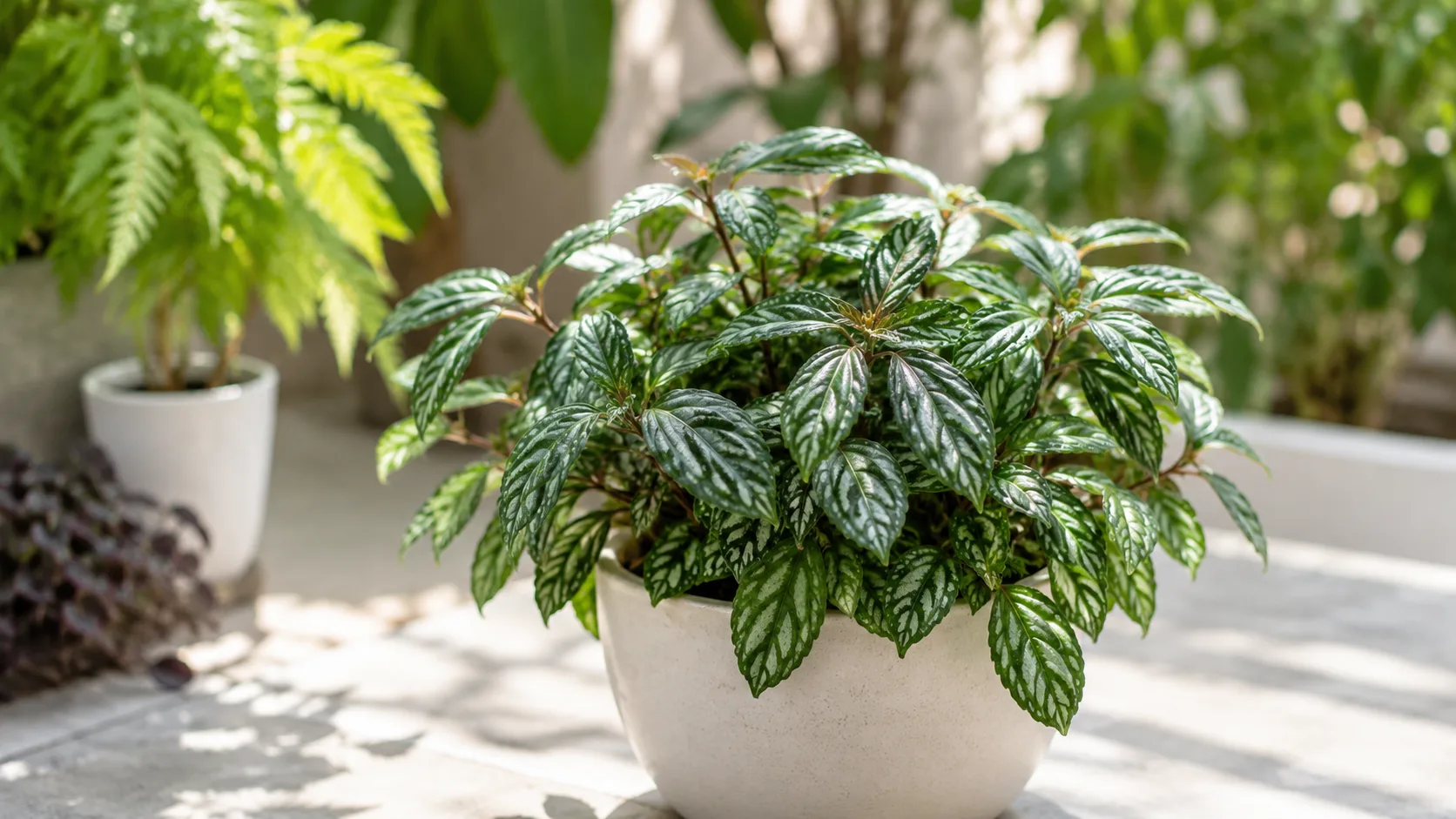
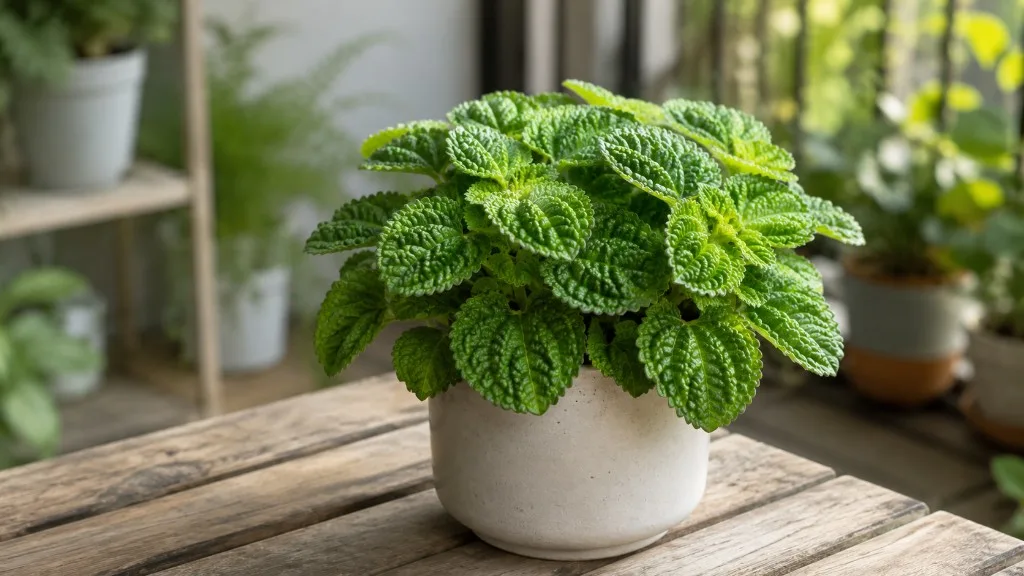
Walk into a plant shop looking for a Pilea and you might expect round, coin-shaped leaves. Pilea Moon Valley breaks that assumption completely. Instead of flat discs, it grows a compact mound of deeply puckered, bronze-green foliage that looks more like a miniature lunar landscape than a money plant. That texture is the whole point - and it changes how you should think about light, humidity, watering, and pest checks in a normal home.
This guide covers what Moon Valley actually is botanically, how it differs from the Pileas you already know, and the practical indoor routine that keeps the leaves crisp, colored, and compact. By the end you should know where to place it, how often to water it, what humidity level to aim for, how to propagate it, whether it is safe around pets, and how to fix the symptoms that show up most often on textured foliage.
What Pilea Moon Valley Actually Is
Pilea Moon Valley is a cultivated form of Pilea mollis, a species in the Urticaceae family - the nettle family. Despite the family name, Moon Valley does not sting. It is grown purely for foliage: ovate, toothed leaves with sunken veins, bronze undertones, and bright green margins. The Missouri Botanical Garden describes the leaf surface as strongly puckered in a way that resembles the craters and valleys on the moon, which is where the cultivar name comes from.
In the wild, Pilea mollis is native to wet tropical regions of northeastern Colombia and northern Venezuela, where it grows as an understory herb in humid forests at low to mid elevations. That origin story matters indoors. Moon Valley is not a desert plant, not a windowsill succulent, and not a low-light tolerant vine. It is a small tropical foliage plant that wants filtered light, steady warmth, and air moisture that does not swing wildly from day to day.
The cultivar itself is compact and upright. Missouri Botanical Garden lists ‘Moon Valley’ as a more mounding, upright form reaching about 12 inches (30 cm) tall, compared with the trailing habit of the species type. Leaf undersides are often reddish, stems can carry a bronze cast, and indoor plants rarely flower in ordinary homes. When they do bloom, flowers are tiny and pink-green - interesting botanically, but not the reason anyone buys the plant.
One honest caveat before we go further: Moon Valley is also commonly sold as a cultivar of Pilea involucrata (Friendship Plant). The Missouri Botanical Garden notes that synonymity has not been conclusively determined. For care purposes the distinction rarely changes your routine, but it does explain why tags, shops, and care articles swap names. If your plant came labeled Pilea involucrata ‘Moon Valley’ or simply “Friendship Plant,” you are still looking at the same textured mound most collectors mean when they say Moon Valley.
Moon Valley vs Other Pileas
Not every Pilea behaves the same indoors. Moon Valley’s textured leaves and humidity appetite put it closer to a terrarium foliage plant than to the easygoing coin Pilea on your coworker’s desk.
Moon Valley vs Pilea peperomioides (Chinese Money Plant)
Pilea peperomioides is the round-leaf “Chinese Money Plant” that went viral for its pancake foliage and self-propagating pups. Moon Valley is a different species with a different silhouette and different tolerances.
| Feature | Pilea Moon Valley (P. mollis) | Chinese Money Plant (P. peperomioides) |
|---|---|---|
| Leaf shape | Puckered, crater-textured, bronze-green | Round, flat, coin-like |
| Growth habit | Compact upright mound, ~12 in. tall | Upright on a stem, often taller over time |
| Humidity | Prefers moderate to high (50–60%+) | Tolerates average home humidity better |
| Light | Bright indirect; avoid hot direct sun | Bright indirect; slightly more forgiving |
| Standout appeal | Texture and color depth up close | Graphic round leaves and easy pups |
If you have succeeded with peperomioides in a dry living room, do not assume Moon Valley will be identical. The textured leaf surface loses water faster at the margins when humidity drops, and the plant stays shorter and bushier rather than sculptural on a long stem.
Moon Valley vs Pilea involucrata and the Naming Confusion
Pilea involucrata is the species behind the common name Friendship Plant, another textured Pilea with quilted leaves and a trailing-to-mounding habit. Moon Valley is often attributed to Pilea Moon Valley overview in commerce even when the more accurate label is Pilea mollis ‘Moon Valley’.
For practical care, treat them as sisters, not duplicates. Both want Pilea Moon Valley light guide, evenly moist soil, and higher humidity than average apartments provide. Both are commonly propagated from stem cuttings and both are widely described as non-toxic to pets under the friendship-plant listings used by retailers. The difference is mostly aesthetic: Moon Valley is more upright, more bronze, and more dramatically puckered, with brighter green leaf margins that make the crater texture easier to see at a distance.
If you are buying, worry less about the exact Latin epithet and more about the plant in front of you: firm stems, clean leaf texture, no webbing on undersides, and new growth scattered through the mound rather than one stretched tip.
Light: Bright, Indirect, and Texture-Preserving
Moon Valley evolved on the tropical forest floor, which means it wants bright, indirect light or part shade, not direct sunbeams across the leaves. The Missouri Botanical Garden is explicit for indoor culture: grow it in bright indirect light and avoid full sun. The same source recommends part shade indoors, tolerating medium light but not intense direct exposure.
A practical placement map for most homes:
- East-facing window: Often ideal. Morning sun is gentler, and the plant receives bright light for much of the day without midday scorch.
- North-facing window: Works if the room is not dim. Watch for leggy stems and pale new leaves - signs the plant wants to be closer to the glass or nearer a brighter source.
- South- or west-facing window: Fine only with distance or a sheer curtain. Hot afternoon sun bleaches the bronze tones and burns the puckered ridges, leaving tan patches that permanently mar the texture.
The texture that makes Moon Valley special is also what makes it unforgiving in direct sun. Flat leaves can sometimes shrug off a little harsh light; deeply ridged leaves show damage faster because the raised ridges and sunken valleys heat unevenly and dry unevenly.
Low light is survivable for a while, but the plant tells you quickly. Leggy stems, long internodes, smaller new leaves, and loss of the tight mound shape mean it is stretching for photons. Move it closer to the window in small steps over a week rather than jumping from a dark shelf to a south-facing sill in one afternoon. Acclimation matters because sudden light shocks show up as washed-out or scorched foliage just as surely as chronic shade shows up as sparse growth.
Rotate the pot a quarter turn every week or two so the mound fills evenly. Moon Valley is small enough that one-sided growth becomes obvious fast, and a lopsided mound is harder to correct than preventing the lean in the first place.
Watering: Even Moisture Without Soggy Roots
Moon Valley likes even moisture, not wet feet. Missouri Botanical Garden calls for medium water indoors: water moderately during the growing season and reduce watering from fall through late winter. That seasonal rhythm is more reliable than watering every Tuesday regardless of what the pot is doing.
A workable starting point in most homes:
- Active growth (spring and summer): Water when the top 2–3 cm (about 1 inch) of mix feels dry, often roughly every 7–10 days.
- Slower months (fall and winter): Stretch the interval to about 10–14 days, still checking soil first.
The interval is a starting point, not a rule. A Moon Valley in a 4-inch plastic pot on a bright kitchen windowsill will dry faster than the same plant in a glazed ceramic pot in a cool north room. Light, pot material, humidity, and root mass all change the math.
The failure mode to fear is not one missed watering. It is chronic overwatering in weak light, which leads to yellowing leaves, soft stems, sour-smelling mix, and stem or root rot on Pilea Moon Valley. Missouri Botanical Garden specifically flags stem rot as a problem on Pilea mollis. Moon Valley’s stems are also fragile and break easily, so a rotting base can topple the whole display mound faster than you expect.
Underwatering shows up as wilting, dry leaf edges, and gray-bronze dulling of the foliage. Wilting on dry mix points to thirst; wilting on wet mix points to stem rot, which Missouri Botanical Garden specifically flags as a problem on Pilea mollis.
How to Read Soil Moisture in a Shallow Pot
Because Moon Valley usually lives in a small pot, the soil volume is limited and the dry/wet swing can happen quickly. Use two checks before every major watering:
The finger or chopstick test. Push your finger or a dry wooden chopstick into the mix to the second knuckle. If the material at that depth feels cool and slightly damp, wait. If it feels dry and the chopstick comes out clean, water.
The pot weight test. Lift the pot after a thorough watering and again when you think it is dry. A dry small pot is noticeably lighter. After a few weeks you can often judge moisture by weight alone, which is especially useful when the textured leaves hide soil surface cues.
When you water, water thoroughly until a little runs from the drainage holes, then empty the saucer within 30 minutes. Never let the pot sit in a puddle. If the mix dries hard and water runs down the sides without soaking in, break the surface gently with a fork, then bottom-water for twenty minutes and resume top watering next time - hard dry pockets are a common issue when peat-heavy mixes age in small containers.
Humidity and Temperature Indoors
Humidity is where Moon Valley separates itself from “easy Pilea” reputation plants. The species comes from humid tropical forests, and the cultivar keeps that preference. Missouri Botanical Garden recommends high humidity, suggesting humidified rooms or placement on a bed of wet pebbles. Most experienced growers target 50–60% relative humidity as a floor, with the plant looking best closer to the upper half of that range or slightly above.
Below about 40% for long stretches, expect crispy leaf margins, shrunken new growth, and higher spider mite risk. Textured leaves show desiccation earlier than smooth foliage because the thin ridge tips dry out first. If your home runs dry in winter - and most heated homes do - plan humidity support rather than hoping misting will rescue the plant.
What works reliably:
- Pebble tray: A shallow tray of stones with water kept just below the pot bottom. It raises local humidity a few points without soaking the roots.
- Plant grouping: Several small tropicals on one shelf create a shared transpiration bubble. Moon Valley pairs well with other humidity-friendly foliage plants.
- Small humidifier: The most dependable fix in dry apartments. Even a tabletop unit near the plant is enough if you run it consistently.
- Bright bathroom or kitchen shelf: Often the best “free” humidity in the house, provided the light is still adequate.
What works poorly: misting the puckered leaves. The humidity bump is brief, water can sit in the leaf valleys and encourage fungal spotting, and you do little to change the room’s actual moisture level. Put the effort into a tray or humidifier instead.
Temperature is the easier variable. Moon Valley is comfortable in ordinary indoor ranges around 65–75°F (18–24°C), and the Missouri Botanical Garden culture notes assume a warm indoor environment. Avoid cold drafts from winter windows, air-conditioning vents pointed directly at the pot, and sudden drops below about 60°F (16°C) for long periods. Prolonged chill dulls foliage color and slows rooting after Pilea Moon Valley repotting guide or propagation.
USDA hardiness is Zone 11–12 outdoors. In temperate climates, treat Moon Valley as an indoor or terrarium plant year-round, not a patio perennial.
Soil and Container Choice
Missouri Botanical Garden recommends a peaty, soil-based potting mix with enough structure to stay moist but not sodden. A practical home recipe that matches that guidance:
- 80–85% quality all-purpose indoor potting mix
- 15–20% perlite for drainage and air around roots
The goal is a mix that holds moisture for a few days in a small pot but drains cleanly when you water deeply. Pure peat-heavy blends sometimes work short term, then compact and suffocate roots - a common reason a Moon Valley that looked perfect for six months suddenly wilts in wet mix.
Target pH roughly 6.0–7.0, slightly acidic to neutral. Most bagged indoor mixes already land in that band, and hobbyists rarely need to adjust unless tap water is extremely alkaline and the plant shows persistent chlorosis on new leaves.
Pot selection matters more than people expect for a 12-inch plant:
- Drainage holes are non-negotiable. Decorative cachepots without drainage are where Moon Valley goes to develop stem rot.
- Small is fine. Moon Valley looks best in a pot proportional to the mound. An oversized pot holds excess water the root system cannot use.
- Plastic vs. terracotta: Plastic retains moisture longer - helpful in dry homes if you tend to underwater. Terracotta breathes and dries faster - helpful if you tend to overwater. Match the pot material to your habits, not the other way around.
If water runs straight through and the plant wilts soon after, the mix may have gone hydrophobic or the roots may have filled the pot. That is a repot signal, not a Pilea Moon Valley watering guide problem.
Fertilizer Schedule and Strength
Moon Valley is not a heavy feeder. It needs light nutrition during active growth and silence the rest of the year. A balanced water-soluble houseplant fertilizer at half the label strength, applied about monthly from spring through early fall, is enough for most specimens. Skip feeding in late fall and winter when growth slows, and skip feeding on a stressed, drought-damaged, or recently repotted plant.
Always water first, then fertilize moist soil. Feeding dry roots concentrates salts and shows up as crispy leaf margins that look like humidity problems but are actually chemical burn. If you see white crust on the pot rim or mix surface, flush the pot with plain water until runoff runs clear, then pause feeding for a month.
Yellowing on older leaves alone, with good new growth, may be normal senescence. Yellowing on new, small, pale leaves after months without repotting can mean mild nutrient exhaustion - but check light and moisture before you reach for fertilizer. Moon Valley problems are environmental far more often than they are nutritional.
Pruning and Keeping the Mound Compact
Moon Valley’s selling point is a tight, textured mound. Missouri Botanical Garden advises pinching stem tips as needed to keep the plant compact. Pinching redirects energy to lateral growth, which is exactly what you want when the plant starts to look like a small shrub on stilts.
Use clean scissors or pinch with fingernails just above a leaf node. Remove:
- Leggy stems that have stretched in low light
- Damaged leaves with permanent brown patches
- Flower spikes if they appear - they divert energy from foliage and are not ornamental indoors
Do not strip the plant bare in one session. Remove a few stems at a time, let new sprouts fill in, then shape again. Because stems are brittle, support the base of the stem with your other hand while cutting so you do not wrench the crown.
Wipe dust from the puckered leaves with a soft damp cloth every few weeks. Dust blocks light and makes spider mite webbing harder to see. The texture that makes Moon Valley photogenic also makes it a dust collector.
Repotting Without Losing the Shape
Moon Valley does not need frequent repotting. Every one to two years, or when roots circle the drainage holes and water runs through without soaking, is a typical rhythm. The best timing is early in the active growing season, when longer days and warmer room temperatures support root recovery.
Go up only one pot size - about 1 inch (2.5 cm) of additional diameter. Jumping to a large pot is the fastest way to turn a compact mound into a wilted mound with rotting stems, because the extra mix stays wet while the root system catches up.
Steps that keep the plant stable:
- Water lightly the day before so stems are turgid and mix is cooperative.
- Slide the plant out and gently tease only the outer root mass - do not bare-root a healthy specimen for routine repotting.
- Place at the same depth in fresh, perlite-amended mix.
- Water lightly once, then resume normal checks after a week.
Hold off on fertilizer for three to four weeks after repotting. Your job in that window is stable light, steady humidity, and careful moisture - not pushing new growth with nutrients.
Propagation by Stem Cuttings
Moon Valley is easily propagated from stem cuttings, per Missouri Botanical Garden - one of the most satisfying traits of the plant, because a single healthy pot can become several textured mounds for shelves, gifts, or terrariums.
Stem-cutting method:
- Choose a healthy stem with several leaves and at least one obvious node.
- Cut with clean scissors, making a straight cut just below a node.
- Remove the lowest leaves so nothing sits underwater or buried in mix.
- Root in water or moist, well-draining mix. Water rooting lets you watch root formation; soil rooting often transitions with less shock.
- Keep the cutting in bright indirect light and high humidity - a loose clear bag or propagation box helps until roots form and new growth starts.
- Pot up when roots are 1–2 inches long in water, or when a gentle tug meets resistance in soil.
Offset division at the base is the second option when the plant has multiple crowns. Divide only when the parent is healthy, not when it is recovering from rot or mites. Weak parents make weak propagules.
Label your cuttings if you are running multiple Pilea species at once. Young P. mollis and P. involucrata sprouts can look similar until the crater texture develops fully.
Pet Safety and Household Placement
For many readers, pet safety is the deciding factor. Moon Valley is widely sold and listed as non-toxic to cats and dogs under the ASPCA friendship-plant entry for Pilea involucrata, the name often used in trade for this plant complex. That makes Moon Valley a strong candidate for homes with curious animals, especially compared with many popular foliage plants that carry real toxicity risk.
Two nuances keep the guidance honest. First, non-toxic does not mean edible. Large amounts of chewed leaf material can still cause mild gastrointestinal upset in cats or dogs, the same way any unfamiliar fiber might. Second, rabbits, horses, and exotic pets have different data coverage. If your pet species is not clearly listed on a current veterinary or poison-control reference, keep the plant out of reach until you confirm.
Practical placement for pet owners:
- Desk height or a closed shelf keeps texture visible without inviting nibbling.
- Terrarium with a ventilated lid can protect both the humidity curve and the plant from persistent chewers.
- Quarantine new purchases from pets for a week anyway - not for toxicity, but to rule out grower pesticides and hitchhiking pests.
If a pet does ingest a noticeable amount and shows persistent vomiting, diarrhea, or lethargy, contact your veterinarian. Non-toxic classification is reassuring, not a reason to ignore real symptoms.
Common Problems and Real Fixes
Most Moon Valley problems are environmental. The diagnostic order that saves time is always the same: check soil moisture, then light, then humidity, then pests on the leaf undersides and stem joints. Fix the condition first; prune damaged leaves after the plant stabilizes.
Yellow Leaves, Wilting, and Leggy Growth
Yellow leaves with wet mix and soft stems point to overwatering or poor drainage. Let the pot dry to the proper depth, verify drainage holes are open, and improve light if the plant has been sitting damp in a dim corner. If stems are mushy at the soil line, unpot, trim rotten tissue, and repot into fresh mix in a smaller pot if needed.
Wilting with dry mix is underwatering or root damage. A thorough soak usually revives minor drought stress within a day. If the plant wilts while the mix stays wet, suspect root rot instead of thirst.
Leggy growth with small pale leaves is low light. Move the plant closer to a bright indirect source and pinch back stretched stems to restart a compact mound.
Gray-brown leaf dulling can mean chill, low light, or both. Missouri Botanical Garden notes Pilea mollis needs a warm indoor environment. Warm the placement and brighten the light slightly, then wait for new growth before judging recovery.
Brown Tips and Crispy Edges on Textured Leaves
Crispy margins are the signature stress flag for Moon Valley. The usual causes are:
- Low humidity, especially in heated winter air
- Underwatering or uneven watering that lets the mix go bone dry between soaks
- Direct sun that desiccates ridge tips
- Salt or fluoride buildup from tap water and overfeeding
Raise humidity first, then audit your watering rhythm. If several plants in the same room show tip burn, suspect tap water quality and switch to filtered or distilled water for a month while flushing the mix. Trim brown tips with clean scissors for cosmetics only after the underlying cause is fixed - otherwise new leaves will crisp again within weeks.
Mealybugs, Spider Mites, and Leaf Spots
Missouri Botanical Garden warns to watch for mealybugs and spider mites on Pilea mollis, and leaf spots can appear when foliage stays wet or airflow is poor.
Spider mites thrive in dry air. Look for fine webbing, stippled yellowing, and dull bronze dust on the puckered undersides. Shower the plant gently to knock mites off, raise humidity, and follow with insecticidal soap applied to all leaf surfaces, including the valleys. Repeat weekly until clean.
Mealybugs hide in stem axils as white cottony clusters. Dab visible insects with 70% isopropyl alcohol on a swab, then treat with insecticidal soap. Quarantine the plant while treating so mealybugs do not spread to smoother-leaved neighbors that are easier for them to colonize.
Leaf spots from fungal issues often follow misting or overhead watering. Remove affected leaves, improve airflow, and keep water off the foliage. Severe stem rot from fungal infection may require discarding the plant if the crown collapses - prevention through drainage and humidity management is far easier than cure.
Because Moon Valley stems are fragile, handle the plant gently during treatment. A vigorous scrub can break stems and create entry points for rot exactly when the plant is already stressed.
Conclusion
Pilea Moon Valley is a small tropical foliage plant grown for one reason: crater-textured leaves that read beautifully up close on a windowsill, desk, or terrarium shelf. The care is not difficult, but it is specific. Give it bright indirect light, even moisture without soggy soil, humidity at or above roughly 50%, warm stable indoor temperatures, a peaty well-draining mix with perlite, light feeding in the growing season, and occasional pinching to preserve the compact mound.
What trips growers up is treating Moon Valley like Pilea peperomioides or like a plant that can live on a calendar schedule. The textured leaves tell you faster when humidity, light, or watering is wrong - and they reward you longer when those basics stay steady. Name tags may say Pilea mollis or Pilea involucrata; your eyes and the pot’s drying rhythm matter more than the label debate.
If you want a pet-friendly, space-efficient foliage plant with real visual depth, Moon Valley is one of the best options in the genus. Place it where you can see the texture, keep the air around it slightly more humid than your average room, and check the soil before you water. Do that consistently and the craters stay sharp, the bronze tones stay rich, and the mound stays appropriately small.
When to use this page vs other Pilea Moon Valley guides
- Pilea Moon Valley overview - Canonical hub for this species - care topics and problems branch from here.
- Pilea Moon Valley problems - Symptom-first path when you already know something is wrong.
Related Pilea Moon Valley guides
- Pilea Moon Valley watering
- Pilea Moon Valley light
- Pilea Moon Valley soil
- Pilea Moon Valley propagation
- Pilea Moon Valley fertilizer
- Pilea Moon Valley repotting
- Pilea Moon Valley pruning
- Brown Tips on Pilea Moon Valley
- Leggy Growth on Pilea Moon Valley
- Root Rot on Pilea Moon Valley
- Yellow Leaves on Pilea Moon Valley
- Pilea Moon Valley problems
How to care for Pilea Moon Valley?
How much light does Pilea Moon Valley need?
bright indirect light, medium indirect light
- bright indirect light, medium indirect light - bright indirect light, medium indirect light.
When should you water Pilea Moon Valley?
Every 7–10 days in summer - allow top 2–3 cm to dry. Every 10–14 days in winter.
- Check top 2 inches - Every 7–10 days in summer - allow top 2–3 cm to dry.
- Drain excess water - Empty the saucer after watering so the roots are not sitting in standing water.
What soil works best for Pilea Moon Valley?
Standard potting mix + 15–20 % perlite. Well-draining. pH 6.0–7.0.
- Well-draining mix - Well-draining.
Grower notes for Pilea Moon Valley
What makes Moon Valley different
Pilea Moon Valley is grown for textured, quilted leaves rather than the round coin leaves people associate with Pilea peperomioides. It wants brighter humidity-friendly conditions and can sulk if the mix dries hard. The leaf surface makes dust and mite damage more visible, so close inspection matters. It is a compact foliage plant for shelves and terrarium-style humidity, not a sculptural plant on a tall bare stem.
Moon Valley humidity note
Keep Moon Valley evenly moist without letting the crown sit wet. It appreciates a room with naturally higher humidity or a grouped plant shelf, especially when air conditioning dries the leaf edges. A small pot is fine as long as the mix does not compact. If new leaves are tiny and puckered, check light, moisture swings, and pests before feeding.
Moon Valley buying note
Look for clean textured leaves and firm stems near the soil line. Avoid plants with webbing, speckled leaves, or crisp edges across most of the pot. Since the plant is valued for leaf texture, damaged foliage affects the whole display. A healthy compact specimen should have new growth tucked throughout the mound, not only at one stretched tip.
What matters most with Pilea Moon Valley
Pilea Moon Valley is easiest to grow when you judge the whole plant: new growth, root-zone moisture, light exposure, and how quickly the pot dries after watering. In practice, the care checkpoint is simple: bright indirect light, medium indirect light. Pair that with standard potting mix + 15–20 % perlite. Well-draining; pH 6.0–7.0, and avoid changing water, pot size, and placement all at once.
Best placement in a real home
Pilea Moon Valley belongs where bright indirect light, medium indirect light is realistic for most of the day, not only where the pot looks good. Every 7–10 days in summer - allow top 2–3 cm to dry. Every 10–14 days in winter. If the pot stays wet longer than expected, move the plant into better light or reassess the mix before watering again. Humidity target: Moderate to high humidity (50–60%).. Temperature comfort zone: 16°C to 24°C (60–75°F).
Before you buy this plant
Choose Pilea Moon Valley with firm new growth, clean leaf undersides, and soil that does not smell sour or feel compacted. Be cautious if you see yellow-leaves, sticky residue, collapsed crowns, or a pot that is wet in poor light. Cosmetic old-leaf damage is less worrying than weak roots or active pests.
First month after bringing it home
Do not repot Pilea Moon Valley on day one unless the mix is failing or pests are obvious. Quarantine it, learn how fast the pot dries, and keep care boring while it adjusts. Watch especially for yellow-leaves, brown-tips, and root-rot. If problems appear, correct the condition first rather than stacking fertilizer, repotting, and pruning together.
Is it pet safe?
Pilea Moon Valley is generally considered pet safe.
Watering Pilea Moon Valley
Every 7–10 days in summer - allow top 2–3 cm to dry. Every 10–14 days in winter.
Soil & potting for Pilea Moon Valley
Standard potting mix + 15–20 % perlite. Well-draining. pH 6.0–7.0.
Humidity & temperature for Pilea Moon Valley
Pilea Moon Valley prefers moderate to high humidity (50–60%), though normal home humidity is usually fine. Keep temperatures around 16°C to 24°C (60–75°F).
| Detail | Information |
|---|---|
| Humidity | Moderate to high humidity (50–60%) - normal home humidity is fine. |
| Ideal temperature | 16°C to 24°C (60–75°F) |
Fertilizer & pruning for Pilea Moon Valley
Use feed lightly during active growth. Use monthly during spring and summer.. for Pilea Moon Valley.
| Detail | Information |
|---|---|
| Fertilizer type | Feed lightly during active growth. Use monthly during spring and summer.. |
Common problems on Pilea Moon Valley
Brown Tips
LowLikely cause: Low humidity or salt build-up from over-fertilising
Quick fix: Increase humidity; flush soil with plain water
Full fix guide →Leggy Growth
MediumLikely cause: Insufficient light
Quick fix: Move to brighter indirect light
Full fix guide →Root Rot
MediumLikely cause: Persistently wet soil
Quick fix: Repot in fresh draining mix
Full fix guide →Yellow Leaves
MediumLikely cause: Overwatering
Quick fix: Allow top 2–3 cm to dry before watering
Full fix guide →