Yellow Leaves on Pilea Moon Valley: Causes, Checks & Fixes
Quick answer
Yellow leaves on Pilea Moon Valley usually mean wet soil in a dim corner-not one old leaf aging out. First step: press your finger 2–3 cm into the mix; if it stays cold and wet for days, stop watering until that depth dries.
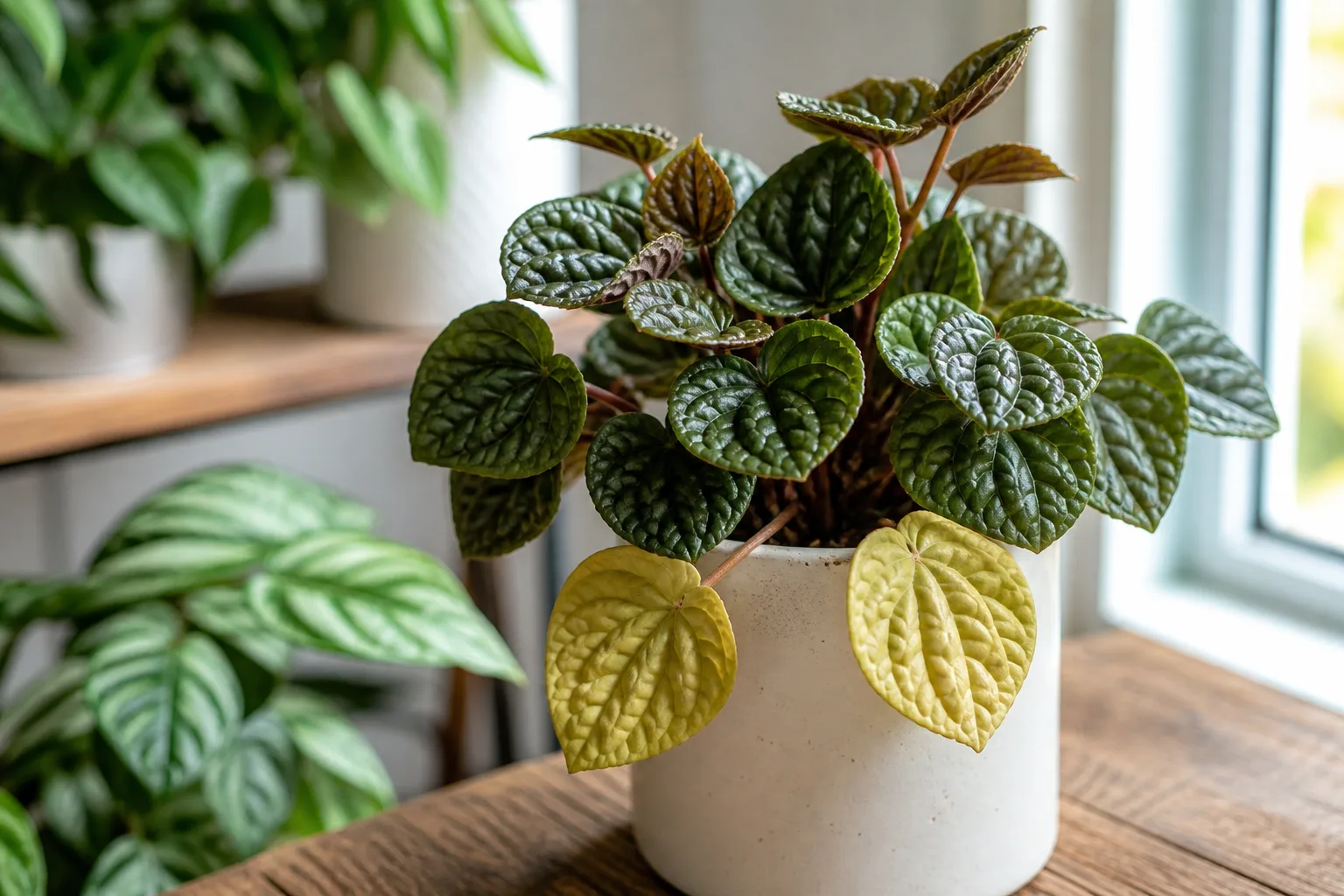
Yellow Leaves on Pilea Moon Valley: Causes, Checks & Fixes
This guide covers yellow leaves on Pilea Moon Valley. See also the general Yellow Leaves guide, watering, and light pages for this plant.
Yellow Leaves on Pilea Moon Valley: Causes, Checks & Fixes
Quick answer
Yellow leaves on Pilea Moon Valley (Pilea mollis ‘Moon Valley’) usually trace to wet soil in a dim corner-not a single old leaf aging out on an otherwise healthy mound. The quilted bronze-green foliage can look textured and perky while lower leaves chartreuse and the pot stays heavy, because textured leaves hide root stress until the mix has been soggy too long.
First step: press your finger 2–3 cm into the mix. If it feels cold and wet for days after your last drink, stop watering until that depth dries. If the pot is light, mix pulls from the sides, and leaves wilt on dry soil, read underwatering instead.
Senescence reassurance: One or two yellow lowest quilted leaves on a firm mound with green puckered new tips and normal dry-down between waterings is usually normal lower-leaf drop-not a crisis. Widespread chartreuse on wet, heavy mix is a care signal.
Moon Valley is grown for dense textured foliage on a compact mound-not a single coin leaf on one stem like Pilea peperomioides. When several lower leaves yellow at once while soil stays swampy, treat it as a root-zone problem, not cosmetic aging alone.
What yellow leaves look like on Moon Valley
Yellowing on this cultivar follows recognizable patterns tied to quilted leaf morphology and mounding habit.
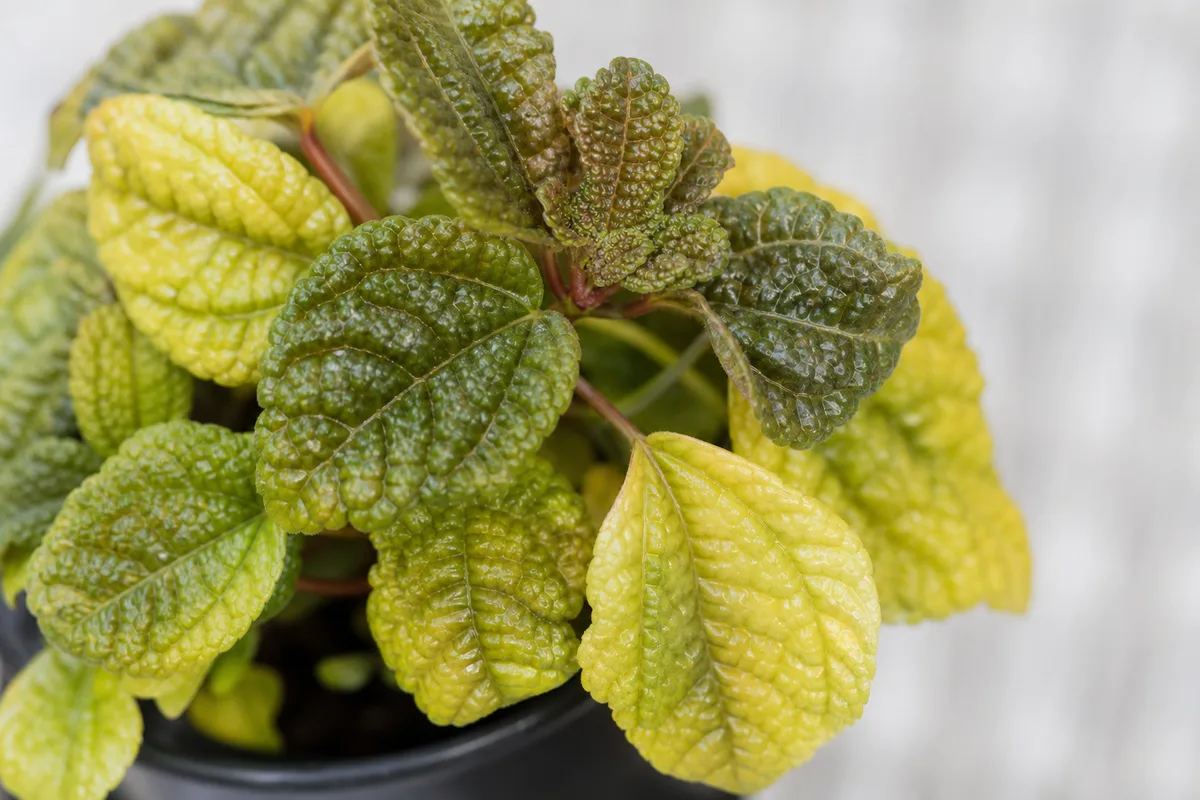
Yellow Leaves symptoms on Pilea Moon Valley - compare with healthy tissue on the same plant.
Normal senescence (low urgency):
- One or two oldest lowest quilted leaves fade to chartreuse or yellow
- New puckered tips stay bronze-green with firm texture
- Pot lightens between your normal watering rhythm
- Stems at soil line feel firm
Overwatering plus low light (most common stress pattern):
- Several lower quilted leaves turn chartreuse or yellow at once
- Mix at 2–3 cm stays wet and cool for days; pot feels heavy
- New tips may stay small and pale in the same dim spot
- Veins can stay green briefly on textured bronze-green leaves
- Sour smell, white mold on soil surface, or fungus gnats near the pot
- Yellow climbs toward new growth while soil stays soggy-see root rot if stems soften
Underwatering:
- Yellow or limp leaves on light, dry pot; mix pulls from pot sides
- Crispy brown edges on quilted leaves-not chartreuse on wet mix
Pests:
- Speckled yellow with fine webbing in leaf craters points to spider mites
- White cottony patches in axils suggest mealybugs-soil moisture often feels normal
Nutrient stress (less common):
- Pale upper foliage on otherwise wet, heavy soil after months without feed-confirm watering first; do not fertilize waterlogged roots
Cold draft / winter shock:
- Sudden yellowing on outer leaves after a heating vent blast or cold window contact-pair with seasonal watering cutbacks in cool rooms
Why Pilea Moon Valley gets yellow leaves
Wet soil plus dim light (dominant indoor failure mode)
Moon Valley wants bright indirect light and moderate watering when actively growing. In low light, the peaty mix dries slower than growers expect from puckered, succulent-looking leaves. Pots stay wet longer, roots lose oxygen, and yellowing leaves appear on lower foliage even when you water on schedule. This compound failure-dim shelf plus heavy pot-is the signature pattern this page targets; the dedicated overwatering guide goes deeper on salvage when stems soften.
Normal lower-leaf senescence
Compact mounds naturally shed the oldest quilted leaves at the base. On a healthy plant, senescence is slow, limited, and paired with firm new growth-not a wave of chartreuse across the lower mound on soggy mix.
Underwatering after drought stress
Moon Valley wilts dramatically on dry soil. Prolonged drought yellows lower leaves and crisps edges before the whole mound collapses. The pot feels light, not heavy-route to underwatering for rehydration without confusing wilt-on-wet-soil root failure.
Not enough light alone
Pale, tiny puckered new tips in shade precede wider yellowing because the plant metabolizes slowly and uses less water-soil stays damp and roots suffocate. Read not enough light when growth stalls for months in the same dim corner.
Low humidity crossover
Brown crisp tips with yellow halos on otherwise firm leaves and normal soil moisture point to air dryness, not root rot. Fix humidity around quilted foliage via the low humidity guide-do not pour more water.
Pests on textured surfaces
Mealybugs and spider mites hide in puckered leaf craters and undersides. Speckled yellow with webbing or sticky residue needs pest routing-see spider mites and mealybugs-before assuming a watering fix.
Winter overwatering
Reduce watering in fall through late winter when growth slows. Cool rooms plus wet soil yellow Moon Valley fast.
Lookalike symptoms - quick comparison
| Pattern | Soil / pot | New growth | Likely cause | Start here |
|---|---|---|---|---|
| 1–2 yellow lowest quilted leaves | Normal dry-down; pot lightens | Green puckered tips | Normal senescence | Monitor; no emergency watering change |
| Several chartreuse lower leaves | Wet at 2–3 cm; heavy pot | May be pale in dim spot | Overwatering + low light | Overwatering - dry-down first |
| Limp yellow leaves | Bone dry; light pot; mix gap | Wilted tips | Underwatering | Underwatering |
| Tiny pale puckered tips | Often wet for weeks in shade | Small, flat puckering | Not enough light | Not enough light |
| Crisp tips, yellow halos | Normal moisture | Otherwise firm | Low humidity | Low humidity |
| Speckled yellow + webbing | Often normal moisture | Stippled texture | Spider mites | Spider mites |
| Yellow + soft stems + sour smell | Wet, swampy | Collapsing crown | Root rot | Root rot - same day |
Senescence vs. stress - decision tree
Work through this before changing your whole care routine:
- Count affected leaves - One or two lowest quilted leaves only → likely senescence if steps 2–4 check out. Three or more lower leaves chartreuse at once → stress pathway.
- Feel the mound base - Firm stems at soil line support senescence or mild stress. Mushy or hollow bases → root inspection today.
- Check soil at 2–3 cm - Dry or normally cycling → senescence plausible. Wet and cold for days → overwatering pathway regardless of leaf count.
- Inspect newest tips - Green, puckered, bronze-tinged new growth → plant is still functioning. Pale, tiny new tips in shade → add light before more water.
- Pot weight - Lightens between drinks → healthy rhythm. Stays heavy a week after watering → pause drinks and read overwatering.
- Pest scan - Webbing, speckles, or cottony patches → pest guides, not fertilizer.
Case study (editorial example): A Moon Valley on a dim bookshelf with a heavy 15 cm pot showed four chartreuse lower leaves but firm stems. After stopping water until 2–3 cm dried and moving to bright indirect light three feet from an east window, firm puckered new tips emerged in 10–14 days. Old yellow leaves did not re-green-that is normal.
How to confirm the cause
Use this six-step inspection in order:
- Newest quilted leaves - Color, puckering depth, and size relative to older leaves
- Soil moisture at 2–3 cm - Wet and cold vs. dry and dusty
- Pot weight - Heavy days after watering vs. light and hollow-sounding
- Stem bases - Firm vs. soft where stems meet soil
- Leaf undersides and craters - Webbing, speckles, mealybug cotton
- Roots (if decline continues) - Unpot only when stems soften, smell is sour, or dry-down failed for two weeks-see root rot for trim-and-repot workflow
Press a finger 2–3 cm into the mix before fertilizing, repotting, or misting the crown.
First fix for Pilea Moon Valley - by confirmed cause
One clear rule: Match the first action to what you confirmed-not a bundle of repot, feed, and prune on day one.
If soil is wet and pot is heavy (overwatering pathway)
Stop watering until the top 2–3 cm is dry. Empty saucers. Move to brighter indirect light if the plant sat in a dim corner. Do not fertilize. Full protocol: overwatering guide.
If soil is dry and pot is light (underwatering)
One thorough soak until a little water runs from drainage holes; discard excess. Resume checking 2–3 cm dryness-do not lock into a calendar. Details: underwatering guide.
If new tips are pale and tiny in shade (light stress)
Move to bright indirect light today-then wait for firmer puckered new growth before pinching or feeding. Brighter light helps the mix dry evenly without extra drinks. See not enough light.
If only 1–2 lowest leaves yellow on firm mound (senescence)
No watering change needed if dry-down rhythm is healthy. Snip fully yellow leaves if tidy; otherwise let them drop. Watch the next two new leaves-if more lower leaves yellow while soil stays wet, switch to the overwatering pathway.
If webbing or speckles confirmed (pests)
Isolate and rinse leaf undersides before any spray. Route to spider mites or mealybugs. Do not fertilize while treating.
If stems soften or soil smells sour (root rot)
Same-day unpot and inspect roots-dry-down alone is not enough. Follow root rot.
Recovery timeline
Senescence: Old yellow quilted leaves will not re-green. Replacement comes from new puckered tips over the next few weeks-no special intervention beyond normal care.
Mild overwatering with firm stems: Within one to two weeks of corrected dry-down and brighter light, expect firm new leaves with clean puckered texture. Lower chartreuse leaves may drop; judge success by new growth and a pot that lightens between waterings.
Moderate root stress: Three to four weeks with some leaf loss. Hold fertilizer until new growth looks stable.
Severe rot: Several weeks to salvage via trim and repot-or stem cuttings if the mound cannot recover. Moon Valley roots easily from clean tips above damage.
What not to do
Do not pour more water because leaves look tired when soil is already wet-that worsens oxygen starvation at the roots.
Do not fertilize a waterlogged or pest-stressed plant-salts on damaged roots worsen yellowing.
Do not strip every leaf at once; the mound needs foliage to recover photosynthesis.
Do not mist the quilted crown instead of fixing soil moisture-surface wetness in leaf clusters can rot fragile stems.
Do not repot on day one unless stems are soft or soil smells rotten.
When removing fallen yellow leaves near pets, bag them promptly. Moon Valley is widely listed as non-toxic to cats and dogs under the ASPCA friendship-plant entry for this plant group-non-toxic is not edible, and large ingestions can still cause mild stomach upset.
How to prevent yellow leaves on Moon Valley
Water when the top 2–3 cm dries, not on a fixed weekly calendar-see the watering guide for seasonal rhythm.
Keep bright indirect light so the peaty mix cycles predictably; pair with 50–60% humidity around leaves without soaking the crown.
Use perlite-heavy mix and pots with drainage holes. Group pots for microclimate if edges crisp-route chronic crisp tips to low humidity.
Reduce watering sharply in fall and winter when growth slows.
Inspect quilted leaf surfaces weekly during active growth-pests and moisture stress both show on textured foliage.
Practical checks
Urgency check
Treat as urgent if yellow climbs to new growth, stems soften at the base, webbing spreads across leaf craters, several leaves collapse at once while soil stays wet, or soil smells sour. Same-day root inspection may be required.
Not urgent: One or two yellow lowest leaves on a firm mound with green puckered tips and normal dry-down.
Best inspection order
Newest quilted leaves → soil moisture at 2–3 cm → pot weight → leaf undersides and craters → stem bases → roots only if decline continues.
Moon Valley care cross-check
Moon Valley sulks when the mix dries hard or stays soggy in poor light. Pair bright indirect exposure with a drying cycle that matches your room-not a fixed schedule copied from a coin-leaf Pilea or succulent. For full species context, start from the Moon Valley overview.
Related Pilea Moon Valley problem guides
- Moon Valley overview - identification, humidity, and general care hub
- Overwatering - wet-soil dry-down, fungus gnats, winter cutbacks
- Root rot - soft stems, sour soil, trim-and-repot salvage
- Not enough light - pale puckered tips and wet-soil compounding in shade
- Underwatering - light pot, crispy edges, rehydration protocol
- Low humidity - crisp tips with yellow halos on firm leaves
- Spider mites - speckled yellow with webbing in leaf craters
- Mealybugs - cottony patches in quilted axils
- Watering - top 2–3 cm dry-down rhythm year-round
Conclusion
Yellow leaves on Pilea Moon Valley are a diagnostic symptom, not one disease. Start with soil at 2–3 cm and newest puckered growth: one or two yellow lowest leaves on a firm, drying pot is usually senescence; widespread chartreuse on heavy wet mix in a dim corner is the classic overwatering-plus-light failure this cultivar hides until the lower mound gives it away. Match your first fix to the confirmed cause, route chronic patterns to the sibling guides above, and judge recovery by firm new quilted tips-not by old leaves re-greening.