Watering Pilea Moon Valley: Schedule, Soil Checks & Mistakes
Watering Pilea Moon Valley: Schedule, Soil Checks & Mistakes
Watering Pilea Moon Valley: Schedule, Soil Checks & Mistakes
Pilea Moon Valley watering is one of those care topics where the plant looks thirsty when it is drowning - and sulks like it is dry when the mix has turned into a brick. Pilea mollis ‘Moon Valley’ is a compact tropical herb from humid understory forests in northeastern Colombia and northern Venezuela, grown indoors as a textured bronze-green mound rather than a tall sculptural stem. Missouri Botanical Garden rates it medium water: water moderately during the growing season and reduce watering from fall through late winter. That is not permission to keep the soil wet. It means even moisture with real dry-down between drinks - and fast action when stem rot threatens this species.
The main mistake is treating Moon Valley like a calendar plant. A weekly reminder to check the pot is fine. A weekly soak regardless of moisture is how compact mounds develop soft stems, sour mix, and limp puckered leaves with wet roots. This guide covers how often to water, how to read soil and pot weight, terrarium vs open-shelf timing, seasonal shifts, step-by-step technique, overwatering and underwatering recovery, and how Moon Valley differs from the round-leaf Chinese money plant. For full species context, see the Pilea Moon Valley overview.
Why Moon Valley Watering Differs From Other Pileas
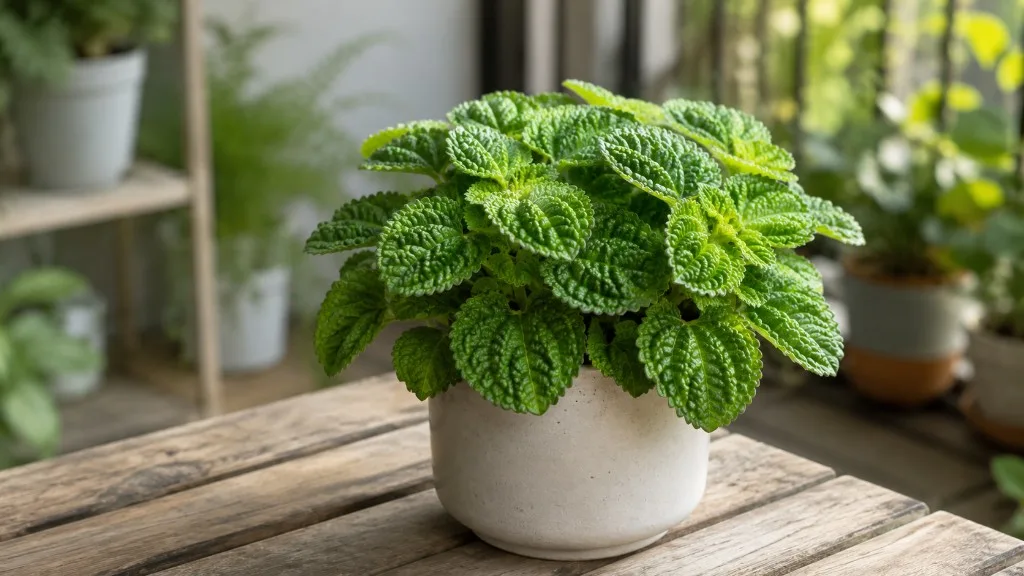
Moon Valley is not Pilea peperomioides. The Chinese money plant tolerates average home humidity and a wider dry-down window on a single upright stem. Moon Valley is a low, quilted mound - Missouri Botanical Garden describes ‘Moon Valley’ as a more upright, mounding cultivar reaching about 12 inches (30 cm) tall with leaves strongly puckered like lunar craters. That leaf architecture matters for watering because textured ridges and sunken valleys expose more surface area at the margins, so low humidity dries leaf edges faster even when the root zone is still moist. Puckered leaves also show wilt early: the mound looks collapsed and soft before a flat-leaf pilea in the same pot would telegraph the same root stress.
Compact Mound Geometry and Root Volume
A Moon Valley pot is often small relative to the leaf mass sitting on top. Roots fill a shallow, wide root ball rather than a deep tap system. Less soil volume means faster dry-down on an open shelf - but also faster waterlogging if you pour too often into a pot that has not dried. In a terrarium or humidity dome, the opposite happens: high ambient humidity slows transpiration and keeps the surface from crisping, so the top layer can look fine while the center stays wet for days. That is the hidden overwatering trap on Moon Valley displays. Match checks to the root zone, not the puckered foliage alone.
Moon Valley also appreciates high humidity - humidified rooms or pebble trays per Missouri Botanical Garden - which pairs with a peaty, soil-based potting mix that holds moisture without staying sodden. Your soil mix (standard potting mix plus 15–20% perlite) should drain freely; soggy peat in a cachepot is still soggy peat.
How Often to Water Pilea Moon Valley Indoors
There is no honest universal schedule. Illinois Extension is clear: several factors influence watering frequency, including plant species, temperature, humidity, light, pot size, and mix - and the best method is testing soil with your finger, not obeying a calendar (Illinois Extension - Watering). For Moon Valley, use checks every time and treat intervals below as home-condition starting points, not rules.
In a typical bright, moderately humid home with a 4-inch (10 cm) pot and well-draining mix:
- Active growth (roughly March–September): often every 7–10 days once the top 2–3 cm (about 1 inch) of mix is dry
- Cooler, darker months (roughly October–February): often every 10–14 days, sometimes longer in dim or cool rooms
Terrarium-grown Moon Valley may need water less often because humidity reduces dry-down - but rot risk rises if you water on open-shelf timing without checking. A plant under grow lights in a warm room may need the summer side of the range year-round. Track your pot: note the date you watered, when weight dropped, and how the mound looked two days later.
The Top 2–3 cm Dry-Down Rule
Missouri Botanical Garden’s medium-water rating translates indoors to moderate irrigation when the upper mix has dried, not constant dampness. For Moon Valley, wait until the top 2–3 cm feels dry to the touch - coolness and cling mean wait; uniform dryness means proceed. PlantTalk Colorado notes that plants needing even moisture should be watered when the top layer begins to feel dry, while those tolerating slight drying should be checked deeper before the mix goes completely dry (PlantTalk Colorado - Houseplants: Watering). Moon Valley sits in the first group for leaf health but still requires oxygen at the roots between drinks; permanently wet peat is how stem rot starts on Pilea mollis.
Seasonal Watering Rhythm for Moon Valley
Moon Valley metabolism follows light and temperature, not your phone reminder. Missouri Botanical Garden instructs growers to reduce watering from fall to late winter when growth slows. Cooler rooms, shorter days, and lower transpiration mean the same pour that worked in August will linger in January.
Month-by-Month Starting Intervals
Use this table as a starting framework - always confirm with finger, skewer, or pot-weight checks before watering.
| Month | Typical home conditions | Starting check interval | Notes |
|---|---|---|---|
| March–May | Brightening light, warming rooms | Every 5–8 days | New growth resumes; pot may dry faster |
| June–August | Peak light and warmth | Every 7–10 days | Top 2–3 cm dry-down rule |
| September | Transitional | Every 8–11 days | Begin stretching checks as growth slows |
| October–November | Cooler, shorter days | Every 10–14 days | Reduce volume and frequency |
| December–February | Low light, heating-dried air | Every 10–14+ days | Dim north rooms may need water rarely; watch humidity vs soil separately |
If you run grow lights through winter, treat bright-lit plants closer to the summer column. Pair seasonal watering shifts with the light guide - low light plus frequent water is the classic overwatering setup.
How to Check Soil Moisture Before You Water
Clemson HGIC states that overwatering is the main cause of death for potted plants because waterlogged roots cannot take up oxygen (Clemson HGIC - Indoor Plants: Watering). Underwatering and overwatering can look similar - wilt, yellowing, poor growth - which is why Moon Valley growers need a consistent check ritual, not a guess from leaf texture alone.
Finger, Skewer, and Pot-Weight Methods
Finger or knuckle test: Push into the mix to 2–3 cm depth. Any coolness or soil sticking to skin means wait. Dry, crumbly soil at that depth supports watering.
Skewer or chopstick test: Insert a dry wooden skewer toward the pot bottom. Darkening or clinging soil indicates moisture deep in the root ball - critical in terrariums where the surface dries slowly.
Pot-weight test: Lift the container right after a thorough watering, then daily until it feels noticeably lighter. Many growers trust weight more than surface color because it reflects the whole soil column, not just the top inch.
Moisture meters can help if calibrated to your mix, but Clemson notes wilting can occur from root rot on Pilea Moon Valley caused by too much water, not drought - so a wet reading plus limp leaves means stop, not soak (Clemson HGIC - Indoor Plants: Watering). University of Maryland Extension recommends periodically lifting the pot for weight changes and using a dowel that picks up soil moisture when inserted to the bottom (UMD Extension - Overwatered Indoor Plants).
Fast decision rule for Moon Valley: limp puckered leaves with wet, heavy mix point to overwatering or root trouble - see wilting and root rot. Limp leaves with a light, dry pot point to underwatering or compacted mix that will not absorb water.
How to Water Moon Valley Correctly
Moon Valley wants a full drink followed by even dry-down, not daily sips that keep the crown wet while never reaching deep roots. Water the soil surface evenly at the base of the mound - avoid showering the puckered foliage, which can leave water pooled in leaf valleys and encourage fungal spotting on textured tissue.
- Confirm dryness with at least one method above.
- Water slowly across the soil surface until excess runs from drainage holes - usually a minute or two for a 4-inch pot.
- Drain 15–30 minutes, then empty the saucer completely.
- Do not water again until the top 2–3 cm dries - days or weeks later, not hours.
Room-temperature water is safest; Illinois Extension recommends avoiding cold tap water straight onto roots (Illinois Extension - Watering). If leaf tips brown despite good timing, consider filtered or settled water after fixing drainage first.
Drainage, Saucers, and Cachepot Traps
Never let Moon Valley sit in runoff. NC State Extension warns that plants constantly sitting in water develop root rot and die (NC State Extension - Indoor Plant Care 101). Saucers and decorative cachepots are the silent killer: water pools where you cannot see it, wicks back into the mix, and suffocates roots. University of Florida diagnosticians note this outer-vessel pattern as a top cause of overwatering despite visible drainage holes in the inner pot (UF - Diagnosing Houseplants).
Best practice: remove the nursery pot, water in a sink, drain fully, then replace in the decorator. If you cannot remove it easily, water lightly enough to moisten without flooding - but upgrading to a removable inner pot is the real fix. After every watering, empty the saucer twice if needed - once immediately and again ten minutes later.
Bottom watering can work for Moon Valley when top watering repeatedly misses dry pockets in a rootbound mound, but PlantTalk Colorado cautions that bottom irrigation can accumulate salts unless you periodically water from the top to leach (PlantTalk Colorado - Houseplants: Watering). If you bottom-water, set the pot in shallow water until the surface darkens, remove, drain, and top-water monthly to flush salts.
Terrarium and High-Humidity Setups
Missouri Botanical Garden lists Moon Valley as good for terrariums - and terrarium culture changes the math. Enclosed glass slows evaporation from both soil and leaves. A 4-inch Moon Valley in an open terrarium with a vent may dry only slightly slower than a shelf plant. A sealed or mostly sealed setup can go 10–14+ days between checks in cool conditions while the root zone stays evenly moist - yet a single heavy pour into a closed system can keep soil anaerobic for weeks.
Terrarium rules for Moon Valley:
- Check the skewer at depth, not just surface color.
- Water small amounts when the lower half of the mix is dry, not when leaves merely look soft.
- Ventilate briefly after watering if condensation coats the glass continuously.
- Watch for mold on soil or fungus gnats - signs the mix never dries; see overwatering and fungus gnats.
High humidity on an open shelf (pebble tray, grouped plants, humidifier) sits between terrarium and dry-room extremes. You may water slightly less often than a plant in dry AC, but do not skip checks because leaves look turgid - roots can still be waterlogged.
Signs You Are Overwatering Moon Valley
Overwatering on Moon Valley often shows as yellowing lower leaves, soft stems at the soil line, and limp puckered foliage despite wet mix - the paradox that sends growers back with the watering can. Clemson HGIC links chronic excess water to root decline, wilting, and stem rot fungi (Clemson HGIC - Houseplant Diseases & Disorders). Additional signals:
- Sour or rotten smell from the mix
- Soil staying dark and cool many days after watering
- Fungus gnats on the surface
- New leaves small, pale, or slow while stems soften
- Brown, mushy roots when you tip the plant out
If several signs appear together, pause all watering and inspect the root zone before feeding or repotting on impulse. Cross-reference yellow leaves and drooping leaves when watering is the suspected trigger.
Stem Rot on Pilea mollis and Recovery Steps
Missouri Botanical Garden specifically lists stem rot as a problem on Pilea mollis. On Moon Valley this often starts at the crown where moisture lingers on a compact mound - soft, dark tissue at the base, sometimes spreading up fragile stems that break easily.
Recovery while firm tissue remains:
- Stop watering immediately.
- Unpot and rinse roots. Healthy roots are firm and pale; rotting roots are brown, black, and mushy.
- Trim all soft roots with clean scissors.
- Let the root ball air-dry several hours if rot is mild.
- Repot into fresh, perlite-amended mix in a clean pot with drainage - see repotting.
- Wait 7–14 days before the first cautious soak, then resume top 2–3 cm dry-down checks.
Severe crown rot on a small mound may not leave enough healthy stem for recovery. Take healthy stem cuttings before discarding the mother plant if you want a backup - propagation details live in the propagation guide.
Signs You Waited Too Long
Underwatering on Moon Valley shows as wilting and collapse of the mound, dry soil pulling from pot walls, and crispy margins on puckered leaves - especially when humidity is low or AC runs constantly. A single dry episode is usually recoverable. Repeated drought damages fine roots and makes the plant react badly when water finally returns - alternating flood and drought is worse than consistent checks.
Rehydrate with one thorough top watering until runoff, full drain, then return to the dry-down cycle. Do not compensate with daily small cups; that keeps the upper layer wet while deep roots stay starved.
Rehydrating Hard, Compacted Mix
Moon Valley sulks when the mix dries hard - peat shrinks, pulls from the sides, and water runs down the gap without wetting the root ball. Clemson HGIC recommends the double-watering method: water once, wait thirty minutes, water again; or submerge the pot briefly until the surface moistens, then drain completely (Clemson HGIC - Indoor Plants: Watering). UMD Extension notes pots that dried until mix pulled away from sides may need several applications to rehydrate (UMD Extension - Overwatered Indoor Plants).
If peat repeatedly goes hydrophobic, refresh the mix at the next sensible repotting rather than fighting the same brick every week.
After Repotting or Relocating the Plant
Fresh repotting changes dry-down immediately. A Moon Valley moved into a larger pot sits in extra moist mix that roots have not colonized - it dries slower than expected. After repotting, water lightly once to settle soil, then let the top 2–3 cm dry before the next full soak. Hold fertilizer for at least a month per standard transplant practice on this species.
Relocating from a humid terrarium to a dry shelf - or the reverse - changes timing overnight. Change one variable at a time: if you move the plant, wait two weeks before also changing pot size or watering rhythm drastically. The overview’s first-month advice applies: learn how fast this container dries in this spot before locking a schedule.
Post-repot wilting beyond a few days with wet mix signals oversized pot or overwatering in fresh soil - inspect roots rather than adding more water.
Moon Valley vs Chinese Money Plant Watering
Pilea peperomioides is often watered on a wider dry-down window - many growers let more of the pot dry because the coin-leaf plant tolerates brief drought on a woody stem. Moon Valley, as a humid-forest foliage mound, loses turgor faster when the root zone dries and shows edge crisping sooner in dry air, but it is less forgiving of wet feet because compact stems sit close to the soil line.
| Factor | Moon Valley (P. mollis ‘Moon Valley’) | Chinese Money Plant (P. peperomioides) |
|---|---|---|
| Dry-down trigger | Top 2–3 cm dry; even moisture preferred | Often top half or more dry in many homes |
| Humidity interaction | High humidity slows dry-down; still check depth | Tolerates average humidity better |
| Rot risk | Stem rot documented on P. mollis | Root rot possible but different stem architecture |
| Display context | Terrariums, humid shelves | Open shelves, brighter dry rooms |
If peperomioides thrives on neglect in your home, Moon Valley still needs more consistent moisture checks - not more water volume, but less tolerance for calendar guessing.
Common Watering Mistakes and How to Fix Them
Watering every Tuesday without checking soil. Fix: set a reminder to check, not to pour.
Misting puckered leaves instead of checking the root zone. Fix: assess mix moisture; address low humidity separately if edges crisp.
Leaving the pot in a full saucer or cachepot. Fix: drain after every watering; see cachepot section above.
Using dense, unamended potting soil that stays wet for weeks. Fix: perlite-amended mix per the soil guide.
Watering because leaves wilt without touching the mix. Fix: wet + wilt = overwatering; dry + wilt = underwatering.
Same summer frequency through winter. Fix: stretch intervals October–February per MOBOT seasonal reduction.
Flooding a terrarium on open-shelf timing. Fix: small pours; skewer checks at depth.
Changing water, pot, and placement the same week after purchase. Fix: stabilize watering checks for two weeks before other interventions.
Each mistake returns to the same principle: check the root zone, water thoroughly when the top 2–3 cm is dry, drain completely, and let the mix breathe before the next drink.
Conclusion
Pilea Moon Valley watering succeeds when you respect Pilea mollis biology: a humid-origin, compact mound that wants even moisture without soggy roots, seasonal reduction from fall through late winter, and pot checks instead of calendar habits. Wait for the top 2–3 cm to dry - often 7–10 days in active growth and 10–14 days or longer in winter as starting points - then water thoroughly, drain saucers and cachepots, and watch for the fast decision pair: limp leaves with wet soil mean stop; limp leaves with a light dry pot mean soak.
Terrarium and high-humidity setups slow dry-down and raise rot risk if you overpour. After repotting, expect slower drying until roots fill the new mix. Compared with Chinese money plant, Moon Valley needs tighter attention to moisture swings and stem health on textured foliage. Get the rhythm right and the cratered leaves stay bronze, firm, and worth showing close up - not collapsed over sour soil you could have caught with a skewer and an empty saucer.
When to use this page vs other Pilea Moon Valley guides
- Pilea Moon Valley overview - Start here for whole-plant context before deep-diving this topic.
- Pilea Moon Valley problems hub - Jump to symptom-specific fix guides when this care topic does not resolve the issue.
- Root Rot on Pilea Moon Valley - Escalate here when watering adjustments are not enough.