Root Rot on Pilea Moon Valley: Causes, Checks & Fixes
Quick answer
Root rot on Pilea Moon Valley shows as sour-smelling wet mix, brown mushy roots, and yellow lower quilted leaves that wilt despite moisture. First step: unpot gently, trim all soft roots with clean scissors, and repot into fresh perlite-amended mix with open drainage.
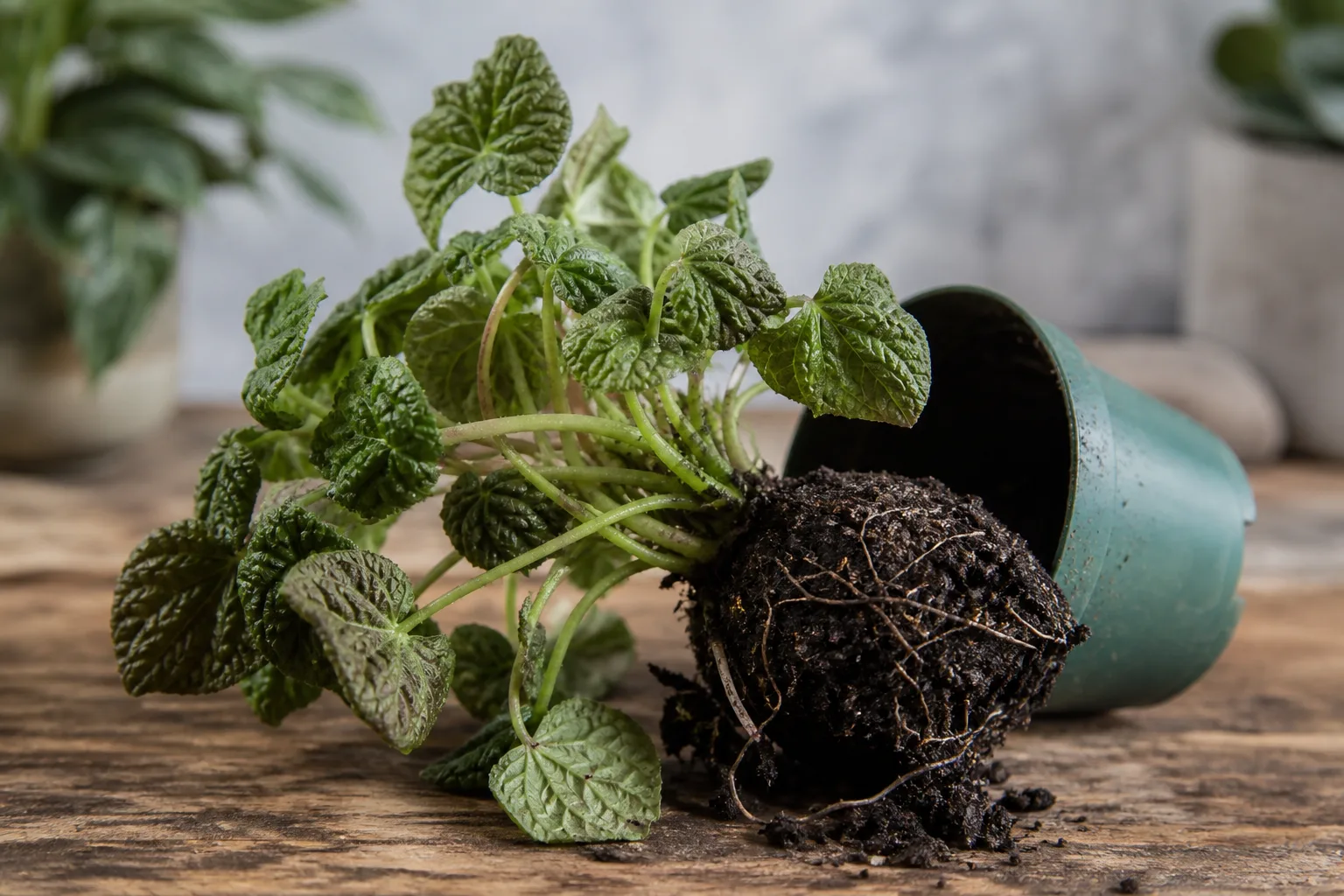
Root Rot on Pilea Moon Valley: Causes, Checks & Fixes
This guide covers root rot on Pilea Moon Valley. See also the general Root Rot guide, watering, and light pages for this plant.
Root Rot on Pilea Moon Valley: Causes, Checks & Fixes
Quick answer
Root rot on Pilea Moon Valley shows as sour-smelling wet mix, brown mushy roots, and yellow lower quilted leaves that wilt despite moisture. First step: unpot gently, trim all soft roots with clean scissors, and repot into fresh perlite-amended mix with open drainage.
This is not the same problem as a single heavy drink on a hot day. Root rot means fungal breakdown has already damaged the root system-usually after weeks of peaty mix staying saturated in low light. If stems are still firm and roots are only slightly discolored, read overwatering on Moon Valley first; a dry-out period may be enough without surgery.
What root rot looks like on Moon Valley
On Pilea mollis ‘Moon Valley’, root rot follows a recognizable pattern on this compact, quilted mound-not random leaf spots.
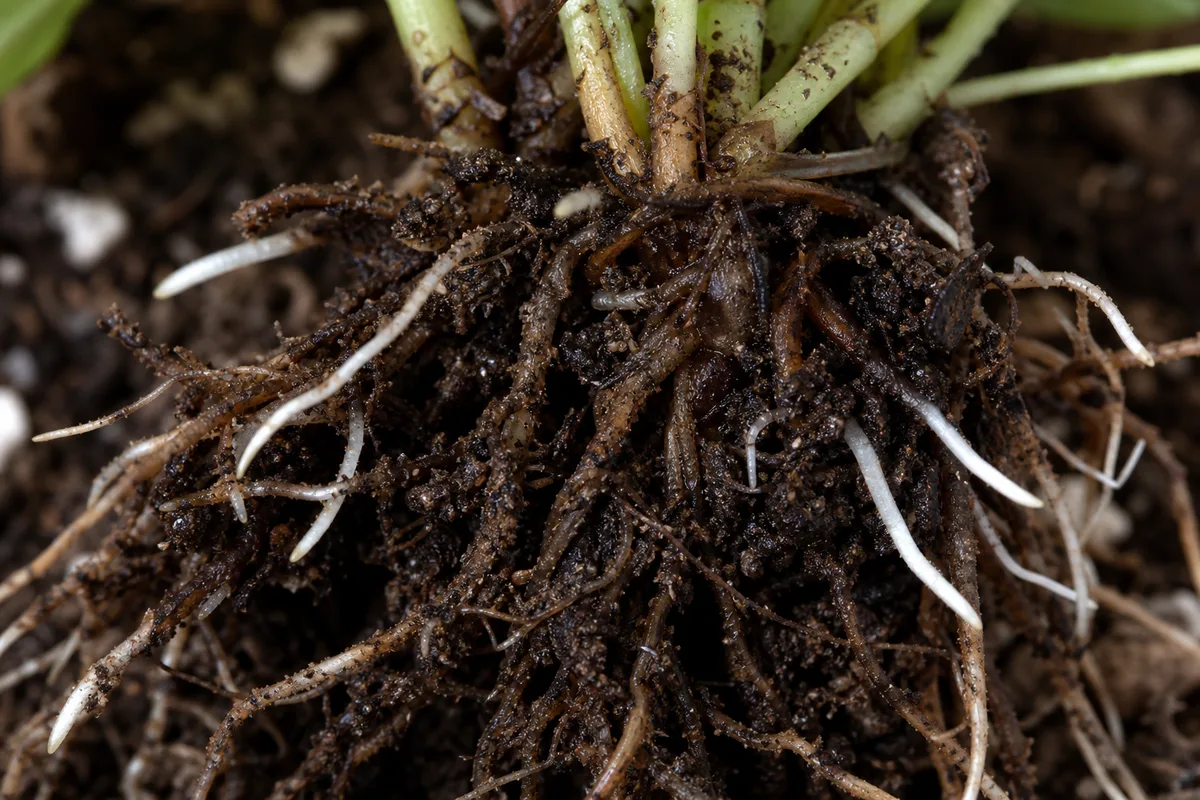
Root Rot symptoms on Pilea Moon Valley - compare with healthy tissue on the same plant.
Early signs:
- Lower quilted leaves turn chartreuse or yellow while newer tips still look puckered
- Pot feels heavy days after watering; mix at 2–3 cm depth stays cold and wet
- Lifting the pot releases a sour or musty smell from drainage holes
- Small black fungus gnats hover near the soil surface on chronically wet peaty mix
Advanced signs:
- Whole mound wilts or droops despite wet soil-the classic mismatch where roots cannot take up water
- Stems feel soft or hollow where they meet the soil line
- Blackening climbs fragile stems; crown leaves collapse if water sat in leaf craters
- New growth stops; older leaves drop from the base of the compact mound
- After unpotting, roots are brown, translucent, and mushy instead of pale and firm
Moon Valley yellows from the base of the mound upward while tips stay textured longer than the soil stays healthy. That base-up pattern distinguishes rot from a single sun-stressed leaf.
Why Moon Valley gets root rot
Several traits make this cultivar rot faster than generic houseplant advice suggests.
Peaty mix in low light. Moon Valley wants a peaty, well-draining potting mix with perlite-but in a dim shelf or terrarium corner, evaporation drops and peat holds water like a sponge. Leggy growth in shade often pairs with chronically wet soil; the plant looks thirsty while roots are drowning. See not enough light if stretch and wet mix overlap.
Oversized pots and blocked drainage. Moon Valley stays compact-about 12 inches tall. A pot much larger than the root ball holds excess wet mix roots never reach. Cache pots without drainage holes or saucers left full keep the bottom saturated.
Winter overwatering. Missouri Botanical Garden recommends watering moderately in the growing season and reducing water in fall through late winter. Many growers keep summer frequency into short winter days when cool rooms slow evaporation. Pair winter cutbacks with the watering guide dry-down checks.
Fragile stems at the soil line. Stems break easily and stem rot follows when wet soil meets the crown. Water sitting in quilted leaf craters after overhead watering accelerates rot where fragile tissue enters the mix.
“Evenly moist” misread as never drying. Moon Valley appreciates humidity around leaves, but the pot should still cycle dry at the top 2–3 cm. Misting the crown instead of fixing root oxygen is a common trigger.
How to confirm the cause
Work through this checklist before deciding between dry-out and same-day surgery.
- Smell test - Lift the pot and sniff drainage holes. Sour or musty odor on wet mix strongly supports rot.
- Soil moisture at 2–3 cm - Wet, cold mix when you watered several days ago in a cool room confirms stagnant moisture.
- Pot weight - Heavy pot days after watering means water is not moving through the profile.
- Stem base feel - Press stems where they enter soil. Mushy or hollow tissue means inspect roots immediately.
- Wilt paradox - Limp quilted leaves on heavy wet mix point to root failure, not drought. Do not pour more water.
- Root rinse inspection - Slide the plant out gently and rinse roots under lukewarm water. Healthy roots are pale and firm; rotting roots are brown, translucent, and mushy.
- Mushy root percentage - If more than one-third of roots are mushy, treat as urgent rot. Less damage with firm stems may still allow repot without propagation.
Severity decision tree
| Finding | Action |
|---|---|
| Wet mix, firm stems, pale roots, slight lower yellowing | Try dry-out per overwatering guide before repotting |
| Sour smell, some mushy roots, stems still mostly firm | Same-day trim and repot |
| Soft crown, blackening stems, more than half mushy roots | Trim salvageable roots or take stem cuttings; parent may not recover |
| Fine webbing in leaf craters, normal pot weight | Not rot-inspect for spider mites |
First fix for Pilea Moon Valley
Unpot gently, trim all brown mushy roots with clean scissors, and repot into fresh mix with 15–20% perlite and open drainage holes.
That single rescue breaks the rot cycle. Do not fertilize. Do not stack heavy prune, repot, and feed on the same day-Moon Valley sulks when you change everything at once.
Numbered trim and repot workflow
- Prepare workspace - Lay newspaper, sterilize scissors with rubbing alcohol, and have fresh standard potting mix plus perlite ready. Choose a pot only slightly larger than the trimmed root ball with confirmed drainage holes.
- Unpot and rinse - Slide the plant out gently. Rinse roots under lukewarm running water to see firm versus mushy tissue clearly.
- Trim decisively - Cut away all brown, black, translucent, or mushy roots. Leave only pale, firm tissue. If the crown is mushy, stop trimming the parent and move to propagation backup below.
- Air-dry briefly - Let trimmed roots sit uncovered 15–30 minutes so cut surfaces callus slightly before repotting. Do not leave the plant out for hours in direct sun.
- Repot shallow and airy - Fill the pot with fresh mix amended with 15–20% perlite. Set the plant so the crown sits at the previous soil line-do not bury quilted leaves. Lightly firm mix around roots without compacting.
- Water once, lightly - Moisten mix evenly until a little runs from holes, then discard saucer water. Do not soak repeatedly the first week.
- Bright indirect light and patience - Move to brighter indirect exposure if the plant was in deep shade. Hold all fertilizer until new firm puckered leaves appear.
Recovery timeline
Minor rot with most roots firm after trim often stabilizes within two to three weeks. Expect some lower leaves to drop; judge success by new quilted growth with clean bronze-green texture.
Moderate damage can take three to four weeks. The pot should start feeling lighter between waterings as roots regain function.
Severe rot with a mushy crown may require stem cuttings from clean tips above the damage. Moon Valley roots easily from cuttings when the parent mound cannot be saved-see the propagation guide for water versus soil rooting and humidity during recovery.
Lookalike symptoms to rule out
| Symptom pattern | Likely cause | Key difference from root rot |
|---|---|---|
| Heavy wet pot, firm stems, pale roots, slight yellowing | Overwatering | Dry-out may suffice; roots not mushy |
| Light pot, dry mix throughout, crispy leaf edges | Underwatering | Wilt on dry soil, not wet |
| Limp quilted leaves on wet mix with sour smell and mushy roots | Root rot (this page) | Requires trim and repot |
| Fine webbing, stippling in leaf craters, normal pot weight | Spider mites | Webbing is a pest sign-not rot |
| Gnats on surface, wet peaty mix, firm stems | Fungus gnats | Larvae in moist medium; dry surface between drinks |
| Persistent wilt despite wet soil | Wilting | Deep-dive on the wet-soil paradox |
Do not confuse Moon Valley with Pilea peperomioides rescue advice. The quilted mounding habit, peaty mix, and fragile crown rot differently from a single-stem coin plant.
What not to do
Do not keep watering limp leaves on heavy soil-that worsens oxygen-starved roots.
Do not use a pot without drainage holes or leave standing water in saucers.
Do not repot into a much larger container “to help” a struggling plant-extra wet mix invites more rot.
Do not apply fertilizer to yellow leaves on soggy or freshly repotted mix.
Do not treat webbing in leaf craters as a root-rot sign-that points to spider mites.
Do not strip the entire mound at once; the plant needs foliage for photosynthesis during recovery.
How to prevent root rot on Moon Valley
Water when the top 2–3 cm dries, following the watering guide rhythm-not a fixed calendar.
Keep bright indirect light so the pot cycles moisture predictably. Pair humidity around leaves with draining mix, not constant root soaking.
Use perlite-amended mix and pots with drainage holes. Repot every one to two years before peat compacts into a water-retentive slab.
Reduce watering sharply in fall and winter when growth slows in cool rooms.
Empty saucers within 30 minutes of watering. If you use cache pots, lift the inner container to drain, then return it.
Inspect quilted leaf surfaces weekly-pests and moisture stress both show clearly on textured foliage.
When to worry
Treat as same-day urgent when stems soften at the base, soil smells sour while staying wet, blackening climbs fragile stems, the whole mound collapses on heavy mix, or more than one-third of roots are mushy after rinse.
Also act quickly if fungus gnats swarm in large numbers and new growth stalls-persistent larvae in saturated soil damage fine roots on a compact plant.
A slightly heavy pot with one yellow lower leaf and firm stems is not an emergency. Confirm moisture, consider the overwatering dry-out path, and reassess in a week before surgery.
Propagation backup if the crown fails
When the crown is mushy or more than half the root system is black and odoriferous, salvage may mean starting over from cuttings rather than saving the parent.
Take 3–4 inch stem sections from firm tips above any soft tissue. Include at least two nodes, remove lower leaves that would sit below water or bury in mix, and root in water or moist airy mix. Missouri Botanical Garden notes Pilea mollis is easily propagated from stem cuttings. Full step-by-step timing, humidity, and aftercare live in the propagation guide.
Discard the rotted parent and sterilize the old pot before reuse.
Related Moon Valley guides
- Overwatering - early-stage wet-soil rescue before full rot
- Watering - baseline dry-down schedule and moisture checks
- Underwatering - wet-vs-dry fork when wilt confuses you
- Wilting - wilt-on-wet-soil paradox deep-dive
- Fungus gnats - gnat swarm on chronically wet peaty mix
- Propagation - stem-cutting salvage when the parent fails
- Spider mites - webbing and stippling differentiation
Conclusion
Root rot on Pilea Moon Valley is advanced moisture failure-sour wet mix, mushy roots, and yellow lower quilted leaves wilting despite water. Confirm severity with smell, stem-base firmness, and root rinse inspection, then trim and repot into airy mix or pivot to stem cuttings if the crown is gone. Brighter light, open drainage, winter cutbacks, and soil-based watering-not a calendar-keep this compact mound dense and puckered instead of soft and collapsing at the base.