Pilea Moon Valley Light Needs: Best Window & Sun Guide
Pilea Moon Valley Light Needs: Best Window & Sun Guide
Pilea Moon Valley Light Needs: Best Window & Sun Guide
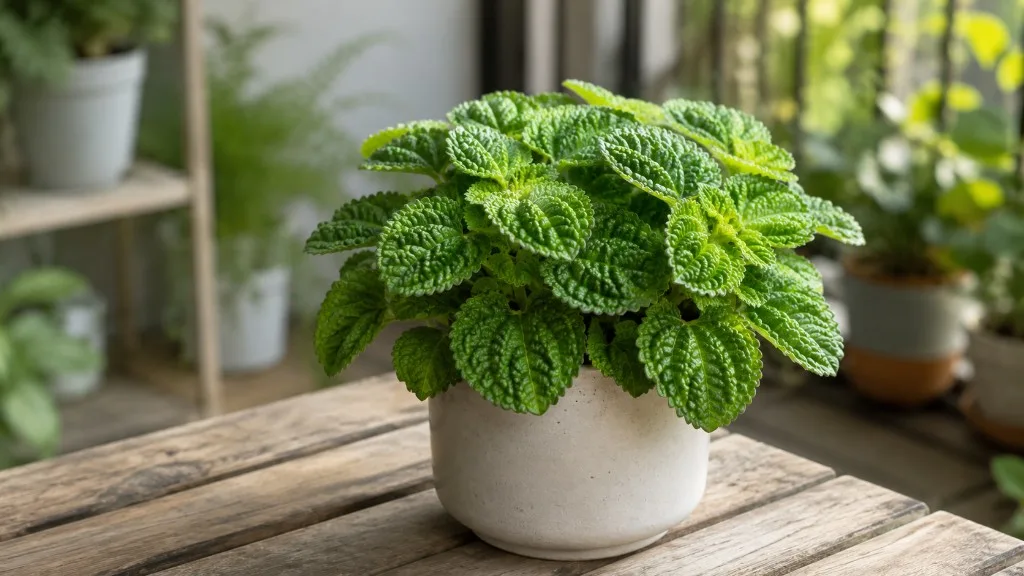
You bought a Pilea expecting flat coin leaves and got a compact mound of deeply puckered, bronze-green foliage instead. Pilea Moon Valley (Pilea mollis ‘Moon Valley’) is valued for that lunar texture - and texture is exactly why light placement matters more than generic “bright indirect” advice suggests. Flat leaves can hide early sun stress; ridged, bronze-margined leaves show bleaching and crisp edges fast. The Missouri Botanical Garden recommends growing Moon Valley indoors in bright indirect light, avoiding full sun, and lists the cultivar as good for terrariums - three facts that should shape every window, shelf, and grow-light decision in your home.
This guide covers how much light Moon Valley actually needs, which windows work in the northern hemisphere, terrarium and humidity-shelf brightness, honest low-light limits, grow-light starting specs, safe acclimation, and the warning signs that tell you to move the pot before permanent texture damage sets in. For full species biology, watering rhythm, and pet safety, see the Pilea Moon Valley overview.
Quick Answer
Pilea Moon Valley grows best in bright indirect light - strong ambient brightness at the leaf surface without harsh midday sunbeams on the puckered foliage. It tolerates medium indirect light for a while if growth stays compact, but chronic shade produces stretched stems, smaller leaves, and faded bronze tones. An east-facing window one to two feet from the glass is the safest default for most homes. South and west windows work only with distance or a sheer curtain. Low-light interior shelves are short-term holding zones, not long-term homes for a plant grown for leaf texture.
Judge success by new growth: firm, deeply puckered leaves with crisp bronze-green contrast mean the placement works. Bleached ridges, tan papery patches, or one stretched tip reaching for glass mean light is wrong - too much, too little, or changed too fast.
Why Moon Valley Light Differs From Coin-Leaf Pileas
Moon Valley is often shelved beside Pilea peperomioides, the Chinese money plant with round pancake leaves. Both want bright indirect light indoors, but tolerance and symptom profiles diverge. Peperomioides tolerates average home humidity and slightly dimmer corners more gracefully. Moon Valley - with its textured bronze-green leaves and compact 12-inch mound habit - sulks faster in identical low light and shows sun damage sooner on raised leaf ridges.
The practical takeaway: do not copy your peperomioides window placement without watching Moon Valley’s newest leaves for two weeks. A spot where coin leaves stay flat and green may still stretch and dull a Moon Valley mound.
Puckered Foliage and Bronze Margins
Moon Valley leaves are not a flat photosynthetic panel. They are a topographic surface - sunken valleys and raised bronze margins that heat and dry unevenly under direct sun. The Sill notes the cultivar prefers bright indirect light, tolerates medium light, and is not suited for intense direct sunlight - language that maps directly to this geometry. Scorch often appears first on bronze ridges and margins before the green centers bleach, which is why beginners miss early damage until whole leaves look tan and papery.
In low light, the same texture collapses differently than on flat Pileas: internodes lengthen, new leaves shrink, puckering looks shallow, and the bronze undertone washes out toward yellow-green. Those are texture-specific etiolation signs, not generic “leggy plant” advice. If stretch is your main symptom, also read leggy growth on Moon Valley and not enough light.
Best Light Level: Bright Indirect Indoors
Horticulturists describe Moon Valley’s native niche as filtered understory brightness in the wet tropical forests where Pilea mollis evolved. Indoors, translate that to bright indirect light or part shade - Missouri Botanical Garden’s outdoor sun rating that becomes filtered indoor exposure, not sunbeams on leaves.
“Bright indirect” means the plant receives strong usable daylight for much of the day without prolonged direct rays on foliage. For many tropical foliage plants, extension guides place that range around 500 to 1,000 foot-candles (roughly 5,000 to 10,000 lux) at the leaf surface - bright enough to cast a soft, readable hand shadow, gentle enough to avoid daily scorch. University of Maryland Extension classifies 500–1,000 FC as high indoor brightness and notes that insufficient light causes spindly, leggy growth as plants stretch toward sources - exactly the failure mode Moon Valley shows on a dim shelf.
Moon Valley also fits the medium-bright band (100–500 FC) short term, but long-term medium light usually trades texture for survival. If the mound stays compact and new leaves remain deeply puckered, medium light is acceptable. If internodes open up, treat medium as a stepping stone, not the destination.
Foot-Candles and the Hand-Shadow Test
You do not need a light meter to start. On a clear midday, hold your hand between the window and the plant at leaf height. A soft shadow with defined edges usually indicates bright indirect range. A faint or absent shadow means low light - survivable briefly, poor for texture. If leaves feel warm to touch within an hour of sun hitting them, you are in direct exposure territory.
Optional meter readings help when a room “looks bright” to human eyes that auto-adjust to dim interiors. Illinois Extension notes that distance from the window dramatically changes intensity - a lesson that matters for small Moon Valley pots on deep shelves. Measure at the crown, not at the wall.
Duration matters as much as peak intensity. Aim for roughly 8 to 10 hours of useful ambient brightness daily. A spot with gentle morning sun plus bright indirect afternoon often outperforms a single harsh midday blast through west glass.
Best Window Placement Compared
Window direction is a starting map, not the full terrain. Outdoor shade from trees, overhangs, tinted glass, and interior walls all shift the light that reaches a 12-inch mound. Still, compass orientation gives a reliable first guess in the northern hemisphere.
Place Moon Valley where leaves receive light, not where the room looks decorated. A pot on a bookcase across from a window is aesthetics. A pot one to two feet from appropriate glass is horticulture. Rotate the container a quarter turn weekly so the mound fills evenly - lopsided texture is harder to correct than prevent.
East, South, West, and North Orientations
| Window | Typical indoor light | Moon Valley fit | Main risk |
|---|---|---|---|
| East | Gentle morning direct sun, then bright indirect day | Best default for most homes | Hot glass in summer if leaves touch pane |
| North | Steady moderate indirect | Works in bright north rooms; watch for stretch | Chronic low light in dim apartments |
| South | Highest total daily light | Fine 3–5 ft back or behind sheer curtain | Afternoon scorch on bronze margins |
| West | Strong late-day sun | Use only filtered or 4+ ft setback | Heat + intensity bleach puckered ridges |
An east-facing window one to two feet from the glass is the sweet spot The Sill and most Moon Valley growers converge on: a short gentle direct period, then hours of bright ambient light without midday furnace rays.
South-facing glass can grow excellent Moon Valley when you manage distance. Four to six feet back on an open floor, or two to three feet behind a sheer curtain, often delivers bright indirect without cooking bronze edges. In summer, watch for bleached ridges on leaves facing the pane - pull back one foot before whole leaves crisp.
West windows need more caution than east because afternoon sun carries heat through glass. Treat west like south with extra setback or diffusion. Never place an unacclimated nursery plant on an unfiltered west sill in July.
North windows work when the room is not cave-dark. Moon Valley may survive north exposure but often loses density and color depth over months. If new leaves stay small and pale, move closer to the glass or add a grow light rather than accepting a flat mound.
Seasonal adjustment beats guessing once. Move closer in winter when sun angle drops; slightly back in midsummer if leaf surfaces heat up. One foot of movement can matter more than switching exposures.
Terrarium and Humidity-Shelf Light
Missouri Botanical Garden lists Moon Valley as a small indoor plant good for terrariums - and terrarium shoppers are a huge slice of this cultivar’s audience. Terrarium culture changes light math: glass concentrates humidity and can filter or trap heat depending on lid design.
Open-Top vs Closed Case Intensity
Open-top or vented terrariums behave like humid shelves: they need the same bright indirect placement as a potted specimen - typically within a few feet of an east window or under a supplemental LED. Light must reach the mound, not just brighten the glass box.
Closed or nearly sealed cases scatter and absorb light through condensation, fogged glass, and lid tint. A spot that looks bright outside the case may land in medium or low light inside. If Moon Valley inside a closed terrarium stretches while siblings on the same windowsill stay compact, raise brightness - move the entire case closer, add a small panel LED above the lid, or switch to a vented design.
Avoid baking a closed terrarium under unfiltered south or west sun. Trapped heat scorches puckered leaves and encourages stem rot in stagnant air - a combination worse than either stress alone. Grouped humidity trays and plant shelves follow the same rule: shared moisture does not replace photons. A steamy shelf three feet from a north wall still starves Moon Valley for light even if leaf edges stay supple.
For propagation and rooting after cuttings, keep young plants in bright indirect light with high humidity - see the propagation guide for timing once roots form.
Direct Sun: What Part Shade Means Indoors
Outdoors, Missouri Botanical Garden rates Pilea mollis culture as part shade - direct sun only part of the day, not all-day exposure. Indoors, part shade means filtered or brief direct light, not a south sill with blazing afternoon beams.
Moon Valley can handle some direct sun when acclimated, especially cool morning rays on an east windowsill for an hour or two. Problems start when intensity jumps faster than the plant adjusts - common when a shade-grown nursery pot lands on unfiltered west glass.
Morning Sun vs Afternoon Heat
Morning direct sun differs from afternoon direct sun in heat load and duration. East exposure gives Moon Valley a manageable direct period followed by long bright indirect day length. Afternoon sun through south or west panes can exceed tolerance within days, showing bleached bronze ridges, crisp papery patches, and sudden leaf collapse on the window-facing side.
If you want direct sun benefits - slightly tighter mounding on some specimens - east morning sun is the entry point. South and west direct sun require sheer curtains, greater setback, and two-week acclimation. Sunburn on textured leaves is permanent; damaged tissue does not re-green.
Watch hot and cold glass contact. Moon Valley’s fragile stems and textured leaves pressed against a sun-heated pane scorch even when ambient room light looks moderate. Keep foliage at least a few inches from glass in summer and winter.
Low Light: When Survival Becomes Visible Decline
Moon Valley tolerates medium light short term - The Sill explicitly allows it - but low light is a poor long-term strategy for a plant sold on crater-like texture. Survival mode looks deceptively calm: old leaves stay green while the mound opens up, bronze fades, and soil stays wet.
University of Maryland Extension notes that low light produces leggy, spindly growth as plants reach for illumination. On Moon Valley, that stretch destroys the compact lunar silhouette that justified the purchase.
Moon Valley Stretch and Color Fade
Low-light symptoms specific to this cultivar:
- Long thin stems with wide gaps between opposite leaf pairs
- Smaller new leaves with shallow puckering compared with older crown foliage
- Dull yellow-green color as bronze undertones fade
- One-sided mound thickening only toward the brightest corner
- Months without meaningful new growth despite warm temperatures
- Soil that stays damp for weeks because transpiration slowed - setting up crown stress detailed in not enough light
How dark is too dark? If no firm puckered leaf has emerged in three or more months during the growing season, or the pot takes more than two weeks to dry in normal indoor temperatures, light is likely below the growth threshold. Short-term dim placement during a room renovation is fine. Multi-year interior-shelf storage is not.
Grow Lights When Natural Light Is Weak
When windows cannot deliver enough daily brightness - interior offices, north-only winter rooms, terrariums away from glass, or apartments with deep floor plans - full-spectrum LED grow lights close the gap more reliably than hoping medium tolerance equals preference.
Choose a fixture labeled for houseplants or seedlings, not a standard bulb optimized for human lumens. Full-spectrum white LEDs in the roughly 4000K to 6500K range support foliage color and compact growth.
Hours, Distance, and Spectrum Defaults
Starting points - tune by watching new leaves, not by chasing perfect PAR at home:
- Duration: 10 to 12 hours daily on a timer. University of Maryland Extension cautions that most plants need a dark period; avoid running lamps more than 16 hours combined with other light sources.
- Distance: 12 to 18 inches (30–45 cm) above the tallest leaf tip for typical small LED panels or clip lamps. If leaves pale and stretch toward the fixture, lower slightly or extend hours. If bronze margins crisp only under the lamp, raise it or reduce duration.
- Coverage: Moon Valley mounds are small but dense - center-only bulbs leave shaded sides. Use a bar that spans the pot or rotate every few days under a clip light.
Integrate grow lights with seasonal window light rather than treating them as winter-only tools. A mediocre north window plus a supplemental LED often beats either source alone. When you add a lamp, re-check watering after two weeks - brighter total daily light increases dry-down rate even if the window did not change.
Moving or Acclimating Without Scorch
Sudden light jumps are the fastest way to ruin Moon Valley texture. A plant grown under nursery shade cloth that lands on an unfiltered south sill in June may show bleached ridges within days. Acclimate in stages over 7 to 14 days, not one afternoon.
A simple protocol: week one, place the pot in the target room but several feet back from the final window; week two, move halfway to the intended distance; week three, settle at the goal spot unless new growth shows stress. Watch newest leaves first - slight temporary curl during brightest hours can occur during acclimation; large bleached zones or soft tissue mean you moved too fast.
Moon Valley’s fragile stems also snap when you rotate a heavy, wet mound quickly near bright glass - support the pot base when turning. Combine stressors carefully: avoid simultaneous Pilea Moon Valley repotting guide, fertilizing, and major light jumps after purchase. Change light first; let one compact new leaf confirm success before other interventions.
Store-bought specimens often arrive from low-light retail displays. Give them a week in moderate indirect light before pushing toward your brightest acceptable window.
Warning Signs on Puckered Leaves
Moon Valley communicates light stress through texture, color, and growth pace - not dramatic wilting. Use a two-week observation window after any move. Old scars are historical; new leaves tell you whether today’s placement works.
Too little light:
- Absent or very slow new growth during warm months
- Stretched internodes and a single reaching tip
- Smaller, paler, shallowly puckered new foliage
- Bronze undertone fading toward flat yellow-green
- Soil staying wet too long without obvious pest damage
Too much light or heat:
- Bleached white-yellow patches on bronze ridges and margins
- Crisp tan papery areas on sun-facing leaf valleys
- Sudden damage within days of an unacclimated window move
- Curling or folding during brightest hours that repeats daily
- Hot glass contact marks along leaves pressed to the pane
When symptoms overlap - dim winter room but hot afternoon glass - remove direct beam and heat load first. Scorch can appear in a week; low-light stasis takes months. After stabilizing, reassess total brightness and add a grow light if growth remains absent.
Light and Watering: Adjust Together
Light is the throttle on Moon Valley metabolism even though watering gets blamed first. Brighter light increases photosynthesis and transpiration; dim light slows both. A soak schedule that worked on a bright kitchen sill will overwater the same plant on a dim bookshelf because the root zone stays saturated longer - the pattern behind many yellow leaves and rot scares in shade.
After any light increase, check moisture more often for the first month per the watering guide - top 2–3 cm dry before soaking, but expect that interval to shorten. After a light decrease, stretch dry intervals and skip fertilizer until new growth confirms the plant is still active. You cannot feed your way out of insufficient light.
The new-growth test applies here too: if light is right but leaves stay tiny and puckered, look next at humidity swings and pests on textured surfaces before stacking more inputs.
Conclusion
Pilea Moon Valley light success is texture-first: place the mound where new leaves stay deeply puckered and bronze-green, not where the room merely looks bright. Aim for bright indirect light - roughly the brightness of an east window one to two feet from the glass - and treat medium light as acceptable only while growth stays compact. Protect raised bronze margins from hot afternoon glass; treat interior shelves as temporary unless you add a 10–12 hour grow light.
Move in small steps over 7 to 14 days, link watering to dry-down speed after every shift, and read results only on new growth. Terrarium growers should light the plant inside the case, not just the windowsill beside it. When leaves stretch and dull, open not enough light; when ridges bleach after a move, pull back and acclimate again. Get placement right and Moon Valley repays you with the crater-like foliage that made you pick this Pilea in the first place.
When to use this page vs other Pilea Moon Valley guides
- Pilea Moon Valley overview - Start here for whole-plant context before deep-diving this topic.
- Pilea Moon Valley problems hub - Jump to symptom-specific fix guides when this care topic does not resolve the issue.
- Leggy Growth on Pilea Moon Valley - Escalate here when light adjustments are not enough.