Best Soil for Pilea Moon Valley: Mix & Drainage
Best Soil for Pilea Moon Valley: Mix & Drainage
Best Soil for Pilea Moon Valley: Mix & Drainage
Why Soil Controls Moon Valley Health in Small Pots
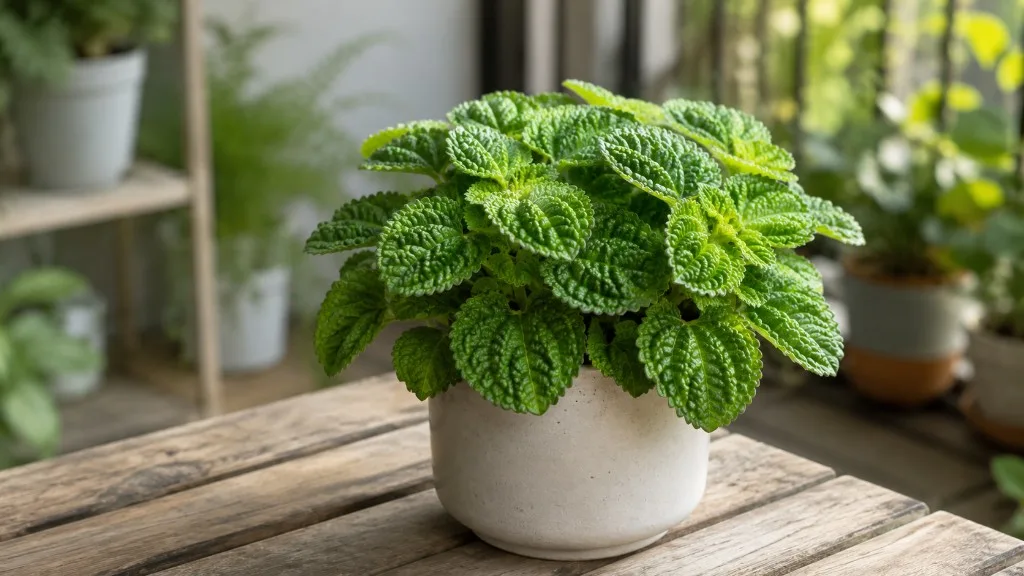
Pilea Moon Valley (Pilea mollis ‘Moon Valley’) is not a tall tree in a deep pot. It is a compact upright mound - Missouri Botanical Garden describes the cultivar as reaching about 12 inches tall with strongly puckered, bronze-green leaves - and most indoor specimens live in 4- to 6-inch containers on shelves, grouped plant stands, or open terrariums. That geometry changes everything about soil. A trailing vine in a hanging basket has a large soil volume relative to its crown and can tolerate slow drainage longer than a shallow-rooted mound whose entire root zone sits in a few cups of mix.
The Missouri Botanical Garden recommends a peaty, soil-based potting mix for indoor culture, with medium water and high humidity. Those three variables are linked. Peaty mixes hold moisture - which Moon Valley wants - but without enough perlite or structural amendment, that same moisture lingers around fragile stems after watering. Missouri Botanical Garden specifically flags stem rot and notes that stems are fragile and break easily on Pilea mollis. Soil is the system that decides whether “evenly moist” stays healthy or becomes sodden.
If your Moon Valley wilts while the mix still feels cool an inch down, yellows on lower leaves in stable light, or smells sour at the drainage hole, inspect the root zone before you change watering or light. A well-built mix makes every other care signal easier to read. For full species context - humidity, temperature, and how Moon Valley differs from other Pileas - see the Pilea Moon Valley overview.
Compact Mound Habit vs. Trailing Pileas
The species type of Pilea mollis is described as a bushy trailing plant in Missouri Botanical Garden’s species notes, but the ‘Moon Valley’ cultivar is more upright and mounding. That means roots spread horizontally in a shallow dish-shaped zone rather than diving deep like a tree. Oversized pots are especially dangerous: the extra mix around an unused root zone stays wet while the small root mass cannot pull water fast enough, creating the anaerobic conditions that lead to rot.
Trailing Pileas with longer stems and more distributed foliage can sometimes survive mediocre mix longer because the plant has more stored tissue above the failure point. Moon Valley’s display value is the tight textured mound at the soil line. Lose the crown to stem rot and the whole visual point of the plant is gone - often before you get a clear wilting signal on every leaf.
Best Soil Mix for Pilea Moon Valley
The best soil for Pilea Moon Valley balances two needs that sound contradictory but are not: hold moisture for a few days in a small pot and drain excess water within minutes so oxygen returns to the root zone. Missouri Botanical Garden’s “peaty soil-based” guidance points toward a peat-lite blend - the same family of mixes Clemson Cooperative Extension describes as peat moss combined with perlite or vermiculite for foliage houseplants (Clemson HGIC - Indoor Plants Soil Mixes). Pure bagged potting soil without amendment often compacts after six to twelve months of watering and becomes the hidden reason a previously happy Moon Valley suddenly struggles.
You do not need a specialty “Moon Valley soil” label on the bag. You need a mix whose texture stays open, re-wets evenly, and matches how fast your room dries the pot. The recipe below is an editorial starting point that aligns with Missouri Botanical Garden’s peaty recommendation and Clemson’s standard foliage-plant ratios - adjust perlite upward if your pot stays wet too long, or slightly downward if you underwater in a dry apartment.
The Quick-Answer Recipe Card
For most indoor Moon Valley specimens in plastic or glazed ceramic pots with drainage holes:
| Component | Volume ratio | Role |
|---|---|---|
| Quality all-purpose indoor potting mix | 80–85% | Moisture retention, organic structure |
| Perlite (medium grade) | 15–20% | Drainage macropores, aeration |
| Optional: fine orchid bark (editorial) | Up to 10% of total mix in humid homes | Extra air in terrariums or cachepot setups |
Target pH: roughly 6.0–7.0, slightly acidic to neutral. Clemson Agricultural Service Laboratory lists peat-based soilless mixes at pH 5.3–6.5 as the normal range for healthy growth (Clemson - Soilless Mix Test Results). Most commercial indoor mixes ship near 6.0–6.5 after lime adjustment, so hobbyists rarely need to test unless tap water is very alkaline and new leaves show persistent chlorosis.
Drainage hole: non-negotiable. The Royal Horticultural Society describes waterlogging as perhaps the biggest killer of houseplants and formulates its houseplant potting mix with perlite for airflow and drainage to prevent exactly that failure mode.
Step-by-Step Mix Assembly
Mixing your own batch takes ten minutes and removes the guesswork from repotting day.
- Gather materials: one part measuring container (yogurt tub, scoop, or cup), clean tub or tarp, bagged indoor potting mix, perlite, optional orchid bark.
- Measure by volume, not weight: pour four scoops of potting mix and one scoop of perlite for a standard 80/20 blend. For 85/15, use roughly five and a half scoops mix to one scoop perlite.
- Blend thoroughly: dry-mix until perlite is evenly distributed. The texture should feel light and crumbly - not muddy.
- Squeeze test: a handful should hold together briefly and fall apart when you open your hand. A tight ball means too much peat and not enough perlite.
- Moisten slightly before potting if the mix is dust-dry, so it settles evenly around roots without leaving dry pockets.
- Pot at the same depth as the previous container. Do not bury stems deeper than they were - Moon Valley nodes near the soil line are vulnerable when kept wet.
Ingredient Substitutions and Bagged Options
Not every grower wants to measure scoops. These substitutions keep the same drainage logic while adapting to what you have on hand.
| Instead of… | Use… | Notes |
|---|---|---|
| All-purpose potting mix | African violet mix straight from the bag | Already lighter and more porous; still add a handful of perlite if the pot dries slowly |
| Peat-based mix | Coco coir–based indoor mix | Rinse coir products if salts are high; RHS notes that coir behaves differently from peat and may need trial |
| Extra perlite only | Perlite + small amount of fine orchid bark | Helpful in terrariums or grouped shelves where humidity slows surface dry-down |
| DIY from scratch | 2 parts peat : 1 part perlite : 1 part coarse sand | Matches Clemson foliage-plant recipe (Clemson HGIC 1456) |
Clemson Extension advises that growers who tend to overwater should add perlite to bagged mix for better drainage - guidance written for Peperomia houseplants but directly applicable to any small-rooted foliage plant prone to soggy mix. Moon Valley fits that profile.
Peat vs. Coco Coir vs. All-Purpose Mix
Peat-based mixes are what Missouri Botanical Garden’s “peaty soil-based” note describes. They hold moisture well in small pots and are the traditional baseline for tropical foliage. They compact over time, which is why the perlite amendment matters for long-term indoor use.
Coco coir is a sustainable peat alternative with similar water-holding capacity. RHS guidance on peat-free media notes that coir-based blends can work well but may need adjustment because physical properties differ from peat. If you switch, watch dry-down speed for two weeks and add perlite if the pot stays heavy.
Straight all-purpose bagged mix without amendment is the most common beginner mistake. It works for a few months, then compresses under repeated watering. If that is all you have today, mix in at least 15–20% perlite by volume before potting - do not wait for decline to prove the point.
Drainage Speed and the One-Minute Check
Water should move through the pot freely at each watering and leave the root zone aerated within hours, not days. Missouri Botanical Garden’s medium-water guidance assumes a mix that drains well enough that roots never sit in stagnant moisture. After a full watering, excess water should exit the drainage hole within seconds and the pot should not remain heavy and cold at the bottom three days later.
One-minute drainage check: water until runoff appears, then watch the surface. Water should sink in evenly without pooling for more than a few seconds. Lift the pot after thirty minutes - it should feel heavier than dry, but not leaden. If water sits on top, runs down the gap between mix and pot wall, or the cachepot collects standing water, the soil system needs correction before the next scheduled watering.
Why Drainage Holes Beat Bottom Stones
A layer of gravel at the pot bottom does not create a drainage system. It creates a perched water table where the fine-textured mix above holds moisture while the coarse layer below does nothing to pull water out of the root zone. Clemson and Missouri Botanical Garden overwatering guidance both emphasize that roots in saturated soil cannot absorb oxygen and die back - the mechanism behind stem rot and the wilting that growers misread as thirst (Missouri Botanical Garden - Overwatering).
The fix is perlite mixed throughout the profile, plus a drainage hole and an emptied saucer. Not stones. Not hope.
Pot Choice for Terrariums vs. Open Shelves
Missouri Botanical Garden lists Moon Valley as good for terrariums - and the cultivar’s humidity appetite makes enclosed culture appealing. But enclosed culture changes dry-down physics. A sealed or nearly sealed terrarium keeps humidity high, which slows evaporation from the mix surface. The same 80/20 recipe that works on an open shelf may stay wet too long under a lid.
Open-top or vented terrariums are the safer default. A hinged lid left slightly open, or a mesh vent panel, preserves humidity around leaves without trapping moisture in the soil profile. For fully enclosed builds, increase perlite toward 25–30% and consider a drainage layer of gravel or lava rock below a screen separator - not stones dropped into the planting mix itself.
Open shelf culture dries faster, especially near heating vents or air conditioning. Plastic pots retain moisture longer; terracotta breathes and dries faster. Match pot material to your habits: if you tend to overwater, terracotta earns its keep. If you tend to underwater in a dry room, plastic reduces panic-watering cycles.
Cachepot and Lid Moisture Traps
A decorative cachepot without drainage is one of the fastest routes to Moon Valley stem rot. Water drains from the inner pot, collects in the outer shell, and the root zone wicks it back up within hours. If you use a cachepot for aesthetics, lift the inner pot after every watering and empty standing water - every time, without exception.
Terrarium lids create the same trap when condensation drips back onto soil that already holds adequate moisture. If leaf surfaces stay beaded with water while the mix smells earthy-sour at the base, crack the lid and reduce watering frequency before you reach for fungicide.
pH and Mineral Buildup
Moon Valley tolerates slightly acidic to neutral conditions, roughly pH 6.0–7.0. That band overlaps Clemson’s recommended 5.3–6.5 for peat-based soilless mixes and the 6.0–6.5 target many foliage recipes use. Most bagged indoor mixes already include dolomitic lime for pH correction, so testing is optional unless you build from raw peat.
Salt buildup shows up as white crust on the soil surface or brown crisping on leaf margins despite adequate humidity. Fertilizer, hard tap water, and months without flushing leave minerals in the mix. Clemson recommends flushing container mix with at least twice the pot’s volume of water and letting it drain freely when salts accumulate (Clemson - Soilless Mix Test Results). If crust returns within weeks, refresh the mix at the next repot rather than chasing flushes indefinitely.
When to Refresh or Repot the Mix
Moon Valley does not need annual soil surgery, but peat-heavy mixes break down over one to two years - compacting, shrinking away from pot walls, and developing hydrophobic dry pockets. Plan a full repot on that rhythm, or sooner if symptoms demand it. The detailed step-by-step procedure lives in the Pilea Moon Valley repotting guide; this section covers when the soil - not the calendar - tells you to act.
Refresh triggers (any two mean action soon):
- Water runs straight through the pot without soaking in
- Mix has pulled away from pot sides and will not re-wet evenly
- Sour or swampy smell at the drainage hole
- New leaves stay small and puckered despite good light and humidity
- Roots visible at drainage holes or circling the surface
Best timing: early spring through early summer, when active growth supports root recovery. Avoid repotting a stressed plant in deep winter unless the mix is clearly failing or root rot requires emergency intervention.
Pot size rule: go up only one size - about 2–5 cm wider in diameter. Jumping larger turns fresh mix into a moisture trap the small root system cannot manage.
Signs the Mix Has Failed
| Symptom | Likely soil cause | First action |
|---|---|---|
| Wilting on wet mix | Poor drainage, stem rot beginning | Stop watering; inspect roots; repot into fresh perlite-amended mix |
| Water pools on surface | Compacted or hydrophobic mix | Break surface crust; bottom-water once; plan full refresh |
| Sour smell at base | Anaerobic root zone | Unpot; trim mushy roots; repot with new mix |
| Crispy tips + white crust | Salt buildup | Flush or refresh mix; pause fertilizer |
| Fungus gnats persistent | Upper mix stays wet too long | Add perlite; let surface dry slightly between waterings |
Soil Mistakes to Avoid
Using unamended garden soil or topsoil introduces compaction, pathogens, and weed seeds Clemson explicitly warns against for container culture. Moon Valley’s small pot magnifies every drainage failure.
Oversized pots after a well-meaning upgrade are a common stem-rot trigger. The root mass stays small; the wet mix volume does not.
Repotting on day one after purchase stresses a plant already adjusting to your home. Quarantine, learn dry-down speed, and repot only if the shop mix is clearly compacted or pests are visible - the same patience the overview recommends for the first month.
Burying stems deeper at repot invites crown rot. Keep the soil line stable.
Ignoring saucer water after a thorough watering negates every drainage hole you drilled. Empty it within thirty minutes.
Stem-Rot Rescue: Soil and Repot Steps
When wilting appears on cool, damp mix - not dry mix - suspect stem or root rot before you water again. Missouri Botanical Garden lists stem rot as a documented problem on Pilea mollis, and fragile stems can collapse quickly once the base softens.
Rescue protocol:
- Stop watering immediately. More water accelerates anaerobic decay.
- Unpot gently. Moon Valley stems break easily; support the crown with one hand while tipping the pot.
- Inspect roots and lower stems. Healthy roots are firm and white or tan. Mushy brown tissue gets trimmed with clean scissors.
- Bare-root rinse only if necessary. If mix is sour and heavily infected, rinse gently with lukewarm water. For mild cases, shake off the outer compacted layer and keep some original soil around the root ball.
- Let trimmed roots air-dry for one to two hours on paper towel in bright indirect light - not direct sun.
- Repot into fresh 80/20 mix in a clean pot with drainage, same size or one size smaller if you removed substantial root mass.
- Water lightly once, then resume moisture checks only when the upper mix dries. Hold fertilizer for three to four weeks.
- Watch for recovery over two to four weeks. If the crown is already mushy, propagation from healthy upper stems may be the salvage path - see the propagation guide.
For ongoing prevention after rescue, pair the refreshed mix with the overwatering troubleshooting page and adjust your watering check to pot weight, not guilt.
Moon Valley vs. Chinese Money Plant Soil
Shops sell many Pileas, and beginners often assume one soil recipe fits all. It does not.
Pilea peperomioides - the Chinese money plant with round coin leaves - tolerates average home humidity better and typically grows in a slightly larger soil volume relative to its upright stem. Moon Valley’s textured mound in a smaller pot punishes slow drainage faster. You can start from the same peat-perlite baseline for both, but Moon Valley often needs the higher end of perlite (20% rather than 15%) if your home runs humid or the plant lives in a terrarium.
Peperomioides in a dry room may tolerate denser mix longer. Moon Valley in the same room may need more perlite and more attention to saucer water. Same genus, different geometry, different soil risk profile.
Practical Root-Zone Checks
Build these three checks into your weekly routine - they take less time than treating stem rot after the fact.
Drainage check after watering: runoff within seconds; saucer emptied; no water pooled in cachepot.
Smell check at the drainage hole: fresh mix smells earthy. Sour, swampy, or rotten odors mean oxygen starvation below - even if leaves still look acceptable.
New-growth check: healthy Moon Valley pushes small quilted leaves from multiple points in the mound. If new growth is absent while the mix stays wet, roots may be failing. If new growth is tiny and puckered in good light, suspect low humidity or salt buildup before adding fertilizer.
Before you buy: choose specimens with firm stems at the soil line, no webbing on leaf undersides, and shop mix that does not smell sour or feel brick-hard. Soil health at purchase saves a rescue repot on day three.
Conclusion
Pilea Moon Valley soil is not a mystery recipe. Missouri Botanical Garden points to a peaty, soil-based mix with moderate watering and high humidity. Clemson Extension’s peat-perlite foliage recipes and RHS houseplant mix design both say the same thing in different words: retain some moisture, but never trap water around roots. For Moon Valley’s compact mound in a small pot, that translates to 80–85% quality potting mix plus 15–20% perlite, a drainage hole, an emptied saucer, and a repot when the mix compacts or smells sour - not when a calendar says so.
Match the mix to your display context. Open shelves dry faster than lidded terrariums. Cachepots and oversized containers are moisture traps. Chinese money plant soil may look similar on paper but Moon Valley’s shallow root zone forgives less. When in doubt, add perlite, check the drainage hole, and read how fast the pot dries before you change anything else in the care routine. For watering rhythm, repot steps, and problem-specific fixes, continue with the watering guide, repotting guide, and root-rot troubleshooting.
When to use this page vs other Pilea Moon Valley guides
- Pilea Moon Valley overview - Start here for whole-plant context before deep-diving this topic.
- Pilea Moon Valley problems hub - Jump to symptom-specific fix guides when this care topic does not resolve the issue.
- Root Rot on Pilea Moon Valley - Escalate here when soil adjustments are not enough.