Pilea Moon Valley Fertilizer: When, How, and Mistakes
Pilea Moon Valley Fertilizer: When, How, and Mistakes to Avoid
Pilea Moon Valley Fertilizer: When, How, and Mistakes to Avoid
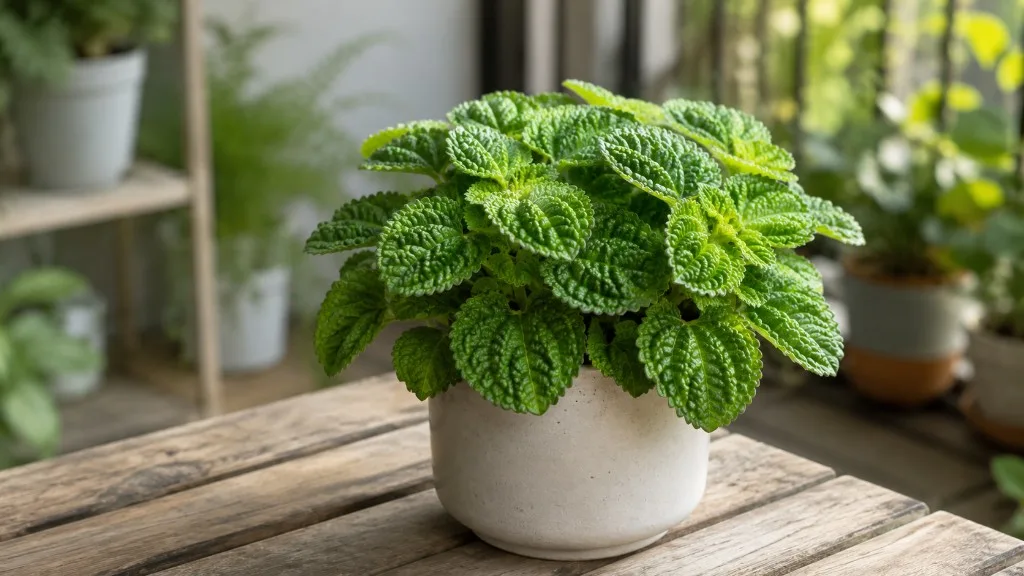
Pilea Moon Valley fertilizer decisions are simpler than the internet makes them sound - and more consequential than most growers realize. Pilea mollis ‘Moon Valley’ is a compact, mounding cultivar grown for deeply puckered bronze-green leaves, not the flat coin foliage of Pilea peperomioides. That small root volume, humidity appetite, and textured leaf margins change how salts behave in the pot. What Moon Valley needs is a conservative routine: a balanced liquid fertilizer at half the label strength, applied on a monthly schedule from spring through early fall (or every four to six weeks if the plant is in moderate light, a terrarium, or has a history of tip burn), with a full pause in late fall and winter when growth slows. Always feed onto moist soil, never dry roots. Skip feeding entirely on stressed, drought-damaged, freshly repotted, pruned, or pest-hit plants until new growth stabilizes.
The practical goal is maintenance, not forced growth. Fix light, watering, and soil first - Moon Valley problems are environmental far more often than nutritional. Over-feeding is the dominant mistake with this cultivar, not under-feeding. A pale, stalled mound in a dim corner usually needs photons before nutrients.
This guide covers when to feed, which NPK ratio to use, a worked dilution example for typical small pots, how to read salt burn versus low-humidity crisping on puckered margins, terrarium-specific cautions, and how to reconcile feeding with repotting, pruning, and pest recovery across the Moon Valley care cluster.
Quick Answer: Half-Strength Liquid, Spring Through Fall, Winter Pause
For most indoor Moon Valley specimens in bright indirect light: use a balanced water-soluble houseplant fertilizer (10-10-10 or 20-20-20), dilute to half the label strength, and apply once a month from March through September. Taper in October; pause from November through February unless the plant sits under strong grow lights and keeps pushing new quilted leaves. Water the day before or at the same session so the root zone is moist. Flush the pot with plain water monthly to leach accumulated salts. Hold fertilizer for three to four weeks after repotting and until pests are controlled after treatment.
What Moon Valley Is - and Why Feeding Differs From Chinese Money Plant
Pilea Moon Valley is widely cultivated as Pilea mollis ‘Moon Valley’, a bushy foliage cultivar with textured bronze-green leaves, sunken veins, and bright green margins. The Missouri Botanical Garden describes ‘Moon Valley’ as a more upright, mounding form to about 12 inches (30 cm) tall - not a tall stem with dangling discs. It is also sold as Pilea involucrata ‘Moon Valley’ in commerce; the Royal Horticultural Society lists the friendship plant group (P. involucrata) including the ‘Moon Valley’ cultivar with crinkled, nettle-like leaves that prefer slightly more humidity than many pileas.
That biology matters for feeding. Moon Valley is a small tropical mound from humid understory conditions, often displayed in terrariums or grouped shelves where the Missouri Botanical Garden notes it appreciates high humidity and moderate watering that reduces in fall through late winter. The seasonal care rhythm that governs watering should govern feeding too.
Moon Valley vs Pilea peperomioides feeding contrast
Pilea peperomioides - the Chinese money plant - tolerates average home humidity better, often grows on a taller stem with more root mass relative to leaf display area, and can look acceptable with leaner feeding in bright light. Moon Valley’s puckered leaf ridges show tip burn and salt damage earlier than flat coin leaves in the same pot size because the thin ridge tips desiccate and scorch first. Moon Valley also stalls visibly when you stack fertilizer on top of repotting, relocation, or pest stress - behaviors documented across this site’s overview and problem guides. Treat Moon Valley as a moderate, conservative feeder, not a “more fertilizer equals bigger leaves” plant.
Why Moon Valley Is a Moderate, Light Feeder
Moon Valley is not a heavy feeder. It pushes modest new foliage from a compact crown in a small pot - often 10–12 cm (4–5 inches) at purchase. Clemson HGIC notes that indoor plants in low light have reduced fertilizer requirements and that rapid new growth is often undesirable because plants outgrow their locations. That advice fits Moon Valley perfectly: you want a tight textured mound, not a nitrogen-flushed shrub with soft aphid-friendly shoots.
The Royal Horticultural Society recommends feeding pileas every month or two from April to September with a balanced liquid fertiliser at label dilution rates, while warning that overfeeding can do more harm than good. For Moon Valley indoors, half-strength dilution is the safer interpretation - consistent with Clemson HGIC guidance that water-soluble fertilizers are preferred because dilute solutions reduce fertilizer burn potential.
Compact mound geometry and small-pot salt concentration
In a 4-inch pot, a few milliliters of concentrated fertilizer solution represents a large salt load per unit of soil volume. University of Maryland Extension explains that high soluble salts come from excessive fertilizer use, frequent applications, or incorrect concentrations, producing browning of leaf tips and margins, white crust on the potting media surface, and reduced growth - symptoms Moon Valley growers often misread as humidity failure.
Textured leaves make the damage obvious: crispy bronze tips on puckered ridges while the leaf center still looks green. That pattern on an otherwise well-watered plant recently fed at full strength is classic salt burn, not underwatering. If you also run hard tap water and never leach, salts stack from water plus fertilizer - another reason monthly plain-water flushing belongs in the routine, echoing the watering guide’s salt-leaching note for bottom-watered pots.
When to Fertilize Pilea Moon Valley
Feed when Moon Valley is actively producing new quilted leaves at the mound center, not when it is merely holding old foliage through a dim winter. Indoors, that active window usually tracks warm months and longer days, though heated apartments and supplemental lights can extend it slightly.
Core schedule for typical bright-indirect setups:
- March–September: Half-strength balanced liquid, monthly on moist soil.
- October: Taper - one optional feed at half strength if growth is still strong, or skip.
- November–February: No fertilizer for most homes. Resume when new growth appears in spring.
Conservative schedule (recommended for terrariums, moderate light, salt-sensitive plants, or after prior tip burn):
- Every four to six weeks at half strength during active growth only. This aligns with the aphid recovery guide, which recommends modest feeding after pests are controlled - avoiding soft, nitrogen-rich shoots that attract sap feeders.
Both schedules are valid. The monthly rhythm matches the overview feeding section and the Missouri Botanical Garden moderate growing-season watering cadence. The four-to-six-week interval is safer when salt leaching is slower (enclosed terrarium, plastic pot, low light) or when you want extra margin against tip burn on puckered margins.
Month-by-month feeding schedule
| Month | Growth phase | Feeding guidance |
|---|---|---|
| January–February | Winter rest | No fertilizer in typical indoor light |
| March | Growth waking | First half-strength feed when new quilted leaves appear |
| April–August | Peak foliage | Monthly half-strength on moist soil; flush with plain water monthly |
| September | Slowing | Monthly or extend to 6-week interval |
| October | Transition | Taper; skip if no active new leaves |
| November–December | Low growth | Pause unless under strong grow lights (see below) |
| Year-round grow lights | Extended active growth | Every 6–8 weeks at half strength only if new leaves keep forming; watch for white crust |
Grow-light winter exception: If Moon Valley sits under strong supplemental lighting (roughly 12+ hours daily) and continuously pushes new textured leaves through winter, a quarter- to half-strength feed every six to eight weeks may be appropriate. If growth is static, treat winter as rest regardless of the calendar. Clemson HGIC is explicit: during short winter days, many indoor plants enter a resting stage and should not receive fertilizer.
Never feed when:
- Soil is dry or the plant is drought-stressed (underwatering guide)
- Mix is waterlogged or stems are soft (overwatering guide)
- Within three to four weeks after repotting (repotting guide)
- Within two to three weeks after moderate pruning (pruning guide)
- During active aphid, mealybug, or spider mite infestations (aphids, mealybugs, spider mites)
- New leaves are pale and stretched in a dim corner - fix not enough light first
What Fertilizer to Use on Moon Valley
Use a complete balanced fertilizer containing nitrogen, phosphorus, and potassium. Clemson HGIC recommends a balanced foliage formula such as 20-20-20 for indoor foliage plants; 10-10-10 liquid houseplant products work equally well when diluted. Moon Valley is grown for leaf texture and bronze-green color, not flowers - skip high-phosphorus bloom boosters.
Product type guidance:
| Type | Moon Valley verdict | Why |
|---|---|---|
| Liquid water-soluble | Best default | Precise dilution in small pots; easy to skip a month |
| Slow-release pellets or sticks | Avoid in small pots | Unpredictable release; salts can spike in shallow root zones |
| Foliar sprays | Skip | Puckered valleys trap residue; roots are the target |
| Fertilizer-pesticide combos | Avoid | Adds salt and chemical load when the plant is already stressed |
Always dilute to half the label strength for routine feeding. Full label rate is reserved for outdoor production contexts, not a 12-inch humidity-sensitive mound in a 4-inch pot.
Worked dilution example for a 4-inch pot
Most liquid houseplant fertilizers instruct something like 1 teaspoon (5 ml) per gallon (3.8 L) of water at full strength. For Moon Valley at half strength, mix ½ teaspoon per gallon. If you are feeding a single small pot and do not want to mix a full gallon:
- Mix ¼ teaspoon fertilizer into 1 quart (about 1 L) of water - equivalent to half-strength at the common 1 tsp/gallon rate.
- Water the plant with plain water first if the top 2–3 cm of mix feels dry (per the watering guide).
- Slowly pour enough solution to moisten the root zone until a little drains from the holes - typically 100–200 ml for a 4-inch pot, depending on how dry the mix was.
- Empty the saucer within 30 minutes.
- Mark the calendar for the next feed four weeks later (or six weeks if you chose the conservative interval).
If math is not your strength, mix a full gallon at half strength and store it sealed for up to a week - label the jug clearly so it is never mistaken for plain water.
Step-by-Step: How to Feed Onto Moist Soil
- Check the calendar and the plant. Confirm it is active growth season, the plant is not recently repotted, and pests are under control.
- Inspect soil moisture. Push a finger to the second knuckle. If dry, water with plain water first and feed the next day.
- Mix fertilizer at half strength in a watering can with a narrow spout.
- Pour slowly onto the soil surface, not over the puckered leaves. Keep fertilizer out of leaf valleys where residue can spot foliage.
- Let excess drain; empty the saucer.
- Once per month during the feeding season, follow a feed week with a plain-water flush - run water equal to at least the pot volume through the mix to leach salts, per University of Maryland Extension leaching guidance.
Signs Feeding Is Working vs. Signs of Burn or Deficiency
Healthy feeding signals on Moon Valley:
- New leaves emerge fully puckered with bronze-green depth and bright margins
- The mound stays compact without soft, overly succulent shoots
- Soil surface stays free of white crystalline crust
- Growth is steady but unhurried through spring and summer
Over-fertilizing signals (University of Maryland Extension):
- Brown or crispy tips on puckered ridges, sometimes with unchanged leaf centers
- White crust on soil surface or pot rim
- Sudden leaf drop despite moist mix
- Stunted new leaves after a heavy feed
Under-fertilizing or nutrient exhaustion is rarer indoors but possible in the same pot for two-plus years without repotting or feeding. Suspect mild exhaustion only when light and water are already correct, new leaves stay small and pale (not stretched), and older leaves are not simply aging off. Even then, repotting into fresh mix often helps as much as fertilizer. Cross-check slow growth before assuming nutrients are the bottleneck.
Symptom differential for brown tips:
| Pattern | Likely cause | First action |
|---|---|---|
| Tips brown after recent feed; white crust present | Salt burn | Flush; pause feed 4–6 weeks |
| Tips crisp in dry winter air; no crust | Low humidity | Humidifier or pebble tray; see low humidity |
| Whole leaves yellow on wet mix | Overwatering | Dry-down fix; see brown tips |
| Pale stretched leaves in dim spot | Low light | Move to brighter indirect; see not enough light |
Common Fertilizer Mistakes on Moon Valley
Feeding at full label strength. The fastest route to scorched puckered margins in a small pot. Half strength is the default, not the cautious exception.
Feeding every watering. Constant low-dose salts accumulate faster than Moon Valley can use them in limited soil volume. Use a clear monthly or six-weekly schedule with plain water between.
Winter feeding without growth. Unused nutrients become soluble salts that show up as tip burn in spring. Clemson HGIC advises no fertilizer during the winter rest period for typical indoor plants.
Feeding dry soil. Concentrated salts on dry roots cause immediate root tip damage. Moist soil first, always.
Using slow-release pellets “for convenience.” In a 4-inch terrarium pot, pellets can release unpredictably when warmth and moisture fluctuate - a setup that produces tip burn without an obvious calendar mistake.
Chasing pale growth with nitrogen. Stretched pale leaves in a dim corner need light, not fertilizer. Feeding without photons produces soft growth that invites aphids.
Ignoring hard tap water. Minerals from tap water plus fertilizer salts compound on the soil surface. Monthly flushing matters more than choosing a trendy product.
Recovery After Over-Fertilizing
If you see sudden tip burn, white crust, or leaf drop within days of feeding:
- Stop fertilizing immediately.
- Scrape off visible surface crust gently without damaging surface roots.
- Flush the pot with plain water until it runs freely from drainage holes. Repeat two to three times at volumes at least equal to the pot size, per University of Maryland Extension.
- Empty saucers after each flush.
- Pause feeding for four to six weeks while watching for new puckered leaves.
- Resume at half strength - or quarter strength for the first application - only when new growth looks normal in size and texture.
Badly burned old leaf margins will not green up again; judge recovery on fresh leaves at the mound center. If symptoms worsen despite flushing, replace the top third of mix or repot into fresh soil blend - but not on the same day you discover burn; stabilize first.
Terrarium vs. Open Shelf: Salt Buildup Differences
Moon Valley is a popular terrarium plant because it loves humidity. Enclosed setups, however, leach salts more slowly: less free drainage, less top-watering volume, and higher evaporation cycling on the soil surface. That means:
- Prefer the four-to-six-week feeding interval in enclosed terrariums
- Top-water thoroughly periodically even if you normally mist or spot-water, so salts move downward and out
- Watch for white crust along the glass line where soil meets container walls
- Avoid slow-release products entirely in closed jars
On an open shelf with drainage holes, monthly half-strength feeding plus a monthly plain-water flush is usually sustainable if light and watering are already tuned.
After Repotting, Pruning, or Pests: When to Resume Feeding
After repotting: Hold fertilizer three to four weeks while roots settle - consistent with the repotting guide and standard transplant practice on this species. Fresh bagged mix also supplies starter nutrients for several weeks, so feeding immediately stacks salts on tender new root tips.
After pruning: Wait two to three weeks until new puckered growth appears. The pruning guide advises stability over stimulation immediately after cuts.
After pest treatment: Resume only when pests are controlled for two clean weeks and you are not pushing soft nitrogen-rich shoots. The aphid guide recommends half-strength every four to six weeks after recovery - leaner than peak-season monthly feeding.
After propagation: Newly rooted cuttings need four to six weeks before the first light feed, per the propagation guide.
How Fertilizer Fits With Light, Water, Humidity, and Soil
Fertilizer is the last variable, not the first. Moon Valley in bright indirect light with a stable top 2–3 cm dry-down cycle and 50–60%+ humidity uses nutrients efficiently. The same plant in a dim corner with soggy mix will accumulate salts even at half strength because metabolism is slow and water movement through the root zone is poor.
Light drives demand. Brighter conditions (within MOBOT’s no-direct-sun rule) support slightly more frequent feeding within the monthly to six-weekly band. Low light means feed less often or not at all outside spring.
Water quality matters. Hard tap water deposits minerals; pair feeding with monthly leaching.
Soil age matters. Peat-heavy mix in a small pot compacts over 12–18 months, holding salts and stale moisture. If fertilizer seems ineffective, exhausted structure may be the limit - see soil and consider repotting before increasing dose.
Pet and Child Safety Note
Moon Valley is widely listed as non-toxic to cats and dogs under the ASPCA friendship-plant entry used for this plant group. That makes feeding less stressful around curious pets than with many foliage plants, but non-toxic is not edible. Large ingestions can cause mild stomach upset, and fertilizer solution is not safe to drink - store concentrates and mixed jugs out of reach. Contact your veterinarian if a pet ingests a substantial amount of plant material or fertilizer and shows persistent vomiting or diarrhea.
How We Verify This Guide
Author: sai-ananth. Reviewed by: LeafyPixels Review Board, 2026-06-15.
Care recommendations are checked against Missouri Botanical Garden culture notes for Pilea mollis ‘Moon Valley’, Royal Horticultural Society pilea feeding guidance, Clemson HGIC indoor fertilizing principles, and University of Maryland Extension fertilizer-toxicity management. Feeding cadence is reconciled with the LeafyPixels Moon Valley cluster: monthly half-strength on the overview for peak-season open-shelf culture; every four to six weeks where conservative feeding is noted (terrariums, post-pest recovery). Editorial heuristics - exact teaspoon math, grow-light winter exception thresholds - are labeled as practical indoor interpretations, not MOBOT prescriptions.
Related Pilea Moon Valley Care
- Overview - species context, humidity, terrarium use
- Light - brightness before fertilizer
- Watering - moist-soil rule and salt flushing
- Soil - mix and repot signals
- Repotting - post-repot feeding hold
- Brown tips - salt vs humidity
- Slow growth - when not to feed
- Not enough light - pale stretched growth
Conclusion
Pilea Moon Valley (Pilea mollis ‘Moon Valley’) rewards a light, seasonal feeding hand. Use half-strength balanced liquid on moist soil, monthly from spring through early fall (or every four to six weeks in terrariums and conservative setups), flush salts monthly, and pause in winter unless strong grow lights keep new quilted leaves coming. Never feed stressed, dry, newly repotted, pruned, or pest-hit plants until growth stabilizes. When tips brown, run the differential - salt crust means flush and wait; dry winter air means humidity; pale stretch means light. Get the basics right on the overview hub, and fertilizer becomes a simple maintenance step instead of a rescue tool.
When to use this page vs other Pilea Moon Valley guides
- Pilea Moon Valley overview - Start here for whole-plant context before deep-diving this topic.
- Pilea Moon Valley problems hub - Jump to symptom-specific fix guides when this care topic does not resolve the issue.