Pilea Moon Valley Pruning: When, How, and Mistakes to Avoid
Pilea Moon Valley Pruning: When, How, and Mistakes to Avoid
Pilea Moon Valley Pruning: When, How, and Mistakes to Avoid
A Moon Valley Pilea that has one stem stretching toward the window with small puckered leaves at the tip does not need fertilizer first - it needs a clean pinch above the nearest leaf pair once you have cleared damaged tissue from view. Start by removing any fully yellow, brown, or pest-marked leaves at the petiole base with sharp scissors. That single cleanup cut costs the plant almost nothing and lets you see which stems have actually run ahead of the mound.
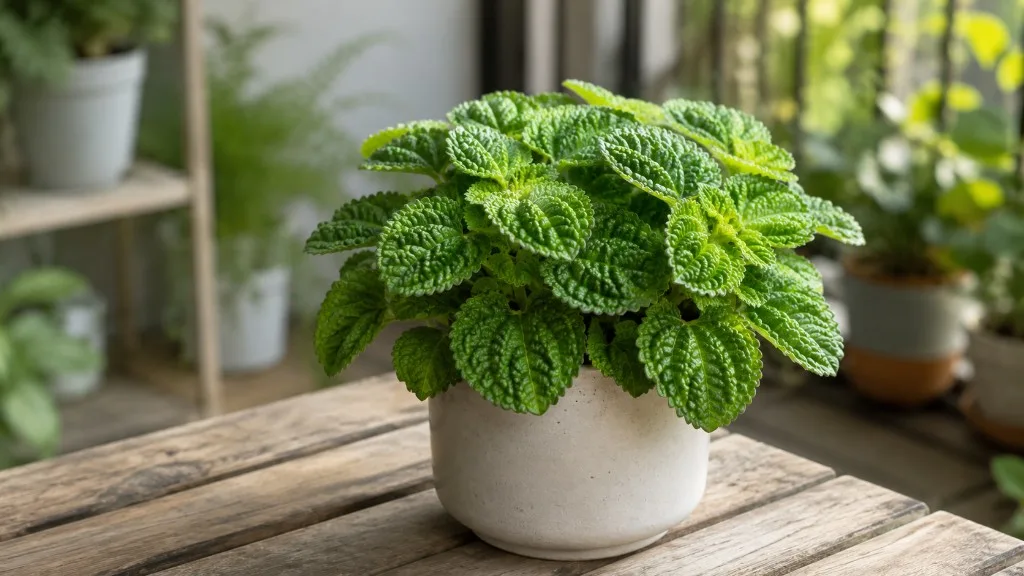
Pilea Moon Valley pruning shapes a compact textured mound - not a trailing vine or upright coin-leaf tree. Pilea mollis ‘Moon Valley’ (often sold as a cultivar of Pilea involucrata) produces quilted, crinkled leaves in opposite pairs on square stems; the value is in the leaf surface, so aggressive shearing destroys the reason you grow it. Missouri Botanical Garden describes Moon Valley as an upright mounding cultivar to about 12 inches tall with strongly puckered bronze-green leaves, and recommends pinching stem tips as needed to keep the plant compact. Pruning on Pilea Moon Valley overview means pinching stretched tips, removing damaged leaves, and dividing overcrowded clumps in spring - not hedge-trimming the whole pot.
Moon Valley sulks if the mix dries hard or the crown stays wet. Stabilize moisture before corrective pruning on a wilted plant.
Why Moon Valley Needs Pinching, Not Shearing
Moon Valley is grown for dense, textured foliage pressed into a low mound - similar in pruning logic to nerve plants and other compact foliage pileas, not like the single-stem Pilea peperomioides. NC State Extension describes the closely related friendship plant as a trailing evergreen with velvety, crinkled, quilt-like leaves valued for ornamental foliage rather than flowers. Moon Valley follows that pattern: soft stems, opposite leaves, and a bushy habit that lengthens when light is weak.
What keeps the mound full is interrupting the apical bud at each stretched tip. Without pinching, the leading shoot extends, internodes lengthen, and you get a leggy plant with bare stem below clustered leaves at the ends. Missouri Botanical Garden lists pinch stem tips as needed as the primary maintenance method - low stress and repeatable every few weeks during active growth.
Shearing the top flat like a hedge damages the large textured leaves and removes the display surface that defines Moon Valley. Hard cutback is reserved for one or two severely leggy stems - shorten to a lower leaf pair, not the entire plant at once. Pruning manages architecture; it does not replace brighter indirect light, steady humidity, or even watering. If the plant is wilted from drought, waterlogged, or was repotted within the past two weeks, stabilize care before structural cuts.
What to Check Before You Cut
Walk the plant once before blades touch tissue. Look for leggy growth - stems extending beyond the mound with long smooth sections and leaves clustered at tips. Note which direction the plant leans; uneven light often produces taller shoots on one side. Inspect the quilted leaf surfaces and undersides for spider mites and mealybugs, which show up as fine webbing, stippling, or cottony clusters on textured foliage. Missouri Botanical Garden notes that Moon Valley stems are fragile and break easily, so tugging leaves to remove them is risky.
Separate three cut categories in your head:
- Cleanup - dead, yellow, or pest-damaged leaves at petiole bases; always appropriate
- Maintenance pinching - soft tips on stems slightly ahead of the rest; low stress, best in warm months
- Corrective cutback - shorten one severely leggy stem to a lower leaf pair; reserve for spring and summer
If multiple leaves are yellowing, soil smells sour, or the whole plant is collapsed, pruning is secondary. Fix watering, drainage, or root health first, then trim damaged foliage after firmness returns.
When to Prune Pilea Moon Valley
Moon Valley can survive a light trim any time, but it responds fastest during active growth. Late spring through early summer is the strongest window for pinching, corrective stem shortening, and division at Pilea Moon Valley repotting guide. During that period new side shoots emerge faster because the plant has light and warmth to support compact regrowth.
Anytime removal applies to fully yellow, brown, or mite-speckled leaves - cut at the petiole base as soon as you spot them so pests do not spread through the mound. Year-round pinching works when conditions stay stable: a humid terrarium, grouped plant shelf, or bright windowsill where temperatures stay roughly 16–24°C (60–75°F).
Avoid heavy division or repeated hard cutbacks in late autumn and winter unless you are removing diseased material. Shorter days and cooler rooms slow bud break, and cuts made in winter can leave the mound looking sparse for weeks. Do not pinch when soil is waterlogged or the plant is drought-crisped - fix moisture first.
The First Cut to Make
Remove damaged foliage before you reshape anything. Trace each failing leaf to where its petiole meets the square stem and make one clean cut. Do not pull attached petioles - Moon Valley stems snap easily, and a torn stem opens an entry point for rot on a plant whose crown should stay dry.
Only after cleanup should you address the tallest stretched stem. Pinch or snip the soft growing tip just above the uppermost leaf pair on that shoot. That redirects growth to buds at the node below and keeps the quilted mound even without removing healthy display leaves elsewhere.
Where to Pinch and Cut on Square Stems
Every pruning decision on Moon Valley comes down to the node - the junction where an opposite leaf pair attaches to the four-sided stem. Unlike vine pileas with long bare internodes, Moon Valley stays relatively compact, but stretched stems still develop smooth sections between leaf pairs when light is insufficient.
Position your cut just above a leaf pair, not through the middle of a leaf and not halfway down a bare internode with no leaves below. The remaining stem must keep at least one healthy leaf pair below the cut so it can photosynthesize while new buds break.
Pinching Soft Tips With Fingers
Tender new growth at stem tips can be pinched between thumb and forefinger just above the uppermost leaf pair - quick, clean, and ideal for weekly maintenance during spring and summer. Remove the apical bud and the top soft leaf pair. On a healthy Moon Valley in warm humid conditions, new side branches often appear within two to four weeks.
Shortening a Leggy Stem to a Lower Leaf Pair
When one stem has run far ahead with small puckered leaves only at the tip, tip pinching alone may not balance the mound. Cut that stem back to a lower leaf pair at the height of the surrounding foliage, using fine snips. Leave enough leaf area on the shortened stem to recover. Never cut below the lowest healthy leaves on a shoot unless you intend to remove the entire stem at soil level.
Step-by-Step Moon Valley Pruning
Work on a healthy plant in active growth unless you are removing diseased tissue. Examine the mound from above and from the side. Identify the tallest stems, damaged leaves, and any crowded offsets at the base.
Sterilize tools with 70% isopropyl alcohol before starting and between plants if you removed spotted foliage - Iowa State University Extension recommends sanitizing pruning tools to limit disease spread. Remove dead and yellow material first at petiole bases. Address the tallest leggy stem: pinch or cut just above the nearest leaf pair at the height of the surrounding mound.
After each major cut, step back and assess balance. Rotate the pot as you work so one side does not stay taller. When pinching for maintenance, remove the top soft growth on any stem outpacing its neighbors every two to four weeks during active growth - small frequent pinches beat one drastic session.
After pruning, return the plant to stable conditions. Do not increase watering or fertilizer immediately. If legginess came from low light, improve bright indirect exposure gradually. Hold fertilizer for two to three weeks after moderate pruning until new growth appears.
How Much Foliage You Can Safely Remove
Remove no more than one-third of healthy leaves in a single session under normal conditions. Moon Valley grows at a moderate indoor pace - not like a fast vine - and the textured leaf display needs remaining foliage to photosynthesize while buds break.
For a severely leggy plant, stage corrective cuts over two sessions spaced several weeks apart rather than stripping half the mound at once. Count roughly before you cut: if the pot holds thirty leaves, removing ten stays within the one-third guideline; removing twenty needs a second session after the first flush of regrowth.
Division as a Renewal Prune
When the pot is a tight tangle of stems with weak growth in the center, division at repotting renews form better than repeated hard pruning on old stems. RHS lists propagation by division or detaching rosettes in spring for Moon Valley. Unpot in late spring, tease apart rooted offsets, or cut through the root ball with a clean knife so each section keeps several stems and healthy roots.
Replant sections in fresh airy mix with good drainage. Division is more stressful than tip pinching - expect a week or two of adjustment before new puckered leaves appear. Avoid dividing in winter when root recovery is slow.
Using Trimmings for Propagation
Healthy pinched tips and stem sections can become new plants. Missouri Botanical Garden notes Moon Valley is easily propagated from stem cuttings. Sort clippings as you cut: viable sections with at least one node go into water or moist soil; damaged or node-free debris goes to compost.
A good cutting is 5–8 cm (2–3 inches) with at least one leaf pair and one node. Remove the lowest leaf if it would sit below the water line or bury in soil. Keep cuttings in Pilea Moon Valley light guide with steady humidity. Roots often form within two to three weeks during spring and summer. You can also root a cutting in the same pot to fill a sparse side of the mound.
Aftercare and Recovery Timeline
Pruning redirects growth but does not manufacture energy. Moon Valley relies on remaining leaves and stored reserves to push new buds. Keep bright indirect light and moderate to high humidity (50–60%) after trimming - RHS pilea guidance notes that species with smaller textured leaves such as P. involucrata prefer slightly more humidity than coin-leaf pileas.
Avoid direct afternoon sun on fresh cuts. Water when the top 2–3 cm of soil approaches dryness - fewer leaves need less water, so do not overcompensate after a trim. Expect visible new side shoots within two to four weeks during spring and summer pinching; the mound looks noticeably fuller within six to eight weeks when light and humidity support short internodes.
If nothing breaks after six weeks in warm, bright, humid conditions, check cut placement and root health before cutting again. Tiny new leaves that stay puckered and undersized often signal light or moisture stress - fix care before removing more foliage.
Pilea Moon Valley is non-toxic to cats and dogs per the ASPCA - trimmings are pet-safe but messy on the floor.
What Not to Cut
Do not shear the entire mound to one height - you will destroy the quilted leaf display. Do not cut all stems to bare stubs in one session. Do not remove healthy inner leaves just because outer leaves look slightly older; older textured leaves still contribute to the mound’s depth.
Do not prune aggressively when the plant is wilted, root-bound in soggy soil, or showing active crown rot. Do not pull leaves off by hand. Skip major division when the plant is dormant in a cool dim room.
Common Pruning Mistakes
The most common errors on Moon Valley:
- Shearing the mound - ruins the textured leaf display that defines the cultivar
- Pulling leaves - tears fragile square stems; always cut petioles
- Pinching without fixing dry air - new growth stays small and crisp at the edges
- One drastic cut instead of regular pinches - staged tip pinching during growth season works better
- Division in winter - slow root recovery and sparse appearance for weeks
- Overwatering after leaf loss - wet crowns promote stem rot on compact pileas
- Discarding viable tip cuttings - easy propagation material wasted
Conclusion
Keeping Pilea Moon Valley compact comes down to a few principles applied consistently: remove damaged leaves at petiole bases first, pinch stretched tips just above leaf pairs during late spring through early summer, remove no more than one-third of healthy foliage in one session, and divide overcrowded clumps at spring repot rather than repeatedly hacking old stems. Moon Valley is a texture plant - light pinching preserves the quilted leaves that make it worth growing.
Start with one cleanup cut on the worst damaged leaf, then pinch the single tallest stretched tip above its nearest leaf pair, and wait two weeks before deciding the plant needs more. Small frequent pinches during active growth produce the bushiest mounds; clean tools and steady humidity keep new leaves deeply puckered after every trim.
When to use this page vs other Pilea Moon Valley guides
- Pilea Moon Valley overview - Start here for whole-plant context before deep-diving this topic.
- Pilea Moon Valley problems hub - Jump to symptom-specific fix guides when this care topic does not resolve the issue.
- Leggy Growth on Pilea Moon Valley - Escalate here when pruning adjustments are not enough.
- Brown Tips on Pilea Moon Valley - Escalate here when pruning adjustments are not enough.