Syngonium Neon Robusta Care: Light & Water
Syngonium podophyllum 'Neon Robusta'
Syngonium Neon Robusta needs bright indirect light to maintain its striking neon-pink colour. Water when the top inch of soil dries out.
Syngonium Neon Robusta Care: Light & Water
Start with wateringThe most common care mistake for Syngonium Neon RobustaWatering guide →Syngonium Neon Robusta care essentials
Light
bright indirect light, medium indirect light
Water
Water when top inch of soil dries.
Soil
Well-draining potting mix.
Humidity
Moderate humidity (50–60%)
Temperature
16°C to 27°C (60–80°F)
Fertilizer
Feed lightly during active growth. Use monthly in spring and summer..
About Syngonium Neon Robusta
Syngonium Neon Robusta has a upright growth habit.
| Detail | Information |
|---|---|
| Growth habit | Upright |
| Scientific name | Syngonium podophyllum 'Neon Robusta' |
Syngonium Neon Robusta Care: Light & Water
What Is Syngonium Neon Robusta?
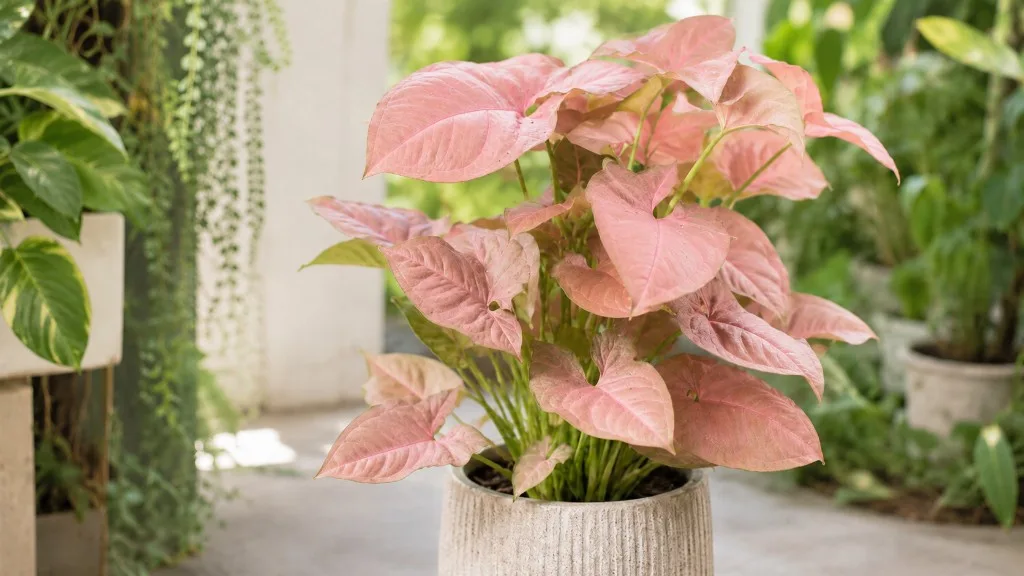
Syngonium Neon Robusta - botanically Syngonium podophyllum ‘Neon Robusta’ - is a pink-green cultivar of the arrowhead vine, one of the most recognizable colorful aroids in the houseplant trade. Retail tags call it pink arrowhead vine, neon syngonium, or simply arrowhead plant, but the cultivar name matters because this is not a generic green Syngonium with a marketing label slapped on. It is a patented selection (plant patent PP18013) distinguished by light green foliage washed with rosy-pink, especially on the upper leaf surface, with greener undersides and a soft arrowhead shape on juvenile leaves.
The species behind the cultivar, Syngonium podophyllum, is an evergreen tropical climber native from Mexico to Ecuador, where it grows in warm, humid forest understories and climbs tree trunks in filtered light. Indoors, the parent species can reach 3 to 6 feet (0.9 to 1.8 m) on a support, but ‘Neon Robusta’ stays more compact in typical home cultivation. According to the Missouri Botanical Garden, mature houseplant specimens reach roughly 1 foot (30 cm) tall with vining branches up to 2 feet (60 cm) long - though stems grow considerably longer outdoors in frost-free climates or in a conservatory. Growth is moderate to fast in bright, warm conditions and slows when light or temperature drops.
If you are deciding whether Neon Robusta fits your home, the honest summary is this: it rewards Syngonium Neon Robusta light guide, evenly moist well-draining soil, and stable warmth - and it punishes chronic overwatering, cold drafts, and dim corners where the pink fades to plain green. It is easier than a calathea and more demanding about light than a solid-green Syngonium if you want to keep the color that made you buy it. The payoff is a bushy, self-branching plant with continuous new pink-tinged leaves, easy stem-cuttings propagation, and flexibility as a tabletop specimen, hanging basket, or moss-pole climber. One critical caveat for pet owners: like all S. podophyllum cultivars, Neon Robusta is toxic to cats, dogs, and horses according to the ASPCA, which lists the species under its older common name nephthytis.
Botanical Background
Neon Robusta belongs to the family Araceae - the aroid family - alongside philodendrons, monsteras, pothos, alocasias, and peace lilies. That family connection matters for care more than most product labels suggest. Aroids share baseline patterns: they prefer well-drained, airy potting mix; they are sensitive to roots sitting in stale water; many contain insoluble calcium oxalate crystals that cause irritation if chewed; and most perform best in bright indirect light that mimics forest-floor and lower-canopy conditions rather than open, baking sun.
The cultivar itself has a specific origin story. ‘Neon Robusta’ arose as a branch mutation on a plant of the older cultivar ‘Neon’, discovered in Apopka, Florida, on June 6, 2003, and subsequently propagated asexually to preserve its pink-toned foliage. Commercial descriptions from AgriStarts emphasize a symmetrical upright habit, prolific branching, and dense bushy form - traits that make it popular in mixed dish gardens and as a standalone accent. Unlike some vining Syngonium that look sparse until trained, Neon Robusta often arrives from the nursery already full and compact, which can mislead new owners into thinking it will stay small without pinching or support.
The genus name Syngonium comes from Greek roots referring to united reproductive organs in the flower structure. You will rarely see flowers indoors, and that is fine because Neon Robusta is grown entirely for foliage. The older synonym Nephthytis triphylla still appears in botanical references and explains why poison-control databases list the plant as nephthytis even when your pot label says Syngonium. Outdoors, S. podophyllum is winter-hardy only in USDA Zones 10 through 12, per the Missouri Botanical Garden. Compared with the parent ‘Neon’ cultivar, Neon Robusta is the brighter, more intensely pink selection with a more self-heading, symmetrical habit rather than a loose open vine.
Why Pink Color Depends on Light
The single biggest reason people buy Neon Robusta is the pink-green foliage, and the single biggest reason they feel disappointed six months later is that the pink quietly disappears. This is almost never a mysterious cultivar reversion. It is a light response. The rosy-pink wash on new and young leaves is most vivid when the plant receives strong bright indirect light - enough energy to support the pigment without the stress of direct midday sun. In low light, Neon Robusta does what many variegated and blush-toned aroids do: it prioritizes chlorophyll production and the leaves shift toward solid green to capture more usable light.
That does not mean Neon Robusta is a high-light-only plant that belongs on a south-facing sill with no filter. It means the window placement that keeps a dark-green Syngonium happy may be too dim to hold the pink you paid for. East-facing windows are often ideal: gentle morning direct sun, then bright indirect light the rest of the day. A few feet back from a south- or west-facing window behind a sheer curtain also works well. The diagnostic that matters is new growth: if the freshest leaves open with a visible pink blush that matches reference photos, light is probably adequate. If new leaves arrive smaller, farther apart on the stem, and mostly green, the plant is telling you it wants a brighter position or supplemental grow light.
Too much light produces a different problem: bleached patches, brown scorch on sun-facing leaves, or midday curling on foliage formed in lower light and suddenly exposed to harsh rays. Acclimate any move toward a brighter spot over one to two weeks so leaves hardened in a shop’s dim corner are not shocked by afternoon sun. Reading the newest leaf tells you more than inspecting older ones at the base of the plant, which naturally age toward green as they mature even under good light.
Best Growing Conditions for Syngonium Neon Robusta
Neon Robusta does best when your space approximates the warm, humid, filtered-light rhythm of a tropical forest understory. The four variables that decide almost every outcome are light, water, soil, and temperature. Get those aligned and feeding, Syngonium Neon Robusta repotting guide, pinching, and propagation become routine. Get one badly wrong - especially water combined with low light - and the plant declines faster than its reputation as an easy pink houseplant suggests.
Light Requirements
Syngonium Neon Robusta grows best in bright, indirect light - strong ambient daylight without harsh midday sun striking the leaves. The Missouri Botanical Garden recommends bright indirect exposure and explicitly advises protection from direct sun for this cultivar. That guidance matters doubly here because pink-toned leaves bleach and scorch more visibly than solid-green foliage when light is too intense.
Neon Robusta tolerates lower light better than many strictly high-light colorful plants, which is why it survives in offices and dimmer rooms - but tolerance is not the same as the look you bought. In low light, stems stretch, internodes lengthen, leaves shrink, and the pink wash fades toward green on new growth. The plant may stay alive while slowly looking leggy, thin, and indistinguishable from a generic arrowhead. If you must use a darker corner, expect slower growth, longer intervals between watering, and a loss of pink unless you supplement with a full-spectrum grow light on a 10–12 hour timer positioned roughly 12 to 18 inches (30 to 45 cm) above the foliage.
The fastest diagnostic for incorrect light is new growth. Compact nodes, firm stems, and a visible pink blush on opening leaves mean the plant is probably happy. Long, floppy stems with small pale-green leaves mean more light. Bleached yellow-white patches, brown scorch, or midday curling mean less direct exposure or slower acclimation to a brighter spot. Rotate the pot weekly if growth leans toward one side, especially near a single window.
Temperature and Humidity
Neon Robusta prefers stable indoor temperatures between 65 and 80°F (18 and 27°C) during active growth, with nights above 60°F (15°C). It handles typical home warmth well but dislikes cold drafts from winter windows, frequently opened doors, and air-conditioning vents blowing directly on the foliage. Prolonged exposure below about 55°F (13°C) slows growth and can cause yellowing and leaf drop. Outdoors, treat it as a Zone 10–12 plant only - bring containers inside before nights drop toward 60°F if you use it as a summer patio accent in temperate climates.
Humidity is more important for Neon Robusta than for many common houseplants, though it remains secondary to getting light and water right. In its native forest habitat, humidity stays high year-round. Indoors, 40 to 60% relative humidity supports healthy leaf edges and reduces spider-mite pressure. Average winter homes that drop below 30% often produce crisp brown leaf tips, smaller new leaves, and mite outbreaks on stressed plants. Grouping plants, using a pebble tray with the pot elevated above the water line, placing the plant in a bright bathroom or kitchen, or running a small humidifier nearby all raise ambient moisture more reliably than occasional misting.
If you do mist, do it in the morning with good air circulation so foliage dries within a few hours. Wet leaves that stay wet overnight invite bacterial leaf spot and soft rot. Humidity targets the air around the plant, not a constant film of water on the leaf surface.
Soil and Drainage
Use a light, well-draining, airy potting mix suited to aroids. The principle matters more than a single branded recipe: the mix should hold moisture in the root zone without staying waterlogged for days, and it should retain enough air space that roots can breathe between waterings. A workable home blend is roughly two parts quality peat-free or peat-based houseplant mix, one part perlite, and one part orchid bark or coco chips - increase perlite and bark if your home runs hot and bright, or if you tend to water heavily.
The Missouri Botanical Garden recommends a soil-based potting mix for S. podophyllum, which in practice means a structured indoor blend with real mineral and organic components rather than pure fine peat alone. Avoid heavy, all-peat mixes that compact within a year, and avoid garden soil in containers. Compacted mix is one of the fastest paths to root rot in Syngonium because the top may look dry while the core stays saturated. Always plant in a container with a drainage hole, and empty saucers after watering so the pot is not standing in runoff. Decorative cachepots work only if you treat them as covers, not as the primary water reservoir.
Target a slightly acidic to neutral pH in the 5.5 to 7.0 range - normal commercial indoor mixes sit close enough that hobbyists rarely need to adjust pH for Neon Robusta. The bigger practical issue is salt buildup from hard tap water and over-fertilizing, which shows as white crust on the soil surface and brown leaf margins. Flush the pot with plain water every few months in hard-water areas, letting excess run freely through the drainage holes.
How to Water Syngonium Neon Robusta
The general rule for Neon Robusta is water when the top 1 inch (2.5 cm) of mix feels dry, then soak thoroughly until a small amount runs from the drainage hole. Syngonium prefers evenly moist soil during active growth - not a swamp, but not bone-dry for long stretches either. The Missouri Botanical Garden describes the species as needing regular water in the growing season with reduced frequency from fall through late winter, which matches how most indoor specimens behave when light and temperature drop.
In warm, bright conditions, that moisture check often translates to every 7 to 10 days for a medium pot, but your calendar should be a reminder to check, not a rule to follow blindly. Pot size, soil composition, humidity, and whether the plant sits in a hot window all change the interval. A small pot in a bright east window may need water twice weekly at midsummer; the same plant in a cool north room in January may go two to three weeks between drinks. Lift the pot - a noticeably light container means the root zone has dried more than Syngonium prefers, while a heavy pot with a damp surface usually means wait.
Always empty the saucer after watering. Aroids are particularly unforgiving of roots sitting in stale water, and Syngonium’s fine root system rots quickly when oxygen is cut off. If water runs straight through without soaking in, the mix may have dried out completely and become hydrophobic - water in two passes a few minutes apart, or bottom-water for twenty to thirty minutes, then drain fully.
Syngonium Neon Robusta watering guide in Active Growth
During active growth - typically spring through early fall when new pink-tinged leaves appear regularly - Neon Robusta uses water predictably. Water deeply and evenly rather than giving small sips daily, and use room-temperature water when possible.
Seasonal Adjustments
In cooler, dimmer months, Neon Robusta slows even indoors. Stretch the interval, rely on the weight test and deeper finger check, and pause or reduce fertilizer until new growth resumes. Heating systems can make the surface dry faster while the core retains moisture - check an inch or two down rather than trusting a crusty top alone. The most common winter mistake is continuing a summer watering rhythm on a plant that is no longer using water at the same rate.
Common Watering Mistakes
The single most common Neon Robusta problem is watering on a schedule instead of on the plant’s actual state - especially automatic weekly watering without checking the mix. The second most common is leaving the pot in a full saucer after every drink. Third is confusing dry-stress with root rot: a plant with damaged roots from overwatering sometimes wilts in wet soil, and watering again kills it. When stems are soft at the base, leaves yellow widely, and the mix smells sour, inspect roots before assuming drought.
Using pots far too large for the root system is a watering mistake disguised as generosity. Excess mix holds excess water with too few roots to use it, creating the chronic damp conditions aroids hate. This combination is especially dangerous in low light, where the plant uses even less water - a pattern that produces yellow leaves and pink fade simultaneously as the plant weakens. Size up one pot diameter at a time at repotting - usually 1 to 2 inches (2.5 to 5 cm) - rather than jumping to a huge decorative container.
How to Feed Syngonium Neon Robusta
Neon Robusta is not a heavy feeder, but it is a moderate to fast grower when light and water are right, so modest nutrition during active growth keeps leaf color strong and internodes compact. A balanced water-soluble houseplant fertilizer diluted to one-quarter to one-half of the label rate every four to six weeks from spring through early fall is enough for most indoor plants. Apply to already-moist soil so the solution distributes through the root zone without burning fine roots.
If your potting mix includes a starter fertilizer charge, hold supplemental feeding for the first four to eight weeks after repotting. Organic slow-release fertilizers mixed into the substrate at repotting can replace liquid feeding for the season - follow product rates conservatively because excess salt hurts aroids faster than it helps. Pink-tinged, firm new leaves on a well-lit plant usually mean nutrition is adequate. Pale new leaves with green veins may indicate nitrogen deficiency, but check light and watering first - those cause similar symptoms far more often than true starvation indoors.
Fertilizer Type and Strength
A balanced formula such as 10-10-10 or 20-20-20 at quarter strength works well. Some growers prefer formulas with slightly higher nitrogen during active foliage production, but the difference is minor at indoor light levels. Pause feeding during winter slowdown, for four weeks after a major repot, and while the plant recovers from pest damage or root pruning. Feeding a plant that cannot use nutrients adds salt to the mix without producing better pink color. Resume when new growth is clearly active and the pot dries on a normal rhythm. Never apply fertilizer to bone-dry soil; water lightly first, then feed, or use the fertilizer in your regular watering can at half strength.
Repotting and Root Health
Repot Neon Robusta roughly every one to two years, or whenever roots circle drainage holes, water runs straight through without soaking, or the plant dries out unusually fast between waterings. The best timing is early in the active growing season - late winter through spring in the Northern Hemisphere - so the plant has months of warmth and light to recover. Choose a pot one size larger with drainage, refresh the mix completely rather than topping off old compacted soil, and water lightly for the first week while cut or disturbed roots heal.
Neon Robusta is marketed as self-heading and bushy, and many specimens stay compact on a shelf without support for the first year or two. Over time, stems still vine naturally - the species is a climber at heart. Indoors it performs well three ways: staying bushy through regular tip pinching, trailing from a hanging basket or shelf, or climbing a moss pole, trellis, or bamboo stake. Without pinching or support, vining stems eventually grow long and bare at the base unless you propagate tops to restart fullness. A moss pole encourages larger, more divided mature leaves if you want the adult arrowhead look; pinching tips every few months keeps the pink tabletop specimen many buyers prefer.
Signs It Is Time to Repot
The clearest repot signals are physical: roots emerging from drainage holes, roots visible on the soil surface, water running through instantly, or a plant that is top-heavy and unstable for its pot. Performance signals matter too - a Neon Robusta that previously dried every seven days and now dries every three despite the same light may be root-bound. If the mix has compacted, smells sour, or grows persistent fungus gnats because the surface never dries, repot into fresh airy mix even if the calendar says otherwise.
Not every plant needs a larger pot at repotting time. Specimens you want to keep compact can be root-pruned lightly and returned to the same container with fresh mix. That restrains size while renewing soil chemistry - useful for shelf-sized plants you do not want vining across the room.
Propagation Methods for Syngonium Neon Robusta
Neon Robusta is among the easiest Syngonium cultivars to propagate, which is how a 2003 Florida branch mutation became a global houseplant. The most reliable home methods are stem cuttings in water or moist mix and division of multi-stem clumps at repotting. Whichever method you use, start from a healthy, well-hydrated plant and clean, sharp scissors or pruners.
For stem cuttings, select a stem with at least one node and preferably two or three leaves. Cut just below the node, remove the lowest leaf if it would sit below the water line or bury in mix, and place the cutting in bright, indirect light. In water, change the water every few days and pot into airy mix when roots are 2 to 3 inches (5 to 7.5 cm) long. In moist perlite or coco coir, keep humidity high with a vented bag or dome until new growth resists a gentle tug. Because Neon Robusta branches freely, you can often take a cutting without leaving the parent plant looking bare - a advantage over single-stem specimens.
Division at repotting works when multiple stems have separate root systems - tease apart gently and pot each section on its own. Do not propagate a stressed, diseased, or heavily pest-infested plant; cuttings inherit the parent’s problems, and weak cuttings fail at a much higher rate than healthy ones. Address the parent’s issues first, then propagate from recovered growth.
Common Syngonium Neon Robusta Problems
Most Neon Robusta problems are environmental or cultural, not mysterious diseases. They show up as specific leaf symptoms that map to specific causes. The hardest part is usually patience: chronic overwatering damage takes weeks to appear and weeks to reverse after you fix the rhythm.
Yellow Leaves and Fading Pink
Yellow leaves are the most common complaint. Causes include overwatering, underwatering, low light, cold drafts, normal older-leaf senescence, salt buildup, and pests. Check moisture in the mix first - soggy soil with yellow lower leaves and soft stems strongly suggests root stress from excess water. Crispy dry edges with yellowing often mean underwatering or very low humidity. A single yellow lower leaf on an otherwise healthy plant is often normal shedding as the plant grows; remove it and watch whether new growth stays green and pink-tinged. If moisture and light look reasonable, inspect leaf undersides and stem joints for spider mites, mealybugs, aphids, and scale. Mites leave fine stippling and webbing; mealybugs look like cotton puffs in axils; scale appears as brown bumps on stems.
Pink fading to green on new leaves is almost always a light problem, not a fertilizer deficiency. Move the plant to stronger bright indirect light, filter harsh sun, or add a grow light, then wait for two or three new leaves before judging the result. Older leaves at the base naturally green with age even under good light - evaluate the freshest foliage.
Brown leaf tips and margins usually point to low humidity, underwatering, salt or fluoride/chlorine in tap water, or fertilizer burn. Flush the pot periodically with plain water in hard-water areas, and review whether the watering rhythm matches what the plant actually uses. A humidifier or pebble tray often improves tip health more than trimming alone - though you can snip dead tips for appearance with clean scissors.
Leggy, sparse growth with small green leaves means insufficient light in most cases. Move closer to a bright window, filter harsh sun, or add a grow light, then pinch tips after the plant adapts to encourage branching. Bleached or faded pink with scorch patches means too much direct sun - pull the plant back or add a sheer curtain.
Pests to watch for include spider mites in dry air, mealybugs in leaf axils, aphids on new growth, and fungus gnats if the soil surface stays wet. Catch problems early with a weekly glance at undersides. Rinse foliage, manual removal, and insecticidal soap handle most outbreaks if you start early. Bacterial leaf spot and soft rot appear as water-soaked lesions or mushy stems, often after wet foliage persists too long - remove affected leaves, improve air circulation, and let the mix dry slightly more between waterings.
For pet owners: Syngonium Neon Robusta is toxic to cats, dogs, and horses because all parts contain insoluble calcium oxalate crystals, per the ASPCA. Chewing causes oral irritation, swelling, drooling, vomiting, and difficulty swallowing. Most cases resolve with supportive care, but swelling that affects breathing warrants immediate veterinary attention - call the ASPCA Animal Poison Control Center at (888) 426-4435 (a consultation fee may apply) or your veterinarian if ingestion is suspected. Hang baskets out of jump range and avoid floor-level shelves where curious pets chew vines.
Conclusion
The most useful thing to know about Syngonium Neon Robusta is that it is a pink-green, self-branching aroid cultivar from tropical American forest understories that wants bright indirect light, evenly moist well-draining soil, stable warmth, and moderate humidity for its best form - especially if you want the pink to last. Treat it as an aroid: respect drainage, watch for root rot in dim overwatered corners, and understand calcium oxalate toxicity around pets. Pinch it for a bushy tabletop look or give it a moss pole if you want a climber with larger mature leaves. Propagate stem cuttings whenever you trim, and when something looks wrong, check light and water before reaching for fertilizer or pesticide. Fix the environment first - particularly light if the pink is fading - and Neon Robusta usually follows.
When to use this page vs other Syngonium Neon Robusta guides
- Syngonium Neon Robusta overview - Canonical hub for this species - care topics and problems branch from here.
- Syngonium Neon Robusta problems - Symptom-first path when you already know something is wrong.
Related Syngonium Neon Robusta guides
How to care for Syngonium Neon Robusta?
How much light does Syngonium Neon Robusta need?
bright indirect light, medium indirect light
- bright indirect light, medium indirect light - bright indirect light, medium indirect light.
When should you water Syngonium Neon Robusta?
Water when top inch of soil dries.
- Check top 2 inches - Water when top inch of soil dries.
- Drain excess water - Water when top inch of soil dries.
What soil works best for Syngonium Neon Robusta?
Well-draining potting mix.
- Well-draining mix - Well-draining potting mix.
Grower notes for Syngonium Neon Robusta
Neon Robusta identity note
Neon Robusta is the softer pink tabletop Syngonium. It looks best when kept compact through pruning, because long unsupported stems can make the pastel leaves look sparse. Bright indirect light preserves the pink wash; dim light turns the plant muted and greenish. It is the better pick when you want a gentle blush color rather than a stronger pink-and-green arrowhead pattern.
Best use for Neon Robusta
This is a good tabletop Syngonium when pruned young. If you want a climbing plant with larger mature leaves, train it early on a pole. If you want the pink juvenile look, pinch and rotate before the stems run long.
What makes Neon Robusta different
Syngonium Neon Robusta is valued for soft pink new growth and a compact look. Too little light turns it dull and greenish; too much direct sun makes the pale leaves look washed and tired. Judge it by color on the newest leaves, not by vine length.
What matters most with Syngonium Neon Robusta
Syngonium Neon Robusta can change leaf shape as it matures, so juvenile leaves are not always a sign of poor care. Give it support or pruning depending on whether you want a compact tabletop plant or a climbing arrowhead vine. In practice, the care checkpoint is simple: bright indirect light, medium indirect light. Pair that with well-draining potting mix, and avoid changing water, pot size, and placement all at once.
Best placement in a real home
Syngonium Neon Robusta belongs where bright indirect light, medium indirect light is realistic for most of the day, not only where the pot looks good. Water when top inch of soil dries. If the pot stays wet longer than expected, move the plant into better light or reassess the mix before watering again. Humidity target: Moderate humidity (50–60%).. Temperature comfort zone: 16°C to 27°C (60–80°F).
Before you buy this plant
Choose Syngonium Neon Robusta with firm new growth, clean leaf undersides, and soil that does not smell sour or feel compacted. Be cautious if you see leggy-growth, sticky residue, collapsed crowns, or a pot that is wet in poor light. Cosmetic old-leaf damage is less worrying than weak roots or active pests.
First month after bringing it home
Do not repot Syngonium Neon Robusta on day one unless the mix is failing or pests are obvious. Quarantine it, learn how fast the pot dries, and keep care boring while it adjusts. Watch especially for leggy-growth. If problems appear, correct the condition first rather than stacking fertilizer, repotting, and pruning together.
Safety note for Syngonium Neon Robusta
Syngonium Neon Robusta is not a plant to keep within reach of pets or children. Treat it as an inaccessible display plant. Use gloves if sap or plant tissue is irritating, and pick a pet-safe alternative for floor pots or low shelves.
How to tell Syngonium Neon Robusta is settling in
If you plan to multiply it later, common methods include Stem cuttings.
Is it pet safe?
Syngonium Neon Robusta is toxic to cats and dogs.
Toxic - calcium oxalate crystals.
Watering Syngonium Neon Robusta
Water when top inch of soil dries.
Soil & potting for Syngonium Neon Robusta
Well-draining potting mix.
Humidity & temperature for Syngonium Neon Robusta
Syngonium Neon Robusta prefers moderate humidity (50–60%), though normal home humidity is usually fine. Keep temperatures around 16°C to 27°C (60–80°F).
| Detail | Information |
|---|---|
| Humidity | Moderate humidity (50–60%) - normal home humidity is fine. |
| Ideal temperature | 16°C to 27°C (60–80°F) |
Fertilizer & pruning for Syngonium Neon Robusta
Use feed lightly during active growth. Use monthly in spring and summer.. for Syngonium Neon Robusta.
| Detail | Information |
|---|---|
| Fertilizer type | Feed lightly during active growth. Use monthly in spring and summer.. |
Common problems on Syngonium Neon Robusta
Leggy Growth
MediumLikely cause: Low light.
Quick fix: Move to brighter indirect light.
Full fix guide →