Syngonium Neon Robusta Pruning: When, How, and Mistakes
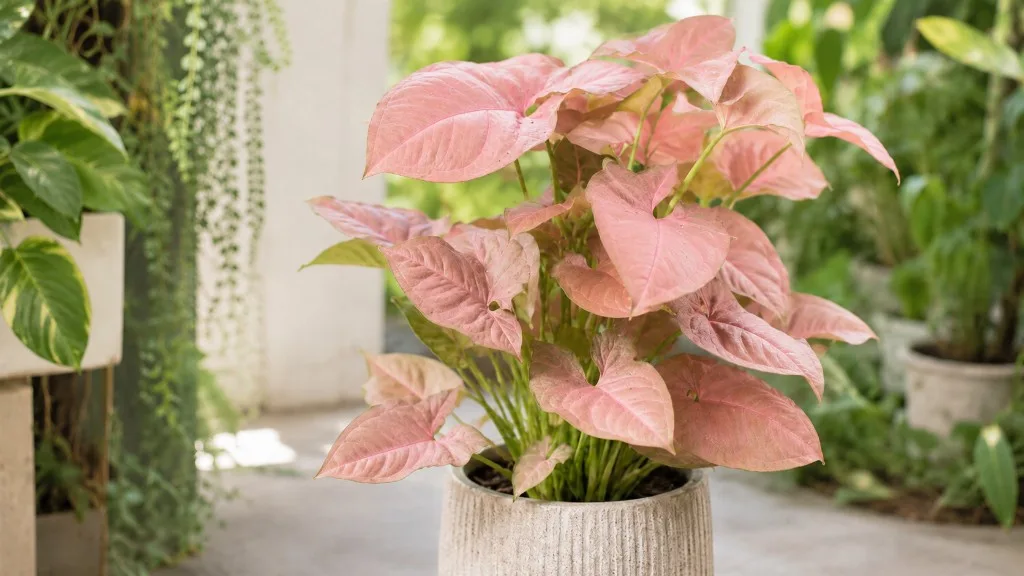
Syngonium Neon Robusta Pruning: When, How, and Mistakes to Avoid
Syngonium Neon Robusta Pruning: When, How, and Mistakes to Avoid
First, remove only dead, brown, or clearly damaged leaves at the petiole base with clean sharp scissors - snip close to the stem without tearing bark. Syngonium Neon Robusta (Syngonium podophyllum ‘Neon Robusta’) stores energy in its stems and recovers fast, but a sanitation pass shows you what is actually alive before you pinch tips or cut back leggy runners for shape.
Quick Answer
Prune Neon Robusta for compact tabletop form in late spring through summer, when the plant is actively producing leaves. Make each shaping cut 6–10 mm (about ¼ inch) above a visible node - the slightly swollen point where a leaf attaches. Limit routine shaping to no more than one-third of total foliage per session. Pinch soft growing tips every two to four weeks during warm months to preserve juvenile arrowhead leaves with the soft pink wash. Emergency removal of mushy, pest-damaged, or fully dead stems can happen any time. Pruning breaks apical dominance at the vine tip and activates buds at nodes below the cut, but it cannot replace adequate Syngonium Neon Robusta light guide - legginess and dull green regrowth return quickly in a dim corner even after a hard trim.
What Pruning Does for Neon Robusta Syngonium
Neon Robusta is a cultivated form of arrowhead vine valued for soft pink new growth and a compact juvenile silhouette on a tabletop. Without regular maintenance, it behaves like any Syngonium podophyllum: stems lengthen, internodes stretch, and leaves shift toward the mature lobed adult form that looks different from the pastel mound most growers expect. Missouri Botanical Garden notes that juvenile leaves are ovate and arrow-shaped while mature leaves become pedate with multiple leaflets - pruning before stems run long keeps the plant in the juvenile stage longer.
NC State Extension recommends cutting developing stems as they begin to vine if you wish to retain arrowhead foliage and a more shrub-like habit. That guidance maps directly to Neon Robusta care: the cultivar looks best when you interrupt elongation early rather than waiting for one long runner to dominate the pot.
Pruning serves four practical jobs on Neon Robusta:
- Redirects growth by removing the dominant tip and waking lateral buds at nodes below
- Removes failing tissue before pests or rot spread along soft stems
- Shortens leggy runners that have lost lower leaves and pink color on new growth
- Supplies propagation material - node-bearing cuttings root easily in water or soil
Pruning does not fix chronic under-lighting. If new leaves after a trim emerge mostly green with little pink wash, improve placement to bright filtered light before expecting compact pastel regrowth. Neon Robusta color lives on the newest leaves - judge success by what unfurls after the cut, not by what you removed.
What to Check Before You Cut
Walk the plant stem by stem in good light before touching shears. You are looking for node health, pink intensity on recent leaves, and whether light placement supports the look you want after trimming.
Inspect nodes, pink color, and light first
Follow each stem from soil line to tip. Healthy nodes show a small bump or leaf scar where a petiole attaches - that is where new shoots emerge after a cut. If internodes are longer than a few centimeters and the newest leaves look greener and less pink than older ones, light is probably too low; moving the pot before a hard cutback often produces better regrowth than scissors alone.
Compare leaf color on the top two nodes versus lower sections. Plain green revert stems - vines that have lost the soft pink juvenile look - are candidates for cutback to a node where pinker leaves still attach, not for repeated tip pinching alone.
Check leaf undersides for sticky residue, webbing, or scale. Prune out infested sections into a sealed bag rather than composting them on a windowsill. If several leaves yellow at once and soil stays wet, suspect overwatering or root stress; trimming yellow foliage without fixing moisture will not solve the underlying problem.
If the plant was recently repotted, moved, or shows widespread yellowing, resolve that stress first and wait one to two weeks before structural pruning.
The First Cut to Make
After your sanitation pass on dead or damaged leaves, identify the longest bare or overextended stem - or the plainest green revert section if pink color is your main concern. Follow it back from the tip until you find a node that still has a healthy leaf with acceptable pink wash, or pick a node roughly two-thirds of the way toward the soil where you want new fullness to start.
Sterilize bypass shears with 70% isopropyl alcohol. Position the blade 6–10 mm above that node at a slight angle, with the node tissue remaining intact on the parent stem. Make one cut, then step back and assess balance before shortening the next stem. One deliberate cut above a node beats removing six random sections in a single pass.
When to Prune Syngonium Neon Robusta
Pinching and structural cutbacks belong in late spring through summer, when Neon Robusta is actively producing leaves in warm indoor conditions. University of Minnesota Extension notes that early spring is ideal for light houseplant pruning, with new leaves often appearing within a few weeks. That schedule matches how fast this cultivar replaces foliage indoors.
Pinch soft tips every two to four weeks during active growth if you are maintaining a tabletop mound. Remove dead or yellow leaves any time they appear.
Avoid heavy cutbacks in late autumn and winter unless you accept a slower response. A one-third reduction that rebounds in three weeks during June may look unchanged until March if done in December. Light tip pinching during the off-season is fine; hard rejuvenation is not.
Cuts that cannot wait
Some trimming should not wait for spring:
- Blackened, mushy, or rotting stems - cut back into firm green tissue above a healthy node; sterilize blades between cuts on diseased material
- Stems with heavy active pest infestation - remove the worst sections once you have a treatment plan for the rest
- Fully brown, dry leaves - snip at the petiole base any time; they no longer photosynthesize
Cosmetic shaping can wait for active growth. Health and sanitation cuts happen immediately.
Pinching for Compact Pink Form
Tip pinching is the main maintenance task for Neon Robusta on a shelf or desk. Remove the soft terminal bud and the top one to two leaves just above the next node by pinching with fingernails or snipping with sharp scissors. This interrupts apical dominance with minimal stress and keeps internodes short so the pot reads as a dense pink-tipped mound rather than a single long vine.
Repeat every two to four weeks from late spring through summer on stems that are still producing juvenile arrowhead leaves. Pinching works best when the plant already sits in bright indirect light - new leaves that follow a pinch in dim conditions often emerge greener with less pink wash.
Pinching cannot fill a long bare internode. Once a stem has stretched with empty space between nodes, switch to a node cutback farther down the vine instead of repeated tip pinches at the end.
Node Cutbacks on Leggy Vines
When internodes stretch and foliage clusters only at the tips, cut 6–10 mm above a lower node on the worst stems. NC State Extension describes syngonium as developing a vine-like habit as it ages - Neon Robusta will follow that pattern quickly without pinching or cutbacks.
For maximum bushiness on one long stem, make multiple cuts along its length - each above a node - rather than trimming only the tip. Shortening a runner at nodes three, six, and nine activates three branching points instead of one. Leave enough remaining leaf area on each section to support recovery.
On revert-prone green stems, cut back to a node where pinker juvenile leaves still attach. If the entire lower run is plain green, pick the lowest healthy node and accept that new color depends on light quality after the cut.
Where to Cut - and What to Avoid
Cut just above the node, not through it and not midway down the bare internode above it. The node is the bump where the leaf meets the stem; dormant buds typically flank it. RHS notes that syngonium propagates from stem-tip or leaf-bud cuttings taken in summer - the same node tissue branches after pruning.
Do not cut:
- Mid-internode on bare stem - produces a dead stub with no branching
- Below the node - removes the branching point entirely
- Through crushed or blackened node tissue - recut 6–10 mm above the next healthy node down
- Into a tight sheared ball unless you plan to pinch frequently afterward - syngonium responds better to selective node cuts than blunt hedge trimming
Remove yellow leaves at the petiole base where the leaf stem meets the main vine, not by pulling and tearing bark.
How Much You Can Safely Remove
The standard guideline is no more than one-third of total healthy foliage at once. Neon Robusta grows quickly and often tolerates slightly more in spring and summer, but the one-third rule keeps outcomes predictable for beginners and for plants in average indoor light.
Severely leggy plants benefit from a staged approach over four to six weeks: remove one-third, wait until new shoots are visible, then shorten the next longest sections. A single hard cutback to two or three nodes above the soil can work on a vigorous specimen in bright light, but prolonged bare appearance is more likely if roots, watering, or placement are suboptimal.
Light frequent pinching is less stressful than one drastic winter cut on this fast grower.
Tabletop vs Climbing Display Goals
Neon Robusta suits two different displays - pruning strategy should match the one you want.
Tabletop compact form (default for this cultivar): aggressive tip pinching every two to four weeks during active growth, periodic node cutbacks on runners that escape, and rooted cuttings tucked at the pot edge for density. Avoid moss-pole training unless you deliberately want larger mature lobed leaves and a climbing silhouette.
Climbing vine: allow one or more leaders onto a moss pole or trellis early. Trim only runners that exceed the support or remove damaged leaves. Mature pedate foliage is normal on supported plants - that is a different aesthetic from the pink juvenile mound.
You cannot easily have both at once on the same stem. Decide per vine: pinch for mound, or train for climb.
Pruning Damaged, Yellow, or Dead Leaves
Yellow leaves on an otherwise healthy Neon Robusta often signal watering stress, low light, or natural aging of lower foliage. Remove them at the petiole base once you have addressed the likely cause - keeping yellow tissue does not help the plant and can harbor fungus gnats.
Brown crispy tips on pale pink leaves may indicate low humidity or direct sun burn. Trim the damaged portion or remove the whole leaf if more than one-third is affected. If many leaves scorch at once, move the plant out of direct sun before pruning further.
Soft mushy stems from rot require cutting back into firm tissue above a healthy node. Discard infected material; do not root those cuttings.
Tools, Sanitation, and Pet Safety
Use sharp bypass scissors or snips for young stems; older pencil-thick vines may need bypass pruning shears rather than crushing anvil blades. Wipe blades with 70% isopropyl alcohol before and after cutting, and between stems if you removed diseased tissue.
Neon Robusta is toxic to cats and dogs if chewed. All parts contain calcium oxalate crystals that cause oral irritation, drooling, and difficulty swallowing. Pruning does not reduce toxicity - cut stems, dropped leaves, and rooting water remain hazardous.
Keep pets away from the work area. Dispose of clippings in a sealed bag. Wash hands after handling sap, especially before touching pets or food. Wear gloves if skin is sensitive. Keep the plant on an inaccessible shelf or ledge rather than a floor pot in pet-accessible homes.
Using Pruning Cuttings for Fuller Pots
One of the fastest ways to add fullness is rooting pruned cuttings in the parent pot. Each section with at least one node and one leaf can root - remove the lowest leaf to expose the node, bury it in moist potting mix at the base of the plant, and keep the soil evenly moist in bright indirect light. Roots often form in two to three weeks during warm months.
Alternatively, root cuttings in water until roots reach 2–5 cm (1–2 inches), then plant around the parent. NC State Extension lists stem cutting as a recommended propagation strategy for syngonium. Layering pinned nodes at the soil surface fills wide pots without shortening the display yet.
This works especially well on Neon Robusta because the goal is a dense pink-tipped mound - extra stems at the base accelerate that look while you continue pinching above.
Aftercare and Recovery Timeline
Pruning redirects growth but does not create energy. The plant relies on remaining leaves and stored reserves to push new buds.
Place Neon Robusta in bright indirect light - an east-facing window or several feet back from a south- or west-facing window. Avoid direct midday sun on freshly cut stems; pale pink leaves scorch easily. Water when the top inch of soil dries, the same rhythm as before pruning; fewer leaves transpire less water, so check moisture before every session rather than keeping the old calendar schedule.
Hold fertilizer for two to three weeks after moderate to heavy pruning. Resume balanced liquid feed at half strength once several new leaves have unfurled during active growth.
Expect the first visible buds within one to two weeks during active growth after pinching, with side shoots from node cutbacks often appearing within two to four weeks. Meaningful pot fullness from layered cuttings develops over six to eight weeks in warm bright conditions. Out-of-season pruning can double that timeline.
Signs Pruning Worked - or Went Too Far
Pruning worked when:
- New shoots emerge from nodes below your cuts within two to four weeks in warm months
- Internodes on new growth stay short - roughly 2–5 cm (1–2 inches) apart in good light
- Newest leaves show the soft pink wash you expect from Neon Robusta
- The pot looks denser from branching and any rooted cuttings at the base
Pruning may have gone too far or been badly timed when:
- No bud break after six weeks in warm, bright conditions - recheck cut placement, root health, and pests
- Widespread yellowing continues after the cut - likely watering or root stress, not a pruning problem
- New growth is uniformly dark green with no pink - light is too low; move the plant before cutting again
- Stems soften at the base after a hard prune - possible overwatering with reduced leaf area; let soil dry further
Mistakes to Avoid
Letting vines lengthen without pinching is the most common error on Neon Robusta. Long unsupported stems make pastel leaves look sparse and dull even when the plant is otherwise healthy.
Pruning without improving light produces greener muted regrowth. Move to better filtered light, then prune - or prune and acclimate to brighter placement over seven to ten days.
One drastic winter cutback on a fast grower often sits visually bare for months. Spread major renovation across spring and summer sessions instead.
Ignoring plain-green revert stems allows those sections to dominate the pot. Cut them back to pinker nodes or root fresh pink-tip cuttings to replace them.
Overwatering after a hard prune follows close behind legginess as a recovery killer. Fewer leaves need less water - adjust before keeping the old schedule.
Discarding node-bearing cuttings wastes the easiest fullness opportunity. Keep a glass of water or small pot of mix ready before you start cutting.
Mid-internode cuts produce dead stubs with no branching. Recut 6–10 mm above the nearest healthy node if you notice immediately.
When Not to Prune
Delay structural pruning when:
- The plant was repotted within the last two weeks - wait until new root growth stabilizes watering
- Widespread yellowing suggests chronic overwatering or root rot - fix moisture first
- Active pest infestation is spreading - treat or isolate before heavy trimming spreads spores or insects
- You are in late autumn or winter with low light and the plant is not urgently overgrown - light pinching only, or wait for spring
- Pink color has already faded from deep shade - improve light for two to three weeks before a hard cutback so new leaves have a chance to emerge with color
Emergency removal of dead, rotting, or heavily infested tissue is always appropriate regardless of season.
Conclusion
Syngonium Neon Robusta pruning comes down to consistent principles matched to this cultivar’s pink tabletop look: cut just above the node, remove no more than one-third of foliage in one session under most conditions, pinch soft tips every two to four weeks during active growth, and pair every structural trim with adequate bright indirect light. Tip pinching maintains the compact juvenile mound; node cutbacks correct leggy runners and green revert sections; rooted cuttings fill the pot base while branching develops above. Start with dead and damaged leaves, then shorten the worst stem with one clean cut above a node, and give the plant two weeks before deciding it needs more - this fast-growing arrowhead rewards correct placement and early pinching more than repeated late rescue cuts.
When to use this page vs other Syngonium Neon Robusta guides
- Syngonium Neon Robusta overview - Start here for whole-plant context before deep-diving this topic.
- Syngonium Neon Robusta problems hub - Jump to symptom-specific fix guides when this care topic does not resolve the issue.
- Leggy Growth on Syngonium Neon Robusta - Escalate here when pruning adjustments are not enough.