Leggy Growth on Syngonium Neon Robusta: Causes, Checks &
Quick answer
Leggy growth on Syngonium Neon Robusta means long stretched stems from too little usable light-the chartreuse foliage greens and spaces out. First step: move to brighter indirect light and pinch the longest bare stems to force branching.
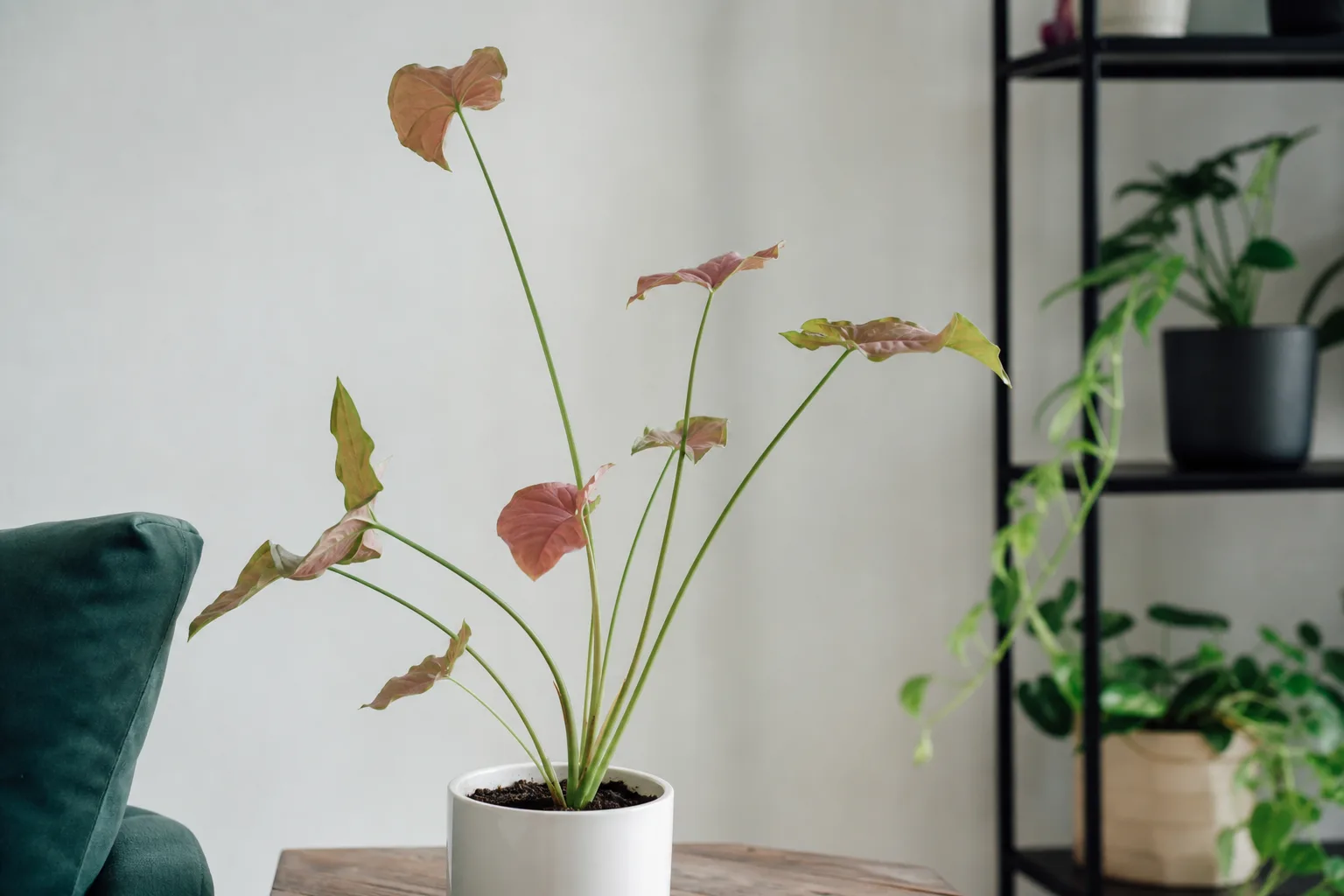
Leggy Growth on Syngonium Neon Robusta: Causes, Checks & Fixes
This guide covers leggy growth on Syngonium Neon Robusta. See also the general Leggy Growth guide, watering, and light pages for this plant.
Leggy Growth on Syngonium Neon Robusta: Causes, Checks & Fixes
Quick answer
Leggy growth on Syngonium Neon Robusta (Syngonium podophyllum ‘Neon Robusta’) is etiolation-the plant stretching toward light while internodes lengthen and leaves shrink. The cultivar is valued for compact chartreuse-pink arrowhead foliage; in dim rooms that pastel wash fades to dull green and stems lean toward windows with wide gaps between leaves.
This is a light and structure problem, not a feeding deficiency. Leggy Neon Robusta also uses water slowly, so the same dim shelf often pairs chronic wet soil with stretch-raising overwatering risk. For the broader low-light symptom set (color loss, wet mix, root stress), see not enough light-this page focuses on recovering shape after stretch.
First step: move gradually to brighter indirect light over one to two weeks, then pinch the longest bare stems. An east window or a filtered spot one to three feet from south/west glass is the usual target. Do not repot or fertilize until new leaves open closer together with chartreuse tone restored.
What leggy growth looks like on Syngonium Neon Robusta
Leggy is about architecture, not one yellow leaf.
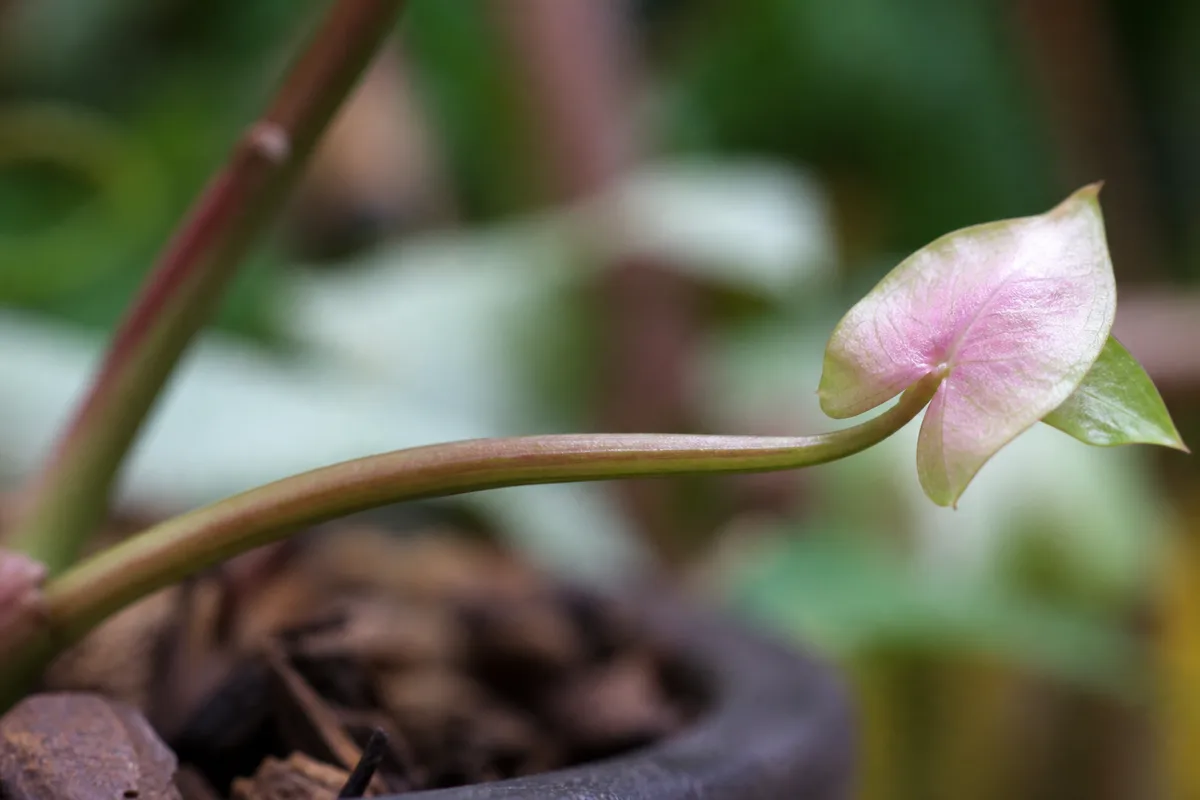
Leggy Growth symptoms on Syngonium Neon Robusta - compare with healthy tissue on the same plant.
Typical signs:
- Long spaces between arrowhead leaves - Internodes measure several inches; the plant loses its mounded tabletop look
- Stems arching or leaning toward the brightest window
- Smaller new leaves that are greener and less chartreuse than when you bought the plant
- Bare lower stem sections after older leaves drop, leaving “leggy” naked nodes
- Weak stems that bend or snap when moved-structural tissue is thin from low light
Compare with healthy compact growth:
- New leaves emerge near the previous node with soft pink-chartreuse wash
- Plant stays upright or gently bushy without staking
- Soil dries on a predictable rhythm because the plant uses water actively
Not leggy growth alone:
- Long vines with vivid color in bright light - Neon Robusta naturally climbs; mature plants trail unless pinched. That is habit, not etiolation.
- Sudden collapse on wet soil - Root rot, not stretch
Why Syngonium Neon Robusta gets leggy
Insufficient usable light at the leaf surface. Syngonium podophyllum is a tropical understory vine that tolerates shade but needs bright indirect light to stay compact. In deep shade it produces more chlorophyll-Neon Robusta reads that as dull green plus longer internodes as cells elongate searching for photons.
Neon Robusta has less chlorophyll than green forms. Pastel cultivars need more brightness, not less, to hold color. Dim office shelves are the most common trigger.
Seasonal daylight drop. Autumn and winter shorten effective light even beside the same window. Stretch that begins in October often traces to day length, not a sudden care mistake.
No pinching on climbing habit. Allowed to vine unchecked, Neon Robusta puts energy into length over bushiness-especially in marginal light.
Leggy + wet soil feedback loop. Low light slows transpiration; owners who keep watering on habit leave mix damp weeks, compounding stress. Fix light and reduce water together.
How to confirm the cause
- Shadow test at leaf height - At midday, hold your hand at the crown. A soft defined shadow means enough light for compact growth. Faint or no shadow confirms etiolation risk.
- Internode length on newest growth - Measure distance between the last three leaves. More than one to two inches indoors on a tabletop plant strongly suggests stretch.
- Color on newest leaf - Muted green vs. chartreuse-pink wash compared to nursery photos or older crown leaves.
- Water use - Soil wet five or more days after one drink in a dim spot supports low-light overlap.
- Recent moves - New shelf farther from glass? Sheer curtain added? Neighbor plant blocking light?
If stems are leggy but soil stays bone dry and leaves crisp, pair with underwatering checks-not covered fully here.
First fix for Syngonium Neon Robusta
Increase light first; prune second.
- Relocate to bright indirect exposure over 7–14 days-avoid jumping from deep shade to harsh direct sun on pale leaves.
- Adjust watering - In brighter light the plant uses water faster; in the dim old spot, skip the next scheduled drink if mix is still damp.
- Pinch longest bare stems - Cut just above a node where you want branching. Wear gloves; arrowhead plant is toxic to cats and dogs.
One targeted light upgrade beats stacking repot, feed, and hormone paste on the same day.
Step-by-step recovery
Reshape a compact tabletop plant
- Move to brighter light as above.
- After two weeks of tighter new growth, pinch top two to three inches of each long runner.
- Rotate the pot weekly so all sides receive light.
- Optional: stake only if you prefer climbing form over bush-see the light guide.
Recover a badly stretched specimen
- Cut back the longest naked stems to within a few inches of the soil if most lower leaves are gone-new shoots emerge from nodes.
- Do not remove more than one-third of total foliage in one session.
- Maintain bright light and stable moisture while new chartreuse leaves emerge.
When leggy pairs with wet soil
- Fix light and let the top inch dry before watering.
- Yellow lower leaves on damp mix may need overwatering recovery-not more pinching alone.
Recovery timeline
- New leaf spacing: Tighter internodes within three to six weeks in improved light.
- Chartreuse color return: On new leaves only; old green stretched sections stay unless pruned.
- Full bushy shape: Two to three pinching cycles over one growing season.
Judge success by new arrowheads close together with pastel tone-not by old internodes shrinking.
Leggy growth vs. not enough light (quick cross-link)
| Focus | Leggy growth (this page) | Not enough light |
|---|---|---|
| Main symptom | Long bare stems, lost compact shape | Color fade, slow growth, wet-soil risk |
| First fix | Bright light + pinching | Bright light + dry-down check |
| Cross-link | /plants/syngonium-neon-robusta/not-enough-light/ | /plants/syngonium-neon-robusta/leggy-growth/ |
Mistakes to avoid
- Do not fertilize heavily in a dim corner-it fuels weak stretch.
- Do not assume leggy means root-bound; Syngonium Neon Robusta repotting guide without more light rarely helps.
- Do not place immediately in scorching west afternoon sun-pale chartreuse leaves burn.
How to prevent leggy growth next time
Keep bright filtered light year-round-supplement with a full-spectrum grow light in dark rooms. Pinch tips before stems exceed your desired length. Rotate weekly. Match watering to faster dry-down in brighter spots per the watering guide. Re-check window exposure each spring when sun angle intensifies.
For full species context, see the Syngonium Neon Robusta overview.
When to use this page vs other Syngonium Neon Robusta guides
- Syngonium Neon Robusta watering guide - Use for routine moisture checks before assuming leggy growth is the main issue.
- Syngonium Neon Robusta problems hub - Browse all 1 common issues on this species.