Syngonium Neon Robusta Repotting: When, How, and Mistakes
Syngonium Neon Robusta Repotting: When, How, and Mistakes to Avoid
Syngonium Neon Robusta Repotting: When, How, and Mistakes to Avoid
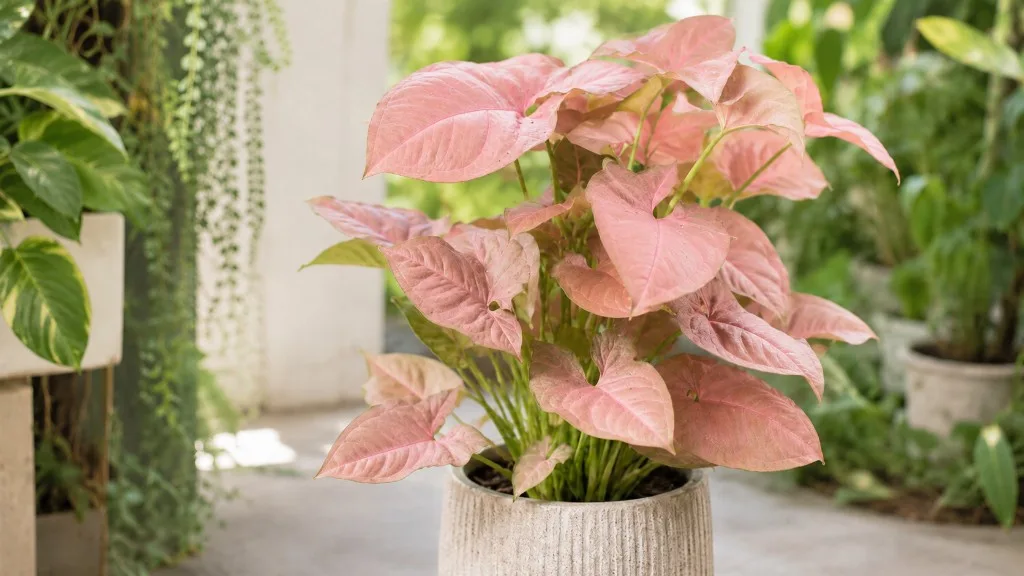
Syngonium Neon Robusta repotting is one of those tasks that looks simple until you watch a healthy pink arrowhead wilt for two weeks because the new pot was twice the size of the old one. Syngonium podophyllum ‘Neon Robusta’ - the soft pink cultivar sold as arrowhead plant or pink syngonium - grows quickly in Syngonium Neon Robusta light guide, develops a dense root system for its pot size, and responds well to fresh, airy mix when the current container is genuinely full. It also punishes overcorrection. Jump to an oversized pot, soak the root ball on day one, or repot in deep winter when growth has stalled, and you trade a manageable root-bound situation for soggy mix, stalled pink new leaves, and a recovery window that stretches past a month.
The practical goal for most home growers is straightforward: repot only when the plant needs more root room or fresh mix, choose a container one size larger with drainage holes, use a well-aerated aroid-style blend, and give the plant lighter watering, softer light, and no fertilizer for the first several weeks after the move. Spring and early summer are the safest windows because Neon Robusta is actively pushing stems and pastel new growth during warm, bright months.
If symptoms persist, see the Leggy Growth on Syngonium Neon Robusta guide.
Why Repotting Matters for Syngonium Neon Robusta
Repotting does three useful jobs at once: it gives roots physical space, it replaces degraded or compacted mix, and it gives you a chance to inspect the root system before small problems become leaf drop. Syngonium Neon Robusta is an aroid in the Araceae family, native to tropical forests in Central and South America, where it climbs and spreads in humid, filtered light. Indoors it is usually kept as a compact tabletop plant with blush-pink juvenile leaves, though it can be trained on a moss pole if you want larger, greener mature foliage. Either way, the root habit is the same: fibrous, vigorous, and eager to fill a pot that looked roomy six months ago.
In a container, roots eventually circle the bottom, mat against drainage holes, and consume the air pockets that keep an aroid healthy. Old peat-based mix breaks down, salts accumulate, and water runs through in seconds while the center stays wet - a pattern that feels like underwatering but is actually a structure problem. Fresh mix with perlite, bark, or coco coir restores drainage; a modestly larger pot adds room for new white root tips without drowning unused soil. Repotting is not a fix for every yellow leaf - treat it as root-zone maintenance when signs point to the pot itself, and check light and watering first when symptoms are ambiguous.
When to Repot Syngonium Neon Robusta
How often should you repot Syngonium Neon Robusta? Most healthy indoor plants need a full repot every 12 to 24 months, but frequency follows growth rate, not a calendar. A young Neon Robusta in a 4-inch nursery pot on a bright east windowsill may need an upgrade in 12 to 18 months. A mature, pruned plant in an 8-inch pot with moderate light may go two years between full repots if you top-dress annually. Repot when two or more root-bound or soil-fatigue signs appear together, not because spring arrived on the calendar.
When should you repot Syngonium Neon Robusta? The best answer combines plant signals and season. Active growth - new pink-tinged leaves unfurling, stems lengthening, the pot drying on your normal rhythm - means roots can repair disturbance quickly. Stalled growth despite good light and consistent watering often means the root ball has maxed out the container. Emergency repotting for root rot, severe salt crust, or a cracked pot overrides seasonal preference, but routine upgrades should wait for spring or early summer when possible.
Signs Your Neon Robusta Is Root-Bound
Root-bound means the root system has filled the container and started circling itself rather than expanding into fresh mix. Syngonium hides early constriction well because the foliage stays pretty while roots struggle below. Check the pot, not just the leaves.
Watch for these signs your Syngonium is root-bound:
- Roots visible at drainage holes or pushing up through the surface after watering
- Water runs through in seconds while the center of the root ball stays dry or oddly wet
- Growth slows even though light and watering have not changed
- The plant dries out faster than it used to because roots occupy most of the soil volume
- The pot feels tight when you gently slide the plant out - a solid white root mat holds the shape of the old container
- Top-heaviness or wobble because the root ball is dense but the current pot is small for the canopy
One sign alone is not always urgent. Roots peeking from a drainage hole on a fast-growing spring plant confirm timing. The same sign on a dormant winter plant may still mean waiting six weeks for warmer growth unless rot is involved. Lift the plant out of the pot for a thirty-second inspection before you commit to repotting - that single check prevents unnecessary disturbance.
Best Season and Timing for Repotting
Spring and early summer are the best seasons to repot Syngonium Neon Robusta. Longer days and warmer room temperatures align with active shoot and root growth, so the plant re-establishes feeder roots within weeks instead of sitting idle. In temperate climates, March through June is the prime window. The Missouri Botanical Garden notes that Syngonium podophyllum grows actively in warm humidified indoor conditions and benefits from fresh soil-based mix when roots need room. Early fall can work if your winters are mild indoors and the plant still shows new leaves, but aim to finish at least six weeks before you expect the darkest, coolest part of winter so roots settle before growth slows sharply.
Can you repot Syngonium Neon Robusta in winter? Avoid routine winter repotting when growth has clearly paused. Cold roots in fresh, wet mix absorb oxygen slowly, which extends transplant shock and raises rot risk in an already moisture-sensitive species. Exceptions are worth making when the plant has confirmed root rot (mushy roots, sour smell), severe root constriction with chronic wilt, or physical pot failure. In those cases, repot into barely moist, airy mix, keep the plant warmer and brighter than usual, and accept a longer recovery. Do not repot a healthy Neon Robusta in December just because you bought a new ceramic pot - wait unless the root inspection leaves no doubt.
Choosing the Right Pot Size
The safest pot size rule for Syngonium Neon Robusta is one size up - typically 2 to 5 cm (1 to 2 inches) wider in diameter than the current container, and only slightly deeper if the root ball is shallow. Move from a 4-inch nursery pot to a 5- or 6-inch pot, from a 6-inch to an 8-inch, and stop there unless the plant is an established climber with a proportional canopy. The new pot should feel modest relative to the foliage. If you imagine the plant sitting in a swimming pool of unused soil, the pot is too big.
Why does size matter so much? Aroid roots prefer even moisture with constant airflow. An oversized pot holds a large volume of mix that stays wet around a small root system after each watering. Syngonium tolerates brief dryness better than chronic sogginess, but overpotting removes that buffer - the outer soil never dries at the same rate as the center, and fungi move in before white root tips explore the space. One size up balances room to grow with a soil volume the existing roots can manage within a few weeks.
Depth matters less than width for most Neon Robusta kept as bushy tabletop plants. Match depth to the root ball you see during inspection. A deep pot with a shallow root mass invites water to sit below the active roots. If you are upgrading from a tall nursery pot to a wider standard pot, keep the crown at the same soil line as before - burying stems to stabilize a wobbly plant often leads to stem rot where moisture wicks against the bark-like tissue.
Drainage, Material, and What to Avoid
Every repotting container must have drainage holes. No holes, no exceptions for Syngonium Neon Robusta overview. The Missouri Botanical Garden recommends growing Syngonium podophyllum in containers with drainage and a soil-based potting mix. Cachepots are fine only if the grow pot inside drains freely and you empty excess water after every watering. Terracotta and unglazed ceramic speed drying through porous walls - helpful if you tend to water heavily. Plastic and glazed ceramic retain moisture longer - fine if you already wait for the top of the mix to dry before watering again. Choose material based on your watering habits, not aesthetics alone.
Avoid these pot choices when repotting Neon Robusta:
- Pots without drainage - the most common long-term rot setup indoors
- Jumping two or more sizes up to “reduce how often I repot” - you will repot less because the plant struggles, not because it thrives
- Decorative pots so tall that the root ball sits on a thick layer of soggy mix below it
- Reusing old mix from a previous plant without sterilizing the pot - disease and salt hitchhike easily
If you love a hole-less cover pot, keep the syngonium in a plain nursery pot that fits inside it and lift it out to water. That single habit prevents more repotting emergencies than any soil recipe.
Best Soil Mix for Repotting Neon Robusta
The best soil for repotting Syngonium Neon Robusta is a light, well-draining aroid blend that holds moisture in the middle range without compacting. Plain bagged potting soil alone often stays too wet too long for indoor syngoniums because fine peat particles collapse after repeated watering. Adding chunky amendments creates the air pockets this plant uses in the wild - attached to bark and forest debris, not sitting in dense mud.
A reliable home mix ratio:
- 2 parts quality indoor potting mix (labeled for houseplants)
- 1 part perlite or pumice for drainage and pore space
- 1 part orchid bark or coco chips for long-term structure
If you do not have bark, increase perlite to 1.5 parts instead. Some growers add 10 to 20 percent coco coir to improve moisture retention in very dry rooms, but skip coir if you already struggle with slow-drying pots. The finished mix should feel loose in your hand, not sticky, and water should pass through a test handful without pooling on the surface.
Syngonium prefers a slightly acidic to neutral pH typical of peat-based houseplant mixes - roughly 5.5 to 7.0 - and does not need specialty cactus grit or heavy garden soil. UF IFAS EP244 specifies commercial Syngonium media at pH 5.5 to 6.5 with peat, pine bark, vermiculite, and/or perlite for aeration. Refresh the entire root zone during a full repot rather than packing fresh mix only on top while leaving compacted old soil in the center; that half-upgrade keeps the worst drainage problems in place. If your current mix smells sour or stays wet for more than a few days after a moderate watering, assume the whole volume needs replacing.
Tools and Materials You Need
Gather everything before you unpot. Syngonium stems snap when you rush mid-process, and exposed aroid roots dry out faster than you expect in a heated room.
Basic repotting kit for Neon Robusta:
- New pot one size up with drainage holes, washed if reused
- Fresh soil mix prepared and slightly moistened - not wet mud
- Hand trowel or scoop for filling edges
- Clean scissors or pruning shears sterilized with rubbing alcohol for dead roots
- Chopstick, pencil, or thin dowel for settling mix without compacting
- Watering can with a narrow spout for the first light irrigation
- Gloves recommended because sap can irritate skin
- Newspaper or a tray to contain old mix and make cleanup fast
You do not need rocks in the bottom of the pot; they do not improve drainage.
Step-by-Step: How to Repot Syngonium Neon Robusta
Repotting Neon Robusta works best as a calm sequence: hydrate, inspect, trim only what is dead, replant at the same depth, water lightly, then leave the plant alone to settle. The whole job usually takes 20 to 40 minutes for a single container plant.
Pre-Repot Prep and Root Inspection
Water the plant lightly one day before repotting so the root ball holds together but is not saturated. Dry roots break; soggy roots tear. On repot day, tilt the pot and slide the plant out with gentle pressure on the sides - never yank from the stems. If the pot is stuck, run a knife around the edge or squeeze a flexible nursery pot.
Hold the root ball and inspect color and texture. Healthy syngonium roots are white to light tan and firm. Dark brown, black, mushy, or hollow roots are rot - trim them back to solid tissue with sterile scissors. Tease circling roots at the bottom and outer edges with your fingers or the chopstick; you are loosening the spiral, not bare-rooting the entire plant. Remove no more than one-third of the root mass unless rot forces heavier surgery.
Keep most of the old mix attached if it is not sour or compacted. Stripping every particle off the roots (bare-rooting) removes fine root hairs that absorb water and sets recovery back weeks. The goal is a slightly loosened root ball that can grow into fresh amendment-rich mix around the edges.
Placing the Plant and Settling Fresh Mix
Add 1 to 2 inches of fresh mix to the bottom of the new pot - enough to lift the root ball so the crown sits at the same depth as before. Center the plant. Fill around the sides in small batches, tapping the pot gently and using the chopstick to work mix into gaps without pressing down hard. Stop when the soil line matches the old level; do not bury lower leaves or nodes unless you are deliberately propagating a cutting.
Water lightly and evenly until a little runs from the drainage holes, then empty the saucer. Place the plant in bright indirect light that is slightly softer than its usual spot for 5 to 10 days. Skip fertilizer for at least four weeks, longer if growth was weak before repotting.
Aftercare: Water, Light, and Fertilizer
The first month after repotting is about stability, not stimulation. Roots need oxygen, mild moisture, and time to grow into the new mix before you ask the plant to push heavy pink foliage again.
Watering: Let the top 2 to 3 cm (about an inch) of mix dry before the first few post-repot waterings. Fresh mix often looks dry on top while the center near the old root ball stays moist - insert a finger or skewer to check depth rather than relying on surface color alone. Water until a small amount drains out, then stop. Empty saucers promptly. Most growers water less often in weeks one and two than they did before repotting because the new volume holds moisture differently.
Light: Keep Neon Robusta in bright, indirect light, but avoid direct sun on pale pink leaves immediately after repotting. Soft light reduces transpiration stress while roots are limited. Once stems feel firm and a new leaf begins to unfurl, move back to the usual spot gradually if you shifted it.
Fertilizer: Do not fertilize Syngonium Neon Robusta for at least four weeks after repotting - six weeks if the plant was stressed, root-trimmed for rot, or repotted out of season. Fresh cut root tissue is vulnerable to salt burn. When you resume, use half-strength balanced liquid fertilizer on moist soil during active growth. Feeding a plant that is still wilting daily is wasted at best and harmful at worst.
Normal room humidity is adequate; focus on correct watering and light first.
Recovery Timeline and What Normal Shock Looks Like
Is transplant shock normal after repotting an arrowhead plant? Yes - mild shock is expected. A few leaves may droop, older foliage may yellow slightly, and growth may pause for 7 to 14 days while roots reconnect. That pattern is normal if stems re-firm within a few days and watering is conservative.
How long does it take for Syngonium to recover after repotting? Visible stabilization often appears within one to two weeks. Full root establishment in the new mix typically takes four to six weeks, marked by new pink-tinged leaves at the growing tips and a return to the pot’s previous drying rhythm. Damaged leaves do not revert to perfect color - judge recovery by new growth, not old blemishes.
Worry when severe wilt lasts more than two weeks, multiple leaves yellow and drop without new buds forming, stems turn soft at the base, or the mix smells sour despite reduced watering. Those patterns point to overwatering in too large a pot, buried stems, or hidden rot - unpot again, inspect roots, trim decay, and repot into a smaller container with very airy mix if needed. A plant that only sulks mildly but keeps firm stems and occasional new tips is on track; patience beats repeated repotting.
Repotting vs Top-Dressing and Dividing
Full repotting is not the only root-zone tool. Top-dressing - scraping off the top 2 to 5 cm of old mix and replacing it with fresh blend in the same pot - refreshes salts and surface compaction when the root ball still fits comfortably. It works well in late winter or early spring as a gentle upgrade and can extend time between full repots by 6 to 12 months on mature plants.
Dividing during repotting makes sense when multiple crowns or rooted stems have filled one pot and you want separate plants. Syngonium Neon Robusta divides more easily than woody houseplants: identify sections with their own stems and roots, pull or cut gently between them, and pot each division into small containers with the same airy mix. Divisions recover faster in modest pots than in large ones because each section has a reduced root system. Spring division plus repotting is the standard combo for overcrowded pots.
Choose full repotting when roots circle heavily, drainage has failed throughout the volume, or rot requires inspection. Choose top-dressing when growth is healthy but the surface is crusted or salt-streaked. Choose division when the aesthetic goal is multiple compact pink plants rather than one leggy vine.
Common Syngonium Neon Robusta Repotting Mistakes
Most repotting failures trace back to a short list of repeatable errors. Knowing them saves plants.
Jumping two pot sizes up is the headliner mistake - the syngonium sits in wet outer soil for weeks while roots stay in the old root-ball zone. Bare-rooting or over-teasing strips fine root hairs and extends shock. Fertilizing immediately burns cut roots. Repotting for the wrong reason - yellow leaves from overwatering will continue in a new pot if watering habits do not change. Using garden soil or heavy outdoor mix suffocates indoor roots within months.
Overpotting and Overwatering After the Move
Overpotting and overwatering after repotting are the same problem viewed from two angles. More mix holds more water; eager post-repot care adds even more. The fix for a sulking overpotted Neon Robusta is unglamorous: stop watering until the mix dries deeper, improve light airflow around the pot, and if wilt persists with sour smell, repot down into a smaller container with fresh bark-heavy mix after trimming rot.
Prevention beats rescue: reduce watering frequency for two weeks and resist moving the plant to a dark corner “to rest.”
When Repotting Fixes Rot, Salt, or Compact Mix
Sometimes repotting is emergency medicine. Root rot from chronic overwatering shows as mushy roots, brown base stems, and a swampy smell. Unpot, trim all soft tissue, dust cuts if you use cinnamon as a drying aid (optional), and repot into fresh airy mix in a pot sized to the remaining root mass - often the same size or one size smaller than before, not larger. Water sparingly until new white root tips appear.
Salt buildup from hard water or heavy feeding appears as white crust on the soil surface and brown leaf tips despite good habits. Scrape the crust, leach the old pot with plain water if the plant is otherwise healthy, or full-repot with fresh mix in spring. Resume fertilizer at half strength only after new growth returns.
Compacted mix that never dries evenly makes every watering a guess. If the root ball is solid and water channels along the sides, full repot with teased roots and new amendments restores predictable moisture - the foundation Neon Robusta needs to keep pink new leaves coming.
Safety: Handling Toxic Sap During Repotting
Syngonium Neon Robusta contains insoluble calcium oxalate crystals in all parts of the plant, like other syngonium varieties. Touching sap during repotting can irritate skin; ingestion causes oral pain, swelling, and digestive upset in humans and pets. The ASPCA lists Syngonium species as toxic to cats and dogs (ASPCA - Syngonium).
Wear gloves when handling broken stems or trimming roots, especially if you have sensitive skin. Wash hands and tools after the job. Keep cuttings and old leaves away from pets and children. Repot on a table rather than the floor if curious cats investigate. Sap exposure on skin usually resolves with soap and water; seek medical or veterinary help promptly if plant material is chewed or swallowed, or if swelling affects breathing.
Conclusion
Syngonium Neon Robusta repotting succeeds when you treat it as timed root maintenance, not a reflex whenever the plant looks tired. Repot in spring or early summer when roots circle the pot, growth stalls, or mix has broken down - choose a container one size up with drainage holes, fill it with airy aroid mix, tease circling roots without bare-rooting, and keep the crown at the same depth. Water lightly after the move, hold fertilizer for at least four weeks, and judge recovery by firm stems and new pink growth, not by perfect old leaves.
Most failures come from oversized pots, heavy watering, and winter repotting without cause - all fixable with a smaller pot, drier rhythm, and patience. Top-dress between full upgrades, divide when you want multiple compact plants, and repot urgently when rot or salt demands a root inspection. Wear gloves, wash up after handling sap, and keep the plant out of reach of pets. Get those pieces right and Neon Robusta settles into fresh mix quickly, returning to the soft blush foliage that makes this arrowhead cultivar worth the shelf space.
When to use this page vs other Syngonium Neon Robusta guides
- Syngonium Neon Robusta overview - Start here for whole-plant context before deep-diving this topic.
- Syngonium Neon Robusta problems hub - Jump to symptom-specific fix guides when this care topic does not resolve the issue.