Best Soil for Syngonium Neon Robusta: Mix & Drainage
Best Soil for Syngonium Neon Robusta: Mix & Drainage
Best Soil for Syngonium Neon Robusta: Mix & Drainage
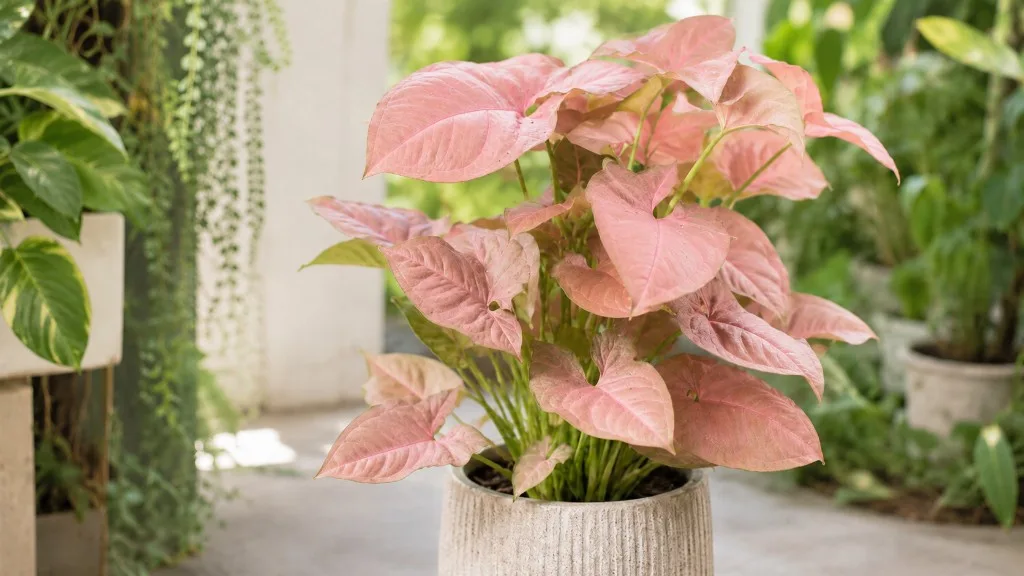
Syngonium Neon Robusta is grown for one thing above all else: soft, salmon-pink new leaves that glow under Syngonium Neon Robusta light guide. That color is not a soil achievement on its own - light and genetics set the ceiling - but bad soil removes the floor. When the root zone stays wet, compacted, or oxygen-poor, Neon Robusta loses vigor long before you notice a watering mistake. Lower leaves yellow while the mix still feels damp. New growth washes out to green. Stems stretch and flop because weak roots cannot support compact tabletop growth.
The best soil for Syngonium Neon Robusta is an airy, well-draining aroid-style mix that holds moisture in the middle of the pot without turning the lower root zone into a swamp. Think forest-floor conditions: organic matter, chunky structure, fast initial drainage, and enough water retention that you are not watering every forty-eight hours in a normal indoor room. A reliable starting point is equal parts quality potting mix, perlite, and orchid bark, adjusted up or down based on how fast your home dries pots. University of Florida IFAS commercial production guidelines for Syngonium recommend media with pH 5.5 to 6.5, good aeration from peat, pine bark, vermiculite, and/or perlite, and moisture kept moist but not wet - language that maps directly to what home growers should aim for, even if commercial greenhouses use different volumes and fertigation (UF IFAS EP244).
This guide covers what Neon Robusta roots need, three DIY mix recipes, how to test drainage, when to repot, how to adapt for your room, and the soil mistakes that quietly undo pink arrowhead care.
If symptoms persist, see the Leggy Growth on Syngonium Neon Robusta guide.
Why Soil Matters for This Pink Arrowhead Vine
Neon Robusta (Syngonium podophyllum ‘Neon Robusta’) is a cultivar, not a separate species. It shares the same basic biology as other arrowhead vines: climbing hemiepiphytic roots that want oxygen, moderate fertility, and stable moisture - not alternating drought and flood. What makes soil especially important for this cultivar is how growers typically display it. Most people keep Neon Robusta as a compact tabletop plant with regular pinching, not as a tall moss-pole specimen. That means a relatively small root ball in a modest pot, drying on a faster rhythm than a large floor plant, and less buffer against a heavy, waterlogged mix.
Soil is the control system for three variables roots cannot negotiate on their own: air, water, and temperature stability at the root surface. When mix compacts after six to twelve months of watering, air pores collapse. Water moves more slowly. Roots work harder for less oxygen. The plant still looks fine for a while because Syngonium can tolerate brief dry spells better than chronic wet soil (UF IFAS EP244) - but tolerance is not immunity. Chronic wet soil still produces yellow lower leaves, stalled pink new growth, and eventually root rot.
The practical takeaway: soil is not a one-time recipe decision. It is an ongoing question of whether the root zone still drains predictably, dries on a rhythm that matches your watering, and supports new roots when you propagate or repot.
Understanding Neon Robusta as an Aroid
Syngonium podophyllum belongs to Araceae, the aroid family. Aroids evolved in tropical understories where roots encounter decomposing leaf litter, bark chunks, and pockets of moisture - not dense, airless clay. Neon Robusta does not need exotic ingredients to survive indoors, but it does need a mix that mimics structure more than chemistry. A bag labeled “indoor potting soil” that is mostly fine peat can hold plenty of nutrients and still fail because it compacts and suffocates roots after repeated soak-and-dry cycles.
In cultivation, Neon Robusta behaves like a vigorous juvenile grower when light is adequate. It produces arrowhead-shaped leaves on upright to slightly trailing stems, usually staying in the 60–90 cm trailing range if allowed to climb, but most owners keep it shorter through pruning. That growth habit matters for soil because a fast leaf producer in a small pot pulls water through the mix steadily during spring and summer. A mix that is too chunky and fast-draining forces you to water constantly; a mix that is too heavy stays wet in the center even when the top inch feels dry.
Root Structure and Moisture Preferences
Syngonium roots are fibrous and relatively fine compared with thick succulent roots, but they still require air films between soil particles. Healthy roots are firm, white to pale tan, and spread evenly through the pot. Dark, mushy, or hollow roots mean oxygen loss - usually from overwatering, poor drainage, or both - not from a mysterious “plant mood.”
Moisture preference sits in a middle band that confuses beginners: slightly moist, never soggy. UF IFAS EP244 specifies that commercial Syngonium potting media should stay moist but not wet, with the surface allowed to dry slightly before the next irrigation. The Missouri Botanical Garden likewise recommends keeping Syngonium podophyllum evenly moist during the growing season. The soil’s job is to make that middle band easy to hit. After you water thoroughly, excess water should exit the drainage hole within seconds. Over the next several days, the mix should dry from top to bottom at a pace that lets you water again when the top 2–3 cm feels dry but the deeper root zone is not dust.
If you only remember one root rule: oxygen first, moisture second. A slightly dry aroid recovers faster than a chronically wet one.
The Best Soil Mix for Syngonium Neon Robusta
The best Syngonium Neon Robusta soil mix balances three functions: fast drainage through the bottom of the pot, moderate water retention in the middle layer where most roots live, and slow decomposition so structure lasts at least a year indoors. A widely used home recipe that hits those targets is 40% coco coir, 30% perlite, 20% orchid bark, and 10% worm castings - a blend that creates large air pores, resists compaction better than straight peat, and supplies gentle organic nutrition without turning the mix heavy. UF IFAS EP244 recommends commercial Syngonium media built from peat, pine bark, vermiculite, and/or perlite with good aeration.
For most readers, a simpler equal-parts blend performs just as well: one part peat- or coir-based potting mix, one part perlite, one part orchid bark. NC State Extension notes that Syngonium podophyllum grows as a climbing vine in tropical forests on tree trunks and branches, not in dense, waterlogged soil - which is why chunky bark and perlite amendments matter indoors. The Missouri Botanical Garden also recommends soil-based potting mix for container Syngonium podophyllum.
Neither recipe is magic. What matters is that when you squeeze a handful of moistened mix, it holds shape briefly then crumbles apart - a quick field test for adequate structure.
Ingredient-by-Ingredient Breakdown
Peat- or coir-based potting mix supplies organic matter, cation exchange capacity, and a baseline of nutrients. Quality houseplant mixes include limestone for pH buffering. Avoid cheap mixes that are mostly fine dust; you want visible texture even before amendments.
Perlite is expanded volcanic glass. It creates permanent air pockets and accelerates drainage without decomposing. It is pH-neutral and sterile. For Neon Robusta, perlite is the cheapest insurance against compaction. Pumice plays a similar role with slightly more weight, which can stabilize top-heavy tabletop pots.
Orchid bark (often fir or pine) adds chunk size. Chunks keep mix open, mimic forest litter, and give young roots something to grip. Bark breaks down over twelve to eighteen months indoors, which is one reason Syngonium Neon Robusta repotting guide matters even when the plant is not root-bound.
Coco coir holds moisture without the water-repelling dry-out phase peat sometimes enters. Coir is more sustainable than peat for many growers. Used alone it can stay too wet; blended with bark and perlite it is excellent.
Worm castings or compost at 5–10% of total volume add slow nutrition and microbial life. More is not better - excess organic fines clog air space.
Vermiculite increases water retention. Useful in very dry homes or small pots that dry too fast; reduce or omit if your mix stays wet more than five days after watering in summer.
Charcoal (horticultural, not briquettes) is optional at 5% for odor control and minor structure. Not required for healthy Neon Robusta.
Ingredients to skip for routine potting: garden soil, pure sphagnum moss as the main substrate, straight cactus mix without amendment, and “moisture control” crystals as a substitute for structure.
DIY Recipes From Simple to Chunky
Choose based on how fast your pots dry and how often you realistically want to water.
Recipe 1 - Beginner (fast to mix, forgiving):
- 2 parts standard indoor potting mix
- 1 part perlite
- 1 part orchid bark
Best for: first-time arrowhead owners, moderate indoor humidity, 4–6 inch pots on a bright windowsill. Drains well without demanding daily attention.
Recipe 2 - Standard aroid home mix:
- 2 parts potting mix or coco coir
- 2 parts orchid bark
- 2 parts perlite
- 1 part worm castings (by volume)
Best for: established Neon Robusta in active growth, bright kitchens and offices, growers who water on a top-dry cue every five to ten days in summer.
Recipe 3 - Chunky and fast-draining:
- 3 parts orchid bark
- 2 parts perlite
- 2 parts potting mix
- 1 part coco coir
Best for: humid bathrooms, dimmer rooms where evaporation is slow, or growers who tend to overwater. Pair with smaller pots and strict drainage-hole discipline.
Mix dry ingredients in a tub until uniform, then moisten slightly before potting so coir and peat hydrate evenly. When repotting, tease apart the outer root ball gently; do not bury the crown deeper than it sat before.
Drainage, Aeration, and the Right Moisture Window
Drainage is not a single event at repotting time. It is how the mix behaves on the tenth, thirtieth, and ninetieth watering. Fresh mix drains beautifully. As roots grow, organic fines migrate downward, and bark softens, drainage slows. That is normal - which is why refresh intervals matter.
For Neon Robusta, aim for a mix that, in your actual home, goes from fully watered to ready-to-water in roughly five to ten days during active growth and ten to fourteen days in winter, assuming bright indirect light and a pot with a drainage hole. Those ranges are not rules; they are calibration targets. If your pot is still wet at day fourteen in summer, the mix is too heavy, the pot is too large, or light is too low for the water demand - often all three.
Aeration and drainage work together. Perlite and bark do not “absorb” excess water in the way a sponge does; they create pathways so water moves through and air replaces it as the mix dries. That replacement is what prevents anaerobic bacteria from dominating the root zone.
The One-Minute Drainage Test
Run this test before repotting a prized Neon Robusta or when diagnosing chronic wet soil:
- Fill a spare pot with your mixed substrate (same depth as your plant’s pot). Use the same pot type if possible - plastic vs glazed ceramic changes dry-down speed.
- Water until water runs freely from the drainage hole. Note how many seconds until the first runoff appears. On a good aroid mix, runoff should start within a few seconds, not minutes.
- After thirty minutes, press a finger into the bottom third through the drainage hole if accessible, or slide the root ball out of a test pot. The mix should feel moist but not squishy.
- Check again at forty-eight hours. The top should be approaching dry in a typical heated room; the center should still carry slight moisture.
If water pools on the surface for minutes, add perlite or bark. If the mix is dusty dry at forty-eight hours in a humid room, add a little coir or potting mix and reduce perlite slightly.
Soil pH, Minerals, and Salt Buildup
Syngonium podophyllum grows well in slightly acidic to neutral conditions. Published ranges cluster around pH 5.5 to 7.0, with commercial production often targeting 5.5 to 6.5 (UF IFAS EP244). Most quality peat- or coir-based mixes with limestone amendment land in that band without hobbyist testing.
Exact pH adjustment is rarely necessary for Neon Robusta indoors. What is necessary is watching soluble salt buildup from tap water minerals and fertilizer. White crust on the soil surface, brown leaf tips despite good humidity, and stunted new pink leaves on an otherwise well-lit plant often trace to salts, not “bad luck.” Flush the pot occasionally by watering deeply with plain water until twice the pot volume runs through, or refresh mix at repotting.
Hard tap water plus frequent weak fertilizer creates a double load. If you see tip burn on a plant with otherwise sound watering, flush before reaching for more fertilizer.
Matching Your Pot to the Mix
Soil and pot are one system. A perfect mix in the wrong container still fails.
Drainage holes are non-negotiable for long-term indoor Neon Robusta care. Cachepots are fine for display if the inner grow pot drains and you empty the outer shell after watering. Without an exit for water, even chunky aroid mix becomes a closed bowl.
Pot size: choose a container one size up at repot - roughly 2–5 cm wider than the root ball - unless you are deliberately restarting a leggy plant. Oversized pots hold excess wet mix around roots that cannot use it, the most common hidden cause of “I only water once a week but the soil is still wet.”
Material effects:
- Plastic and nursery pots dry slowest on the sides; good for dry homes.
- Unglazed terracotta pulls moisture through walls; pair with slightly richer mix or more frequent watering.
- Glazed ceramic behaves like plastic for drying speed but is heavier; do not compensate by upsizing.
Depth: Neon Robusta roots spread more wide than deep. Shallow wide pots dry faster than tall narrow ones - useful for growers who tend to overwater.
When to Repot or Refresh the Mix
Repot Syngonium Neon Robusta when roots need space, when mix structure has collapsed, or when you cannot restore drainage through flushing and watering adjustments. Timing is usually every twelve to eighteen months for actively growing tabletop plants, and every eighteen to twenty-four months for slower specimens in stable conditions. Spring and early summer are ideal because roots repair fastest in warmth and bright indirect light.
Do not repot a stressed plant as a reflex unless the root zone is clearly the problem - sour smell, mud-like mix, or roots circling a dry brick. Yellow leaves from sudden overwatering need watering correction first, not a new pot.
Five Signs Your Soil Needs Replacing
- Water runs down the sides without soaking the root ball - a sign of peat shrinkage and gap formation along the pot wall.
- The mix stays wet beyond your normal dry-down window even after you reduced watering frequency.
- A sour or swampy smell when you lift the plant or probe the bottom drainage hole.
- Visible salt crust and chronic brown tips that flushing does not fix.
- Roots circling densely at the surface or escaping drainage holes - root-bound plus old mix is a combined repot trigger.
At repot, remove only loose old mix from the outer root ball. Cut away mushy roots with sterile snips. Plant at the same depth, backfill with fresh mix, water once lightly, then resume normal care after a week of gentle light.
Adapting Soil to Light, Humidity, and Season
The same recipe does not dry at the same speed in every room. Adjust structure, not just watering calendar.
| Environment | Likely dry-down | Mix adjustment |
|---|---|---|
| Bright kitchen, warm, moderate humidity | Fast (4–7 days summer) | Add a little coir or potting mix; reduce perlite slightly |
| North-facing window, cool room | Slow (10–14+ days) | Increase bark and perlite; use smaller pot |
| Humid bathroom, 60%+ RH | Slow | Use Recipe 3 (chunky); water on finger test only |
| Dry winter heating, 30–40% RH | Fast | Slightly more coir; avoid terracotta unless attentive |
| Low light corner | Slow metabolic + slow evap | Chunkier mix and less water volume per session |
Season matters because Neon Robusta slows in cooler, dimmer months even indoors. Slower growth means slower water uptake. Many winter yellowing cases are heavy summer mix plus winter watering habits - fix by checking moisture depth, not by repotting into an even chunkier mix unless the old one has genuinely degraded.
Light ties directly to pink color. Neon Robusta washes to green in low light, which tempts owners to overwater a plant that is not using moisture. Better light plus appropriate soil beats fertilizer for color every time.
Commercial Mixes vs Homemade Blends
Can Syngonium Neon Robusta grow in regular potting soil? Yes - temporarily. Straight bagged potting mix works for a fresh nursery plant for a few months. For long-term health, amend it. Mix one part potting soil with one part perlite and one part orchid bark and you have solved most problems without a shopping expedition.
Pre-labeled aroid mixes from reputable houseplant suppliers are excellent if you want consistency. Orchid bark blends sold for epiphytes also work when you add a little compost or potting mix for nutrition. Avoid straight cactus/succulent mix unless you amend heavily with coir or potting mix; it dries too fast for Syngonium’s slight moisture preference unless you enjoy watering every three days.
Garden soil is the one product to reject outright. It compacts indoors, introduces pests and pathogens, and does not drain predictably in a container. UF IFAS EP244 specifies commercial potting media with peat, pine bark, and perlite for Syngonium production - not backyard dirt. The Missouri Botanical Garden likewise recommends soil-based potting mix for indoor arrowhead vines, not garden soil.
If you buy rather than blend, read the label for peat or coir, perlite, and bark. If the mix looks like uniform brown powder, plan to add structure before potting Neon Robusta.
Soil Mistakes That Fade Neon Robusta Color
Soil mistakes rarely kill Neon Robusta overnight. They drain color and vigor until the plant looks like a generic green arrowhead.
Using unamended heavy peat mix is mistake number one. It works at the garden center because plants are fresh, roots are small, and staff water on a schedule. In your home, fine peat compacts, drainage slows, and lower leaves yellow while you swear you “only water when dry” - but the top is dry while the core is wet.
Oversized decorative pots are mistake two. The extra soil volume holds water the root ball never reaches, creating a permanent wet zone that breeds anaerobic conditions.
Bottom gravel for drainage is mistake three. A layer of stones reduces usable soil volume and creates a perched water table where the mix above the gravel stays saturated longer. Drainage holes accomplish the job; gravel does not.
Repotting into dry powdery mix without pre-moistening leaves dry pockets around roots. Water runs through without hydrating evenly. Moisten mix to barely damp before filling.
Burying stems too deep during repot buries nodes that expect air. Syngonium tolerates some depth better than many succulents, but chronic stem rot starts when wet mix hugs the crown.
Ignoring decomposition is mistake four. Mix that looked perfect last year may be fine peat sludge today. Refresh on structure, not vanity.
Diagnosing Root and Soil Problems
When Neon Robusta struggles, separate soil problems from watering, light, and pest problems before you change everything at once.
Likely soil or root-zone issues:
- Yellow lower leaves on a plant that has been watered on schedule, especially if the pot feels heavy days after watering
- Musty smell from drainage hole
- New growth stunted or only tiny leaves while soil stays damp
- Root ball brown and mushy when you unpot
Likely not primary soil issues:
- Uniform pale green color on new leaves in a dim corner - light first
- Crispy brown tips with fast dry-down - humidity or salt, sometimes underwatering
- Spider mite stippling on upper leaves - pest and humidity, not mix recipe
If you unpot and find a mix of healthy and dead roots, trim rot, repot into fresh chunky mix, and reduce watering frequency until new growth appears. Do not fertilize immediately; let roots heal two to four weeks.
Why is my Syngonium soil staying wet? The usual causes, in order: pot too large, mix too fine or aged, low light reducing uptake, cool room temperature, blocked drainage hole, or water sitting in a cachepot saucer. Fix the structural causes before swapping to an extreme fast-draining mix that dries unevenly.
How Soil Fits With Watering and Fertilizer
Soil sets the pace; watering executes it. Neon Robusta wants water when the top 2–3 cm of mix is dry and the pot feels noticeably lighter. In a well-structured aroid mix, that cue aligns with adequate moisture still available deeper in the root zone. In compacted mix, the top dries while the bottom stays wet - which is why finger depth matters more than calendar apps.
Water thoroughly until runoff exits the hole, then discard excess. Partial sips keep salts in the mix and encourage shallow rooting.
Fertilizer does not replace good soil, but worm castings at 5–10% or light liquid feeding during active growth supports color and leaf size. UF IFAS notes commercial Syngonium production uses fertigation at 150 ppm nitrogen with a 3-1-2 ratio and monitors EC to avoid salt damage (UF IFAS EP244). Home growers should use dilute balanced houseplant fertilizer on moist soil during spring and summer, not on dry roots and not as a fix for waterlogged mix.
After repotting into fresh mix with worm castings, pause fertilizer four to six weeks unless the plant is clearly hungry in bright active growth.
Pet safety: The ASPCA lists Syngonium species as toxic to cats and dogs due to calcium oxalate crystals, causing oral irritation, vomiting, and drooling if ingested (ASPCA - Syngonium). Soil and fertilizers are not edible either; keep pots out of reach.
Quick Reference: Soil Checklist for Neon Robusta
Before you call your soil “done,” run through this checklist:
- Mix contains structural ingredients - perlite and/or bark - not just fine peat
- Drainage hole is open and cachepots are emptied after watering
- Pot size matches root ball with only modest upsizing at repot
- Squeeze test crumbles after holding shape briefly
- Dry-down window in summer is roughly five to ten days in your room
- pH is in the normal houseplant band without special amendment
- Plan to refresh mix every twelve to twenty-four months depending on growth
- Pink color is judged on newest leaves under adequate bright indirect light - soil supports health; light supplies color
Conclusion
The best soil for Syngonium Neon Robusta is not a single branded bag. It is a structured, well-draining aroid mix - typically built from potting mix or coco coir, perlite, and orchid bark - that keeps roots oxygenated while holding enough moisture to bridge five to ten days between waterings in active growth. Commercial guidelines and home practice agree on the essentials: pH near 5.5 to 7.0, moist but not wet conditions, and media that resists compaction better than straight peat.
Start with the equal-parts beginner recipe if you are new to arrowhead plants. Move chunkier if your home is humid or you overwater. Add a little more coir if pots dry too fast in bright dry rooms. Pair the mix with a right-sized pot, a drainage hole, and a watering check at 2–3 cm depth, and Neon Robusta rewards you with firm pink new leaves on a compact plant worth keeping on the table - not hiding in the recovery corner.
When to use this page vs other Syngonium Neon Robusta guides
- Syngonium Neon Robusta overview - Start here for whole-plant context before deep-diving this topic.
- Syngonium Neon Robusta problems hub - Jump to symptom-specific fix guides when this care topic does not resolve the issue.