Syngonium Neon Robusta Propagation Guide
Syngonium Neon Robusta Propagation Guide
Syngonium Neon Robusta Propagation Guide
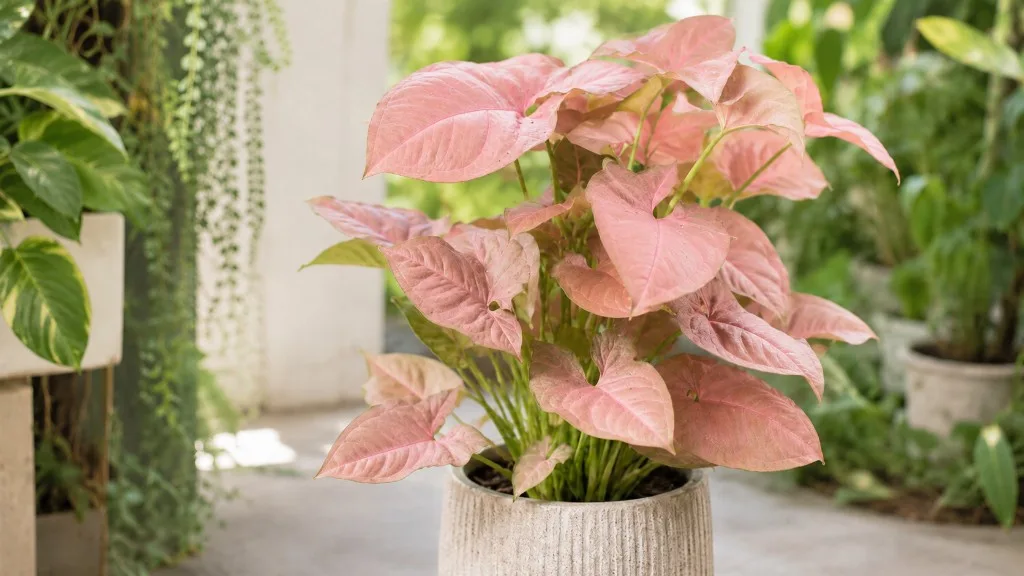
Syngonium Neon Robusta propagation is one of the most reliable projects in indoor plant care - if you understand one anatomical rule before you pick up the scissors. Syngonium podophyllum ‘Neon Robusta’, the soft pink arrowhead vine sold as a compact tabletop aroid, roots readily from stem cuttings that include at least one node. The node is the swollen joint where the leaf petiole meets the stem, and it holds the meristematic cells that produce both adventitious roots and new shoots. A beautiful leaf floating in water without node tissue may stay green for weeks and still never become a plant.
That distinction matters because Neon Robusta is often sold as a bushy juvenile with short internodes and pastel new growth. When stems lengthen and you pinch or prune for shape, each trimmed section is potential propagation material - but only if the cut includes node tissue. This guide covers the full workflow: identifying nodes on bare stems, timing cuts for fast rooting, preparing cuttings cleanly, rooting in water or moist substrate, transplanting without shock, and fixing the failures that trip up even experienced growers.
If symptoms persist, see the Leggy Growth on Syngonium Neon Robusta guide.
Why Stem Cuttings Work Best for Neon Robusta
Neon Robusta belongs to the Araceae family, the same aroid group as pothos, philodendrons, and monsteras. Like those relatives, it is a climbing understory plant from Central and South American rainforests, where stems contact moist bark and send roots from nodes along the vine. Home propagation copies that restart: sever a stem section with living node tissue, give it warmth, bright filtered light, and stable moisture at the node, and the cutting rebuilds a root system.
Stem cuttings outperform other methods for most home growers focused on Neon Robusta specifically. Division works when a mature pot has multiple rooted crowns at Syngonium Neon Robusta repotting guide, but juvenile tabletop plants often have a single stem base, making division impractical. Air layering suits thick older vines but adds steps most beginners do not need. Seed is irrelevant for a named cultivar whose pink color comes from vegetative cloning, not seed genetics. Stem cuttings at nodes clone the parent exactly - same blush tone on new leaves, same growth habit - which is why every Neon Robusta you propagate from cuttings matches the plant you already love.
The method also scales gracefully. One leggy vine trimmed for bushiness can yield three or four independent plants for gifts or fuller groupings. Because Syngoniums root faster than many finicky houseplants, the barrier to success is understanding nodes and moisture discipline, not specialist equipment.
What a Node Is on an Arrowhead Vine
A node is the point on the stem where a leaf attaches, where an aerial root may emerge, or where a side branch can develop. On Neon Robusta, look for a slight thickening or ring on the stem at each leaf junction - even after you remove the leaf, a small scar or bump marks the node location. Internodes are the smooth stem sections between nodes; internode tissue alone cannot generate roots.
Many Syngoniums produce aerial roots - thin brown or white nubs - at nodes, especially on older vines or plants kept humid. Aerial roots are a bonus, not a requirement. They often convert quickly to submerged roots in water because root-producing cells are already active. If your cutting has no aerial roots, roots still emerge from the node once moisture and warmth trigger cell division. What you cannot skip is the node itself.
Experienced propagators sometimes root node-only sections - nicknamed “wet sticks” - with no leaf attached at all. That works because the meristematic tissue lives in the node, not the leaf blade. A leaf helps photosynthesis during rooting, but one or two upper leaves on a 10–15 cm (4–6 inch) cutting is the practical balance: enough energy production without excessive transpiration from a rootless stem.
Why Leaf-Only Cuttings Fail
A single Neon Robusta leaf cut off at the petiole and placed in water is one of the most common propagation mistakes. The leaf may look healthy for a long time - syngoniums hold turgor well - but without stem node tissue it lacks the cambial and meristematic cells needed for root initials and bud activation. It will eventually yellow and die.
The exception people sometimes claim - rooting from a leaf with a sliver of stem - only works if that sliver actually includes node cells, which is rare when the cut is made flush with the leaf base. If you cannot see or feel a node bump on the stem piece, assume the cutting will fail. Always cut below the node, leaving the node on the stem section you propagate, not on the portion you discard.
This biology is consistent across climbing aroids. Resources on aroid propagation from specialist growers and botanical references align: stem plus node is the minimum viable unit. The University of Florida IFAS Extension notes that commercial syngonium production relies on nodal cuttings placed directly into rooting media under mist. For Neon Robusta, that rule protects you from wasting weeks watching a pretty pink leaf that never progresses.
When to Propagate Syngonium Neon Robusta
Timing influences speed more than ultimate success with Syngonium Neon Robusta overview. Neon Robusta is forgiving compared with strict dormancy plants, but active growth months still produce roots in roughly two to four weeks, while cool dim winter attempts may stretch to six weeks or more with higher rot risk if moisture stays excessive.
Propagate when the parent is pushing fresh pink-tinged leaves, the room stays consistently warm, and you are not simultaneously fighting pests or root rot on the donor plant. Propagation is multiplication, not rescue - stressed tissue roots poorly and imports problems into your propagation station.
Best Season for Faster Rooting
Late spring through summer is the optimal window in most homes without supplemental grow lights. Warmth in the 21–27°C (70–80°F) range accelerates cell division at the cut site, and longer daylight supports the cutting’s remaining leaves without the harsh direct sun that desiccates rootless stems. If your Neon Robusta is producing new leaves every one to two weeks in May or June, that metabolic flush is your signal.
Autumn propagation works in heated homes with bright windows. Short days slow the process - expect three to five weeks before substantial roots rather than two - and you must reduce watering frequency to match slower uptake. Winter cuttings are viable but demand patience: keep jars and pots slightly warmer if possible (top of a fridge away from cold glass, or a room with steady heat), maximize Syngonium Neon Robusta light guide, and avoid saturated substrate that stays wet for weeks.
Calendar date matters less than plant condition. A Neon Robusta recently shipped, repotted, or moved to a new window should settle three to four weeks before you take cuttings. Transplant shock plus cutting shock compounds stress and invites stem rot.
Checking That the Parent Plant Is Healthy
Before cutting, inspect the donor plant systematically. Stems should feel firm, not mushy or wrinkled from chronic underwatering. Leaves should show the cultivar’s characteristic soft pink wash on new growth under your current light - if everything is dull green, the plant may be too dim to fuel a cutting through rooting, though propagation can still work if you improve light afterward.
Check for pests: mealybugs hide in leaf axils and travel on cuttings silently. Honeydew, white cottony clusters, or distorted new leaves mean treat the parent first, then propagate from clean regrowth. Check the pot: sour smell, perpetual wetness, or collapsing stems suggest root problems - stabilize watering and refresh mix before harvesting material.
Consider aesthetics. Removing long trailing stems transforms a leggy vine into a compact plant, which suits Neon Robusta’s tabletop appeal, but taking more than one-third of total stem length at once can look sparse until side shoots emerge. Stagger propagation across two sessions two weeks apart if you want both new plants and a full parent display.
How to Take Stem Cuttings With Intact Nodes
Taking the cutting is brief but precise. Gather sharp pruning shears or scissors, 70% isopropyl alcohol for sterilization, a clean work surface, and labels if running multiple batches. Work methodically: each cut exposes vascular tissue to microbes, and aroid stems rot fast when wounded tissue sits in stale water or soggy mix.
Choosing the Right Stem Section
Select a stem 10–15 cm (4–6 inches) long with at least one node, ideally two or three nodes for insurance. Multiple nodes increase success because if one node fails to activate, another may. Two nodes also give you one to submerge and one above the waterline or soil surface for leaf attachment and future branching.
Prefer stems with one or two healthy leaves at the top. Neon Robusta’s juvenile arrow-shaped leaves are lightweight compared with mature lobed foliage on older vines, which keeps transpiration manageable. Avoid stems with brown spots, mechanical crush damage from tight packaging, or yellowing from overwatering - weak tissue rots instead of rooting.
Tip cuttings - sections with the active growing point at the end - root quickly and resume upward growth fast. Mid-stem sections without a terminal bud also root reliably but may pause while an axillary bud at a node activates to become the new lead shoot. Both are valid; choose based on whether you are trimming leggy length (mid sections) or selectively harvesting the vine tip (terminal cuttings).
If propagating to share with pet-owning friends, note that Syngonium species contain calcium oxalate crystals and are listed as toxic to cats and dogs by the ASPCA. That does not stop propagation, but warn recipients to keep cuttings and mature plants out of reach.
Making a Clean Cut Below the Node
Cut just below a node - typically 0.5–1 cm (¼ inch) beneath the node ring - with one decisive snip at a slight angle so water sheds off the wound in propagation jars. A clean cut minimizes crushed cells that invite bacterial entry. Avoid sawing or tearing; ragged wounds heal slowly and rot first.
If taking multiple cuttings from one long vine, work from the tip downward, sterilizing blades between segments if any prior tissue looked questionable. Count nodes as you go: it is easy to accidentally include a leafless internode section with no node at the base, which will not root.
After cutting, you may see clear sap - normal for aroids. Blot gently with a dry paper towel; do not rinse under tap water yet if you plan a brief air-dry. Label cuttings if comparing water versus soil batches side by side on the same day.
Preparing Cuttings Before Rooting
Preparation is the step between harvesting and placing in water or mix. Done well, it prevents the two most common failures: submerged leaf rot and contaminated wound tissue.
Stripping Lower Leaves Safely
Remove any leaves that would sit below the waterline in a jar or below the soil surface in a pot. Submerged leaf tissue decomposes, clouding water and feeding pathogens that attack the stem. For a typical cutting, strip the bottom one or two leaves, leaving one or two at the top for photosynthesis.
Peel petioles cleanly rather than tearing tissue that strips bark from the stem. If a leaf base snaps and exposes a long wound on the internode, trim back to the next healthy node and reassess cutting length. Never bury leaves in propagation mix hoping they will root - they will not, and they will rot.
For wet-stick node sections without leaves, skip stripping and proceed directly to rooting media with the node in contact with moisture.
Optional Callus and Rooting Hormone
Unlike succulents that demand long callus periods, Syngonium cuttings benefit from a short air-dry of a few hours to overnight before soil or sphagnum planting - especially in humid homes where immediate burial can feel too wet. Water propagation often skips extended callus because only the node submerges while the wound above air-dries, but if the cut looks juicy, let it dry to matte before placing in water.
Rooting hormone containing indole-3-butyric acid (IBA) is optional. Neon Robusta roots readily without it in warm active growth. Hormone may help tipless mid-stem cuttings or winter batches slightly. If using powder, dip the moistened cut end lightly, tap off excess, and plant immediately. Liquid hormones follow label dilution. Skip hormone on cuttings already showing aerial roots - they are primed to continue growth.
Water Propagation Step by Step
Water propagation is the most popular Syngonium Neon Robusta propagation method because it lets you watch roots form and confirms node placement visually. Success rates are high when water stays fresh and only node tissue - not leaves - submerges. The Missouri Botanical Garden recommends bright indirect light for Syngonium podophyllum - the same exposure cuttings need while rooting.
Use a clear glass or jar so you can monitor root color and water clarity. Tall narrow jars support the stem on the rim so the cutting does not slump. Add room-temperature water - filtered or dechlorinated if your tap water is heavily treated - to cover the bottom node by about 1–2 cm (½–1 inch). Upper nodes and leaves stay in air.
Place the jar in bright indirect light: an east window or several feet back from south glass. Direct sun heats water and cooks stem tissue. Maintain ambient warmth above 20°C (68°F) for steady progress.
Change water every five to seven days, or sooner if it clouds or smells. Cloudy water signals bacterial growth that precedes stem mush. Rinse the stem gently under lukewarm water during changes and inspect the submerged node for brown soft spots.
Rooting timeline: first white root bumps often appear in 7–14 days during active growth, with usable root length in two to four weeks. Cool or dim conditions extend toward five weeks without necessarily indicating failure. Healthy roots are white or cream, firm, and branching - not slimy or translucent brown.
Resist pulling the cutting to check daily; disturbance slows fragile new roots. Instead watch for new leaf unfurling at the tip - an excellent sign the cutting has established enough to eventually transplant.
Soil and Sphagnum Propagation Methods
Direct soil rooting and sphagnum moss propagation skip the water stage and often produce tougher roots that transition to normal pot culture without water-to-soil shock. Many experienced growers prefer these for long-term plant health even though they sacrifice the visual drama of a root-filled jar.
Best Substrate Mix for Direct Soil Rooting
Use a small pot - 7–10 cm (3–4 inches) - with a drainage hole. Fill with well-draining aroid mix: roughly equal parts quality potting compost, perlite, and optional orchid bark or coco chips for airflow. Pre-moisten so the mix holds together when squeezed but does not drip - lightly damp, not wet.
Insert the cutting so the lowest node sits 1–2 cm (½–1 inch) below the surface. Firm gently around the stem without compacting. If humidity is low, tent a clear plastic bag over the pot - not touching leaves - or use a propagation box to hold 60–70% ambient humidity around the node while leaves transpire normally.
Place in bright indirect light. Water lightly around the pot edge when the top centimeter dries, avoiding flood cycles that saturate idle cuttings. Rooting time typically matches water - two to four weeks - but confirmation requires a gentle resistance check or careful unpotting rather than glass visibility.
Using Sphagnum Moss for Faster Root Initiation
Long-fiber sphagnum moss, lightly moistened, is a favored aroid propagator’s medium because it holds even moisture while staying airy around the node. Nest the cutting so the node contacts moss; wrap loosely or place in a clear container with a vented lid for humidity without stagnation.
Sphagnum works especially well when aerial roots already exist - they branch into the moss within days in warm conditions. Monitor moss color: stay in the range of lightly moist tan-green, not saturated black. When roots bind a moss ball, transplant to standard potting mix with minimal disturbance.
Aftercare Once Roots Form
Water-rooted Neon Robusta cuttings should move to soil when roots reach 5–8 cm (2–3 inches) - long enough to survive burial without breaking, short enough that water-adapted roots have not become too fragile. Use the same airy mix as direct soil propagation. Water thoroughly once after transplant, then let the top dry slightly before the next drink; the first two to three weeks after transfer are the shock window.
Hold fertilizer until new growth hardens - roots must be actively absorbing before salts accumulate. A quarter-strength balanced liquid feed once monthly in spring is enough after the first mature leaf expands post-transplant.
Keep bright indirect light steady; acclimate gradually if moving to a slightly brighter spot to preserve pink color on new leaves. Dim light after rooting produces greenish, stretched growth that loses the cultivar’s signature blush.
Pot sizing: stay in a small starter pot until roots circle the drainage hole - often six to ten weeks after rooting - then upsize one size at a time. Overpotting a tiny root system in a large decorative pot leaves wet margins that cause relapse rot.
Quarantine new propagations two weeks if the parent ever had pests. Mealybugs and spider mites transfer on cuttings invisibly.
Common Propagation Problems and Fixes
Most Syngonium Neon Robusta propagation failures trace to missing nodes, stale water or soggy mix, or propagating weak parent material - not bad luck.
Stem mush at the submerged node means rot has started - usually from cloudy water, submerged leaves, or a wound that was not clean. Trim back to firm green tissue above the rot, let the cut air-dry a few hours, and restart in fresh water or dry moss. Discard severely compromised segments.
Cutting yellows but no roots after four weeks in dim cool conditions often reflects slow metabolism, not death. Move warmer and brighter, refresh water, confirm at least one node is submerged, and verify the base is not silently rotting. A gentle unpot or jar lift check beats repeated tug tests that snap fragile roots.
Leaf drops while roots form can happen if the cutting had only one leaf and transpiration exceeded water uptake. Maintain humidity with a bag tent, reduce direct light stress, and wait - nodes can still succeed with no leaves if roots establish.
Water roots collapse after soil transfer signals transplant too early (roots too short) or mix too dense and overwatered. Re-cut if stem is firm, return to water briefly to re-root, or switch to moist sphagnum before soil.
Propagating from a sick parent spreads weakness and pests. Fix watering, treat infestations, refresh sour mix, then take cuttings from clean new growth.
Expecting a leaf without a node to root produces the longest “failure” - weeks of false hope. Learn node anatomy once and avoid repeating this mistake.
Conclusion
Syngonium Neon Robusta propagation is straightforward once you respect aroid anatomy. Stem cuttings with at least one node - cut cleanly just below the joint, stripped of submerged leaves, rooted in fresh water, airy soil mix, or moist sphagnum under bright indirect light and warm steady conditions - clone the parent’s soft pink character reliably. Spring and summer speed the process, but firm material and fresh moisture matter more than the calendar.
If you remember three rules, make them these: never propagate without a node, keep submerged tissue limited to the node zone while water stays clear, and transplant water roots only after they are long enough to handle soil without breaking. Master those and Neon Robusta becomes one of the easiest aroids to multiply - compact pink plants for shelves, gifts, and fuller groupings, rooted in understanding rather than guesswork.
When to use this page vs other Syngonium Neon Robusta guides
- Syngonium Neon Robusta overview - Start here for whole-plant context before deep-diving this topic.
- Syngonium Neon Robusta problems hub - Jump to symptom-specific fix guides when this care topic does not resolve the issue.