Philodendron Lemon Lime Care Guide: Light, Water & Color
Philodendron hederaceum 'Lemon Lime'
Philodendron Lemon Lime needs bright indirect light for vivid yellow-green colour, watering every 7–10 days when top 3–5 cm is dry, and well-draining aroid mix. Fast-growing. Toxic to pets.
Philodendron Lemon Lime Care Guide: Light, Water & Color
Start with wateringThe most common care mistake for Philodendron Lemon LimeWatering guide →Philodendron Lemon Lime care essentials
Light
medium to bright indirect light, low light (colour becomes greener)
Water
Every 7–10 days in summer - allow top 3–5 cm to dry. Every 10–14 days in winter.
Soil
Standard potting mix + 20–25 % perlite. Well-draining. pH 5.5–6.5.
Humidity
Moderate humidity (50–60%)
Temperature
18°C to 29°C (65–85°F)
Fertilizer
Feed lightly during active growth. Use monthly in spring and summer..
About Philodendron Lemon Lime
Philodendron Lemon Lime has a upright growth habit.
| Detail | Information |
|---|---|
| Growth habit | Upright |
| Scientific name | Philodendron hederaceum 'Lemon Lime' |
Philodendron Lemon Lime Care Guide: Light, Water & Color
Philodendron Lemon Lime (Philodendron hederaceum ‘Lemon Lime’) is the chartreuse answer to the classic heartleaf philodendron: same forgiving aroid temperament, same fast vining habit, but leaves that glow yellow-green when the light is right. That last phrase matters. Lemon Lime is not a low-light accent plant the way a dark green heartleaf can be. It is a trailing cultivar bred for vivid color, and it will tell you quickly - through duller green leaves, long bare stems, and thin new growth - when you have placed it too far from the window.
This guide covers what Lemon Lime actually is, how it differs from Brasil and Neon pothos, and the practical indoor routine that keeps the chartreuse color sharp: medium to Philodendron Lemon Lime light guide, watering when the top 3–5 cm of mix is dry, a well-draining aroid mix, moderate humidity, and the patience to fix environment before you reach for fertilizer or scissors. By the end, you should know where to put the plant, how to water it without rotting roots, how to propagate trailing stems, and why pet households need a different plant on the shelf.
What Philodendron Lemon Lime Actually Is
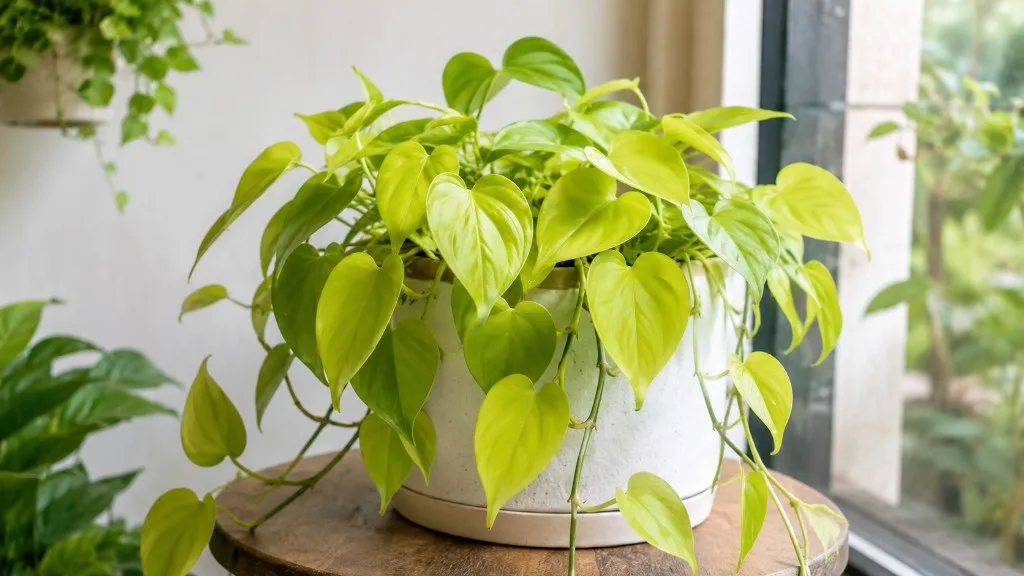
Philodendron Lemon Lime is a cultivar of heartleaf philodendron (Philodendron hederaceum), one of the most widely grown vining houseplants in the world. Trade labels still use older names like Philodendron cordatum or “sweetheart plant,” but the accepted species name for this group is hederaceum. Lemon Lime is the solid chartreuse form - no variegation blocks like Brasil, no fenestrations like a monstera - just heart-shaped leaves in shades from bright lemon yellow on new growth to lime green on mature foliage.
In cultivation it behaves like other heartleaf types: rapid, cascading growth on thin stems that root readily at nodes. A happy plant in a hanging basket or on a high shelf can send vines several feet long over a season. It is genuinely easy care for anyone who already keeps pothos or green heartleaf philodendron, with one extra demand: give it enough indirect light to hold the color that justified buying it in the first place.
Botanical Background and Native Habitat
Heartleaf philodendron belongs to the Araceae (arum) family, the same family as monstera, peace lily, and pothos. The North Carolina Extension Gardener Plant Toolbox describes Philodendron hederaceum as a herbaceous perennial vine native from Mexico through Central America and into tropical South America, climbing tree trunks in filtered understory light. That native picture explains almost everything about indoor care: the plant expects dappled brightness, not deep shade and not open midday sun; it wants airy, organic soil that dries partially between rains; and it grows quickly when warmth and humidity are steady.
The species is a hemi-epiphyte - it roots in soil and climbs toward brighter canopy light using aerial roots at nodes. Indoors you replicate that habit with a moss pole or trellis if you want upward growth, or you let the stems trail from a basket and root where they touch moist mix. NCSU lists stem cuttings and layering among recommended propagation strategies, which matches what home growers see when a vine dropped into water roots in two to three weeks.
Lemon Lime is a selected cultivar, not a separate species. Cultivar names are not always stable in commerce - the same chartreuse plant may arrive tagged “Neon philodendron,” “Lemon Lime,” or simply “chartreuse heartleaf” - but if the botanical name on the tag reads Philodendron hederaceum, the care in this guide applies.
Why the Chartreuse Color Needs More Light Than Green Heartleaf
Chartreuse leaves contain less chlorophyll per area than dark green heartleaf foliage. In low light, the plant compensates by producing more chlorophyll, which shifts new growth toward plain green and can make older leaves look duller. That is not a disease; it is the plant doing what tropical understory species do when light is limiting - maximize photosynthetic pigment at the cost of the decorative color you bought.
Bright indirect light keeps the yellow-lime tone vivid because the plant does not need to darken itself to capture photons. The practical difference between Lemon Lime and a green heartleaf in the same dim corner is visible within a few weeks: Lemon Lime stretches, internodes lengthen, leaves shrink, and the chartreuse effect fades. Green heartleaf might look merely slow. Lemon Lime looks like a different plant.
Pale chartreuse leaves also show damage faster than dark green ones. Brown tips, sun bleaching, and pest stippling read clearly on yellow-green tissue. That visibility is useful for diagnosis even if it feels unforgiving aesthetically.
Lemon Lime vs Heartleaf, Brasil, and Neon Pothos
Three separate plants get mixed up under “bright green trailing houseplant,” and the confusion costs people the right light placement or Philodendron Lemon Lime watering guide.
Green heartleaf philodendron (P. hederaceum, unselected green form) tolerates lower light and stays compact longer. Leaves are deep green, matte to slightly glossy. Care overlaps with Lemon Lime, but Lemon Lime needs brighter indirect light to keep its color.
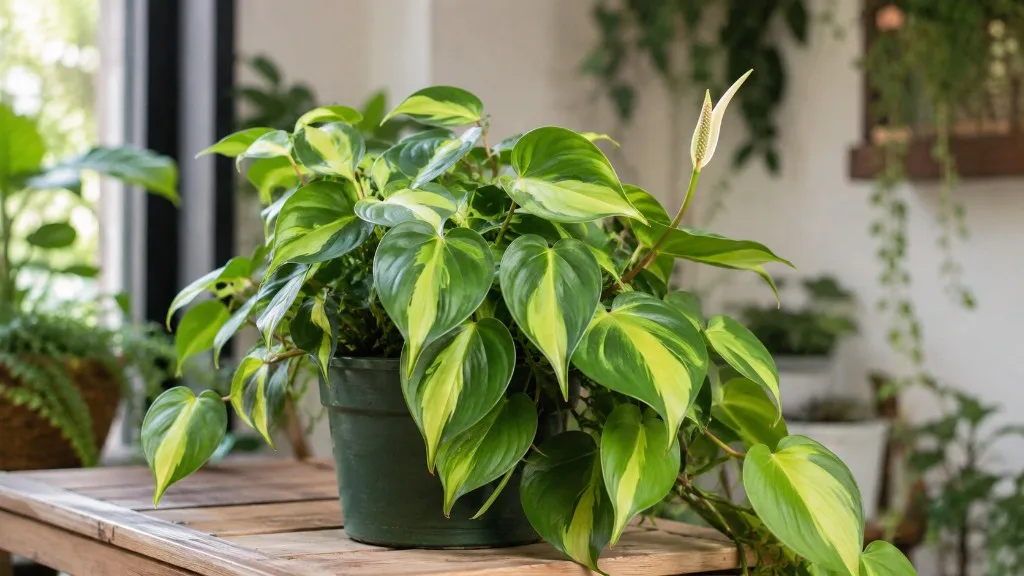
Philodendron Brasil (P. hederaceum ‘Brasil’) is the variegated heartleaf with green leaves and yellow-green stripes or blocks. It also wants bright indirect light for best variegation, but the variegated pattern is different from Lemon Lime’s solid chartreuse. Brasil and Lemon Lime share propagation and watering rules; tell them apart by leaf pattern, not stem color alone.
Neon pothos (Epipremnum aureum ‘Neon’) is the look-alike from a different genus. Neon pothos is also chartreuse and trailing, also easy care, also toxic to pets through calcium oxalates. Differences are subtle at a glance: philodendron leaves are typically more heart-shaped with a sharper tip and a softer texture; pothos leaves are thicker and waxier with a more elongated shape. Philodendron sheaths at new leaves are smooth and green; pothos often shows a ridged, slightly tan sheath. Node spacing on leggy growth can also differ - philodendron nodes are often tighter on a well-lit plant. If the tag is missing, pick care by confirming Philodendron hederaceum versus Epipremnum aureum; the light and water advice is nearly identical, but taxonomy matters for propagation swaps and pest research.
How to Tell Lemon Lime Apart at the Shop
At purchase, choose plants with firm chartreuse new leaves, not pale yellow-white tissue that suggests bleaching or nitrogen excess. Stems should be green and pliable, not brown and woody except on very old specimens. Check leaf undersides and stem joints for webbing, cottony clusters, or scale bumps - chartreuse plants in warm greenhouses attract spider mites when airflow is poor.
Soil should smell neutral and earthy, not sour or musty. A pot that feels waterlogged and heavy in a dim shop corner is a root-rot setup waiting to continue in your home. If two plants look identical but one is labeled pothos and one philodendron, trust the botanical name on the tag over the common name “Neon.”
Light: Bright Indirect Light Keeps the Chartreuse Color
Light is the primary care lever for Philodendron Lemon Lime. The target is medium to bright indirect light for most of the day - enough brightness that you could read comfortably where the plant sits without the sunbeam hitting the leaves directly. An east-facing window is ideal in many homes: gentle morning sun, bright ambient light the rest of the day. A spot 1–3 ft (30–90 cm) back from an east window, or 3–6 ft (1–2 m) from a south- or west-facing window filtered by a sheer curtain, usually holds color well.
Lemon Lime survives lower light, but that is different from performing. In a north room or a shelf far from windows, expect greener leaves, longer internodes, and slower growth. That may be acceptable if you value the vine shape over neon color; it is not acceptable if you bought the plant specifically for chartreuse impact. In that case, move it closer to the window or supplement with a full-spectrum LED grow light on a 12–14 hour timer placed 12–18 inches above the foliage.
Direct sun is the other failure mode. Midday sun through unfiltered glass can bleach chartreuse tissue to near white and crisp leaf edges within days. Morning sun through east glass is often fine; afternoon sun on south or west windows usually needs sheering or distance. Rotate the pot a quarter turn weekly so both sides of the plant receive similar light and the basket does not bald on one side.
If you are comparing light levels numerically, many growers report healthy Lemon Lime color in roughly 10,000–18,000 lux of indirect light at leaf height - roughly the brightness near a bright east window or a filtered south window. Numbers are optional; new leaf color and internode length are the better gauges.
Signs Your Plant Needs More or Less Light
Needs more light: internodes stretch to several inches, new leaves are smaller and darker green, vines lean hard toward the window, growth stalls in winter even with normal watering, or the plant loses the glowing chartreuse look you saw at purchase.
Needs less light or sun protection: bleached patches on sun-facing leaves, crispy brown edges appearing after a move to a brighter sill, leaves curling or wilting at midday despite moist soil, or sudden yellowing on the sun-exposed side only.
Adjust gradually. Move the plant closer to brighter indirect light over 7–10 days, or back from harsh sun over a few days, rather than jumping from a dark hall to a south windowsill in one afternoon. Acclimated leaves tolerate change better than soft greenhouse foliage.
Watering: Let the Top Dry, Then Soak Thoroughly
Philodendron Lemon Lime wants even moisture without soggy roots. The calendar is a hint, not a rule. A practical starting rhythm in many indoor homes is every 7–10 days in the active growing season and every 10–14 days in cooler, dimmer months, but only when the top 3–5 cm (1–2 inches) of potting mix has dried.
Plants in bright light and fast-draining mix dry faster and drink more. Plants in low light, plastic pots, or oversized containers stay wet longer and need less frequent watering. Hanging baskets in warm, airy rooms can dry faster than tabletop pots because air circulates around the entire root ball. Always confirm with touch before you pour.
When it is time to water, soak thoroughly until water runs from the drainage holes, then empty the saucer within 30 minutes. Partial sips every day keep the surface wet and the core unpredictably moist - a pattern that encourages fungus gnats and root rot on Philodendron Lemon Lime without fully hydrating the root ball. Lemon Lime wilts when dry, but it recovers quickly; it rots slowly and silently when kept too wet in low light.
Use room-temperature water. Tap water is fine in most municipalities; if you see persistent brown tips despite good humidity, try filtered water or flush the pot monthly to reduce salt buildup from fertilizers and hard water.
How to Check Soil Moisture Before You Water
The finger test remains the most reliable tool. Insert your finger to the second knuckle. If the mix at that depth feels cool and damp, wait. If it feels dry and the pot is noticeably lighter, water. A bamboo chopstick pushed to the bottom and left for a few minutes tells the same story - damp stick means wait, dry stick means water.
Lift the pot regularly to learn its dry weight versus wet weight. Dry aroid mix in a 6-inch pot can feel almost alarmingly light; that is normal. If the pot stays heavy for a week after watering and leaves begin yellowing, suspect overwatering or poor drainage before you assume the plant is thirsty.
In winter, extend the interval and trust the soil over the schedule. Growth slows, light drops, and evaporation falls. The same weekly summer watering will overwater the plant in January unless you adjust.
Humidity and Temperature Indoors
Philodendron Lemon Lime prefers moderate humidity around 50–60%, which many homes already reach in kitchens and grouped plant areas. It tolerates average indoor humidity near 40% when light and watering are correct, but very dry winter air - below about 30% - encourages brown leaf tips and spider mites.
Raise humidity the boring ways that work: group plants, use a pebble tray with the pot above the water line, or run a small humidifier nearby. Misting leaves gives a minutes-long humidity bump and can leave wet foliage that invites fungal spotting; skip the spray bottle unless you enjoy it for aesthetics, not plant physiology.
Temperature comfort tracks normal indoor living: about 65–85°F (18–29°C) during the day. Keep the plant away from cold window glass in winter, hot radiator blasts, and AC vents that blow directly on leaves. Sustained exposure below about 55°F (13°C) slows growth and can damage tropical foliage. Drafts matter less than sustained cold; a brief open window on a mild day is not the same as a plant sitting on an icy sill all night.
Good air circulation prevents stagnant pockets where mites thrive. A ceiling fan on low or an occasional open window in warm weather helps more than misting ever will.
Soil, Pots, and Drainage
Use a standard indoor potting mix amended with 20–25% perlite for drainage and root oxygen. The goal is a mix that holds moisture briefly but drains within minutes, never staying soggy for days. Target pH 5.5–6.5, slightly acidic - typical peat- or coco-based bagged mixes already land here, and hobbyists rarely need to test unless troubleshooting persistent chlorosis.
A simple recipe: three parts quality all-purpose potting mix, one part perlite. Add orchid bark at 10–15% if you tend to overwater or if the plant lives in a low-light room where evaporation is slow. Avoid garden soil, pure peat with no structure, or dense “moisture control” mixes that stay wet in cool rooms.
Pots must have drainage holes. Decorative cachepots without holes are fine only if you lift the nursery pot out to water and drain. Terracotta dries faster; plastic retains moisture longer - choose based on your watering habits, not Instagram aesthetics. For hanging baskets, lightweight plastic with a saucer beats heavy ceramic that turns a wall hook into a structural engineering problem.
When mix compacts over time, water runs straight through without soaking in - a sign to repot into fresh mix even if roots are not yet crowded.
Fertilizer During Active Growth
Lemon Lime is a fast grower in good light, but it is not a heavy feeder. Apply a balanced liquid houseplant fertilizer at half the label strength monthly from spring through early fall, on already-moist soil, and pause in winter or when the plant is stressed, newly repotted, or recovering from root damage.
Signs you are feeding appropriately: firm chartreuse new leaves and steady vine extension without soft, floppy growth. Signs you are overfeeding: crisp brown leaf tips, white salt crust on the pot rim, or pale new growth that looks more yellow-white than chartreuse. If salts accumulate, flush the pot with plain water until runoff is clear and skip the next feeding.
Fertilizer cannot fix low light, rotting roots, or a pot that stays wet. Fix the environment first; then feed lightly during active growth.
Philodendron Lemon Lime repotting guide and Root Health
Repot every one to two years, or when roots circle the drainage holes, water runs through without absorbing, or the plant becomes top-heavy and unstable. Spring and early summer - when new growth is starting - is the best window. Avoid repotting in deep winter unless the plant is clearly failing in sour, compacted mix. Move up only one pot size - about 1–2 inches (2.5–5 cm) wider in diameter. Oversized pots hold excess mix that stays wet around a small root system, the most common post-repot root rot trigger. After repotting, water lightly and keep the plant in bright indirect light without direct sun stress for a week while torn roots heal.
Trim black, mushy roots with clean scissors if you unpot and find rot, then repot into fresh mix and reduce watering until new growth resumes. Healthy roots are white or tan and firm, not slimy or smelling foul.
Propagation by Stem Cuttings
Philodendron Lemon Lime is one of the easiest philodendrons to propagate. Each node on a stem can produce roots and a new vine.
Water propagation: Cut a 4–6 inch (10–15 cm) section just below a node with at least two leaves (remove the bottom leaf if it would sit underwater). Place in a clear jar of room-temperature water with the node submerged and leaves above the waterline. Keep in bright indirect light, refresh water weekly, and expect roots in two to three weeks in warm conditions. Plant into moist mix when roots are 1–2 inches long.
Soil propagation: Stick the same cutting into moist, airy mix, keep humidity high with a loose plastic bag or dome vented daily, and tug gently after three weeks to feel resistance. Soil props avoid transplant shock from water to mix but need more attention to moisture.
Always propagate from healthy vines, not from stems already yellowing from rot or mite damage. The parent plant’s problems become the cutting’s problems.
Toxicity to Pets and People
Philodendron Lemon Lime is toxic to cats, dogs, and horses because it contains insoluble calcium oxalate crystals in leaves, stems, and roots. The ASPCA lists heartleaf philodendron (Philodendron hederaceum) as toxic with clinical signs including oral irritation, pain and swelling of mouth, tongue, and lips, excessive drooling, vomiting, and difficulty swallowing. Lemon Lime is the same species group; treat it with the same caution.
Pet Poison Helpline notes that chewing Araceae plants releases needle-like raphides that mechanically irritate mouth and GI tissues. Severe airway swelling is rare but possible with large ingestions. NCSU rates human poisoning severity as low for typical exposures, but contact dermatitis can occur in sensitive people from sap during pruning.
This is not a plant for floor pots in pet households or on low shelves where cats can bat trailing vines. Hang it high, place it in a closed room, or choose a pet-safe alternative such as a true fern or peperomia if animals chew plants.
What to Do If a Pet Chews the Plant
Remove remaining plant material from the mouth if you can do so safely. Offer a small amount of yogurt or milk only if your veterinarian or poison control suggests it - some sources note dairy can help bind oxalate irritation, but follow professional guidance for your pet’s size and health. Call ASPCA Animal Poison Control at (888) 426-4435 (consultation fee may apply) and your veterinarian promptly. Do not induce vomiting unless a professional directs you to.
For human exposure, rinse the mouth and contact Poison Control at 1-800-222-1222 in the US if symptoms are more than mild irritation.
Common Problems and Real Fixes
Most Lemon Lime problems are environmental, not mysterious. The diagnostic order is the same every time: check soil moisture, then light, then pests, then water quality. Fix the cause, wait two to three weeks, then trim cosmetic damage.
Yellow Leaves, Leggy Vines, and Color Reversion
Yellow leaves on a wet pot usually mean overwatering or root rot - especially in low light. Unpot if the plant keeps yellowing despite dry surface mix; trim rotten roots and repot into fresh, airy mix.
Yellow leaves on a dry, light pot suggest underwatering or extreme low humidity. Soak thoroughly and adjust the rhythm.
Leggy vines with small leaves mean insufficient light almost every time. Move to brighter indirect light; the plant will not bush out without a prune, but new growth should tighten.
Color reversion to plain green is a light problem, not a nutrient deficiency. Increase indirect brightness before you fertilize.
Brown tips often combine low humidity, underwatering, and salt buildup. Raise humidity, flush salts, trim tips for appearance.
Spider mites show as fine webbing, stippled leaves, and dull bronzing, worst in dry winter air. Shower the plant, increase humidity, and treat with insecticidal soap on a test leaf first - chartreuse tissue can mark from harsh oils.
Mealybugs and scale hide at nodes; treat with isopropyl alcohol on a swab plus repeated soap applications.
Root rot smells foul and shows mushy roots and collapsing stems while soil stays wet. Cut rot, repot dry-ish, withhold water briefly, and improve light and drainage.
Conclusion
Philodendron Lemon Lime is a fast, trailing, chartreuse cultivar of heartleaf philodendron that rewards one clear priority: bright enough indirect light to keep the color honest. Pair that with watering when the top 3–5 cm of mix dries, a perlite-amended well-draining mix, moderate humidity near 50–60%, light feeding during active growth, and annual or biennial repotting, and the plant will grow long, glowing vines with minimal fuss.
It is not pet safe, and it is not a true low-light plant despite what generic philodendron labels imply. For display, a hanging basket near an east window or a high shelf with trailing vines shows the chartreuse color best; pinch tips after vines reach the length you want to encourage branching, or train stems up a moist moss pole for slightly larger leaves. Group it with dark green or burgundy foliage so the lime tone pops by contrast. If you can place it where light stays bright, keep trailing stems away from chewers, and water based on the pot rather than the calendar, Lemon Lime is one of the easiest ways to add electric chartreuse to an indoor room. If you cannot give it that light, a dark green heartleaf will look better longer - but if you can, few houseplants match this cultivar’s vivid, trailing glow.
When to use this page vs other Philodendron Lemon Lime guides
- Philodendron Lemon Lime overview - Canonical hub for this species - care topics and problems branch from here.
- Philodendron Lemon Lime problems - Symptom-first path when you already know something is wrong.
Related Philodendron Lemon Lime guides
- Philodendron Lemon Lime watering
- Philodendron Lemon Lime light
- Philodendron Lemon Lime soil
- Philodendron Lemon Lime propagation
- Philodendron Lemon Lime fertilizer
- Philodendron Lemon Lime repotting
- Philodendron Lemon Lime pruning
- Brown Tips on Philodendron Lemon Lime
- Ants on Plant on Philodendron Lemon Lime
- Leaf Spot Disease on Philodendron Lemon Lime
- Leaf Miners on Philodendron Lemon Lime
- Leaf Drop on Philodendron Lemon Lime
How to care for Philodendron Lemon Lime?
How much light does Philodendron Lemon Lime need?
medium to bright indirect light, low light (colour becomes greener)
- medium to bright indirect light, low light (colour becomes greener) - medium to bright indirect light, low light (colour becomes greener).
When should you water Philodendron Lemon Lime?
Every 7–10 days in summer - allow top 3–5 cm to dry. Every 10–14 days in winter.
- Check top 2 inches - Every 7–10 days in summer - allow top 3–5 cm to dry.
- Drain excess water - Empty the saucer after watering so the roots are not sitting in standing water.
What soil works best for Philodendron Lemon Lime?
Standard potting mix + 20–25 % perlite. Well-draining. pH 5.5–6.5.
- Well-draining mix - Well-draining.
Grower notes for Philodendron Lemon Lime
Placement note for Lemon Lime
Use Lemon Lime as a bright foliage accent near filtered light. If it is kept too far from the window, stems stretch and the plant loses the dense glowing look that makes it worth growing.
What makes Lemon Lime different
Philodendron Lemon Lime is all about bright chartreuse growth. It needs enough light to keep that color, but harsh sun can bleach or crisp the thin leaves. It reads stress quickly because pale leaves show every brown mark.
What matters most with Philodendron Lemon Lime
Philodendron Lemon Lime is easiest to understand by its growth habit. Climbers need support for larger leaves, self-heading types need stable root moisture, and delicate velvet forms punish stale air faster than basic green philodendrons. In practice, the care checkpoint is simple: medium to bright indirect light, low light (colour becomes greener). Pair that with standard potting mix + 20–25 % perlite. Well-draining; pH 5.5–6.5, and avoid changing water, pot size, and placement all at once.
Best placement in a real home
Philodendron Lemon Lime belongs where medium to bright indirect light, low light (colour becomes greener) is realistic for most of the day, not only where the pot looks good. Every 7–10 days in summer - allow top 3–5 cm to dry. Every 10–14 days in winter. If the pot stays wet longer than expected, move the plant into better light or reassess the mix before watering again. Humidity target: Moderate humidity (50–60%).. Temperature comfort zone: 18°C to 29°C (65–85°F).
Before you buy this plant
Choose Philodendron Lemon Lime with firm new growth, clean leaf undersides, and soil that does not smell sour or feel compacted. Be cautious if you see yellow-leaves, sticky residue, collapsed crowns, or a pot that is wet in poor light. Cosmetic old-leaf damage is less worrying than weak roots or active pests.
First month after bringing it home
Do not repot Philodendron Lemon Lime on day one unless the mix is failing or pests are obvious. Quarantine it, learn how fast the pot dries, and keep care boring while it adjusts. Watch especially for yellow-leaves, leggy-growth, and root-rot. If problems appear, correct the condition first rather than stacking fertilizer, repotting, and pruning together.
Safety note for Philodendron Lemon Lime
Philodendron Lemon Lime is not a plant to keep within reach of pets or children. Treat it as an inaccessible display plant. Use gloves if sap or plant tissue is irritating, and pick a pet-safe alternative for floor pots or low shelves.
How to tell Philodendron Lemon Lime is settling in
If you plan to multiply it later, common methods include Stem cuttings in water. If leggy-growth shows up early, inspect light, watering, and roots before assuming the plant is permanently weak.
Is it pet safe?
Philodendron Lemon Lime is toxic to cats and dogs.
Toxic - calcium oxalate crystals.
Watering Philodendron Lemon Lime
Every 7–10 days in summer - allow top 3–5 cm to dry. Every 10–14 days in winter.
Soil & potting for Philodendron Lemon Lime
Standard potting mix + 20–25 % perlite. Well-draining. pH 5.5–6.5.
Humidity & temperature for Philodendron Lemon Lime
Philodendron Lemon Lime prefers moderate humidity (50–60%), though normal home humidity is usually fine. Keep temperatures around 18°C to 29°C (65–85°F).
| Detail | Information |
|---|---|
| Humidity | Moderate humidity (50–60%) - normal home humidity is fine. |
| Ideal temperature | 18°C to 29°C (65–85°F) |
Fertilizer & pruning for Philodendron Lemon Lime
Use feed lightly during active growth. Use monthly in spring and summer.. for Philodendron Lemon Lime.
| Detail | Information |
|---|---|
| Fertilizer type | Feed lightly during active growth. Use monthly in spring and summer.. |
Common problems on Philodendron Lemon Lime
Brown Tips
LowLikely cause: Low humidity
Quick fix: Increase humidity
Full fix guide →Likely cause: Philodendron is a large genus of flowering plants in the family Araceae. As of September 2025, the Plants of the World Online accepted 625 species; [2] other sources accept different numbers. [3][4] …
Quick fix: Confirm diagnosis on your Philodendron Lemon Lime, then address the most likely care or pest factor described in current extension guidance.
Full fix guide →Leaf Spot Disease
MediumLikely cause: Feb 21, 2024 · Philodendron Types with Pictures and Care Guide The green heartleaf Philodendron is a vining type of plant with dark-green leaves in a heart’s shape. This type of Philodendron can be …
Quick fix: Confirm diagnosis on your Philodendron Lemon Lime, then address the most likely care or pest factor described in current extension guidance.
Full fix guide →Leaf Miners
MediumLikely cause: Feb 21, 2024 · Philodendron Types with Pictures and Care Guide The green heartleaf Philodendron is a vining type of plant with dark …
Quick fix: Confirm diagnosis on your Philodendron Lemon Lime, then address the most likely care or pest factor described in current extension guidance.
Full fix guide →Leaf Drop
MediumLikely cause: Feb 21, 2024 · Philodendron Types with Pictures and Care Guide The green heartleaf Philodendron is a vining type of plant with dark-green leaves in a heart’s shape. This type of Philodendron can be …
Quick fix: Confirm diagnosis on your Philodendron Lemon Lime, then address the most likely care or pest factor described in current extension guidance.
Full fix guide →Leggy Growth
MediumLikely cause: Insufficient light dulling colour and stretching growth
Quick fix: Move to brighter indirect light
Full fix guide →Plant Leaning
MediumLikely cause: Philodendron is a large genus of flowering plants in the family Araceae. As of September 2025, the Plants of the World Online accepted 625 species; [2] other sources accept different numbers. [3][4] …
Quick fix: Confirm diagnosis on your Philodendron Lemon Lime, then address the most likely care or pest factor described in current extension guidance.
Full fix guide →Root Rot
MediumLikely cause: Wet soil
Quick fix: Repot in draining mix
Full fix guide →Thin Stems
MediumLikely cause: Feb 6, 2025 · If you are thinking of adding a philodendron to your indoor or outdoor garden, choosing the right variety can be a challenge because there are so many different options. Some are more …
Quick fix: Follow extension or botanical guidance for Philodendron Lemon Lime thin stems; adjust care before applying broad treatments.
Full fix guide →Yellow Leaves
MediumLikely cause: Overwatering
Quick fix: Allow soil to dry at 3–5 cm
Full fix guide →Aphids
MediumLikely cause: Aphids on Philodendron Lemon Lime cluster on soft chartreuse new growth at vine tips and unfurling heart leaves, leaving sticky honeydew on lime-green foliage. First step: isolate the plant and rinse
Quick fix: See plant-specific guide for step-by-step fixes.
Full fix guide →Drooping Leaves
MediumLikely cause: First check soil before watering: if the top 3-5 cm is dry and the pot feels light, water deeply; if the mix is still wet and the plant droops, pause watering and inspect roots for stress.
Quick fix: See plant-specific guide for step-by-step fixes.
Full fix guide →Fungus Gnats
MediumLikely cause: Fungus gnats on Philodendron Lemon Lime almost always mean the soil surface stays too wet-often from calendar watering on a fast-growing chartreuse trailer in low light. First step: let the top 3–5 cm
Quick fix: See plant-specific guide for step-by-step fixes.
Full fix guide →Low Humidity
MediumLikely cause: Low humidity on Philodendron Lemon Lime crisps brown tips on thin chartreuse foliage-usually worst on outermost trailing leaves in heated winter rooms. Move the plant away from vents, then raise local
Quick fix: See plant-specific guide for step-by-step fixes.
Full fix guide →Mealybugs
MediumLikely cause: Mealybugs on Philodendron Lemon Lime hide as white cottony patches in leaf axils and stem nodes on vining chartreuse growth. First step: isolate the plant and dab every visible cluster with 70% isopro
Quick fix: See plant-specific guide for step-by-step fixes.
Full fix guide →Mold on Soil
MediumLikely cause: Fluffy white or gray mold on Philodendron Lemon Lime potting mix means the surface stayed damp too long-usually from overwatering, dense peat, or poor airflow under a hanging basket. Scrape the top la
Quick fix: See plant-specific guide for step-by-step fixes.
Full fix guide →Not Enough Light
MediumLikely cause: Not enough light on Philodendron Lemon Lime dulls chartreuse leaves to green and stretches stems. Move the plant to medium or bright indirect light within a few feet of an east window, acclimate over
Quick fix: See plant-specific guide for step-by-step fixes.
Full fix guide →Overwatering
MediumLikely cause: Overwatering on Philodendron Lemon Lime usually shows up as limp, dull chartreuse leaves while the pot still feels heavy and wet. First, stop watering and let the top 3–5 cm dry before doing anything
Quick fix: See plant-specific guide for step-by-step fixes.
Full fix guide →Slow Growth
MediumLikely cause: Slow growth on Philodendron Lemon Lime usually means too little light, a crowded pot, or normal winter rest-not disease. First step: move the plant to brighter indirect light and confirm the top 3–5 c
Quick fix: See plant-specific guide for step-by-step fixes.
Full fix guide →Spider Mites
MediumLikely cause: Spider mites on Philodendron Lemon Lime cause fine stippling and webbing on thin chartreuse leaves, especially in dry winter rooms. First step: isolate the plant and rinse every leaf underside with lu
Quick fix: See plant-specific guide for step-by-step fixes.
Full fix guide →Underwatering
MediumLikely cause: Underwatering on Philodendron Lemon Lime dries fine roots and makes thin chartreuse leaves wilt and crisp at edges. First step: check soil 3–5 cm deep and pot weight-if dry throughout, give one thorou
Quick fix: See plant-specific guide for step-by-step fixes.
Full fix guide →Wilting
MediumLikely cause: Wilting on Philodendron Lemon Lime is not fixed by watering blindly. Probe soil moisture 3–5 cm down and lift the pot first-dry, light soil usually means thirst; wet, heavy soil with limp chartreuse l
Quick fix: See plant-specific guide for step-by-step fixes.
Full fix guide →