How to Prune Philodendron Lemon Lime: When, Where & What
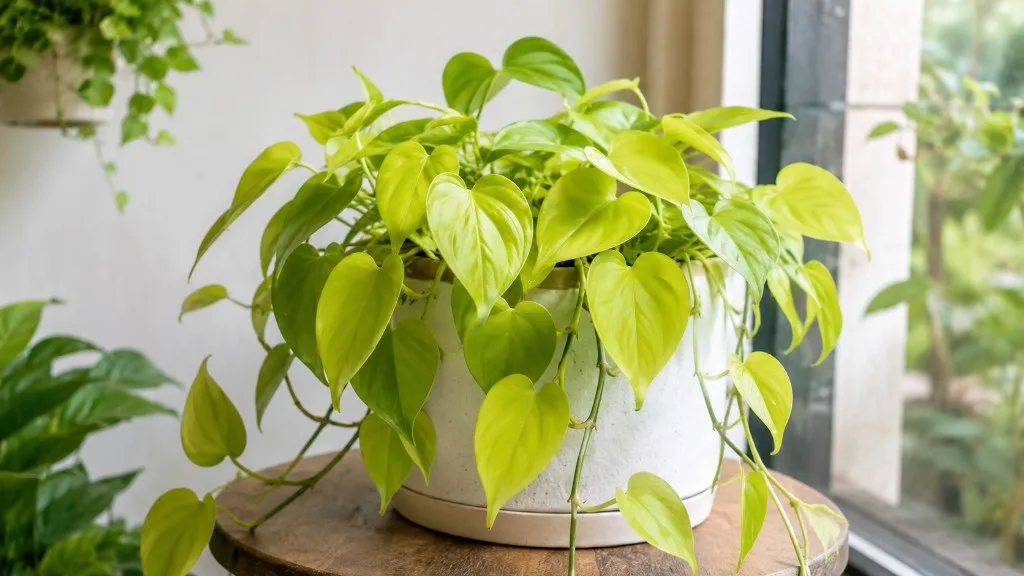
How to Prune Philodendron Lemon Lime: When, Where & What to Cut
How to Prune Philodendron Lemon Lime: When, Where & What to Cut
First, snip only dead, yellow, or clearly damaged leaves and stems with clean sharp scissors - at the petiole base or back into firm green tissue just above a healthy node. Philodendron Lemon Lime (Philodendron hederaceum ‘Lemon Lime’) is a fast chartreuse cultivar of heartleaf philodendron. Its thin pale blades show every brown mark, so a sanitation pass reveals what tissue is actually alive before you shorten any vine. For general culture - watering rhythm, humidity, and placement - see the Philodendron Lemon Lime overview.
Quick Answer
Prune Lemon Lime for shape and density in late spring through early summer, when active growth supports branching from nodes. Make each shaping cut 5–10 mm (about ¼ inch) above a visible node - the swollen point where a leaf attaches and a tiny aerial root may appear. Limit routine shaping to no more than one-third of total foliage per session. Emergency removal of mushy, pest-damaged, or fully dead stems can happen any time. Pruning breaks apical dominance at the vine tip and wakes dormant buds at nodes below the cut, but it cannot recolor old leaves or replace adequate bright indirect light - legginess and greener regrowth return quickly in a dim corner even after a hard trim.
Why Lemon Lime Pruning Is About Light and Nodes
Lemon Lime shares the vining architecture of Philodendron hederaceum - long runners, a node at every leaf attachment, and rapid trailing growth indoors. Missouri Botanical Garden notes that heartleaf philodendrons trail from pots or climb with support and that growers should pinch trailing stems to promote bushier growth - the same node logic applies whether you pinch a soft tip or cut back a bare runner.
Without intervention, each vine follows apical dominance: the terminal bud produces auxin that suppresses lateral buds lower on the stem. The tip keeps extending, internodes stretch, and lower leaves age out - leaving bare runners with chartreuse foliage clustered at the ends. In low light, Lemon Lime stretches faster than solid-green heartleaf types and new blades shift toward plain green, which signals the plant is reaching for brighter conditions. That color shift is a placement diagnostic - adjust light before expecting compact vivid chartreuse regrowth.
Pruning can redirect growth, remove failing tissue, shorten leggy runners, and supply propagation material. It cannot fix chronic under-lighting or restore chartreuse to leaves that already opened.
Sanitation vs Pinch vs Cutback: Which Approach When
Match the tool to the problem before you touch live structure:
| Situation | Action | Tool | When |
|---|---|---|---|
| Brown, yellow, or pest-damaged tissue | Sanitation cut | Scissors or snips | Any time - do this first |
| Soft tip outgrowing neighbors on a healthy stem | Pinch | Fingernails or snips | Warm season; stem still has leaves below |
| Bare middle section or severely leggy hanger | Stem cutback above a lower node | Bypass shears | Late spring through early summer |
| Sparse soil at pot base after shortening vines | Same-pot fill from trimmings | Root cuttings in jar, replant at base | Pair with spring/summer structural work |
Shared heartleaf mechanics - node placement, apical dominance, and the one-third limit - also appear on the generic philodendron pruning guide. This page focuses on Lemon Lime chartreuse color, thin-leaf sun sensitivity, and internode stretch benchmarks.
What to Inspect Before Any Cut
Walk the whole plant in good light before blades touch tissue:
- Nodes and internodes - locate swollen points where leaves attach; heartleaf philodendron branches from nodes, not bare stem tissue
- Leaf color - chartreuse fading to green on new growth, yellow climbing a stem, brown tips, or pest residue on undersides
- Vine length - which runners are bare in the middle, which tips still produce healthy vivid leaves
- Root and water stress - wilting, sour-smelling soil, or roots circling the pot surface suggest watering or root problems to fix before aggressive cuts
- Recent care changes - repotting, relocation, or stacked interventions within the last two weeks
Internode stretch and chartreuse color
Measure internode length on the newest vine section. On a well-lit plant, nodes are often 5–8 cm (2–3 inches) apart and new leaves open bright chartreuse. On a stretched plant, gaps can exceed 15 cm (6 inches) and fresh growth looks greener. RHS philodendron guidance warns that philodendrons in insufficient light become leggy with fewer, smaller leaves - pruning shortens the vine but does not replace brighter placement. If recurring stretch follows every trim, read the not enough light guide before cutting again.
When to Prune - Active Season vs Emergency Trims
Lemon Lime tolerates light grooming year-round, but timing changes speed, not survival. Structural cuts during active growth produce faster branching, larger new leaves, and shorter internodes with stronger yellow-green color.
Late spring through early summer is the ideal reshaping window in most homes. Daylight is increasing, the pot dries on a predictable rhythm, and new leaves are already unfurling. RHS philodendron guidance recommends pruning climbing philodendrons in spring, cutting just after a leaf node. Early autumn works as a second option if your space stays warm and bright.
Avoid major cutbacks in late autumn and winter unless you accept a slower response. Light tip pinching during the off-season is fine; hard rejuvenation is not.
Cuts that cannot wait:
- Blackened, mushy, or rotting stems - cut back into firm green tissue above a healthy node; sanitize blades between cuts on diseased material
- Stems with heavy active pest infestation - remove the worst sections once you have a treatment plan
- Fully brown, dry leaves - snip at the petiole base any time; they no longer photosynthesize
The First Structural Cut
After your sanitation pass, identify the longest bare or overextended vine. Follow it back from the tip until you find a node that still has a healthy leaf attached - or, if the entire lower run is leafless, pick a node roughly two-thirds of the way toward the soil where you want new fullness to start.
Wipe bypass shears with 70% isopropyl alcohol - Iowa State University Extension recommends alcohol wipes or dips for home gardeners disinfecting pruning tools. Position the blade 5–10 mm above that node at a slight angle, with the node tissue remaining intact on the parent stem. Make one cut, step back, and assess balance before shortening the next vine.
Step-by-Step Pruning Routine
- Sterilize tools and set out a bag for clippings - ASPCA lists philodendron as toxic to cats and dogs due to calcium oxalate crystals
- Remove dead and yellow material at petiole bases or back to live nodes
- Shorten the worst leggy vines one at a time, cutting 5–10 mm above chosen nodes
- Pause between major cuts - remove no more than one-third of total foliage unless the plant is vigorous and in peak season
- Return the plant to stable bright indirect light and normal watering; hold fertilizer until new shoots appear
Young Lemon Lime stems cut cleanly with sharp floral snips. Mature trailing vines that have reached several feet may need bypass pruning shears rather than crushing anvil blades.
Where to cut on a node
Cut just above the node, not through it and not midway down the bare internode above it. The node is the bump where the leaf meets the stem; axillary buds typically flank it. Iowa State University Extension confirms that philodendron stem cuttings need at least one node to root - the same tissue that branches after pruning.
A cut through the middle of an internode leaves a bare stub that cannot produce new shoots and may brown at the tip. A cut too close to the node can damage the bud you need for regrowth.
Pinch vs Cutback Compared
| Pinching | Cutting back | |
|---|---|---|
| Trigger | Soft tip outgrowing neighbors; stem still leafy below | Bare middle section, severely leggy hanger, or lost lower foliage |
| Tool | Fingernails or snips | Bypass shears |
| Cut placement | Just above topmost node on an extending tip | 5–10 mm above a lower node on a long bare runner |
| Best timing | Warm season; can repeat every few weeks | Late spring through early summer for structural work |
| Recovery | Side shoots within 1–2 weeks in active growth | New branches at lower nodes; fuller silhouette in 6–8 weeks |
| What it cannot fix | Bare internode tissue below - only nodes branch | Color on old leaves; dim placement |
Missouri Botanical Garden recommends pinching trailing stems for bushier growth - use that for fine-tuning. Reserve cutbacks for structural reshaping when pinching the tip no longer addresses long bare sections.
How Much Foliage You Can Remove
Under normal conditions, remove no more than one-third of total foliage in one session. Lemon Lime is fast-growing and forgiving in bright active-season light, but the one-third rule keeps recovery predictable and preserves enough leaf surface for photosynthesis.
For severely leggy plants with long bare runners, spread major cutbacks over two or three sessions spaced three to four weeks apart during spring or summer. Each session can take up to one-third. Trying to chop a sparse hanger down to a stub in one day works only if light, watering, and root health are already solid - otherwise the plant stalls and new growth emerges pale and stretched.
Root Pruning Cuttings in the Same Pot
Lemon Lime cuttings from pruning are worth keeping. Select sections with at least one node and one or two healthy leaves. Trim the lowest leaf if it would sit underwater or underground. Root in a clear jar with the node submerged and bright indirect light - roots typically appear in one to three weeks per Iowa State University Extension.
Once roots reach 2–5 cm (about 1–2 inches), plant several cuttings around the base of the parent pot for a denser glowing mound. This fills bare soil faster than waiting for a single vine to branch on its own. For medium-specific rooting, water-change rhythm, and troubleshooting failed cuttings, see the dedicated propagation guide.
Aftercare and Light Placement
After pruning, focus on stability rather than stimulation:
- Light - return to bright indirect light; avoid harsh direct sun that bleaches chartreuse leaves, especially right after a major cut
- Water - resume your normal rhythm when the top 3–5 cm of soil dries; fewer leaves mean slower water use - check soil before every watering per the watering guide
- Humidity - moderate humidity (50–60%) supports clean new leaf edges on thin foliage
- Fertilizer - wait until you see new shoots before feeding lightly
- Sanitation - discard clippings in pet-accessible homes; sap contains irritant calcium oxalate crystals. Contact your veterinarian or the ASPCA Animal Poison Control Center if a pet chews plant tissue or clippings
Do not repot on pruning day unless root failure or soil breakdown is the actual problem. Let new growth confirm recovery before changing the root environment.
Recovery Timeline
The ranges below are practitioner observations for indoor Lemon Lime under typical home conditions - not fixed extension mandates. Actual speed depends on light, temperature, and how much foliage was removed.
| Phase | Timing (active spring/summer) | What to expect |
|---|---|---|
| Immediate | Days 0–3 | Cut faces callus; possible minor leaf yellowing; keep conditions stable |
| Bud swell | Days 7–14 | Visible enlargement at nodes below cuts |
| First new leaves | Weeks 2–4 | Small chartreuse shoots unfurl; color deepens as leaves mature |
| Canopy fill | Weeks 6–8 | Side branches lengthen; silhouette looks fuller, especially with same-pot cuttings |
| Out-of-season cut | Winter | Timeline may double; minimal visible progress until spring |
Signs Pruning Worked - and When It Failed
Worked:
- New buds breaking at nodes directly below your cuts
- Shorter internodes on fresh growth compared to the section you removed
- Chartreuse color on newly opened leaves when light is adequate
- Stopped decline - no further yellowing climbing the same stem
Failed or mistimed:
- Wilting or leaf drop on remaining stems within days of a heavy cut
- No new growth for six or more weeks during what should be active season
- Pale, thin new leaves with internodes still stretching - usually a light problem
- Brown, crispy new tips - often sun stress after pruning combined with too much direct light
Mistakes That Undo Chartreuse Color
- Cutting mid-internode - bare stubs cannot branch and look worse on a color-focused display plant
- Heavy pruning in a dim room - regrowth emerges greener and more stretched, undoing the visual goal
- Stripping leaves without cutting the stem - removes photosynthetic surface without activating lateral buds
- Expecting old leaves to turn chartreuse - only new growth reflects current light conditions
- Bleaching from direct sun after major cuts - thin Lemon Lime leaves scorch easily; acclimate gradually
- Overwatering after pruning - fewer leaves mean slower water use
- Pruning during active root rot or severe pest outbreak - fix the underlying problem first, then trim
When to Wait
Delay structural pruning when:
- The plant was repotted within the last two weeks
- Widespread yellowing suggests overwatering or root stress - correct care first
- Active mealybug, scale, or thrips infestation is untreated
- Winter conditions are dim and cool unless you accept months of little visible response
- The plant is wilting from drought - water and recover turgor before cutting live tissue
Light pinching of soft tips during the off-season is fine. Hard rejuvenation is not.
Related Philodendron Lemon Lime Guides
- Philodendron Lemon Lime overview - general care hub
- Light placement - chartreuse color and post-prune positioning
- Watering - adjust rhythm after foliage removal
- Propagation - full rooting workflow beyond same-pot fill
- Leggy growth - when stretch is the root cause
- Philodendron pruning (genus guide) - shared P. hederaceum mechanics
- Philodendron Brasil pruning - sibling cultivar with variegation reversion concerns Lemon Lime does not share
Conclusion
Lemon Lime pruning starts with dead-tissue cleanup, then shortens leggy vines just above nodes during active growth when bright indirect light supports vivid chartreuse regrowth. Match pinching to soft tips and cutbacks to bare runners, limit each session to one-third of the foliage, and root useful cuttings to fill sparse pots. The shears manage shape - placement manages the glow.
Recommendations were checked against NC State Extension Philodendron hederaceum culture, Missouri Botanical Garden heartleaf philodendron notes, RHS philodendron growing guide, Iowa State University Extension propagation and tool-sanitization guidance, and ASPCA philodendron toxicity data, plus LeafyPixels cluster guides linked above. Author: sai-ananth. Reviewer: LeafyPixels Review Board. Reviewed June 2026.