How to Propagate Philodendron Lemon Lime: Stem Cuttings
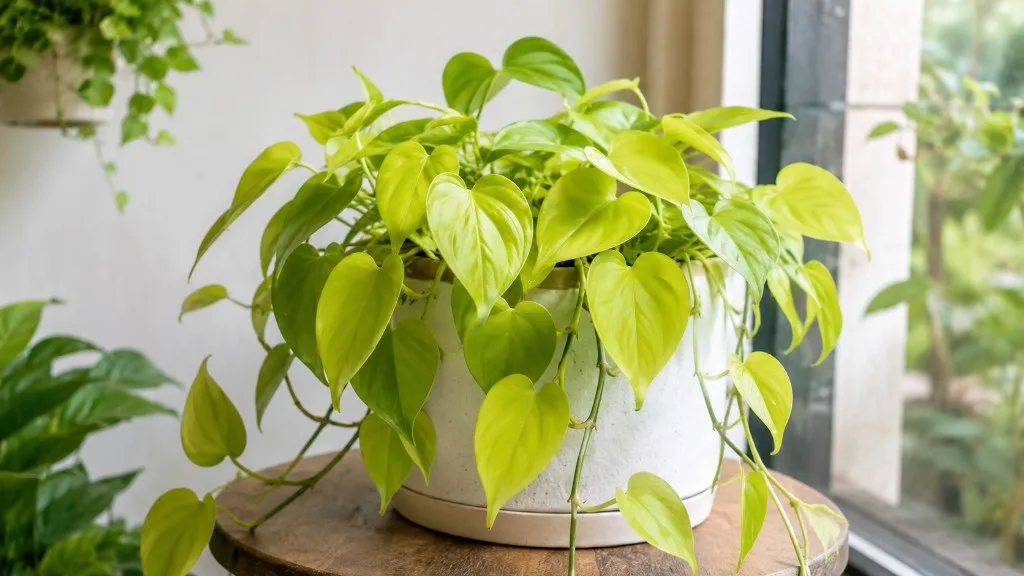
How to Propagate Philodendron Lemon Lime: Stem Cuttings Guide
How to Propagate Philodendron Lemon Lime: Stem Cuttings Guide
Philodendron Lemon Lime propagation is one of the easiest projects in houseplant care-because Philodendron hederaceum ‘Lemon Lime’ roots readily from stem cuttings at nodes, the same biology that makes heartleaf philodendron a beginner staple. Success means clean cuts below nodes, bright indirect light, and patience through one pot-up-not hormone gel stacks or greenhouse humidity.
Lemon Lime adds one twist: give rooted cuttings enough light so new vines keep the chartreuse color that makes this cultivar worth growing.
Why Lemon Lime Propagates Easily (and Where Beginners Fail)
Lemon Lime is a vining aroid-each node (the swollen joint where leaves and roots emerge) can produce roots and a new shoot. Heartleaf philodendron propagates easily from cuttings placed in water or moist media. The cultivar ‘Lemon Lime’ shares that biology; chartreuse color is a leaf pigment pattern, not a separate propagation method.
The most common beginner failure is taking a leaf without a node or letting cuttings sit in stale water on a dark shelf. A leaf alone may root but never become a full plant. A node-less cutting shrivels. A node in sour water rots. Fix all three with the steps below.
Choose Your Method: Water vs. Soil Stem Cuttings
Both methods work on trailing heartleaf types. Iowa State Extension recommends 3–6 inch stem sections with lower leaves removed, rooted in water or perlite/well-drained potting soil.
| Factor | Water | Soil (airy mix) |
|---|---|---|
| Visibility | See roots form | Check with gentle tug test |
| Typical timeline | 2–3 weeks | 2–3 weeks |
| Equipment | Jar, clean water | Small pot, perlite mix, optional humidity bag |
| Transplant shock | Moderate at pot-up | Lower if rooted directly in mix |
| Best for | Beginners, sharing cuttings | Growers who want to skip the jar stage |
Water rooting lets you watch progress; soil rooting reduces the water-to-soil transition for experienced growers. Beginners usually succeed faster in water.
Best Time to Propagate Philodendron Lemon Lime
Propagate when the parent plant is actively growing-spring through early autumn indoors. Missouri Extension notes spring and early summer give quickest rooting for philodendron cuttings. Warm rooms (18–27°C / 65–80°F) and bright indirect light speed root formation.
Avoid propagating a plant that is recently repotted, pest-infested, dehydrated, or recovering from root rot on Philodendron Lemon Lime. Stabilize the parent first, then take cuttings from clean chartreuse vines.
Tools, Sterilization, and Pet-Safety Basics
Gather before you cut:
- Sharp clean scissors or pruners (wipe with rubbing alcohol)
- Jar of room-temperature water or small pot with airy mix
- Healthy parent with firm chartreuse stems and no active pests
- Bright indirect light location-not direct hot sun on fresh cuts
Pet safety: Lemon Lime is a cultivar of Philodendron hederaceum, which the ASPCA lists as toxic to cats and dogs because it contains insoluble calcium oxalate crystals. Sap from cut stems can irritate skin and mouths. Propagate on a counter pets cannot reach, wash hands after handling, and call your veterinarian if a pet chews cuttings or rooted jars.
Method 1: Water Propagation Step by Step
Selecting Healthy Chartreuse Parent Material
Choose stems with vivid chartreuse new growth, not long sections that have already reverted to plain green in low light. Firm green stems root faster than yellowing or pest-damaged tissue. If the parent basket looks thin, prune leggy vines first and propagate the fresh tips-not the oldest woody runners.
Cutting, Jar Setup, and Weekly Water Refresh
- Identify a vine with at least one healthy node (two nodes per cutting produces a bushier start)
- Cut 10–15 cm (4–6 inch) sections just below a node at a slight angle
- Remove leaves that would sit underwater-keep one or two leaves above the waterline
- Place the node in room-temperature water; leaves stay above the jar rim
- Set in bright indirect light-no direct afternoon sun on the jar
- Change water weekly (or twice weekly in warm rooms) to limit algae and bacteria
Iowa State stem-tip guidance stresses never letting the water level drop enough to expose developing roots to air. Keep the node submerged throughout.
When Roots Are Ready
White roots typically appear in 2–3 weeks in warm bright conditions. Pot when roots reach 2.5–5 cm (1–2 inches) long-not when they are barely visible, and not after months of water growth. Iowa State recommends transplanting when roots are about 1 inch long; waiting until several inches reduces stress from an overly water-adapted root system.
Transplanting to Mix
When roots are ready:
- Plant in well-draining aroid mix with drainage holes
- Water once thoroughly; let the top 3 cm dry before the next soak
- Keep in bright indirect light-avoid harsh sun on tender new roots
- Hold fertilizer for 4–6 weeks after potting
Plant 3–5 cuttings in one hanging pot for a full basket faster than a single trailing vine.
Multi-Node Cuttings for Fuller Starter Pots
A cutting with two nodes can root from both joints when one node sits in water and the upper node stays above the rim-producing a denser first vine than a single-node tip. For soil, bury the lower node and leave the upper node at the surface; both can push roots and shoots. Iowa State Extension notes that trailing philodendron stem sections root readily when lower leaves are removed and nodes contact water or moist media.
Water-to-Soil Transition Without Shock
When moving a water-rooted cutting to mix, pre-moisten the potting mix and plant at the same depth the node sat in the jar. Water once, then let the top 3 cm dry before soaking again-overwatering tender water roots is the main post-transplant failure. Keep the plant in the same bright indirect spot for two weeks rather than moving it to a dim room “to recover.”
Method 2: Soil Propagation Step by Step
Soil propagation suits growers who want to skip the jar stage.
- Fill a small pot with moist airy mix (potting soil + perlite)
- Insert the cutting so the node is buried but leaves stay above the surface
- Cover loosely with a clear plastic bag for humidity 3–5 days, then ventilate daily
- Keep mix lightly moist, not soggy
- Provide bright indirect light
Humidity Tent and Moisture Balance
The humidity tent reduces water loss while roots form. After the first week, poke holes or remove the bag for an hour daily so stems do not mold. Soggy mix causes stem rot-the most common soil-method failure on Lemon Lime.
Tug-Test Readiness
After 2–3 weeks, give the cutting a gentle upward tug. Resistance means roots formed. If it slides out cleanly, rebury the node, refresh moisture, and wait another week in brighter light.
Optional rooting hormone on the cut end can speed soil rooting, but Lemon Lime usually roots without it.
Keeping Chartreuse Color in Propagated Plants
Chartreuse leaves contain less chlorophyll per area than dark green heartleaf foliage. In dim light, new growth shifts toward plain green as the plant compensates-that is not a propagation failure; it is a light signal.
To keep the lemon-lime glow on rooted cuttings:
- Root and grow new plants in medium to bright indirect light from day one
- Avoid rooting jars on dark shelves-even if roots form, the first leaves may emerge green
- Move newly potted cuttings within 1–3 ft of an east window or a filtered south/west window
Propagated Lemon Lime inherits the parent stem’s color potential, but environment decides expression. A chartreuse parent in good light produces chartreuse offspring in good light.
Confirming You Have Lemon Lime (Not Neon Pothos)
Both are chartreuse trailing houseplants, but they belong to different genera. Confirm identity before you propagate the wrong plant.
| Feature | Lemon Lime philodendron | Neon pothos |
|---|---|---|
| Botanical name | Philodendron hederaceum ‘Lemon Lime’ | Epipremnum aureum ‘Neon’ |
| Leaf shape | Softer, heart-shaped with sharper tip | Thicker, waxier, more elongated |
| New leaf sheath | Smooth green | Often ridged, slightly tan |
| Propagation | Same stem-node method | Same stem-node method |
If the tag is missing, compare leaf texture and sheath color at the newest leaf. Propagation technique overlaps, but taxonomy matters for research, pest ID, and cluster care guides.
Building the Right Environment for Rooting Cuttings
Rooting cuttings need warmth, brightness, and stability-not greenhouse humidity.
- Light: Bright indirect-enough to read comfortably without sunbeams on leaves. UF/IFAS describes heartleaf philodendron as tolerant of lower light for mature plants, but Lemon Lime cuttings root and color better with brighter indirect exposure.
- Temperature: 18–27°C (65–80°F). Cold windowsills below 15°C slow rooting dramatically.
- Airflow: Gentle room air prevents mold on humidity tents and stale jar water.
- Water quality: Room-temperature tap water is fine; change jar water weekly.
Aftercare During and After Rooting
New Lemon Lime plants need steadier conditions than established baskets, but not constant fussing.
In water: Change water weekly; do not pull cuttings daily to inspect roots-that disturbs developing tissue.
After potting: Match watering rhythm to parent care-soak when the top 3–5 cm of mix dries. No repot for 6–8 weeks unless roots circle heavily. No fertilizer until the plant pushes new chartreuse growth.
Filling a sparse parent pot: Root cuttings in water first, then poke holes beside existing stems in the same container, bury nodes, and firm mix gently. One watering, bright indirect light, and no tugging until tug-resistant.
Common Propagation Problems and Recovery
| Symptom | Likely cause | Next step |
|---|---|---|
| Mushy stem at node | Submerged leaf or stale water | Fresh cut above rot; clean jar; weekly water changes |
| No roots after 4 weeks | Too cold, too dim, or no node | Move warmer/brighter; recut with visible node |
| Roots but leaf yellows | Low light or overwatering after pot-up | Brighten; let top 3 cm dry |
| New growth plain green | Dim rooting/potting location | Move to brighter indirect light |
| Sour-smelling water | Bacteria buildup | Discard water; rinse stem; fresh jar |
| Cutting shrivels, mix wet | Rot from soggy soil | Start over with drier mix and ventilated tent |
When Not to Propagate
Do not propagate as a first response to every problem. If the parent has active root rot, spider mites, or severe dehydration, stabilize care first-or take cuttings only from clean unaffected vines far from damaged tissue.
Skip propagation when:
- The plant arrived within the last two weeks and is still acclimating
- You cannot provide bright indirect light for new cuttings (they will root but lose chartreuse color)
- Pets can access counters where jars and tools sit
Propagation is a backup plan for multiplying a healthy plant, not a cure for chronic overwatering or pest outbreaks.
When to use this page vs other Philodendron Lemon Lime guides
- Philodendron Lemon Lime overview - Start here for whole-plant context before deep-diving this topic.
- Philodendron Lemon Lime problems hub - Jump to symptom-specific fix guides when this care topic does not resolve the issue.
Related Philodendron Lemon Lime guides
- Philodendron Lemon Lime overview
- Philodendron Lemon Lime watering
- Philodendron Lemon Lime light
- Philodendron Lemon Lime soil
- Philodendron Lemon Lime fertilizer
- Philodendron Lemon Lime repotting
- Philodendron Lemon Lime problems
Conclusion
Propagating Philodendron Lemon Lime is node-based stem cutting in water or airy soil-choose healthy chartreuse parent stems, give bright indirect light, pot at 2.5–5 cm roots, and plant several cuttings together for a full display. Lemon Lime rewards quick propagation with fast trailing growth when light, watering, and soil match the parent plant’s needs. Keep one backup jar on a bright sill while you learn your room’s rhythm-heartleaf philodendron is forgiving enough that an extra cutting often becomes your best insurance against a sparse basket or a vine that greened out in dim light.