Root Rot on Philodendron Lemon Lime: Causes, Checks & Fixes
Quick answer
Root rot on Philodendron Lemon Lime means roots have turned brown and mushy from chronically wet soil-sour smell, dull chartreuse limp vines, and soft nodes confirm it. Stop watering, unpot today, trim decay, repot in fresh perlite-amended mix, and take stem cuttings if more than half the root ball is gone.
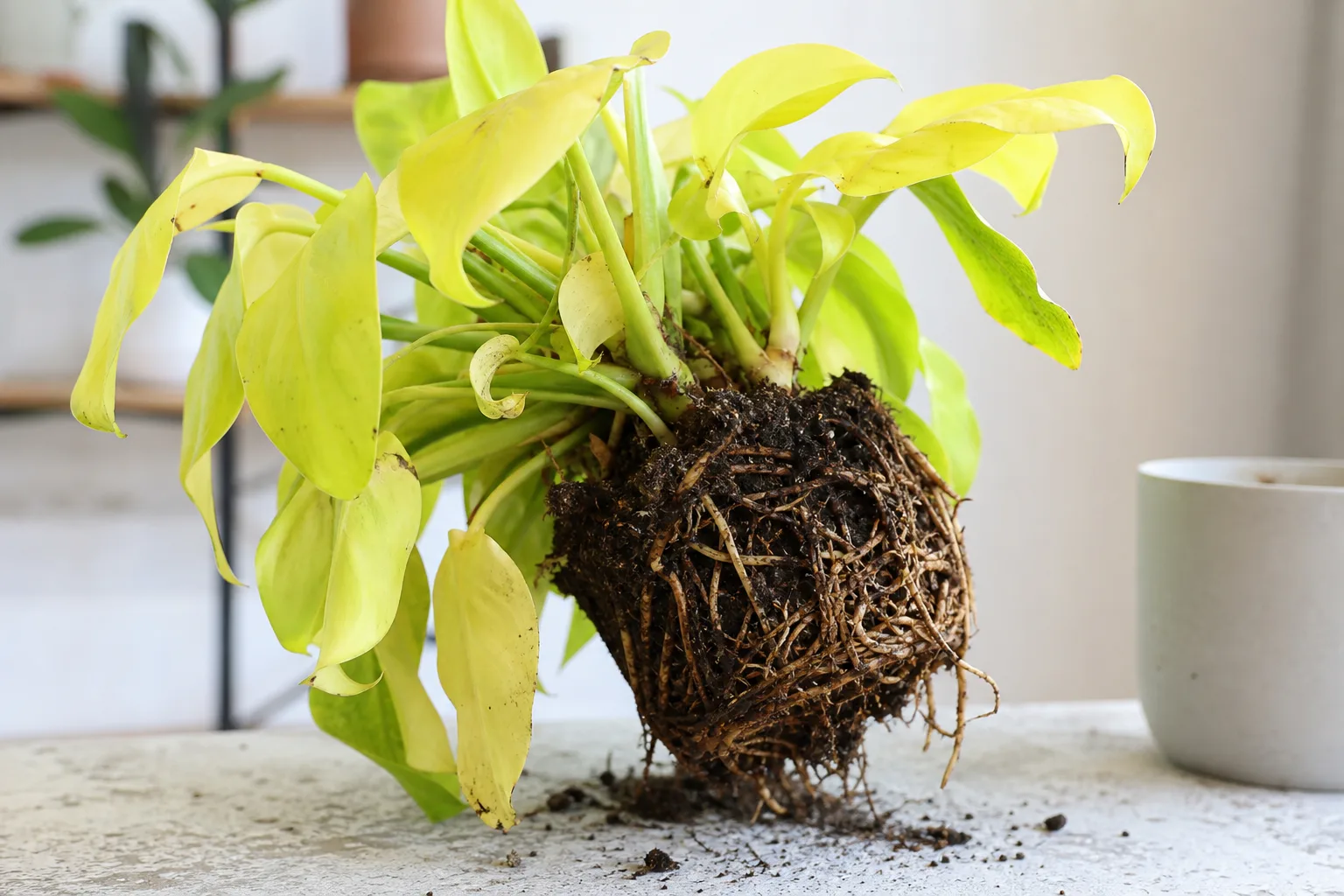
Root Rot on Philodendron Lemon Lime: Causes, Checks & Fixes
This guide covers root rot on Philodendron Lemon Lime. See also the general Root Rot guide, watering, and light pages for this plant.
Root Rot on Philodendron Lemon Lime: Causes, Checks & Fixes
Quick answer
Root rot on Philodendron hederaceum ‘Lemon Lime’ is root tissue dying from chronically wet, oxygen-poor soil-not a mystery fungus you can spray away. The cultivar’s bright chartreuse leaves can mask early failure: you may notice dull yellow-green limp vines while the pot still feels heavy and damp. If soil smells sour or nodes feel soft when you press them, stop all watering and unpot today-do not wait for another dry-down cycle.
First step: unpot and inspect roots. Trim every brown, translucent, or mushy section, let cut surfaces air-dry for several hours, then repot into fresh perlite-amended mix sized to the remaining root mass-not the full trailing vine length.
| Situation | Root inspection | First action | Use this page? |
|---|---|---|---|
| Wet heavy pot, firm pale roots, no sour smell | Not needed yet | Dry down 3–5 cm, fix rhythm | No - overwatering guide |
| Wet pot, dull chartreuse, limp vines | Optional if decline continues | Stop watering, check drainage | Start overwatering; return here if roots turn mushy |
| Sour smell, brown mushy roots, soft nodes | Required | Unpot, trim, repot, propagate backup | Yes - this guide |
When to use this page vs. overwatering
The overwatering guide covers early wet-soil rescue when roots are still firm and pale-you stop watering until the top 3–5 cm (about 1–2 in.) dries and correct your rhythm. This page is for confirmed root rot: you have inspected roots and found brown, translucent, or mushy tissue, often with sour-smelling mix and softening at stem nodes.
If you are unsure, unpot once. Firm pale roots with a dry-down fix point to overwatering. Mushy roots with a sour odor point here. The watering guide sets normal soak-and-drain care; use these problem pages when symptoms appear.
What root rot looks like on Philodendron Lemon Lime
Above ground, rot hides behind thirst signals. Chartreuse leaves turn dull yellow-green and go limp even though the pot feels heavy-that mismatch is the clue. Wilting with wet soil means damaged roots cannot take up water, not drought. Thin chartreuse foliage loses turgor faster than darker heartleaf cultivars, so collapse can look sudden.
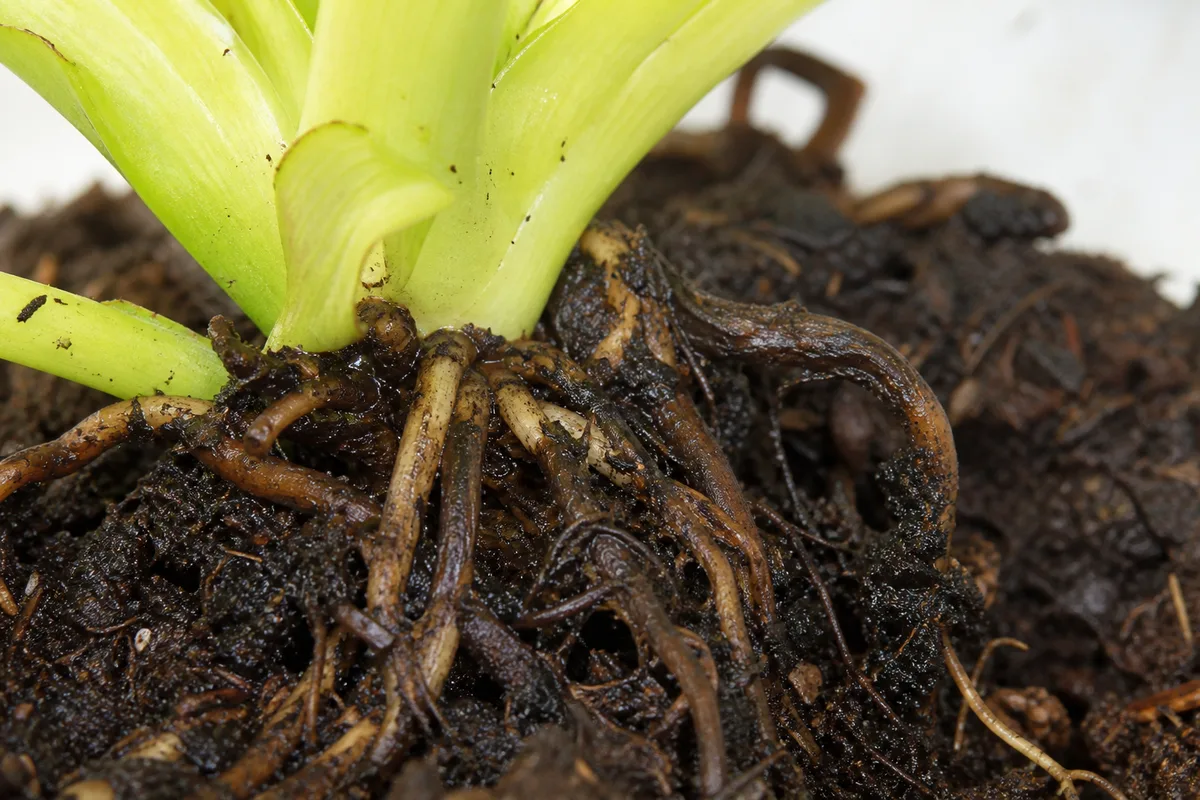
Root Rot symptoms on Philodendron Lemon Lime - compare with healthy tissue on the same plant.
Early signs that overlap with overwatering:
- Soil damp on the surface days after watering
- Sour or swampy odor from drainage holes
- Soft, collapsing petioles at soil level or nodes
- New growth stalling or emerging already pale
- Yellow lower leaves spreading while the pot stays wet
Advanced rot on Lemon Lime shows soft stems at nodes where leaves meet the vine. Because this trailing heartleaf philodendron roots easily at nodes, decay can climb quickly from wet soil into stem tissue. Fungus gnats often swarm persistently wet pots-a secondary signal that roots may already be failing.
Below ground, healthy roots are firm and white or tan. Rotted roots are slimy, brown, or translucent and pull away when rinsed. Clemson Extension notes that root rot usually results from soil that does not drain quickly or overly frequent watering-both common on fast-growing trailing cultivars in oversized peat-heavy pots.
Why Philodendron Lemon Lime gets root rot
Lemon Lime is a rapidly growing vine that prefers evenly moist-not saturated-soil. NC State lists rapid growth on heartleaf philodendron indoors with good drainage; owners often match that vigor with a summer watering rhythm that stays excessive through dim winter months when transpiration drops.
Heartleaf philodendrons store some water in their stems , which is why limp chartreuse vines on already wet mix signal root failure, not thirst-damaged roots cannot take up water even when soil is moist. Watering again deepens the problem.
Common setup mistakes:
- Calendar watering without checking whether the top 3–5 cm (about 1–2 in.) has dried
- Oversized pots that hold extra wet soil the root ball cannot use
- Dense peaty mix without perlite that stays saturated at depth-see the soil guide
- Blocked drainage holes or standing saucer water
- Low light slowing water use while mix stays damp-see not enough light when chartreuse fades in dim corners
Missouri Botanical Garden advises watering regularly in growth season but reducing in fall to late winter-a rhythm many owners miss, leaving mix soggy through cooler months.
How to confirm root rot (5-step inspection)
- Moisture history - Has the top 3–5 cm (about 1–2 in.) stayed wet for five or more days? Lift the pot; a heavy cool-damp container days after watering supports chronic saturation.
- Wilting vs. moisture - Limp chartreuse vines on wet mix strongly suggest root dysfunction. Wilting with moist soil often signals root damage, not thirst-do not add water.
- Smell - Sour or rotten odor from mix supports rot over simple underwatering (dry dusty mix, light pot).
- Stem nodes - Press where leaves meet the vine. Firm is good; wet and soft means rot is advancing.
- Root inspection - Slide the plant out. Compare firm pale roots with brown mushy sections. Any significant mush confirms rot and triggers trim-and-repot-not dry-down alone.
First fix for Philodendron Lemon Lime
Stop watering, unpot, and trim all mushy roots-then repot into fresh draining mix sized to the remaining root mass.
Do not wait for another dry-down cycle when roots are already brown and slimy. Slide the plant out, rinse away saturated old mix, and cut soft roots with clean scissors until only firm tissue remains. Let cut surfaces air-dry on paper towels for two to four hours. Repot at the same depth using standard potting mix with 20–25% perlite in a clean pot one size larger than the trimmed root ball-not the full trailing vine length.
Plants with partial rot may be salvaged by pruning out the rotted part. Wait seven days before the first cautious watering, then soak only when the top 3–5 cm (about 1–2 in.) has dried.
Step-by-step recovery
- Unpot and discard saturated, sour-smelling mix-do not reuse it.
- Rinse roots gently in lukewarm water to see firm vs. mushy tissue clearly.
- Trim decay with sterilized scissors; remove all brown, translucent, or slimy sections.
- Air-dry cut roots two to four hours so wounded tissue calluses slightly before repotting.
- Repot into fresh perlite-amended mix per the soil guide; choose a pot sized to roots, not vine length.
- Propagate backup cuttings if more than half the root mass is gone-take firm nodes with healthy chartreuse foliage and follow the propagation guide while the trimmed plant recovers.
Hold fertilizer until new growth appears. Place in bright indirect light per the light guide-not a dim corner while roots re-establish. Wear gloves when trimming; heartleaf philodendron contains calcium oxalate crystals toxic to pets and can irritate skin. Contact your veterinarian or ASPCA Animal Poison Control at (888) 426-4435 if a pet chews trimmed roots or foliage.
Recovery timeline
Mild rot - Firm stems, less than half the root mass removed: expect one new chartreuse leaf within two to three weeks in warm bright light. Judge success by fresh bright tips and predictable pot dry-down, not immediate vine length. Old dull leaves will not fully re-green.
Moderate rot - Major trim but firm nodes above soil: recovery may take four to six weeks before trailing growth resumes. Watch new nodes, not yellowed lower foliage.
Severe rot - Soft stem base climbing multiple nodes or crown failure: repot rescue often fails; stem cuttings are the realistic salvage path. Rooted cuttings may show new chartreuse tips in three to four weeks.
Escalate to propagation-first if decline continues two weeks after repot despite corrected light and dry-down.
Lookalike symptoms
| Pattern | Soil at 3–5 cm | Pot weight | Roots on inspection | Likely cause | Guide |
|---|---|---|---|---|---|
| Limp vines, dull chartreuse | Wet, cool-damp | Heavy | Firm white/tan | Early overwatering | Overwatering |
| Limp curled vines, crispy edges | Dusty dry | Very light | Firm, dry-looking | Underwatering | Underwatering |
| Chartreuse fade, wide node gaps | Moist, slow dry-down | Moderate | Firm | Low light + wet mix | Not enough light |
| Limp vines, sour smell, soft nodes | Wet | Heavy | Brown mushy | Root rot | This page |
| Sudden collapse, draft or heat | Variable | Variable | Usually firm unless secondary rot | Environmental wilt | Wilting |
What not to do
Do not keep watering because chartreuse vines look limp when soil is already wet-that deepens root failure. Do not fertilize a rotting plant; stressed roots cannot use nutrients. Do not repot into standard dense mix or an oversized decorative pot without drainage. Do not leave the pot in a full saucer after watering. Do not handle trimmed roots bare-handed if pets may access the work area-insoluble calcium oxalate crystals irritate mouths and skin on contact.
How to prevent root rot next time
Water when the top 1–2 inches of soil has dried-the same 3–5 cm check used throughout the watering guide. Bright indirect light helps Lemon Lime use water steadily so mix dries on schedule; dim corners need fewer drinks, not more patience with a heavy pot.
Use perlite-amended mix, ensure drainage holes flow freely, and empty saucers within 30 minutes of every soak. Refresh peat-heavy mix every 12–24 months before it compacts and holds stale moisture at the center. Reduce watering frequency in winter when trailing growth slows.
When to worry and propagation salvage
Act immediately when nodes soften, soil smells sour, yellowing reaches new growth while the pot stays wet, or vines collapse within days of wilting. Wet anaerobic conditions rot roots fast on trailing vines-the farthest chartreuse leaves fail first while the base still looks partly green.
If more than half the root mass is mushy or the crown turns soft, take backup cuttings before repot rescue fails:
- Choose firm stem sections with at least one healthy node above any soft tissue.
- Cut with sterilized scissors; remove lower leaves that would sit below the water line.
- Place in clean water with the node submerged; change water every few days.
- Pot rooted cuttings into perlite-amended mix once roots reach 5–8 cm-full steps in the propagation guide.
Brief yellowing on one old lower leaf with firm stems and neutral soil is rarely root rot. Discard the pot only if the crown shrivels, stems turn brittle brown throughout, and no nodes activate after four to six weeks.
Related Philodendron Lemon Lime guides
- Philodendron Lemon Lime overview - hub page for the full care cluster
- Philodendron Lemon Lime watering - normal dry-down rhythm and seasonal intervals
- Overwatering on Philodendron Lemon Lime - early wet-soil rescue before mushy roots
- Underwatering on Philodendron Lemon Lime - dry-pot lookalike when limp vines confuse diagnosis
- Yellow leaves on Philodendron Lemon Lime - full yellowing pattern guide
- Wilting on Philodendron Lemon Lime - collapse from drafts, heat, and pests
- Not enough light on Philodendron Lemon Lime - dim-corner slow dry-down
- Philodendron Lemon Lime propagation - stem cutting salvage when roots fail
- Philodendron Lemon Lime soil - perlite-amended mix that prevents chronic wet roots
- Fungus gnats on Philodendron Lemon Lime - secondary wet-soil signal
- Root rot on Philodendron Brasil - same P. hederaceum species-complex reference
Conclusion
Philodendron Lemon Lime root rot begins with waterlogged mix, not mysterious wilt. Confirm by inspecting roots-firm pale tissue with a dry-down fix means overwatering; brown mushy tissue means trim, repot, and possibly propagate. Prevent recurrence with drainage, bright indirect light, and watering only when the top 3–5 cm (about 1–2 in.) dries. One new crisp chartreuse leaf and predictable pot weight are the signs your Lemon Lime is back on track.