Best Soil for Philodendron Lemon Lime: Mix, Drainage &
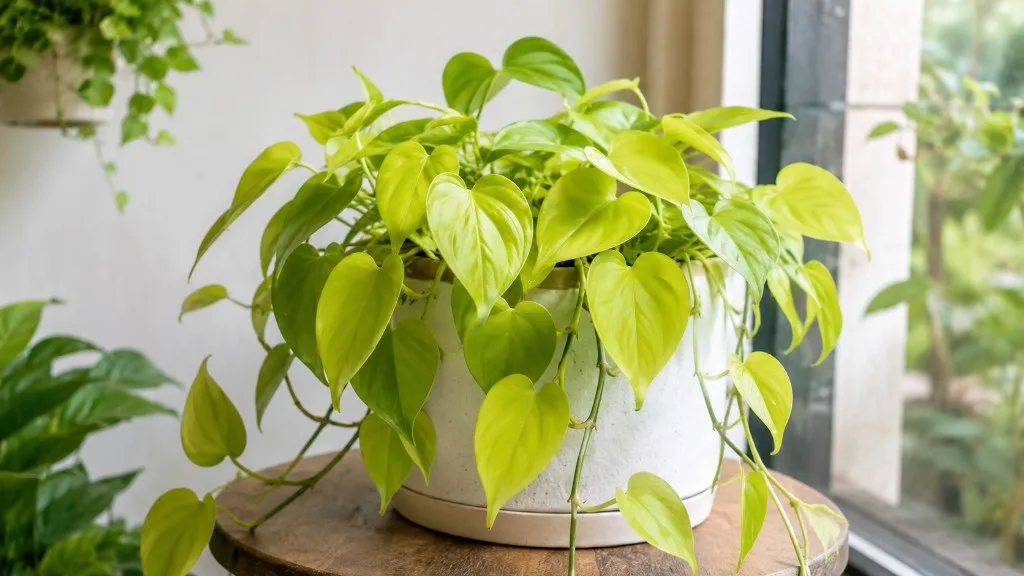
Best Soil for Philodendron Lemon Lime: Mix, Drainage & Repotting
Best Soil for Philodendron Lemon Lime: Mix, Drainage & Repotting
Philodendron Lemon Lime (Philodendron hederaceum ‘Lemon Lime’) is sold as a forgiving chartreuse trailer, but the fastest way to kill it indoors is not forgetting to water - it is compressing the root zone with heavy, airless peat and then watering on schedule anyway. Lemon Lime is a tropical evergreen vine in the Araceae family whose roots evolved to grip bark and leaf litter in filtered understory light, not to sit in dense, waterlogged potting soil. When mix structure fails, you see the same symptoms growers blame on watering: yellow lower leaves, limp stems on heavy wet pots, chartreuse color dulling toward plain green in dim corners, and eventually root rot. Soil is the system that decides how much oxygen, moisture, and recovery time roots get after every soak.
UF/IFAS Gardening Solutions recommends a lightweight, well-drained potting medium for heartleaf philodendron so the plant does not become too wet or waterlogged. Iowa State Extension advises growing philodendrons in all-purpose potting soil in containers that support the plant without toppling, while keeping plants evenly moist but not wet and never sitting in soggy soil or saucer water. For Lemon Lime specifically, that translates to a peat-based indoor blend amended with 20–25% perlite as the reliable baseline, with optional orchid bark when you want chunkier structure for fast-growing trailing root mass.
This guide covers why airy mix matters for this cultivar, the core perlite-amended recipe, optional chunky aroid upgrades, DIY and commercial options, drainage testing, pot sizing for trailing vines, pH and salt flush protocol, when to refresh compacted peat, a repot summary with link to the full repotting guide, hanging-basket vs shelf-pot differences, common mistakes, and wet-mix troubleshooting. For how often to water once mix is right, see the Lemon Lime watering guide. For light level tied to dry-down speed, see light guidance. For the full species picture, start with the overview.
Why Lemon Lime Needs Airy, Well-Draining Mix (Not Heavy Peat)
Heartleaf philodendrons are climbing or vining aroids native from Mexico to tropical America. In habitat, roots encounter loose organic debris, bark crevices, and rapid drainage after rain - not a solid block of saturated peat. Indoors, standard bagged potting mix alone often compacts within months under repeated watering, especially in plastic hanging baskets where trailing biomass adds weight and the mix settles.
Lemon Lime amplifies the drainage problem because it is a fast-growing trailing cultivar with thin chartreuse leaves that show stress quickly. A root zone that holds water five to seven days after a single summer soak in bright light is usually a mix and pot-volume problem, not a calendar watering problem. When wet peat sits in a dim corner, chartreuse color often dulls toward green while the surface still looks acceptable - a pattern many growers misread as a light issue alone when the soil has not dried through the column in weeks.
NC State Extension lists philodendron cultural requirements as moist, well-drained soil high in organic matter with good drainage and acidic pH (below 6.0) in the genus profile. That combination - organic matter for moisture retention, structure for oxygen - is exactly what perlite and optional bark amendments provide. Heavy peat without amendment satisfies the “organic matter” half while failing the “well-drained” half within one growing season.
The Core Mix: Standard Potting Mix + Perlite
The baseline Lemon Lime mix that works in most homes is simple: quality indoor potting soil plus 20–25% perlite by volume, blended thoroughly before planting. Perlite is a sterile, lightweight volcanic rock that increases air space and improves drainage without adding weight the way sand can in small hanging baskets.
For a 6-inch (15 cm) pot refresh, measure roughly 3 parts potting mix to 1 part perlite - that lands near 25% perlite. For a 4-inch (10 cm) starter pot, the same ratio applies; do not skip perlite because the pot is small. Small pots dry faster, but they also re-wet quickly if the mix is pure peat with no pore structure.
What “Standard Potting Mix” Actually Means
“Standard potting mix” or “all-purpose indoor potting soil” means a commercial peat- or coir-based blend formulated for container plants - not garden soil, not topsoil, and not seed-starting mix alone. Clemson HGIC notes that garden soils contain too many bacteria and poor structure for containers; native soil must be amended heavily or avoided entirely indoors. Iowa State Extension specifically recommends all-purpose potting soil for philodendrons.
Read the bag label. You want a mix listing peat moss or coconut coir as the base, often with lime for pH buffering and a starter fertilizer. Avoid products labeled “moisture control” or heavy water-retention blends for Lemon Lime - they fight the dry-down cycle this trailing philodendron needs between soaks. If the only option at your shop is dense peat, plan to add 25–30% perlite at home.
Coco Coir vs. Peat: What Changes for Lemon Lime
Both peat moss and coconut coir work as the organic base when amended with perlite. Clemson HGIC notes coir has become a popular alternative to peat in indoor blends. Coir often holds moisture slightly longer and rewets more easily after a dry spell - useful in warm bright rooms where hanging baskets dry in three to four days, but a liability in dim winter corners where the pot already stays heavy ten or more days between checks. Peat can become hydrophobic after repeated drought cycles, repelling water at the surface while the center stays oddly dry; coir is less prone to that behavior but still compacts without perlite.
Neither base replaces drainage amendment. Whether your bag says peat or coir, blend in 20–25% perlite before potting Lemon Lime. If you switch from a peat-based nursery pot to a coir-heavy home mix at repot, expect the first two weeks to dry on a slightly different schedule - log pot weight daily until the rhythm stabilizes rather than reverting to a calendar.
Optional Upgrade: Chunky Aroid Mix with Orchid Bark
When Lemon Lime fills a hanging basket within a year, or when mix stays wet more than four days after watering in summer bright light, upgrade from perlite-only to a chunkier aroid blend. Fine roots of P. hederaceum benefit from irregular air pockets the way they would around bark chips in nature.
Clemson HGIC publishes a Cornell Epiphytic Mix - one-third finely ground fir bark, one-third shredded sphagnum peat, one-third medium perlite - listed as suitable for philodendron among other foliage plants. That three-way balance is the template for chunky upgrades: bark for structure, peat or coir for moisture, perlite for drainage.
A practical Lemon Lime chunky tier: 50% indoor potting mix, 25% perlite, 25% orchid bark (medium grade). In very bright, warm rooms where hanging baskets dry in three to four days, bark helps prevent the “water runs down the inside wall” problem that happens when peat shrinks and pulls away from the pot rim. In dim winter rooms, reduce bark to 15% and keep perlite at 25% so the mix does not dry so fast that roots desiccate between infrequent winter soaks.
DIY Recipe Table: Basic vs. Chunky Mix
| Component | Basic Lemon Lime mix | Chunky aroid upgrade | Notes |
|---|---|---|---|
| Indoor potting mix | 75% (3 parts) | 50% (2 parts) | Peat- or coir-based commercial blend |
| Perlite | 25% (1 part) | 25% (1 part) | Increases drainage and air space |
| Orchid bark | - | 25% (1 part) | Medium fir bark; optional for hangers |
| Best for | Shelf pots, beginners, 4–6 inch pots | Hanging baskets, fast trailers, warm bright rooms | Adjust bark down in dim/cool rooms |
UF/IFAS foliage plant recipes offer related starting points: 2 parts peat, 1 part perlite, 1 part coarse sand, or 1 part peat, 1 part pine bark, 1 part coarse sand. Lemon Lime indoors rarely needs sand if perlite is present; sand adds weight that works against hanging-basket practicality.
Worked example: Repotting a 15 cm hanging basket Lemon Lime that has been in the same peat-heavy mix for 14 months. Blend 2 liters potting mix + 0.5 liter perlite + 0.5 liter orchid bark. Moisten lightly before filling so peat does not repel the first watering. After planting, water until runoff clears, time drainage - water should exit the bottom within 30–60 seconds of steady pouring, not pool on the surface for minutes.
Commercial Mix Options and What to Amend
Store-bought tropical, foliage, or aroid houseplant mixes can work for Lemon Lime if you verify drainage. Squeeze a handful of moist mix - it should crumble apart when you open your hand, not form a tight ball that holds shape like clay.
If the commercial mix feels dense or stays in a wet clump, amend with 20–30% perlite before use regardless of what the bag claims. Premium aroid blends with pre-mixed bark and charcoal are appropriate when you want convenience; still confirm the pot has drainage holes and that dry-down in your room matches the watering guide expectations.
Do not use straight cactus or succulent mix for long-term Lemon Lime culture - it drains too fast and holds too little moisture for a tropical vine that prefers evenly moist but not wet conditions. A cactus blend can work as a minor amendment (10–15%) to open structure, not as the sole medium. Straight garden soil is worse: poor drainage, compaction, and pathogen risk in closed indoor pots.
Drainage Speed: How to Test Your Mix
Drainage is not a vibe - it is measurable behavior. After a full watering, excess water should leave the pot freely, the surface should accept the next pour without pooling for more than a few seconds, and the mix should reach a partial dry-down at the top within the interval your watering routine expects.
Missouri Botanical Garden notes that root rot can occur in overly moist soils for P. hederaceum - the failure mode you are testing against. Slow drainage in summer bright light usually means compacted peat, insufficient perlite, an oversized pot with unused wet volume, or a cachepot trapping runoff.
The One-Minute Drainage Check
Water the pot thoroughly until water runs from the drainage holes. Start a timer. Within 60 seconds, runoff should slow to a drip, not continue as a steady stream. Lift the pot - it should feel heavy, but when you press the top 3–5 cm, the mix should not squish like wet sponge mud. If water sits on the surface or runs down between the root ball and pot wall without wetting the center, the mix may be hydrophobic from peat drought cycles; break the crust with a chopstick, water in two passes, and plan a full refresh at the next repot.
Pot Choice and Mix Volume for Trailing Lemon Lime
Pot geometry changes how mix behaves as much as ingredients do. Iowa State Extension notes philodendrons do well slightly pot-bound because soil dries more quickly between waterings - a useful principle for Lemon Lime hangers that otherwise stay wet too long in oversized containers.
Choose a pot only one size larger than the root ball at repot - about 2–5 cm wider in diameter. An oversized decorative pot filled with fresh mix holds a large volume of moisture the root system cannot use for months, creating a permanent wet zone at the bottom. Match pot depth to root mass, not trailing stem length; a wide shallow bowl dries differently than a deep nursery pot.
Every container needs a drainage hole. NC State lists good drainage among cultural requirements for heartleaf philodendron. Decorative pots without holes are display-only; grow in a nursery pot that lifts out, or drill holes. Do not rely on a layer of stones at the bottom - that creates a perched water table that keeps the root zone wetter, not drier, than uniform mix would.
pH, Minerals, and When to Flush the Mix
Philodendron genus culture per NC State prefers acidic soil (pH below 6.0) with high organic matter. Clemson HGIC recommends adjusting Cornell-style foliage mixes to about pH 6.0 with dolomitic limestone when preparing from scratch. Commercial peat-based potting soils are typically pre-buffered into the slightly acidic range (~5.5–6.5) - adequate for Lemon Lime without hobbyist pH testing unless you are mixing from raw components.
More practical indoors than pH strips is watching salt buildup. White crust on the soil surface, leaf tip burn on new chartreuse growth, and slowed drainage after months of fertilizer can signal accumulated salts. Flush the mix by watering slowly with plain water until 2–3 pot volumes run through and exit the drainage hole, emptying the saucer each time. Repeat every few months during active growth if you fertilize regularly, or refresh mix entirely at repotting.
When to Refresh or Replace Soil
Peat-based mix has a finite life indoors. Over 12–18 months, repeated wet-dry cycles break down structure, fine roots fill pore spaces, and the blend compacts even if you watered correctly. Signs it is time to refresh:
- Water runs straight through the pot in seconds without wetting the root ball (channeling)
- Surface stays wet for many days while lower leaves yellow
- Mix smells sour or swampy despite correct watering
- White mineral crust thickens on the surface
- Trailing growth stalls in bright light with regular feeding
Top-dressing - scraping and replacing the top 3–5 cm - helps mid-season but does not fix a compacted core. Full refresh at repot is the reliable fix. Lemon Lime typically needs this every one to two years when root mass fills the pot, matching Iowa State’s repot guidance for overcrowded philodendrons.
Repotting Into Fresh Mix (Summary)
When roots circle the bottom, water channels through without soaking, or mix smells sour, it is time to repot into fresh blend. The full step-by-step - timing, pot sizing, root inspection, post-repot watering - lives in the dedicated Philodendron Lemon Lime repotting guide. Soil-specific repot rules:
- Blend fresh mix (basic or chunky tier) before you unpot.
- Tease circling roots; trim mushy tissue if you find rot.
- Use a pot one size up with drainage holes.
- Water once to settle, drain fully, then wait for top 3–5 cm dry before the next soak.
- Hold fertilizer for four weeks while roots establish.
Wear gloves if sap irritates your skin. Philodendron contains calcium oxalate crystals toxic to pets - bag old mix and wash hands after handling roots and soil during repot.
Soil for Propagation Cuttings
Stem cuttings rooted in water or moss still move into the same perlite-amended blend once roots are several centimeters long. Iowa State Extension notes trailing philodendrons root readily in water or perlite, then pot into regular potting soil. Use a small 10 cm pot with the basic 75/25 mix for fresh cuttings - oversized containers stay wet around a tiny root system. Full propagation timing and water-root transfer steps are in the Lemon Lime propagation guide.
Hanging Baskets vs. Shelf Pots: Soil Considerations
The same cultivar dries differently by container type. Hanging baskets expose more pot surface to air, dry faster in warm bright rooms, and often benefit from the chunky bark tier so structure survives a full summer of fast trailing growth. A 15 cm plastic hanger in July may need the 50/25/25 blend; watch for mid-day wilt on genuinely dry mix versus wilt on wet mix (overwatering paradox).
Shelf or tabletop pots hold moisture longer, especially wide ceramic pots in dim light. The basic 75/25 perlite mix is usually sufficient; avoid oversized pots “for stability” that create unused wet volume. Elevate pots slightly in saucers so they never sit in drained water.
Worked comparison: Same Lemon Lime cutting grown one year in a 15 cm hanger vs 18 cm shelf pot in the same room. The hanger mix compacts faster from gravity and frequent summer watering; plan bark upgrade at year one. The shelf pot may stay wet 2–3 days longer after each soak - reduce perlite only if you confirm chronic dry stress at depth, not surface color alone.
Common Philodendron Lemon Lime Soil Mistakes
Using garden soil or pure peat. Garden soil compacts and carries pathogens. Pure peat holds too much water without perlite or bark structure. Both set up root rot in months.
Oversized pots with fresh heavy mix. Roots explore only a fraction of the volume while the rest stays saturated. One size up at repot is the safe rule.
Stones in the bottom of the pot. Does not improve drainage; raises the wet zone into root contact. Uniform amended mix throughout the pot works better.
Ignoring cachepots. Decorative outer shells hide standing water. Always empty runoff within thirty minutes.
Repotting into dry compacted mix without loosening roots. Old peat root balls can stay hydrophobic inside new mix. Tease the outer third of the root ball and moisten new blend before filling.
Changing mix, pot, light, and watering simultaneously after purchase. Quarantine new Lemon Lime in its nursery mix for the first month unless drainage is clearly failing; adjust one variable at a time per the overview settling-in guidance.
Troubleshooting: Wet Mix, Sour Smell, or Slow Drainage
| Symptom | Likely soil cause | First fix |
|---|---|---|
| Water pools on surface | Hydrophobic compacted peat | Break crust, water in passes, plan repot |
| Pot heavy 10+ days after soak | Too dense / too large pot / low light | Stop watering, improve light, amend or repot |
| Sour smell | Anaerobic root zone | Unpot, inspect roots, repot fresh mix |
| Chartreuse dulling, wet mix | Wet peat + insufficient light | Improve light before adding bark that dries faster |
| Fungus gnats | Chronic surface moisture | Let top dry, add perlite, avoid overwatering |
If several rows match at once, treat it as overwatering and root-zone failure, not a fertilizer deficiency. Unpot only when you are ready to trim rot and repot immediately - roots exposed to air dry out quickly.
Know Your Plant: Trailing Lemon Lime Root Habit
Philodendron hederaceum ‘Lemon Lime’ is a trailing or climbing vine typically reaching several feet indoors on cascading stems. NC State lists ‘Lemon Lime’ among cultivars with bright yellow to chartreuse foliage and notes the species produces aerial roots that can root into soil or climb supports. That growth habit means root mass spreads horizontally and along the soil surface faster than many upright houseplants - compressing the upper profile starves fine roots even when the bottom of the pot is still wet.
Missouri Botanical Garden recommends a soil-based potting mix indoors with bright indirect light and regular watering in the growing season. Soil success for Lemon Lime is not about finding a magic branded product; it is about matching epiphytic root biology to container physics: airy structure, predictable drainage, refresh before peat collapses, and pot volume proportional to roots - not stem length.
Compaction Check and Root-Zone Smell Test
Once a month, press a finger into the top 5 cm - if the mix feels rock-hard and resists water, compaction is advanced. Lift the pot after a normal watering cycle; if weight stays high for two weeks in summer bright light, pore space is likely gone. Smell the drainage hole area: earthy is fine; sour or swampy is not. Healthy white to tan roots at repot confirm mix worked; brown slimy roots mean the blend or watering rhythm failed - see root rot recovery.
Conclusion
Philodendron Lemon Lime thrives in airy, well-draining peat- or coir-based mix amended with 20–25% perlite, upgraded with orchid bark when fast trailing growth in hanging baskets outpaces a basic blend. Test drainage after every repot, size pots to root mass not stem length, refresh mix every one to two years or when peat compacts and smells sour, and link soil fixes to watering and light before chasing fertilizer. The full repotting walkthrough covers timing and technique; keep root rot, overwatering, and yellow leaves guides open when wet mix symptoms outlast a single corrected soak. Get the blend right once and Lemon Lime rewards you with dense, glowing chartreuse trails - get it wrong and no watering calendar will save the roots.
When to use this page vs other Philodendron Lemon Lime guides
- Philodendron Lemon Lime overview - Start here for whole-plant context before deep-diving this topic.
- Philodendron Lemon Lime problems hub - Jump to symptom-specific fix guides when this care topic does not resolve the issue.
- Root Rot on Philodendron Lemon Lime - Escalate here when soil adjustments are not enough.