Brown Tips on Philodendron Lemon Lime: Causes, Checks &
Quick answer
Brown tips on Philodendron Lemon Lime are usually moisture-stress damage from dry air, uneven watering, or salt buildup. First fix: confirm roots are firm, then raise local humidity and flush excess salts if you see crust on the mix.
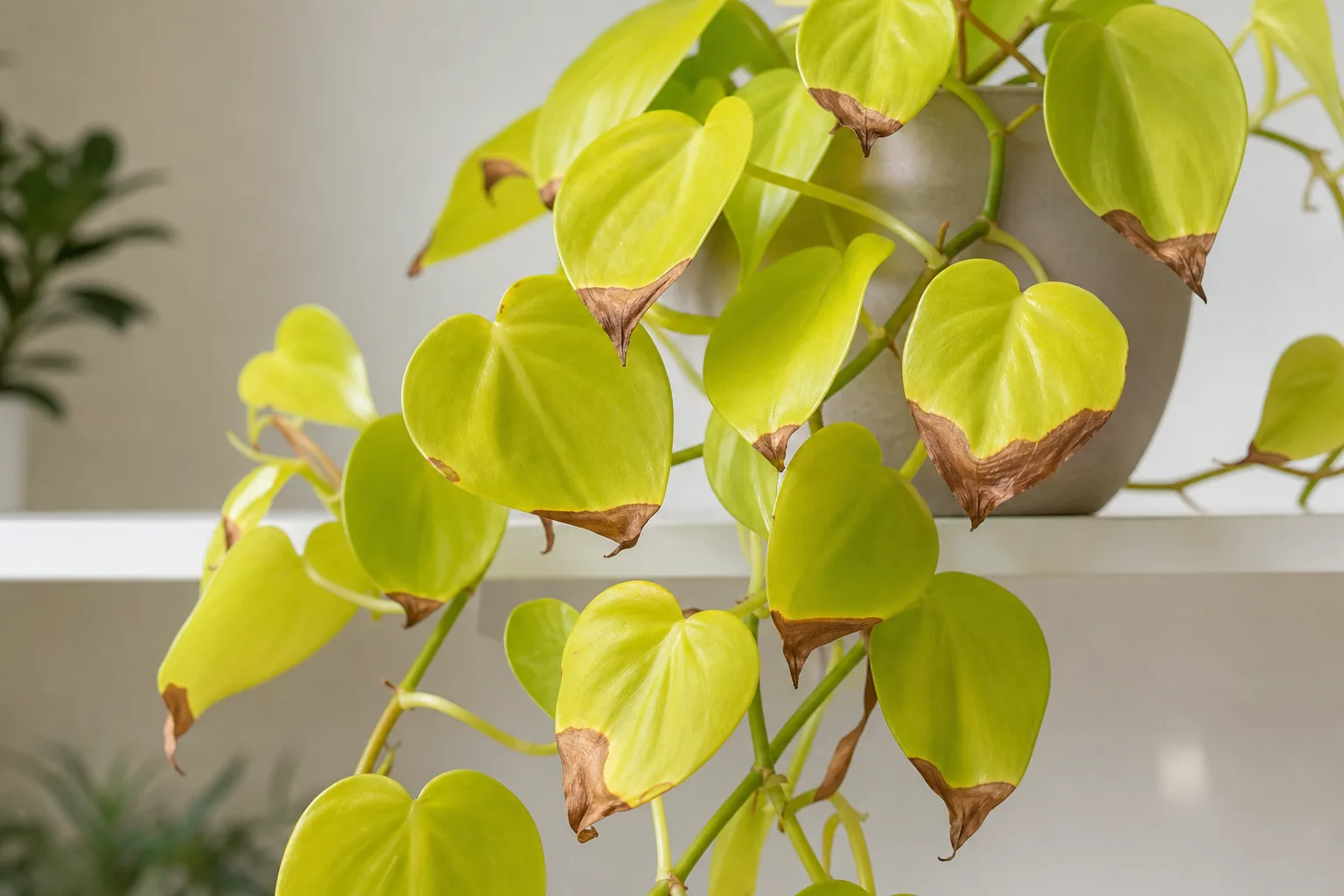
Brown Tips on Philodendron Lemon Lime: Causes, Checks & Fixes
This guide covers brown tips on Philodendron Lemon Lime. See also the general Brown Tips guide, watering, and light pages for this plant.
Brown Tips on Philodendron Lemon Lime: Causes, Checks & Fixes
Quick answer
Brown tips on Philodendron Lemon Lime usually mean moisture stress, not infection. The cultivar’s thin, bright leaves lose water faster at the margins, so the damage shows up as crisp brown edges before the center of the blade declines. This matches NC State’s guidance that Philodendron hederaceum tolerates some dry indoor air but still prefers medium relative humidity and moist soil.
Your first move is simple: confirm the roots are still firm, then stabilize humidity and watering. If you also see a white crust on the soil or pot rim, treat salt buildup as part of the problem and leach the potting mix.
What brown tips look like on Philodendron Lemon Lime
On Lemon Lime, true tip burn is usually:
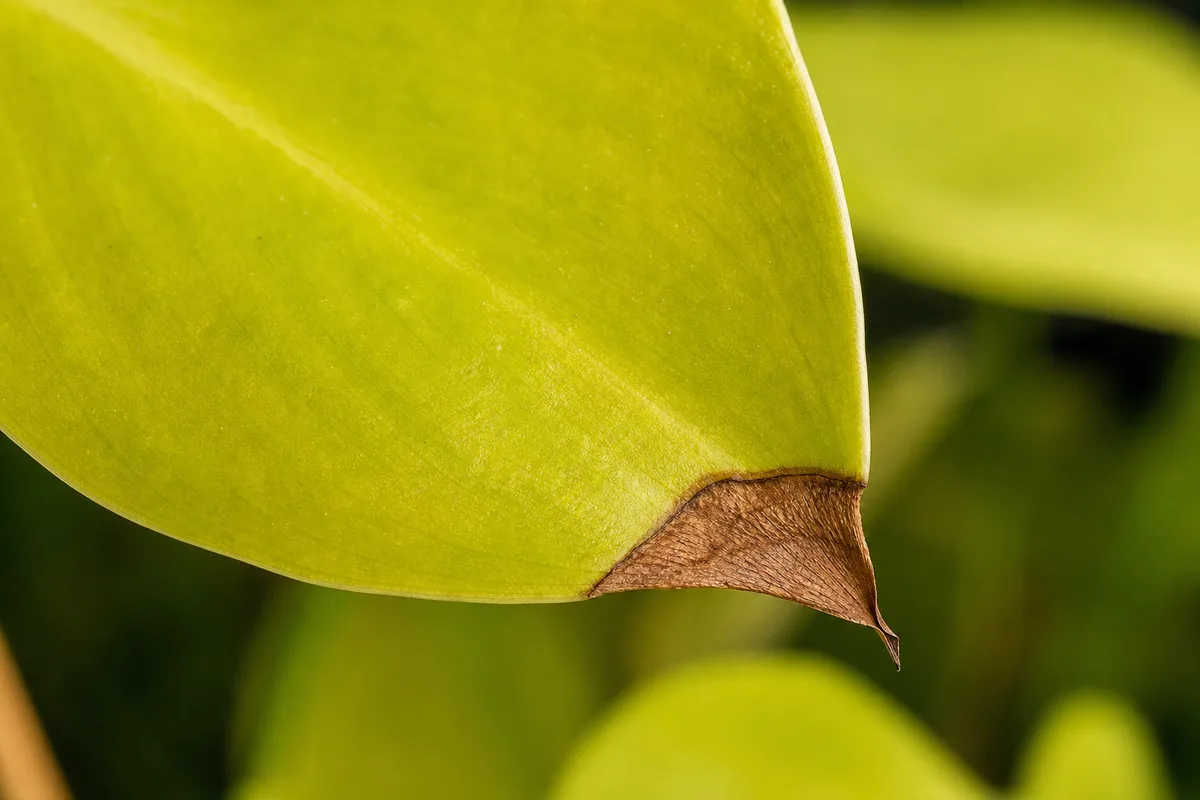
Brown Tips symptoms on Philodendron Lemon Lime - compare with healthy tissue on the same plant.
- Dry and crisp at the tip or margin, with the inner leaf staying mostly chartreuse
- Worse on older trailing leaves farthest from the pot
- More obvious after heater or AC airflow
- Not accompanied by mushy stems or spreading wet lesions
Do not confuse this with normal young-leaf bronze tinting. NC State notes new growth can emerge with bronze tones, which is different from papery brown necrosis at the edge.
Why Philodendron Lemon Lime gets brown tips
1) Dry indoor air plus warm airflow
Brown margins often spike in winter or near HVAC vents. RHS notes that brown tips can reflect too dry an atmosphere, especially when heat and low humidity overlap.
2) Inconsistent watering cycles
Repeated dry-down to bone-dry followed by heavy soaking can injure fine root function and cause distal leaf-edge damage. UC IPM includes overly dry or overly wet soil among common causes of brown tips and margins.
3) Fertilizer or mineral salt accumulation
If tips worsened after feeding, suspect salts. Nebraska Extension links brown leaf tips and white crust deposits to fertilizer salt buildup and recommends periodic leaching.
4) Heat/light stress at the leaf surface
Even if Lemon Lime tolerates medium light, prolonged hot glass exposure can scorch delicate margins. Missouri Botanical Garden advises bright indirect light and avoiding full sun.
How to confirm the cause (7-step check)
- Read humidity at leaf level. If it is regularly below the mid-40s, humidity stress is likely.
- Check watering pattern, not just today’s moisture. Tip burn rises when the mix swings between very dry and saturated.
- Inspect for salt crust. White residue on soil or pot rim supports mineral/fertilizer accumulation.
- Review feeding timeline. New tip burn within a few days of feeding often points to excess salts.
- Inspect roots if symptoms escalate. Healthy roots are firm and pale; soft dark roots suggest rot risk.
- Check placement. Nearby vents, radiators, or hot windows accelerate transpiration stress.
- Rule out pests. Fine stippling/webbing indicates a different workflow than humidity-only correction.
First fix for Philodendron Lemon Lime
Take one first action before stacking treatments: stabilize the root-zone moisture pattern.
Water only when the top 3-5 cm feels dry, then water thoroughly until runoff drains. Keep the pot out of standing runoff water. This follows houseplant guidance to avoid persistent saturation and also avoid long drought gaps, both of which UC IPM associates with brown tip symptoms in indoor plants.
If you confirm salt crust, perform a leach the same day. Nebraska Extension recommends using roughly twice the pot volume in water to flush excess salts and allowing complete drainage.
Step-by-step recovery
- Move the plant away from direct heater/AC airflow and harsh afternoon sun.
- Keep humidity more stable (target roughly 45-60% around the vine).
- Re-establish a consistent water rhythm based on soil feel, not calendar dates.
- If salt buildup is present, leach thoroughly and pause fertilizer for about 4 weeks.
- Trim dead brown tissue only after conditions are corrected.
- Resume feeding lightly only when you see active, clean new growth.
Missouri Botanical Garden also notes to reduce watering in fall to late winter, which helps prevent wet-root stress while indoor growth slows.
Recovery timeline
- First 7-10 days: Existing brown tips remain brown; progression should slow.
- 2-4 weeks: New leaves should emerge with cleaner edges if moisture stress is corrected.
- 4-8 weeks: The plant regains steady growth if roots stayed healthy and salts were reduced.
Judge recovery by new growth quality, not by old damaged leaves.
Lookalike problems to rule out
Brown tips from humidity/salt stress
- Crisp edge necrosis
- Leaf center stays mostly firm
- Stems remain firm
Root-rot pattern
- Yellowing plus limp growth
- Sour mix smell
- Soft/dark roots
Sun/heat scorch pattern
- Localized scorched patches facing window side
- Faster decline after direct hot exposure
What not to do
- Do not water more often without checking soil depth first.
- Do not keep fertilizing through active tip burn.
- Do not leave runoff in saucers/cache pots.
- Do not assume all brown tips are humidity; check roots and salt clues first.
How this page differs from a low-humidity-only guide
This page is a multi-cause diagnostic hub for Lemon Lime brown tips. If your humidity is already stable but browning continues, focus next on watering inconsistency, salt accumulation, root health, or light/heat exposure instead of adding more humidity alone.
How to prevent brown tips next time
- Keep light bright and indirect.
- Maintain steady root moisture with full drainage.
- Leach the pot periodically if you fertilize regularly.
- Reduce fertilizer strength/frequency when growth slows.
- Keep airflow gentle and avoid prolonged dry hot drafts.
If you share your home with pets, note that ASPCA lists heartleaf philodendron as toxic to cats and dogs due to insoluble calcium oxalates. Dispose of trimmed leaves where pets cannot chew them.
When to worry
Seek urgent troubleshooting if you see rapid yellowing, soft stems, sour mix odor, or collapse despite moist soil. Those signs suggest more than simple edge desiccation and require root-level intervention.
Conclusion
Brown tips on Philodendron Lemon Lime are usually fixable when you diagnose the cause in order: humidity and airflow, watering pattern, then salts and root health. Set one stable moisture routine, correct the environment, and track progress on new leaves rather than old damage.
When to use this page vs other Philodendron Lemon Lime guides
- Philodendron Lemon Lime watering guide - Use for routine moisture checks before assuming brown tips is the main issue.
- Philodendron Lemon Lime problems hub - Browse all 10 common issues on this species.
- Yellow Leaves on Philodendron Lemon Lime - Different entry point when symptoms overlap with brown tips.