Philodendron Micans Care Guide: Velvet Trailing P.
Philodendron hederaceum var. hederaceum
Philodendron Micans needs medium to bright indirect light, watering every 7–10 days when top 3–5 cm is dry, and 50–60 % humidity for best velvet texture. Toxic to pets.
Philodendron Micans Care Guide: Velvet Trailing P. hederaceum
Start with wateringThe most common care mistake for Philodendron MicansWatering guide →Philodendron Micans care essentials
Light
medium to bright indirect light, low indirect light (growth slows)
Water
Every 7–10 days in summer - allow top 3–5 cm to dry. Every 10–14 days in winter.
Soil
Standard potting mix + 20–25 % perlite + optional orchid bark. Well-draining. pH 5.5–6.5.
Humidity
Moderate to high humidity (50–60%)
Temperature
18°C to 29°C (65–85°F)
Fertilizer
Feed lightly during active growth. Use monthly in spring and summer..
About Philodendron Micans
Philodendron Micans has a upright growth habit.
| Detail | Information |
|---|---|
| Growth habit | Upright |
| Scientific name | Philodendron hederaceum var. hederaceum |
Philodendron Micans Care Guide: Velvet Trailing P. hederaceum
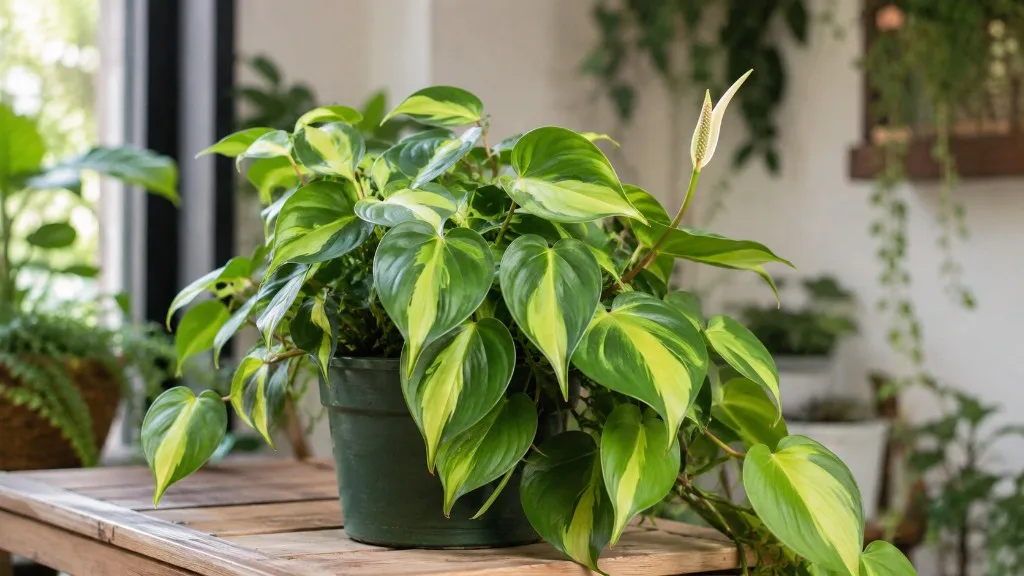
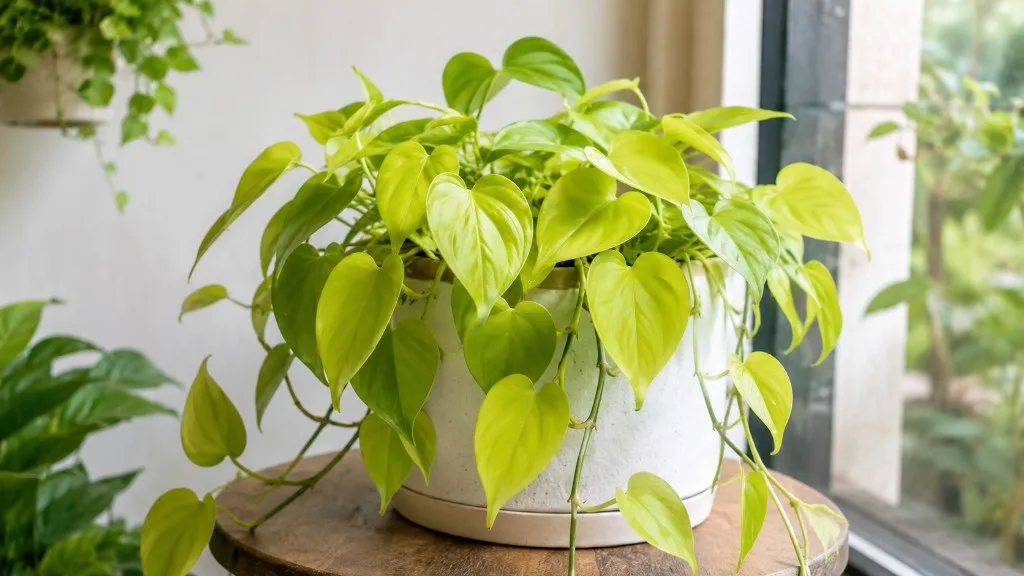
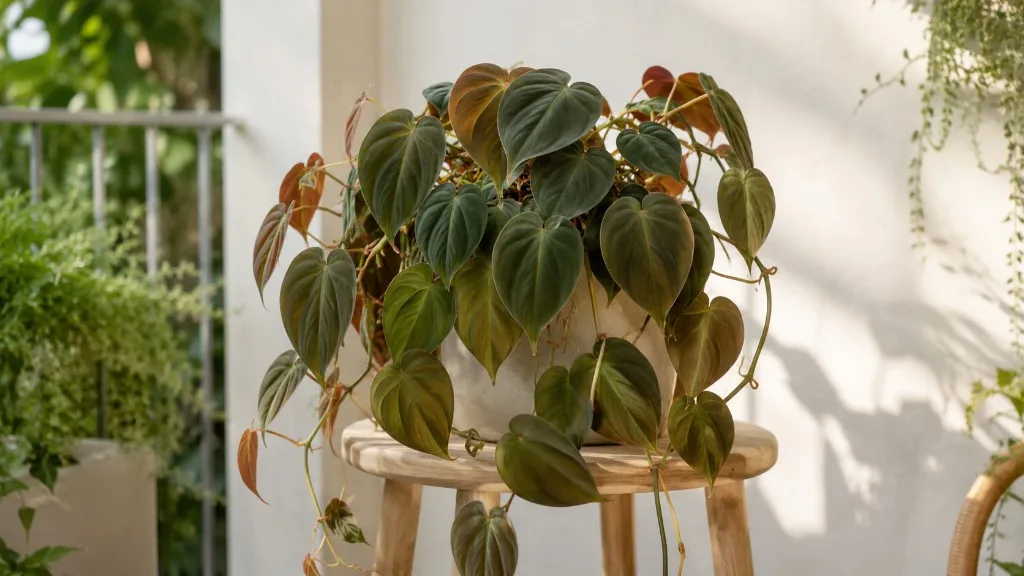
Philodendron micans is the houseplant people buy for the leaves and then accidentally damage while trying to love it. The foliage is heart-shaped, impossibly soft, and shifts between bronze, copper, sage green, and deep purple depending on age and light. Trail it from a shelf and it looks effortless. Place it wrong, water it on autopilot, or let a cat treat it like a snack, and the same plant becomes a string of crispy, leggy vines with permanent thumbprints on the velvet.
This guide treats micans as what it actually is - a velvet-leaf form of Philodendron hederaceum var. hederaceum - and walks through the care decisions that matter indoors: light for color and compact growth, watering that respects both roots and fuzzy leaf surfaces, humidity and soil that keep new leaves opening cleanly, propagation that takes advantage of how easily Philodendron Micans overview roots, and the pet-safety reality that makes placement non-negotiable in many homes.
What Philodendron Micans Actually Is (P. hederaceum var. hederaceum)
The name on most tags - Philodendron micans - is a historical trade name, not the current accepted botanical identity. Kew’s Plants of the World Online lists Philodendron micans Klotzsch ex K.Koch as a synonym of Philodendron hederaceum var. hederaceum, and NCBI Taxonomy treats Philodendron micans as a heterotypic synonym of Philodendron hederaceum Schott. World Flora Online records the connection explicitly through the forma name Philodendron scandens f. micans (Klotzsch ex K.Koch) G.S.Bunting.
In plain language: micans is the velvet-leaf heartleaf philodendron, one juvenile form within the enormous P. hederaceum species complex that also includes the glossy green heartleaf sold as P. hederaceum var. oxycardium and the variegated Brasil cultivar. Botanist Thomas Croat’s revision work on Central American P. hederaceum, summarized on aroid.org, distinguishes varieties primarily by juvenile leaf texture - var. hederaceum has velvety juvenile blades with a lustrous sheen above and purplish undersides, while var. oxycardium has glossy juvenile blades. That velvet juvenile form is what the houseplant trade has called micans for decades.
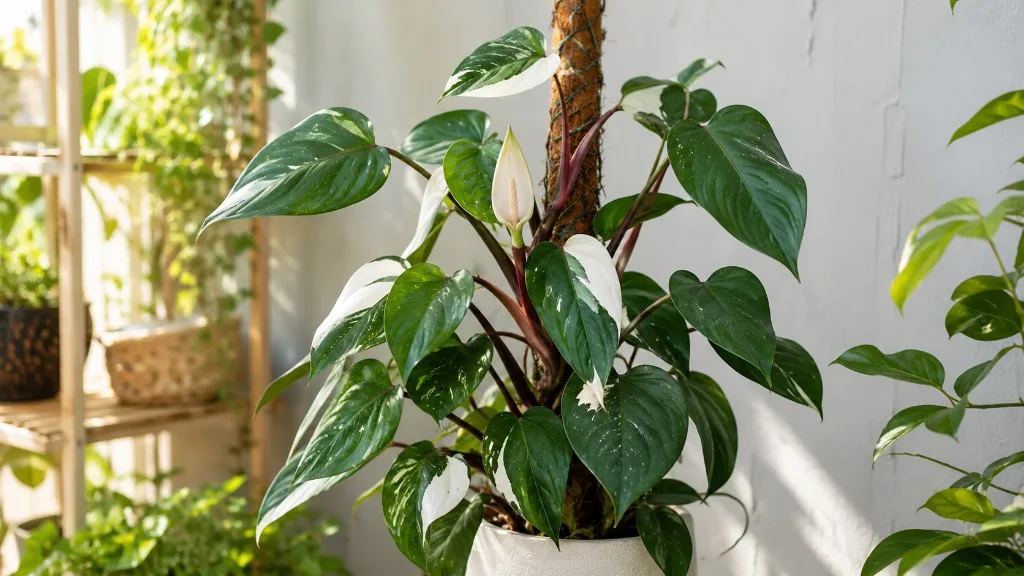
The plant is a hemi-epiphytic aroid in the Araceae family. In the wild it climbs tree trunks in humid tropical forest, producing slender green stems with adventitious roots that anchor to bark and absorb moisture from the air. The North Carolina Extension Gardener Plant Toolbox notes that Philodendron hederaceum is native from Mexico through Central America, the Caribbean, and into South America, climbing by clinging and reaching several feet in length. Indoors, most growers treat micans as a trailing plant in a hanging basket or on a high shelf, though it will climb a moss pole or trellis if given support - and the leaves can grow noticeably larger when allowed to climb.
Do not confuse micans with Monstera siltepecana, Scindapsus pictus, or other velvety trailing aroids. The heart-shaped leaf, reddish leaf undersides, and pinkish-bronze new growth are the micans tells. If your plant has silver speckling on matte leaves, you likely have a Scindapsus, not a Philodendron.
The Velvet Leaf and Color Shift Explained
The reason micans looks different from a standard heartleaf philodendron is microscopic. The upper leaf surface is covered in fine trichomes - tiny hairs that create a soft, iridescent, velvet-like texture. Those hairs scatter light in a way glossy leaves do not, which is why micans appears to change color as you move around the room or as window light shifts through the day. NC State Extension notes that leaves emerge bronze and quickly turn green, with mature blades often showing contrasting reddish-purple undersides on velvet forms.
That texture is also a care liability. Velvet leaves hold water droplets after misting or sloppy watering, show permanent marks from repeated touching, and scorch more visibly than glossy philodendron leaves under direct sun. The newest leaves are the quality signal on a micans: if they open cleanly, fully, and with strong color, your light, humidity, and watering are aligned. If they emerge small, curled, or dull, something in the environment is off before any fertilizer will help.
New Leaves vs. Mature Foliage
New micans leaves unfurl from pointed cataphylls, often starting pinkish-bronze or copper with bright green along the veins. Over days to weeks they harden off and darken toward a bronzy sage or deep green, while the undersides stay reddish-brown. This gradient along a single vine - coppery young leaves fading into darker mature ones - is normal and one of the plant’s best features.
Leaf size on a trailing micans in a small pot is typically modest, often 5–8 cm long on young plants. That is not a defect. Leaves enlarge when the plant is established, well-lit, and especially when allowed to climb, where individual blades can reach 10–12 cm or more along a moss pole. Comparing your six-month-old hanging basket to a mature climbing specimen online will only depress you unnecessarily.
How Light Controls Bronze, Green, and Purple Tones
Light is the dial that adjusts micans color: brighter indirect light intensifies bronzy and purple tones, while lower light pushes foliage toward a more uniform deep green and encourages longer gaps between leaves. Missouri Botanical Garden recommends bright indirect light and notes that in too-dark conditions stems become spindly.
This is not variegation in the genetic sense. It is physiological color expression driven by light intensity and leaf age. You can tune it. Want richer bronze iridescence? Move the plant a foot closer to a bright east window or a sheer-filtered south window. Prefer more green? Pull it back into medium indirect light. Either way, avoid full sun on the velvet surface - prolonged direct exposure bleaches or scorches the delicate foliage, leaving flat tan patches that do not recover.
Light: Bright Indirect for Color and Compact Growth
Micans wants bright, indirect light for most of the day. A practical target is roughly 500–1,000 foot-candles at leaf level, which translates to a spot within 0.5–1.5 meters of an east-facing window, or 1–2 meters back from a south- or west-facing window with a sheer curtain. Gentle direct morning sun for an hour or two is usually fine and can deepen color; afternoon direct sun through clear glass is where velvet philodendrons burn.
The plant tolerates medium indirect light and will survive in lower conditions than most Instagram photos suggest, but growth slows, internodes lengthen, and the signature iridescence fades. Leggy vines with small leaves spaced far apart are a light problem almost every time, not a watering problem. If you cannot provide a bright window, a full-spectrum grow light on a 12–14 hour timer, positioned 20–30 cm above the foliage, works well - micans responds to artificial light similarly to other heartleaf philodendrons.
Acclimate gradually when moving between light levels. A plant pulled from a dim shop corner into a bright west window will scorch within days. Shift it over one to two weeks, increasing exposure incrementally. Rotate the pot a quarter turn weekly if you want even growth; skip constant rotation if you prefer the plant reaching naturally toward one direction in a hanging display.
Watering: Let the Top Dry, Not the Whole Root Zone
Micans is neither a desert plant nor a bog plant. It wants the top of the mix to dry between waterings while the deeper root zone stays lightly moist during active growth. A reliable starting rhythm is every 7–10 days in summer, waiting until the top 3–5 cm (1–2 inches) feels dry, and every 10–14 days in winter when growth slows and the pot dries more slowly. Those intervals are guides, not rules - a micans in a small terracotta pot under a grow light will dry faster than one in a large plastic hanging basket in a cool room.
Illinois Extension advises checking soil moisture and watering when the top layer has dried - check before you pour rather than following a blind calendar. Stick a finger in, use a bamboo chopstick and look for damp cling, or lift the pot and learn its weight. Water thoroughly until excess runs from the drainage holes, then empty the saucer within 30 minutes. Never let the pot sit in standing water.
Chronic overwatering is the fastest way to kill micans. Velvet philodendrons show stress through yellowing lower leaves, soft stems, and stalled new growth while the mix stays wet. Underwatering is more forgiving - the leaves may curl slightly and feel less supple, but the plant usually recovers after a deep soak. When in doubt, wait an extra day rather than water a pot that is still damp at depth.
Reading Soil Moisture Without Damaging Leaves
Because micans leaves show water spots and fingerprints, water at the soil surface rather than showering the foliage from above. A long-spout watering can or bottom-watering for ten to fifteen minutes both keep the velvet clean. If you do get drops on leaves, blot gently with a soft cloth rather than rubbing.
In winter, reduce frequency before you reduce volume. The goal is fewer wet-dry cycles through cold, dim months, not smaller sips every day. Daily shallow watering keeps the surface wet and the core starved of oxygen - the pattern that produces fungus gnats and root rot on Philodendron Micans simultaneously.
Humidity and Temperature Indoors
Micans is tropical in origin and prefers moderate to high humidity, with 50–60% being the practical sweet spot for clean leaf edges and steady growth. NC State Extension notes that Philodendron hederaceum prefers medium relative humidity and can tolerate dry air, though very dry conditions may cause crispy brown tips on newer leaves and increased spider mite pressure.
Raise humidity the boring ways that actually work: a pebble tray with the pot base above the water line, grouping plants together, or a small cool-mist humidifier near the plant. Skip foliar misting as a humidity strategy - the effect lasts minutes, water sits on velvet and invites fungal spotting, and you create the thumbprint problem yourself.
Temperature comfort aligns with normal indoor living: 18–29°C (65–85°F) is ideal. Iowa State Extension notes typical home temperatures of 65°F to 80°F are well-tolerated. Outdoors it is winter hardy only in USDA Zones 11–12, so indoor plants need protection from cold drafts. Keep micans away from cold drafty windows in winter, air-conditioning vents blowing directly on the canopy, and radiators that bake the foliage while the roots stay cool. Rapid temperature swings cause leaf curl and drop on sensitive new growth.
Soil and Pot Choice for Trailing Aroids
Micans needs a well-draining, airy aroid mix that holds some moisture without compacting. A proven home recipe: standard peat- or coco-based potting mix plus 20–25% perlite and optional orchid bark for extra structure. The target pH is slightly acidic, around 5.5–6.5, which most quality indoor mixes already approximate. Heavy garden soil, straight peat without amendment, or dense moisture-retention mixes stay wet too long and suffocate the fine roots heartleaf philodendrons depend on.
The pot matters as much as the mix. Drainage holes are mandatory. For hanging baskets, make sure the liner does not trap water against the bottom. Terracotta dries faster and forgives slight overwatering; plastic and glazed ceramic retain moisture longer - fine if you tend to underwater, risky if you water by habit. Size up one pot size at a time when Philodendron Micans repotting guide; an oversized pot holds water the root ball cannot use and is the most common post-repot root-rot trigger.
Fertilizer Schedule and Strength
Micans is a moderate feeder, not a hungry one. During active growth - typically spring through early fall - apply a balanced liquid houseplant fertilizer at half the label strength, roughly monthly. Iowa State Extension recommends fertilizing lightly once or twice monthly during active spring and summer growth. Always apply fertilizer to already-moist soil, never to a dry or stressed plant.
Pause fertilizer in late fall and winter, after repotting until new growth resumes, and during any recovery from root rot, pest treatment, or major pruning. Excess salts show up as brown leaf tips and a white crust on the mix surface - flush the pot with plain water monthly if you use tap water, and skip the next feeding if you see salt buildup.
Slow-release fertilizer sprinkled at the start of the growing season is acceptable if you prefer low maintenance, but liquid feeding gives you more control on a plant that already punishes over-care more than under-care.
Trailing vs. Climbing: Shape and Leaf Size
Micans is flexible in form. Left alone in a hanging basket, it produces long cascading vines with smaller to medium leaves - the look most people buy it for. Given a slim moss pole, trellis, or coco coir stake, it behaves like the wild climber it is: internodes shorten, leaves enlarge, and the plant develops a fuller, more vertical presence. Missouri Botanical Garden notes that juvenile leaves typically grow to 4 inches but increase in size up to 12 inches on mature climbing plants.
There is no wrong choice, only a trade-off. Trailing is lower maintenance and fits shelves and baskets. Climbing demands occasional tying-in and a moist pole for best results, but rewards you with larger, showier foliage. If your micans is producing long bare stems with tiny leaves, combine brighter light with pruning back to a node above the soil line - the plant will branch and produce bushier new growth.
Handle vines gently when training. The velvet surface marks easily, and crushed stems do not recover cosmetically. Soft plant ties or loose clips are enough; do not wrap tightly enough to dent the stem.
Repotting Without Damaging Velvet Leaves
Repot micans every one to two years, or when roots circle the pot surface, emerge from drainage holes, or water runs straight through without absorbing. The best timing is early spring as new growth starts, not mid-winter dormancy or peak summer heat. Spring repotting gives the plant a full season to fill the new container with roots.
Water the day before repotting so the root ball is pliable. Tip the plant out carefully - hanging baskets especially require support underneath so vines are not crushed. Loosen only the outer root mass; aggressive teasing breaks the fine roots micans needs. Move up one size, use fresh aroid mix, and plant at the same depth as before. Water lightly after repotting and keep the plant in bright indirect light without direct sun for two weeks while roots heal.
Wear gloves if sap contact irritates your skin. Philodendron sap contains the same calcium oxalate compounds that make the plant toxic to pets, and sensitive people can get mild skin irritation from prolonged contact.
Propagation by Stem Cuttings
Micans is one of the easiest philodendrons to propagate, which is why it became ubiquitous in the trade. The NC State Extension Plant Toolbox lists stem cutting as the recommended propagation strategy for Philodendron hederaceum, and home growers get reliable results in water or soil.
Take a 10–15 cm cutting from a healthy vine just below a node - the swollen joint where leaves and roots emerge. Remove the lower one or two leaves so at least one node is bare. For water propagation, submerge the node in a clear jar of room-temperature water, keep it in bright indirect light, and change the water weekly. Roots typically appear in two to three weeks, sometimes faster in warm conditions. Iowa State Extension notes that stem sections 3 to 6 inches long with lower leaves removed will readily root in water or rooting media.
For soil propagation, stick the cutting node-deep into moist aroid mix, cover loosely with a clear bag or dome to hold humidity, and keep the medium evenly moist but not soggy. Roots form invisibly; gentle resistance when tugged after three to four weeks confirms success. The best time is spring and summer during active growth. Winter cuttings root more slowly and fail more often.
Always propagate from healthy stock. Pests, rot, and fungal issues transfer directly from parent to cutting. If the mother plant has spider mites or thrips, fix that first.
Toxicity to Pets and People
Micans is toxic to cats, dogs, and other pets if chewed or ingested. This is not a plant for floor-level placement in pet-active homes, and it is not a candidate for “my cat ignores plants” optimism unless the plant lives well out of reach.
Cats and Dogs
The ASPCA lists Philodendron species as toxic to dogs and cats. The mechanism is insoluble calcium oxalate crystals - needle-shaped raphides stored in plant tissue that embed in mouth and throat tissues when chewed. ASPCA’s broader guidance on oxalate-containing Araceae plants describes symptoms including oral pain, excessive drooling, pawing at the mouth, decreased appetite, vomiting, and difficulty swallowing. Severe airway swelling is rare but possible with large ingestions; ASPCA Poison Control is available at 888-426-4435.
The toxicity applies to all parts of the plant - leaves, stems, and sap - and is shared across the Philodendron genus, including Brasil, Birkin, and standard heartleaf forms. Micans is not safer because it is velvety or trendy. Position hanging baskets high, use wall-mounted shelves, or choose a confirmed non-toxic alternative for surfaces pets can reach.
For people, sap may irritate sensitive skin during pruning or repotting. Ingestion by toddlers should be treated seriously - rinse the mouth, contact poison control, and seek medical advice if swelling or breathing difficulty occurs.
Common Problems and Real Fixes
Most micans problems are environmental. The diagnostic order that saves time: soil moisture first, then light, then pests, then water quality. Fixing the cause beats treating symptoms.
Root rot follows chronic overwatering, poor drainage, or an oversized pot. Signs include yellowing leaves on wet soil, soft stems at the base, and a sour smell from the mix. Unpot, trim black or mushy roots with sterile scissors, repot into fresh airy mix, and withhold fertilizer until new growth appears. Severe cases may not recover; prevention is easier.
Spider mites thrive in dry air and are easy to miss on textured leaves. Look for fine webbing, stippled yellow dots, and dull bronzing. Shower the plant gently to dislodge mites - protect the pot from flooding - then treat with insecticidal soap or horticultural oil, repeating weekly. Raise humidity to reduce recurrence.
Mealybugs appear as white cottony clusters in leaf axils. Dab with 70% isopropyl alcohol on a swab, then follow with soap spray. Thrips cause silvery scarring and distorted new leaves; they require persistent treatment and isolation from other plants.
Fungus gnats indicate surface soil staying too wet. Let the top 3–5 cm dry, use yellow sticky traps for adults, and consider a hydrogen peroxide drench (one part 3% peroxide to four parts water) if larvae persist.
Yellow Leaves, Leggy Vines, and Crispy Tips
Yellow leaves on micans usually mean overwatering, especially if several lower leaves yellow at once while the mix stays damp. Single yellow leaves on an otherwise healthy plant may be normal senescence - older leaves die off as the vine extends. If yellowing spreads or pairs with soft stems, check roots immediately.
Leggy vines with long bare sections and small leaves mean insufficient light. Move the plant brighter, prune back to nodes to encourage branching, and consider a moss pole if you want larger foliage going forward.
Crispy brown tips and edges point to low humidity, underwatering, or salt buildup from tap water or over-fertilizing. Increase humidity, verify your watering depth, flush the pot, and trim damaged tips with clean scissors for appearance only - the trimmed leaf will not regrow from the tip.
Curling new leaves often combine inconsistent watering, low humidity, and occasionally thrips on the unfurling blade. Inspect closely with a phone flashlight on the velvet surface; pests hide in the texture.
Buying Micans and the First Month at Home
Choose plants with firm new growth, clean leaf undersides, and no sticky residue that suggests scale or aphids. Avoid pots that feel waterlogged in dim shop light, smell sour, or show widespread yellowing - those are root problems already underway. A few cosmetic marks on older leaves matter less than healthy roots and active tips.
Quarantine new micans for two to three weeks away from your main collection. Pest hitchhikers on velvet leaves are harder to spot than on glossy foliage. Do not repot on day one unless the mix is clearly failing or roots are rotting; let the plant adjust to your home’s light and humidity first. Learn how fast the pot dries in your conditions before committing to a watering calendar.
Keep care boring during acclimation: stable light, cautious watering, no fertilizer, no moss pole upgrade, no propagation project. If problems appear - yellowing, droop, pest signs - fix one variable at a time. Stacking repot, prune, and feed in the same week makes diagnosis impossible.
For placement, think about the velvet surface. Micans shows water spots, dust, and handling marks more than glossy philodendrons. Hang it where leaves will not be brushed constantly by traffic, keep it away from splashy sinks, and resist the urge to pet the leaves daily. Clean texture on the newest unfurling leaf is the sign you are doing it right.
Conclusion
Philodendron micans rewards a specific kind of care: bright indirect light that brings out bronze and green iridescence, water when the top 3–5 cm dries rather than on a blind schedule, 50–60% humidity for clean velvet edges, an airy aroid mix with perlite and optional bark, and gentle handling that keeps the fuzzy leaves looking new. It is the same species complex as the heartleaf philodendron - Philodendron hederaceum var. hederaceum - with a velvet juvenile form that behaves like the climber it evolved to be, whether you trail it or give it a moss pole.
The non-negotiable constraint for many households is toxicity: keep micans away from pets that chew plants, and treat sap as an irritant during pruning. Get the environment stable, resist changing everything at once when the plant arrives, and propagate from healthy vines when you want more. Micans is not difficult - it is particular about light, water timing, and leaf handling in ways that glossy philodendrons forgive. Once you account for the velvet, the care is straightforward.
When to use this page vs other Philodendron Micans guides
- Philodendron Micans overview - Canonical hub for this species - care topics and problems branch from here.
- Philodendron Micans problems - Symptom-first path when you already know something is wrong.
Related Philodendron Micans guides
- Philodendron Micans watering
- Philodendron Micans light
- Philodendron Micans soil
- Philodendron Micans propagation
- Philodendron Micans fertilizer
- Philodendron Micans repotting
- Philodendron Micans pruning
- Ants on Plant on Philodendron Micans
- Brown Tips on Philodendron Micans
- Leaf Drop on Philodendron Micans
- Leaf Spot Disease on Philodendron Micans
- Leaf Miners on Philodendron Micans
How to care for Philodendron Micans?
How much light does Philodendron Micans need?
medium to bright indirect light, low indirect light (growth slows)
- medium to bright indirect light, low indirect light (growth slows) - medium to bright indirect light, low indirect light (growth slows).
When should you water Philodendron Micans?
Every 7–10 days in summer - allow top 3–5 cm to dry. Every 10–14 days in winter.
- Check top 2 inches - Every 7–10 days in summer - allow top 3–5 cm to dry.
- Drain excess water - Empty the saucer after watering so the roots are not sitting in standing water.
What soil works best for Philodendron Micans?
Standard potting mix + 20–25 % perlite + optional orchid bark. Well-draining. pH 5.5–6.5.
- Well-draining mix - Well-draining.
Grower notes for Philodendron Micans
Placement note for Micans
Let Micans trail where leaves will not be brushed constantly, or give it a slim support to size up. The velvet surface shows water spots and damage, so avoid splashy sinks and crowded shelves.
What makes Micans different
Philodendron Micans has velvet leaves that shift bronze, green, and deep purple depending on light. It dislikes rough handling and dry blasts more than basic heartleaf philodendrons. Clean texture on the newest leaves is the quality signal.
What matters most with Philodendron Micans
Philodendron Micans is easiest to understand by its growth habit. Climbers need support for larger leaves, self-heading types need stable root moisture, and delicate velvet forms punish stale air faster than basic green philodendrons. In practice, the care checkpoint is simple: medium to bright indirect light, low indirect light (growth slows). Pair that with standard potting mix + 20–25 % perlite + optional orchid bark. Well-draining; pH 5.5–6.5, and avoid changing water, pot size, and placement all at once.
Best placement in a real home
Philodendron Micans belongs where medium to bright indirect light, low indirect light (growth slows) is realistic for most of the day, not only where the pot looks good. Every 7–10 days in summer - allow top 3–5 cm to dry. Every 10–14 days in winter. If the pot stays wet longer than expected, move the plant into better light or reassess the mix before watering again. Humidity target: Moderate to high humidity (50–60%).. Temperature comfort zone: 18°C to 29°C (65–85°F).
Before you buy this plant
Choose Philodendron Micans with firm new growth, clean leaf undersides, and soil that does not smell sour or feel compacted. Be cautious if you see yellow-leaves, sticky residue, collapsed crowns, or a pot that is wet in poor light. Cosmetic old-leaf damage is less worrying than weak roots or active pests.
First month after bringing it home
Do not repot Philodendron Micans on day one unless the mix is failing or pests are obvious. Quarantine it, learn how fast the pot dries, and keep care boring while it adjusts. Watch especially for yellow-leaves, leggy-growth, and root-rot. If problems appear, correct the condition first rather than stacking fertilizer, repotting, and pruning together.
Safety note for Philodendron Micans
Philodendron Micans is not a plant to keep within reach of pets or children. Treat it as an inaccessible display plant. Use gloves if sap or plant tissue is irritating, and pick a pet-safe alternative for floor pots or low shelves.
How to tell Philodendron Micans is settling in
If you plan to multiply it later, common methods include Stem cuttings in water. If leggy-growth shows up early, inspect light, watering, and roots before assuming the plant is permanently weak.
Is it pet safe?
Philodendron Micans is toxic to cats and dogs.
Toxic - calcium oxalate crystals cause oral irritation.
Watering Philodendron Micans
Every 7–10 days in summer - allow top 3–5 cm to dry. Every 10–14 days in winter.
Soil & potting for Philodendron Micans
Standard potting mix + 20–25 % perlite + optional orchid bark. Well-draining. pH 5.5–6.5.
Humidity & temperature for Philodendron Micans
Philodendron Micans prefers moderate to high humidity (50–60%), though normal home humidity is usually fine. Keep temperatures around 18°C to 29°C (65–85°F).
| Detail | Information |
|---|---|
| Humidity | Moderate to high humidity (50–60%) - normal home humidity is fine. |
| Ideal temperature | 18°C to 29°C (65–85°F) |
Fertilizer & pruning for Philodendron Micans
Use feed lightly during active growth. Use monthly in spring and summer.. for Philodendron Micans.
| Detail | Information |
|---|---|
| Fertilizer type | Feed lightly during active growth. Use monthly in spring and summer.. |
Common problems on Philodendron Micans
Likely cause: Philodendron is a large genus of flowering plants in the family Araceae. As of September 2025, the Plants of the World Online accepted 625 species; [2] other sources accept different numbers. [3][4] …
Quick fix: Confirm diagnosis on your Philodendron Micans, then address the most likely care or pest factor described in current extension guidance.
Full fix guide →Brown Tips
MediumLikely cause: Low humidity fading velvet texture
Quick fix: Increase humidity to 55%+
Full fix guide →Leaf Drop
MediumLikely cause: Feb 21, 2024 · Philodendron Types with Pictures and Care Guide The green heartleaf Philodendron is a vining type of plant with dark-green leaves in a heart’s shape. This type of Philodendron can be …
Quick fix: Confirm diagnosis on your Philodendron Micans, then address the most likely care or pest factor described in current extension guidance.
Full fix guide →Leaf Spot Disease
MediumLikely cause: Feb 21, 2024 · Philodendron Types with Pictures and Care Guide The green heartleaf Philodendron is a vining type of plant with dark-green leaves in a heart’s shape. This type of Philodendron can be grown …
Quick fix: Confirm diagnosis on your Philodendron Micans, then address the most likely care or pest factor described in current extension guidance.
Full fix guide →Leaf Miners
MediumLikely cause: Feb 21, 2024 · Philodendron Types with Pictures and Care Guide The green heartleaf Philodendron is a vining type of plant with dark-green leaves in a heart’s shape. This type of Philodendron can be …
Quick fix: Confirm diagnosis on your Philodendron Micans, then address the most likely care or pest factor described in current extension guidance.
Full fix guide →Leggy Growth
MediumLikely cause: Insufficient light
Quick fix: Move to brighter indirect light
Full fix guide →Plant Leaning
MediumLikely cause: Philodendron is a large genus of flowering plants in the family Araceae. As of September 2025, the Plants of the World Online accepted …
Quick fix: Confirm diagnosis on your Philodendron Micans, then address the most likely care or pest factor described in current extension guidance.
Full fix guide →Root Rot
MediumLikely cause: Wet soil
Quick fix: Repot in fresh draining mix
Full fix guide →Thin Stems
MediumLikely cause: Feb 6, 2025 · If you are thinking of adding a philodendron to your indoor or outdoor garden, choosing the right variety can be a …
Quick fix: Follow extension or botanical guidance for Philodendron Micans thin stems; adjust care before applying broad treatments.
Full fix guide →Yellow Leaves
MediumLikely cause: Overwatering
Quick fix: Allow soil to dry
Full fix guide →