Leaf Drop on Philodendron Micans: Causes, Checks & Fixes
Quick answer
Leaf drop on Philodendron Micans usually signals water stress, relocation shock, or cold drafts on a trailing velvet vine. First step: stop changing care-lift the pot, check whether the top 3–5 cm is wet or dry, and keep light and temperature steady for two weeks while you correct only the moisture pattern.
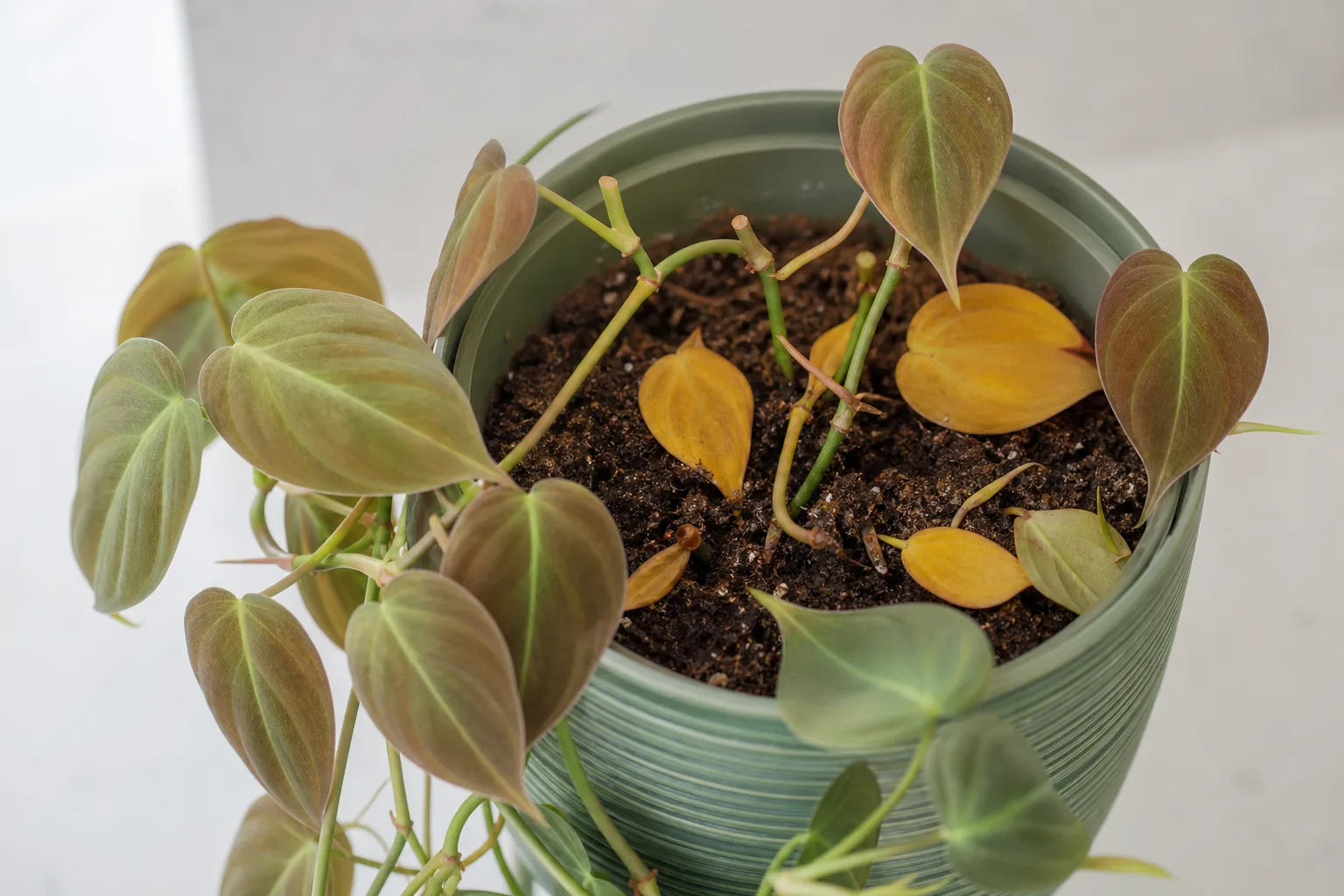
Leaf Drop on Philodendron Micans: Causes, Checks & Fixes
This guide covers leaf drop on Philodendron Micans. See also the general Leaf Drop guide, watering, and light pages for this plant.
Leaf Drop on Philodendron Micans: Causes, Checks & Fixes
Quick answer
Leaf drop on Philodendron Micans usually signals water stress, relocation shock, or cold drafts on a trailing velvet vine. First step: stop changing care-lift the pot, check whether the top 3–5 cm is wet or dry, and keep light and temperature steady for two weeks while you correct only the moisture pattern.
Micans sheds leaves when roots cannot support the full trailing canopy. As a cascading philodendron vine, long stems carry velvet foliage farther from the root ball-outer nodes lose leaves first when water, light, or temperature swing. Clemson HGIC notes that either over- or under-watering can cause leaf drop, and significant environmental change can trigger temporary shedding for about three weeks.
Why Philodendron Micans drops leaves
Overwatering and root decline force the plant to shed foliage it can no longer support. Wet soil suffocates fine aroid roots; damaged roots deliver less water even though the mix stays heavy. Clemson HGIC lists too much or too little water among the main philodendron problems, and persistent wetness often shows as yellow-then-drop on lower leaves before stems soften.
Underwatering and drought stress trigger defensive shedding when turgor collapses along trailing sections. Iowa State Extension recommends watering philodendrons when the top of the soil is dry and never letting them sit in saucers of water-the dry side of that range produces limp leaves that detach if drought continues.
Relocation and Philodendron Micans repotting guide shock are common on Micans moved from a shop shelf to a new home. Clemson HGIC states that leaf drop after a significant environment change should last only about three weeks if you stabilize light, water, and temperature instead of making repeated adjustments.
Cold drafts and chilling disrupt transpiration on velvet leaves faster than on glossy philodendrons. Clemson HGIC lists chilling as a cause of leaf drop, and Micans near winter windows or HVAC vents often sheds green leaves suddenly while soil moisture was otherwise adequate.
Low light slows metabolism so the plant cannot sustain its full canopy. NC State notes heartleaf philodendron tolerates low light but prefers medium conditions-chronic dim placement leads to thin trailers that drop inner leaves while outer tips struggle.
Pot too small or root-bound limits soil volume for water and nutrients. Clemson HGIC notes that plants in pots that are too small will drop leaves even when watering looks correct on the surface.
Pests occasionally cause drop when sap-sucking insects weaken new growth-inspect stems and leaf undersides if drop is unexplained by soil or placement.
What leaf drop looks like on Philodendron Micans
Normal aging drops one oldest leaf on a long vine every few months while nodes stay firm and new velvet leaves keep unfurling. Problem drop looks different:
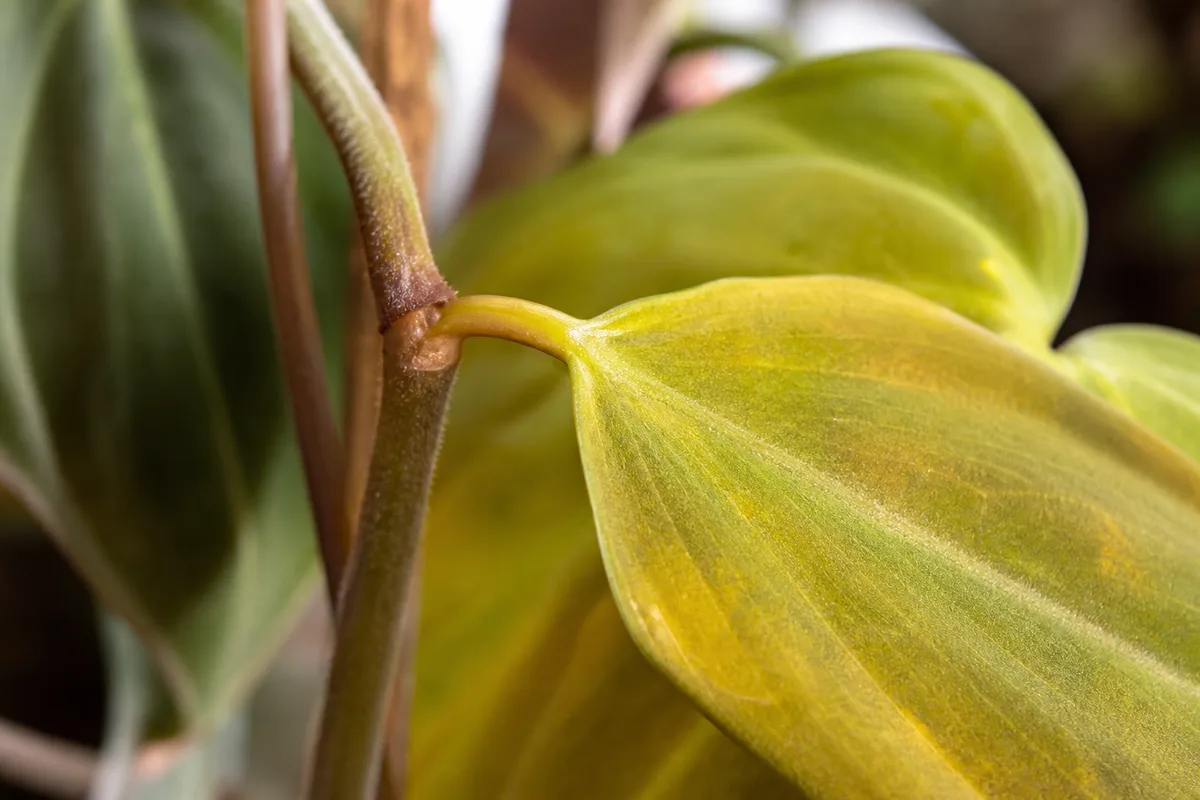
Leaf Drop symptoms on Philodendron Micans - compare with healthy tissue on the same plant.
- Leaves detach with little resistance-sometimes still green
- Multiple leaves fall within one to two weeks across several vine sections
- Outer trailing growth thins while inner crown may look intact briefly
- Velvet surface dulls or wrinkles before drop
- Paired with heavy wet pot (roots) or light dry pot (drought)
- Follows a recent move, repot, or draft exposure within days
Micans hides early stress under dark bronze-green foliage-compare the oldest leaves on each vine against newest growth to spot a pattern before the canopy looks sparse.
How to confirm the cause
- Pot-weight triage - Heavy and wet: excess moisture or root damage. Light and dry: drought path.
- Soil probe to 3–5 cm - Finger-test to about two inches before deciding the moisture fix.
- Drop timing - Started within a week of moving or repotting: acclimation shock. Sudden mass drop near a vent: draft stress.
- Leaf color at drop - Yellow lower leaves on wet soil fit overwatering. Brown crispy edges on dry soil fit underwatering. Green leaves on stable soil fit chilling or relocation.
- Stem firmness - Soft bases on moist mix warrant unpotting the same day.
- New growth check - Stalled or furled new leaves mean escalate beyond simple stabilization.
Lookalike symptoms to rule out
Normal senescence affects only the oldest leaf per vine. Yellow-leaves from chronic wet roots often precedes drop but may stop if you dry the pot early. Pest drop from spider mites comes with stippling and fine webbing. Physical brushing against velvet leaves causes local damage-not canopy-wide shedding unless the plant is knocked repeatedly.
First fix for Philodendron Micans
Stop changing multiple variables. Keep Philodendron Micans light guide and room temperature steady for two weeks. Correct only the moisture pattern revealed by pot weight:
Dry, light pot: Deep soak until water runs from drainage holes, then empty the saucer. Resume top 3–5 cm dry checks-not calendar watering.
Heavy wet pot: Stop watering until the top 3–5 cm dries. If drop continues on moist soil or smell turns sour, unpot and inspect roots the same day.
Recent relocation: Do not repot again unless roots are failing. Hold placement and watering steady; expect shedding to slow within about three weeks per Clemson guidance.
Make one correction first. Do not fertilize, prune heavily, and relocate simultaneously.
Step-by-step recovery
- Identify wet-soil vs dry-soil path using morning pot weight.
- Dry path: full soak, raise humidity toward 50–60%, resume moisture-based watering.
- Wet path: dry-back, prune mushy roots if present, repot into perlite-amended aroid mix only if rot is confirmed.
- Draft path: move away from vents and cold glass; keep temperature in the 18–29°C comfort range Micans prefers indoors.
- Light path: shift gradually to brighter indirect exposure over one to two weeks-avoid direct sun on velvet leaves.
- Support long trailers on a moss pole or slim trellis to reduce node stress from weight.
- Remove fallen debris and spent leaves only after drop rate slows.
Recovery timeline
Relocation or draft shock often slows within one to three weeks once conditions stabilize. Drought-related drop should stop within days after a proper soak if roots are firm. Root-damage drop may need four to eight weeks; some bare vine sections never refill until new side shoots emerge. UF/IFAS notes heartleaf philodendron recovers steadily when water and light balance is restored-use new velvet leaves as your progress marker, not reattached old foliage.
What not to do
- Do not repot immediately after drop starts unless roots are mushy-unnecessary repotting adds stress during acclimation.
- Do not fertilize to force regrowth on a shedding plant.
- Do not water a heavy wet pot because leaves fell-confirm dryness first.
- Do not hang Micans where long vines are brushed constantly-velvet leaves mark and stress easily.
- Do not assume all drop is normal aging without checking rate and soil evidence.
How to prevent leaf drop next time
Water when the top 3–5 cm dries, using bright indirect light so the pot dries at a predictable rate. Use well-draining aroid mix with 20–25% perlite and optional orchid bark. Buffer from HVAC drafts and cold windows. When moving the plant, change one factor at a time-avoid repotting, relocating, and altering watering in the same week.
Target 50–60% humidity for best velvet texture; Clemson describes Micans as a velvet-textured cultivar that shows stress on leaf surface faster than glossy types. Support trailing length before stems kink at hanger hooks. Repot every one to two years into a slightly larger pot only when roots circle the mass-not preemptively during stable growth.
When to worry
Escalate if green leaves keep falling after two weeks of stable care, stems soften at the base on wet soil, or more than one-third of roots are mushy on inspection. Chronic drop with sour smell on a heavy pot is rot until proven otherwise. Sudden mass green drop with firm roots and adequate moisture suggests chilling injury-move immediately and watch whether new growth resumes within two weeks.
Conclusion
Leaf drop on Philodendron Micans is a stress signal on a trailing velvet vine-not a mystery disease. Confirm with pot weight, top 3–5 cm moisture, and recent placement changes; stabilize environment before stacking fixes. Wet path: dry and inspect roots if needed. Dry path: soak deeply and resume moisture checks. Success means fewer leaves falling each week and clean new velvet growth along the vine-not every old section refilling overnight.
When to use this page vs other Philodendron Micans guides
- Philodendron Micans watering guide - Use for routine moisture checks before assuming leaf drop is the main issue.
- Philodendron Micans problems hub - Browse all 10 common issues on this species.
- Yellow Leaves on Philodendron Micans - Different entry point when symptoms overlap with leaf drop.
- Root Rot on Philodendron Micans - Different entry point when symptoms overlap with leaf drop.