Yellow Leaves on Philodendron Micans: Causes, Checks & Fixes
Quick answer
Yellow leaves on Philodendron Micans are usually caused by overwatering that keeps roots too wet in dense mix. First step: stop watering, allow the top 3–5 cm of soil to dry completely, check drainage, and inspect roots if yellowing spreads despite dry surface soil.
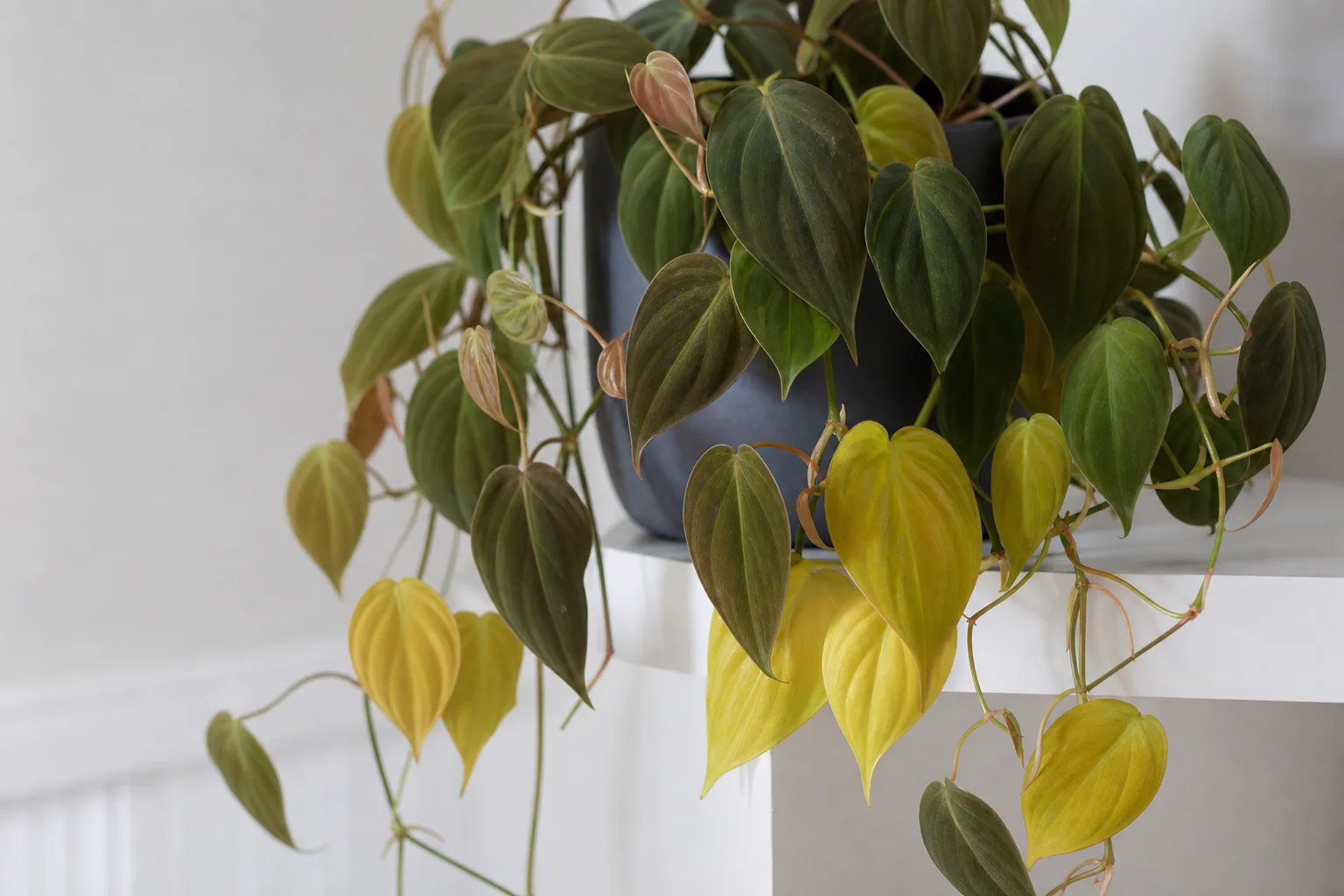
Yellow Leaves on Philodendron Micans: Causes, Checks & Fixes
This guide covers yellow leaves on Philodendron Micans. See also the general Yellow Leaves guide, watering, and light pages for this plant.
Yellow Leaves on Philodendron Micans: Causes, Checks & Fixes
Quick answer
Yellow leaves on Philodendron Micans are usually caused by overwatering that keeps roots too wet in dense mix. First step: stop watering, allow the top 3–5 cm of soil to dry completely, check drainage, and inspect roots if yellowing spreads despite dry surface soil.
Philodendron Micans (Philodendron hederaceum var. hederaceum) carries iridescent bronze-green velvet leaves on fast-trailing vines. When roots sit in wet mix too long, they cannot deliver nutrients and oxygen efficiently, and older leaves yellow first while the plant tries to shed tissue it can no longer support. The tricky part on Micans is that dark velvet makes early yellowing harder to spot-you may notice dull, limp texture before obvious chartreuse color appears.
Why Philodendron Micans gets yellow leaves
Overwatering is the most common cause. UF/IFAS notes that too much water can cause yellowing leaves on heartleaf philodendron, and Micans follows the same pattern because it shares the species’ root physiology. Watering on a schedule instead of checking soil dryness is the usual trigger. In practice, Micans needs the top 3–5 cm of mix to dry between drinks-roughly every 7–10 days in summer and every 10–14 days in winter in typical indoor conditions.
Dense or slow-draining soil amplifies the problem. Standard peat-heavy mix without perlite or bark holds moisture around fine aroid roots long after the surface looks acceptable. Missouri Botanical Garden warns that root rot can occur in overly moist soils on Philodendron hederaceum; chronic wetness often shows up as yellow leaves before obvious mushy roots appear. Micans in oversized hanging baskets or dim corners is especially vulnerable because the pot dries unevenly.
Low light slows water uptake and makes overwatering easier to trigger accidentally. RHS guidance states that philodendrons without enough light produce fewer, smaller leaves and use water more slowly. A Micans moved to a dark shelf may still get summer-level watering while its metabolism has dropped, pushing roots toward suffocation and leaf yellowing.
Other contributors include sudden cold drafts, Philodendron Micans repotting guide shock, and nutrient problems-but on Micans, check watering and root-zone moisture before assuming fertilizer deficiency. One lower yellow leaf on an otherwise healthy trailing vine is often normal aging; widespread or climbing yellowing points to root stress.
What yellow leaves look like on Philodendron Micans
Yellowing on this cultivar has a distinct pattern compared with glossy heartleaf philodendron:
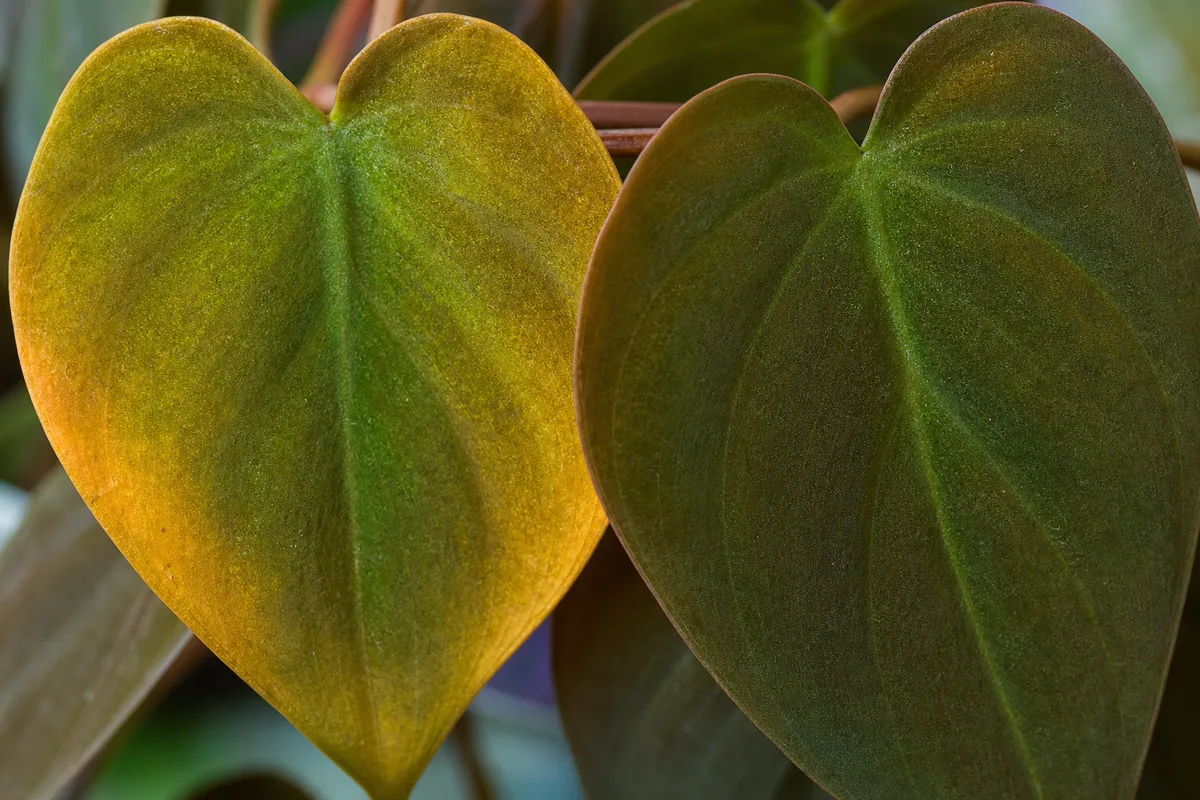
Yellow Leaves symptoms on Philodendron Micans - compare with healthy tissue on the same plant.
- Lower or inner leaves turn chartreuse-yellow first, often starting at the edges or between veins
- Velvet texture looks flat or dull rather than softly iridescent
- Vines feel limp or heavy despite wet soil
- New leaves emerge smaller, thinner, or with less bronze-purple flash
- Several leaves yellow within one to two weeks rather than one leaf every few months
- Soil surface stays damp for days after watering
Because Micans leaves are darker than standard green heartleaf philodendron, yellow can read as olive or lime-green at first. Tilt leaves toward light and compare the oldest leaves on each vine-that comparison reveals whether you are seeing normal senescence or systemic stress.
How to confirm the cause
Use this inspection order before pruning or repotting:
- Watering history - Count days since the last drink and whether you watered because the calendar said so or because the top 3–5 cm was dry.
- Pot weight - A heavy pot days after watering suggests the center is still wet even if the surface feels dry.
- Soil smell - A faint sour odor at the drainage hole points to anaerobic conditions from overwatering.
- Yellowing pattern - Lower leaves only, one at a time, on an otherwise vigorous vine suggests aging. Multiple leaves on several vines at once suggests root stress.
- New growth check - Firm nodes and clean new velvet leaves mean the problem may be mild. Soft nodes, stunted new leaves, or no new growth mean dig deeper.
- Root spot-check - If yellowing keeps spreading after you dry the pot for ten days, unpot and look for firm white roots versus brown mushy tissue.
Lookalike symptoms to rule out
Normal aging affects the oldest leaf on a long vine while the tip keeps producing healthy velvet foliage. Underwatering causes crispy brown edges and a light pot with dusty dry mix throughout-not heavy wet soil. Direct sun scorch shows as bleached or brown patches on leaves facing the window, not uniform chartreuse yellowing. Nitrogen deficiency can yellow older leaves evenly, but the pot is usually appropriately dry and roots are firm; fix watering first on Micans because overwatering is far more common indoors.
First fix for Philodendron Micans
Stop watering immediately and let the top 3–5 cm of mix dry completely before the next drink. Empty any standing water from the saucer. If the pot has been wet for weeks, pull the root ball slightly out of the pot to check whether the center is soggy-sometimes the top dries while the middle stays saturated.
Make one correction at a time:
- Do not prune every yellow leaf the same day you change watering; wait to see whether new growth stabilizes.
- Do not fertilize yellowing plants-UF/IFAS notes that excess fertilizer can also brown leaf tips, adding stress on top of wet roots.
- Do not repot unless roots are mushy or mix smells sour; unnecessary repotting can worsen shock.
If the pot stays heavy and yellowing spreads after ten days of dry-down, unpot, trim mushy roots, and repot into fresh aroid mix with perlite and bark-the same rescue path as root rot, but caught earlier.
Step-by-step recovery
Once watering is corrected:
- Place Micans in medium-Philodendron Micans light guide so the mix dries at a predictable pace.
- Resume watering only when the top 3–5 cm is dry-use your finger or a moisture meter at that depth, not the surface alone.
- Water thoroughly until runoff exits the drainage hole, then discard saucer water.
- Watch for new leaves with restored velvet sheen over the next three to six weeks.
- Remove fully yellow leaves after the plant produces at least one healthy new leaf, to avoid stripping too much photosynthetic tissue during recovery.
Rotate the pot weekly so all sides of the trailing vine receive even light; uneven light can make one side yellow faster while the other stays green.
Recovery timeline
Mild overwatering with firm roots often stops yellowing within one to two weeks once the mix dries properly. Moderate cases may need four to six weeks before new velvet leaves look normal. Leaves that have already turned fully yellow will not green up again-use new growth as your progress marker.
If yellowing continues despite correct dry-down watering, inspect roots for rot or consider whether low light, cold drafts, or compacted mix is keeping the root zone unhealthy.
What not to do
- Do not keep watering because leaves look limp while the pot is still heavy.
- Do not fertilize to “green up” yellow leaves on wet roots.
- Do not strip all yellow foliage immediately-you may remove tissue the plant still needs during recovery.
- Do not move the plant to direct sun as a fix; Micans scorches easily and sunburn mimics stress.
- Do not assume one yellow leaf means disaster; compare the pattern across the whole plant.
How to prevent yellow leaves next time
Water by soil condition, not habit. For most indoor Micans, confirm the top 3–5 cm is dry before every drink. Use aroid mix with 20–25% perlite and optional bark, a pot with drainage holes sized to the root mass, and medium-bright indirect light so the plant uses water steadily.
Reduce watering frequency in winter and when the plant moves to lower light. Refresh tired mix every one to two years so it drains properly. A weekly pot-weight check catches overwatering before velvet leaves dull.
Keep Philodendron Micans out of reach of pets-yellow leaves trimmed during care still contain irritant calcium oxalate crystals.
When to worry
Escalate beyond simple dry-down if:
- Yellowing spreads to new growth within seven to ten days
- Nodes soften or stems collapse near soil level
- Soil smells sour despite reduced watering
- More than one-third of roots are mushy on inspection
- The entire vine goes limp while soil is wet
Those patterns suggest advancing root rot, not cosmetic yellowing alone.
Conclusion
Yellow leaves on Philodendron Micans usually mean roots have been too wet too long, not that the plant needs more water. Confirm with heavy pots, damp center soil, and widespread chartreuse fading on velvet leaves; fix by drying the mix, correcting drainage, and watering only when the top 3–5 cm is dry. Judge recovery by new leaves with clean iridescent sheen-not by old yellow foliage turning green again.
When to use this page vs other Philodendron Micans guides
- Philodendron Micans watering guide - Use for routine moisture checks before assuming yellow leaves is the main issue.
- Philodendron Micans problems hub - Browse all 10 common issues on this species.
- Root Rot on Philodendron Micans - Different entry point when symptoms overlap with yellow leaves.