Philodendron Micans Repotting: When, How, and Mistakes
Philodendron Micans Repotting: When, How, and Mistakes to Avoid
Philodendron Micans Repotting: When, How, and Mistakes to Avoid
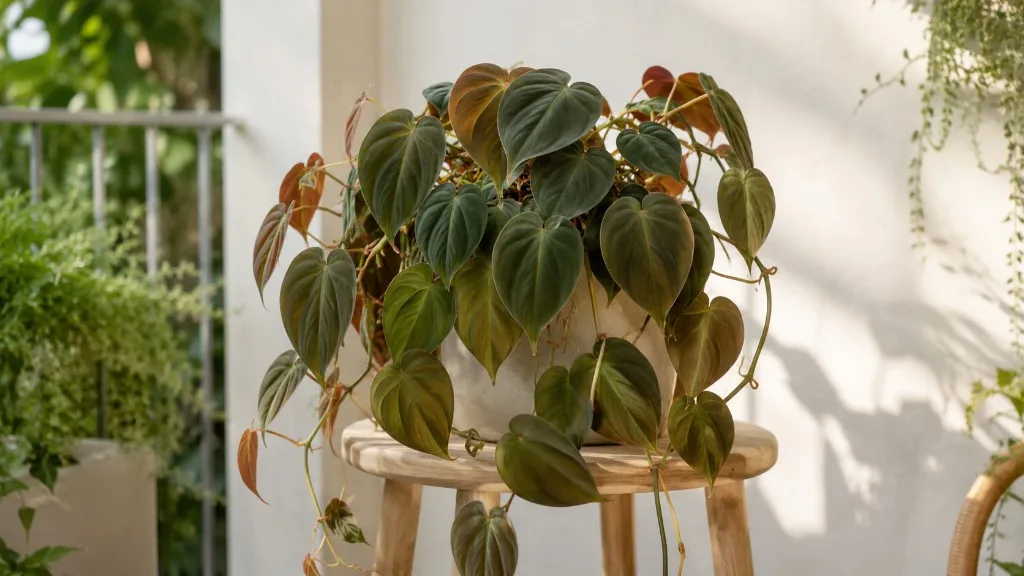
Philodendron Micans (Philodendron hederaceum var. hederaceum) is the velvet-leaf heartleaf philodendron - a trailing aroid whose iridescent bronze-green foliage is the whole reason people grow it. That same fast-growing vine habit means the root mass often hits the pot wall long before the hanging basket looks crowded from across the room. Repotting is not a decorative upgrade for Micans. It is the maintenance step that restores drainage, replaces compacted mix, and gives roots room to support the velvet leaves you bought the plant for.
Most repot disasters on Micans are not about calendar dates. They come from wrestling a root-bound hanger while vines swing, jumping to an oversized decorative pot, or scrubbing every grain of old soil off fine roots while bruising velvet leaves against the table edge. Done in spring with a one-size-up pot and the same 20–25% perlite mix published on the Micans soil guide, a repot is usually an hour of careful work, a week of slight adjustment, and then fresh bronze-toned leaves along the trails. This guide walks through when to repot, how to handle hanging baskets and velvet foliage, what to do with circling vs. rotting roots, and the mistakes that turn a routine upgrade into a recovery project.
Quick Answer: When and How to Repot Velvet Micans
Repot Philodendron Micans when two or more root-bound signals appear together: roots circling the pot bottom or emerging from drainage holes, water running straight through without wetting the core, or growth stalling despite good light and normal watering. As a check-based heuristic - not a fixed rule - many active indoor Micans need a full repot every 12–24 months in warm, bright homes; let root and drainage performance decide, not the date on the calendar.
Best timing: spring through early summer, when the plant is in active growth. Pot size: only 2–5 cm (1–2 inches) wider in diameter than the current container, with drainage holes. Soil: roughly 75–80% peat- or coco-based indoor potting mix plus 20–25% perlite, with optional orchid bark for hanging baskets - full recipe on the soil guide. Procedure: water 24 hours ahead, slide the plant out, tease circling roots (do not bare-root), trim mushy tissue only, backfill with fresh mix, water lightly, skip fertilizer for at least a month, and watch for clean velvet texture on new leaves within four to six weeks as your success signal.
Why Velvet-Leaf Micans Repotting Is Different From Generic Aroid Advice
Heartleaf philodendron advice transfers partially to Micans - both are trailing hemi-epiphytic aroids that want airy, moist-but-not-soggy roots. Micans adds two practical wrinkles generic repotting templates miss: velvet leaf fragility during messy root work, and hanging-basket physics where a shallow pot binds faster than a shelf pot of the same diameter because the vine mass above outweighs the soil volume below.
Hemi-epiphytic roots and fast-filling trailing vines
Philodendron hederaceum var. hederaceum (Powo taxonomic record) climbs and trails using clinging roots in native habitat across Mexico and Tropical America. NC State lists good drainage with moist soil - the classic compromise of roots that breathe between drinks rather than sit in standing water. Indoors, Micans produces running stems with nodes that root readily when they touch damp mix, which is useful for propagation but also means the root mat spreads horizontally faster than an upright self-heading philodendron fills depth.
A 15–20 cm hanging basket can hold a surprisingly dense root ball by the second growing season even when trails still look manageable from below. Plan mix refresh on drainage performance, not pride: when water sits on the surface, the pot stays heavy ten days after a modest drink, or the mix smells sour, structure is failing even if older leaves still look green. That pattern often precedes root rot and wilting that beginners blame on watering alone.
Velvet foliage as the quality signal after transplant
Micans is defined by velvet-textured leaves that shift bronze, green, and deep purple depending on light. The velvet surface shows water spots, bruises, and handling damage far more visibly than smooth heartleaf or Brasil philodendron foliage. During repotting, leaves dragged across gritty mix or pressed against a hard table edge can develop permanent matte patches - cosmetic damage that does not kill the plant but defeats the reason you grow Micans.
Recovery confirmation is also velvet-specific. After a successful repot, watch new leaves emerging along active vines: firm texture, normal iridescent color, and size matching recent growth mean roots have reconnected. Older bruised leaves will not revert; new clean velvet is the signal. If new leaves arrive small, pale, or with rough texture weeks after repot, inspect roots and pot size before adjusting fertilizer or light.
When to Repot Philodendron Micans
Repotting solves three problems that eventually show as leaf symptoms if ignored: circling roots that cannot absorb water or oxygen efficiently, potting mix that lost its airy structure, and salt buildup from tap water and fertilizer that burns fine root hairs. Micans, like other aroids, hates stagnant wet soil - the exact environment an oversized pot creates after repotting. Refreshing mix and modest root room before decline becomes obvious is cheaper than rescuing overwatering damage on a stressed vine.
Do not repot simply because one lower leaf yellowed. Yellowing can mean cold drafts, low light, natural aging on long trailers, or recent watering mistakes. Confirm the root zone is the bottleneck before you commit. If tips keep producing new velvet leaves while only the base drops old foliage, that may be normal vine senescence rather than a root crisis.
Root-bound and drainage signals
The clearest sign is visual: roots peeking through drainage holes or circling the surface when you slip the plant partway out of the pot. Less obvious but equally reliable signals include water that runs straight through without absorbing, a plant that wilts hours after a thorough watering, and growth that stalls even though light and feeding have not changed. When two or more of these appear during active growth season, repotting is usually the right move.
Slide the plant out gently. If the root ball holds a perfect pot-shaped mold with little visible mix on the sides, you are looking at classic root-binding. Fast drainage sounds healthy until you realize water is bypassing a hydrophobic or compacted core. Slow drainage combined with sour smell or mushy stems points to rot requiring immediate attention - not a routine upgrade. A white crust on the soil surface often signals salt buildup; top-dressing helps briefly, but a full repot with fresh mix is the durable fix when binding and compaction coexist.
When slight pot-bound is acceptable
Philodendrons tolerate being slightly pot-bound better than many houseplants. Iowa State Extension notes that philodendrons do well when slightly pot-bound because soil dries more quickly between waterings - a useful trait for Micans in plastic pots or dimmer rooms where excess wet mix is the bigger risk. You do not need to repot the moment you see a few circling roots at the bottom if drainage still works, the plant pushes regular new growth, and watering rhythm has not become erratic.
Wait when only one mild signal appears and the plant otherwise looks vigorous. Repot when binding plus drainage failure, chronic wilting despite correct watering, or sour compacted mix appear together. Chronic binding eventually stalls growth regardless of how tough Micans looks, but rushing repot on a healthy slightly tight plant adds unnecessary shock - especially in winter or when the plant is already stressed from a recent move.
Best Time of Year to Repot Micans
Timing matters because Micans recovers fastest when it is already geared for growth. Spring through early summer is the safest window for most indoor growers, when Missouri Botanical Garden guidance for related philodendrons aligns with repotting during active growth phases. Rising temperatures and lengthening days trigger root development, so the plant can colonize fresh mix quickly before heat stress or winter slowdown arrives.
During active growth, Micans can start showing new turgid velvet leaves within two to four weeks after a well-executed repot. Early summer still works if you avoid repotting during the hottest week in an un-air-conditioned room. Shade slightly for the first week after summer repotting, then return to bright indirect light on the light guide schedule.
Winter repotting is a backup plan, not a default. Growth slows, days are short, and disturbed roots sit in wet mix longer because the plant is not pulling water actively - increasing rot risk for any aroid. Skip winter repot if the plant is merely slightly tight but still growing a little and watering normally. Repot in winter only when delay would clearly harm the plant: severe root-binding with repeated wilting, active root rot requiring trimming and fresh mix, or a broken pot. If you must repot then, use a modest size increase, keep temperatures above roughly 18°C (65°F), provide bright indirect light, and water more cautiously until new growth returns in spring.
Choosing Pot Size and Material
The single most important pot decision is diameter, not aesthetics. Micans wants one step up, not a mansion. Jumping from a 12 cm pot to a 20 cm pot feels generous, but unused soil volume stays wet for days while the small root system catches up. That wet zone is where aroid roots struggle most, and Micans will show the problem as yellow lower leaves and drooping stems that look like feeding issues but are really oxygen problems at the root level.
Measure the current inner diameter and choose a new pot 2–5 cm (about 1–2 inches) wider, with the same depth profile or slightly deeper if the plant is top-heavy or sits in a hanging basket that dries quickly. Iowa State recommends repotting with fresh potting soil in a container one size larger when overcrowded - the same conservative principle applies to Micans every time you upgrade across the plant’s life rather than skipping sizes to save future effort.
Every Micans pot needs drainage holes so water can drain freely and roots have adequate air. Decorative cache pots without holes are fine only if the plant remains in a nursery pot that drains freely into a saucer you empty after every watering. Plastic retains moisture longer - useful in dry air but demands sharper attention to drainage. Terracotta breathes through porous walls and dries faster - helpful if you tend to overwater. Glazed ceramic sits between the two; weight adds stability for top-heavy hanging baskets. Match material to your watering habits on the watering guide rather than aesthetics alone.
Best Soil Mix for Repotting Micans
Micans wants well-draining, airy potting mix that holds moisture without staying soggy. Clemson HGIC groups philodendrons among species where root rot usually results from a soil mix that does not drain quickly or from overly frequent watering - the same tension every good repot mix must balance.
For repotting, use the recipe already published for Philodendron Micans overview: roughly 75–80% quality peat- or coco-based all-purpose potting soil plus 20–25% perlite by volume, pre-moistened and blended thoroughly. Optional 10–15% medium orchid bark helps fast trailers and hanging baskets where the mix bears weight plus vine mass. Full mixing instructions, drainage tests, and hanging-basket adjustments live on the dedicated Micans soil guide - repotting is the moment to implement that recipe, not reuse exhausted nursery peat.
Avoid garden soil, unamended cactus mix, and reusing sour old mix - especially after root rot. Top-dressing - replacing the top 3–5 cm without disturbing roots - can buy time in early spring if the plant is not yet root-bound at the bottom, but it will not solve circling roots in a shallow hanging basket. Full repot is appropriate when roots are bound, mix is compacted or sour, or you are correcting rot.
Step-by-Step: How to Repot Philodendron Micans
Repotting Micans is straightforward if you prepare materials first and minimize root exposure time. Gather the new pot, pre-mixed soil, clean scissors, a chopstick or pencil, soft plant ties if the plant hangs, and a watering can. Work on a surface you can wipe clean - velvet leaves pick up grit and show pressure marks easily.
Step 1: Water the plant 24 hours before repotting. A lightly moist root ball holds together and slips out more cleanly than a bone-dry or soggy one.
Step 2: Bundle trailing vines loosely if needed. Coil them in wide loops and secure with soft ties - never tight string that dents stems.
Step 3: Add a small mound of fresh mix to the bottom of the new pot. Do not create a thick gravel “drainage layer”; a coarse bottom layer hinders rather than helps drainage and can create a perched water table.
Step 4: Turn Micans on its side and slide it out, supporting the base of stems with your hand. If it resists, squeeze flexible nursery pots or run a knife around the inside edge of rigid pots.
Step 5: Inspect roots. Trim brown, mushy tissue with clean scissors. Tease circling roots at the bottom and sides gently with your fingers so they point outward - keep most of the original root mass intact.
Step 6: Set the plant so the previous soil line sits about 1–2 cm below the rim. Do not bury stems deeper than they were growing.
Step 7: Backfill with fresh mix, working soil between roots with a chopstick while holding the plant centered. Firm lightly - enough to remove large air gaps, not enough to compress mix into concrete.
Step 8: Water thoroughly until excess runs from drainage holes. Empty the saucer. Place in bright indirect light, out of direct sun, for 7–10 days. Hold fertilizer for at least three to four weeks while roots settle.
Repotting a Hanging Micans vs. a Shelf Pot
Many Micans plants spend their lives in hanging baskets, which adds logistics on top of usual root work. You are managing several feet of velvet vine, a pot suspended in midair, and often a root ball that dried faster on the exposed bottom than a shelf-sitting plant would. The same one-size-up and spring-timing rules apply, but the workflow changes.
Start by lowering the basket to a stable work surface - table or floor - rather than repotting while the plant still hangs. Unhook the hanger before you wrestle a root-bound plant out; swinging baskets snap stems and scatter mix. Hanging baskets often use shallower pots than floor containers of the same diameter, so Micans becomes root-bound faster because soil volume is lower relative to aggressive vine mass above. Check hanging plants at least once a year even if they look fine from below.
When upsizing a hanging basket, confirm your hook or ceiling anchor handles saturated mix weight - wet fresh soil is heavier than dry spent mix. Leave the plant on a stable surface for 24–48 hours before rehanging so excess water drains and you can verify stability. If vine mass far exceeds the basket, divide the root ball into two modest pots or take propagation cuttings during repot rather than jumping to an oversized container.
| Factor | Hanging basket | Shelf or floor pot |
|---|---|---|
| Root-binding speed | Faster (shallower volume) | Moderate |
| Repot difficulty | Higher (vine bundling, hook weight) | Lower |
| Post-repot watering | Center may stay damp under trailing cover | More even dry-down |
| Recovery watch | Leggy vine collapse if root ball disturbed | Top-heavy wobble if undersized |
How to Handle Velvet Leaves During Repotting
Velvet Micans leaves are easily bruised by rough handling, table edges, and gritty mix contact. Treat foliage as part of the procedure, not an afterthought. Bundle vines before tilting the pot. Lay a soft cloth or paper on the work surface where leaves will rest. Avoid dragging stems across the table when sliding the root ball out.
Do not mist bruised leaves immediately after repot hoping to “revive” them - extra surface moisture on velvet can leave persistent water spots and invites fungal spotting in stagnant air. Keep humidity moderate per the overview guide and let the plant recover in stable bright indirect light. Direct sun on freshly repotted Micans bleaches velvet and compounds transplant stress; shade slightly for the first week.
Velvet texture on new leaves confirms handling did not permanently derail the plant. Texture loss on old leaves from bruising is permanent - trim only if unsightly after new growth arrives, using guidance from the pruning guide if you need fuller shape.
Inspecting and Trim Roots Before Repotting
Use a simple decision tree at repot time:
White, firm roots with circling only: Tease outer circling layer outward; optional 1–2 cm slice off the bottom of a dense mat to stimulate new tips. Do not remove more than one-third of total root mass unless rescuing rot.
Brown, mushy, sour-smelling roots: Trim affected tissue back to firm white tissue with clean scissors. Wash hands and tools between cuts. Repot into fresh mix in the same size or only slightly larger pot - not a big upgrade during rescue. See root rot if stems are already soft.
Salt-crusted surface, slow drainage, but firm roots below: Full repot with fresh mix is better than repeated top-dress. Flush old saucers and discard compacted mix.
Hydrophobic dry core with circling: Full repot; tease outer roots and replace mix entirely. Watering harder into old mix rarely rewets the center evenly.
The goal is to redirect growth, not destroy the root ball. Bare-rooting by washing every particle of old soil away strips fine root hairs and extends recovery time unnecessarily - a common mistake covered below.
Signs Your Repot Worked or Went Wrong
Success signals: New velvet leaves emerge within two to four weeks in warm, bright conditions with firm texture and normal bronze-green iridescence. The pot drains within a minute of a full soak. The plant does not wilt for more than a few days after the move. Soil holds even moisture between waterings once roots begin exploring fresh mix - usually within four to six weeks.
Failure signals: Sustained wilting, yellowing, and leaf drop beyond two to three weeks suggest transplant shock, oversized pot, or buried stems. Soft stems and sour smell from mix suggest overwatering in fresh soil that has not dried. Leggy vine collapse in hangers often means the root ball was disturbed heavily without adequate recovery time - support the plant, reduce light stress, and verify pot size before watering again.
Damaged old leaves will not heal, but new clean velvet means the plant is back on track. If problems persist, inspect roots rather than fertilizing or repotting again immediately - stacking interventions is a common secondary mistake.
Recovery Timeline After Repotting
Mild transplant shock on Micans usually clears within one to two weeks: slight wilting or a pause in new leaves, then perking after a careful watering cycle. Full root re-establishment takes four to six weeks in warm, bright indoor conditions. During that window, water when the top 3–5 cm of mix dries per normal Micans watering checks - fresh mix often holds moisture slightly differently than old compacted soil, so let the pot weight and skewer test guide you rather than the old calendar.
Skip fertilizer for at least three to four weeks; tender new root tips burn easily in fresh, already nutrient-containing mix. Resume half-strength feeding only after new growth matches normal leaf size and velvet quality. Avoid moving the plant, repotting again, or heavy pruning during the first recovery month unless rot forces intervention.
Common Repotting Mistakes and Recovery
Oversized pots top the list. More soil without more roots means chronic bottom wetness. Stick to one size up even if you imagine the plant “will grow into it soon” - especially in hanging baskets where excess wet mix sits at the lowest point.
Bare-rooting or over-washing removes fine hairs that absorb water. Keep the root ball mostly intact unless rot forces a wash. Tease, do not scrub.
Bruising velvet leaves during rough handling causes permanent cosmetic damage. Bundle vines, pad the work surface, and work at table height for hangers.
Immediate fertilizing after repot burns tender roots. Wait for new velvet growth before resuming the fertilizer guide schedule.
Repotting a sick plant for the wrong reason - yellow leaves from cold, low light, or recent overwatering - adds stress without fixing the trigger. Diagnose first; repot when roots or mix are clearly the issue.
Using pots without drainage holes turns repotting into a long-term rot trap. Decorative outer pots only, with an inner draining container.
Dropping or yanking hanging baskets breaks stems and tears roots. Lower the basket, bundle vines, repot at table height.
Winter repot on a merely slightly tight plant adds rot risk without benefit. Wait for spring unless emergency binding or rot demands action.
After Repot: Watering, Light, and Fertilizer
Repotting resets soil and the watering rhythm. Micans in fresh mix often needs slightly lighter watering for the first two to three weeks while roots colonize new volume - not less frequent necessarily, but less volume per drink until you learn how the new mix behaves. Use the skewer or pot-weight test from the watering guide rather than autopilot schedules.
Keep bright indirect light; avoid direct sun on disturbed velvet foliage for the first week. Moderate humidity helps but is not a substitute for correct pot size and drainage - low humidity stress shows faster on repotted plants already in shock.
Hold fertilizer until new growth confirms recovery, then resume normal feeding. If you trimmed roots aggressively, trim vines lightly so foliage demand matches root capacity. Propagation cuttings taken during repot can root separately - see the propagation guide for node selection on trailing stems.
Pet and child safety during repotting
Philodendron Micans contains insoluble calcium oxalate crystals. The ASPCA lists heartleaf philodendron (Philodendron hederaceum) as toxic to cats and dogs, causing oral irritation, drooling, vomiting, and difficulty swallowing if chewed. Clemson HGIC notes all parts of philodendrons are toxic if eaten, with similar mouth and GI irritation in pets and young children. Keep repotting debris, trimmed vines, and spilled mix out of reach while you work. Contact your veterinarian or the ASPCA Animal Poison Control Center at (888) 426-4435 if ingestion is suspected. Wear gloves if sap irritates your skin.
Conclusion
Philodendron Micans repotting comes down to reading the roots, choosing spring or early summer when you can, moving the plant one pot size up with fresh 20–25% perlite-amended mix, and handling velvet leaves and hanging baskets with the same care you give the root ball. The plant grows fast enough that checking every twelve to eighteen months - especially on hangers - beats waiting for obvious distress, but never repot on autopilot when the real problem is light, water, or temperature.
Get pot size and soil right and Micans rewards you with clean velvet on new leaves within weeks. Oversize the container, bare-root aggressively, or wrestle a hanging plant while it still swings and the same vine will look punished for a month. Watch roots, protect velvet foliage, link repotting to the soil guide mix you already trust, and treat repotting as a targeted fix rather than a reflex - you will rarely lose a healthy Micans to a routine upgrade.
When to use this page vs other Philodendron Micans guides
- Philodendron Micans overview - Start here for whole-plant context before deep-diving this topic.
- Philodendron Micans problems hub - Jump to symptom-specific fix guides when this care topic does not resolve the issue.
- Root Rot on Philodendron Micans - Escalate here when repotting adjustments are not enough.