Philodendron Micans Light Needs: Best Window & Sun Guide
Philodendron Micans Light Needs: Best Window & Sun Guide
Philodendron Micans Light Needs: Best Window & Sun Guide
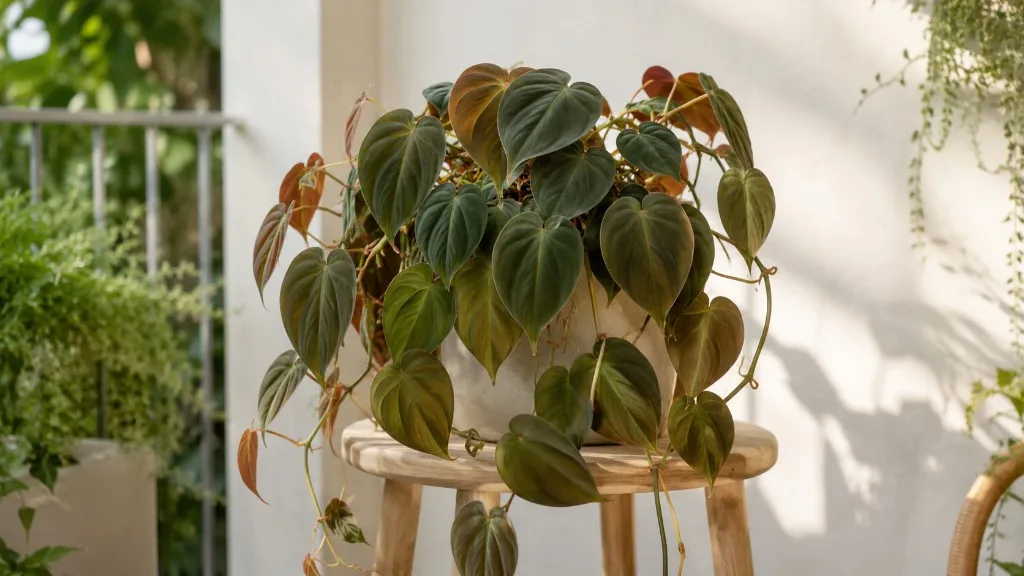
Philodendron Micans light is not a generic heartleaf philodendron question with a velvet sticker on the label. Philodendron hederaceum var. hederaceum ‘Micans’ is a fast-trailing hemi-epiphytic aroid whose juvenile leaves are covered in fine trichomes that create an iridescent, bronze-to-green velvet surface. Those hairs scatter light differently than the glossy blades on standard heartleaf forms, which means the same window that keeps a green P. hederaceum happy can bleach Micans in a week - and the dim shelf that merely slows a Brasil can turn Micans into a string of pale, stretched nodes within a month.
The practical goal is placement where new velvet leaves open firm, compact, and richly colored without scorch, bleaching, or the long internodes that signal the plant is reaching for photons. Light also sets your watering rhythm: a Micans in bright east exposure drinks faster than the same plant trailing three meters from a north pane. Get light right first, then tune moisture on the watering guide.
Reviewed by the LeafyPixels Review Board against botanical references and extension guidance. Author: sai-ananth. Methodology: recommendations checked against NC State, Missouri Botanical Garden, Illinois Extension, and MU Extension indoor-lighting publications before publication.
Quick Answer: Bright Indirect Light for Compact Velvet Growth
Philodendron Micans grows best in bright, indirect light - roughly 500–1,000 foot-candles (about 5,000–10,000 lux) at the leaf surface. That usually means 0.5–1.5 meters (2–5 feet) from an east-facing window, or 1–2 meters back from a south- or west-facing window filtered by a sheer curtain. Gentle direct morning sun for an hour or two is often fine and can deepen bronze tones; harsh afternoon sun through clear glass scorches velvet foliage.
The plant tolerates medium indirect light and survives lower conditions longer than many tropical trailers, but growth slows, internodes lengthen, and iridescent bronze-purple color fades toward uniform green. If natural light is weak, a full-spectrum LED grow light on a 12–14 hour timer, with foliage 15–30 cm (6–12 inches) below the fixture, is a reliable supplement per MU Extension indoor lighting guidance.
Judge success by new growth, not old leaves. Compact spacing between nodes, normal leaf size for a trailing vine, and clean velvet texture on the newest unfurling leaf mean today’s placement works. Permanent tan bleach patches, crispy sun-facing zones, or vines with 8–10 cm gaps between small leaves mean light needs adjustment - see the diagnostics section below and the not-enough-light and leggy-growth problem pages if symptoms persist after a move.
Why Micans Light Matters - Velvet Trailing Vine Biology
Botanically, Micans is Philodendron hederaceum var. hederaceum* - the velvet juvenile form within the heartleaf philodendron complex. NC State Extension lists Philodendron micans among the previous names for P. hederaceum and describes the species as a trailing or climbing Araceae vine native from Mexico through Tropical America, with rapid growth under favorable conditions. Indoors, most growers treat Micans as a hanging-basket or high-shelf trailer, though it will climb a moss pole and produce larger leaves when given support - behavior that changes how light reaches different parts of the same vine.
Unlike an upright self-heading philodendron, a long Micans specimen creates its own shade. Upper leaves on a dense canopy intercept most window light; lower nodes on the same string may sit in surprisingly dim conditions even when the pot looks “near the window.” That is why a plant can show bronze compact new growth at the soil line and pale stretched growth at the vine tips simultaneously - or the reverse, if you hang the basket high and let trails dangle into a bright zone.
How Trichomes Change What “Enough Light” Looks Like
The velvet surface is not cosmetic. Fine trichomes on the adaxial (upper) leaf scatter incoming light, producing the copper-bronze iridescence that shifts as you change viewing angle. In brighter indirect light, those hairs and underlying pigments express richer bronze, copper, and purple tones on new and juvenile leaves. In lower light, the same plant pushes toward deeper, more uniform green and longer stems between leaves - not because the cultivar “reverted,” but because the plant is allocating energy to reach a brighter zone.
Velvet also changes sun tolerance in practice, not in a way that makes Micans sun-loving. The fuzzy surface can hold heat and shows bleaching and crisping more visibly than glossy heartleaf leaves under the same direct exposure. Missouri Botanical Garden recommends bright indirect light and to avoid full sun on P. hederaceum, noting that too-dark conditions produce spindly stems - the exact pattern Micans shows as leggy trailing vines with undersized leaves.
Placement vignette: A 20 cm hanging Micans moved from a dim interior shelf (roughly 100–200 foot-candles at the top leaves) to an unobstructed east windowsill (roughly 600–900 foot-candles at the canopy) typically shows measurable change within four to six weeks: internodes on new growth shorten from 6–8 cm to 2–4 cm, emerging leaves regain bronze-pink tone before hardening green, and overall vine extension accelerates. Old stretched sections do not compact retroactively - only new growth reflects the improvement.
Best Light Level for Philodendron Micans
Extension and botanical sources converge on bright filtered light for heartleaf philodendrons. Illinois Extension advises growing philodendrons in bright, indirect sunlight while keeping them out of direct sunlight. NC State lists cultural light as partial shade - direct sunlight only part of the day, 2–6 hours - while noting the species prefers medium light and tolerates extremely low light for survival, not vigor. For Micans specifically, aim for the upper half of that medium-to-bright range if you want compact trailing growth and strong velvet color.
Think in terms of plant-facing brightness, not room ambiance. A living room that feels adequately lit to human eyes at 7 p.m. may deliver under 100 foot-candles at a bookshelf three meters from the window - fine for a week, frustrating for a Micans you want to thicken up.
Foot-Candles, Lux, and the Hand-Shadow Test
You do not need a light meter to place Micans well, but numbers help when comparing windows or diagnosing chronic leggy growth.
Bright indirect (ideal for Micans): roughly 500–1,000 foot-candles (5,000–10,000 lux). On a clear day, hold your hand between the plant and the window. A soft shadow with readable edges at the leaf surface usually falls in this range.
Medium indirect (tolerable, slower growth): roughly 250–500 foot-candles. Shadow is visible but faint; color may shift greener; internodes lengthen over time.
Low light (survival, not display): under 250 foot-candles. Little or no shadow; new leaves small and widely spaced; iridescence fades.
MU Extension classifies philodendrons among medium-light houseplants preferring roughly 250–1,000 foot-candles, with best growth toward the upper end unless the plant also receives extended direct sun. Micans behaves like a medium-light species that rewards bright-medium placement - closer to the 750–1,000 foot-candle end when you want bronze tones and short internodes.
Best Window Placement for Micans
Window direction is a starting point. Outdoor tree shade, neighboring buildings, overhangs, sheer curtains, and pot distance all change the light that actually hits velvet leaves. Still, compass orientation gives a reliable first guess in the northern hemisphere.
Place the pot where leaves receive useful brightness most of the day, not where the room merely looks bright. For trailing Micans, consider which part of the vine sits in the beam - the top of a hanger near the ceiling can be 40–60 cm higher than a shelf plant at the same window.
Window Orientation Comparison Table
| Window | Typical intensity at leaf level | Micans suitability | Notes |
|---|---|---|---|
| East | Bright indirect most of day; 1–2 hours gentle direct morning sun | Best default | Cool morning rays deepen bronze tones; pull back only if summer morning sun bleaches leaves |
| North | Low to moderate indirect all day | Maintenance only | Survives; growth slow, color muted; pair with grow light or accept leggy trails |
| West | Strong afternoon direct + heat | Use with distance or filter | Keep 1.5–2 m back or behind sheer curtain; watch summer heat on velvet |
| South | Highest total daily light | Bright indirect with setback | 1–2 m from glass or filtered; excellent winter boost; monitor summer scorch |
An east-facing window is the safest default for Micans in most homes. Missouri Botanical Garden places P. hederaceum in part shade indoors - bright ambient light without prolonged harsh direct beams. Two to four feet from an unobstructed east pane often delivers the sweet spot where vines stay compact and new leaves show copper-bronze before maturing green.
A south-facing window is an asset in winter at mid and high latitudes when sun angle is low. In summer, the same glass can exceed 2,000+ foot-candles at the sill - too intense for unacclimated velvet leaves. Move the pot farther back or diffuse with a sheer curtain rather than assuming “indirect” because the plant is not on the glass.
West-facing windows work when you respect afternoon heat. Micans on a west sill in July can develop crisp bleached patches within days if moved suddenly from a shop’s dim corner. Treat west like south with extra heat caution.
North-facing windows keep Micans alive and green but rarely produce the dense, iridescent display you see in photos. If north is your only option, place the pot as close to the glass as practical and add a grow light rather than accepting perpetual leggy growth.
Rotate the pot a quarter turn every two to three weeks if you want symmetrical trailing. Skip constant rotation if you prefer a natural lean toward the window in a hanging display - aesthetic choice, not a health requirement.
Can Philodendron Micans Take Direct Sun?
Yes - in measured doses, after acclimation, and usually in the morning. NC State’s partial shade definition - 2–6 hours of direct sun - applies to P. hederaceum as a species. For Micans velvet leaves, interpret that as gentle early-day direct exposure, not an all-afternoon bake against south glass.
Direct morning sun on an east windowsill for one to two hours often intensifies bronze and purple tones on new growth without the thermal stress of west or south afternoon rays. Leaves that developed in lower light need gradual acclimation over one to two weeks before you increase direct exposure - shift the pot closer by a few inches every few days and watch the newest leaf, not the oldest.
Direct afternoon sun through clear west or south glass is where Micans fails most often. Velvet leaves show damage as flat bleached tan patches, crisp brown edges on the sun-facing side, and sometimes curling during peak hours. That tissue does not recover green. Trim unsightly scorched leaves only after the plant stabilizes in softer light.
Morning Sun Versus Afternoon Heat Through Glass
Morning and afternoon sun differ in heat load, not just brightness. East exposure gives Micans a manageable direct period followed by long bright-indirect day length. Afternoon sun carries more infrared heat through the pane, and velvet trichomes can amplify perceived stress because damaged fuzz catches the eye immediately.
If you want slightly faster vine extension and richer juvenile color, east morning direct is the lowest-risk experiment. If you only have strong south or west glass, use sheer curtains or set the pot 1.5–2 meters back so leaves receive high ambient brightness without sitting in a heat beam. A simple leaf-surface check helps: if foliage feels hot to touch within an hour of sun hitting it, pull back.
Low-Light Limits and Warning Signs
Micans earns its “easy houseplant” reputation partly because it survives lower light longer than many tropicals. NC State notes P. hederaceum can survive extremely low light for long periods - but survival is not the same as the compact, shimmering trailer most growers want.
In low light, expect:
- Longer internodes - 6–10 cm or more between leaves on new growth
- Smaller new leaves relative to recent growth in brighter conditions
- Loss of bronze iridescence - foliage trends toward flat deep green
- Slower soil dry-down - metabolic slowdown; do not keep watering on a bright-window schedule
- Thin, weak new stems that may eventually yellow if the plant cannot photosynthesize enough to sustain itself
Illinois Extension notes philodendrons in lower light grow more slowly - accurate for Micans, with the added velvet tell of dull, non-iridescent new leaves.
Low-light damage is partially reversible if you catch it early: move to brighter indirect exposure, wait for compact new growth, then prune the most stretched bare stems if you want a fuller basket. Sections with permanently elongated internodes never shorten on their own - only new nodes after the move reflect improvement.
Micans-Specific Light Diagnostics
Generic philodendron light advice stops at “yellow leaves mean too much sun.” Micans gives clearer velvet-specific signals if you know what to compare.
Healthy light response: New leaves emerge pinkish-bronze or copper, harden toward bronzy sage or deep green, and show 2–4 cm internodes on a typical indoor trailer in bright indirect light. Undersides stay reddish-purple. The newest leaf feels firm and velvety, not papery.
Too little light: Vine tips produce small leaves with long gaps between nodes; color homogenizes to green; soil stays wet unusually long; growth may stall entirely in very dim rooms. Often misdiagnosed as underwatering or nutrient deficiency.
Too much light or heat: Bleached white-tan patches on sun-facing surfaces; crisp brown margins; leaves curling midday; sudden damage within days of a window move. Distinct from low-light yellowing, which tends to be whole-leaf chlorosis on older lower foliage tied to root stress in wet soil.
Color shift is not always stress. Micans naturally darkens as individual leaves age. A vine showing copper new growth fading to green mature leaves is normal. A vine producing only small, dull green new growth in a dim corner is not.
Velvet Scorch, Stretching, and Bronze-to-Green Color Shift
Use this decision flow when troubleshooting:
- Did the problem start within 14 days of a window move? If yes, suspect light shock (too much) or reaching (too little) before fertilizer or pest theories.
- Is damage on the sun-facing leaf surface only? Scorch. Pull back, filter, or acclimate.
- Are internodes lengthening on newest growth only? Insufficient light. Move closer or add a grow light.
- Is the whole plant pale with wet soil? Likely overwatering in dim conditions - light and watering fixes together.
“Why is my Micans turning green?” Usually lower light intensity, not a cultivar reversion. Move toward brighter indirect exposure and watch the next two leaves for returning bronze tone. Prefer greener foliage? Stay in medium indirect light - a valid aesthetic choice.
Using Grow Lights on Micans
When window light is insufficient - north rooms, winter short days, office desks - supplemental lighting keeps Micans compact and colorful. MU Extension recommends positioning most houseplants 15–30 cm (6–12 inches) from fluorescent or LED sources because intensity drops rapidly with distance, and running lights 12–14 hours daily when some natural window light is present, or 16–18 hours in rooms with little or no daylight.
For Micans specifically:
- Fixture type: Full-spectrum LED grow light or shop-light panel; avoid incandescent spotlights that add heat without balanced blue/red output
- Duration: 12–14 hours on a timer when supplementing a dim window; align the timer with daylight hours when possible
- Distance: Start 20–30 cm (8–12 inches) above the top leaves; move closer only if growth stays leggy and leaves are not warm to touch
- Coverage: Light the top of the trailing canopy; long hangers may need a second lower fixture or periodic rotation of which vine section sits under the lamp
- Heat check: Velvet leaves that feel warm or show dry crisping under the lamp need more distance - Micans scorches from radiant heat even when color looks fine for the first week
Philodendrons appear in MU Extension’s medium-light houseplant list - heartleaf types tolerate low light but most prefer the medium range for best indoor growth. Micans at the brighter end of medium responds visibly within two to three weeks when a grow light replaces a dark corner.
Distance, Hours, and Heat Checks on Velvet Foliage
Treat grow-light setup as iterative. Install the lamp, run 13 hours daily for two weeks, and evaluate internode length on new growth. Still stretching? Raise intensity slightly (closer lamp or longer duration by one hour), not both at once. Leaves warming or bleaching? Back the fixture up 5–10 cm and reduce hours to 12.
Winter is when grow lights earn their keep: lower sun angle and shorter days drop window delivery even at east exposures. A Micans that thrived in summer may slow and pale by February without supplementation - not a watering problem until you verify light first.
Trailing-Vine and Hanging-Basket Placement
Hanging Micans changes the geometry of light. A basket mounted 30–45 cm below the ceiling near an east window often places the densest leaf mass in the brightest zone, while dangling vine tips receive less - useful if tips were stretching, problematic if the canopy blocks light from reaching the pot-side nodes.
High hanger, bright window: Top leaves color richly; lower trails may stretch. Fix by raising the light source (lower the hanger slightly), pruning the longest bare strands, or adding a side grow light aimed at the lower third.
Shelf or cabinet top: Trails fall into potentially dimmer air below the window line. Set the pot on the sill or a plant stand at window height, not on a low shelf across the room.
Moss pole or trellis: Climbing Micans puts more leaf area in vertical light gradients. Face the moss pole toward the window; rotate monthly for even coverage if growth leans.
Crowded plant shelves: Neighbors block side light. Micans needs open sky path to the window - not a slot between two tall fiddle-leaf figs.
For integrated care after placement changes, see the overview guide and soil guide - light shifts always change dry-down speed.
How to Move Micans Safely Between Light Levels
Sudden jumps cause more Micans casualties than steady suboptimal light. A plant moved from a dim shop to a bright west sill in one afternoon can bleach and crisp within days. One pulled from a bright east window to a dark bathroom may drop leaves and stall while roots sit wet in the slower metabolism of shade.
Increase light gradually: Over 10–14 days, move the pot closer to the target window by a few inches every two or three days, or add one hour of direct morning exposure per week. Watch the newest unfurling leaf after each step.
Decrease light gradually when possible: If you must move to a dimmer room, reduce watering frequency at the same time - lower light means slower water use. Expect some leaf yellowing on older foliage; focus on whether new growth remains healthy.
One change at a time: Do not simultaneously repot, fertilize, and relocate to a new window. Micans recovers faster when you can read which variable caused the response.
Old scorch and stretch marks do not heal. Judge moves by post-change new growth over four to six weeks, not by whether damaged mature leaves green up.
How Light Changes Micans Watering
Light and watering are coupled on every trailing aroid, but Micans makes the link obvious because velvet leaves plus fast summer growth can dry a small pot in four days under a grow light while the same pot in a dim corner holds moisture for two weeks.
Brighter light → faster dry-down → more frequent checks. A Micans in strong east exposure may need water every 6–9 days in summer once the top 3–5 cm dries. The same plant in medium north light may go 12–16 days in winter. Those ranges are illustrations, not rules - always verify with a finger, chopstick, or pot weight as described on the watering guide.
Dimmer light → slower metabolism → fewer drinks, not smaller sips. Chronic wet soil in low light produces yellow lower leaves and root rot that beginners blame on “overwatering” as a moral failure rather than a light mismatch.
Grow lights add heat and evaporation. A lamp running 14 hours near the canopy can accelerate dry-down even in winter. Re-learn your pot’s rhythm after installing any light upgrade.
Iowa State Extension notes philodendrons prefer 65–85°F (18–29°C) and warns against soggy soils - temperature and light together set how fast roots consume water. Cold drafty windows plus bright winter sun create uneven stress; stable bright indirect placement simplifies both light and watering decisions.
Related Micans Care
Light is the first dial; these guides handle the rest of the cluster:
- Philodendron Micans overview - taxonomy, velvet biology, full care snapshot
- Watering - moisture checks, bottom-watering for velvet leaves, seasonal rhythm
- Soil - airy aroid mix for baskets and poles
- Propagation - stem cuttings need bright indirect light to root well
- Pruning - trim stretched low-light vines after a brighter move
- Not enough light - recovery when leggy growth has already set in
- Leggy growth - diagnosing internode stretch vs other causes
For genus-level context beyond Micans, see the broader philodendron light guide - but window specifics here reflect velvet trailing P. hederaceum var. hederaceum, not upright or variegated siblings like Birkin.
Conclusion
Philodendron Micans rewards one clear placement goal: bright, indirect light that produces compact new growth with clean velvet texture and bronze-to-green color you can tune by window choice. East-facing windows are the safest default; south and west work with distance or sheer filtering; north and dim corners need honest grow-light supplementation rather than wishful thinking.
Watch new leaves and internode spacing after every move - they tell you whether light is right faster than any light meter. Pair brighter placement with more frequent moisture checks on the watering guide; pair dimmer placement with patience and less water. Old bleached or stretched foliage will not reverse, but the next vine node can look excellent within weeks when the window, distance, and duration finally match what this velvet trailing heartleaf actually wants.
When to use this page vs other Philodendron Micans guides
- Philodendron Micans overview - Start here for whole-plant context before deep-diving this topic.
- Philodendron Micans problems hub - Jump to symptom-specific fix guides when this care topic does not resolve the issue.
- Leggy Growth on Philodendron Micans - Escalate here when light adjustments are not enough.
- Leaf Drop on Philodendron Micans - Escalate here when light adjustments are not enough.