Heartleaf Philodendron Light Needs: Best Window, Sun &
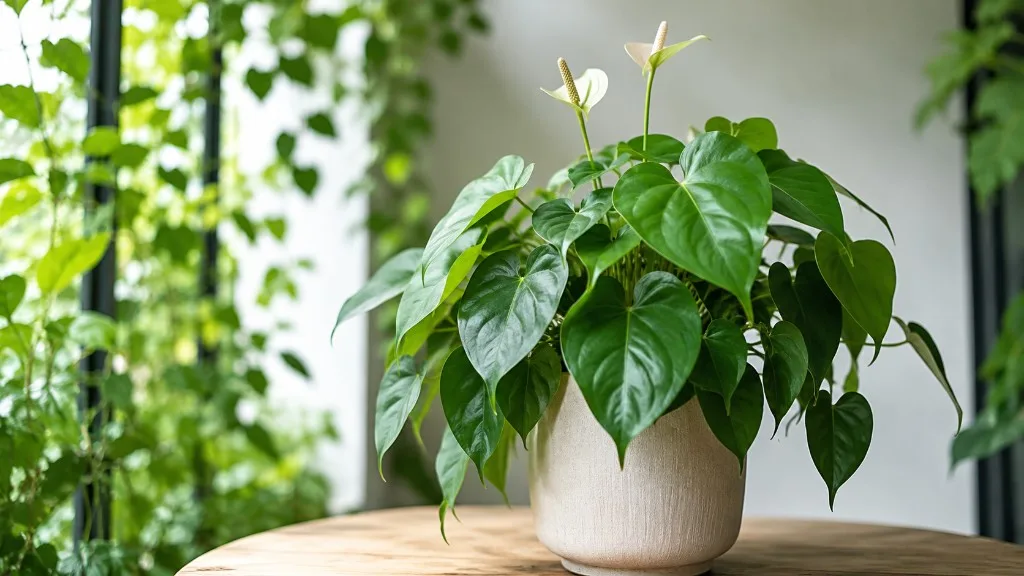
Heartleaf Philodendron Light Needs: Best Window, Sun & Warning Signs
Heartleaf Philodendron Light Needs: Best Window, Sun & Warning Signs
Heartleaf Philodendron (Philodendron hederaceum) is sold as an indestructible low-light plant-and that half-truth causes more stretched, sparse vines than almost any other care mistake. The species tolerates dim corners longer than most tropical foliage plants, but it grows best in medium to bright indirect light: strong plant-facing brightness without harsh direct beams baking the leaves. NC State Extension lists heartleaf cultural conditions as deep shade through partial shade (roughly zero to six hours of direct sun), noting the plant prefers medium light and will tolerate low light, and that it can survive for long periods in extremely low light. That flexibility is real. It is not the same as preferring a dark hallway.
The practical goal is placement where new leaves emerge firm, glossy, and close together on the vine-not where the room looks bright to your eyes while the pot sits ten feet from glass. Heartleaf is a trailing aroid from the Central and South American understory (Mexico through Brazil and the Caribbean), evolved to capture filtered light through canopy gaps rather than bake in open sun. Light controls how fast the plant drinks, how tight internodes stay, and whether a hanging basket looks lush or stringy. Every watering decision should follow what light actually reaches the leaves.
This guide covers window placement with distance rules, direct sun limits, honest low-light boundaries, grow-light setup numbers, and the warning signs that tell you to move the pot before cosmetic damage becomes permanent structural stretch.
Quick answer: medium to bright indirect light
Best default: medium to bright indirect light-roughly 100 to 500 foot-candles at the leaf surface on a clear midday, in UF IFAS terms the medium indoor range found near windows that receive no direct sun, or softened east and west exposures. The Royal Horticultural Society philodendron guide recommends bright but indirect light and warns that insufficient light makes philodendrons leggy with fewer, smaller leaves.
Heartleaf survives lower light-Clemson Extension notes the common heartleaf philodendron tolerates very low light and grows under artificial or existing room light-but survival mode means long internodes, small pale leaves, and slow dry-down that raises overwatering on Heartleaf Philodendron risk. Judge success by new growth after any move, not by whether old leaves stay green.
Why light matters for trailing heartleaf philodendron
Unlike self-heading philodendrons that hold leaves in a rosette, heartleaf grows as a cascade of nodes on thin stems. Each node can produce a leaf, an aerial root, or both. In bright filtered light, nodes stay relatively close and the vine looks full. In dim light, the plant extends internodes-the bare stem between leaves-searching for photons. That etiolation is the classic “leggy” look, and existing stretched sections never shorten when you add light later; only new growth after the fix comes out compact.
Heartleaf also shares the aroid habit of responding to light through water use. Brighter placement increases photosynthesis and transpiration; dim placement slows both. A watering rhythm that worked on a bright sill will overwater the same plant in a dim corner because the mix stays wet while roots lose oxygen. Light problems and root problems overlap-see the not enough light and leggy growth guides if stretch is already advanced.
Editorial observation (March 2026): A heartleaf moved from a grocery-store shelf to an unobstructed east sill at roughly 24 inches (60 cm) from glass produced its first compact leaf pair in eleven days; the prior node spacing on the same stem had averaged 3 inches (7.5 cm) in the dim display. Old stretched tissue remained-only new nodes tightened.
Best light intensity for Heartleaf Philodendron
Extension sources converge on indirect or filtered sun as the indoor target. Clemson HGIC states most philodendrons prefer indirect or curtain-filtered sunlight while heartleaf specifically tolerates very low light. UF IFAS Gardening Solutions recommends bright diffuse light for heartleaf philodendron and says the plant will tolerate a range from diffused light to shade, with direct sunlight avoided because it can burn the leaves.
Translating that into room language: heartleaf wants the brightness you get within a few feet of an appropriate window, not the ambient glow of a well-lit living room across the room. If you want measurable reference points-optional, not required-UF IFAS houseplant lighting guidance places medium light at roughly 100–500 foot-candles and high indirect light at 500–1000 foot-candles, while over 1000 foot-candles usually means direct sun at the leaf surface.
Medium light vs display-quality brightness
There is a useful distinction between survival light and display light. Heartleaf can maintain green leaves below the growth threshold for months-NC State notes survival in extremely low light-but you will see sparse vines, smaller blades, and soil that dries slowly. Display-quality density-tight nodes, 2–4 inch glossy heart-shaped leaves as described by Missouri Botanical Garden for this trailing species-generally needs upper medium to high indirect brightness, or supplemental LED.
Solid-green heartleaf tolerates lower light than variegated siblings like ‘Brasil’ or ‘Lemon Lime’, which need more photons to maintain chlorophyll and pigment in pale sectors. If you own a variegated cultivar, treat it as one light band brighter than plain heartleaf; this page focuses on P. hederaceum green heartleaf, but the rule holds across the genus.
Best window placement
Window direction is a starting point, not the whole answer. Outside tree shade, overhangs, tinted glass, and pot distance all change intensity at the leaves. Still, compass orientation gives a reliable first guess in the northern hemisphere.
Place heartleaf where leaves receive plant-facing light most of the day, not where the pot looks decorative on a distant shelf. Human vision adapts to dim interiors; plants do not. For trailing displays, measure light at the top of the cascade-the newest growth point-not at the pot on the floor below a high hanger.
East, north, west, and south windows compared
An east-facing window is the safest default for most heartleaf pots. Morning sun is bright but relatively cool; 2 to 3 feet (60–90 cm) from an unobstructed east pane often lands in the medium to high indirect range where growth stays steady without frequent scorch scares. Many growers keep heartleaf on an east sill with sheer fabric if leaves show heat stress by mid-morning in summer.
A north-facing window delivers gentle indirect light all day-usually lower medium intensity, especially in winter. Heartleaf survives north exposure more reliably than sun-loving succulents, but vines often stretch unless you accept slow growth or add a grow light from November through February when day length drops.
A west-facing window can work in spring and fall and becomes risky in midsummer when late-afternoon sun carries heat through the pane. Treat west like south with extra caution: filter or add 1–2 feet (30–60 cm) of setback during heat waves.
A south-facing window delivers the highest total daily light. Use sheer curtains or place the pot 4 to 6 feet (1.2–1.8 m) back from unobstructed south glass so leaves receive bright ambient light without prolonged hot direct beams. Watch sun-facing leaves for bleaching in June and July-that is your signal to move back or diffuse.
Distance-from-glass checklist for trailing displays
Direction labels fail when distance is wrong. Use distance as a dimmer switch:
| Starting placement | Typical distance from glass | What to expect |
|---|---|---|
| East or filtered west | 2–3 ft (60–90 cm) | Compact nodes, steady growth |
| Sheer-curtained south | 3–5 ft (90–150 cm) | Strong growth; monitor summer heat |
| Unobstructed south | 4–6 ft (1.2–1.8 m) or diffuse | Bright indirect without daily scorch |
| North | As close as possible | Survival to moderate growth; supplement in winter |
| Hanging basket | Top of vine within 3 ft of glass | Full cascade receives usable light |
Seasonal adjustment beats permanent guessing. Move closer in winter when sun angle drops; slightly back in midsummer if leaf surfaces feel hot. Rotate hanging baskets a quarter turn weekly so one side does not lean and age faster. If the same placement fails twice-stretch returns after a move-compare light with soil and watering before changing everything at once; the overview guide ties the full care system together.
Can Heartleaf Philodendron take direct sun?
Heartleaf can handle some direct sun only when acclimated and when exposure stays short and gentle. NC State’s partial shade definition-direct sunlight only part of the day, two to six hours-maps to morning east exposure or filtered beams through sheer fabric, not to an unshaded south sill in July. UF IFAS is explicit: avoid direct sunlight on heartleaf because it burns leaves (heartleaf philodendron guide).
Problems start when intensity jumps faster than the plant adjusts. A vine grown under fluorescent shop light and placed on a hot west sill may show bleached patches, crisp margins, or sudden leaf collapse within days. Leaves formed in lower light lack the protective pigment load for harsh rays-acclimation is mandatory.
Acclimating to brighter light safely
Move in stages over two to three weeks, not one afternoon:
- Week one: Place the pot in the target room but several feet back from the final window distance.
- Week two: Move halfway to the intended spot unless newest leaves show stress.
- Week three: Settle at the final distance; hold there two weeks before changing water or fertilizer.
Watch newest leaves first. Mild temporary orientation toward the window is normal; white-yellow bleaching, large brown scorched zones, or softening tissue mean you moved too fast-step back and wait another week. Store-bought heartleaf often comes from low-light retail displays; quarantine in moderate indirect light before pushing toward your brightest window.
Low-light limits and stretch signs
Heartleaf’s low-light reputation is biologically real and aesthetically misleading. Clemson Extension and NC State both document very low light tolerance-heartleaf grows under north, east, or west windows and existing room light. Tolerance means the plant persists, not that it fills out.
In insufficient light, expect long bare internodes, smaller new leaves, paler green color, and weeks between new nodes. The RHS warns philodendrons become leggy with fewer, smaller leaves without enough light-heartleaf shows that pattern on trailing stems rather than in a rosette.
How dark is too dark for a plant you want to grow, not just keep alive? If no new leaf has opened in three or more months during spring or summer, or internode gaps exceed 4 inches (10 cm) on active growth, you are below the display threshold. If soil stays wet more than two weeks after a moderate watering in normal indoor temperatures, light is likely too low for safe watering rhythms-a common low-light overwatering loop.
The hanging-basket height trap
Hanging baskets create a light problem shelves do not: the top of the vine sits near the window while lower nodes sit in progressively dimmer air. A basket hung 5 feet (1.5 m) below a north skylight can look acceptable at the pot while the growing tip receives less light than a tabletop plant on the sill. Always assess light at the newest leaf, and lower the hanger or shorten the trail if the top stretches while lower leaves stay small and dark.
Short-term dim placement-three to six months during a room renovation-is reasonable for mature heartleaf. Multi-year dark-corner storage produces stringy vines that only recover visually after pruning once light improves.
Using grow lights indoors
When windows cannot deliver enough daily brightness-windowless rooms, deep interior offices, north-only winter exposures, or high hangers far from glass-full-spectrum LED grow lights are the most reliable fix. Heartleaf responds well to moderate supplementation; it does not need flowering-crop PAR levels.
Choose a fixture labeled for houseplants or seedlings, not a standard room bulb optimized for human lumens. Full-spectrum white LEDs in roughly the 4000K–6500K range suit foliage maintenance. UF IFAS and Iowa State Extension emphasize measuring at foliage level and thinking in daily duration, not just bulb wattage.
Duration, distance, and fixture basics
Practical starting points for heartleaf-adjust by leaf response over 7–10 days:
- Distance: 12–18 inches (30–45 cm) above the top of the vine for a typical small-to-medium LED panel; increase distance if leaf edges crisp only under the lamp.
- Duration: 12–14 hours daily on a timer for foliage maintenance; consistency matters more than chasing exact photoperiod science at home.
- Coverage: Use a bar or panel that spans the width of the cascade, or rotate the pot every few days under a clip-on lamp so outer nodes are not in shadow.
When you add a lamp, check soil moisture after two weeks; total daily light increases dry-down rate even if the window did not change. Integrate grow lights with seasonal natural light rather than treating them as winter-only tools-a mediocre north window plus supplemental LED often outperforms either alone.
How to move or acclimate safely
Sudden light jumps cause leaf drop, curling, scorch, or stalled growth on heartleaf-even though the species is forgiving overall. Treat light changes like a controlled experiment: one move, then two weeks of observation before adjusting water, fertilizer, or pot size.
If moving from dim to bright, follow the three-week acclimation protocol above. If moving from bright to dim-a new office, winter shift away from glass-extend dry intervals immediately and skip fertilizer until new growth confirms the plant is still active. Do not stack Heartleaf Philodendron repotting guide, pruning, and a major light change the same week; see propagation and repotting guides after light stabilizes.
When in doubt, split the difference: place the pot where midday hand-shadow test passes (see below) and hold for fourteen days before optimizing further.
Warning signs: too much sun vs not enough light
Heartleaf communicates light stress through leaf color, texture, and node spacing over weeks-not through dramatic wilt like a fern. Use a two-week observation window after any placement change; old damage is historical, new nodes tell the truth.
| Signal | Too little light | Too much sun or heat |
|---|---|---|
| New growth pace | Absent or very slow; gaps between nodes widen | May stall temporarily after scorch shock |
| Leaf size and color | Smaller, paler new leaves; darker overall green | Bleached white-yellow patches; crisp brown sun-facing edges |
| Stem habit | Long bare internodes; vine reaches toward window | Sudden collapse or curling on exposed leaves after move |
| Soil dry-down | Stays wet 2+ weeks; fungus gnat risk rises | May dry faster; secondary issue if scorch already present |
| Permanence | Old stretch remains; new nodes can tighten | Sunburn tissue does not green up again |
When both seem possible-hot glass in a dim winter room-remove direct beam and heat first. Scorch can appear in days; low-light stasis takes months. After stabilizing, reassess total brightness and add a grow light if new nodes still elongate.
Practical checks for placement
Two field tests beat guessing room brightness.
New-growth test and hand-shadow test
New-growth test: Judge light by the newest leaf or node on the vine. Old blemishes will not heal, but new leaves should be firm, glossy, and proportionally sized for heartleaf. If the last three nodes are progressively smaller or farther apart, light is limiting-regardless of how green the plant looks overall.
Hand-shadow test: At midday, hold your hand between the newest leaves and the window. A soft, readable shadow with defined edges suggests bright indirect light in the useful range. Faint or no shadow means low light-survivable for heartleaf, weak for compact growth. Hard, dark shadow with heat on the leaf surface means direct exposure-filter or add distance.
Link light to moisture: brighter placement means check the mix more often; dimmer placement means wait longer before watering. The watering guide covers finger-test depth and seasonal rhythm; light sets the pace.
Heartleaf vs pothos light confusion
Heartleaf philodendron and golden pothos (Epipremnum aureum) share similar light advice in extension bulletins-both tolerate low light and prefer indirect brightness-and often sit on the same nursery bench. Clemson HGIC groups them with monsteras as easy aroids for indoor culture. For light purposes, treat them as roughly equivalent: medium to bright indirect ideal, low light survivable with stretch.
The differences matter for diagnosis, not placement. NC State notes heartleaf is distinguished from pothos by conspicuous stipules on new growth and non-grooved petioles (NC State P. hederaceum). If you inherited an unlabeled vine, identify it before assuming cultivar-specific rules-but for window choice, east or filtered bright exposure suits both. Pothos may grow slightly faster in marginal light; heartleaf may hang on longer in extremely dim conditions according to NC State’s extremely low light survival note.
Do not copy variegated pothos rules onto solid-green heartleaf or vice versa; variegation always raises light demand.
Conclusion
Heartleaf Philodendron light needs reduce to one distinction: tolerance is not preference. Philodendron hederaceum will endure dim corners longer than most houseplants, but it produces tight, glossy, trailing growth in medium to bright indirect light-roughly the brightness of an east window at 2–3 feet (60–90 cm), or filtered south light with enough setback to avoid hot direct glass.
Place the pot where new nodes prove the light works, not where the room looks nice. Use morning direct sun cautiously after acclimation; avoid unfiltered afternoon beams through west and south panes in heat. Treat north windows and high hanging baskets as placements that may need grow-light supplementation or acceptance of slower, sparser vines. When natural light falls short, a full-spectrum LED at 12–18 inches (30–45 cm) for 12–14 hours on a timer closes the gap more reliably than hoping “low-light plant” means darkness.
If something looks wrong, read the newest leaf, adjust one variable at a time, and remember that old stretched internodes never shorten-but the right placement today still produces compact new growth tomorrow. For deeper troubleshooting, see not enough light, leggy growth, and the full Heartleaf Philodendron overview.
How we verify: Recommendations were cross-checked against NC State P. hederaceum, Clemson HGIC aroid guidance, UF IFAS heartleaf and houseplant lighting pages, RHS philodendron culture, and Missouri Botanical Garden species data. Reviewed by LeafyPixels Review Board, 2026-06-15.
When to use this page vs other Heartleaf Philodendron guides
- Heartleaf Philodendron overview - Start here for whole-plant context before deep-diving this topic.
- Heartleaf Philodendron problems hub - Jump to symptom-specific fix guides when this care topic does not resolve the issue.
- Not Enough Light on Heartleaf Philodendron - Escalate here when light adjustments are not enough.
- Leggy Growth on Heartleaf Philodendron - Escalate here when light adjustments are not enough.
Related Heartleaf Philodendron guides
- Heartleaf Philodendron overview
- Heartleaf Philodendron watering
- Heartleaf Philodendron soil
- Heartleaf Philodendron propagation
- Heartleaf Philodendron fertilizer
- Heartleaf Philodendron repotting
- Not Enough Light on Heartleaf Philodendron
- Leggy Growth on Heartleaf Philodendron
- Heartleaf Philodendron problems