Best Soil for Heartleaf Philodendron: Mix, Drainage &
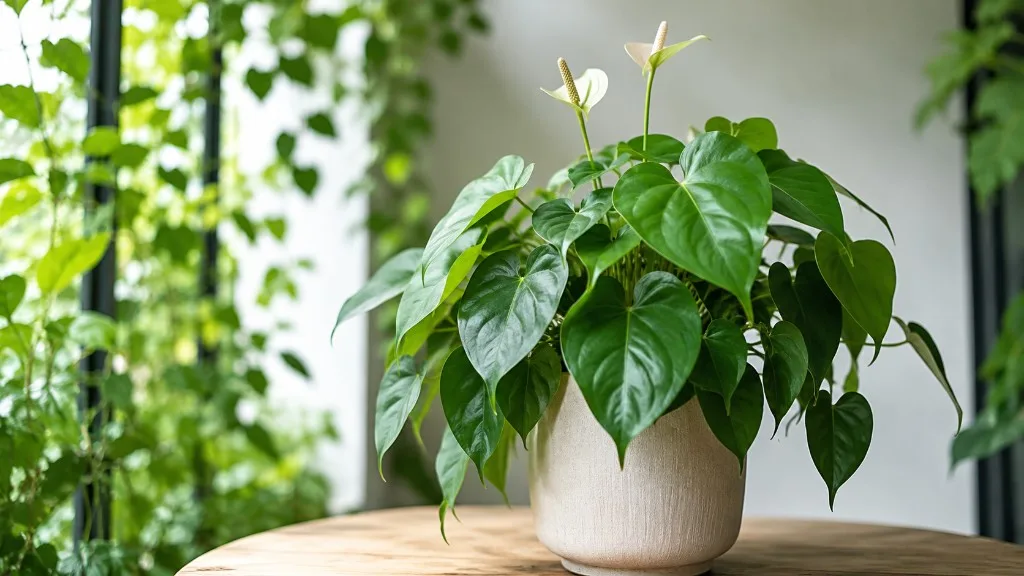
Best Soil for Heartleaf Philodendron: Mix, Drainage & Repotting
Best Soil for Heartleaf Philodendron: Mix, Drainage & Repotting
The most common heartleaf philodendron soil mistake is not choosing the wrong brand - it is keeping a dense, peat-heavy shop mix in a pot that dries too slowly for a fast-trailing aroid. Philodendron hederaceum evolved as a hemi-epiphytic climber in Central and South American forests, rooting onto bark and leaf litter where water passes through in minutes, not days. Indoors, that biology means fine feeder roots need air pockets between waterings, not a permanently damp peat plug. When the mix compacts, roots lose oxygen first; yellow leaves and mushy stems follow even if your watering calendar looks reasonable.
This guide covers the best soil mix for Heartleaf Philodendron, how to build it by volume, ingredient swaps, drainage and pot choice for hangers versus shelf pots, pH and salt buildup, when to refresh or repot, root-rot rescue steps, and how heartleaf soil differs from pothos. For the full repot procedure, see the Heartleaf Philodendron repotting guide; for watering rhythm once the mix is right, see watering guidance.
How this guide was reviewed: Recommendations were checked against NC State Extension, the Royal Horticultural Society, Iowa State Extension, Missouri Botanical Garden, and Clemson HGIC references, cross-read with LeafyPixels Heartleaf Philodendron plant data, and reviewed by the LeafyPixels Review Board (June 2026).
Why Soil Matters for Trailing Heartleaf Philodendron
Heartleaf Philodendron is not a self-heading floor plant with a thick trunk buffer - it is a cascading vine whose root system is relatively small compared with the leaf mass it supports in a hanging basket. NC State Extension describes P. hederaceum as a trailing or climbing member of the Araceae family with slender green stems and adventitious roots that attach in habitat. Those fine roots absorb water quickly when mix is airy, but they also suffocate quickly when peat collapses and pore space disappears.
The Royal Horticultural Society notes that philodendrons in the wild are often hemi-epiphytic - starting on trees or soil and rooting along the way - which is why commercial advice for the genus centers on loose, free-draining compost rather than heavy garden soil. (Royal Horticultural Society) Iowa State Extension recommends growing philodendrons in all-purpose potting soil in containers large enough to stay upright, and adds that they do well when slightly pot-bound because soil dries faster between waterings - a detail that matters directly for mix texture, not just pot size. (Iowa State Extension)
Soil is the control surface for oxygen, moisture, and salt concentration. Get it wrong and you will chase symptoms on the overwatering and root rot pages that are really root-zone failures.
Best Soil Mix for Heartleaf Philodendron
The baseline mix for Heartleaf Philodendron balances moisture retention with fast drainage and stable structure across months of watering. NC State lists cultural requirements for the species as good drainage with moist - not waterlogged - conditions. (NC State Extension) Missouri Botanical Garden recommends a soil-based potting mix in bright indirect light for indoor heartleaf, underscoring that even an easy species still needs a real container medium, not dense outdoor topsoil. (Missouri Botanical Garden)
For LeafyPixels heartleaf data, the practical indoor recipe is:
- 55–60% peat-free potting compost (base nutrients and structure)
- 25–30% perlite (drainage and pore space)
- 15% orchid bark or pine bark fines (chunky air pockets)
Label note: those percentages are an editorial indoor heuristic tuned for typical room humidity and hanging-basket dry-down. They extend Iowa State’s all-purpose baseline and RHS free-draining guidance rather than replacing either source wholesale.
The Volume-Based Recipe Card
For one 6-inch (15 cm) repot, measure by volume, not weight:
| Component | Volume | Role |
|---|---|---|
| Peat-free indoor potting compost | 6 parts (~3 cups) | Base structure and nutrients |
| Perlite | 3 parts (~1.5 cups) | Drainage, prevents compaction |
| Orchid bark (medium grade) | 1.5 parts (~¾ cup) | Air channels, mimics epiphytic debris |
Yield: enough fresh mix for one one-size-up repot with a little left for top-dressing. The finished texture should feel crumbly and springy, not sticky or muddy when squeezed.
Mixing the Batch Step by Step
Use a clean bucket or tray. Dry-mix compost, perlite, and bark until the color is uniform - streaks of white perlite and tan bark throughout, no dense clumps. Add water sparingly only if dust makes mixing unsafe; the mix should stay loose going into the pot. Fill the new container one-third deep, set the root ball, backfill while tapping the pot to settle gaps, and stop when the surface sits 1–2 cm below the rim so water does not spill over. Water once lightly to settle, then let excess drain fully before returning the pot to its cachepot or hanger.
Ingredient Substitutions and Shop-Mix Upgrades
Not every grower needs a from-scratch batch. Start from what you have and open the structure.
Coco Coir, Peat-Free Compost, and Bagged Aroid Mix
Coco coir can replace up to half the peat-free compost fraction if you prefer a renewable fiber base. Coir holds moisture evenly but can compact if the fraction is too high - keep perlite at 25% or above when coir is prominent. Bagged aroid or orchid mixes are acceptable starting points if you stir in 10–20% extra perlite for heartleaf in plastic hangers, because pre-mixed aroid blends sometimes stay wet longer in cool rooms. The RHS philodendron guidance - two parts orchid compost to one part peat-free ericaceous compost - is a useful shop-bought mental model even if you approximate it with bark-heavy potting soil plus extra perlite. (Royal Horticultural Society)
Optional additions in small doses: pumice (substitute 1:1 for part of the perlite), horticultural charcoal (a handful per gallon for odor-prone mixes), or worm castings (no more than 10% of total volume to avoid salt spikes). Skip garden soil, straight peat plugs, and moisture-control crystals that hold water against aroid biology.
Drainage Speed and the One-Minute Check
Well-draining mix for Heartleaf Philodendron means water enters evenly, passes through in under a minute at the drainage hole, and leaves the root zone breathable within 24–48 hours in a typical indoor room. Iowa State is explicit: philodendrons prefer evenly moist conditions but not wet soil, and plants should not sit in soggy mix or saucers of standing water. (Iowa State Extension)
One-minute drainage check: After a full soak, watch the drainage hole. Water should run freely within seconds. If it pools on the surface for more than a minute, the mix is too compact, the hole is blocked, or both. Root-zone smell test: Fresh mix smells earthy. Sour, swampy, or stagnant odor means anaerobic conditions - inspect roots before the next scheduled watering.
A drainage hole is non-negotiable for long-term indoor heartleaf. Clemson HGIC notes that containers used for direct planting should have a drainage hole and a tray to catch excess, and warns that salt buildup from overfertilizing and overwatering damages roots - a risk that rises when drainage is poor. (Clemson HGIC)
Bottom gravel does not fix bad mix. A layer of stones at the pot bottom creates a perched water table where saturated mix sits directly above the “drainage” layer. Improve texture throughout the column instead.
Pot Choice for Hangers vs. Shelf Display
Pot material changes dry-down speed as much as recipe does. Unglazed terra-cotta breathes through walls and suits shelf pots where you want faster drying. Plastic hangers retain moisture longer - compensate with slightly higher bark fraction (toward 20%) or water less per session, not both at once without watching new growth.
Size discipline matters: Iowa State recommends repotting into a container one size larger when overcrowded, because excess empty wet mix around a small root ball is a common rot trigger. (Iowa State Extension) Match depth to root mass, not trailing vine length - a shallow wide basket can work if roots are concentrated, but a deep oversized pot for a young cutting holds stagnant mix at the bottom.
Cachepot trap: A decorative outer pot without a hole keeps the inner pot sitting in drained water. Either lift the grow pot to empty the sleeve after every watering, or plant only in the decorative pot if it has a hole and tray.
pH, Mineral Buildup, and Salt Flushing
Target pH 5.5–7.0 for Heartleaf Philodendron - slightly acidic to neutral. The RHS lists philodendron preference for slightly acidic compost (pH 5–6) when using peat-free ericaceous and orchid blends. (Royal Horticultural Society) LeafyPixels plant data centers 5.5–7.0 as the practical indoor band for peat-free mixes with bark and perlite.
Hard tap water and fertilizer leave white crust on soil and pot rims. Clemson HGIC identifies salt buildup as a cause of brown leaf tips, lower leaf drop, and wilting despite wet soil - symptoms that mimic watering errors but trace to chemistry. (Clemson HGIC) Flush by watering slowly with room-temperature water until roughly twice the pot volume exits the drainage hole. Repeat monthly in hard-water homes or when crust appears. If flushing fails twice, full mix refresh at repot is safer than escalating fertilizer.
When to Refresh or Repot the Mix
Refresh soil when structure collapses - not on a decorative schedule. Triggers include: sour smell, water racing straight through a root-bound ball, surface crust with slow penetration, fungus gnat persistence, or yellow lower leaves paired with wet mix. Iowa State repot guidance: move up one size when overcrowded or when soil dries too fast to keep up with normal watering. (Iowa State Extension)
Seasonal Timing and the Decision Tree
Spring and early summer are the safest windows - roots repair fastest while growth is active. Winter refresh is acceptable for clear root-zone emergencies (sour mix, confirmed rot) but skip optional upgrades on a stressed plant. Decision tree:
- Roots white, mix earthy, growth steady → No repot; optional top-dress of bark-perlite blend in spring.
- Water runs through instantly, roots circling → Repot one size up with fresh mix; see repotting guide.
- Sour smell, mushy roots, wet mix → Root-rot rescue (below), not a routine upsize.
- Yellow leaves but dry mix → Check watering and light before repotting.
After any refresh, hold fertilizer four weeks and let dry-down establish before resuming the normal soak cycle.
Soil Mistakes That Damage Heartleaf Roots
Heavy peat without amendment is the top indoor failure - bag labels say “indoor potting mix” but many blends compact after six to nine months. Oversized pots after repot hold unused wet volume. Bottom stones falsely reassure while the root zone stays saturated. Repotting every symptom stacks stress when light or watering is the real issue.
Do not bury vines deeper than their original soil line; heartleaf roots from nodes are useful for support, but burying living stems in soggy mix invites stem rot. Do not reuse sour soil “to save money” after rot - pathogens and anaerobic byproducts linger in fine pores.
Root-Rot Rescue: Soil and Repot Steps
When mix smells sour and roots are brown-mushy, a calendar tweak will not help. Act on soil:
- Unpot and rinse debris from roots under lukewarm running water.
- Trim mushy brown roots with clean scissors; keep firm white or tan tissue.
- Air-dry the root ball 2–4 hours on a rack - not days - so cuts callus slightly.
- Repot into fresh airy mix in the same or smaller clean pot with a drainage hole.
- Water lightly once, drain fully, then wait until the top 2–3 cm dries before the next soak.
- No fertilizer for four to six weeks; bright indirect light without direct sun stress.
If more than half the root mass was removed, expect leaf drop and pause in growth for several weeks - that is recovery, not failure. Severe cases are covered in depth on the root rot problem page.
Symptom-to-Soil Action Table
| What you notice | Likely soil issue | First action |
|---|---|---|
| Sour smell, gnats, wet surface | Anaerobic, compacted mix | Inspect roots; repot into fresh airy mix or rescue protocol |
| Water pools on top | Hydrophobic or compacted peat crust | Break crust, flush, or repot; increase perlite |
| Dry again 1 day after watering | Root-bound; water bypasses root ball | Repot one size up with fresh mix |
| White crust on soil | Salt buildup | Flush twice; reduce fertilizer; refresh mix if tips burn |
| Yellow lower leaves, wet mix | Overwatering on poor drainage | Fix mix and hole; review watering guide |
| Wilting with dry mix | Not a soil-density issue | Water; check roots for past rot damage |
Heartleaf Philodendron vs. Pothos Soil Confusion
Heartleaf Philodendron and golden pothos (Epipremnum aureum) are both trailing Araceae houseplants often sold in the same pot size with the same generic mix - and the same airy aroid blend suits both for indoor culture. NC State distinguishes heartleaf from pothos by stipules and non-grooved petioles, not by a radically different soil chemistry. (NC State Extension)
Where they diverge in practice: heartleaf in a fast-growing hanger may dry unevenly along a long vine, so bark-heavy mix helps; pothos often tolerates slightly slower dry-down in the same room. If a bag says “pothos soil,” read ingredients - if it is peat-heavy without perlite or bark, amend both plants the same way rather than trusting the label art.
Practical Checks Before You Change the Mix
Before repotting or rebuilding mix, run three checks on a normal watering day:
Finger depth: Top 2–3 cm should dry between soaks; constant wetness at depth means mix or pot size, not just frequency.
Pot weight: Lift after watering and again 48 hours later. A pot that stays heavy in a warm room likely holds too much water for the root volume.
New growth signal: Firm emerging leaves and active nodes mean the current system works - resist repotting a happy plant because the calendar says spring.
If one issue keeps returning, compare this page with overview, watering, light, and propagation before changing several variables at once.
Related Heartleaf Philodendron Care
Soil sits in the middle of the care stack. Light sets transpiration speed; watering executes what the mix allows; fertilizer adds salts the mix must tolerate or flush. Use the overview hub for the full picture, repotting for step-by-step moves, and problem pages for root rot and overwatering when symptoms persist after mix correction.
How We Verify This Guide
LeafyPixels care guides are reviewed against botanical and extension references before publication. For this soil page, primary sources included NC State Extension (Philodendron hederaceum), the Royal Horticultural Society philodendron growing guide, Iowa State Extension “Growing Philodendrons at Home,” Missouri Botanical Garden Plant Finder, and Clemson HGIC container and salt guidance. Mix ratios are labeled as editorial heuristics where extension sources state general free-draining or all-purpose guidance without exact perlite percentages. Reviewed June 2026 by the LeafyPixels Review Board.
Conclusion
Heartleaf Philodendron rewards a simple rule: airy mix, drainage hole, pot matched to roots, refresh when structure fails. Build peat-free compost with 25–30% perlite and ~15% bark, adjust bark upward for plastic hangers, flush salts before fertilizing harder, and repot on root-zone evidence - not leaf noise alone. When mix goes sour, rescue roots into fresh medium rather than waiting for yellow leaves to explain the problem. With soil working, watering and light decisions become easier to read on the plant itself.
When to use this page vs other Heartleaf Philodendron guides
- Heartleaf Philodendron overview - Start here for whole-plant context before deep-diving this topic.
- Heartleaf Philodendron problems hub - Jump to symptom-specific fix guides when this care topic does not resolve the issue.
- Root Rot on Heartleaf Philodendron - Escalate here when soil adjustments are not enough.
- Mold on Soil on Heartleaf Philodendron - Escalate here when soil adjustments are not enough.
Related Heartleaf Philodendron guides
- Heartleaf Philodendron overview
- Heartleaf Philodendron watering
- Heartleaf Philodendron light
- Heartleaf Philodendron propagation
- Heartleaf Philodendron fertilizer
- Heartleaf Philodendron repotting
- Root Rot on Heartleaf Philodendron
- Mold on Soil on Heartleaf Philodendron
- Heartleaf Philodendron problems