Root Rot on Heartleaf Philodendron: Causes, Checks & Fixes
Quick answer
Root rot on Heartleaf Philodendron means roots have died in wet, oxygen-poor mix-usually from overwatering in low light. First fix: stop watering, unpot, and inspect roots before trimming or repotting.
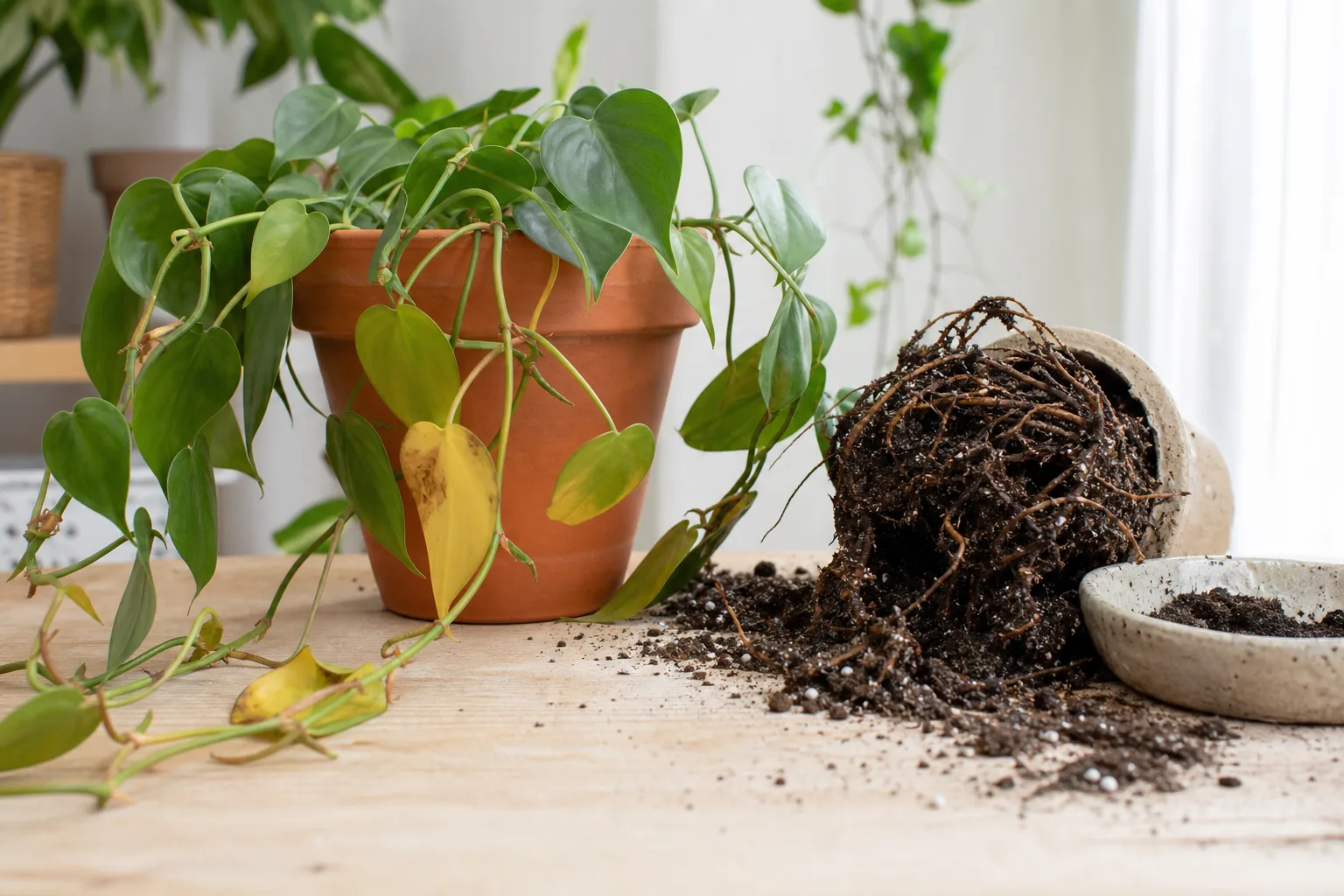
Root Rot on Heartleaf Philodendron: Causes, Checks & Fixes
This guide covers root rot on Heartleaf Philodendron. See also the general Root Rot guide, watering, and light pages for this plant.
Root Rot on Heartleaf Philodendron: Causes, Checks & Fixes
Quick answer
Root rot on Heartleaf Philodendron (Philodendron hederaceum) means fine roots have died in wet, oxygen-poor mix-not a leaf disease you can spray away. This fast-growing trailing aroid needs soil-based potting mix that dries between drinks; roots rot quickly in compacted or persistently wet media.
The highest-value diagnostic clue is the wilt-with-wet-soil trap: vines hang limp while the pot stays heavy because damaged roots cannot absorb the oxygen or move water the plant needs. Watering again because leaves look thirsty makes decline faster.
First fix: stop all watering, unpot the plant, and inspect roots before trimming or repotting. If you only suspect wet soil without mushy roots, start with the overwatering guide. If vines droop but you have not confirmed rot, use the drooping-leaves guide for triage first.
What root rot looks like on Heartleaf Philodendron
Heartleaf Philodendron carries glossy heart-shaped leaves on slender green stems that trail from hanging baskets or climb a support. Root rot rarely starts with spots on the blade-it starts underground and shows up as a water-uptake failure.
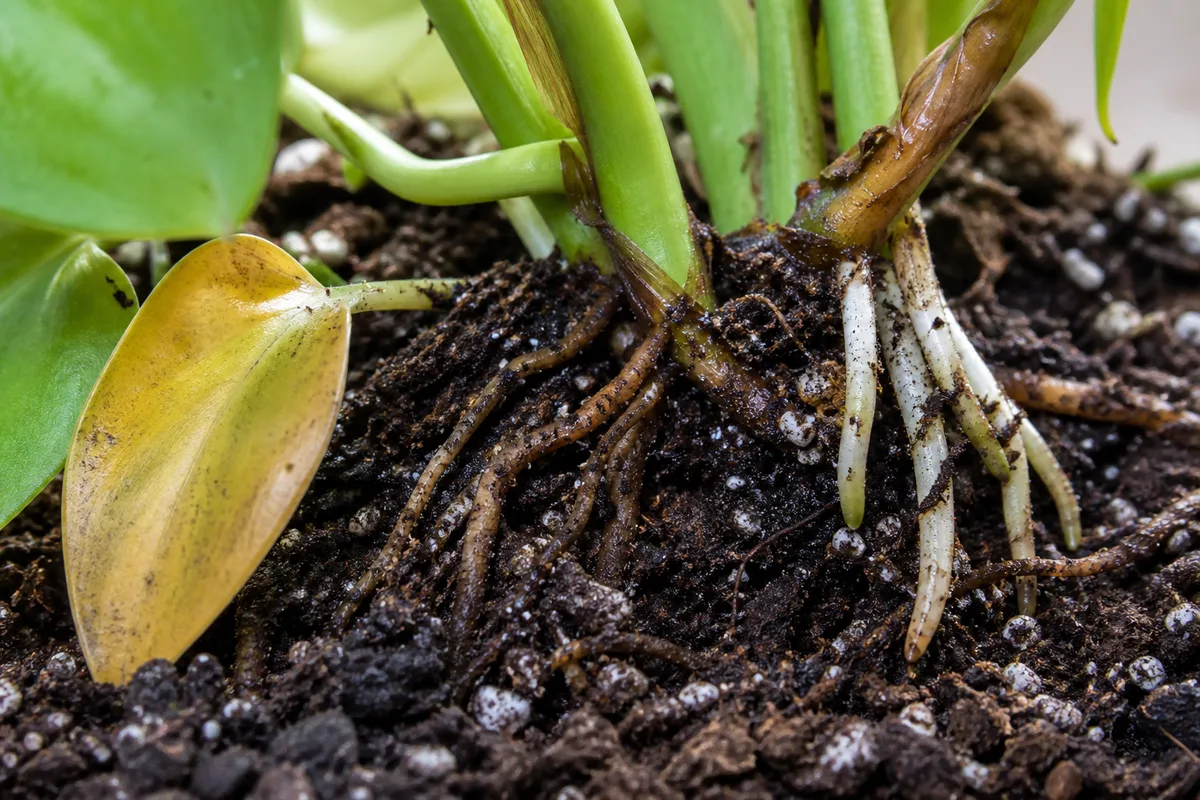
Root Rot symptoms on Heartleaf Philodendron - compare with healthy tissue on the same plant.
Yellow lower leaves on trailing vines
Yellowing usually begins at the oldest, lowest nodes on the vine and moves upward as root function fails. On a long trailing stem, the farthest tips may still look green while lower leaves yellow and drop-because water from surviving roots cannot reach the full length of the hanger.
Wilt-with-wet-soil trap
The whole vine may limp despite soggy mix. That is the dangerous mirror image of thirst: the plant looks dehydrated while sitting in water. Many owners add another soak; on philodendron that often converts mild overwatering into confirmed rot within days.
Stem-base blackening and sour soil
Soft dark stems where vines enter the mix signal rot climbing above the root zone. Sour or rotten smell from the drainage hole confirms anaerobic breakdown. Advanced cases show blackening climbing the base of the vine-treat as salvage-or-propagate territory, not a passive dry-down wait.
Small fungus gnats hovering above the soil surface do not cause rot, but they confirm the root zone has stayed wet too long. See the fungus gnats guide if flies appear alongside yellow lower leaves.
Why Heartleaf Philodendron gets root rot
Root rot is almost always a watering and drainage failure on this species-not a random infection on healthy roots in airy mix.
Calendar watering and winter schedule mismatch
Heartleaf can use water quickly in warm bright months, so a weekly soak may work in summer. The same calendar in winter-when growth slows and watering should be reduced from fall through late winter-keeps mix wet for weeks. Iowa State Extension recommends watering when the top of the soil is dry, not on a fixed schedule carried over from July.
Low light, hanging baskets, and slow dry-down
This plant tolerates low light, but tolerance is not fast drying. In dim corners water use drops while peat-heavy shop mix holds moisture at the root zone. Hanging baskets dry from all sides in summer but can stay damp in the center when airflow is low. A trailing vine in a north-facing room may take 14–21 days between drinks in winter-see the watering guide for seasonal check intervals.
Oversized pots, heavy peat mix, and cachepot standing water
Oversized pots keep a large wet zone around a small root ball. Heavy peat without perlite amendment compacts and holds water too long. Saucers or decorative cachepots that trap runoff create chronic bottom saturation; the RHS advises never leaving philodendron containers standing in water. The overview hub warns about cachepot standing water for this exact reason.
How to confirm the cause
Work through these checks in order. Each step narrows the diagnosis before you cut or repot.
- Pot weight - Lift the container. Heavy and wet supports rot suspicion; light and dry points to underwatering instead.
- Deep moisture probe - Push a finger or skewer 5–7 cm into the mix. Surface dust can hide wet roots below.
- Smell at the drainage hole - Stale, sour, or rotten odor supports confirmed rot over simple thirst.
- Stem squeeze at the soil line - Pinch base stems where they enter the mix. Soft, dark, collapsing tissue supports rot; firm flexible stems with dry mix support underwatering.
- Unpot and inspect roots - Healthy roots are firm and white or tan; rotted roots are brown, mushy, and may pull away or smell foul.
- Recent care history - Note last watering date, pot size relative to root mass, and whether the plant sits in a cachepot.
Lookalikes: overwatering early stage vs. underwatering vs. droop without rot
| Pattern | Pot weight | Roots on inspection | Stem at soil line | Next step |
|---|---|---|---|---|
| Early overwatering | Heavy; damp at depth | Still firm | Firm at first | Overwatering guide - stop watering, improve dry-down |
| Confirmed root rot | Heavy; sour smell | Brown, mushy | Soft, darkening | Stay on this page - trim and repot |
| Underwatering | Light; dry at depth | Firm | Firm, flexible | Underwatering guide - one deep soak |
| Droop without confirmed rot | Variable | Not yet inspected | Variable | Drooping-leaves guide - triage first |
If mix is dusty dry with limp vines and firm stems, you may have underwatering-not rot. Do not unpot and trim healthy roots on a dry plant.
First fix for Heartleaf Philodendron
Stop all watering and unpot the plant to inspect roots. That single action prevents the most common mistake-adding water to a drowning vine.
Mild cases: stop watering, trim rot, air-dry cuts, repot with perlite
Use this path when more than half the root mass is still firm white or tan tissue:
- Knock the plant out of its pot and rinse roots gently under lukewarm water.
- Trim brown mushy roots with clean scissors, leaving only firm tissue. Disinfect blades between cuts if rot was extensive.
- Let cut root surfaces air-dry 24 hours on paper towels in a warm spot out of direct sun.
- Repot into fresh standard potting mix with 25–30% perlite in a pot matched to the remaining root mass-not oversized. See the repotting guide for pot-sizing rules.
- Wait about one week before the first light watering. Plants with partial rot may be salvaged by pruning rotted parts and repotting into fresh mix.
Trim yellow leaves only if they are fully collapsed; remaining green tissue may still photosynthesize while roots rebuild.
Severe cases: propagate firm vine cuttings as backup
Use this path when most roots are mushy, stems blacken at the base, or the whole vine collapses on wet mix:
- Identify vine sections that are still firm and green above the rot line.
- Cut 10–15 cm sections with at least one node each using clean scissors.
- Remove lower leaves so one or two nodes sit below the water or rooting medium line.
- Root in water (change water every few days) or moist perlite. Iowa State Extension notes trailing philodendron stem cuttings 3–6 inches long root readily in water or perlite.
- Pot rooted cuttings into fresh airy mix once roots are several centimeters long.
Keep the parent plant on the mild rescue path if any firm roots remain-but treat propagation as your insurance policy, not an afterthought.
Recovery timeline
Recovery speed depends on how much healthy root tissue survives after trimming.
Mild partial rot - Expect firm new leaves at vine tips within two to four weeks after repotting and the first cautious watering. Old yellow leaves will not turn green again; judge progress by new growth, not old foliage.
Moderate rot with heavy root loss - Growth may stall for four to six weeks while the plant rebuilds root mass. Some additional leaf drop is normal. Do not fertilize during this window.
Severe base rot - Parent plant may not recover even with propagation backup. Rooted cuttings often establish faster than a collapsing parent with no viable roots.
Signs improvement is working: new tips unfurl with normal gloss, stems firm at the soil line, pot weight drops on a predictable dry-down cycle.
Signs the problem is worsening: blackening climbs the stem, mix stays sour after repot, or new growth emerges small and pale while old leaves continue to yellow.
What not to do
Do not keep watering because trailing vines look wilted when soil is already wet-that converts salvageable overwatering into confirmed rot.
Do not fertilize a rotting plant hoping to push vigor. Feed only after new growth looks normal for several weeks.
Do not repot into a larger pot to “help drying.” A bigger wet zone accelerates rot on a reduced root mass.
Do not use heavy peat mix without perlite or bark amendment.
Do not reuse old potting mix from a rotted plant; pathogens can persist in saturated media.
Keep away from pets when handling cut tissue; philodendron is toxic to cats and dogs.
How to prevent root rot next time
Learn your pot’s dry-down rhythm in its actual light spot rather than watering on a calendar. Water when the top 2 inches of mix are dry-roughly every 7–10 days as a summer check reminder, every 14–21 days in winter, but always confirm dryness first.
Use containers with open drainage and empty saucers after every soak. Lift the inner pot from decorative cachepots to drain; never let the philodendron sit in standing water.
Reduce watering from fall through late winter when growth slows. A heavy pot that stays wet for more than a week in a dim room is your signal to cut back further.
Repot in spring when roots circle the base, using only one size up and fresh airy mix. Review the full watering guide and soil guide for mix and seasonal rhythm.
When to worry
Treat as urgent when stems blacken at the base, soil smells rotten, or the whole vine stays limp on wet mix for more than 48 hours. Fast-growing Heartleaf Philodendron vines can collapse quickly once base rot spreads-propagate firm sections immediately rather than waiting for passive recovery.
Also escalate when more than half the root mass is mushy on inspection, or when new growth emerges stunted while lower leaves yellow in rapid succession.
Not urgent: one yellow lower leaf on an otherwise firm vine with appropriate dry-down-may be normal senescence if the rest of the plant is stable. Confirm with pot weight and root inspection before assuming rot.
Conclusion
Confirmed root rot on Heartleaf Philodendron is a rescue problem, not a foliage problem. The wilt-with-wet-soil trap tells you roots have failed even though the mix is damp-stop watering, unpot, and read the roots before you act. Mild cases recover after trim, air-dry, and repot into airy mix; severe base rot means propagate firm vine cuttings while you still can. Match watering to how fast your pot dries in its real light spot, and this trailing aroid will keep producing the glossy heart-shaped leaves it is grown for.
This page was reviewed against NC State Extension, Iowa State Extension, Missouri Botanical Garden, RHS, and ASPCA guidance on P. hederaceum root decline, cross-checked with LeafyPixels watering, overwatering, underwatering, drooping-leaves, and repotting articles on the same plant.
Related guides:
- Heartleaf Philodendron overview - full care profile and common-problem index
- Watering - seasonal rhythm and dry-down checks
- Overwatering - early wet-soil triage before rot is confirmed
- Drooping leaves - droop triage when rot is not yet confirmed
- Repotting - pot sizing and mix after root trim
When to use this page vs other Heartleaf Philodendron guides
- Heartleaf Philodendron watering guide - Use for routine moisture checks before assuming root rot is the main issue.
- Heartleaf Philodendron problems hub - Browse all 16 common issues on this species.
- Overwatering on Heartleaf Philodendron - Different entry point when symptoms overlap with root rot.
- Yellow Leaves on Heartleaf Philodendron - Different entry point when symptoms overlap with root rot.
- Wilting on Heartleaf Philodendron - Different entry point when symptoms overlap with root rot.
Related Heartleaf Philodendron guides
- Heartleaf Philodendron overview
- Heartleaf Philodendron watering
- Heartleaf Philodendron light
- Heartleaf Philodendron soil
- Overwatering on Heartleaf Philodendron
- Yellow Leaves on Heartleaf Philodendron
- Wilting on Heartleaf Philodendron
- Mold on Soil on Heartleaf Philodendron
- Heartleaf Philodendron problems