Underwatering on Heartleaf Philodendron: Causes, Checks &
Quick answer
Underwatering on Heartleaf Philodendron shows as limp trailing stems, curling leaf edges, and a very light dry pot. Water deeply once when the top 2–3 cm is dry-if soil is already wet, do not add water and check for root rot instead.
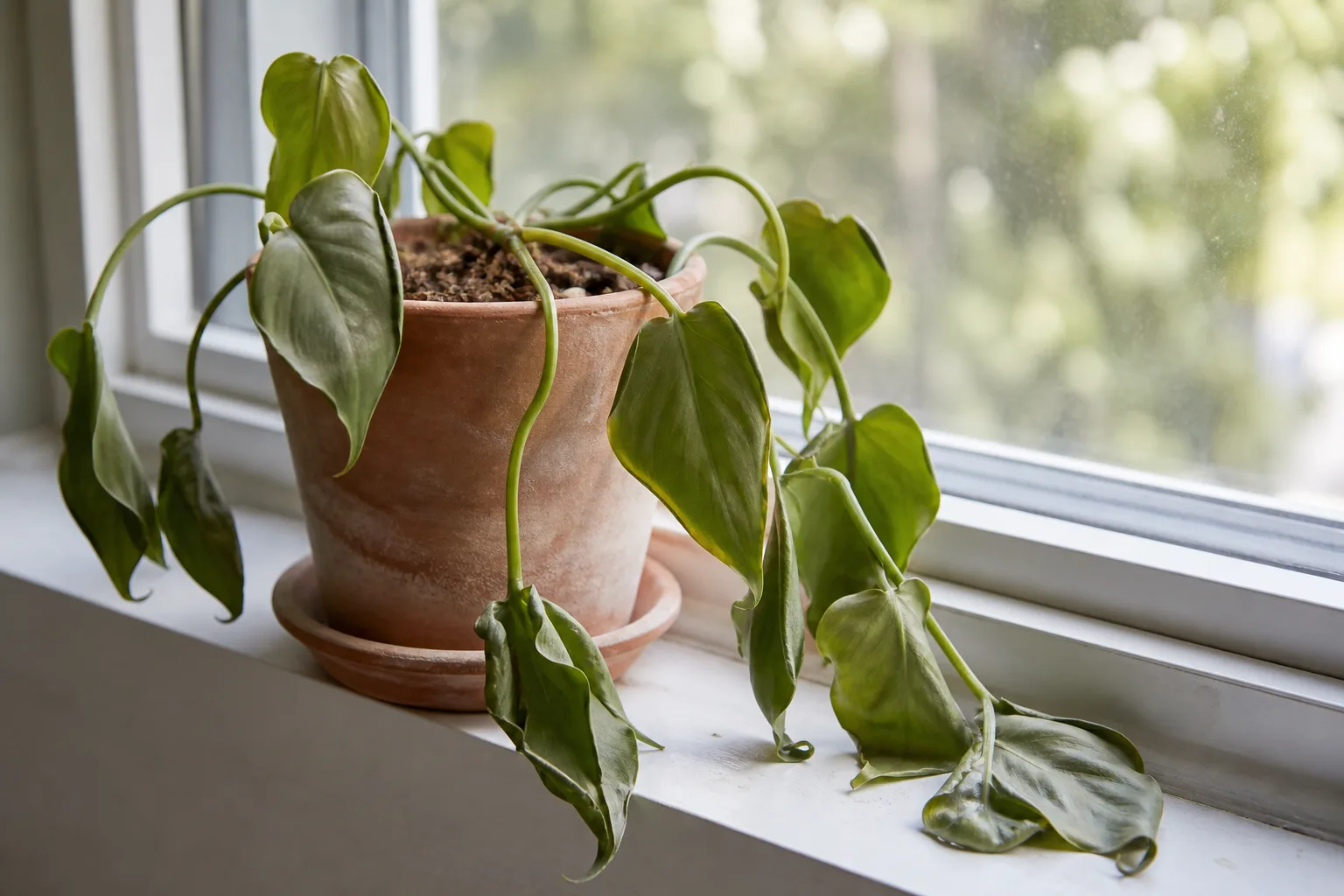
Underwatering on Heartleaf Philodendron: Causes, Checks & Fixes
This guide covers underwatering on Heartleaf Philodendron. See also the general Underwatering guide, watering, and light pages for this plant.
Underwatering on Heartleaf Philodendron: Causes, Checks & Fixes
Quick answer
Heartleaf Philodendron (Philodendron hederaceum) wilts slightly to signal thirst-it is one of the clearer communicators among common houseplants and forgives brief dry spells better than months of neglect. When the top 2–3 cm of mix is dry, the pot feels light, and trailing vines hang limp with curling leaf edges, underwatering is the likely cause.
First fix: water deeply once until excess runs from the drainage hole, then discard saucer water. If mix repels water on the surface, bottom-water for 30 minutes or poke shallow holes so the root ball rewets evenly.
Critical stop rule: If soil is wet or the pot feels heavy and stems are soft at the base, do not add water. That pattern is overwatering or root rot-the opposite problem-and another soak accelerates decline.
Scope note: This page covers chronic or acute dry-down stress only. General watering rhythm, pot choice, and seasonal schedules live in the Heartleaf Philodendron watering guide. Limp vines with unclear soil context are covered in the drooping leaves guide and wilting guide.
Wet-soil vs. dry-soil decision table
The same limp trailing vine can mean opposite root-zone problems. Read the pot before you pour.
| Check | Underwatering (thirst) | Overwatering / root stress |
|---|---|---|
| Pot weight | Light | Heavy for days after last watering |
| Moisture 5–7 cm deep | Dusty dry | Wet or soggy |
| Stem at soil line | Firm, green, flexible | Soft, dark, or collapsing |
| Leaf pattern | Tips droop first; edges curl inward | Whole vine limp; lower leaves may yellow |
| Smell from drainage hole | None | Sour or musty |
| After one deep watering | Perks within 6–24 hours | Stays limp or worsens |
If your plant matches the right column, stop here and follow the overwatering guide or root rot guide instead.
What underwatering looks like on Heartleaf Philodendron
Heartleaf Philodendron carries glossy heart-shaped leaves on slender green stems that trail from hanging baskets or climb a support. When the root zone dries too far, the vine loses turgor-the internal water pressure that keeps foliage firm.
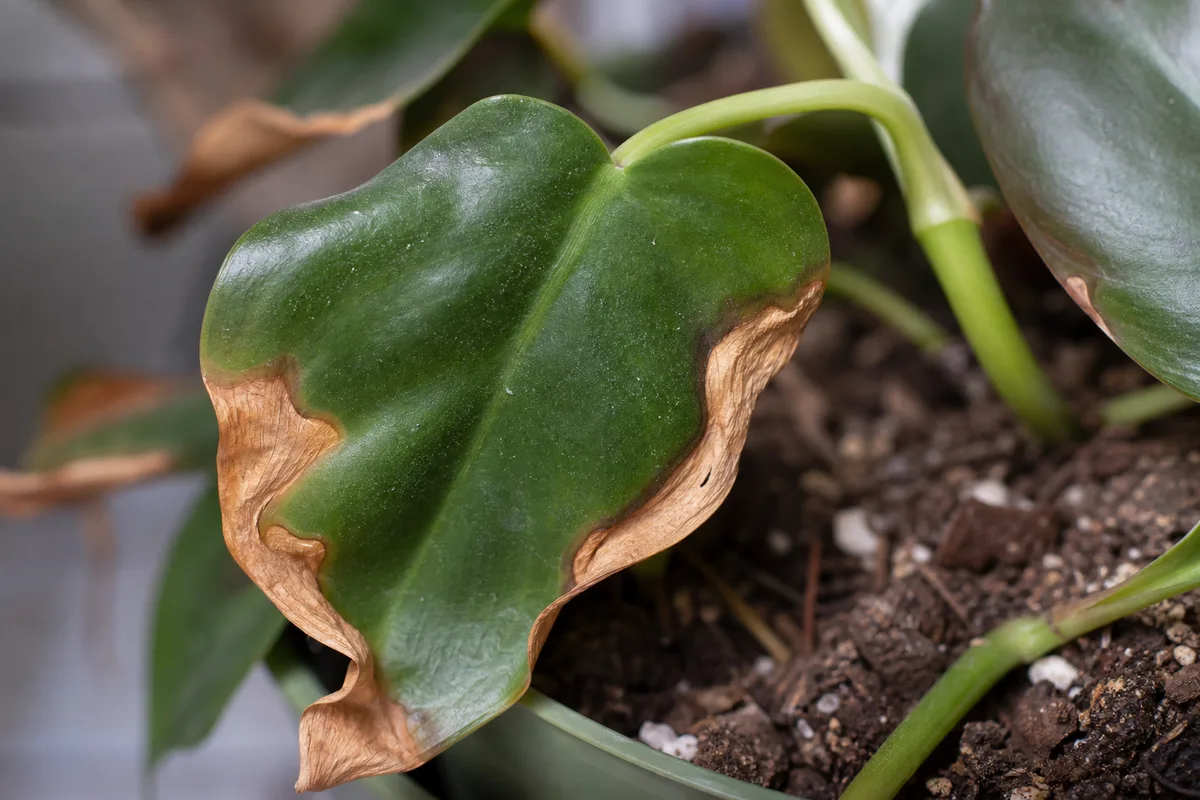
Underwatering symptoms on Heartleaf Philodendron - compare with healthy tissue on the same plant.
Typical underwatering signs:
- Trailing tips hang lowest while inner leaves may still look slightly firm
- Leaf edges curl inward before full collapse
- Stems feel flexible but not mushy
- Pot feels noticeably light; mix is dry several centimeters down
- Soil may pull slightly away from the pot wall after prolonged drought
- Lower leaves may yellow or crisp after repeated dry cycles
What underwatering does not look like:
- Whole vine uniformly limp on wet, heavy mix
- Soft dark stems at the soil line
- Sour smell from the drainage hole
- Sticky residue, stippling, or webbing on leaves (pest signs)
Unlike low-humidity brown tips, underwatering usually shows limp stems before crisp edges. The vine droops because roots cannot supply water, not because dry air pulls moisture from leaf margins alone.
Why Heartleaf Philodendron gets underwatered
This species is a fast-growing tropical vine adapted to forest understory. It moves water from roots through long trailing stems to leaves at the far end of a hanger. Anything that outpaces that pipeline-or blocks water from reaching roots-shows up as thirst stress.
Bright light and fast growth
In bright indirect light, philodendron uses water quickly and dries the pot on a predictable cycle. A plant moved to a brighter east or south window without adjusting watering schedule can go from fine to limp within a few days.
Hanging baskets and trailing length
Hanging baskets dry from all sides and often faster than floor pots. A long trailing stem means the farthest leaves are the last to receive water and the first to droop. A basket near a ceiling vent or AC register can dry twice as fast as a shelf pot in the same room.
Hydrophobic or compacted old mix
Peat-based mix that has dried completely can repel water on the surface. You pour, water runs through the gap between soil and pot wall, and the center of the root ball stays dry. The plant looks underwatered even after you “watered.”
Fear of overwatering after a past scare
Many owners swing too far toward dryness after yellow leaves or a root rot scare. Heartleaf Philodendron wilts clearly when thirsty, which makes underwatering easier to correct than rot-but only if you check soil before reflex-watering a wet plant.
Seasonal rhythm misread
Growth slows in fall and winter. Mix stays moist longer between drinks. Watering on a summer calendar in January can alternate between brief drought and occasional overwatering. Reduce watering when growth slows rather than stopping checks entirely.
Root-bound fast dry-down
Slightly pot-bound philodendrons dry faster between drinks because roots fill the container. Philodendrons do well when slightly pot-bound as soil dries more quickly-but a severely root-bound plant may pass water straight through without saturating the root mass, mimicking thirst after every pour.
How to confirm the cause
Work through these checks in order before you treat.
- Pot weight - Lift the container. Light means dry; heavy means wet or waterlogged.
- Deep moisture probe - Push a finger or skewer 5–7 cm into the mix, not just the surface. Surface dust can hide wet roots below.
- Stem firmness at the soil line - Pinch base stems where they enter the mix. Firm and green supports thirst. Soft, dark, or collapsing tissue supports rot-see wilting escalation.
- Tip-vs-base pattern - Tips-only droop with dry mix usually means underwatering on a long vine. Whole-plant limp on wet mix means root uptake failure.
- Hydrophobic check - If surface water beads or runs down the pot wall, probe the center of the root ball with a skewer. Dry core after surface watering confirms hydrophobic mix.
- Recent care history - Note last watering date, travel gaps, and whether the plant moved to a brighter window.
- Recovery test (dry mix only) - If mix is clearly dry and stems are firm, water once deeply until excess drains. Perked foliage within 6–24 hours confirms thirst. Do not run this test on wet soil.
If wet soil, soft stems, and sour smell align, skip watering and inspect roots instead of waiting for a perk-up that will not come.
First fix for Heartleaf Philodendron
Water thoroughly once when the top 2–3 cm of mix is dry and the pot is light-do not water by habit or calendar.
- Water until excess runs from the drainage hole. Discard saucer water within 15 minutes.
- If mix repels water, bottom-water the pot for 30 minutes in a basin so the root ball rewets from below, or poke shallow holes in the dry surface so water penetrates evenly.
- Wait 24 hours and check whether trailing tips have lifted.
- Resume normal rhythm: water when the top of the soil is dry-roughly every 7–10 days in active summer growth, less in winter.
One diagnostic soak-not daily shallow sips, not fertilizer, and not repotting on day one unless roots are clearly failing.
Step-by-step recovery
After the first deep watering, follow the path that matches severity.
Mild underwatering (one missed cycle)
- Give one full watering (or bottom soak if mix was hydrophobic).
- Wait 24 hours and confirm trailing tips have lifted.
- Resume checking the top 2–3 cm of mix rather than watering on a fixed schedule.
- Trim only leaves that stay fully crisp after the vine stabilizes.
Moderate drought (limp vine, dry mix for a week or more)
- Bottom-water 30 minutes if surface water runs through without soaking the core.
- Move the plant out of harsh direct sun while it recovers-bright indirect light is enough.
- Check pot weight every three to four days until you learn the new dry-down rhythm in its current spot.
- Expect lower leaves that yellowed during stress to stay damaged; watch for firm new growth at vine tips.
Chronic neglect or hydrophobic mix
- Bottom-soak until the pot feels noticeably heavier and the surface darkens evenly.
- If mix is years old and always repels water, repot into fresh well-draining potting mix with perlite in spring-only after the vine has perked from the soak.
- If roots are severely circling and water passes straight through, step up one pot size with fresh mix.
- Do not fertilize until new growth looks normal for two weeks.
Do not mist expecting underwatering to fix itself. Misting does not rehydrate the root zone on a trailing philodendron.
Recovery timeline
| Severity | What to expect | Signs of success |
|---|---|---|
| One missed watering | Perk within hours; full turgor across a long vine may take 24 hours | Trailing tips lift; stems feel firm |
| Several dry days | 24–48 hours for most vines to firm; lower crisp leaves stay damaged | New leaves at tips look glossy |
| Repeated drought cycles | Weeks of stable watering before consistent new growth | Yellow lower leaves stop spreading |
| Hydrophobic mix corrected | Immediate weight gain after bottom soak; perk within 24 hours | Even moisture through root ball |
Leaves that went fully limp and then crisp will not become glossy again, but that does not mean the plant is lost if new nodes produce normal foliage.
Lookalike symptoms to rule out
Overwatering and root rot-root rot can occur in overly wet soil-produce the same limp vine on wet mix. Stems soften at the base, lower leaves yellow, and sour smell may come from the drainage hole. Adding water because leaves look dry is the fastest way to turn a recoverable thirst case into rot. Cross-check the overwatering guide.
Heat or AC draft wilt can sag trailing tips for a few hours without soil being bone dry. Check whether only the side facing a heater or cold window collapsed. Turgor often returns overnight without extra water if mix moisture was already adequate.
Low-humidity crisp tips show brown dry edges on firm leaves before whole vines collapse. Soil moisture may look normal. See the low-humidity guide if tips crisp while stems stay upright.
Leggy weak growth in deep shade produces thin stretched stems that sag under their own weight. That is a light problem, not thirst-internodes are long and mix may stay wet for weeks.
Root-bound instant drainage mimics thirst when water runs through a dense root mat without saturating. Pot feels light soon after watering; vine droops again within two days. Repot in spring if roots circle heavily and mix dries the day after every soak.
What not to do
Do not give daily shallow sips-philodendron prefers a full drink after dry-down, not constant surface moisture.
Do not water a wilted Heartleaf when soil is already wet. That is root uptake failure, not thirst.
Do not confuse winter reduced growth with thirst. Growth slows; checks should continue, but frequency drops.
Do not increase fertilizer on a limp plant hoping to push vigor. Feed only after turgor returns and new growth looks normal.
Do not ignore hanging basket physics. A floor philodendron and a basket in the same window can need different schedules.
Wear gloves when handling stressed vines; heartleaf philodendron contains calcium oxalate crystals toxic to cats and dogs and sap can irritate skin. Keep trailing stems out of pet reach during inspection and bottom-watering.
How to prevent underwatering next time
Learn your pot’s dry-down rhythm in its actual light spot rather than watering on a calendar. Lift the pot until weight tells you when the top 2–3 cm has dried.
Use containers with open drainage and empty saucers after every soak. If you use decorative outer pots, lift the inner pot to drain-do not let the philodendron sit in standing water.
Place the vine in bright indirect light so the pot cycles moisture predictably. Very low light slows water use and can mask a different problem-mix staying wet too long.
Check hanging baskets twice weekly in summer heat, especially near AC vents or ceiling registers that accelerate dry-down.
Reduce watering in fall and winter when growth slows, but do not stop probing the root zone entirely.
Repot in spring when roots circle the base or hydrophobic old mix no longer holds water evenly.
When to worry
Treat as urgent when drooping persists more than 48 hours after a confirmed deep watering on dry mix with firm stems-that may indicate root damage beyond simple thirst, not just a missed drink.
Also escalate if you corrected drought but new growth emerges small, pale, and limp while old leaves keep yellowing-root function may be failing.
Not urgent: slight afternoon droop on the outermost trailing tips in peak summer heat that recovers overnight, or one missed watering cycle on an otherwise healthy vine.
If wet soil, soft base stems, and sour smell appear together, treat as root rot escalation-not underwatering.
Related Heartleaf Philodendron guides
- Heartleaf Philodendron overview - full care profile and growth habit
- Watering guide - seasonal rhythm and pot-weight method
- Drooping leaves - wet-vs-dry droop when cause is unclear
- Wilting - urgent wilt patterns and escalation
- Overwatering - when limp vines sit on wet mix
- Root rot - soft stems and sour smell on saturated soil
- Yellow leaves - lower-leaf yellowing after drought cycles
- Light requirements - how brightness changes dry-down speed
Conclusion
Underwatering on Heartleaf Philodendron looks alarming but usually tells a clear story once you read the pot instead of the foliage. A light dry pot with firm stems needs one thorough drink; a heavy wet pot with soft base tissue needs watering paused and root inspection. That single habit prevents the two most common mistakes-ignoring a thirsty trailing vine and soaking a drowning one-so your philodendron can firm up and keep producing the glossy heart-shaped leaves it is grown for. If soil context stays unclear after these checks, start with the drooping leaves guide before treating.