Yellow Leaves on Heartleaf Philodendron: Causes, Checks &
Quick answer
On Heartleaf Philodendron, one older leaf yellowing low on a long vine can be normal. Widespread yellowing usually points to wet roots, low light slowing dry-down, repeated drought stress, pests, or an exhausted potting mix. Start by checking soil moisture and stem firmness before you water again.
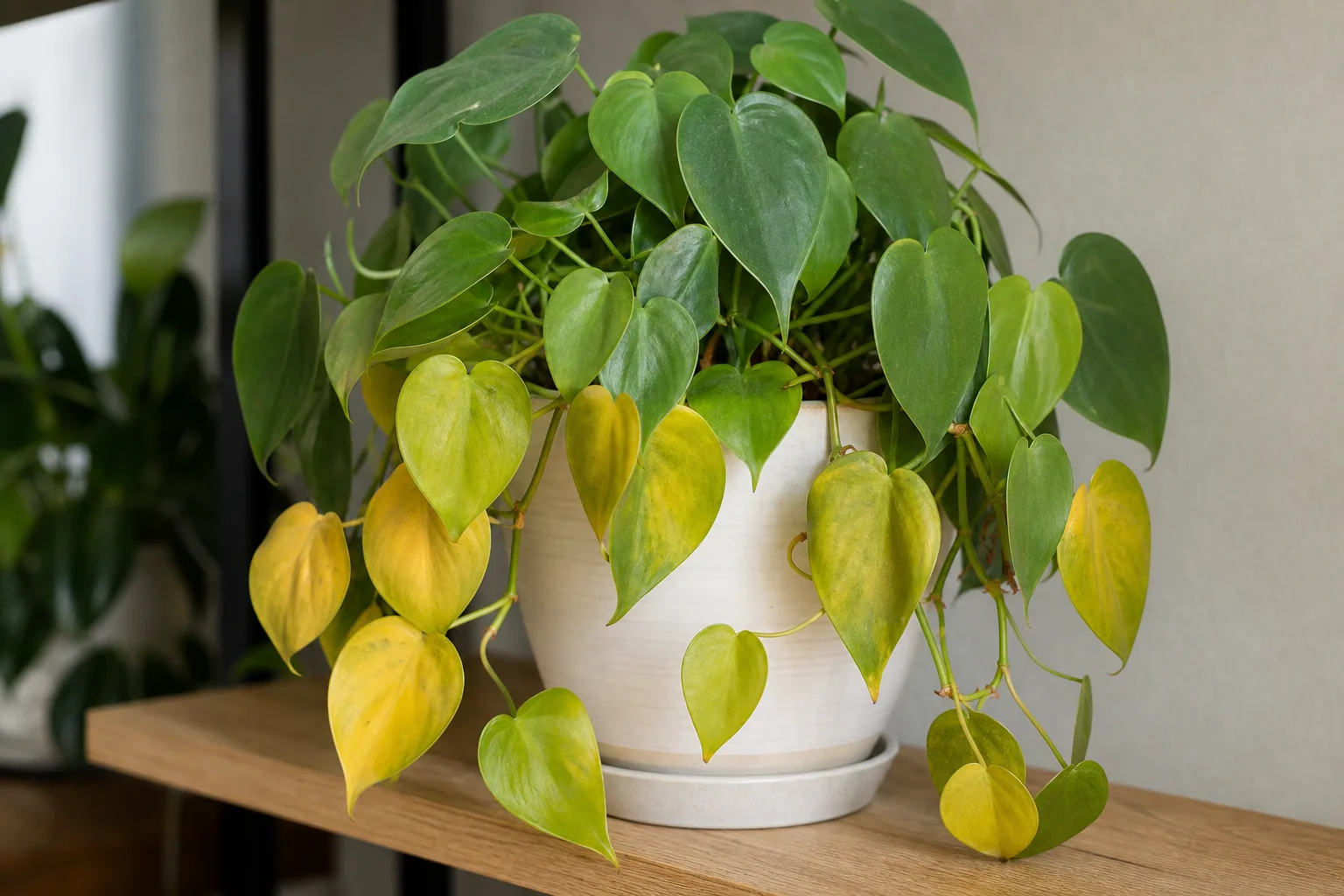
Yellow Leaves on Heartleaf Philodendron: Causes, Checks & Fixes
This guide covers yellow leaves on Heartleaf Philodendron. See also the general Yellow Leaves guide, watering, and light pages for this plant.
Yellow Leaves on Heartleaf Philodendron: Causes, Checks & Fixes
Quick answer
Yellow leaves on Heartleaf Philodendron are common, but they do not all mean the same thing. On a long trailing vine, one older leaf at a lower node may yellow simply because the plant is aging and extending growth elsewhere. When several leaves yellow at once, or when yellowing comes with a heavy wet pot, limp vines, or soft stems, the real issue is usually root-zone stress rather than nutrition.
Start with the two checks that save the most guesswork: is the pot still wet at depth, and are the stems firm at the soil line? Those answers separate normal aging from overwatering, root rot, low-light stress, repeated drought, or pest damage.
What Is Normal and What Is Not
Heartleaf philodendron is a fast-growing tropical vine. It naturally prioritizes newer growth at the tips, so the oldest leaves can drop over time.
Usually normal:
- One yellow leaf at the oldest node on a long vine
- The rest of the plant looks glossy and firm
- New leaves are still emerging cleanly
- The pot is drying on a normal rhythm
Usually a real problem:
- Several leaves yellowing in the same week
- Yellowing that climbs upward from the base of the vine
- Limp vines on a still-heavy pot
- Soft, dark tissue at the soil line
- Yellowing paired with pests, curling, crisp edges, or stalled growth
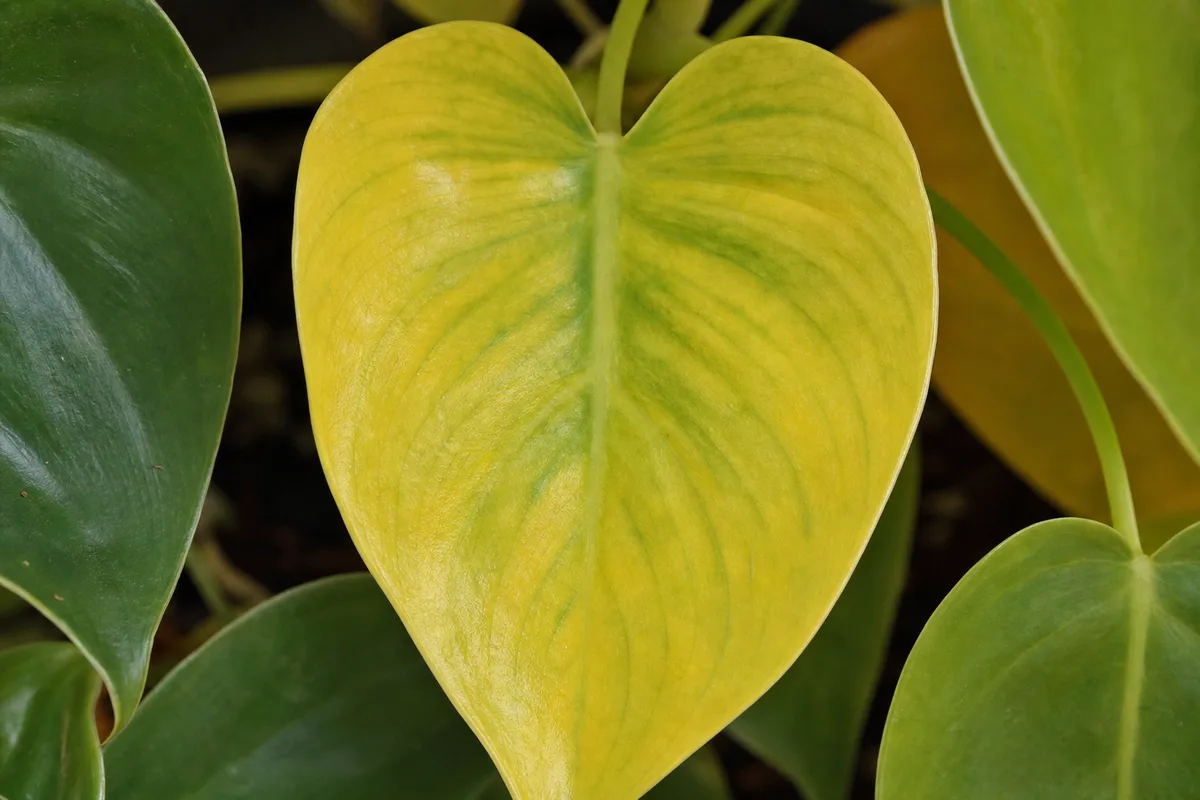
On heartleaf philodendron, pattern matters more than any single yellow leaf.
The Most Common Causes
1. Wet Roots From Overwatering
This is the most common cause. The Clemson Cooperative Extension philodendron guide notes that overwatering and low light are both common reasons philodendron leaves yellow. On heartleaf, the usual pattern is lower leaves yellowing first while the pot stays wet too long.
The plant then tricks growers: the vines droop, so it looks thirsty, but the roots are already short of oxygen. Another watering makes the problem worse.
2. Low Light Slowing Dry-Down
The NC State Extension profile shows why heartleaf philodendron survives in lower light so well: it is a vining understory plant. But “tolerates low light” does not mean “thrives in darkness.” In a dim room, growth slows, the mix stays wet longer, and older leaves yellow from wet-root stress even if the watering volume did not change.
3. Repeated Drought Stress
Underwatering can also yellow leaves, especially older ones. This usually comes with:
- A very light pot
- Dry mix deeper than the surface
- Leaf edges that curl or crisp
- Vines that recover somewhat after a thorough soak
Repeated dry-outs hit long trailing vines hard because water has to travel farther along the stems to the leaves at the ends.
4. Natural Aging on Long Vines
One old leaf sacrificed along a long stem is part of how this plant manages growth. It becomes less normal when multiple leaves yellow together or when the rest of the plant also looks stressed.
5. Pests or Exhausted Mix
Spider mites, sap-feeding pests, and very old compacted mix can also yellow leaves. Pests usually add their own clues such as stippling, sticky residue, webbing, or distorted growth. Old mix often shows up as slow growth, root crowding, and poor watering behavior rather than isolated yellowing alone.
How To Diagnose the Cause
Use a sequence, not a guess.
Check Moisture 5 to 7 cm Deep
The Iowa State University Extension guide advises watering philodendrons when the top of the soil dries. If the upper layer looks dry but deeper mix is still damp, the plant is not ready for another soak.
Lift the Pot
A heavy pot days after watering points toward overwatering, poor drainage, or too little light. A very light pot points toward drought.
Inspect the Stem Bases
Firm green stems are reassuring. Soft, dark, or collapsing stem bases are not. If the base is soft, the next page you need is root rot on Heartleaf Philodendron, not a waiting game.
Look Under the Leaves
Yellowing with fine webbing or stippling suggests pests, especially spider mites. Yellowing with sticky residue may suggest sap feeders rather than a watering issue.
Look at the Pattern on the Vine
One oldest leaf is a minor issue. Several leaves across multiple vines usually means a culture problem affecting the whole root zone.
What To Do Based on What You Find
If the Pot Is Wet and the Stems Are Firm
Stop watering and let the mix dry down to the normal next-watering point. Move the plant into brighter indirect light if it has been sitting in a dim corner. Empty saucers and remove any trapped runoff from decorative outer pots.
If the Pot Is Wet and the Stems Are Soft
Unpot the plant and inspect the roots. Mushy roots and dark stem tissue mean the issue has moved beyond simple overwatering. Trim damage, repot into fresh airy mix, and follow the root rot guide.
If the Pot Is Dry and the Plant Is Limp
Give the plant one full watering, let excess drain away, and monitor whether the vines recover within the next several hours. If they do, the problem was thirst. If they do not, inspect the root system rather than repeating water.
If the Light Is Very Low
Move the plant to brighter indirect light before changing several other variables at once. Heartleaf philodendron is forgiving, but chronic dimness makes both yellowing and watering mistakes more likely.
If Pests Are Present
Treat the pest first and keep watering steady rather than overcorrecting the soil. Pests can yellow leaves on a perfectly watered plant.
When Yellow Leaves Mean Wet-Root Stress
The Missouri Botanical Garden overwatering page is useful because it explains the classic wet-soil wilt pattern: a plant can look dry because damaged roots are no longer moving water upward.
On heartleaf philodendron, that usually looks like:
- Lower leaves yellowing first
- Vines drooping while the pot still feels heavy
- Mix staying damp for too many days
- Growth slowing noticeably
When those signs line up, the problem is not a lack of water. It is that the roots are sitting in too much of it.
Recovery Expectations
Once a leaf turns fully yellow, it is not coming back. Improvement shows up elsewhere:
- The pot resumes a normal dry-down rhythm
- Stems stay firm
- New leaves come out healthy at the growing tips
- Yellowing stops spreading
If the plant only had mild wet-root stress, that may happen within a week or two after you correct the watering pattern. If roots were damaged, recovery takes longer and may require repotting.
What Not To Do
- Do not fertilize first and diagnose later.
- Do not keep watering a limp plant without checking soil at depth.
- Do not assume every yellow leaf means deficiency.
- Do not repot repeatedly unless the mix or roots clearly need it.
- Do not keep the plant in a dark corner and then try to solve the symptoms with watering changes alone.
- Keep trimmed leaves and cuttings away from pets, because heartleaf philodendron is toxic to cats and dogs.
How To Prevent It Next Time
Use habits that match how this vine actually grows:
- Water when the top part of the mix has dried, not on a fixed schedule
- Use a well-draining mix and a pot with drainage
- Give the plant bright indirect light instead of very low light
- Check long trailing vines regularly so one yellow leaf does not turn into a whole-vine decline
- Repot before the mix becomes compacted and hard to rewet evenly
Heartleaf philodendron is forgiving when its roots can cycle between moisture and air. Most recurring yellow-leaf problems start when that cycle breaks.
When To Worry
Treat yellowing as urgent when:
- It spreads fast across several vines
- The pot smells sour
- The stem base turns dark or soft
- The plant stays limp on wet soil for more than a day or two
- New leaves emerge small, pale, or deformed while older leaves keep dropping
At that point, root inspection matters more than another round of waiting.
Conclusion
Yellow leaves on Heartleaf Philodendron are easiest to solve when you stop treating them as one problem with one answer. A single old leaf often means nothing serious. A heavy wet pot, multiple yellowing leaves, and limp vines usually mean the roots are under stress. Check moisture, pot weight, stem firmness, light, and pests in that order, and the cause becomes much clearer. Once you correct the real cause, watch the new growth, not the already-yellow leaves, to judge whether the plant is back on track.
Related tool
Use the Yellow Leaves Diagnosis Tool to narrow causes for yellow leaves on this plant before changing multiple variables at once.