Watering Heartleaf Philodendron: Schedule, Soil Checks &
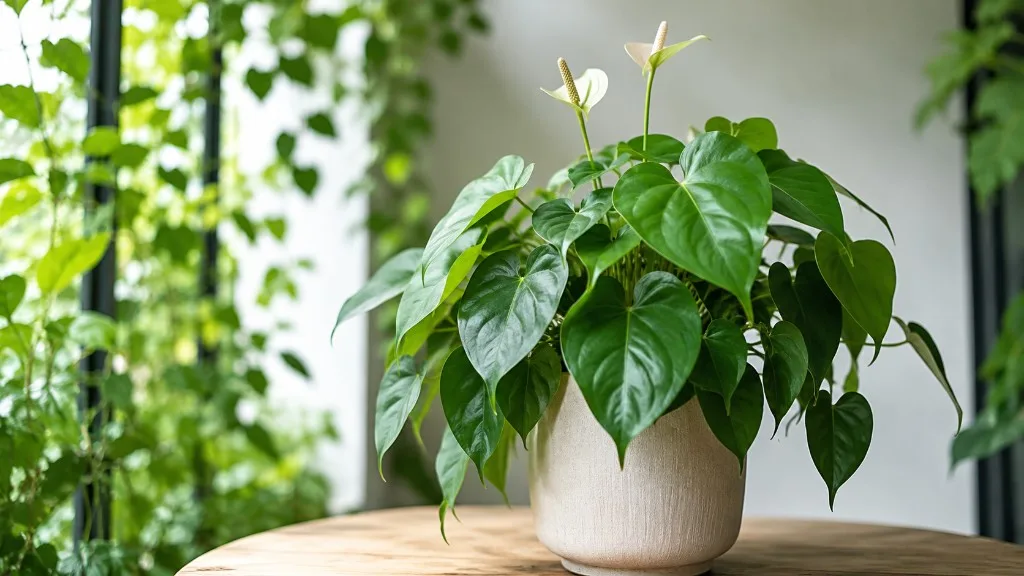
Watering Heartleaf Philodendron: Schedule, Soil Checks & Mistakes
Watering Heartleaf Philodendron: Schedule, Soil Checks & Mistakes
Heartleaf philodendron watering is one of the easier houseplant routines to get right - and one of the easiest to get dangerously wrong. Philodendron hederaceum evolved as a hemi-epiphytic climber in the Central and South American understory, where rain passes through bark and leaf litter quickly and roots breathe between showers. Indoors, that biology translates into a simple rule: check the pot, not the calendar. Water when the top 1–2 inches (2–3 cm) of mix feel dry, soak until runoff exits the drainage holes, then let the root zone dry again before the next drink.
Heartleaf is the classic beginner trailing aroid - fast-growing, quick to wilt when thirsty, and quick to recover after a proper soak. It tolerates brief drought far better than chronic saturation in low light. The most common failure mode is not forgetting to water; it is watering on a fixed weekly habit while a peat-heavy shop mix stays wet at the root zone for days. overwatering on Heartleaf Philodendron shows up as yellow lower leaves, mushy stems at the soil line, and foul-smelling mix - the same root rot signals extension services warn about for any container plant whose roots sit in anaerobic soil.
This guide covers how often to water Heartleaf Philodendron, a step-by-step moisture-check workflow, over- and underwatering on Heartleaf Philodendron diagnosis, seasonal adjustments, soak-drain technique, cachepot traps, trailing-basket versus moss-pole dry-down, common mistakes, and recovery when soil has stayed too wet. For mix composition that controls dry-down speed, see the Heartleaf Philodendron soil guide; for the full care picture, start at the overview hub.
Quick answer: check the pot, not the calendar
For most indoor heartleaf philodendrons in a 6-inch pot with drainage, a practical starting point is every 7–10 days in active summer growth and every 14–21 days in winter - but only after the top 2 inches of soil are dry. Iowa State Extension recommends watering philodendrons when the top of the soil is dry and warns against letting plants sit in soggy soil or saucers of water. Light level, pot material, room temperature, and whether the plant trails from a hanger or climbs a moss pole all change the interval. Your job is to verify dryness, not obey a reminder app.
| Moisture at top 2 inches | Pot weight feel | Action |
|---|---|---|
| Dry, crumbly | Light for its size | Water thoroughly until runoff; empty saucer |
| Cool but not wet | Medium | Wait 1–2 days; recheck |
| Damp or cool and clingy | Heavy | Do not water; improve light or airflow if pattern repeats |
| Wet with sour smell | Heavy, stagnant | Pause water; inspect roots - see overwatering |
Why heartleaf watering is forgiving - until it is not
Heartleaf Philodendron is not a desert plant, but it is also not a peace lily. Iowa State Extension FAQ guidance notes philodendrons prefer to stay evenly moist, not wet, and that heartleaf can tolerate very low light - a combination that catches beginners off guard. In dim corners the plant uses water slowly while shop potting mix holds moisture at the root zone for a week or more. You water on schedule because the surface looks pale; the bottom half of the root ball never dries; fine roots die; the plant wilts on wet soil; you water again.
That spiral is more dangerous for heartleaf than missing one dry-down cycle. A slightly underwatered heartleaf droops, then perks up within hours of a thorough soak. An overwatered heartleaf yellows from the bottom up, develops soft stems, and may not recover without Heartleaf Philodendron repotting guide. The Royal Horticultural Society advises waiting until the top of the compost dries out before watering and never leaving philodendrons standing in water, because saturated compost leads to root rot (RHS philodendron guide).
Worked vignette: A 6-inch plastic hanging basket in an east window might need a full soak every 7 days in July when new leaves unfurl weekly. The same plant moved to a cool north room in January may take 18–21 days between drinks - not because the calendar changed, but because transpiration slowed and the mix held moisture longer. Log your own pot for two cycles and you will beat any generic blog schedule.
How often to water Heartleaf Philodendron
There is no honest universal calendar for how often to water heartleaf philodendron. Missouri Botanical Garden lists Philodendron hederaceum with a “Medium” water requirement indoors in bright indirect light - horticultural shorthand for consistent moisture with dry-down between drinks, not constant dampness (Missouri Botanical Garden). What changes the interval is how fast your container dries in your room.
Starting intervals by season (not rules)
Use these as check reminders, not automatic watering days:
| Season / conditions | Typical check interval | Notes |
|---|---|---|
| Bright warm room, active growth | Every 5–7 days | Faster in terracotta, slower in plastic hangers |
| Average indoor summer | Every 7–10 days | Match Iowa State heartleaf starting range |
| Cool or dim winter | Every 14–21 days | Reduce when growth slows; confirm dryness |
| Recently repotted | Add 3–5 days to prior rhythm | Fresh mix and extra volume stay wet longer |
| After moving to lower light | Stretch interval immediately | Low light + old summer schedule = overwatering |
Iowa State Extension also notes philodendrons do well slightly pot-bound because soil dries more quickly between waterings - another reason a newly upsized pot suddenly needs fewer drinks even if you have not changed rooms.
The moisture check workflow
Surface color lies. Mix can look cracked on top while staying damp near the roots - especially in peat-heavy blends. Use at least one of these checks before every major watering:
- Finger or knuckle test: Insert your finger 2 inches (5 cm) into the mix. If you feel coolness, cling, or moisture, wait. Bone dry at that depth means you can proceed. In small pots, dry at 2 inches often means the whole root zone is ready.
- Skewer or chopstick test: Push a dry wooden skewer toward the pot bottom. Pull it out. Darkening or soil sticking means moisture remains. Clean, dry wood means the root zone has dried enough for heartleaf.
- Pot weight test: Lift the container after a fresh watering and again daily until it feels noticeably lighter. Experienced growers often trust weight more than touch because it reflects the whole column, not just the rim.
- Wilt check (secondary only): Heartleaf wilts slightly when thirsty and recovers after watering - but limp leaves with wet soil mean root trouble, not thirst. Always confirm with a soil check before reacting to droop.
NC State Extension describes P. hederaceum as a trailing or climbing aroid with slender stems and adventitious roots - fine roots that respond quickly when mix is airy but suffocate when it stays saturated (NC State Extension). Learning how your pot transitions from heavy to light matters more than any published day count.
Finger and skewer depth check
The top 2 inches target comes directly from extension philodendron guidance (Iowa State Extension). In hanging baskets with a curved bottom, probe two spots - near the rim and closer to the center - because water can pool along the lower curve while the edge feels dry. For moss-pole plants, check at the pot base, not at the pole; aerial roots on damp moss do not replace root-zone dryness in the container.
Pot weight and what it tells you
After watering, note how the pot feels in your hand. As heartleaf uses water, weight drops before the surface looks dusty. A light pot with limp leaves points to underwatering. A heavy pot with yellow lower leaves points to overwatering even if you have not watered in ten days - the mix never dried. Terracotta feels lighter faster than glazed ceramic; plastic hanging baskets hold moisture longest along the bottom curve.
Signs you are watering too much (and what to do)
Heartleaf philodendron overwatering announces itself in layers:
- Yellow leaves starting from lower, older growth while the mix stays dark and cool
- Mushy stems at the soil line or a soft crown
- Foul or sour smell from the mix
- Wilting despite wet soil on Heartleaf Philodendron - roots cannot take up water because they are dying
- Fungus gnats hovering when the surface rarely dries
- Slow or absent new growth in warm bright months
Overwatering is more likely when well-draining mix sits in low light, a pot without drainage, or a decorative cachepot that holds runoff. If several signs appear together, pause watering and inspect the root zone before feeding or repotting on impulse.
Root rot recovery when soil stays wet
At the first suspicion of chronic wetness:
- Stop watering until you can assess the root ball.
- Tip the plant out of the pot. Healthy roots are firm and pale; rotting roots are brown, black, or mushy and may smell foul.
- Trim dead roots with clean scissors. Remove all soft tissue - leaving rot spreads fast.
- Repot into fresh airy mix in a clean pot with drainage - often the same size or one size smaller after root loss. See soil guidance for mix ratios.
- Wait one to two weeks before the first cautious soak, then return to check-first watering.
- Place in bright indirect light while recovering - not a hot window that adds stress.
Full step-by-step detail lives on the root rot problem page. Honest limitation: if most of the root mass is gone and stems are mushy, recovery is uncertain. Early intervention succeeds far more often than waiting until half the vine collapses.
Signs you waited too long (and how to rehydrate)
Underwatering on heartleaf is usually visible and fixable:
- Wilting and drooping stems with a very dry, lightweight pot
- Curling leaf edges or slightly shrunken leaves
- Soil pulling away from the pot walls
- Crispy brown tips on older leaves - also linked to low humidity or salt buildup
A single dry episode rarely kills heartleaf. Rehydrate with one full soak at the sink until water runs from drainage holes, let the pot drain 15–30 minutes, then empty the saucer. Do not compensate with daily sips - that swings the problem to overwatering within a week.
If mix has gone hydrophobic - water runs down the sides without wetting the core - bottom-water for 30–45 minutes in a basin, then top-water once to settle the mix. Repeat the normal dry-down cycle afterward.
Seasonal watering changes
Heartleaf metabolism follows light and temperature, not your watering app. During warm months with longer days, new leaves appear faster and the pot dries more quickly. From late fall through early spring, cooler rooms and shorter days slow growth; the same volume that worked in August can waterlog roots in January.
Summer active growth vs winter slowdown
| Phase | What changes | Watering adjustment |
|---|---|---|
| Spring–summer | Faster growth, more transpiration | Check more often; soak when top 2 inches dry |
| Fall transition | Growth slows, days shorten | Stretch interval before each soak |
| Winter | Minimal new leaves in cool rooms | Often 14–21+ days between soaks; always verify dryness |
| Near heating vents | Faster surface dry-down | Pot may need water sooner; watch for uneven drying |
The RHS recommends reducing frequency in cooler months and never overwatering in winter (RHS philodendron guide). If you moved the plant away from a bright window for the season, cut water further - reduced light slows water use even if the room feels warm.
How to water cleanly
The soak-and-drain method matches tropical rain followed by dry-down: one thorough irrigation, complete drainage, then no water until the mix dries again.
- Check dryness at 2 inches depth minimum.
- Water slowly and evenly across the surface until water runs freely from drainage holes - usually several minutes for a large pot.
- Let the pot drain 15–30 minutes in the sink or on a rack.
- Empty the saucer or cachepot completely - twice if needed after ten minutes.
- Return the plant to its spot. Do not water again until the next check passes.
Use room-temperature water when possible. The RHS prefers rainwater or filtered water in hard-water areas to maintain slightly acidic compost (RHS philodendron guide). Avoid splashing crowns if your heartleaf is prone to leaf spotting in high humidity.
Pet note: Heartleaf philodendron is toxic to cats and dogs if chewed. Empty saucers promptly so pets do not drink fertilizer-laced runoff, and keep trailing vines above reach - covered on the overview hub.
Cachepot and saucer traps
Decorative cachepots without drainage are where heartleaf develops root rot slowly enough that beginners blame “underwatering” when the bottom half of the root ball has been anaerobic for weeks. If you use a cover pot, remove the nursery pot, water at the sink, drain fully, then replace. Never let the inner pot sit in accumulated runoff.
Shallow daily top-ups keep the surface wet while the core starves for oxygen - the opposite of a full soak-drain cycle. One deep drink spaced by dry-down beats a tablespoon every morning.
Common Heartleaf Philodendron watering mistakes
Watering on a fixed weekly schedule without checking soil - fix by replacing the “water Tuesday” reminder with a “check soil” reminder.
Trusting wilt alone - limp plus wet soil means overwatering; limp plus dry soil means thirst. Always feel the mix.
Keeping summer frequency through winter - the classic low-light saturation setup. Stretch intervals from October onward.
Leaving the plant in soggy shop mix in a dim corner - fix light or soil before chasing a better calendar.
Upsizing the pot “to help it grow” - extra wet mix without roots to fill it extends dry-down unpredictably. Iowa State notes philodendrons perform well slightly pot-bound (Iowa State FAQ).
Compensating for underwatering with daily sips - causes chronic surface moisture and shallow roots.
Ignoring blocked drainage holes - even one blocked hole traps water where roots die first (Missouri Botanical Garden overwatering guidance).
Trailing basket vs moss pole dry-down
The same heartleaf in two displays can need water on different schedules:
Hanging basket: Plastic hangers with a curved bottom often hold moisture along the lower curve longer than the top inch suggests. Long trailing stems increase leaf mass relative to a modest root ball, so the plant may wilt visibly before the pot feels light - still verify at 2 inches before soaking. Expect slightly faster checks in warm bright rooms, slower in cool air.
Moss pole: Climbing heartleaf sends roots into damp moss as well as the pot. The container mix still governs watering decisions - aerial roots on a moist pole do not mean the pot is dry. Supported plants in brighter light often use water faster than the same specimen trailing in a dim corner. Match pole misting to humidity goals, not to a substitute for pot checks.
If one setup dries in four days and the other takes twelve, the problem is display and light, not a “difficult” plant. Adjust checks per pot, not per species label.
When to use this page vs other Heartleaf Philodendron guides
- Heartleaf Philodendron overview - Start here for whole-plant context before deep-diving this topic.
- Heartleaf Philodendron problems hub - Jump to symptom-specific fix guides when this care topic does not resolve the issue.
- Overwatering on Heartleaf Philodendron - Escalate here when watering adjustments are not enough.
- Underwatering on Heartleaf Philodendron - Escalate here when watering adjustments are not enough.
- Root Rot on Heartleaf Philodendron - Escalate here when watering adjustments are not enough.
Related Heartleaf Philodendron guides
- Heartleaf Philodendron overview
- Heartleaf Philodendron light
- Heartleaf Philodendron soil
- Heartleaf Philodendron propagation
- Heartleaf Philodendron fertilizer
- Heartleaf Philodendron repotting
- Overwatering on Heartleaf Philodendron
- Underwatering on Heartleaf Philodendron
- Root Rot on Heartleaf Philodendron
- Wilting on Heartleaf Philodendron
- Drooping Leaves on Heartleaf Philodendron
- Mold on Soil on Heartleaf Philodendron
Conclusion
Heartleaf philodendron watering succeeds when you treat dryness as the signal and the calendar as a reminder. Check the top 2 inches of mix, water thoroughly until runoff drains, empty saucers and cachepots, and let the root zone dry again before the next soak. Expect roughly 7–10 days between drinks in active summer growth and 14–21 days or longer in cool winter rooms - always adjusted to your light, pot material, and whether the plant trails or climbs.
Overwatering - not underwatering - is the usual killer. Yellow lower leaves, mushy stems, and wilt on wet soil mean pause, inspect, and possibly repot. Underwatering droops loudly and recovers after one proper soak. Build your personal rhythm by logging how your specific pot dries for two weeks, link out to soil and light when the schedule still feels wrong, and use the problem pages when symptoms persist after you fix the wet-dry cycle.