Drooping Leaves on Heartleaf Philodendron: Causes, Checks &
Quick answer
Drooping Heartleaf Philodendron leaves mean the vine cannot hold turgor-almost always a water-uptake problem, not a leaf disease. Lift the pot and check moisture deep in the mix before you water or repot.
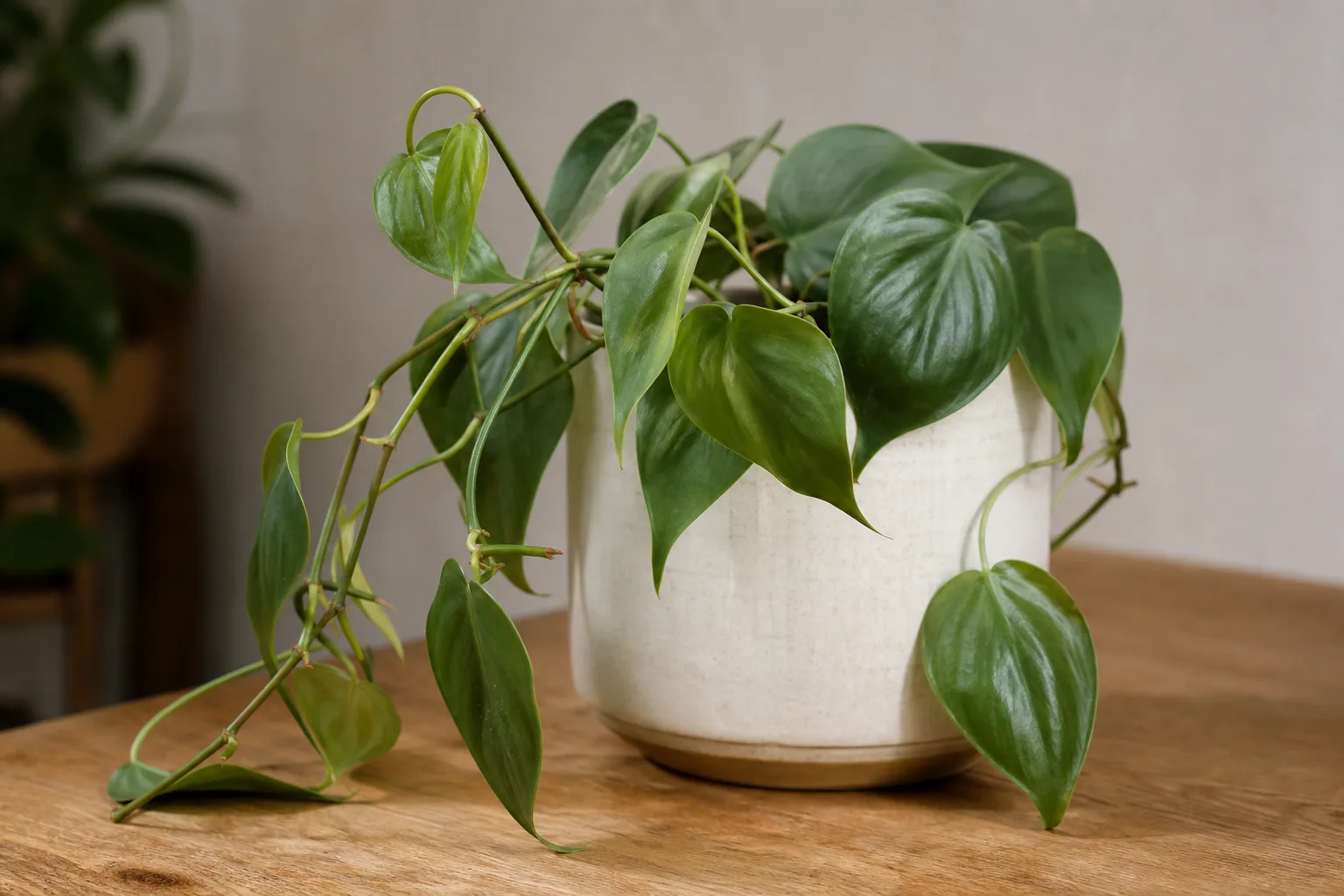
Drooping Leaves on Heartleaf Philodendron: Causes, Checks & Fixes
This guide covers drooping leaves on Heartleaf Philodendron. See also the general Drooping Leaves guide, watering, and light pages for this plant.
Drooping Leaves on Heartleaf Philodendron: Causes, Checks & Fixes
Quick answer
When Heartleaf Philodendron (Philodendron hederaceum) leaves hang limp, the vine has lost turgor-the internal water pressure that keeps heart-shaped foliage firm. That almost always traces back to the root zone, not a problem on the leaf surface itself.
The two most common causes on this trailing aroid are opposite: mix that has dried too far between drinks, or mix that has stayed wet so long that roots can no longer absorb water. Both look like drooping leaves from across the room.
First step: lift the pot and check moisture deep in the mix before you change anything. A light, dry pot needs a thorough watering. A heavy, wet pot with soft stems at the soil line needs watering paused and root inspection-not another soak.
What drooping leaves look like on Heartleaf Philodendron
Heartleaf Philodendron carries glossy, heart-shaped leaves on slender green stems that trail from hanging baskets or climb a moss pole. When turgor drops, the whole vine softens-not just one leaf.
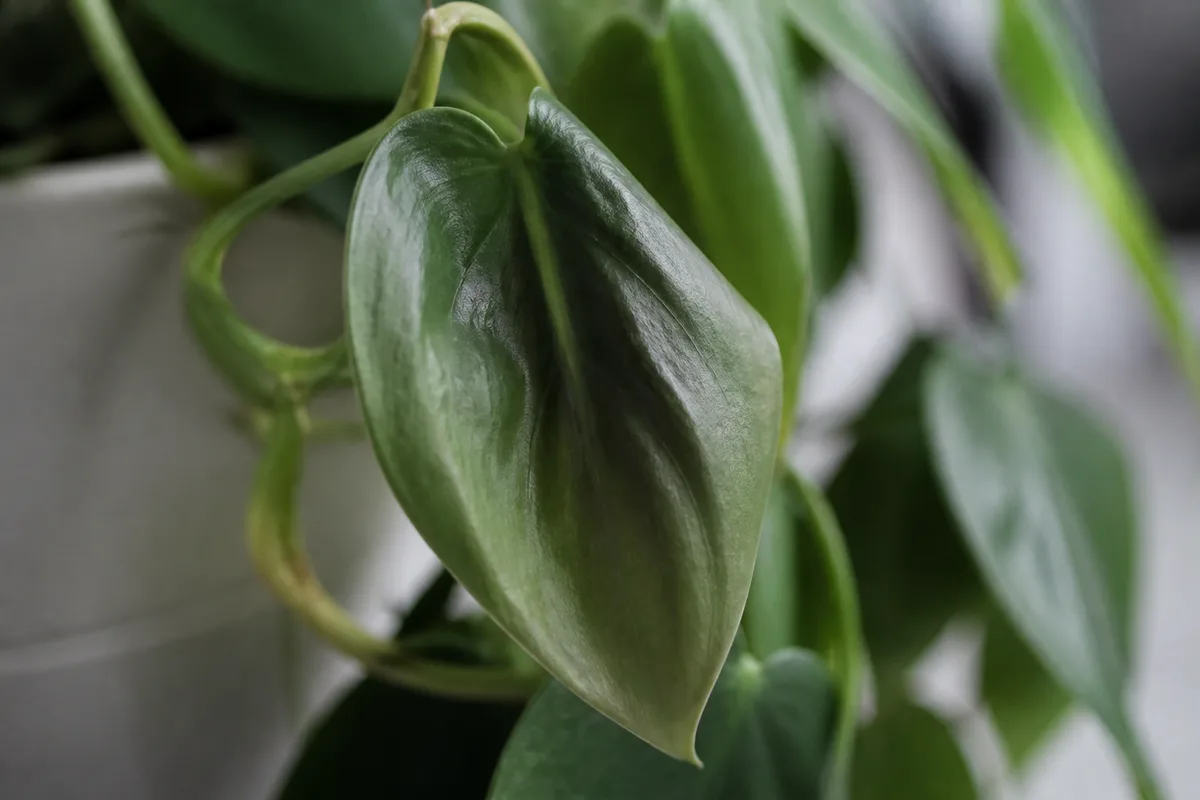
Drooping Leaves symptoms on Heartleaf Philodendron - compare with healthy tissue on the same plant.
Typical droop from thirst:
- Trailing tips hang lowest while inner leaves may still look slightly firm
- Leaf edges may curl inward before full collapse
- Stems feel flexible but not mushy
- Pot feels noticeably light; mix is dry several centimeters down
- Soil may pull slightly away from the pot wall
Typical droop from root stress or rot:
- Entire vine limps despite wet or soggy mix
- Lower leaves yellow while tips still green, or the whole plant looks uniformly limp
- Stems soften and darken at the soil line
- Sour or musty smell from the drainage hole
- Mix stays heavy for days after the last watering
Environmental droop (less common but real):
- Sudden limpness after moving to a hot sunny window or cold AC draft
- Temporary sag after Heartleaf Philodendron repotting guide, even when moisture looks fine
- Tips droop on the side facing a heater while the rest of the plant looks normal
Unlike pest damage, drooping leaves on philodendron rarely show chewing, stippling, or sticky residue. The pattern is about firmness and soil context, not spots on the blade.
Why Heartleaf Philodendron gets drooping leaves
This species is a fast-growing tropical vine adapted to forest understory. It moves water from roots through long trailing stems to leaves at the far end of a hanger. That growth habit makes it sensitive to anything that interrupts the water pipeline.
underwatering on Heartleaf Philodendron and dry-down gaps
Heartleaf Philodendron wilts slightly to signal thirst-it is one of the clearer communicators among common houseplants. Wilting and slight drooping are common when the mix dries too far between drinks, especially in bright light or a warm hanging basket.
Hanging baskets dry from all sides and often faster than floor pots. A long trailing stem means the farthest leaves are the last to receive water and the first to droop. Hydrophobic old mix that repels water can leave the center of the root ball dry even after you think you watered.
overwatering on Heartleaf Philodendron and failing roots
Philodendron roots need oxygen between drinks. When mix stays saturated-common in low light, oversized pots, blocked drainage holes, or cachepots that hold saucer water-roots suffocate and root rot can occur in overly wet soil. Damaged roots cannot take up water, so leaves droop even though the soil is wet.
This is the dangerous mirror image of thirst: the plant looks dehydrated while sitting in water. Adding more water because leaves look limp accelerates decline.
Light, heat, and draft stress
In Heartleaf Philodendron light guide, philodendron uses water quickly and dries the pot on a predictable cycle. Move it to harsh direct sun or place it beside a heating vent, and transpiration can outpace root supply for a few hours, causing temporary droop.
Cold drafts below comfortable room temperature slow root function. Wet soil and cold temperatures often lead to root rots on tropical houseplants.
Recent repotting or relocation
Repotting disturbs fine roots. A freshly moved Heartleaf Philodendron may droop for several days while roots re-establish, even with correct moisture. Moving from a stable shelf to a brighter or dimmer spot can trigger the same temporary response as the plant adjusts water use to new conditions.
How to confirm the cause
Work through these checks in order. Each step narrows the diagnosis before you treat.
- Pot weight - Lift the container. Light means dry; heavy means wet or waterlogged.
- Deep moisture probe - Push a finger or skewer 5–7 cm into the mix, not just the surface. Surface dust can hide wet roots below.
- Stem firmness at the soil line - Pinch base stems where they enter the mix. Firm and green supports thirst or environmental droop. Soft, dark, or collapsing tissue supports rot.
- Drainage check - Confirm holes are open and no saucer is holding standing water. Lift the pot from a decorative outer cachepot after watering.
- Recent care history - Note last watering date, any repot within two weeks, and whether the plant moved windows.
- Tip-vs-base pattern - Tips-only droop with dry mix usually means underwatering on a long vine. Whole-plant limp on wet mix means root uptake failure.
- Recovery test (dry mix only) - If mix is clearly dry and stems are firm, water once deeply until excess drains. Perked foliage within 6–24 hours confirms thirst. Do not run this test on wet soil.
If wet soil, soft stems, and sour smell align, skip watering and inspect roots instead of waiting for a perk-up that will not come.
First fix for Heartleaf Philodendron
Lift the pot, probe moisture deep in the mix, then act on what you find-do not water by habit.
- If dry and light: Water thoroughly until excess runs from the drainage hole. Discard saucer water. For severely dry mix that repels water, bottom-water the pot for 30 minutes or poke shallow holes in the surface so water penetrates evenly.
- If wet and heavy with firm stems: Stop watering. Move to brighter indirect light if the plant has been in deep shade, and do not water again until the top 2–3 cm of mix dries.
- If wet with soft base stems or sour smell: Stop all watering. Unpot, trim mushy roots, and repot into fresh airy mix sized to the remaining root mass. Treat this as root rot escalation, not simple droop.
One diagnostic action-not a stack of fertilizer, misting, and repotting on the same day.
Step-by-step recovery
After the first fix, follow the path that matches your confirmed cause.
Recovering from underwatering
- Give one full watering (or bottom soak if mix was hydrophobic).
- Wait 24 hours and check whether trailing tips have lifted.
- Resume normal rhythm: water when the top of the soil is dry-roughly every 7–10 days in active summer growth, less in winter.
- Trim only leaves that stay crisp or fully collapsed after the vine stabilizes; healthy tissue will re-firm.
Recovering from overwatering without rot
- Pause watering until the top third of the mix dries.
- Improve light to bright indirect if the plant has been in very low light.
- Empty cachepots and confirm drainage holes are clear.
- Watch for new growth at vine tips over the next two to three weeks.
Recovering from root rot
- Unpot and rinse roots. Trim brown mushy tissue; keep only firm white or tan roots.
- Repot into fresh mix with 25–30% perlite in a pot matched to root size-not oversized.
- Wait about one week before the first light watering.
- If most of the root ball is gone, propagate firm stem cuttings with nodes as backup.
Recovering from environmental shock
- Move the plant away from direct sun, AC blasts, or heater drafts.
- Maintain even moisture without overcompensating.
- Allow three to seven days for turgor to return if roots were not damaged.
Do not fertilize during acute droop. Do not prune heavily until you know which tissue will recover.
Recovery timeline
Simple underwatering often shows visible perk within hours; full turgor across a long trailing vine may take 24 hours. Mild overwatering stress improves over one to two weeks once the mix dries and new tips grow. Root rot recovery takes weeks and depends on how much healthy root remains-judge progress by firm new leaves at vine tips, not old limp ones.
Leaves that went fully limp and then crisp will not become glossy again, but that does not mean the plant is lost if new nodes produce normal foliage.
Lookalike symptoms to rule out
Wilting from heat alone can mimic droop without soil being dry. Check whether only the sun-facing side collapsed after a hot afternoon. Move to filtered light and see if turgor returns overnight without extra water.
Leggy weak growth in deep shade produces thin stretched stems that sag under their own weight. That is a light problem, not thirst-stems look thin and internodes are long, and mix may stay wet for weeks.
Mealybugs or scale cause localized yellowing and sticky residue, not whole-vine limpness. Inspect leaf axils and new growth before assuming water stress.
Normal post-repot droop lasts a few days with firm stems and appropriate moisture. Persistent limpness beyond one week on wet mix suggests root damage from the repot or prior overwatering.
Mistakes to avoid
Do not pour water on sight of drooping leaves without checking whether the mix is already wet-that is the fastest way to turn thirst into rot.
Do not mist expecting droop to fix itself. Misting does not rehydrate the root zone on a trailing philodendron.
Do not repot on day one unless roots are clearly failing or mix is compacted and waterlogged. Unnecessary repotting adds stress.
Do not increase fertilizer on a limp plant hoping to push vigor. Feed only after turgor returns and new growth looks normal.
Do not ignore hanging basket physics. A floor philodendron and a basket in the same window can need different schedules.
Heartleaf Philodendron care cross-check
Drooping often exposes a mismatch between how fast Heartleaf Philodendron overview uses water and how you are watering it.
- Light: Bright indirect light keeps the pot drying on a predictable cycle. Very low light slows water use and keeps mix wet longer.
- Pot size: Slightly pot-bound plants dry faster between drinks; oversized pots stay wet around small root balls.
- Mix: Well-draining standard potting mix with perlite and optional bark chunks. Heavy peat without amendment holds water too long.
- Season: Reduce watering in fall to late winter when growth slows.
- Basket vs shelf: Trailing baskets in warm rooms dry faster-check twice weekly in summer.
How to prevent drooping next time
Learn your pot’s dry-down rhythm in its actual light spot rather than watering on a calendar. Lift the pot until weight tells you when the top 2–3 cm has dried.
Use containers with open drainage and empty saucers after every soak. If you use decorative outer pots, lift the inner pot to drain-do not let the philodendron sit in standing water.
Repot in spring when roots circle the base or mix dries the day after watering, using only one size up. Fresh airy mix prevents the slow compaction that keeps roots wet too long.
Keep the vine in stable bright indirect light and away from cold drafts and blasting heat. Acclimate gradually when moving to a brighter window.
For hanging displays, consider a moisture meter or weight check on the same day each week during peak summer growth.
When to worry
Treat as urgent when drooping persists more than 48 hours after a confirmed deep watering on dry mix, or when wet soil, soft base stems, and sour smell appear together. That combination on Heartleaf Philodendron often precedes rapid base rot on fast-growing vines.
Also escalate if new growth emerges small, pale, and limp while old leaves yellow and drop-root function may be failing even if you corrected the last watering.
Not urgent: slight afternoon droop on the outermost trailing tips in peak summer heat that recovers overnight, or one-day sag after repotting with firm stems and appropriate moisture.
Conclusion
Drooping Heartleaf Philodendron leaves look alarming but usually tell a clear story once you read the pot instead of the foliage. Dry and light means drink; wet and soft means stop and inspect roots. That single diagnostic habit prevents the two most common mistakes-watering a drowning plant and ignoring a thirsty trailing vine-so your philodendron can firm up and keep producing the glossy heart-shaped leaves it is grown for.
When to use this page vs other Heartleaf Philodendron guides
- Heartleaf Philodendron watering guide - Use for routine moisture checks before assuming drooping leaves is the main issue.
- Heartleaf Philodendron problems hub - Browse all 16 common issues on this species.
- Underwatering on Heartleaf Philodendron - Different entry point when symptoms overlap with drooping leaves.
- Overwatering on Heartleaf Philodendron - Different entry point when symptoms overlap with drooping leaves.
- Root Rot on Heartleaf Philodendron - Different entry point when symptoms overlap with drooping leaves.
Related Heartleaf Philodendron guides
- Heartleaf Philodendron overview
- Heartleaf Philodendron watering
- Heartleaf Philodendron light
- Heartleaf Philodendron soil
- Underwatering on Heartleaf Philodendron
- Overwatering on Heartleaf Philodendron
- Root Rot on Heartleaf Philodendron
- Wilting on Heartleaf Philodendron
- Heartleaf Philodendron problems