Overwatering on Heartleaf Philodendron: Causes, Checks &
Quick answer
Overwatering on Heartleaf Philodendron usually shows as yellow lower leaves and limp vines while the pot is still heavy and wet. First fix: stop watering and let oxygen return to the root zone before doing anything else.
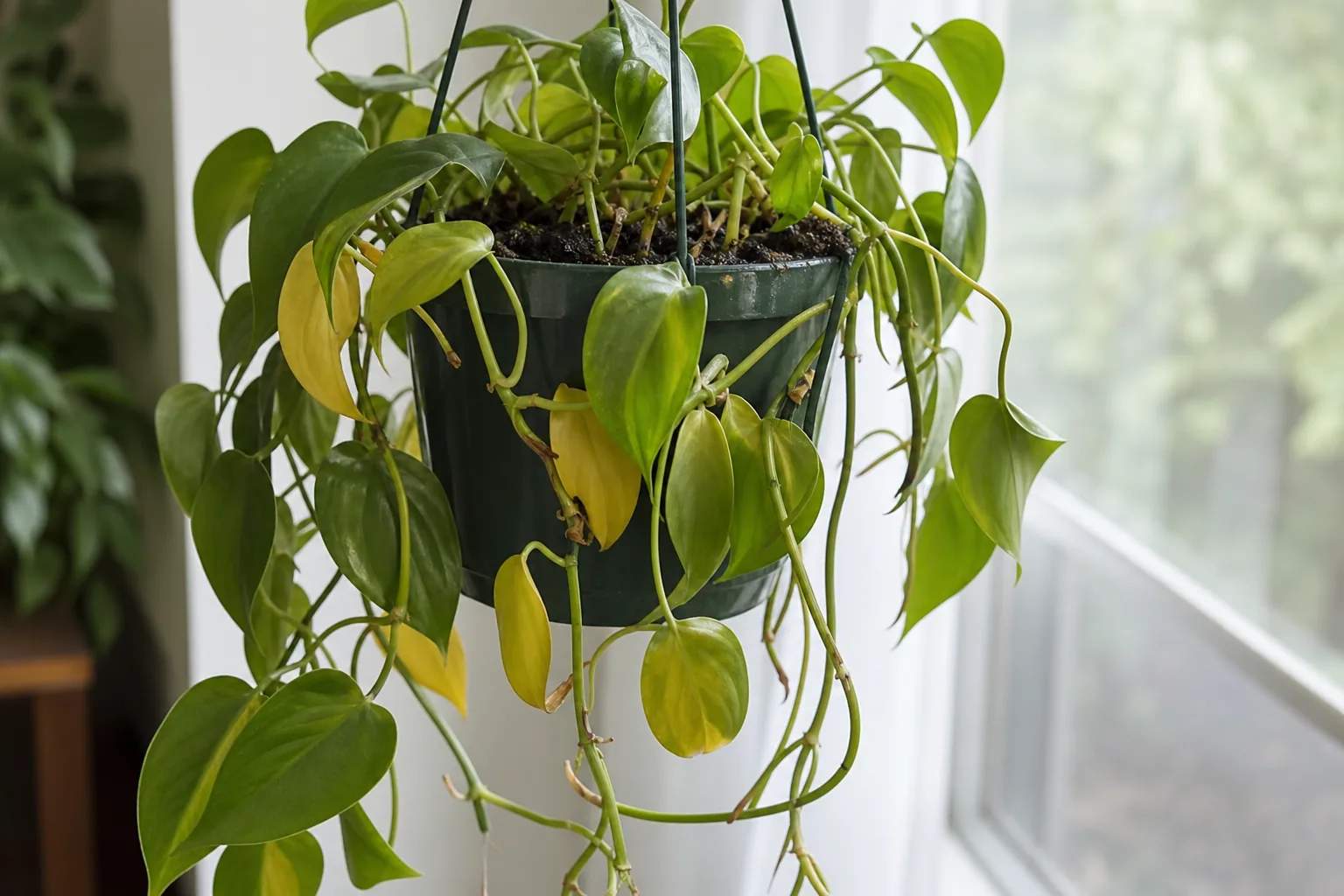
Overwatering on Heartleaf Philodendron: Causes, Checks & Fixes
This guide covers overwatering on Heartleaf Philodendron. See also the general Overwatering guide, watering, and light pages for this plant.
Overwatering on Heartleaf Philodendron: Causes, Checks & Fixes
Quick answer
Heartleaf Philodendron overwatering is usually a wet-soil mismatch problem: leaves droop and lower foliage yellows while the pot is still heavy. The first correct action is simple and specific: stop watering now. If the mix remains wet at depth, more water worsens root stress because roots in waterlogged media cannot absorb oxygen normally.
Use a moisture-first rule from day one: only water when the top 2 inches of mix are dry. If stems are soft near the soil line or the pot smells sour, move quickly from dry-down to root inspection and follow the root rot guide.
What overwatering looks like on Heartleaf Philodendron
Heartleaf is a fast trailing aroid, so early stress often appears at the oldest, lower nodes first. Overwatering signs usually stack in this order:
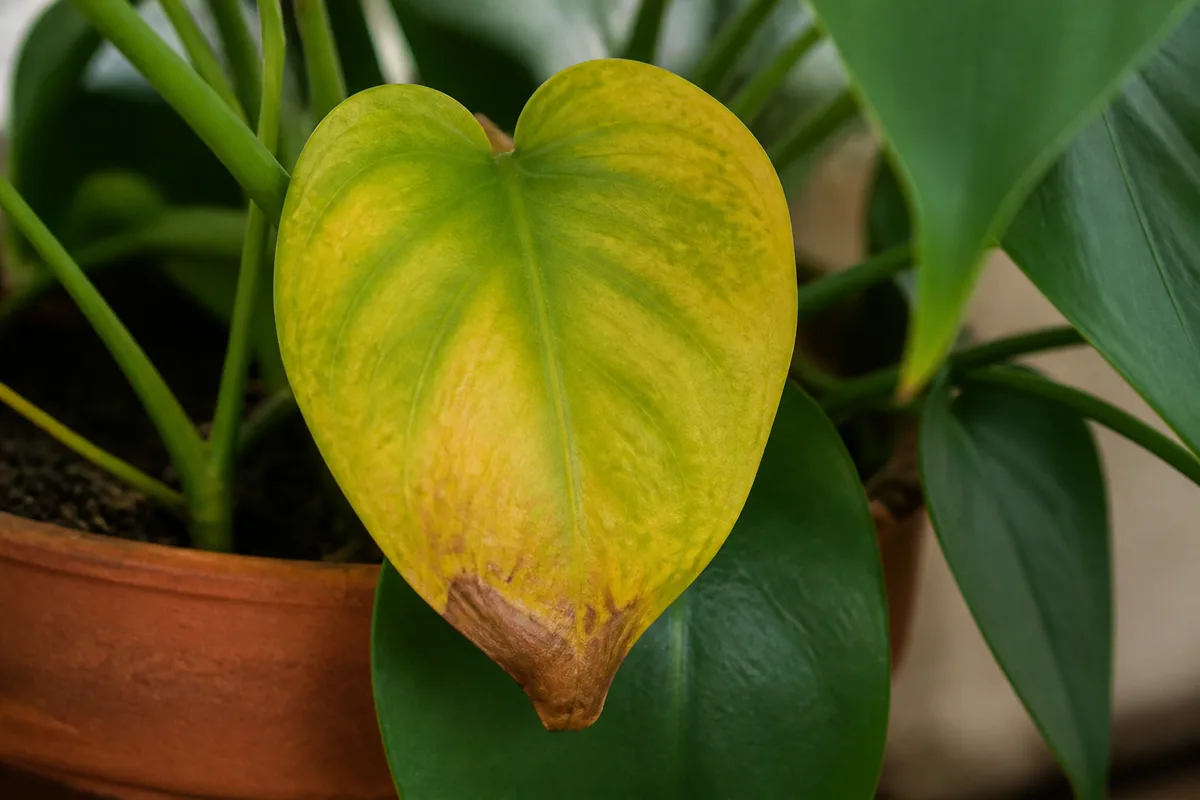
Overwatering symptoms on Heartleaf Philodendron - compare with healthy tissue on the same plant.
- Lower leaves yellow, then drop
- Vines look limp even when mix is wet
- Pot stays heavy for many days after watering
- Soil smells stale or sour at the drainage hole
- Stem bases lose firmness and darken as stress worsens
On Heartleaf Philodendron overview, the key trap is wilt on wet soil. Many owners read droop as thirst and add more water. For philodendron, that can accelerate damage instead of helping.
Why Heartleaf Philodendron is prone to overwatering
Calendar watering carried into winter
Heartleaf can grow quickly in warm bright months, so weekly watering can work in summer. The same schedule often fails in winter when growth slows. Missouri Botanical Garden notes to reduce watering from fall through late winter, but many plants are kept on summer cadence year-round.
Low light and slow dry-down in hanging spots
This plant tolerates lower light, but tolerance is not the same as fast drying. In dim corners, water use drops and mix stays wet longer. A hanging basket can still remain damp in the center if airflow is low and media is dense.
Heavy mix, oversized pots, and standing runoff
Peat-heavy compacted media can hold too much water for too long; NC State notes roots can rot quickly in compacted or wet conditions. Oversized pots keep a large wet zone around a small root system. Saucers or cachepots that hold runoff create chronic bottom saturation; RHS advises never leaving philodendron containers standing in water.
How to confirm the cause
Run this sequence before any corrective watering:
- Lift the pot: heavy means likely still wet.
- Probe at depth: check moisture 5–7 cm down, not just the surface.
- Check stem bases: firm and green is better; soft and dark is urgent.
- Smell near drainage: sour odor supports overwatering progression.
- Review light + last watering date: long wet retention in low light strongly supports overwatering.
If the pot is light and dry with crisp margins, switch to the underwatering guide. If wet soil plus soft stems and odor are present, skip passive dry-down and inspect roots immediately.
First fix to try
Stop watering until the top 2–3 cm are dry and the pot has clearly lightened.
Do not fertilize, mist, or repot on impulse in the first 24 hours unless there are urgent rot signs. Move the plant to bright indirect light, ensure unobstructed drainage, and empty any trapped runoff. University of Minnesota Extension emphasizes using containers with drainage and avoiding prolonged standing water in saucers (UMN Extension).
This first step restores oxygen to the root zone and helps you separate mild overwatering from active rot.
Step-by-step recovery by severity
Mild overwatering (no mushy stems, no sour smell)
- Pause watering until top 2–3 cm dry.
- Improve light and airflow.
- Resume watering only on dryness checks, not calendar days.
- Expect older yellow leaves to drop; track recovery by new leaf firmness.
Moderate overwatering (persistent wetness, repeated limp vines)
- Remove plant from decorative outer pot after each watering.
- Check roots if wetness persists beyond expected interval.
- Trim clearly mushy roots and repot in airier mix if needed.
- Restart with smaller, measured soak volume.
Severe progression (soft base stems, sour soil, collapsing vine)
Treat as root-rot escalation and follow root rot steps: inspect roots, trim non-viable tissue, repot into fresh airy media, and avoid immediate repeat watering.
Recovery timeline and expectations
Recovery depends on root condition at the time you intervene:
- First 2–4 days: foliage may remain limp while roots re-oxygenate.
- 1–2 weeks: decline should stop if damage was mild.
- 2–4 weeks: new growth should emerge firmer if root function is recovering.
- Beyond 4 weeks with no improvement: inspect roots and reassess mix, pot size, and light.
Do not judge progress by damaged old leaves regreening; judge by stable stems and new healthy growth.
Lookalikes to rule out
Overwatering is common, but not every droop is from excess water:
- Underwatering: light pot, dry mix, perk-up after deep soak.
- Root rot: wet heavy pot plus sour odor and mushy roots.
- Low light only: slower growth and stretching without chronic wet decline.
- Heat stress: temporary afternoon droop with quick evening recovery.
If signs overlap, use pot weight and moisture depth as deciding checks before taking action.
What not to do
- Do not water again just because leaves are drooping.
- Do not keep plants in runoff-filled saucers.
- Do not apply fertilizer to a plant with active root stress.
- Do not repot into a much larger container to “dry it out.”
- Do not ignore pet safety when pruning damaged tissue: philodendron is toxic to cats and dogs.
How to prevent overwatering next time
Use a repeatable care rhythm tied to moisture, not habit:
- Check depth moisture before each soak.
- Water thoroughly, then drain completely.
- Reduce frequency in cool/dim months as growth slows.
- Keep mix airy enough to dry in a reasonable window.
- Review the full watering guide for seasonal cadence and the yellow leaves guide if chlorosis persists.
Overwatering prevention on Heartleaf Philodendron is mostly about accurate timing. One skipped watering is rarely fatal. Repeated wet roots are.
When to worry
Escalate quickly when you see any of these:
- Stem bases turning soft or black
- Sour, swampy odor from the pot
- Whole vine collapse on wet soil
- Fast multi-leaf yellowing despite stopping water
At that stage, recovery often depends on immediate root intervention or propagation of still-firm vines.
When to use this page vs other Heartleaf Philodendron guides
- Heartleaf Philodendron watering guide - Use for routine moisture checks before assuming overwatering is the main issue.
- Heartleaf Philodendron problems hub - Browse all 16 common issues on this species.
- Root Rot on Heartleaf Philodendron - Different entry point when symptoms overlap with overwatering.
- Yellow Leaves on Heartleaf Philodendron - Different entry point when symptoms overlap with overwatering.
- Wilting on Heartleaf Philodendron - Different entry point when symptoms overlap with overwatering.
Related Heartleaf Philodendron guides
- Heartleaf Philodendron overview
- Heartleaf Philodendron watering
- Heartleaf Philodendron light
- Heartleaf Philodendron soil
- Root Rot on Heartleaf Philodendron
- Yellow Leaves on Heartleaf Philodendron
- Wilting on Heartleaf Philodendron
- Fungus Gnats on Heartleaf Philodendron
- Mold on Soil on Heartleaf Philodendron
- Drooping Leaves on Heartleaf Philodendron
- Heartleaf Philodendron problems