Wilting on Heartleaf Philodendron: Causes, Checks & Fixes
Quick answer
On Heartleaf Philodendron, wilting can mean either true thirst or root failure from constantly wet mix. First lift the pot and check stem firmness at the soil line before watering; wilt in a heavy, wet pot is the urgent pattern.
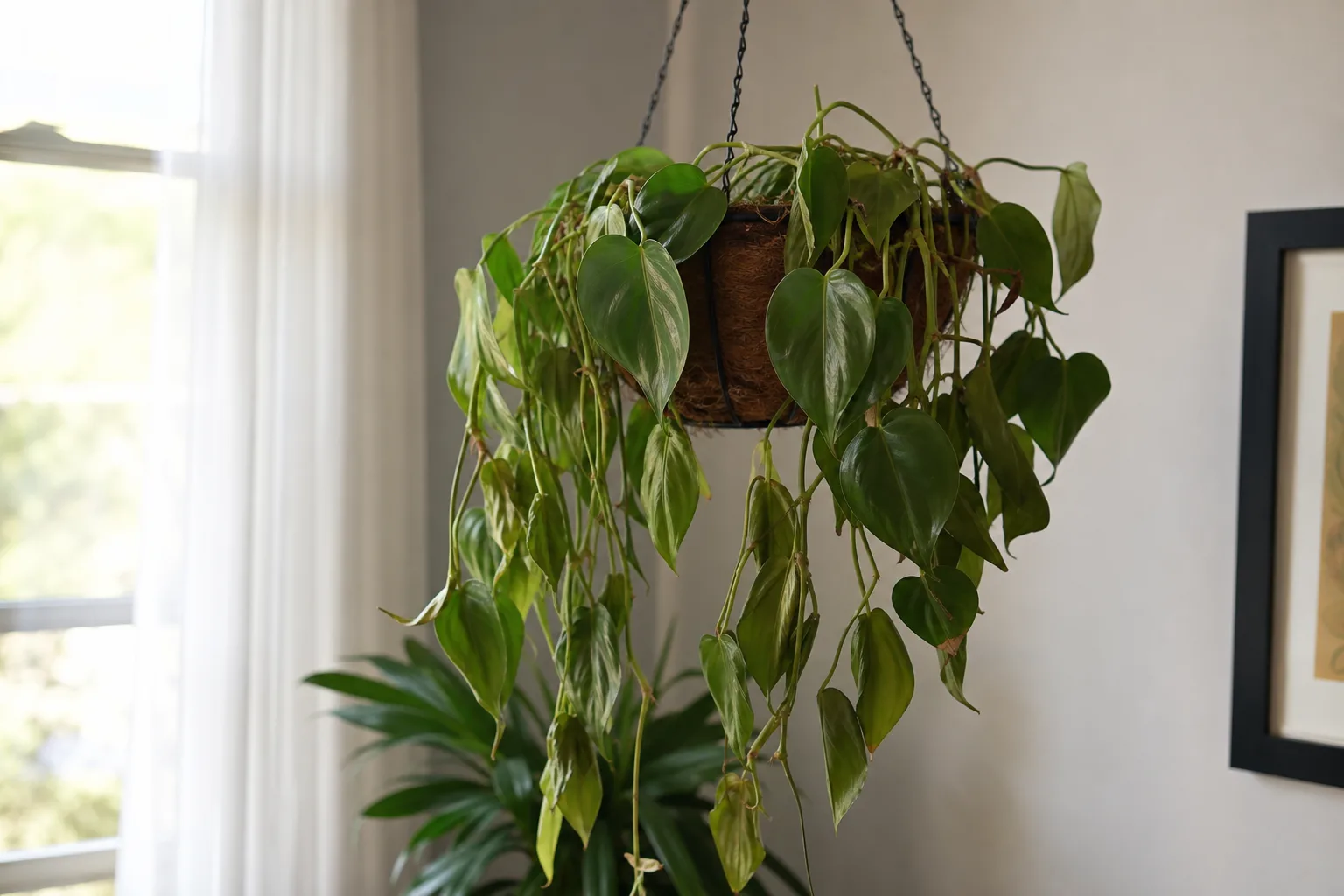
Wilting on Heartleaf Philodendron: Causes, Checks & Fixes
This guide covers wilting on Heartleaf Philodendron. See also the general Wilting guide, watering, and light pages for this plant.
Wilting on Heartleaf Philodendron: Causes, Checks & Fixes
Quick answer
On Heartleaf Philodendron (Philodendron hederaceum), wilt is a water-movement problem, not always a watering-volume problem. This vining aroid is commonly grown in hanging baskets, and long trailing stems can look limp from either dry roots or damaged wet roots. The first move is always the same: check pot weight, then root-zone moisture, then stem firmness at the crown. Excess moisture can damage fine roots and leave plants unable to take up water, so watering a heavy wet pot can worsen collapse.
What wilting looks like on Heartleaf Philodendron
Dry wilt
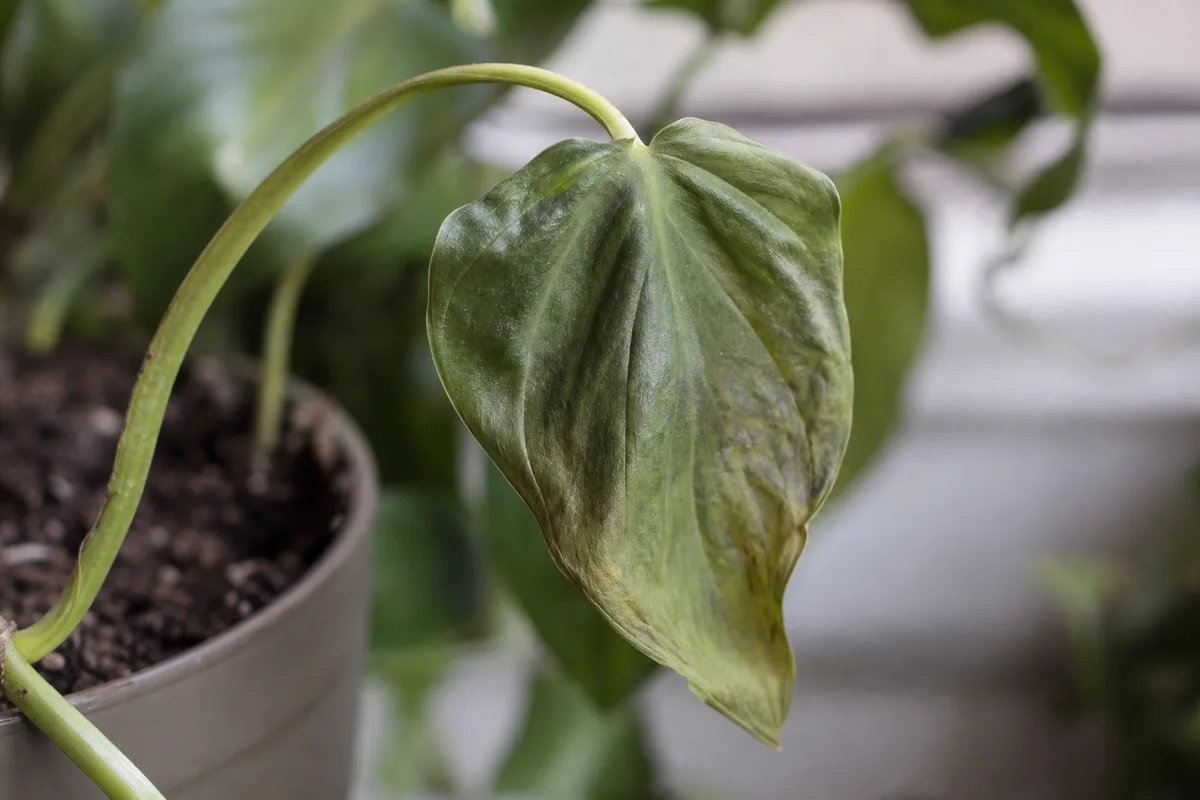
Wilting symptoms on Heartleaf Philodendron - compare with healthy tissue on the same plant.
Dry wilt usually starts with limp leaf blades and soft-looking trailing tips while stems still feel structurally firm. The basket or nursery pot feels light, and moisture is absent deeper in the mix, not just on the surface. Heartleaf Philodendron generally prefers evenly moist but not saturated media, and watering is usually timed when the top layer has dried.
Wet wilt
Wet wilt is the misleading pattern: leaves and vines are limp even though soil is still damp or soggy. In this case, the problem is often root-zone oxygen loss, not thirst. When media stays overly wet, oxygen drops and roots cannot function normally, and plants can show wilt and yellowing despite abundant moisture.
Temporary heat or relocation wilt
After a light, temperature, or placement change, leaves may droop in late day while the mix remains in a normal moisture range. If stems are firm and the plant perks overnight, this often behaves more like short-term stress than root decline.
Why Heartleaf Philodendron overview gets wilting episodes
Heartleaf Philodendron is a climbing tropical vine in the Araceae family with rapid vegetative growth in favorable indoor conditions, which makes its water demand swing with light and season (NC State Extension Plant Toolbox). In bright periods it can dry much faster; in low light or cool rooms, the same schedule can leave media wet for too long.
Two patterns cause most confusion:
- Dry-down mismatch: long vines and warm windows accelerate water use.
- Calendar watering: fixed frequency ignores seasonal slowdown and pot-size effects.
Wilting vs drooping on this species
Wilting and drooping overlap, but they are not always identical events. Use this page when the main problem is sudden loss of turgor (limp leaves and vines). If your plant mainly has chronic hanging posture with mixed causes, compare with /plants/philodendron/drooping-leaves/ for broader symptom context.
As a quick rule:
- Wilt: urgent change in firmness and hydration behavior.
- Droop: posture change that may occur with age, light direction, support habits, or hydration issues.
How to confirm the cause (6-step check)
- Lift the pot first. A clearly lighter pot suggests dry media; a heavy pot suggests retained water.
- Probe 5-7 cm down. Dry at depth supports underwatering on Heartleaf Philodendron; persistent moisture supports wet-stress risk.
- Check crown firmness. Soft tissue near the soil line raises concern for root/crown damage.
- Smell the mix. Sour or stale odor supports excess-moisture root decline.
- Inspect lower leaves. Progressive yellowing with wet media supports overwatering on Heartleaf Philodendron stress.
- Re-check after 12-24 hours. True dry wilt should improve after proper watering; wet wilt usually does not.
This sequence aligns with extension guidance that recommends watering by media state and pot behavior instead of fixed calendar routines (Iowa State Extension).
First fix to try
First fix: pause and diagnose the root zone before adding water.
That single action prevents the most common mistake: adding more water to a plant already unable to move water through damaged roots.
Step-by-step recovery by cause
If the pot is light and dry
- Water thoroughly until excess drains.
- Let extra water leave the saucer completely.
- Place the plant in stable Heartleaf Philodendron light guide for the next 24 hours.
- Re-check leaf firmness the next day.
If the pot is heavy and wet
- Stop watering immediately.
- Improve airflow and light, and remove standing water under the pot.
- If crown softness or odor is present, unpot and inspect roots; trim only mushy black/brown roots and repot in airy, fast-draining mix.
- After Heartleaf Philodendron repotting guide, water sparingly until new root activity resumes.
If symptoms continue, review /plants/philodendron/root-rot/ for deeper escalation signs and recovery limits.
Recovery timeline and expectations
- Mild dry wilt: leaf firmness often returns within 12-24 hours after correct watering.
- Wet-stress without major rot: visible stabilization usually takes several days as oxygen balance improves.
- Root-loss cases: recovery can take weeks and depends on new root and leaf production, not old leaf appearance.
Judge progress by new growth, stable stems, and symptom slowdown. Do not judge only by whether old damaged leaves become perfect again.
Mistakes that make wilting worse
- Watering a wilting plant without checking pot weight and root-zone moisture.
- Repeating small top-up watering that keeps media chronically damp.
- Leaving the pot in standing runoff water.
- Fertilizing immediately during active wilt stress.
- Jumping to full repotting when dry wilt could recover with one proper soak.
How to prevent repeat wilting
Use a rhythm tied to plant behavior:
- Water when the top layer has dried and pot weight confirms water use (Iowa State Extension).
- Keep drainage free and empty saucers after watering (University of Maryland Extension).
- Maintain bright indirect exposure for predictable dry-down (Missouri Botanical Garden Plant Finder).
- In cooler or lower-light periods, extend intervals between waterings.
For broader watering calibration, see /plants/philodendron/watering/, and for related symptom branches compare /plants/philodendron/overwatering/ and /plants/philodendron/underwatering/.
When to treat as urgent
Act quickly when you see wilt plus any of the following: heavy wet media, persistent yellowing, crown softness, sour odor, or ongoing decline after water is withheld. These signs can indicate active root failure and require immediate root-zone correction.
When handling pruned tissue or plant debris, remember that philodendrons contain insoluble calcium oxalates and are toxic to cats and dogs. If pet exposure is suspected, contact a veterinarian promptly.
Related guides
/plants/philodendron/drooping-leaves//plants/philodendron/root-rot//plants/philodendron/watering//plants/philodendron/overwatering//plants/philodendron/underwatering//plants/philodendron/
When to use this page vs other Heartleaf Philodendron guides
- Heartleaf Philodendron watering guide - Use for routine moisture checks before assuming wilting is the main issue.
- Heartleaf Philodendron problems hub - Browse all 16 common issues on this species.
- Underwatering on Heartleaf Philodendron - Different entry point when symptoms overlap with wilting.
- Overwatering on Heartleaf Philodendron - Different entry point when symptoms overlap with wilting.
- Root Rot on Heartleaf Philodendron - Different entry point when symptoms overlap with wilting.
Related Heartleaf Philodendron guides
- Heartleaf Philodendron overview
- Heartleaf Philodendron watering
- Heartleaf Philodendron light
- Heartleaf Philodendron soil
- Underwatering on Heartleaf Philodendron
- Overwatering on Heartleaf Philodendron
- Root Rot on Heartleaf Philodendron
- Drooping Leaves on Heartleaf Philodendron
- Yellow Leaves on Heartleaf Philodendron
- Heartleaf Philodendron problems