Philodendron Care Guide: Heartleaf, Light & Water Indoors
Philodendron hederaceum
Heartleaf philodendron (Philodendron hederaceum) care: fast-growing trailing aroid, light requirements, watering, and propagation.
Philodendron Care Guide: Heartleaf, Light & Water Indoors
Start with wateringThe most common care mistake for Heartleaf PhilodendronWatering guide →Heartleaf Philodendron care essentials
Light
medium to bright indirect light
Water
Water when top 2–3 cm dries. Every 7–10 days in summer; 14–21 days in winter.
Soil
Well-draining standard potting mix with perlite and optional chunky additions.
Humidity
40–60%
Temperature
18–27°C (65–80°F)
Fertilizer
About Heartleaf Philodendron
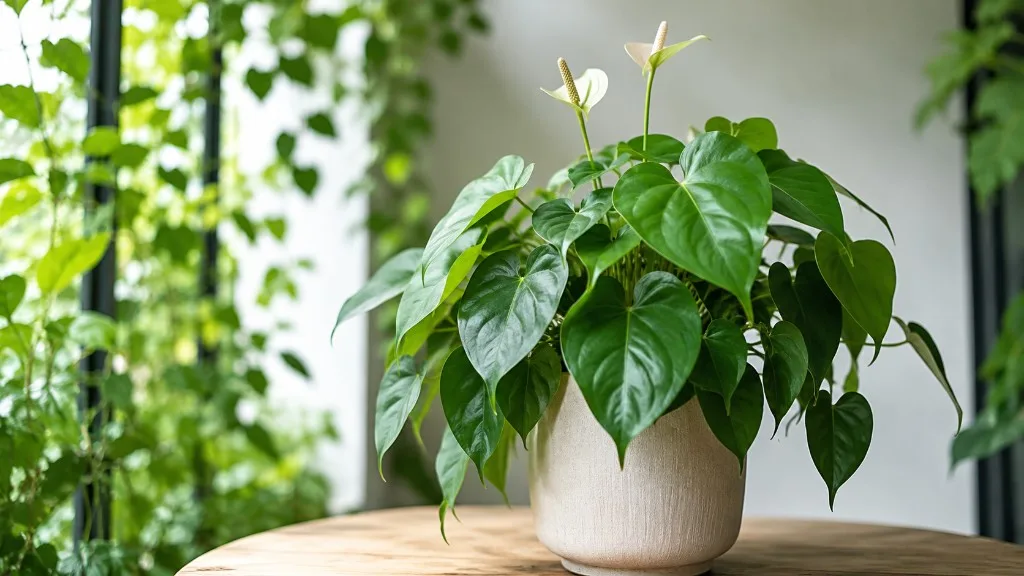
Heartleaf Philodendron is native to Central and South America (Caribbean, Mexico to Brazil), typically reaches Trails 4–6 ft indoors; glossy heart-shaped leaves 2–4 inches indoors, with fast growth. Heartleaf Philodendron has a trailing growth habit and part of the Araceae family. It is also known as Sweetheart Plant, Velvet Leaf Philodendron, and Philodendron scandens.
| Detail | Information |
|---|---|
| Also known as | Sweetheart Plant, Velvet Leaf Philodendron, Philodendron scandens |
| Native region | Central and South America (Caribbean, Mexico to Brazil) |
| Mature size | Trails 4–6 ft indoors; glossy heart-shaped leaves 2–4 inches |
| Growth rate | Fast |
| Growth habit | Trailing |
| Scientific name | Philodendron hederaceum |
| Family | Araceae |
Philodendron Care Guide: Heartleaf, Light & Water Indoors
Walk into any plant shop and you will find philodendrons everywhere - trailing heartleaf pots on high shelves, upright Birkins with pinstripe leaves, and pink-splashed erubescens hybrids under grow lights. What the tags rarely explain is that Philodendron is a large tropical genus in the Araceae family with two fundamentally different growth habits, and that nearly every philodendron in the trade is toxic to cats and dogs according to the ASPCA because of insoluble calcium oxalate crystals. This guide covers climbing vs self-heading types, heartleaf care, and what to fix first when something goes wrong.
What Philodendron Actually Is (Araceae and Hemi-Epiphytic Growth)
Philodendron is a genus of hundreds of species native primarily to the tropical forests of Central and South America, though some extend into the Caribbean and parts of the West Indies. They belong to Araceae, the arum or aroid family - the same family as Monstera, Anthurium, Aglaonema, Epipremnum (pothos), Scindapsus, and peace lilies. Knowing the family matters because aroids share baseline indoor rules: roots need air as much as moisture, most prefer Heartleaf Philodendron light guide rather than direct sun, and problems usually start in the root zone long before the leaves tell the full story.
In the wild, most philodendrons are hemi-epiphytic. The Royal Horticultural Society philodendron growing guide describes this clearly: some species germinate on the forest floor and climb trees, rooting into bark as they ascend; others start life on a branch and send roots down to the soil. Either way, the plant is built to attach, climb, and capture light in a crowded understory. That biology explains aerial roots - thick or wiry roots that emerge from nodes along the stem and absorb moisture and nutrients from humid air and mossy surfaces. Indoors, aerial roots are normal, not a sign of distress. You can leave them, tuck them into the potting mix, or guide them onto a support.
Philodendron leaves emerge wrapped in a cataphyll - a papery sheath that protects the new leaf as it develops. This is one of the easiest ways to distinguish philodendrons from pothos (Epipremnum) at a glance: philodendron new growth pushes out from a sheath; pothos leaves unfurl directly without that wrapper, and pothos stems are thicker with waxier leaves. Monstera shares the same family and care basics but needs more space and light at maturity. The family also shares a toxicity profile: Araceae species commonly contain raphides, needle-shaped calcium oxalate crystals that cause immediate oral irritation when chewed. That is not a minor footnote - it is a reason to treat every philodendron as pet-unsafe until proven otherwise.
Taxonomy moves faster than plant tags. Split-leaf tree philodendron, long sold as Philodendron bipinnatifidum or P. selloum, has been reclassified by some authorities as Thaumatophyllum bipinnatifidum, though it is still widely labeled and sold as philodendron. Heartleaf philodendron appears on old labels as P. scandens, P. oxycardium, or P. cordatum; current nomenclature treats these as synonyms of Philodendron hederaceum. If your tag says any of those names, the care is the same - but the naming chaos is why “philodendron” in commerce can mean anything from a 6-inch trailing pot to a floor-sized split-leaf specimen.
Climbing vs Self-Heading: The Split That Changes Care
The single most important classification for indoor philodendron care is not leaf color or size - it is growth habit. Iowa State University Extension divides the genus into two major types: climbing (vining) and non-climbing, also called self-heading. The care overlap is large - both want bright indirect light, well-draining soil, and a dry-top Heartleaf Philodendron watering guide - but the differences in pot size, support, propagation, and mature leaf size are big enough that mixing them up leads to frustration.
Climbing (Vining) Philodendrons
Climbing philodendrons produce long, flexible stems with nodes at regular intervals. Each node can grow a leaf, an aerial root, or both. Left unsupported, these plants trail from hanging baskets or cascade off shelves - which is attractive, but it keeps many species in a juvenile leaf form with smaller blades. Given a moss pole, trellis, or bark board, the same plant transitions toward mature growth: thicker stems, shorter internodes, and often significantly larger leaves. The RHS specifically recommends training climbing forms onto a moist moss pole, into which they will eventually root if kept damp.
Common climbing species and cultivars include heartleaf (P. hederaceum and cultivars like ‘Brasil’ and micans), red-leaf types (P. erubescens, including ‘Pink Princess’ and ‘Prince of Orange’), silver sword (P. hastatum), melanochrysum, brandi (P. brandtianum), and fiddle-leaf climbers (P. bipennifolium). Climbers tend to be faster-growing, more forgiving of slight neglect, and easier to propagate from stem cuttings than large self-heading species. They also dry out their pots faster when actively growing, especially in bright light.
Self-Heading (Upright) Philodendrons
Self-heading philodendrons grow from a central rosette or trunk-like stem without needing vertical support. They do not naturally vine, though some produce offsets or basal shoots over time. Many self-heading types develop larger, heavier leaves and wider spreads - Iowa State Extension notes that some non-climbing species can eventually grow twice as wide as they are tall, demanding floor space rather than a shelf.
Examples include split-leaf tree philodendron (P. bipinnatifidum / Thaumatophyllum bipinnatifidum), compact hybrids like ‘Xanadu’ and ‘Birkin’, and upright erubescens selections such as ‘Black Cardinal’ and ‘Imperial Red’. Self-heading plants often tolerate slightly lower humidity than velvety climbers, but they are less forgiving of chronic overwatering on Heartleaf Philodendron in oversized pots because their root systems can sit in unused wet soil for days. Propagation is still possible via stem cuttings with nodes, but division of offsets - when the plant produces them - is often simpler for large specimens.
The practical decision rule: if your plant has long trailing stems with visible nodes, treat it as a climber - offer support if you want bigger leaves, or a hanging basket if you prefer cascade. If it grows upright from a single crown with no obvious vining stems, treat it as self-heading - give it a stable pot, room to spread, and avoid burying the crown when Heartleaf Philodendron repotting guide.
Popular Indoor Species and Cultivars
Philodendron collecting can go deep - dozens of species circulate through specialty growers - but most homes start with a short list of proven indoor performers. The table below covers the types you are most likely to encounter in a general nursery or supermarket, with growth habit and a care note that actually changes outcomes.
| Common name | Botanic name (typical label) | Habit | Care note that matters |
|---|---|---|---|
| Heartleaf / sweetheart | P. hederaceum (also P. scandens) | Climbing / trailing | Most tolerant of low light; ideal beginner plant |
| Brasil | P. hederaceum ‘Brasil’ | Climbing / trailing | Variegation needs brighter light than green heartleaf |
| Micans | P. hederaceum var. hederaceum ‘Micans’ | Climbing / trailing | Velvety leaves prefer slightly higher humidity |
| Pink Princess | P. erubescens ‘Pink Princess’ | Climbing | Pink variegation needs bright indirect light |
| Birkin | P. ‘Birkin’ (hybrid) | Self-heading | Compact; avoid wet soil and cold drafts |
| Xanadu | P. ‘Xanadu’ | Self-heading | Dense lobed leaves; needs space to spread |
| Split-leaf tree | P. bipinnatifidum / Thaumatophyllum bipinnatifidum | Self-heading | Large floor plant; bright light, big pot |
| Prince of Orange | P. erubescens ‘Prince of Orange’ | Self-heading / compact | New leaves emerge orange; moderate light |
Heartleaf Philodendron (Philodendron hederaceum)
If you own one philodendron, it is probably heartleaf philodendron - Philodendron hederaceum, still sold under older names like P. scandens, P. oxycardium, and P. cordatum. The ASPCA toxic plant entry for heartleaf philodendron lists additional common names including cordatum and sweetheart plant, which is a useful reminder that toxicity applies regardless of which synonym is on the tag.
Heartleaf is the genus benchmark for forgiving care. Iowa State Extension notes it can tolerate very low light levels - though “tolerate” is not “prefer.” In medium to bright indirect light, it grows fast, with trailing stems commonly reaching 4–6 feet over a few years and leaves typically 2–4 inches long in juvenile form. Water when the top 1–2 inches (2–3 cm) of soil dry, roughly every 7–10 days in summer and every 14–21 days in winter - but always check the pot. Heartleaf wilts slightly when thirsty and recovers quickly after watering.
Light Requirements Indoors
Philodendrons evolved in the low-light understory of tropical forests, and that history sets indoor expectations. The consensus across RHS, Iowa State Extension, and Missouri Botanical Garden resources is bright, indirect light as the default - not direct midday sun, not deep shade.
A practical placement map: 3–6 feet from an east- or north-facing window, or behind a sheer curtain on a south- or west-facing window, gives most philodendrons the light they need without scorch. Direct afternoon sun bleaches leaves, causes brown crispy patches, and heats the pot so fast that roots dry unevenly. A short period of gentle morning sun is tolerable for many green-leaved types, but variegated cultivars like ‘Brasil’, ‘Pink Princess’, and ‘Birkin’ need brighter indirect light to hold their variegation; in too dim a spot, new growth reverts to green and the plant loses the feature you paid for.
Low-light tolerance is real but widely overstated online. Green-leaved heartleaf genuinely survives extended periods in low-light interiors - Clemson Cooperative Extension specifically notes philodendrons can be maintained in low-light settings - but survival is not thriving. Signs your philodendron wants more light include long internodes (visible gaps between leaves), smaller new leaves, pale or dull color, and leaning toward the window. If you see that pattern, move the plant gradually over one to two weeks rather than jumping from a dark corner to a south window in one day.
Watering Without root rot on Heartleaf Philodendron
Philodendrons prefer evenly moist but never soggy soil. Iowa State Extension puts it simply: water when the top of the soil is dry, and do not let plants sit in soggy soil or saucers of water. That one sentence prevents more philodendron deaths than any product label.
The genus is more forgiving of brief dryness than of chronic wetness. A slightly underwatering on Heartleaf Philodendron philodendron wilts, then perks up after a thorough drink. An overwatered philodendron yellows from the bottom up, develops mushy stems at the soil line, and may show foul-smelling soil - classic root rot signals. Because philodendrons are often sold in peat-heavy mixes that stay wet too long in low light, the most common beginner mistake is watering on a fixed Tuesday schedule instead of reading the pot.
Seasonal rhythm matters. During active growth in spring and summer, philodendrons use water quickly - especially climbers in bright light and small pots. In fall and winter, growth slows, days shorten, and the same volume of water stays in the mix longer. Stretch intervals in cool months, pause fertilizer, and resist the urge to “help” a slow plant with extra water.
Reading Soil Moisture by Touch
The finger test remains the most reliable tool. Insert your index finger to the first or second knuckle (about 2–5 cm). If the soil at that depth feels dry or barely cool and crumbly, water thoroughly until water runs from the drainage holes, then empty the saucer within 30 minutes. If it still feels damp, wait. Lift the pot occasionally - a dry philodendron pot is noticeably lighter than a freshly watered one, and that weight difference becomes intuitive after a few weeks.
Wilting is a signal, not an automatic command to water. Check the soil first. A wilted plant in wet soil is an emergency - likely root rot or stem rot - and watering again makes it worse. A wilted plant in dry soil is thirsty. Heartleaf philodendron in particular communicates thirst clearly: stems droop, leaves lose turgor, and the plant recovers within hours of a proper soak.
Use room-temperature water. Cold water shock is minor on hardy heartleaf but more noticeable on velvety or variegated types. If your tap water is very hard, occasional flushing with plain water reduces salt buildup that shows up as brown leaf tips - often mistaken for low humidity.
Humidity and Temperature
Philodendrons prefer moderate to high humidity - roughly 40–60% is a comfortable target for most species - but they tolerate average home humidity better than many tropical finicky plants. Iowa State Extension notes philodendrons grow best in high humidity yet tolerate low home humidity in winter quite well, especially green-leaved heartleaf and upright hybrids. Velvety types like micans and melanochrysum appreciate the upper end of the range and show crisped edges sooner when air stays below 30% for long periods.
Raise humidity with grouped plants, a pebble tray, or a small humidifier - skip misting as a primary fix. Temperature is straightforward. Typical indoor comfort - 65–80°F (18–27°C) - suits philodendrons well. The RHS sets a minimum around 59°F (15°C); below that, growth stalls and cold-damaged leaves develop dark patches. Avoid placing pots on cold window ledges in winter, directly under ** blasting AC vents**, or above radiators that cook roots from below. Philodendrons hate sudden temperature swings more than they hate a steady slightly-cool room.
Soil, Drainage, and Pots
Philodendrons want a well-draining, airy potting mix that holds some moisture without staying waterlogged. A standard approach - used across extension and botanical garden guidance - is a houseplant or peat-free potting compost amended with perlite and optional chunky bark. A workable recipe for most indoor philodendrons: 60–70% quality potting mix, 25–30% perlite, and 10–15% orchid bark or coco chips for climbers that will eventually root onto a moss pole. Target pH is slightly acidic to neutral, roughly 5.5–7.0; most bagged mixes already land in that range.
Drainage holes are non-negotiable. Decorative cache pots without drainage are where philodendrons go to develop root rot slowly enough that beginners blame themselves for “underwatering” when the bottom half of the root ball has been anaerobic for weeks. Terracotta dries faster and suits heavy-handed waterers; plastic retains moisture longer and suits those who forget to water - match the pot material to your habits, not just the aesthetic.
Philodendrons often do well slightly pot-bound. Iowa State Extension notes they perform well when slightly root-bound because soil dries more quickly between waterings. Repot when roots circle the surface, emerge from drainage holes, or water runs straight through without absorbing - not on a calendar. Go up one pot size at a time; an oversized pot is the most common post-repurchase killer for self-heading types.
Fertilizer Schedule and Strength
Philodendrons are moderate feeders, not hungry monsters. Iowa State Extension recommends fertilizing lightly once or twice a month during active spring and summer growth with a balanced all-purpose fertilizer. In practice, that means a water-soluble 20-20-20 or similar balanced formula diluted to half the label strength, applied to already-moist soil so salts do not burn dry roots.
Pause feeding in late fall and winter when growth slows, after repotting while the plant re-establishes, and during pest recovery or root rot rehab - feeding a plant that cannot use nutrients adds salt stress without benefit. Over-fertilizing shows up as brown leaf margins, crusty white deposits on the soil surface, and stalled new growth. If you see that pattern, flush the pot with plain water until runoff runs clear and skip the next feeding.
Moss Poles, Trellises, and Training Climbers
Climbing philodendrons do not require a moss pole to live - heartleaf will trail happily from a basket for years - but support changes the plant’s form. When a vining philodendron climbs a moist moss pole, coco coir pole, or bark board, it shifts toward mature growth: larger leaves, thicker stems, and shorter internodes. Trailing growth is juvenile growth; climbing growth is closer to what the plant produces in a rainforest attaching to a tree trunk.
Training is simple. Insert the pole near the center of the pot without damaging major roots. Gently tie stems to the pole with soft plant ties or velcro strips, positioning nodes against the moist surface. Aerial roots will attach over time if humidity is adequate and the pole stays damp - misting the pole itself (not the room) helps, or choose a self-watering moss pole. As the plant outgrows the pole, extend it by splicing a second pole on top rather than letting the vine wander across the floor.
For purely aesthetic trailing, skip the pole and use a hanging basket or high shelf. Be honest about the trade-off: trailing heartleaf is charming and easy, but leaves stay smaller than the same plant climbing in identical light. Neither choice is wrong - it is a design decision, not a moral test of plant parenting.
Repotting When Roots Outgrow the Pot
Repot philodendrons when they are root-bound or out of soil, not because the calendar says spring. Clear signs: roots circling the pot surface or escaping drainage holes, water running through without soaking in, soil drying out the day after watering, or visible stunting despite good light. The best timing is early in the active growing season - late winter through spring - so the plant has months of warmth and light to refill the new root zone.
Choose a pot one size larger (about 1–2 inches / 3–5 cm more diameter). Remove the plant, loosen the outer root mass gently, trim any black or mushy roots with clean scissors, and replant at the same depth - especially critical for self-heading types where burying the crown invites rot. Use fresh well-draining mix, water lightly, and keep the plant in bright indirect light without direct sun for a week while roots heal.
Heartleaf and other fast climbers may need repotting every 1–2 years when young. Large self-heading specimens may go 3–4 years between repots if top-dressed with fresh mix in intervening seasons. Wear gloves if sap contact irritates your skin - Araceae sap can cause dermatitis in sensitive individuals, per RHS guidance on handling poisonous aroids.
Propagation by Stem Cuttings
Philodendrons are among the easiest houseplants to propagate, which is a big part of their popularity. Iowa State Extension recommends stem sections 3–6 inches long with lower leaves removed, rooted in water or a moist medium like perlite or well-draining potting soil. Each cutting needs at least one node - the knuckle where leaves and roots emerge - because roots grow from nodes, not from leafless stem alone.
For water propagation, cut below a node, remove leaves that would sit submerged, and place in a clear jar in bright indirect light. Change the water every few days to limit rot; roots typically appear within 7–14 days for heartleaf, sometimes faster in warm conditions. Pot into mix when roots are 2–3 inches long. For perlite or moss propagation, keep the medium moist but not soggy, cover loosely with a clear bag to raise humidity if your air is dry, and tug gently after two weeks to feel for resistance.
Toxicity to Pets and People
Every philodendron treated as a houseplant should be assumed toxic until verified otherwise. Iowa State Extension states plainly that philodendrons and closely related aroids contain calcium oxalate crystals toxic to humans, dogs, cats, and other animals, causing pain and swelling in the lips, mouth, tongue, and throat, plus drooling, vomiting, and difficulty swallowing when ingested. The RHS philodendron guide adds that Araceae plants are poisonous, sap can irritate skin, and gloves are advisable when handling - with plants kept out of reach of children and pets.
This is not alarmism for a remote theoretical risk. Philodendrons are among the most common houseplants and among the most commonly chewed by cats because trailing heartleaf sits at exactly the height cats explore. The mechanism is mechanical and immediate: insoluble calcium oxalate raphides embed in soft tissue and cause intense burning.
ASPCA Guidance for Cats and Dogs
The ASPCA heartleaf philodendron listing - which applies to the most widely owned species - classifies Philodendron hederaceum as toxic to dogs, toxic to cats, and toxic to horses, with toxic principles listed as insoluble calcium oxalates. Clinical signs include oral irritation, pain and swelling of mouth, tongue and lips, excessive drooling, vomiting (not horses), and difficulty swallowing. Separate ASPCA entries cover other philodendron species and hybrids under names like split-leaf philodendron, horsehead philodendron, and variegated philodendron, with the same oxalate mechanism and similar signs.
If you suspect ingestion, call ASPCA Animal Poison Control at (888) 426-4435 and contact your veterinarian promptly. For homes with cats that chew plants, choose a confirmed pet-safe alternative for accessible spots.
Common Problems and Practical Fixes
Most philodendron problems are environmental, not mysterious curses. The diagnostic order that saves time: check soil moisture, then light, then pests, then recent changes (repot, move, heat wave). Fix the condition first; prune damaged leaves after the plant stabilizes.
Yellow leaves are the top complaint. Bottom-up yellowing with wet soil and soft stems points to overwatering or root rot - unpot, trim rotten roots, repot in fresh mix, and adjust watering. Uniform pale yellow on new growth in low light means insufficient brightness. Random yellow leaves on an otherwise healthy plant may be normal older-leaf shedding - philodendrons drop lower leaves as they grow. Yellow with stippling and fine webbing is spider mites, common in dry winter air.
Brown tips and edges usually mean low humidity, underwatering, or salt buildup from tap water or over-fertilizing. Raise humidity for velvety types, flush the pot, and review your feeding schedule. Brown patches in direct sun mean sunburn - move the plant.
Leggy, sparse vines mean low light or inconsistent light direction - move closer to a window or add a grow light, and rotate the pot weekly. Curling leaves can mean underwatering, overwatering, or heat stress - soil check resolves the ambiguity.
Pests: Spider mites in dry conditions (stippling, webbing); mealybugs as white cotton in leaf axils; scale as brown bumps on stems; fungus gnats when soil surface stays wet. Manual removal, insecticidal soap, and fixing the underlying moisture or humidity issue handle most outbreaks if caught early. Root rot from chronic overwatering is the serious one - foul soil, black mushy roots, yellow leaves on wet soil. Act fast: discard soggy mix, cut away rot, repot into fresh airy soil, and withhold water briefly.
Conclusion
Philodendron care becomes straightforward once you respect two facts: the genus splits into climbing and self-heading growth habits that change support, pot size, and leaf maturity, and every common indoor philodendron is an Araceae aroid carrying calcium oxalate crystals that make the plant toxic to cats and dogs per ASPCA guidance. Light and water do the heavy lifting - bright indirect light for most types (with heartleaf the most low-light tolerant), water when the top 1–2 inches of soil dry, and a well-draining mix with perlite and bark so roots breathe. Climbers reward moss poles with bigger leaves; self-heading types reward stable pots and space to spread.
Start with heartleaf philodendron if you are new to the genus. Learn to read soil moisture on a forgiving plant, propagate a few cuttings, and decide whether you prefer trailing cascades or vertical growth. Keep every philodendron out of reach of pets and children, wear gloves if sap irritates you, and fix environment before reaching for fertilizer or panic-repotting when leaves yellow. Get those basics right and philodendrons repay you with years of fast, unfussy tropical foliage - one of the best beginner genera in the houseplant world, as long as you do not confuse “easy” with “safe for chewers.”
When to use this page vs other Heartleaf Philodendron guides
- Heartleaf Philodendron overview - Canonical hub for this species - care topics and problems branch from here.
- Heartleaf Philodendron problems - Symptom-first path when you already know something is wrong.
Related Heartleaf Philodendron guides
- Heartleaf Philodendron watering
- Heartleaf Philodendron light
- Heartleaf Philodendron soil
- Heartleaf Philodendron propagation
- Heartleaf Philodendron fertilizer
- Heartleaf Philodendron repotting
- Heartleaf Philodendron pruning
- Yellow Leaves on Heartleaf Philodendron
- Brown Tips on Heartleaf Philodendron
- Mealybugs on Heartleaf Philodendron
- Root Rot on Heartleaf Philodendron
- Overwatering on Heartleaf Philodendron
How to care for Heartleaf Philodendron?
How much light does Heartleaf Philodendron need?
medium to bright indirect light
- medium to bright indirect light - medium to bright indirect light.
When should you water Heartleaf Philodendron?
Water when top 2–3 cm dries. Every 7–10 days in summer; 14–21 days in winter.
- Check top 2 inches of soil; philodendron wilts slightly to signal thirst - Water when top 2–3 cm dries.
- Drain excess water - Water when top 2–3 cm dries.
What soil works best for Heartleaf Philodendron?
Well-draining standard potting mix with perlite and optional chunky additions.
- standard peat-free potting compost - Well-draining standard potting mix with perlite and optional chunky additions.
- perlite (25–30%) - Well-draining standard potting mix with perlite and optional chunky additions.
- orchid bark (15%) - Chunky bark pieces that create air pockets and mimic epiphytic growing conditions.
Grower notes for Heartleaf Philodendron
What matters most with Heartleaf Philodendron
Heartleaf Philodendron is easiest to understand by its growth habit. Climbers need support for larger leaves, self-heading types need stable root moisture, and delicate velvet forms punish stale air faster than basic green philodendrons. In practice, the care checkpoint is simple: medium to bright indirect light. Pair that with well-draining standard potting mix with perlite and optional chunky additions, and avoid changing water, pot size, and placement all at once.
Best placement in a real home
Heartleaf Philodendron belongs where medium to bright indirect light is realistic for most of the day, not only where the pot looks good. Water when top 2–3 cm dries. Every 7–10 days in summer; 14–21 days in winter. If the pot stays wet longer than expected, move the plant into better light or reassess the mix before watering again. Humidity target: 40–60%. Temperature comfort zone: 18–27°C (65–80°F).
Before you buy this plant
Choose Heartleaf Philodendron with firm new growth, clean leaf undersides, and soil that does not smell sour or feel compacted. Be cautious if you see yellow-leaves, sticky residue, collapsed crowns, or a pot that is wet in poor light. Cosmetic old-leaf damage is less worrying than weak roots or active pests.
First month after bringing it home
Do not repot Heartleaf Philodendron on day one unless the mix is failing or pests are obvious. Quarantine it, learn how fast the pot dries, and keep care boring while it adjusts. Watch especially for yellow-leaves, brown-tips, and mealybugs. If problems appear, correct the condition first rather than stacking fertilizer, repotting, and pruning together.
Safety note for Heartleaf Philodendron
Heartleaf Philodendron is not a plant to keep within reach of pets or children. The database flags it for cats and dogs. Use gloves if sap or plant tissue is irritating, and pick a pet-safe alternative for floor pots or low shelves.
How to tell Heartleaf Philodendron is settling in
Also sold as Sweetheart Plant, Velvet Leaf Philodendron, and Philodendron scandens, this plant should be judged by stable new growth rather than label names alone. If you plan to multiply it later, common methods include Stem node cuttings and Air layering. Repot only when you see Roots circling the base or emerging from drainage holes and soil drying out the day after watering. If brown-tips shows up early, inspect light, watering, and roots before assuming the plant is permanently weak.
Is it pet safe?
Heartleaf philodendron is toxic to cats and dogs.
Calcium oxalate crystals cause burning, drooling, vomiting in pets and humans. Keep out of reach.
Watering Heartleaf Philodendron
For Heartleaf Philodendron, check top 2 inches of soil; philodendron wilts slightly to signal thirst and water every 7–10 days in summer; every 14–21 days in winter. Reduce watering in winter when growth slows significantly.
| Detail | Information |
|---|---|
| How often | Every 7–10 days in summer; every 14–21 days in winter |
| How to check | Check top 2 inches of soil; philodendron wilts slightly to signal thirst |
| Seasonal changes | Reduce watering in winter when growth slows significantly |
Signs of overwatering
- Yellow leaves starting from lower growth
- mushy stems at soil level
- foul-smelling soil
Signs of underwatering
- Wilting and drooping stems
- curling leaf edges
- very dry lightweight pot
Soil & potting for Heartleaf Philodendron
Use a mix of standard peat-free potting compost, perlite (25–30%), orchid bark (15%) for Heartleaf Philodendron. Well-draining; roots rot quickly in compacted or persistently wet mix. Target soil pH around 5.5–7.0. Repot every 1–2 years or when root-bound, ideally in spring.
| Detail | Information |
|---|---|
| Recommended mix | standard peat-free potting compost, perlite (25–30%), orchid bark (15%) |
| Drainage | Well-draining; roots rot quickly in compacted or persistently wet mix |
| Soil pH | 5.5–7.0 |
| Repotting frequency | Every 1–2 years or when root-bound |
| Best season to repot | Spring |
Signs it needs repotting
- Roots circling the base or emerging from drainage holes
- soil drying out the day after watering
- stunted spring growth
Humidity & temperature for Heartleaf Philodendron
Heartleaf Philodendron prefers 40–60%, though normal home humidity is usually fine. Keep temperatures around 18–27°C (65–80°F).
| Detail | Information |
|---|---|
| Humidity | 40–60% - normal home humidity is fine. |
| Ideal temperature | 18–27°C (65–80°F) |
Fertilizer & pruning for Heartleaf Philodendron
Common problems on Heartleaf Philodendron
Blight
MediumLikely cause: Jan 21, 2024 · Bacterial blight can be quite alarming, as it spreads rapidly. It manifests as water-soaked spots on leaves, which eventually turn brown and crispy. This disease thrives in warm, humid conditions. Here's how to manage bacteri
Quick fix: Confirm diagnosis on your Heartleaf Philodendron, then address the most likely care or pest factor described in current extension guidance.
Full fix guide →Likely cause: Jun 30, 2023 · By identifying the source of the infestation, using physical removal methods, homemade ant baits, natural repellents, ant traps, or insecticidal soap, you can successfully get rid of ants on your philodendron plant .
Quick fix: Confirm diagnosis on your Heartleaf Philodendron, then address the most likely care or pest factor described in current extension guidance.
Full fix guide →Black Spots
MediumLikely cause: Oct 31, 2025 · Seeing your Heartleaf Philodendron thriving is incredibly rewarding. By understanding the potential causes of black spots and taking proactive steps to address them, you can help your plant stay healthy and beautiful for year
Quick fix: Confirm diagnosis on your Heartleaf Philodendron, then address the most likely care or pest factor described in current extension guidance.
Full fix guide →Chemical Damage
MediumLikely cause: Struggling with Philodendron Heartleaf problems? Learn the top 5 mistakes that can damage your plant—and how to avoid them. Real tips from experience.
Quick fix: Confirm diagnosis on your Heartleaf Philodendron, then address the most likely care or pest factor described in current extension guidance.
Full fix guide →Calcium Deficiency
MediumLikely cause: The purpose of this study was to produce Ca deficiency symptoms in heartleaf philodendron to determine if Ca deficiency symptoms occur on basal leaves, as originally reported (1).
Quick fix: Confirm diagnosis on your Heartleaf Philodendron, then address the most likely care or pest factor described in current extension guidance.
Full fix guide →Brown Tips
LowLikely cause: Low humidity or underwatering causes brown crispy leaf tips
Quick fix: Raise humidity above 50%; water more consistently
Full fix guide →Deformed New Growth
MediumLikely cause: Jan 7, 2025 · Natural Aging: Sometimes, older leaves turn yellow and fall off as new growth comes in. This is perfectly normal and nothing to worry about. By checking these possibilities, you can usually pinpoint and fix the problem. Always
Quick fix: Confirm diagnosis on your Heartleaf Philodendron, then address the most likely care or pest factor described in current extension guidance.
Full fix guide →Curling Leaves
MediumLikely cause: Nov 23, 2022 · Are your philodendron leaves curling ? Find out the reasons why and how to fix it so your old and new philodendron leaves uncurl ASAP.
Quick fix: Confirm diagnosis on your Heartleaf Philodendron, then address the most likely care or pest factor described in current extension guidance.
Full fix guide →Dry Hydrophobic Soil
MediumLikely cause: Mar 22, 2026 · Learn how to care for Philodendron hederaceum , the Heartleaf Philodendron , a low-maintenance trailing plant perfect for indoor spaces. This complete guide covers light, watering, soil , humidity, and propagation to help you
Quick fix: Confirm diagnosis on your Heartleaf Philodendron, then address the most likely care or pest factor described in current extension guidance.
Full fix guide →Draft Stress
MediumLikely cause: Aug 24, 2025 · In this complete guide, we’ll dive deep into philodendron cold tolerance, exploring the ideal temperature range, how to spot the first signs of cold stress , and most importantly, the actionable steps you can take to keep the
Quick fix: Confirm diagnosis on your Heartleaf Philodendron, then address the most likely care or pest factor described in current extension guidance.
Full fix guide →Likely cause: Non-gardeners might not exactly be familiar with the Philodendron Hederaceum plant. In terms of taxonomy, philodendron Hederaceum belongs to the family of “Araceae” and has the botanical name “philodendron scandens.” The Philodendron Hedera
Quick fix: Confirm diagnosis on your Heartleaf Philodendron, then address the most likely care or pest factor described in current extension guidance.
Full fix guide →Heat Stress
MediumLikely cause: Oct 9, 2023 · Let's dig into the details of heat tolerance for the Heartleaf Philodendron . In this article, we'll explore the ideal temperature range for this popular houseplant, how to recognize when it's getting too hot, and what you can
Quick fix: Confirm diagnosis on your Heartleaf Philodendron, then address the most likely care or pest factor described in current extension guidance.
Full fix guide →Fungus Gnats
LowLikely cause: Why Does My Heartleaf Philodendron Have Fungus Gnats? Fungus gnats are one of the most common pests affecting houseplants, and your heartleaf philodendron is likely attracting them due to moisture-related issues . These tiny insects thrive
Quick fix: Confirm diagnosis on your Heartleaf Philodendron, then address the most likely care or pest factor described in current extension guidance.
Full fix guide →Fertilizer Burn
MediumLikely cause: Fertilizer burn is the most common issue you should worry about when feeding a Heartleaf philodendron . This issue occurs when you overfertilize, fail to dilute your fertilizer, or when don’t water during and after fertilization.
Quick fix: Confirm diagnosis on your Heartleaf Philodendron, then address the most likely care or pest factor described in current extension guidance.
Full fix guide →Iron Deficiency
MediumLikely cause: May 23, 2026 · Heart - leaf philodendron , scientifically known as Philodendron hederaceum, is a tropical perennial featuring glossy dark-green leaves. This attractive, easy-care houseplant flourishes indoors without much effort, making it
Quick fix: Follow extension or botanical guidance for Heartleaf Philodendron iron deficiency; adjust care before applying broad treatments.
Full fix guide →Leggy Growth
LowLikely cause: Apr 10, 2026 · Leggy philodendrons need a diagnosis. We show you 5 causes—from low light to missing moss poles—and the exact fix for each pattern you're seeing.
Quick fix: Confirm diagnosis on your Heartleaf Philodendron, then address the most likely care or pest factor described in current extension guidance.
Full fix guide →Leaf Spot Disease
MediumLikely cause: Feb 21, 2024 · Philodendron Types with Pictures and Care Guide The green heartleaf Philodendron is a vining type of plant with dark-green leaves in a heart’s shape. This type of Philodendron can be …
Quick fix: Confirm diagnosis on your Heartleaf Philodendron, then address the most likely care or pest factor described in current extension guidance.
Full fix guide →Magnesium Deficiency
MediumLikely cause: Dec 11, 2025 · Yellowing leaves with green veins (interveinal chlorosis), often indicating a magnesium or iron deficiency . Uniform yellowing of older leaves, suggesting a nitrogen deficiency.
Quick fix: Confirm diagnosis on your Heartleaf Philodendron, then address the most likely care or pest factor described in current extension guidance.
Full fix guide →Nitrogen Deficiency
MediumLikely cause: Aug 24, 2025 · Often, with a nitrogen deficiency , you’ll see the older, lower leaves turn yellow first. Don’t rush to fertilize, though—it’s important to rule out other causes first, as over-fertilizing can also burn the roots and cause ye
Quick fix: Confirm diagnosis on your Heartleaf Philodendron, then address the most likely care or pest factor described in current extension guidance.
Full fix guide →No New Growth
MediumLikely cause: May 23, 2026 · Heart - leaf philodendron , scientifically known as Philodendron hederaceum, is a tropical perennial featuring glossy dark-green leaves. This attractive, easy-care houseplant flourishes indoors without much effort, making it
Quick fix: Follow extension or botanical guidance for Heartleaf Philodendron no new growth; adjust care before applying broad treatments.
Full fix guide →Mealybugs
MediumLikely cause: Mealybugs colonise new growth and leaf axils of philodendron
Quick fix: 70% alcohol on cotton swab; neem oil; repeat weekly
Full fix guide →Overwatering
HighLikely cause: Mar 9, 2026 · This blog post serves as a comprehensive guide to identifying the signs of overwatering in a Heartleaf Philodendron , enabling plant enthusiasts to provide the best possible care for their leafy companions.
Quick fix: Confirm diagnosis on your Heartleaf Philodendron, then address the most likely care or pest factor described in current extension guidance.
Full fix guide →Pale Leaves
MediumLikely cause: May 23, 2026 · There are few named cultivars of heart - leaf philodendron , but there are two variations offered in the trade: var. oxycardium has new leaves that are glossy and brown and var. scandens has new leaves that are light green. V
Quick fix: Follow extension or botanical guidance for Heartleaf Philodendron pale leaves; adjust care before applying broad treatments.
Full fix guide →No Flowers
LowLikely cause: May 23, 2026 · Heart - leaf philodendron, scientifically known as Philodendron hederaceum, is a tropical perennial featuring glossy dark-green leaves. This attractive, easy-care houseplant flourishes indoors without much effort, making it a
Quick fix: Follow extension or botanical guidance for Heartleaf Philodendron no flowers; adjust care before applying broad treatments.
Full fix guide →Pot Too Large
MediumLikely cause: May 1, 2023 · For a Heartleaf Philodendron, which is relatively adaptable and forgiving, starting with a pot that's about 2 inches larger in diameter than the root ball is generally a good rule of thumb. This provides enough room for growth
Quick fix: Confirm diagnosis on your Heartleaf Philodendron, then address the most likely care or pest factor described in current extension guidance.
Full fix guide →Poor Root Growth
MediumLikely cause: One of the early signs of Philodendron Heartleaf problems is sparse growth due to poor lighting conditions. Although the plant’s position didn’t change, I made the mistake of rearranging my plant shelf – placing larger plants in front of it
Quick fix: Confirm diagnosis on your Heartleaf Philodendron, then address the most likely care or pest factor described in current extension guidance.
Full fix guide →Powdery Mildew
HighLikely cause: May 2, 2024 · To treat powdery mildew on your Heartleaf Philodendron, start by isolating the infected plant to prevent the spread of spores. Wipe down the affected leaves with a damp cloth to remove the powdery residue and improve air circu
Quick fix: Confirm diagnosis on your Heartleaf Philodendron, then address the most likely care or pest factor described in current extension guidance.
Full fix guide →Poor Drainage
MediumLikely cause: But the soil had broken down, it was compacted, nutrient- poor , and couldn’t hold moisture or air properly anymore. And poor soil is one of the hidden causes behind many Philodendron Heartleaf problems.
Quick fix: Confirm diagnosis on your Heartleaf Philodendron, then address the most likely care or pest factor described in current extension guidance.
Full fix guide →Root Rot
HighLikely cause: Discover why your Philodendron hederaceum has root rot and learn proven solutions to save your plant with proper care techniques.
Quick fix: Confirm diagnosis on your Heartleaf Philodendron, then address the most likely care or pest factor described in current extension guidance.
Full fix guide →Salt Build-up
MediumLikely cause: Avoid over-fertilizing — too much fertilizer can cause salt build - up in the soil, leading to brown leaf tips and root damage. When in doubt, fertilize less rather than more.
Quick fix: Confirm diagnosis on your Heartleaf Philodendron, then address the most likely care or pest factor described in current extension guidance.
Full fix guide →Slow Growth
LowLikely cause: Jan 7, 2025 · If they're placed near a drafty window or air conditioning vent, it might slow their growth . Nutrient Needs: Regular feeding during the growing season with a balanced fertilizer can give your plant the boost it needs.
Quick fix: Confirm diagnosis on your Heartleaf Philodendron, then address the most likely care or pest factor described in current extension guidance.
Full fix guide →Rust Disease
MediumLikely cause: Jul 6, 2024 · In this blog post, we'll explore what rust fungus is, how to identify it, and, most importantly, what you can do to keep your Heartleaf Philodendron thriving. Whether you're a seasoned plant parent or just starting your plant
Quick fix: Confirm diagnosis on your Heartleaf Philodendron, then address the most likely care or pest factor described in current extension guidance.
Full fix guide →Likely cause: May 23, 2026 · Heart - leaf philodendron, scientifically known as Philodendron hederaceum, is a tropical perennial featuring glossy dark-green leaves. This attractive, easy-care houseplant flourishes indoors without much effort, making it a
Quick fix: Follow extension or botanical guidance for Heartleaf Philodendron small flowers; adjust care before applying broad treatments.
Full fix guide →Underwatering
MediumLikely cause: Mar 13, 2026 · Recognizing and addressing the signs of underwatering in your Heartleaf Philodendron is crucial for its health and longevity. By understanding its needs and implementing the tips outlined above, you can ensure that your plant
Quick fix: Confirm diagnosis on your Heartleaf Philodendron, then address the most likely care or pest factor described in current extension guidance.
Full fix guide →Weak Stems
MediumLikely cause: Jan 7, 2025 · Caused primarily by overwatering, this issue can be a death sentence for your Heartleaf Philodendron if not caught early. Signs: Yellowing leaves, mushy stems , and a foul smell from the soil are common indicators.
Quick fix: Confirm diagnosis on your Heartleaf Philodendron, then address the most likely care or pest factor described in current extension guidance.
Full fix guide →White Spots
MediumLikely cause: Jan 9, 2024 · Among the common pests that look or leave white marks on your plants are spider mites, mealy bugs, scale insects, and white flies. To start getting rid of the pests, isolate them from the rest of your plants first. Pests can r
Quick fix: Confirm diagnosis on your Heartleaf Philodendron, then address the most likely care or pest factor described in current extension guidance.
Full fix guide →Thrips
MediumLikely cause: Discover why thrips infest your Heartleaf Philodendron and learn proven methods to eliminate them naturally and prevent future infestations.
Quick fix: Confirm diagnosis on your Heartleaf Philodendron, then address the most likely care or pest factor described in current extension guidance.
Full fix guide →Yellow Leaves
MediumLikely cause: Overwatering is the most common cause of yellow leaves in philodendron
Quick fix: Allow top 2–3 cm to dry; check drainage; reduce watering frequency
Full fix guide →Water Stress
MediumLikely cause: Jun 26, 2025 · Can I grow my philodendron in just water forever? You sure can, but the plant will need clean water , changed weekly, and might not get as big as it would in soil.
Quick fix: Confirm diagnosis on your Heartleaf Philodendron, then address the most likely care or pest factor described in current extension guidance.
Full fix guide →Wind Damage
MediumLikely cause: Feb 4, 2026 · Protection from the Elements: Shield your Heartleaf Philodendron from strong winds, which can damage the vines and dry out the leaves. A sheltered location near a wall or fence can offer good protection.
Quick fix: Confirm diagnosis on your Heartleaf Philodendron, then address the most likely care or pest factor described in current extension guidance.
Full fix guide →Yellow Seedlings
MediumLikely cause: Why are my new Heartleaf Philodendron leaves yellow ? New-leaf yellowing usually signals nutrient deficiency or root damage. Check root health (mushy = rot), and consider feeding with half-strength balanced fertilizer (10-10-10) every 4 wee
Quick fix: Confirm diagnosis on your Heartleaf Philodendron, then address the most likely care or pest factor described in current extension guidance.
Full fix guide →Brown Leaves
MediumLikely cause: Common brown leaves pattern on Heartleaf Philodendron under indoor care stress.
Quick fix: Inspect roots, watering, light, and pests; adjust one variable and monitor new growth.
Full fix guide →Holes in Leaves
MediumLikely cause: Common holes in leaves pattern on Heartleaf Philodendron under indoor care stress.
Quick fix: Inspect roots, watering, light, and pests; adjust one variable and monitor new growth.
Full fix guide →Distorted Leaves
MediumLikely cause: Common distorted leaves pattern on Heartleaf Philodendron under indoor care stress.
Quick fix: Inspect roots, watering, light, and pests; adjust one variable and monitor new growth.
Full fix guide →Scale Insects
MediumLikely cause: Common scale insects pattern on Heartleaf Philodendron under indoor care stress.
Quick fix: Inspect roots, watering, light, and pests; adjust one variable and monitor new growth.
Full fix guide →Whiteflies
MediumLikely cause: Common whiteflies pattern on Heartleaf Philodendron under indoor care stress.
Quick fix: Inspect roots, watering, light, and pests; adjust one variable and monitor new growth.
Full fix guide →Leaf Miners
MediumLikely cause: Common leaf miners pattern on Heartleaf Philodendron under indoor care stress.
Quick fix: Inspect roots, watering, light, and pests; adjust one variable and monitor new growth.
Full fix guide →Caterpillars
MediumLikely cause: Common caterpillars pattern on Heartleaf Philodendron under indoor care stress.
Quick fix: Inspect roots, watering, light, and pests; adjust one variable and monitor new growth.
Full fix guide →Potassium Deficiency
MediumLikely cause: Common potassium deficiency pattern on Heartleaf Philodendron under indoor care stress.
Quick fix: Inspect roots, watering, light, and pests; adjust one variable and monitor new growth.
Full fix guide →