Spider Mites on Heartleaf Philodendron: Causes, Checks &
Quick answer
Spider mites on Heartleaf Philodendron show as fine yellow stippling on glossy heart-shaped leaves and silk webbing along trailing stems-especially near heating vents in winter. First step: isolate the plant and rinse all leaf undersides with lukewarm water before applying any spray.
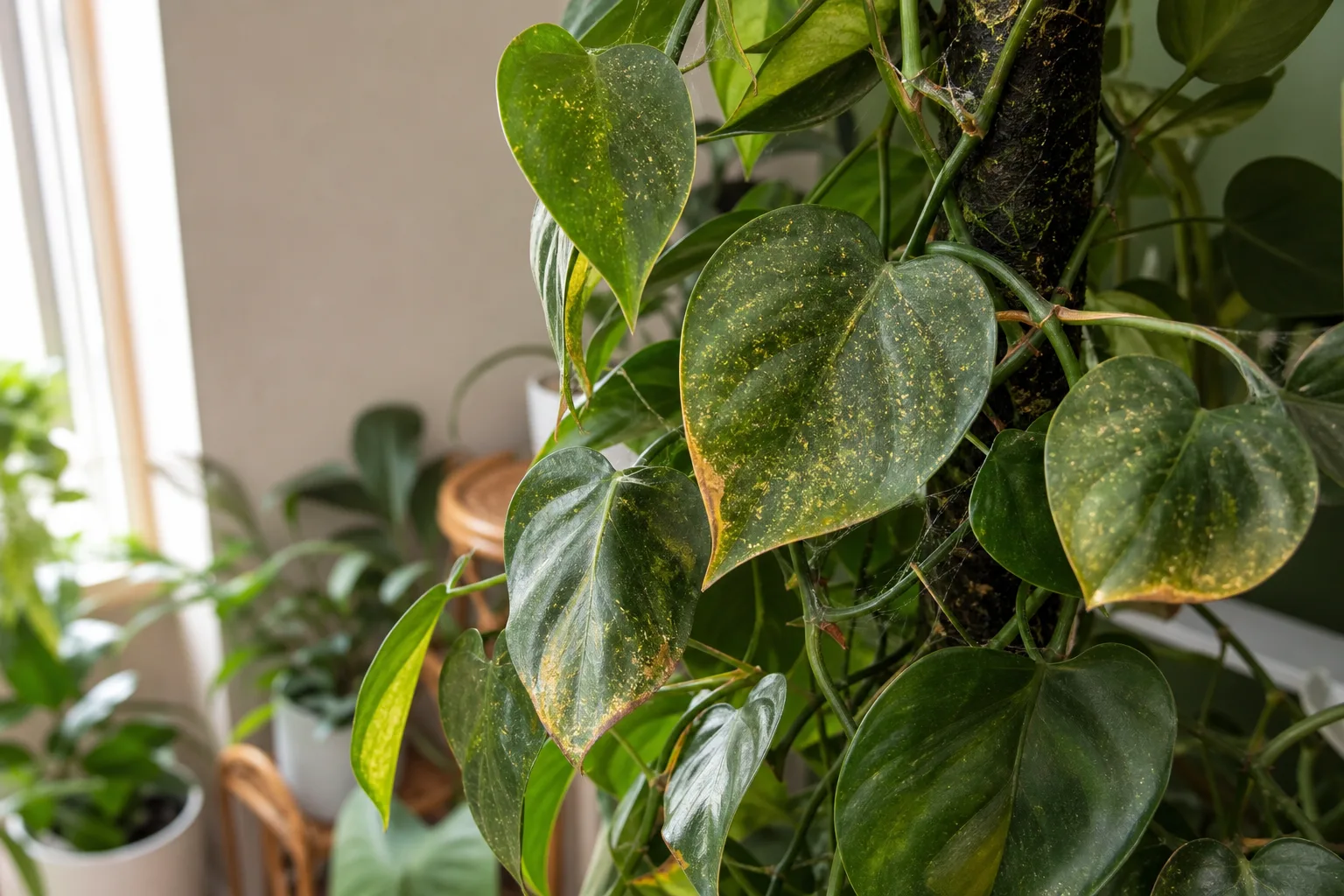
Spider Mites on Heartleaf Philodendron: Causes, Checks & Fixes
This guide covers spider mites on Heartleaf Philodendron. See also the general Spider Mites guide, watering, and light pages for this plant.
Spider Mites on Heartleaf Philodendron: Causes, Checks & Fixes
Quick answer
Spider mites are microscopic sap feeders that thrive in warm, dry indoor air-the same winter conditions many homes create when heating runs and humidity drops. On Heartleaf Philodendron (Philodendron hederaceum), damage usually appears as pale yellow speckles across glossy heart-shaped leaves, followed by dull bronzing and fine silk webbing tucked along trailing stems and node joints.
First step: isolate the plant and rinse all leaf undersides with lukewarm water. Heartleaf’s vining habit means mites hide on the backs of cascading leaves and in overlapping vine sections where warm air stagnates. A thorough shower dislodges adults and webbing before you confirm the pest or choose a spray. Webbing and moving dots confirm mites; uniform yellowing on wet soil without silk points to overwatering instead.
Do not reach for oil or soap until you have washed and inspected-one product application rarely clears an active colony on a long trailing vine.
What spider mites look like on Heartleaf Philodendron
Early damage is easy to miss on uniform green foliage. Mite feeding creates tiny chlorotic flecks scattered across the glossy blade-often denser near leaf edges-rather than whole-leaf yellowing. As feeding continues, leaves lose their shine and look dusty or bronzed. Severely affected heart leaves may curl at the edges or drop from lower vines while upper growth still looks acceptable from across the room.
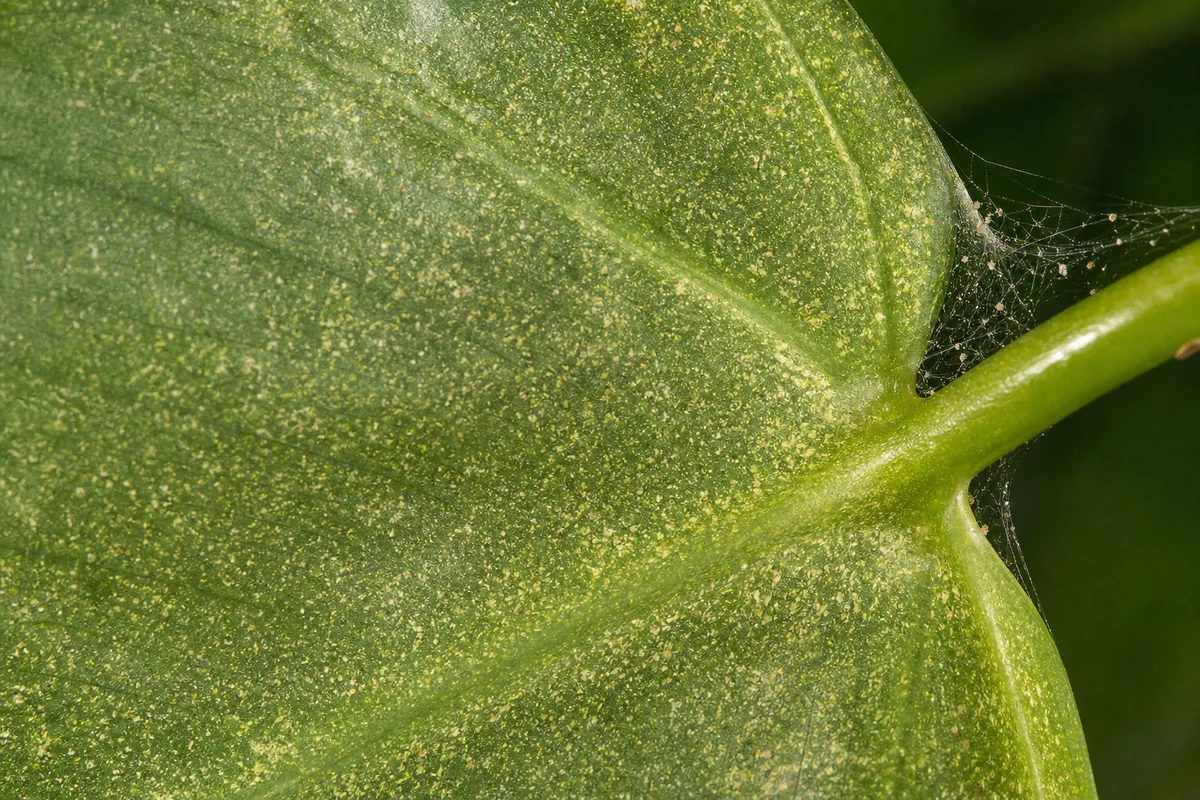
Spider Mites symptoms on Heartleaf Philodendron - compare with healthy tissue on the same plant.
Key signs specific to this plant’s growth habit:
- Fine stippling on heart-shaped leaves, often starting on the warmest side of a trailing vine or on newer foliage near growing tips
- Silk webbing at node joints, petiole bases, or spanning between overlapping vines on a hanger or shelf
- Dull, dusty cast on leaves that previously looked glossy and deep green
- Tiny moving dots on leaf undersides-visible with a hand lens or after tapping foliage over white paper
- New growth distortion-emerging heart leaves smaller, warped, or pale
- Leaf drop on an otherwise well-watered plant with no root-rot smell or soggy mix
Heartleaf grows quickly in spring and summer, so stippling can spread along a trailing stem within one to two weeks once a colony establishes. On glossy green panels, flecking stays subtle until webbing appears at exposed vine tips-by then mites may already colonize the layered sections behind the pot on a high shelf.
Why Heartleaf Philodendron gets spider mites
The twospotted spider mite is the most common mite on houseplants. It prefers warm, dry environments with low humidity-exactly what forced-air heating, radiator heat, and sunny window sills create during winter. Heartleaf tolerates average indoor humidity, but many rooms drop well below the 40–60% comfort zone for months at a time.
Several heartleaf-specific factors raise risk:
Trailing vine architecture. Heartleaf is a fast-growing climbing and trailing aroid that cascades from hangers or climbs a support. Long stems create layers of overlapping foliage where warm air stagnates and mites establish colonies on leaf undersides you rarely see from across the room. Node joints along trailing sections are prime hiding spots-especially where vines loop behind furniture or stack against a wall.
Heartleaf Philodendron light guide placement. Heartleaf needs bright indirect light to stay full and glossy. Vines on east or south window sills get the light they need but also absorb radiant heat during the day. Soil and foliage dry faster near glass, and mites reproduce more quickly in warm, dry microclimates.
Dusty foliage in dry rooms. Dust on leaf surfaces reduces light to the leaf and can attract spider mites on houseplants that are not rinsed regularly. Broad heart leaves collect dust quickly on upper shelves and hanging baskets.
Philodendron susceptibility. Philodendrons are among the houseplants most prone to spider mite outbreaks in collections. Heartleaf shares the same species pest profile as Brasil, Lemon Lime, and Micans cultivars-see the expanded Philodendron Brasil spider mites guide and Micans spider mites guide for cultivar-specific symptom notes.
Stressed plants show damage sooner. Heartleaf stressed by chronic underwatering on Heartleaf Philodendron, cold drafts below 18°C (65°F), or dim corners is less resilient. Mites are not caused by poor care alone, but a weakened vine shows stippling and bronzing faster than a healthy plant in the same dry room.
How to confirm the cause
Work through these checks in order before treating:
- Paper tap test - Hold a white sheet under a leaf and tap sharply. Tiny moving specks that streak when disturbed confirm live mites. Static dust or hard-water spots do not move.
- Underside inspection - Lift trailing stems and check leaf backs with a 10× hand lens. Look for amber eggs, pale cast skins, and black fecal specks, and the mites themselves along veins.
- Webbing check - Fine silk threads at node joints or spanning between two overlapping vines point to mites, not normal plant texture.
- Pattern vs. watering stress - Mite stippling is random fine dots across the blade, often with webbing. Overwatering yellows whole lower leaves while soil stays wet; underwatering wilts the vine with a light pot-neither produces silk.
- Environment check - Is the plant near a heating vent, space heater, or hot window? Dry warm air strongly supports mite reproduction.
- Neighbor plants - Inspect other philodendrons, pothos, palms, and figs on the same shelf or in the same room. Mites crawl short distances and ride air currents to nearby plants.
- Rule out lookalikes - Thrips leave silvery scars and black specks without webbing; mealybugs show white cottony clusters at nodes; aphids cluster on soft new tips. See the lookalike table below.
If you find stippling but no mites or webbing yet, treat as a probable early infestation anyway-populations can explode within days in dry heat.
Lookalike symptoms to rule out
| What you see | Likely cause | How to tell it apart from spider mites |
|---|---|---|
| Random yellow flecks + fine silk at vine tips | Spider mites | Moving dots on tap test; webbing at nodes |
| Silvery trails, black specks, no webbing | Thrips | Scraping damage; no silk threads between leaves |
| White cottony clusters at nodes | Mealybugs | Visible insects; stippling secondary |
| Soft insects on new growth tips, sticky residue | Aphids | Clusters on tender shoots-not dry dusty cast |
| Uniform yellow lower leaves, wet heavy soil | Overwatering | No stippling pattern; no webbing |
| Crispy brown tips only, firm stems | Low humidity / salt stress | See brown tips guide |
| Hard brown bumps on stems | Scale | Stationary shells; not moving dots |
First fix for Heartleaf Philodendron
Isolate the plant and rinse all foliage with lukewarm water, targeting leaf undersides and stem nodes.
Isolate infested houseplants immediately before mites spread to neighbors on the same shelf. Move heartleaf away from healthy plants. Carry hanging baskets carefully so mites do not drop onto furniture or neighboring pots. In a sink or shower, use a gentle but firm spray of lukewarm water angled upward so water hits the backs of heart-shaped leaves and dislodges webbing at node joints. Let foliage dry in bright indirect light the same day.
Cover the pot or tilt it so you do not waterlog soil-support the pot while rinsing so mix does not stay saturated on a plant already stressed by sap loss. The goal is pest removal, not a deep soak. Resume your normal watering rhythm once the pot drains fully.
Do not apply insecticidal soap, horticultural oil, or neem on day one if you have not confirmed live mites-though washing is appropriate even when you only suspect stippling. Do not fertilize a mite-hit plant hoping to push new growth; stressed roots and sap loss make fertilizer the wrong first response.
Step-by-step recovery
After the initial rinse:
- Repeat water washes every three to five days until tap tests show no moving specks for at least one week. Small heartleaf plants fit easily in a sink; larger trailing specimens may need a handheld sprayer in the shower.
- Apply insecticidal soap or horticultural oil if colonies persist after several rinses. Coat all leaf surfaces, especially undersides and node crevices along vines. Test a small leaf patch first-glossy philodendron foliage can burn if oil or soap sits on leaves in hot direct sun. Contact products have no residual effect-eggs hatch on a cycle, so repeat every five to seven days for at least three rounds while live mites remain.
- Raise ambient humidity toward the 40–60% target with a humidifier or grouped plants, while keeping airflow around trailing stems so foliage does not stay wet overnight.
- Prune heavily stippled leaves only after the population drops. Removing a few worst leaves lowers pest load and improves spray coverage on remaining vines. Sterilize scissors between cuts.
- Scout adjacent plants weekly with a hand lens. Mites spread to other philodendrons, palms, and figs before webbing is obvious on heartleaf.
- Hold fertilizer until new unstippled growth appears for two weeks. Salt stress on damaged foliage slows recovery.
If webbing covers most of a long trailing section and leaves are mostly bronzed, cut that stem back to a healthy node after washing rather than fighting endless reinfestation on dead tissue. Heartleaf roots easily from clean nodes once the parent plant is stable-see the propagation guide only after the infestation is under control.
Recovery timeline
Water knockdown shows results within two to three days when colonies are moderate. A full soap or oil course may take two to four weeks with label-interval repeats. Stippled heart leaves themselves rarely regain their original glossy green-judge recovery by clean new growth at vine tips and nodes, not old bronzed foliage.
Expect one to two new unstippled leaves per week on a healthy heartleaf in bright indirect light during active growth. Winter slowdown is normal; keep treating through the cycle even if new leaves appear slowly.
What not to do
Do not spray only the upper leaf surfaces. Mites live and feed on undersides along trailing vines.
Do not stop treatment after one visible improvement. Eggs hatch continuously in warm dry rooms.
Do not place soapy or oily plants in direct hot sun the same day-leaf burn is common on glossy philodendron foliage.
Do not ignore nearby plants that look clean. Scout the whole shelf before declaring victory.
Do not compost heavily infested clippings near other houseplants.
Do not assume yellow leaves mean overwatering when stippling and webbing are present.
Do not increase nitrogen feeding during an active infestation-that fuels soft new tissue mites prefer.
How to prevent spider mites on Heartleaf Philodendron
Scout leaf undersides weekly during dry heating season, especially on the warmest side of trailing vines. Heartleaf produces constant new heart leaves during active growth-the tissue mites colonize first.
Quarantine new plants for two weeks before hanging them beside existing heartleaf. Mixed nursery baskets often introduce mites before top leaves show damage.
Rinse foliage monthly with lukewarm water to remove dust and dislodge early colonies before populations build.
Keep humidity in the 40–60% range with a humidifier when heating runs. Grouping plants helps, but leave space between pots for airflow.
Avoid hanging heartleaf directly above heat registers or in hot south window bays without humidity support.
Inspect the full vine length when moving plants indoors in autumn-mites often ride in on plants that looked clean outdoors.
Preserve beneficial insects when possible. Broad-spectrum indoor sprays can remove predators that would otherwise keep mite numbers low.
When to worry
Treat as urgent when webbing spans multiple nodes on a trailing stem, new heart leaves emerge distorted or mostly bronzed, or leaf drop accelerates despite soil drying on your normal watering schedule. Severe infestations can defoliate long vine sections within weeks in warm dry rooms.
Discard only when most of the plant is webbed, bronzed, and dropping leaves after repeated treatment cycles-or when saving it risks spreading mites through a large collection. Bag the plant before moving it to the trash.
Contact your veterinarian or ASPCA Animal Poison Control if a pet chews treated foliage. Heartleaf philodendron contains calcium oxalate crystals; wash hands after rinsing or pruning, and keep treated plants away from cats and dogs.
A few stippled lower leaves on an otherwise vigorous trailing heartleaf is worth treating early, not panicking. Confirm mites first; escalate when webbing and population spread, not when a single leaf looks off.
Conclusion
Spider mites dull glossy heart leaves and weaken fast-growing trailing vines in dry indoor heat. Isolate, rinse undersides before you spray, and repeat contact treatments until new heart leaves emerge unstippled. That diagnostic path stops a shelf-wide outbreak and keeps a long heartleaf vine worth keeping.
Related Heartleaf Philodendron guides:
- Overview - species context, light, and toxicity
- Watering - dry-down rhythm during recovery
- Brown tips - dry-air damage without webbing
- Mealybugs - cottony clusters at nodes
- Aphids - soft insects on new growth tips
- Philodendron Brasil spider mites - variegated P. hederaceum cultivar guide
- Philodendron Micans spider mites - velvet-leaf cultivar guide
When to use this page vs other Heartleaf Philodendron guides
- Heartleaf Philodendron watering guide - Use for routine moisture checks before assuming spider mites is the main issue.
- Heartleaf Philodendron problems hub - Browse all 16 common issues on this species.
- Low Humidity on Heartleaf Philodendron - Different entry point when symptoms overlap with spider mites.
- Slow Growth on Heartleaf Philodendron - Different entry point when symptoms overlap with spider mites.